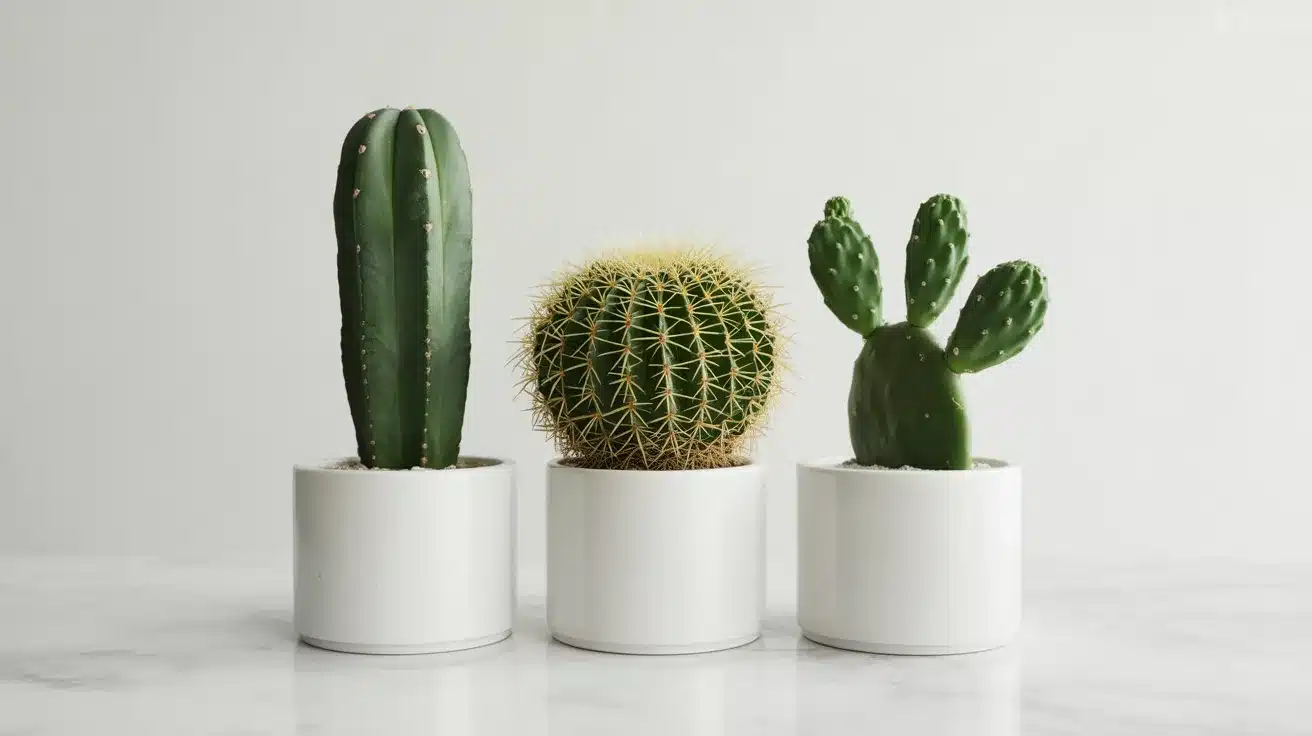
Cacti look tough. And they are. But that does not mean they will survive anything you throw at them.
A lot of people bring one home, water it like a regular houseplant, and watch it slowly turn soft and brown. That is not bad luck. That is just the wrong approach.
Once you understand what a cactus actually needs, caring for it becomes straightforward.
This guide on how to take care of a cactus covers everything, from watering the right way and picking the right soil to repotting, fixing problems, and keeping your plant alive through winter.
What Makes Cacti Worth Having?
Cacti are slow-growing, low-demand plants that fit into almost any space. They can go weeks without water, rarely need pruning, and can live for decades with basic care.
A sunny windowsill, the right soil, and occasional watering are all they ask for. That makes them one of the most practical plants you can keep at home, especially if your schedule does not leave much time for plant maintenance.
How to Take Care of a Cactus at Home?
Caring for a cactus is not complicated, but it is specific. Each habit below plays a direct role in keeping your plant healthy for the long term.
1. Watering Your Cactus the Right Way
Overwatering kills more cacti than anything else. The soil needs to dry out completely before you water again. When you water, give it a proper soak and let the excess drain out fully from the bottom of the pot.
- In summer, water every 1 to 2 weeks, depending on pot size and room temperature.
- In winter, cut this down to once every 4 to 6 weeks.
- Check the soil before watering. Push your finger about an inch in. “Dry” means it is time to water.
- Never let the pot sit in a saucer of standing water. That leads to root rot fast.
2. Sunlight Needs: How Much Light Does a Cactus Need?
Cacti need bright light to grow well, and without enough of it, they start to stretch out and lean. A south-facing window is the best spot indoors for most varieties.
- Aim for at least 4 to 6 hours of bright or direct sunlight daily.
- Morning sun is gentler than harsh afternoon rays magnified through glass.
- If your space does not receive enough natural light, a grow light can serve as a supplement.
- Watch for yellowing or browning on the side facing the sun. That means too much direct heat exposure.
3. Best Soil Mix for Cactus Plants
Regular potting mix holds too much moisture, putting cactus roots at serious risk. Cacti need fast-draining soil that lets water pass through quickly and does not stay wet.
- Use a store-bought cactus or succulent soil mix for the easiest option.
- You can also mix regular potting soil with coarse sand or perlite in equal parts.
- Quick test: pour water in and watch how fast it drains. It should clear out within 60 seconds. If it takes longer, add more grit.
- Skip any soil mix that contains peat moss. It retains too much water for too long.
4. Choosing the Right Pot for Your Cactus
The pot matters more than most people realize. Water needs somewhere to go, and a pot without drainage holes just lets it build up at the bottom where the roots sit.
- Terracotta or clay pots are the best option. They let air reach the roots, allowing them to dry out faster than with plastic.
- Plastic pots work too but require more careful watering.
- Pick a pot only slightly bigger than the root ball. A pot that is too large holds extra soil, which holds extra moisture.
- If using a pot with no drainage holes, measure your water carefully, about one-quarter to one-half a cup at a time, and always let the soil dry fully before adding more.
5. Temperature and Humidity Requirements
Cacti grow best in warm, dry conditions. They are not cold-weather plants, and they do not need any added moisture in the air.
- Keep them in temperatures between 65°F and 85°F (18°C to 30°C).
- Move them away from cold drafts, air conditioning vents, and frosty windows during winter.
- Low indoor humidity is perfectly fine. No misting or humidifier needed.
6. How and When to Fertilize Your Cactus
Cacti do not need much feeding, but a little fertilizer during the growing season makes a real difference. Skipping it in winter is just as important as applying it in spring and summer.
- Fertilize once every 4 weeks from spring through summer only.
- Use a low-nitrogen, cactus-specific fertilizer, or a balanced formula such as 5-10-5 or 10-10-10.
- Always apply at half the strength listed on the label to avoid burning the roots.
- Stop all fertilizing from fall through winter without exception.
- High-nitrogen fertilizers push leafy growth and reduce the chance of flowering.
7. Repotting Your Cactus: When and How to Do It
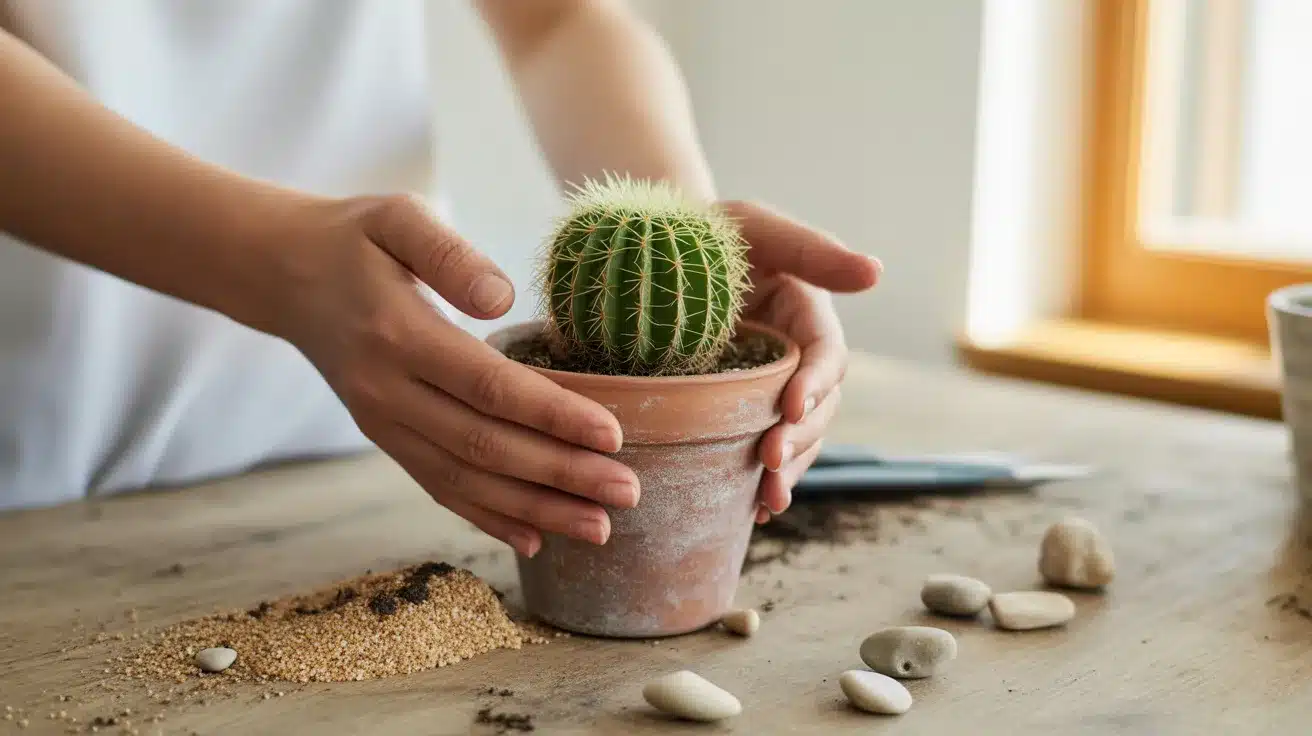
Fresh soil and a slightly bigger pot give your cactus room to grow and keep its roots in good shape. Repotting every 1 to 2 years in spring is enough for most varieties.
- Put on thick gloves before touching the plant.
- Gently tip the old pot and ease the cactus out.
- Use a chopstick or a thin stick to clear old soil from the roots without damaging them.
- Add fresh cactus soil to the new pot and set the plant in place.
- Do not water for 3 to 5 days after repotting. Let any damaged roots seal and recover first.
8. Cactus Care in Winter: What Changes and What Does Not
When temperatures drop, your cactus slows down and enters a rest period. It needs much less from you during this time, but it still needs light.
- Cut watering down to once every 4 to 6 weeks.
- Keep the plant in a bright spot. It still needs light even in the winter months.
- Skip fertilizer completely until spring returns.
- Cool nighttime temperatures, around 50°F to 60°F, can actually help the plant produce flowers in spring.
Common Cactus Problems and How to Fix Them
Even with good care, something can occasionally go wrong. The table below breaks down the most common issues, what causes them, and exactly what to do next.
| Problem | Likely Cause | Fix |
|---|---|---|
| Soft or mushy stem | Overwatering or root rot | Remove from soil, cut away rotted tissue, let it dry, re-root in fresh, dry cactus soil |
| Yellowing skin | Overwatering or sunburn | Let the soil dry out fully; move to indirect light if the sun-facing side is affected |
| Leaning or stretched growth | Not enough light (etiolation) | Move to a brighter spot or add a grow light |
| White cottony spots | Mealybugs or scale insects | Spray with a mix of 3 parts water to 1 part rubbing alcohol |
| Wrinkling or shrinking body | Underwatering or root damage | Water thoroughly if the soil is dry; inspect roots if the soil is still wet |
| Pointy or narrow top growth | Too little light | Provide more direct, bright light as soon as possible |
How to Propagate a Cactus at Home?
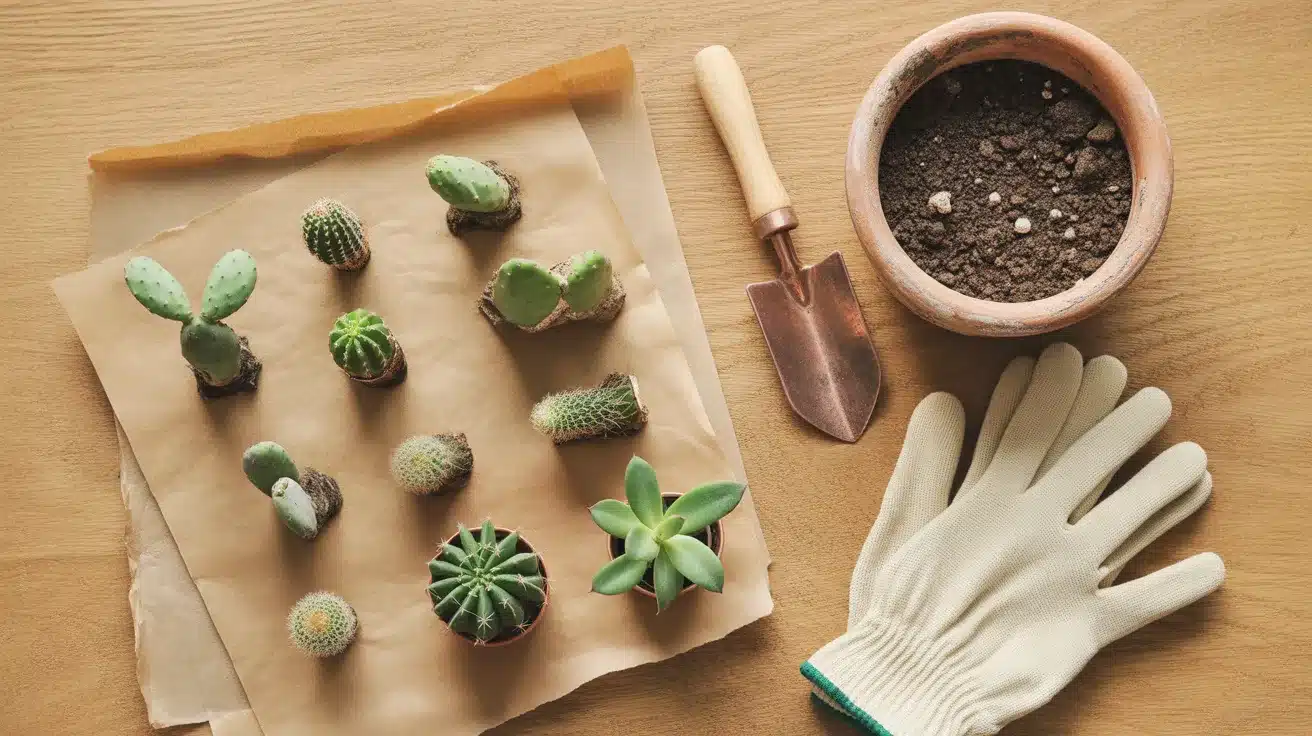
Growing a new cactus from an existing one is simpler than it looks. There are two reliable ways to do it, and both require just a little patience.
From Offsets (Pups)
Pups are small growths that form at the base of a mature cactus. Gently twist or cut one off. Let the cut end sit in a dry spot for a few days. Once it dries and seals over, place it in dry cactus soil. Wait 7 to 10 days before watering.
From Stem Cuttings
Cut a healthy section of stem with a clean, sharp knife. Let it dry and form a hard seal over the cut end. This takes about 7 to 10 days. Then plant it in dry cactus mix. Hold off on watering for another week after planting to keep rot from setting in.
Pro Tip: Dust the cut end with a mix of equal parts sulfur and rooting hormone powder. It speeds up healing and lowers the risk of rot.
Indoor vs. Outdoor Cactus Care: Key Differences
Cacti can do well in both settings, but the approach shifts slightly depending on where the plant lives. Here is what changes and what stays the same.
Indoors:
- Place near a south-facing window for the most light.
- Water less often since indoor spaces have less heat and lower evaporation.
- Add a grow light if the room receives little natural sunlight.
- If moving the plant outside for summer, start it in a shaded spot for a week first, then gradually shift to more sun.
Outdoors:
- Protect from harsh afternoon sun in hot climates. Morning sun suits most varieties better.
- Adjust watering based on rainfall. Always check the soil before adding more water.
- Bring the plant inside or cover it if temperatures drop to within a few degrees of freezing.
- Outdoor cacti are more likely to flower due to natural fluctuations between warm days and cool nights.
Tips for Keeping Pets and Kids Safe Around Cacti
Cacti are not toxic to people or pets, but their spines are sharp and cause real discomfort if touched. Keep them on high shelves or out of reach in homes with small children or curious animals.
Some varieties, like the bunny ear cactus, have tiny, nearly invisible spines called glochids that are especially hard to remove once they get into the skin.
If spines do make contact, use tweezers or press a piece of sticky tape over the spot and peel it away carefully. Always wear thick gloves when handling or repotting any cactus variety.
Final Thoughts
Taking care of a cactus is not complicated once you get the basics right. Water less than you think, give it strong light, use soil that drains fast, and always pick a pot with drainage holes.
That is really the foundation for caring for a cactus well. These plants are forgiving, long-lived, and honestly pretty low effort once you stop treating them like regular houseplants.
From repotting to propagating, small habits go a long way. Have questions or tips of your own? Drop them in the comments below. We would love to hear how your plant is doing.