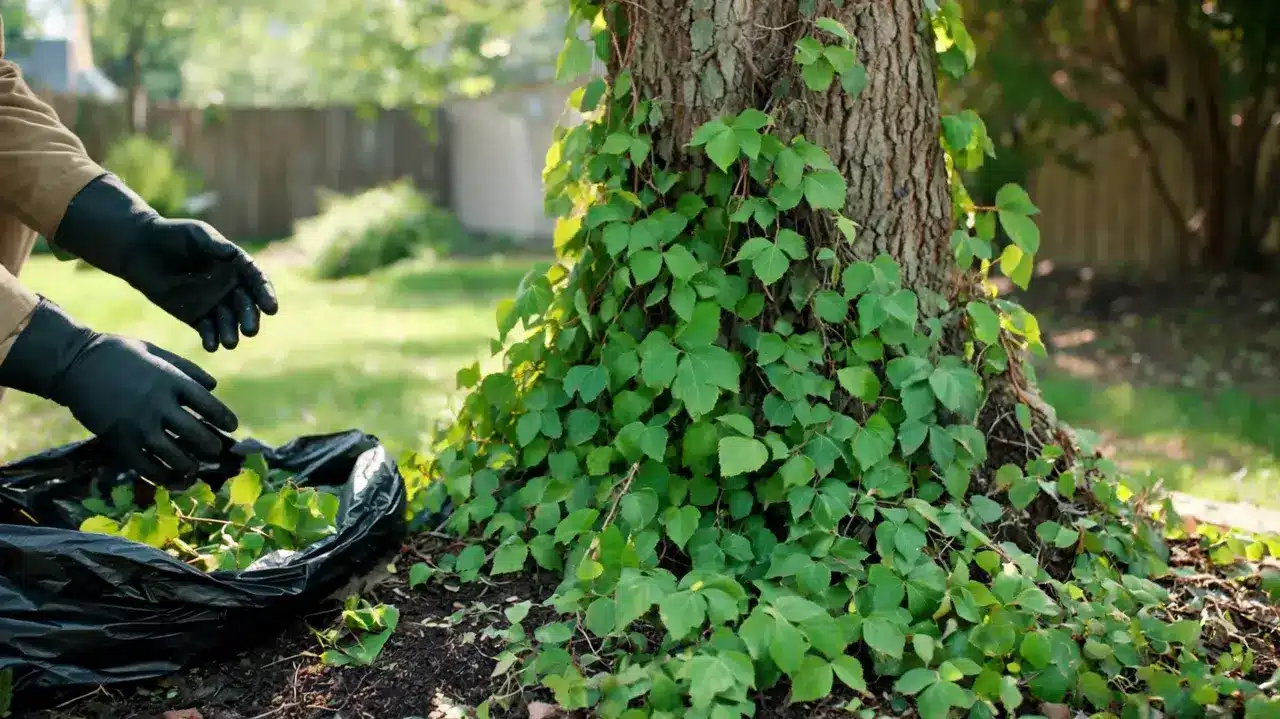
Getting rid of poison ivy safely starts with knowing exactly what you’re looking at before you touch anything at all. Cover your skin completely, then match your method to the size of the plant you’re dealing with, since small growth and mature vines don’t call for the same approach.
For small plants, dig out the roots by hand, and for larger growth, a labeled systemic herbicide tends to work far better.
One rule matters more than any other here: never burn, compost, mow, or use a string trimmer on poison ivy, since each of these spreads the oil that causes the rash.
That same oil can cling to tools, clothes, and shoes, and it stays just as active even on dead plants. Here’s the full process, step by step.
What Is Poison Ivy Exactly?
Poison ivy (Toxicodendron radicans) is a woody, native perennial that can grow as groundcover, a shrub, or a climbing vine. It’s been a fixture in North American landscapes long before it had a name; Captain John Smith first recorded the term “poison ivy” back in 1609, and it’s held its ground ever since.
Some evidence even suggests it’s growing more vigorous and more toxic as the climate warms, so if it feels tougher to control than it used to, you’re likely not imagining it. The plant’s main threat comes down to one thing: urushiol, an oily substance that causes an itchy rash in most people who touch it.
- Where it hides: In every part of the plant, including the leaves, stems, roots, and berries, and even in dead plant matter.
- How little it takes: Brushing against the plant or crushing it is enough to release the oil.
- Where it spreads: From the plant onto clothes, tools, shoes, and pet fur, then onto anyone or anything that touches those surfaces.
- How long it lasts: Active through winter, and still active after the plant has died.
That’s why getting the ID right matters before you touch anything. Full skin cover isn’t optional here; it’s the first real step in safe removal.
Identifying Poison Ivy: What to Look For
Knowing what poison ivy looks like keeps you from guessing when it’s time to treat it. A wrong ID can mean treating a harmless plant or missing the real one entirely. Here’s what to check before you touch anything.
Leaf Pattern: Three leaflets, with the middle one on a longer stalk. Edges vary from smooth to notched, so shape alone doesn’t rule it out.
Color and Fruit: Reddish in spring, green in summer, then red, orange, or yellow in fall. Small white berries often appear along the stem.
Growth Form: Grows as groundcover, shrub, or climbing vine. Older vines look hairy on the bark. Bare winter vines still carry the oil.
No single trait confirms poison ivy on its own. Leaf pattern, color, and growth form all work best together. When you’re unsure, avoid direct contact, wear gloves, and wash your skin, clothing, and tools right after touching any unidentified vine.
How to Kill Poison Ivy: Step by Step
The safest method here depends on the plant’s size, where it’s growing, and what’s growing nearby. Following these six steps in order keeps you protected while giving the treatment the best chance of actually working, from roots to cleanup.
Step 1: Confirm the Plant and Pick Your Timing

Check for three leaflets, with the middle one on a longer stalk than the rest, along with white berries and older vines with hairy-looking roots. Don’t rely on “leaves of three” alone, since several harmless plants share that pattern.
Once confirmed, pick a calm, dry day with no rain expected soon after, and treat healthy, actively growing leaves rather than drought-stressed ones, since stress cuts down how much product they absorb.
Step 2: Cover Your Skin and Eyes

Full skin cover matters more here than in most yard work, so don’t skip any piece of it. Wear long sleeves, long pants, closed shoes, and socks, along with waterproof gloves and eye protection at all times.
Add disposable nitrile gloves underneath for hand removal, and keep clean trash bags ready before you begin the job.
Step 3: Use the Right Removal Method

For small seedlings or patches, pull or dig after rain, when the soil is soft, removing the roots and any spreading underground stems, then bag every piece right away.
For large ground patches, apply a labeled systemic herbicide to healthy leaves while shielding nearby plants. For vines on trees, cut near ground level, cut again higher up, treat the stump immediately, and let the upper vine die in place.
Step 4: Allow Time for the Treatment to Work

Visible damage can show up fast, but killing the roots underground takes far longer, sometimes stretching into several weeks depending on the product and plant size.
Don’t cut or remove treated leaves too soon, since they’re still doing their job even after they start to wilt. Check back later for any fresh shoots pushing through the treated area.
Step 5: Bag and Remove Dead Plant Material

Cover up fully again before touching dead plants, since the oil inside them is still just as active as it was in the living plant. Seal every piece in strong trash bags and put them out with the regular household trash right away.
Never burn or compost poison ivy, no matter how dead or dried out it looks.
Step 6: Clean Clothing, Tools, Shoes, and Skin

Wash tools, including handles, with warm water and detergent to strip away any leftover oil sitting on the surface.
Wash any exposed clothing separately in hot water, then shower with cool to warm water right after finishing the job. Skip the bath entirely, since oil left behind on your skin can cling to the tub itself.
Once every step is done, the real work shifts from removal to keeping the area clear for good.
Common Poison Ivy Lookalikes
Poison ivy isn’t the only three-leaved plant you’ll run into outdoors, and a few others get mistaken for it all the time. Knowing the small differences below can save you from unnecessary caution around a harmless plant, or worse, mishandling poison ivy because you assumed it was something else.
Getting the ID wrong here carries the same real cost as catching early signs of mealybugs too late on a houseplant: the longer you misread the problem, the more it spreads.
| Plant | Key Difference |
|---|---|
| Virginia creeper | Usually has five leaflets instead of three, arranged like an open hand, and produces blue-black berries in late summer rather than white ones. |
| Box elder | A tree with three to seven leaflets that grow opposite each other on the stem, not alternating like poison ivy |
| Fragrant sumac | An upright shrub, not a vine, with a middle leaflet that sits flush against the stem instead of on its own longer stalk |
| Poison oak | Rounder, lobed leaves that resemble oak foliage, usually growing as a shrub, and also contains urushiol, so caution still applies. |
Mixing up poison ivy with one of these can mean skipping the caution it needs, or treating a harmless plant for nothing. Check more than one sign, like leaf shape, growth form, and berry color together, before deciding how to move forward.
Where Poison Ivy Grows
Poison ivy isn’t limited to deep woods, and it doesn’t stick to one climate or soil type. It grows across most of the country, showing up in nearly every state except Alaska, Hawaii, and parts of the West Coast, with its appearance shifting by region.
Look for it along fence lines, up building sides, and over fallen trees, where it climbs, sprawls, or creeps along the ground unnoticed for years. It thrives in shady, moist woods, but that’s far from its only home, since it grows fine in dry soil, sunny edges, and ordinary suburban yards with little upkeep.
Most people picture poison ivy as a summer problem, but it actually grows year-round, including through winter, when leafless vines still carry active oil. There’s really no off-season for poison ivy, so staying alert shouldn’t stop once the weather turns cold.
Which Control Method Fits Your Yard?
Not every yard, plant size, or location calls for the same approach. Use this quick table to match your exact situation with the method that fits it best, without wasting time or effort.
| Situation | Main Method | Key Limit |
|---|---|---|
| Young plant in moist soil | Pull or dig | Missed root pieces can regrow |
| Small patch near valued plants | Careful digging or shielded spot treatment | Avoid root damage and spray drift |
| Large patch with healthy leaves | Labeled systemic herbicide | Nearby plants may also be harmed |
| Thick vine on a mature tree | Window cut plus cut-stump treatment | Do not pull the upper vine |
| Area near water or where sprays are restricted | Hand removal, covering, or repeated cutting | More labor and repeat checks |
| New shoots after treatment | Early retreatment | One pass may not kill every root |
No method here removes the need for a follow-up check, since poison ivy can return from a missed root piece or a seed dropped by birds. A little monitoring after treatment goes a long way toward keeping it gone for good.
Understanding Poison Ivy Herbicides

Herbicides for poison ivy fall into two basic types, and knowing the difference helps you pick the one that actually fits your situation instead of guessing.
1. Systemic Herbicides
These move from the leaves or a freshly cut stem down into the root system below. Because they travel all the way to the roots, they tend to be more dependable on plants that are already well established.
This makes them a solid choice for mature vines and thick, spreading patches.
2. Contact Herbicides
These mainly burn whatever part of the plant they touch, rather than traveling deeper into the plant itself. The roots often survive underneath, so you’ll likely need to treat the area more than once.
They tend to work best on small, young growth rather than mature plants.
3. Timing and Label Rules
Spray only when the plant has enough healthy leaf area to absorb the product, and skip windy days and drought-stressed plants, since both reduce how well it works. For cut-stump treatment, late summer through fall tends to work best, when the label allows it.
Beyond that, the label tells you the rate, protective gear, where you can use it, and how soon to retreat. Getting the type, timing, and label right together is what separates a one-and-done treatment from months of repeat spraying.
4. Common Active Ingredients
A few active ingredients show up again and again in poison ivy products, each working a little differently. The EPA’s glyphosate review is a useful reference point for how these ingredients are evaluated before they reach store shelves:
- Glyphosate: Nonselective, meaning it can harm grass and other broadleaf plants along with poison ivy
- Triclopyr: Targets broadleaf plants and may spare grasses
- 2,4-D: A broadleaf herbicide, best used once leaves are fully open
- Glufosinate: Works mainly by contact and may not kill mature roots
Checking which ingredient a product uses tells you a lot about how it’ll perform in your yard.
Long-Term Prevention Tips
Once the main growth is gone, a few simple habits keep it from creeping back into your yard. Working a fresh layer of homemade mulch into that routine is one of the easiest habits to keep up, and these steps take little effort but make a real difference over the following seasons.
| Habit | What to Do |
|---|---|
| Check the Area Often | Walk the area regularly during the growing season and look for small shoots. Treat new growth while it’s still small and easier to handle. |
| Cover Small Cleared Areas | Use cardboard, landscape fabric, or heavy black plastic to smother a cleared patch. Leave it in place for a full growing season or longer, checking edges and gaps for shoots sneaking through. |
| Add a Thick Mulch Layer | Apply 2 to 6 inches, depending on your site and material. Mulch works better on seedlings than on plants with an established root system. |
| Keep Yard Edges Under Watch | Check fences, shrub lines, tree bases, dead stumps, and wooded borders often. Pull young seedlings before their roots get a chance to spread. |
Mulches and covers help slow new growth, but an established plant may still push through given enough time. Staying consistent with these habits is what actually keeps the area clear.
Why Poison Ivy Keeps Coming Back
Killing the leaves you see is only half the job here. Poison ivy has a few different ways of staying alive underground and coming back weeks or months later.
- Root Pieces Stay Alive: Even a small piece of root or underground stem left behind can send up a brand new shoot.
- Cutting Only Slows the Plant: Mowing and trimming don’t kill the roots; they just knock back the top growth for a while, and worse, they scatter oil-covered plant bits around the area.
- Some Sprays Only Burn Leaves: A plant can turn brown fast and still have a living root underneath, since quick browning is not the same as a dead root system.
- Birds Carry Seeds: Birds eat the berries and drop the seeds along fence lines, in wooded edges, and around the yard, starting fresh patches far from the original plant.
None of this means your first treatment failed. Checking back and treating new shoots is a normal, expected part of getting rid of poison ivy for good.
What to Do After Contact
If contact happens, quick cleanup makes a real difference in how bad the reaction gets, since acting fast in the first few minutes can mean the difference between mild irritation and a rash that lingers for weeks.
The CDC’s NIOSH guidance on poisonous plant exposure backs up why speed matters here. Rinse exposed skin with cool to lukewarm water and soap as soon as possible, and avoid scratching if a rash forms, since broken skin heals more slowly and invites infection.
Remove exposed clothing and shoes without touching them bare-handed, wash them separately in hot water with detergent, and run an empty cycle afterward if exposure was heavy.
Clean handles, blades, seats, and other surfaces with detergent and water, since the oil can cling to them for a long time; rubbing alcohol works especially well on pruners.
Get medical care right away for breathing trouble, a severe or widespread rash, or signs of infection. The oil can also transfer from tools, clothing, or pet fur long after the plant is gone, so cleanup matters as much as avoiding the plant itself.
Methods to Avoid
A few common methods actually make poison ivy control worse, not better. Here’s what to skip and why:
- Burning: Smoke can carry the plant’s oil straight into your lungs.
- String trimming: The fast-moving line throws oil-filled plant bits into the air.
- Mowing: Cut leaves scatter across the yard and stick to your equipment.
- Composting: Plant parts in the pile can still expose anyone who handles it later.
- Household vinegar: It may burn tiny seedlings, but it won’t touch a mature root system.
- Salt: It can damage the soil, nearby plants, and water in the area.
- Bleach: It harms soil life and can form toxic gas if mixed with other cleaners.
- Dish detergent mixes: These aren’t made or tested for weed control in a yard.
- High-strength “natural” acids: These can injure skin, eyes, and lungs on contact.
A “natural” label doesn’t mean a product is safe to skip protective gear or label directions. Every one of these still deserves the same caution as any other treatment.
Frequently Asked Questions
Can poison ivy grow as a shrub instead of a vine?
Yes. Poison ivy can grow as a low shrub instead of only a climbing vine, and its form depends on the site and what it has nearby to climb on for support, which often surprises people expecting only a vine.
Can poison ivy stay harmful after the leaves fall?
Yes. The oil stays active in bare winter vines and dead plant matter, even months after the plant looks completely gone. Leafless poison ivy still carries urushiol and can still cause a rash on contact.
Can a rash spread through blister fluid?
No. Blister fluid does not contain urushiol and won’t spread the rash to new areas or to other people who touch it. The rash can only spread through more direct contact with the oil itself.
Can dogs or cats carry poison ivy oil indoors?
Yes. Pet fur can pick up urushiol outdoors and pass it to you indoors. Eating the plant is a separate risk; it can cause a serious reaction in pets, even though it won’t give them a skin rash.
Final Takeaway
Getting rid of poison ivy safely comes down to a clear order worth following every single time: identify it first, cover your skin completely, choose the right method for its size, remove or treat it properly, bag the waste, clean your gear thoroughly, and check back later for any regrowth.
Skipping a step, or doing them out of order, is usually how a small problem turns into a repeat one. One rule stands above the rest, no matter which method you end up choosing: never burn poison ivy, since the smoke carries the same oil that causes the rash straight into your lungs.
Handle it early, while the growth is still small and manageable. The whole job stays far easier and safer than waiting until you’re facing thick, mature vines with deep, spreading roots.
Drop a comment below and let me know if you were successful in killing this beautiful plant.