Growing Brussels sprouts sounds simple until you actually try it. You follow the steps, the plants look healthy, and then nothing happens for weeks. No sprouts. Just tall stalks and big leaves. That’s where most confusion comes from.
The real secret to how to grow Brussels sprouts isn’t fertilizer or fancy tricks. It’s timing and temperature.
These plants move slowly and react strongly to heat. Once you understand that, everything else starts to make sense.
Today, I’ll slow things down and explain what’s really going on, so you can make better choices from the start and avoid mistakes most people make.
Brussels sprouts grow best when planted early enough to mature in cool weather. They need steady moisture, proper spacing, and moderate feeding. Warm temperatures slow sprout formation, while cool fall conditions help tight sprouts develop. Most problems come from planting too late, excess nitrogen, or heat during the growing season.
Are Brussels Sprouts Hard to Grow?
Brussels sprouts are not hard in the way tomatoes are hard. They don’t need constant pruning or daily attention. But they are unforgiving about timing. That’s why people struggle with them.
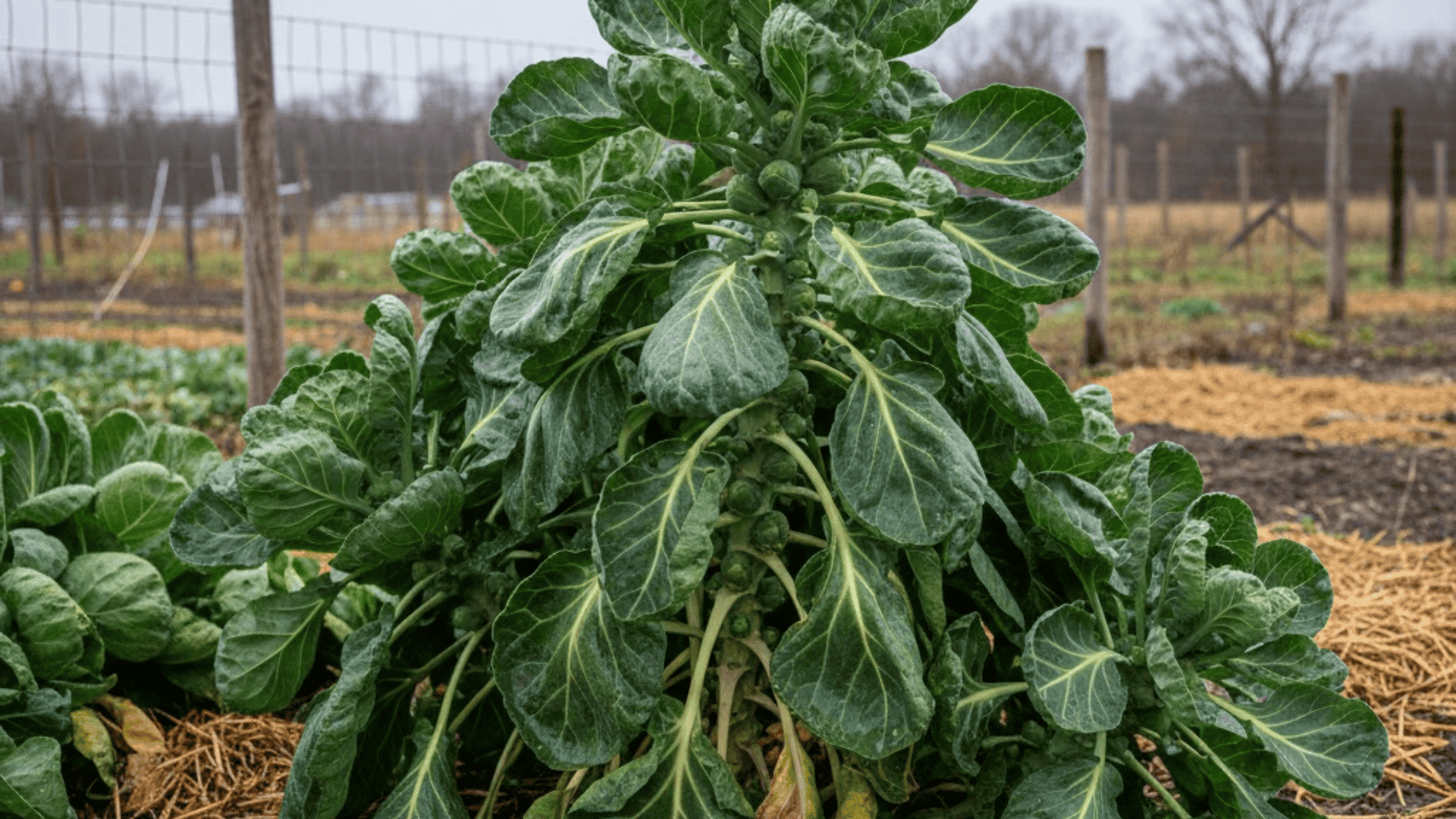
The plants themselves grow easily. Big leaves. Strong stalks. No problem there. The challenge is getting tight sprouts to form along the stem. That part only happens when conditions are right, and those conditions are narrow.
Most failures come from a few things:
- Planting too late or too early
- Growing them through hot weather
- Feeding them too much nitrogen
- Expecting fast results
If you like slow crops and don’t mind waiting, Brussels sprouts are a good fit. They work best for gardeners who plan ahead and are okay with a long season. If you want quick harvests, they can feel frustrating.
Best Climate and Temperature for Growing Brussels Sprouts
Temperature plays a larger role in sprout formation than fertilizer or watering. You can do everything else right, but if the weather is off, the plants won’t cooperate.
Ideal Growing Temperatures
Brussels sprouts grow best when daytime temperatures stay between 60 and 70°F (15–21°C) and nights are cool. Once daytime temperatures stay above the mid 70s°F (24°C) for long periods, the plant shifts its energy into leaf growth instead of sprout formation.
When it gets too hot:
- Sprouts stay loose or never form
- Growth slows even with good watering
- Plants look healthy but don’t produce
Cold does far less damage than heat. Light frost actually improves flavor. Hard freezes can stop growth, but mature plants tolerate cold better than most people expect.
Why Fall Crops Usually Work Better
Fall growing lines up with what Brussels sprouts want. They mature as temperatures cool instead of heat up. This gives you tighter sprouts and better taste.
Cool weather slows the plant just enough to let sprouts form evenly. Sugars also build up in the sprouts after light frost, which makes them less bitter.
This is why fall crops almost always outperform spring crops, especially in warmer regions.
When to Plant Brussels Sprouts
Planting dates matter more than almost any other decision. These plants need a long runway and the right finish.
Spring Planting Timeline
Spring planting works best in cooler climates with mild summers.
Start seeds indoors about 4 to 6 weeks before your last frost. Transplant outside once plants are sturdy and frost risk is low.
The risk with spring planting is heat. If summer arrives before sprouts form, production suffers. Even if the plants survive, sprout quality often drops.
Fall Planting Timeline
Fall planting is more reliable in most areas. Start by finding your average first fall frost date. Count backward 90 to 110 days. That’s when your plants need to be in the ground.
A simple way to think about it:
| Growth Stage | Approximate Timing | What’s Happening | Why This Timing Matters |
|---|---|---|---|
| Start seeds indoors | Late spring to early summer | Seeds germinate and develop strong roots and early leaves | Early indoor growth avoids heat stress and gives plants a head start |
| Transplant outdoors | Mid summer | Plants establish in the garden and begin rapid leaf growth | Plants must be settled before cooler weather arrives |
| Leaf and stalk growth | Late summer | Plants grow tall with thick stalks and large leaves | Strong stalk growth is required before sprouts can form |
| Sprout formation | Fall | Sprouts begin forming along the stalk | Cooler temperatures trigger tight, even sprout development |
| Harvest window | Late fall to early winter | Sprouts firm up and improve in flavor | Cool weather and light frost enhance taste and texture |
This keeps the final growth stages in cool weather, where Brussels sprouts perform best.
How to Plant Brussels Sprouts
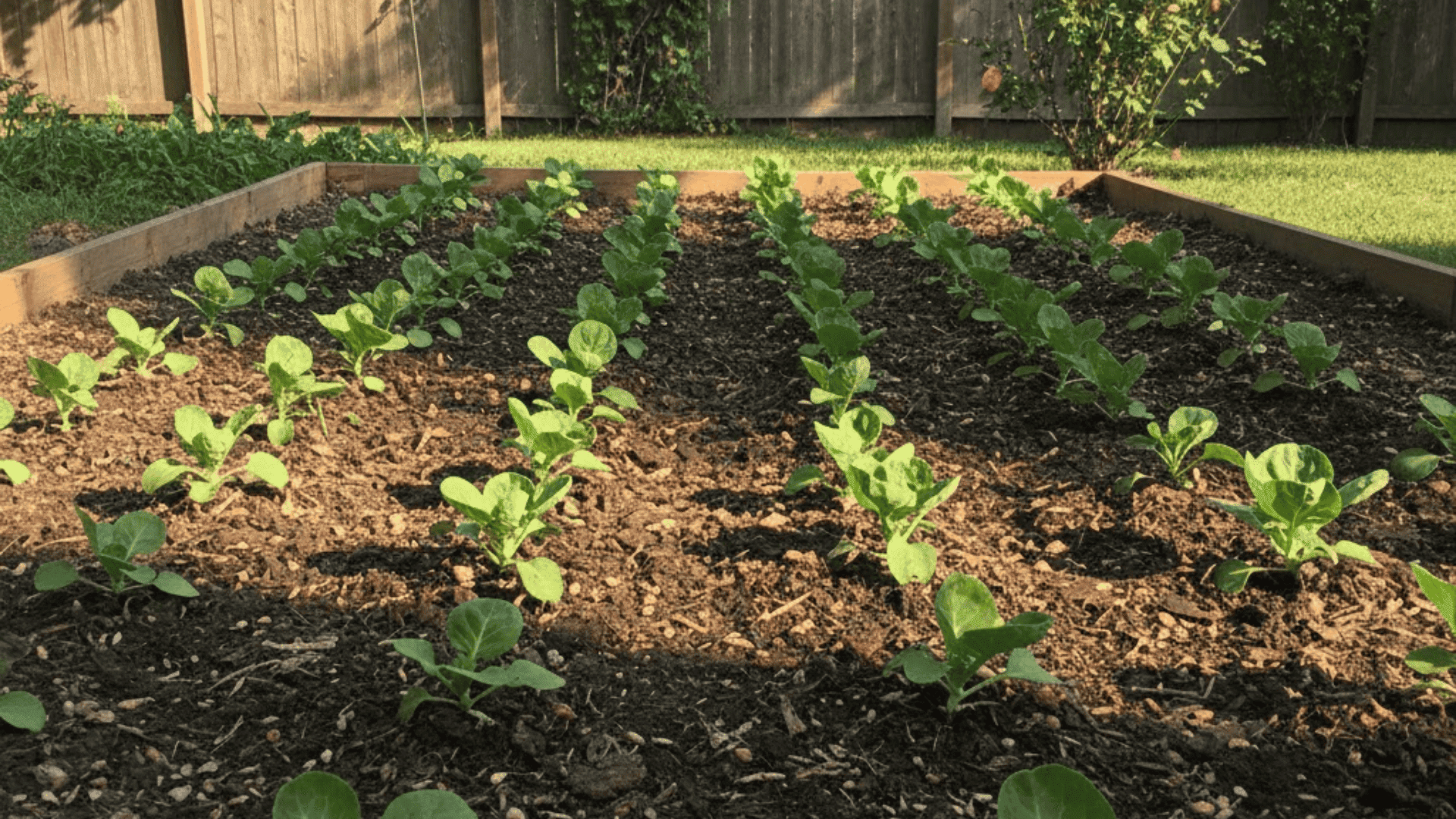
A good planting setup saves you months of frustration later. Brussels sprouts don’t recover well from weak starts, so the goal is to get them settled early and growing steadily.
Step 1: Decide Whether to Use Seeds or Transplants
Start by choosing how you’ll plant. Use seeds if you want full control over timing, especially for a fall crop. Seeds let you line things up with your local frost date and give you more variety options.
Use transplants if you’re short on time or missed your seed-starting window. They work well when planting dates already match your climate.
Both methods work. The key is matching the plant’s age to the season, not rushing it into the ground.
Step 2: Start Seeds Indoors (If Using Seeds)
If you’re growing from seed, start them indoors. Sow seeds shallowly in trays or small pots. Keep soil lightly moist and warm until germination.
Once seedlings emerge, give them bright light and steady moisture so they grow slowly and strong, not tall and weak. Seedlings are usually ready to transplant when they have several true leaves and sturdy stems.
Step 3: Prepare the Planting Area
Choose a spot that gets at least six hours of sun per day. Full sun helps early growth, but cooler air temperatures matter more than intense sunlight.
Work compost into the soil before planting. Rich, well-draining soil helps roots spread and supports steady growth through the long season. Heavy feeding can wait until later.
Step 4: Space and Transplant Carefully
Set plants 18 to 24 inches apart so each one has room to grow a thick stalk and good airflow.
Transplant at the same depth the plant was growing before. Firm the soil gently around the roots and water well to settle everything in. Try to transplant on a mild day and avoid rough handling of the roots.
Step 5: Water and Stabilize
After planting, water deeply and keep soil evenly moist for the first week or two. This helps plants establish quickly.
Once established, Brussels sprouts handle normal garden conditions well, but steady moisture early on makes a big difference in long-term growth.
Brussels Sprouts Care Through the Season
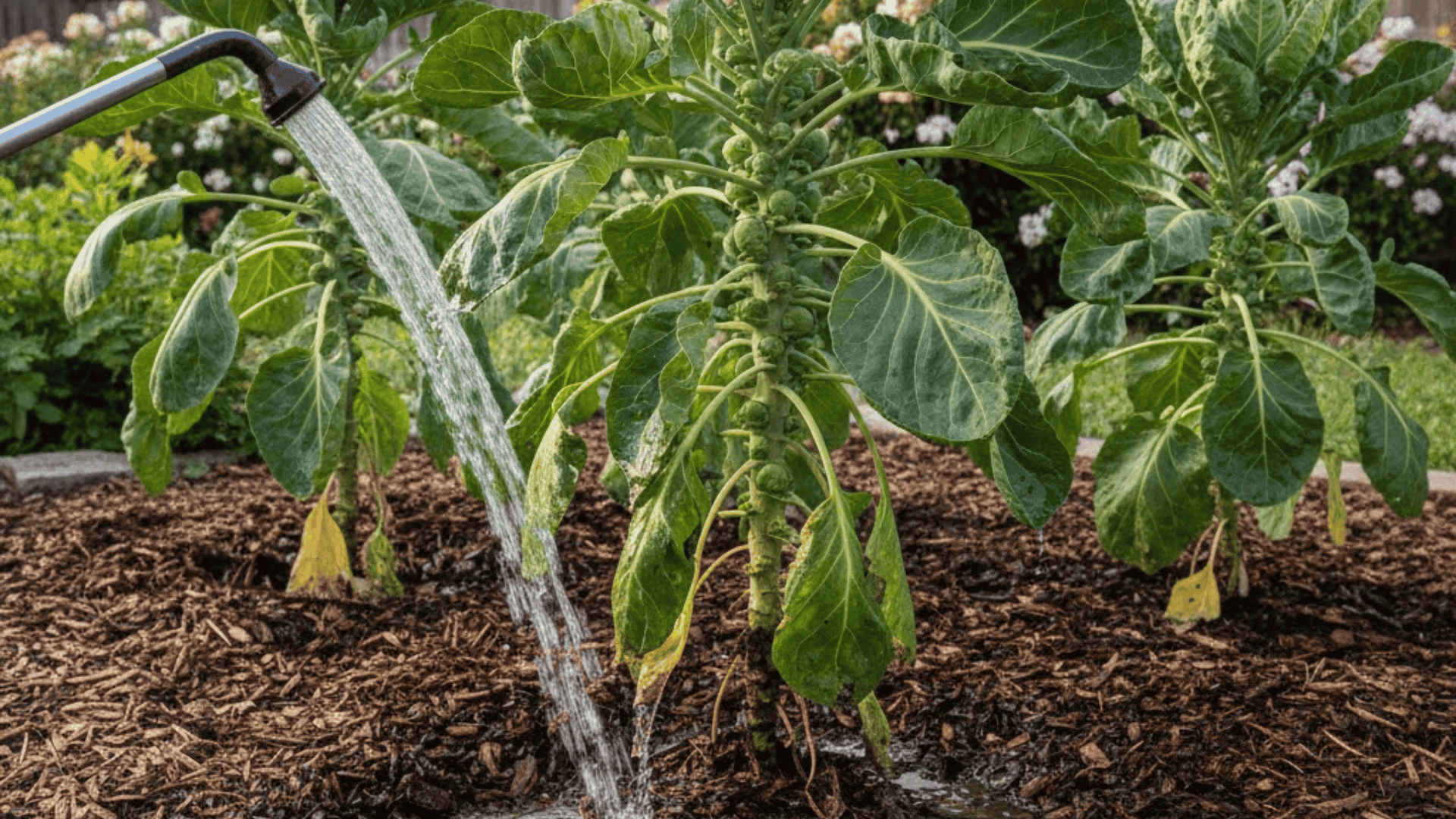
Brussels sprouts respond best to steady care. Big swings in water, feeding, or conditions tend to show up later as growth and sprout problems.
1. Watering Schedule
Water deeply on a regular schedule so moisture reaches the full root zone. Light, shallow watering keeps roots near the surface and leads to stress and uneven growth later.
Most gardens need about 1 to 1.5 inches of water per week , including rainfall. During hot or dry periods, plants may need more water to keep growth steady.
Signs of water stress include:
- Wilting during cool parts of the day
- Yellowing lower leaves
- Slow growth despite warm soil
2. Fertilizing Without Ruining Sprouts
Feed early, then slow down. Brussels sprouts need nitrogen during leaf growth. Once sprouts start forming, too much nitrogen causes loose sprouts.
Use compost or a balanced fertilizer early. Stop heavy feeding once sprouts appear. At that point, the plant should focus on filling out what’s already there.
3. Mulching, Staking, and Pruning
Mulch helps the soil stay cool and evenly moist, which supports slow, steady growth over the season.
As plants get taller, they can become top-heavy. In windy areas, light staking helps prevent leaning or snapping.
You can remove lower leaves once they turn yellow to improve airflow, but heavy pruning isn’t necessary. Healthy leaves are still feeding the developing sprouts, so it’s best to leave them in place.
Brussels Sprouts Growing Stages: What to Expect
Brussels sprouts follow a slow, predictable pattern, but only if you know what you’re looking at. Many gardeners worry something is wrong simply because nothing seems to be happening.
| Stage | What Happens | Time Frame | Normal Signs | Signs of Trouble |
|---|---|---|---|---|
| Early leaf growth | Plant builds a wide base of large leaves close to the ground | First several weeks | Strong leaf growth with no sprouts | Pale leaves, slow growth, weak plants |
| Stalk formation | Main stalk thickens and plant grows upward | Several weeks | Tall, sometimes awkward-looking plants | Thin stalks, floppy or uneven growth |
| Sprout development | Small buds form where leaves meet the stalk | Few weeks | Buds appear along the stalk | Loose buds, no sprout formation |
| Final sizing stage | Sprouts tighten and grow from bottom upward | Several weeks | Uneven sizing, bottom sprouts mature first | Sprouts stay loose or begin splitting |
This process takes time, and most stages overlap slightly. If plants look healthy and temperatures stay cool, slow progress is usually a good sign. Problems tend to show up as weak growth, loose sprouts, or stalled development, not just a lack of speed.
Why Brussels Sprouts Don’t Form and How to Fix It
When Brussels sprouts fail to form, it’s rarely random. The plant is usually reacting to stress or timing issues, not a lack of effort on your part.
- Heat stress: Warm temperatures during sprout formation signal the plant to keep making leaves instead of tightening sprouts. This is the most common cause.
- Overcrowding: Plants spaced too closely compete for light and airflow, which weakens sprout development along the stalk.
- Too much nitrogen: Heavy feeding late in the season pushes leafy growth when the plant should be focusing on sprouts.
- Water stress: Inconsistent watering disrupts steady growth and can stall sprout formation entirely.
- Immature plants: Brussels sprouts take time. If the plant hasn’t finished building its stalk, it simply isn’t ready yet.
In most cases, the fix isn’t more fertilizer or special products. It’s better timing, more space, steadier care, and a little patience.
Pest and Disease Prevention
Brussels sprouts usually struggle more with insects than disease. The goal is to stop damage early, before pests weaken the plant and slow sprout development.
Common Pests
The most common problems come from cabbage worms and moth larvae . These insects lay eggs on the leaves, and the larvae chew holes that reduce the plant’s ability to feed itself. Damage often starts small but adds up over time if ignored.
Aphids can also appear on tender growth, especially during warm spells. While they don’t usually kill plants, heavy infestations can stress them enough to affect sprout formation.
Simple Prevention Methods
Row covers are one of the most effective tools, especially early in the season. They block moths from laying eggs without affecting light or airflow.
Regular inspection matters just as much. Check the undersides of leaves every few days, especially during warm weather. Hand-removing worms early prevents large outbreaks later.
Healthy, unstressed plants handle minor pest pressure much better than weak ones. Steady watering , proper spacing, and good airflow do more to prevent serious problems than sprays ever will.
When and How to Harvest Brussels Sprouts
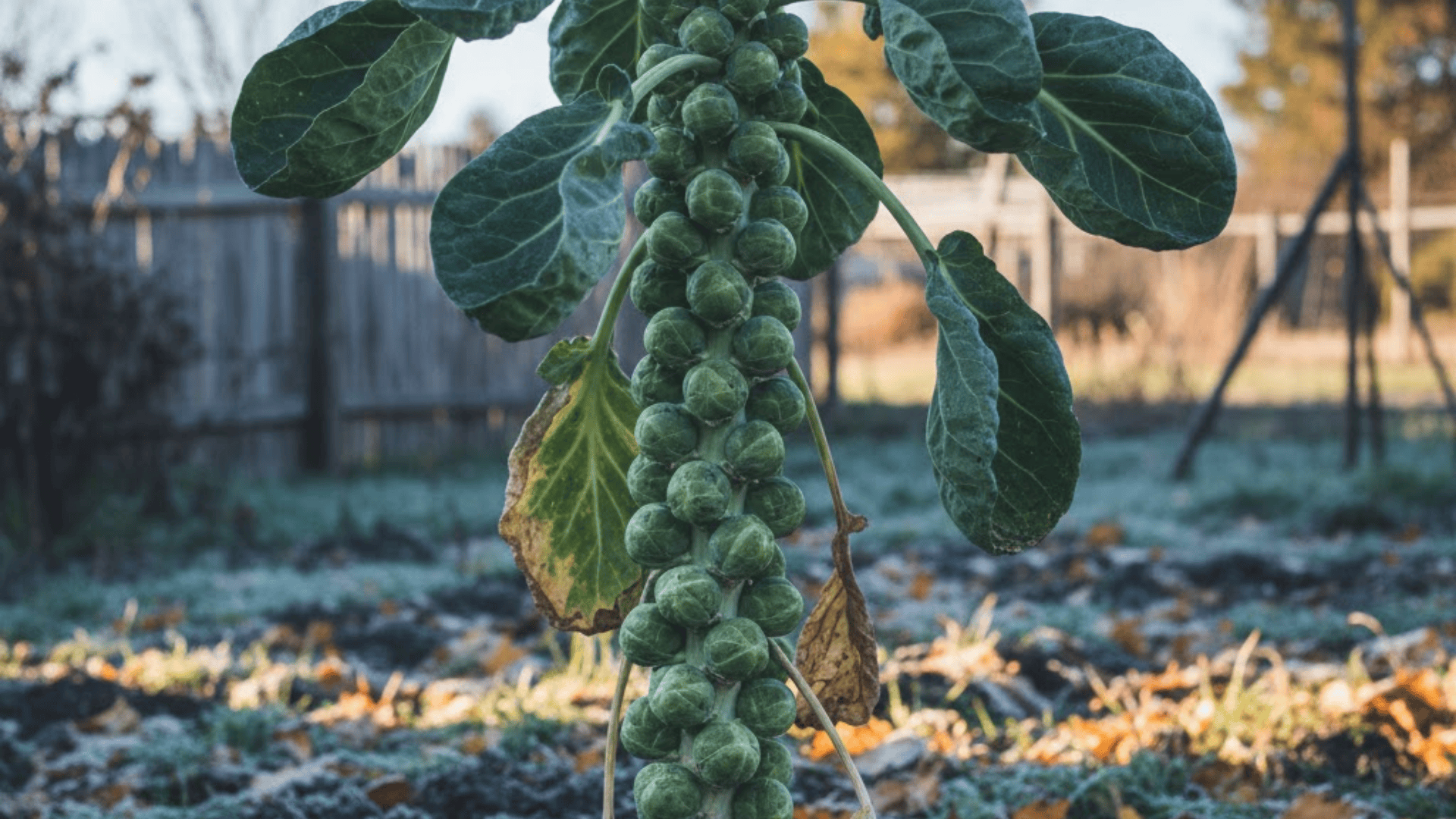
Harvesting Brussels sprouts is a gradual process, not a one-time event. Taking them in the right order and at the right time improves both flavor and texture.
Step-by-Step Harvest Process
- Begin checking: Once cool weather arrives and sprouts are visible along the stalk, start inspecting plants regularly.
- Test firmness: Gently squeeze a few lower sprouts to see if they feel tight and solid.
- Harvest correctly: Remove sprouts from the bottom of the stalk first by twisting them off or cutting them cleanly.
- Let upper sprouts mature: Leave the smaller sprouts higher on the stalk so they can continue to grow and firm up.
- Harvest gradually: Keep harvesting every few days or weeks as sprouts mature upward along the stalk.
- Finish the plant: After the final harvest, remove the plant or compost it once growth has clearly stopped.
Signs Brussels Sprouts are Ready
- Sprouts feel firm and tight when squeezed
- Buds are well-formed and round, not loose or leafy
- Lower sprouts are larger than those near the top
- Color is deep green with no yellowing
- Cool weather or light frost has already occurred or is expected soon
Harvesting this way lets you stretch the season and pick sprouts at their best instead of all at once
Can You Grow Brussels Sprouts in Containers?
Yes, Brussels sprouts can grow in containers, but they won’t behave the same way they do in the ground. Managing expectations makes a big difference.
Use a large container for each plant. Five gallons is the minimum, but larger containers support better root growth and steadier moisture.
Fill containers with a rich, well-draining soil mix and blend in compost to support slow, even growth over the long season.
Container-grown plants usually produce fewer and smaller sprouts than in-ground plants. This method works best when garden space is limited, and fall temperatures stay cool, allowing sprouts to form without heat stress.
Conclusion
Brussels sprouts reward patience and planning. Once you stop fighting their timing and work with their temperature needs, the whole process feels calmer.
Most problems trace back to heat, spacing, or feeding too late in the season. When those are handled early, the plants usually take care of the rest.
Growing Brussels sprouts becomes much clearer when you focus on steady progress instead of speed.
If you’re planning a fall crop, start with your frost date, build backward, and give the plants time. That simple shift changes everything.
Frequently Asked Questions
Why are my plants tall but have no sprouts?
Tall plants without sprouts are usually reacting to heat, excess nitrogen, or stress. The plant keeps producing leaves instead of switching to sprout formation.
How long does it take Brussels sprouts to grow?
Most Brussels sprouts need about 90 to 120 days after transplanting to reach harvest. Growth is slow, especially early, and cooler weather helps sprouts form properly.
Do Brussels sprouts need full sun?
Brussels sprouts grow best with at least six hours of sun, but cool temperatures matter more than intense light. Mild conditions help sprouts tighten and develop evenly.
Can I plant Brussels sprouts in September?
In most climates, September planting is too late. Plants need time to grow strong before cool weather so sprouts can form during fall, not early winter.
Do Brussels sprouts taste better after frost?
Yes, light frost improves flavor by increasing sugar levels. Cool weather reduces bitterness and makes Brussels sprouts taste sweeter and more balanced.