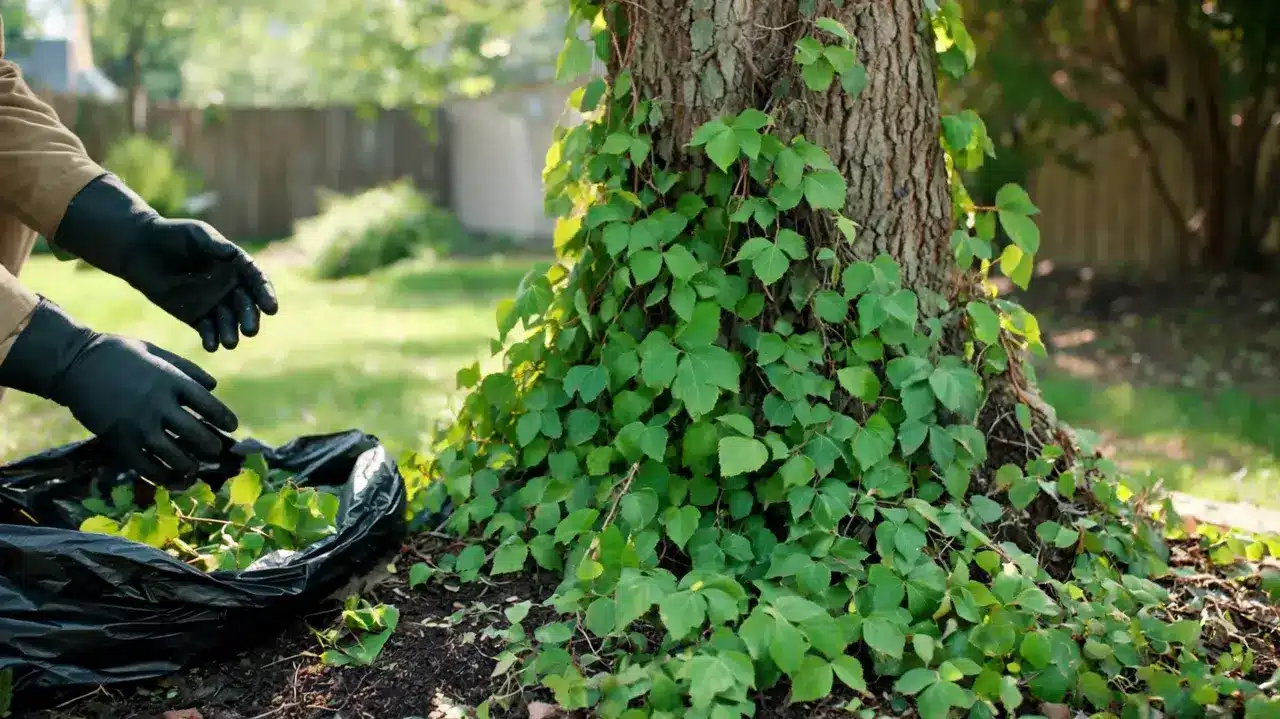
Walking out to find leaves stripped overnight and bite marks on your tomatoes you cannot explain is never a fun way to start the day.
If that is what is greeting you in the garden right now, you already know something has been feasting on your plants, and you want it gone.
The good news is that once you know what to look for, this is one of the easier garden problems to solve.
Knowing how to get rid of tomato hornworms mostly comes down to a few consistent habits rather than anything complicated, so take a breath and keep reading.
How To Tell If You Have Tomato Hornworms
Suspect hornworms if the upper part of your tomato plant suddenly loses whole leaves and you find large, dark droppings on the foliage or ground below. The caterpillar itself is often the last thing you actually see.
Tomato hornworms are large, pale green caterpillars that match tomato foliage closely enough to make them tricky to spot. Mature caterpillars reach about four inches long and carry eight white, V-shaped markings along each side of the body, with a dark horn at the rear, according to the University of Minnesota Extension. That horn looks sharp, but it cannot sting or bite you.
Females lay single, pale green eggs on both the upper and lower surfaces of tomato leaves. A closely related species, the tobacco hornworm, causes the same kind of damage and responds to the same removal steps, so telling them apart matters less than confirming a caterpillar is present at all.
The two are easy to separate once you are looking closely at the caterpillar, and a quick glance at the horn color usually settles the question faster than counting stripes on the body.
| Feature | Tomato Hornworm | Tobacco Hornworm |
|---|---|---|
| Markings | 8 white V-shaped marks | 7 diagonal white stripes |
| Horn color | Black | Red or orange |
| Host plants | Tomato, pepper, eggplant, potato | Same plants, plus tobacco |
How To Find Hornworms On Your Tomato Plants
Hornworms feed on the upper growth first, so start there before working down the rest of the plant.
Fresh, dark droppings on a leaf or on the ground usually mean a caterpillar is feeding just above, so check that foliage closely before moving on.
Early morning, dusk, and right after dark are your best windows, since hornworms are more active outside the heat of midday.
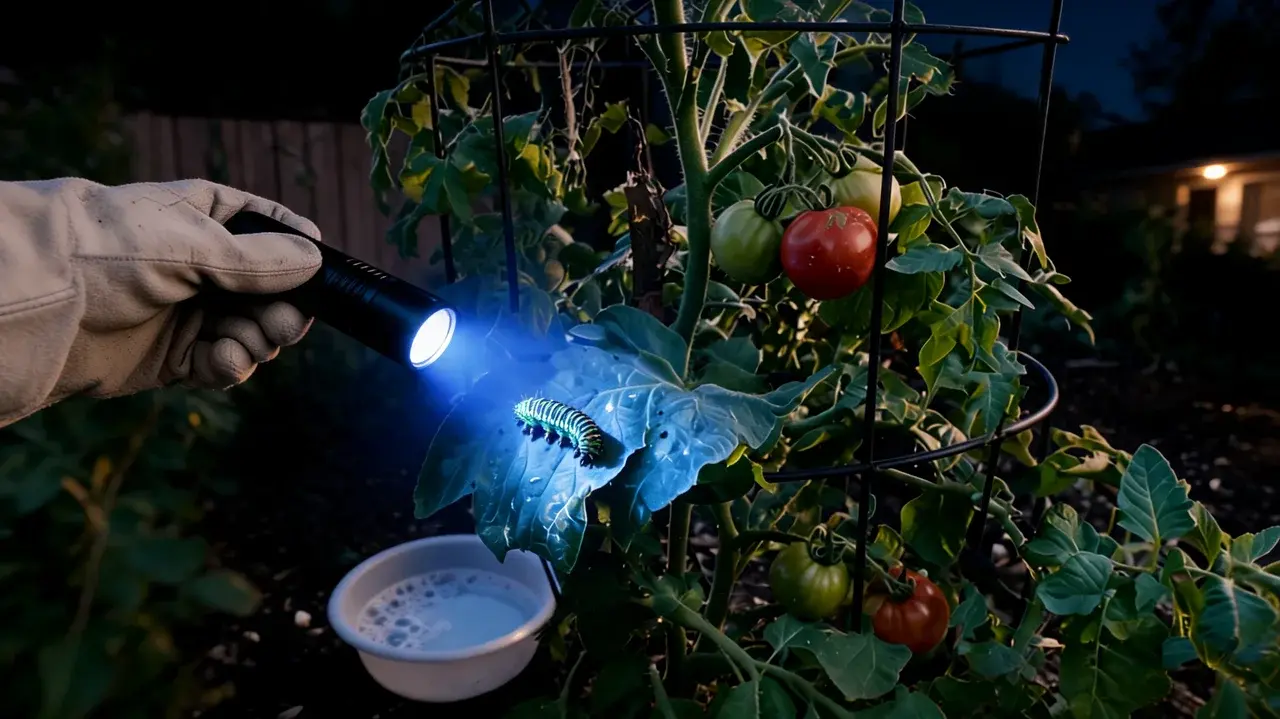
If you cannot find a hornworm during the day, check again after dark with a UV blacklight, since hornworms fluoresce and become far easier to spot against the foliage.
This method works well in home gardens and takes only a few minutes each night. Move the light slowly across leaves and stems and handpick anything you find using the same soapy water method covered below.
How To Get Rid Of Tomato Hornworms: Step By Step
Once you have found a hornworm, removal follows a simple order. Start by handpicking what you see, add BTK if the caterpillars are small or numerous, and leave any parasitized hornworm exactly where it is.
Step 1: Handpick And Drop Into Soapy Water
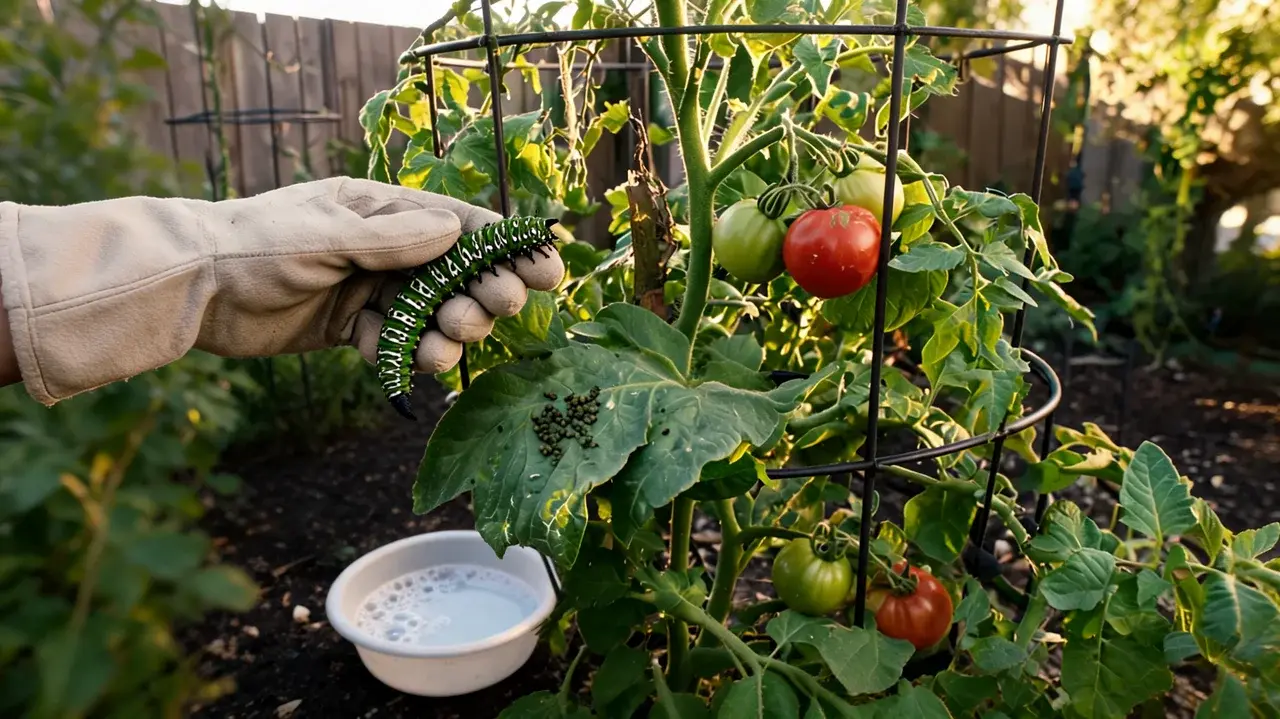
Grip the caterpillar firmly, since hornworms hold tight with their legs, then drop it into soapy water or feed it to backyard chickens. Gloves help if it bothers you, and handpicking alone solves most small infestations.
Large caterpillars are simple to handpick as you find them. If you keep finding more, or they are still small, Btk becomes worth adding.
Step 2: Use BTK For Small Or Repeat Infestations
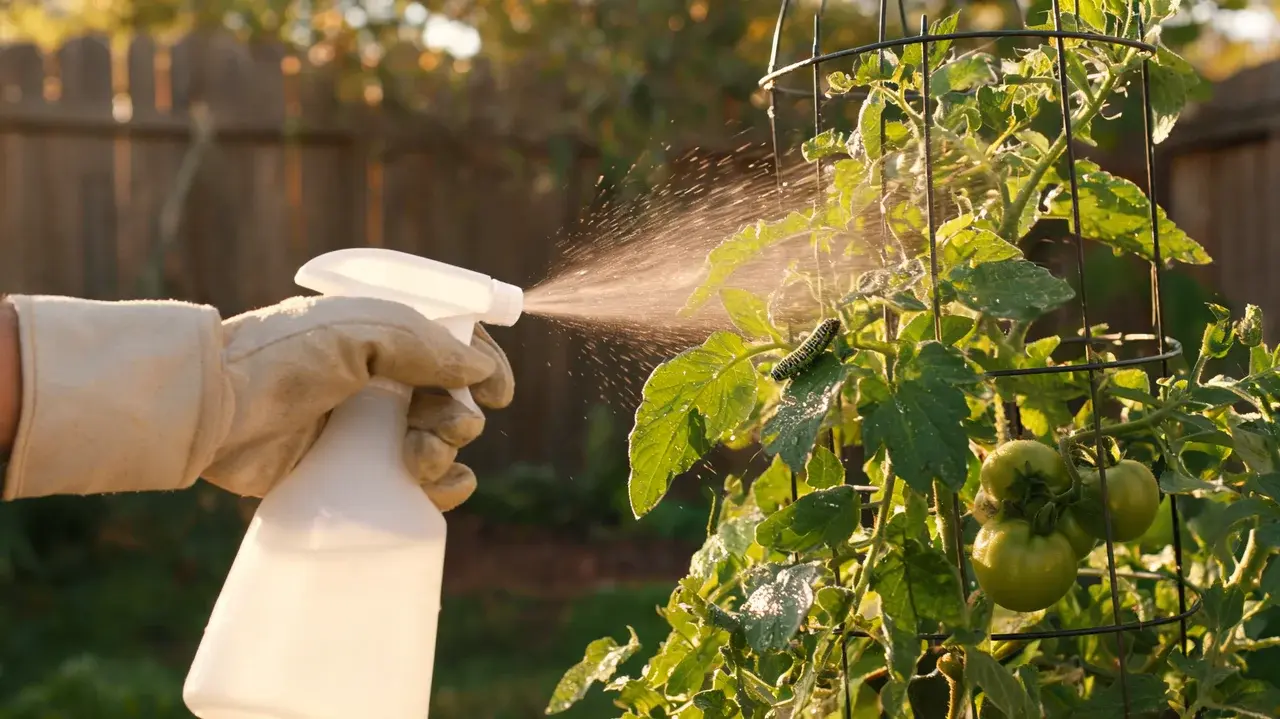
Bacillus thuringiensis var. kurstaki, or BTK, targets young caterpillars once they eat treated foliage.
BTK works best on small, young hornworms, so handpicking is usually more practical for the large caterpillars you can already see.
The active ingredient comes from a naturally occurring soil bacterium that stops caterpillars from feeding within hours of that first bite.
Step 3: Leave Parasitized Hornworms Alone
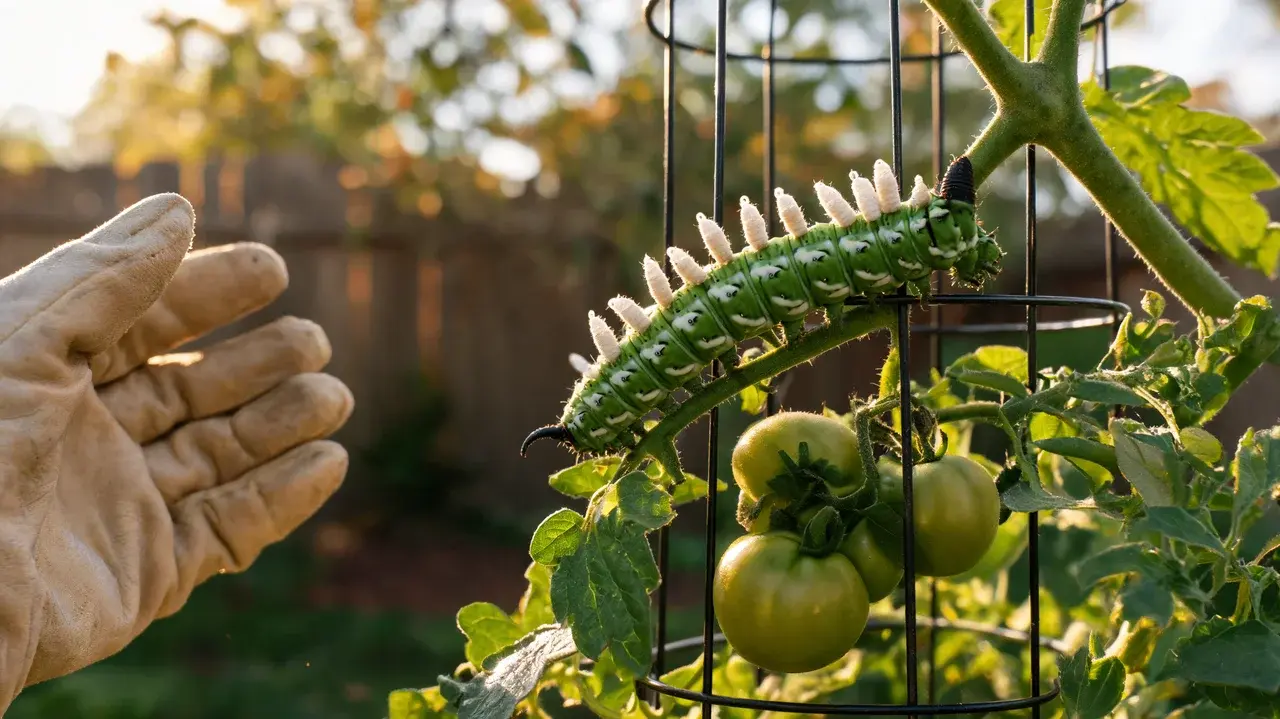
White, rice-like cocoons on a hornworm’s back mean a braconid wasp already laid eggs inside it. Those cocoons are not eggs themselves, since the young wasps have already hatched inside the caterpillar. Skip that hornworm and let the new wasps emerge to help control others nearby.
Which Hornworm Control Should You Use?
Every hornworm situation calls for a slightly different response, and matching what is actually in front of you to the right action saves time. Use the table below to handpick, treat, watch, or keep scouting as needed.
| Situation | What To Do |
|---|---|
| One or two large hornworms visible | Handpick and drop into soapy water |
| Several small hornworms feeding | Treat foliage with BTK |
| Hornworm covered in white cocoons | Leave it alone on the plant |
| Damage present but no worm found | Search near frass at dawn or dusk, or check after dark with a blacklight |
| Heavy defoliation or fruit damage | Increase scouting and consider a labeled treatment |
Those five situations cover nearly everything you will run into on a home tomato plant.
How to Get Rid Of Tomato Worms Naturally?
Handpicking removes hornworms immediately once you can see them, while BTK works best against caterpillars that are still small, since larger larvae keep feeding faster than the bacterium can stop them.
Ladybugs, green lacewings, and braconid wasps provide the strongest long-term control, and these natural enemies are widely credited with keeping hornworm populations below damaging levels in home gardens.
Avoiding broad-spectrum insecticides protects these predators and parasitoids, since a single spray kills beneficial insects along with the pests you are targeting.
Treating only visibly infested plants, rather than spraying the whole garden, further limits collateral damage to these helpers.
Planting nectar-rich flowers such as sweet alyssum, dill, or fennel near tomatoes draws in and sustains these insects through the growing season. Between handpicking, Btk, and protecting natural enemies, most home gardens control hornworms fully without ever needing a synthetic pesticide.
How To Know If Tomato Hornworms Are Gone
A hornworm problem is not finished just because you removed every caterpillar you could find. Watch for these signs that another one is still feeding nearby:
- Fresh feeding damage on upper leaves
- New dark green or black frass
- Newly chewed or damaged fruit
- Small new caterpillars on the plant
Checking tomato plants at least two to three times a week through summer is a solid baseline for most home gardens. After finding active damage, check daily for several days, then return to a normal twice-weekly routine once a full week passes without new signs.
How To Prevent Tomato Hornworms From Coming Back
Hornworms spend part of their life cycle in the soil and on nearby weeds, so a couple of season-long habits go further toward stopping next year’s caterpillars than any single treatment applied after the damage already shows up.
| Prevention Method | What To Do |
|---|---|
| Remove nightshade weeds | Clear horsenettle, jimsonweed, and other nightshade weeds nearby |
| Till soil after harvest | Turn the soil at season’s end to destroy overwintering pupae |
| Rotate tomato crops | Helps in larger gardens, though moths can still fly in from elsewhere |
Tilling after harvest destroys most overwintering pupae, according to the University of Florida IFAS, making it the most effective habit here. Removing nightshade weeds cuts off egg-laying sites, especially before spring transplanting. Rotation helps less in home gardens, since moths fly in from elsewhere anyway. Tillage plus weed removal covers both life stages without any spraying.
Can A Tomato Plant Recover From Hornworm Damage?
Most tomato plants recover well once hornworms are removed, especially if the roots and main stem escaped serious damage. New growth typically appears within one to two weeks, with recovery speed depending directly on how much foliage was lost before treatment began.
A plant that resumes flowering within that first week is usually on track for a normal harvest later in the season. Consistent watering, steady feeding, and healthy soil give a stressed plant its best chance to rebuild quickly, since a weakened root system struggles to support fast new growth.
Building those habits early, from deep watering to proper spacing, does as much for a damaged plant as removing the pest itself. Continue checking the plant every few days after removal, since a single hornworm rarely stays the only one, and fresh frass or new caterpillars call for another round of handpicking.
Frequently Asked Questions
Can tomato hornworms hurt people or pets?
No. The horn on their rear end looks sharp, but it is completely harmless. Hornworms cannot bite or sting, so handling them by hand or dropping them into soapy water is safe for you and pets nearby.
How many hornworms can be on one tomato plant at once?
It varies, but a single plant can host several hornworms of different sizes at once, especially once moths have laid multiple rounds of eggs nearby. Checking the whole plant carefully after finding one is always worth the extra minute.
When are tomato hornworms most active during the season?
Hornworms usually show up from midsummer through early fall, with feeding often heaviest during the hottest weeks. Warmer regions can see two generations in a single season, so damage can reappear even after an early cleanup.
Do tomato hornworms come back every year?
Yes, in most gardens. Pupae overwinter in the soil and emerge as moths the following season, so removing weeds and turning the soil after harvest helps reduce how many caterpillars return the next year.
Final Take
Finding a hornworm on your tomato plant is never fun, but it is one of the most common surprises a summer garden throws at you.
Every gardener deals with a surprise pest at some point, and this one is far from the trickiest to handle once you know the routine.
Learning how to get rid of tomato hornworms takes a little observation and consistency throughout the season. Take a breath, work through what you have learned, and get back to enjoying the rest of your garden.
You have got this, and your tomatoes will thank you. Drop a comment below and tell me if you have any further questions.