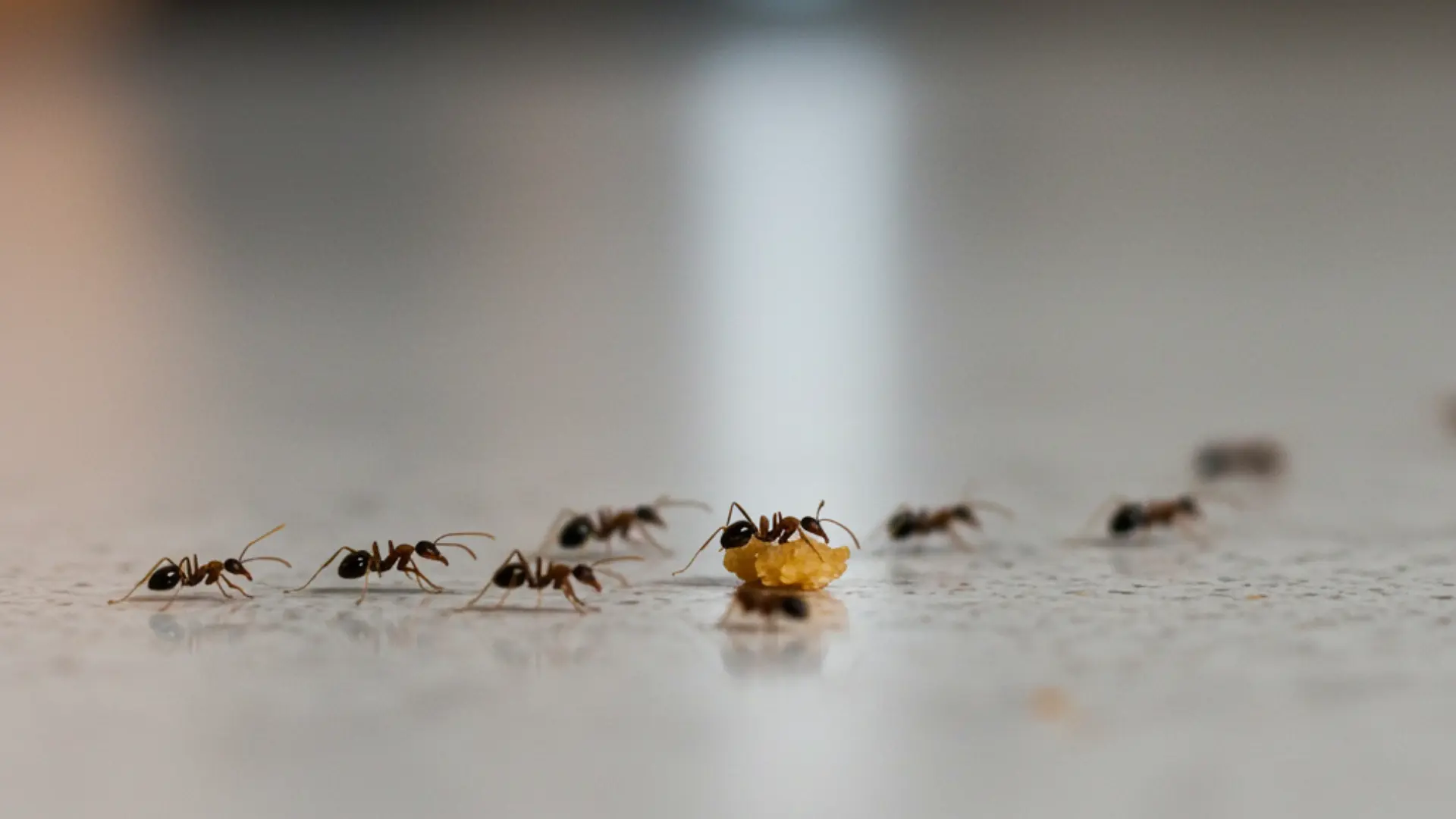
It starts with one ant. Then a few more. Before long, there is a steady trail winding through your kitchen like they own the place.
Ant infestations rarely announce themselves; they creep in through the smallest cracks, drawn by a forgotten crumb or a tiny drop of spilled juice.
The mistake most people make is reaching for a paper towel and calling it a solved problem. But killing the ants you can see does nothing about the thousands you cannot.
The colony is still active, the scent trail is still intact, and more ants are already on the way.
Getting rid of ants for good takes a smarter approach, one that targets the source, eliminates the trail, seals entry points, and removes whatever is pulling them inside. That is exactly what this will walk you through.
What Are Sugar Ants and Why Do They Come Inside?
Sugar ants are a common name for small ants that are attracted to sweet foods. It is not one specific species. In many U.S. homes, this usually refers to small, dark ants, such as odorous house ants or pavement ants.
These ants are tiny, brown or black, and often show up in kitchens and bathrooms. They move in clear lines because they follow scent trails left by other ants. Once one ant finds food, the rest quickly follow the same path.
They come inside for two main reasons: food and water. Sweet spills, crumbs, open containers, and pet food are easy targets. Even a small sticky spot on the counter can attract them.
How to Get Rid of Sugar Ants Indoors: DIY Guide
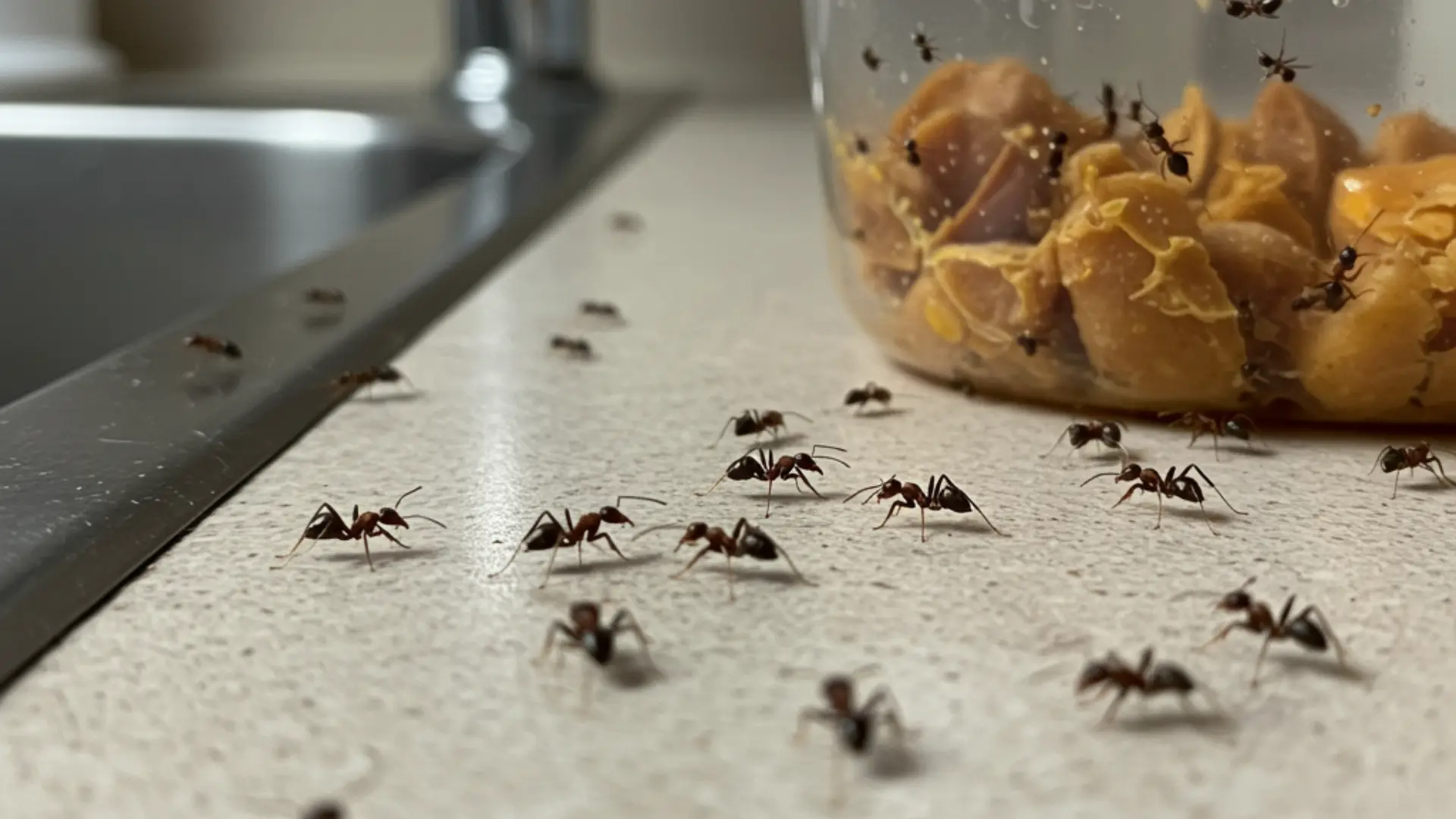
Dealing with sugar ants requires more than just wiping down counters or spraying where you see them.
Tools and Materials You’ll Need
- Spray bottle
- Dish soap
- White vinegar
- Clean cloths or paper towels
- Ant bait stations
- Caulk and caulk gun
- Weatherstripping
- Vacuum cleaner
Having the right tools makes the process easier. It also helps you deal with sugar ants more effectively.
Step 1: Remove What is Attracting Them
Ant control starts with cutting off their food and water supply. If ants cannot find reliable resources, they stop sending workers inside.
Take these actions consistently:
- Wipe up crumbs and sticky spills immediately, even small drops of juice or syrup
- Store sugar, snacks, cereal, and pet food in airtight containers
- Rinse dishes the same day and clean the sink drain area
- Take trash out regularly and keep lids tightly closed
Focus on hidden areas. Ants often feed behind stoves, under refrigerators, and inside cabinets. When you remove easy access to food and moisture, you reduce the reason they enter.
Step 2: Break the Scent Trail
Ants rely on invisible scent trails to guide others to food. If you do not erase the trail, new ants will continue to follow the same route.
Act with purpose:
- Trace the full line of ants to locate both the entry point and the food source
- Clean the entire path with soapy water or a vinegar and water solution
- Wipe baseboards, counter edges, and floor seams where trails are strongest
- Dry the area thoroughly to prevent moisture buildup
Do not just clean the surface. Make sure you cover the full pathway from entry to destination. Removing the scent trail disrupts their communication system and slows reinforcements.
Step 3: Use Bait to Target the Colony
Surface sprays only eliminate visible ants. To solve the problem long-term, the colony must be addressed.
Use bait strategically:
- Place bait stations directly along active ant paths
- Avoid killing ants near the bait so they can carry it back
- Keep bait undisturbed for several days
- Monitor activity and replace bait if it dries out
You may see more ants at first. This is normal. It means they are feeding and transporting bait to the nest. Give it time to work. Colony reduction usually takes several days to a week.
Step 4: Seal Entry Points to Prevent Return
Once activity decreases, shift your focus to prevention. Even a small gap can allow ants back inside.
Inspect and secure these areas:
- Gaps around doors and windows
- Cracks along baseboards and wall corners
- Spaces where pipes and cables enter the home
- Damaged screens and worn weatherstripping
Seal cracks with caulk and install tight-fitting door sweeps where needed. The goal is to remove access, not just react to new sightings. When entry points are blocked, future infestations become far less likely.
Natural Ways to Get Rid of Sugar Ants
If you prefer homemade or natural remedies, there are simple options you can try first. These methods work best for small infestations and early problems. Consistency and patience matter with natural treatments.
1. Vinegar and Water Spray
Vinegar is a strong natural cleaner that helps remove the invisible scent trails ants leave behind. When those trails disappear, other ants cannot follow the same path into your home.
Steps:
- Mix equal parts white vinegar and water in a spray bottle
- Spray directly on ants and along visible trails
- Wipe the area clean with a cloth
- Repeat daily if ants return
2. Borax and Sugar Bait
Borax bait works slowly but effectively by targeting the entire colony. The sugar attracts the ants, and they carry the mixture back to the nest, helping reduce the problem at its source.
Steps:
- Mix 1 tablespoon of sugar with 1 teaspoon of borax
- Add a small amount of water to form a thick liquid
- Soak cotton balls in the mixture
- Place them where sugar ants are active
- Keep away from pets and children
3. Baking Soda and Sugar
This mixture is a simple household option that acts as a mild bait. The sugar attracts ants, while the baking soda helps disrupt their system after they consume it.
Steps:
- Mix equal parts baking soda and sugar
- Place small amounts in shallow lids or bottle caps
- Set them near ant trails and entry points
- Replace every few days for fresh bait
4. Diatomaceous Earth
Food-grade diatomaceous earth is a fine powder that damages the outer layer of ants. It works as a dry barrier and is useful for blocking entry points and hidden cracks.
Steps:
- Lightly sprinkle it along entry points
- Apply near cracks, baseboards, windows, and doors
- Keep the powder dry for best results
- Reapply after cleaning or if it becomes wet
5. Lemon Juice Spray
Lemon juice naturally helps erase scent trails and makes surfaces less attractive to ants. It also leaves a fresh smell while reducing the chances of ants following old paths.
Steps:
- Mix lemon juice with a small amount of water
- Spray along counters, windowsills, and entry points
- Wipe clean after spraying
- Repeat daily in problem areas
6. Essential Oils
Certain essential oils, especially peppermint and tea tree oil, may help repel ants. The strong scent interferes with their scent trails and discourages them from entering treated areas.
Steps:
- Add 10 to 15 drops of essential oil to one cup of water
- Pour into a spray bottle and shake well
- Spray around windows, doors, baseboards, and cracks
- Reapply every few days as needed
Natural remedies can help reduce the number of sugar ants when used regularly. For larger infestations, combining bait methods with sealing entry points often gives better results
Why Ants Keep Coming Back and How to Prevent It?
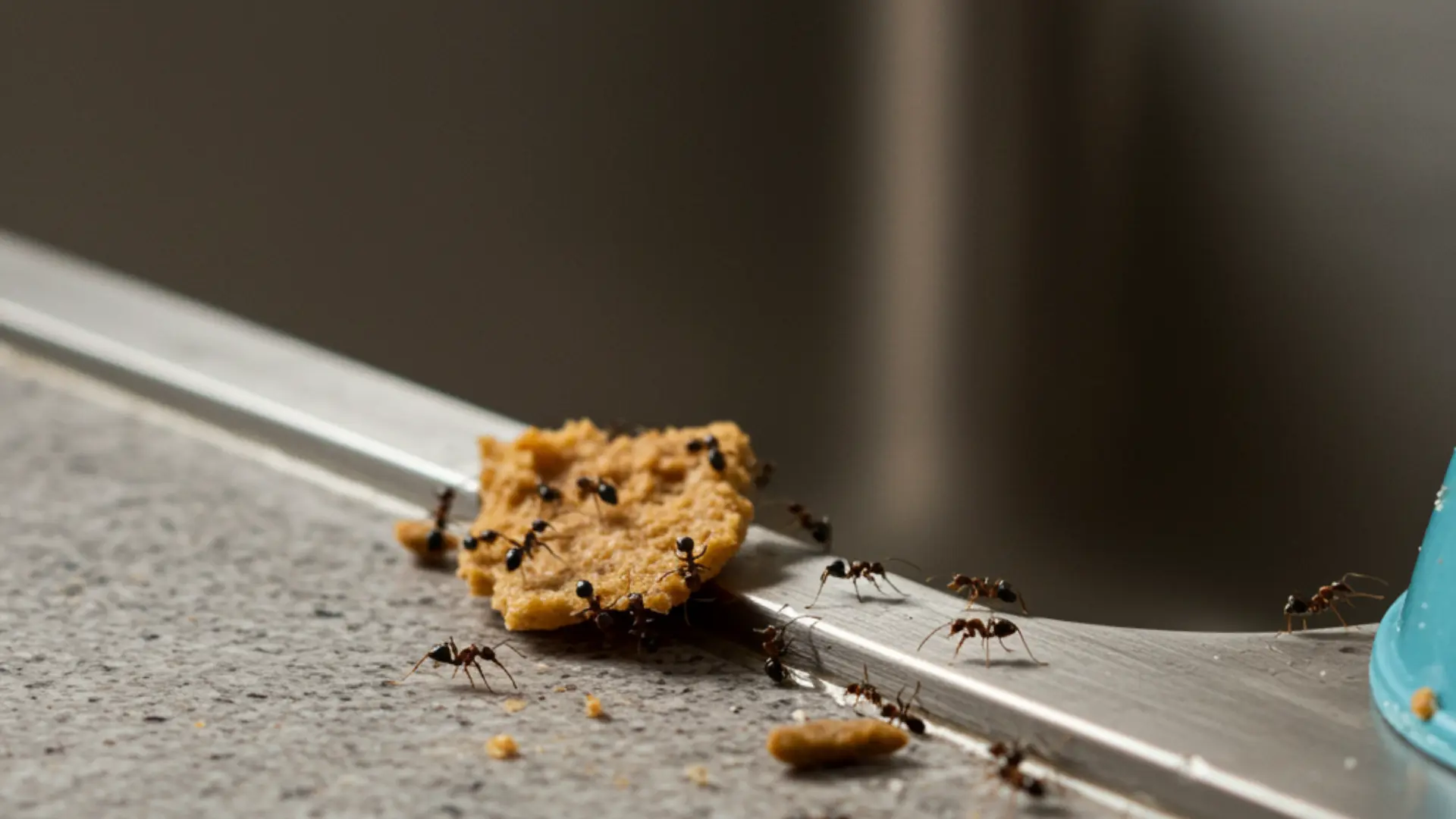
Ants keep coming back when something in your home still supports them. If you remove what they need and block how they enter, repeat visits become far less likely.
Here’s a simple breakdown of the main reasons, where the problem starts, and what you can do about it.
| Reasons | Sources | What to Do |
|---|---|---|
| Food is easily available | Crumbs on counters and floors; candy, fruit, sweet drinks; open cereal boxes and snack bags; pet food bowls and storage bags | Wipe counters after meals; sweep and vacuum often; store pantry items in sealed containers; clean pet feeding areas daily |
| Moisture and damp areas | Leaks under sinks; wet sponges and dishcloths; standing water near drains; damp bathroom floors | Fix plumbing leaks quickly; dry sinks and tubs before bed; replace worn seals; improve airflow in damp rooms |
| Nearby nest | Nests near the foundation; under concrete slabs; inside wall voids; quiet storage areas | Trim plants away from walls; keep mulch away from siding; inspect and seal foundation cracks |
| Easy entry points | Cracks in walls and floors; gaps around doors and windows; spaces around pipes and vents; torn window screens | Seal cracks with caulk; replace worn door sweeps; install weatherstripping; repair damaged screens |
When food, water, nesting spots, and entry points are handled together, ants lose both access and incentive. Consistency is what keeps them from returning.
When to Call a Professional
Most ant problems can be managed with cleaning, bait, and sealing entry points. However, some infestations require professional treatment to fully remove the colony.
Signs you may need professional pest control:
- Ants keep returning after treatment: If ants continue appearing after cleaning, baiting, and sealing cracks, the nest may be hidden inside walls, floors, or foundations.
- Ants are spreading to multiple rooms: Seeing ants in the kitchen, bathroom, bedrooms, and other areas often suggests multiple nests or a large colony inside the home.
- You notice large ants near wooden areas: Large ants, especially around wood, could be carpenter ants that can damage structures if the infestation is left untreated.
- Wood feels soft, hollow, or damaged: Soft or crumbly wood can indicate carpenter ant activity inside walls, furniture, or wooden structures in the home.
A licensed pest control professional can inspect your home to identify the ant species, locate hidden nests, and determine how large the infestation is.
They use targeted treatments that reach the colony itself, including areas behind walls, under floors, or outside near the foundation.
Professionals can also recommend prevention steps such as sealing structural gaps, reducing moisture sources, and creating barriers that help stop ants from returning.
Pest Control Companies in the U.S.
Several national companies provide ant control services:
Local pest control companies can also offer strong service. Always check reviews and confirm they are licensed in your state.
Conclusion
Ant problems indoors usually start small but grow quickly when food, moisture, and entry points are left unchecked.
In this guide, you learned what sugar ants are, why they come inside, how to remove scent trails, when to use bait, and how to seal your home to prevent repeat infestations.
We also explored natural remedies and when it makes sense to call a professional.
The key takeaway is simple: target the colony, remove what attracts them, and block their access. If ants are showing up in your home, start applying these steps today.
For more practical home pest solutions, keep reading, share this guide with others who may need it, and comment on which remedies worked for you.