Most people reach for a handful of almonds without ever wondering where they actually came from. And honestly, the answer is a little surprising.
Almonds are not nuts at all.
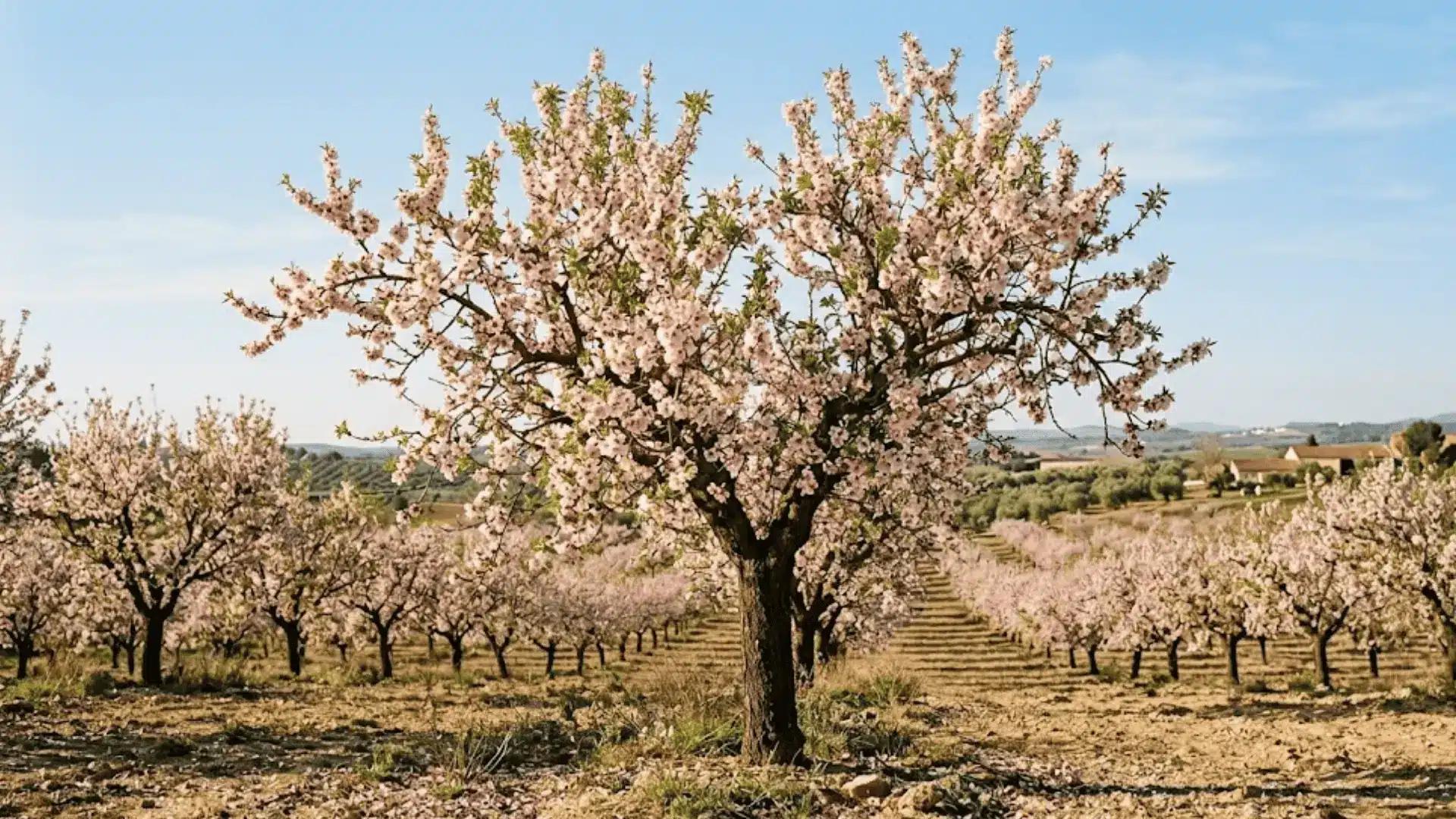
They are seeds nestled inside a fruit, grown on trees that bloom with the softest pink and white blossoms each spring.
The almond tree, Prunus dulcis, is closer to a peach tree than anything you might picture.
Tracing its path from blossom to harvest completely changes the way you look at this quiet, beloved little seed.
Why the Almond Growing Process is Worth Knowing?
Growing an almond tree or just snacking on a handful, knowing the process actually makes a difference.
It helps gardeners make smarter choices about climate, care, and timing. It gives students a real, tangible example of how pollination connects directly to food production.
And for anyone who loves knowing where their food comes from, it adds a layer of appreciation that is hard to explain until you see the full picture.
Almonds are a small seed with a surprisingly detailed story behind them.
The Almond Tree: Traits, Timeline, and Lifespan
Before you grow one or simply learn about one, here is what the almond tree looks like on paper.
| Trait | Description | Good to Know |
|---|---|---|
| Tree Type | Deciduous, sheds leaves every winter | Dormancy is normal and necessary |
| Plant Family | Closely related to peaches, plums, and cherries | Same family, very different harvest |
| What It Produces | Edible seeds tucked inside a hard shell and outer fruit | That outer layer is not waste; it is part of the process |
| First Harvest | Takes a few years after planting to produce | Patience early on pays off later |
| Productive Lifespan | Continues producing for several decades with proper care | A long-term investment worth making |
Simple on the surface, but a surprisingly capable tree once it finds its footing.
What Almond Trees Actually Need to Thrive?
Almond trees are a little particular about where they put down roots, and for good reason. Get these conditions right, and the tree practically does the work for you.
- Almond trees thrive in Mediterranean climates with hot, dry summers and mild winters
- They need a certain number of cold winter hours to bloom properly come spring
- Well-draining, sandy or loamy soil keeps the roots healthy and rot-free
- Heavy, waterlogged soil is one of the fastest ways to stress the tree
- Full sun and consistent watering during the growing season seal the deal
Skip any one of these, and the tree will let you know. Almond trees are resilient, but they do reward the grower who pays attention. Get the environment right from the start, and the tree takes care of the rest.
How Do Almonds Grow: A Step-by-Step Life Cycle
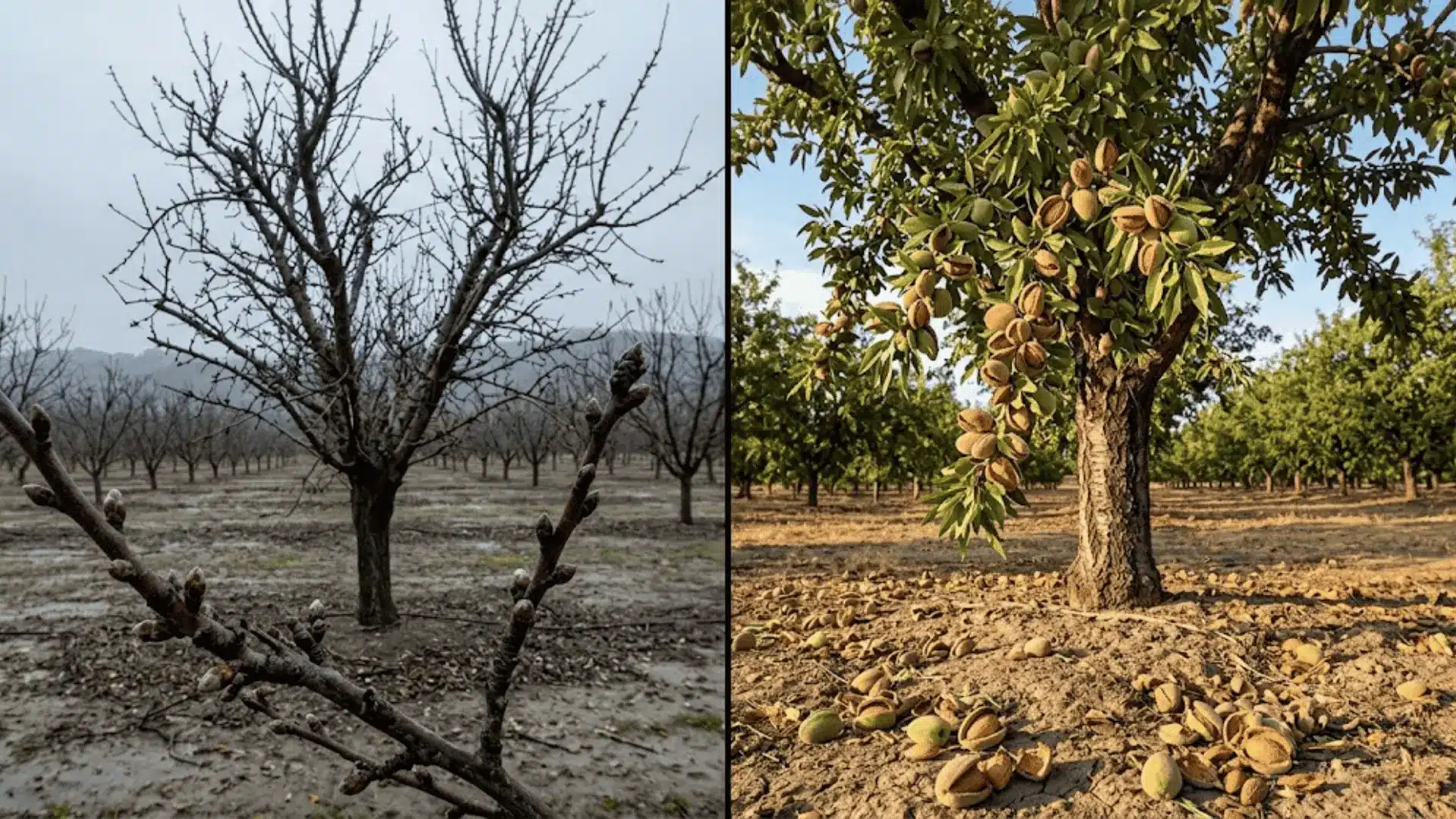
Almonds do not appear overnight. Every single one works through a careful, season-by-season process before it ever reaches your hands.
Stage 1: Winter Dormancy
The tree goes quiet during the colder months, shedding its leaves and pulling energy inward. This resting phase is not inactivity; it is preparation.
The buds are already forming beneath the surface, getting ready for what comes next. Dormancy is what makes a strong spring possible.
Stage 2: Bud Development
As temperatures begin to climb, the buds respond. They swell visibly, and inside each one, flower structures start taking shape. This stage is easy to overlook but critical to the bloom that follows.
What happens here quietly determines how well the tree performs through the rest of the season.
Stage 3: Flowering
Almost overnight, the tree fills up. Branches are covered in soft white and pink blossoms, making this one of the most visually striking stages of the almond life cycle.
It is also one of the most time-sensitive. The bloom window is short, and what happens during it shapes the entire harvest.
Stage 4: Pollination
Almonds cannot pollinate themselves. They depend on cross-pollination between compatible trees, and bees are the ones making it happen.
Without a healthy bee population moving between blossoms, fruit simply does not form. This stage is where the ecosystem and the harvest become inseparable.
Stage 5: Fruit Formation
Once a flower is successfully pollinated, it begins its quiet shift. The petals fall away, and a small, green, fuzzy fruit called a drupe takes shape.
It looks nothing like an almond yet, but tucked inside that fruit, the seed is already beginning to develop.
Stage 6: Nut Development
Through spring and into early summer, the kernel inside the drupe slowly fills out.
The outer shell hardens around it, creating the protective layer most people recognize as the almond shell. This is a slow, steady stage where the nut essentially builds itself from the inside out.
Stage 7: Hull Split
By late summer, the outer hull begins to dry out, turning from green to brown before splitting open on its own.
This is the tree signaling that the almonds inside are ready. It is one of the clearest signs in the entire cycle, and growers watch for it closely.
Stage 8: Harvesting
When the hulls have split, harvesting begins. Trees are mechanically shaken, sending almonds raining down onto the ground below.
They are left to dry for a short period before being swept up and collected. What started as a blossom in February finally becomes the almond you pick up off a shelf.
What Does an Almond Look Like While Growing?
Most people only ever see the finished product. Here is what is actually happening on the tree, stage by stage.
| Growth Stage | What You See | What Is Happening Inside |
|---|---|---|
| Early Stage | A small, green, fuzzy fruit forms on the branch | The seed is just beginning to develop inside the drupe |
| Mid Growth | The fuzzy outer layer starts firming up and filling out | A hard protective shell forms around the developing kernel |
| Final Stage | The outer hull dries, browns, and splits open naturally | The edible almond seed sits fully formed inside the shell, ready for harvest |
How Almonds are Harvested and Processed?
Getting almonds from tree to table is a lot more involved than most people picture. Once the hulls split, a whole sequence of steps kicks in to get them shelf-ready.
Harvesting Method
The process is efficient and surprisingly satisfying to watch.
- Step 1: Mechanical shakers clamp onto the trunk and vibrate the tree.
- Step 2: Almonds fall to the ground in one go.
- Step 3: They are swept into rows for easier collection.
- Step 4: Machines pick them up off the ground for the next stage.
Drying Process
Freshly harvested almonds hold a lot of moisture, and that needs to change before anything else happens.
- Almonds are spread out and left to dry in the sun for several days.
- Moisture levels drop significantly during this time.
- Dry almonds resist spoilage and last considerably longer.
- Proper drying is what makes a long shelf life possible.
Hulling and Shelling
Once dried, the almonds move through one final sequence before they are ready to be packed and shipped.
- Step 1: The outer hull is removed first, separating it from the hard shell beneath.
- Step 2: The hard shell is then cracked open.
- Step 3: The almond kernel inside is carefully extracted.
- Step 4: Kernels are sorted, cleaned, and prepared for packaging or further processing.
How Long Does it Take for Almonds to Grow?
Almonds are not a quick crop. From the first bloom on a young tree to a full, productive harvest, time is very much part of the process.
| Timeline Type | Stage | Timeframe |
|---|---|---|
| Annual Growth Cycle | Bloom to harvest | Around several months each year |
| Tree Maturity | First crop after planting | A few years in |
| Tree Maturity | Peak production | Several more years after the first crop |
| Productive Lifespan | Active yielding years | Continues for several decades with proper care |
Common Challenges in Growing Almond Trees
Almond trees are resilient, but growing them is not without its friction. These are the issues growers run into most often.
- Late frost during bloom can damage or destroy flowers before pollination even begins.
- Poor cross-pollination leads to low fruit set, often due to incompatible tree varieties nearby.
- Overwatering or poorly draining soil suffocates roots and invites rot.
- Pests like navel orangeworm and mites can compromise both the hull and the kernel.
- Fungal diseases spread quickly in humid or overly wet conditions, affecting leaves and fruit.
Knowing these challenges ahead of time makes all the difference. Most of them are preventable with the right setup, consistent monitoring, and a little patience from the grower.
Can You Grow Almond Trees at Home?
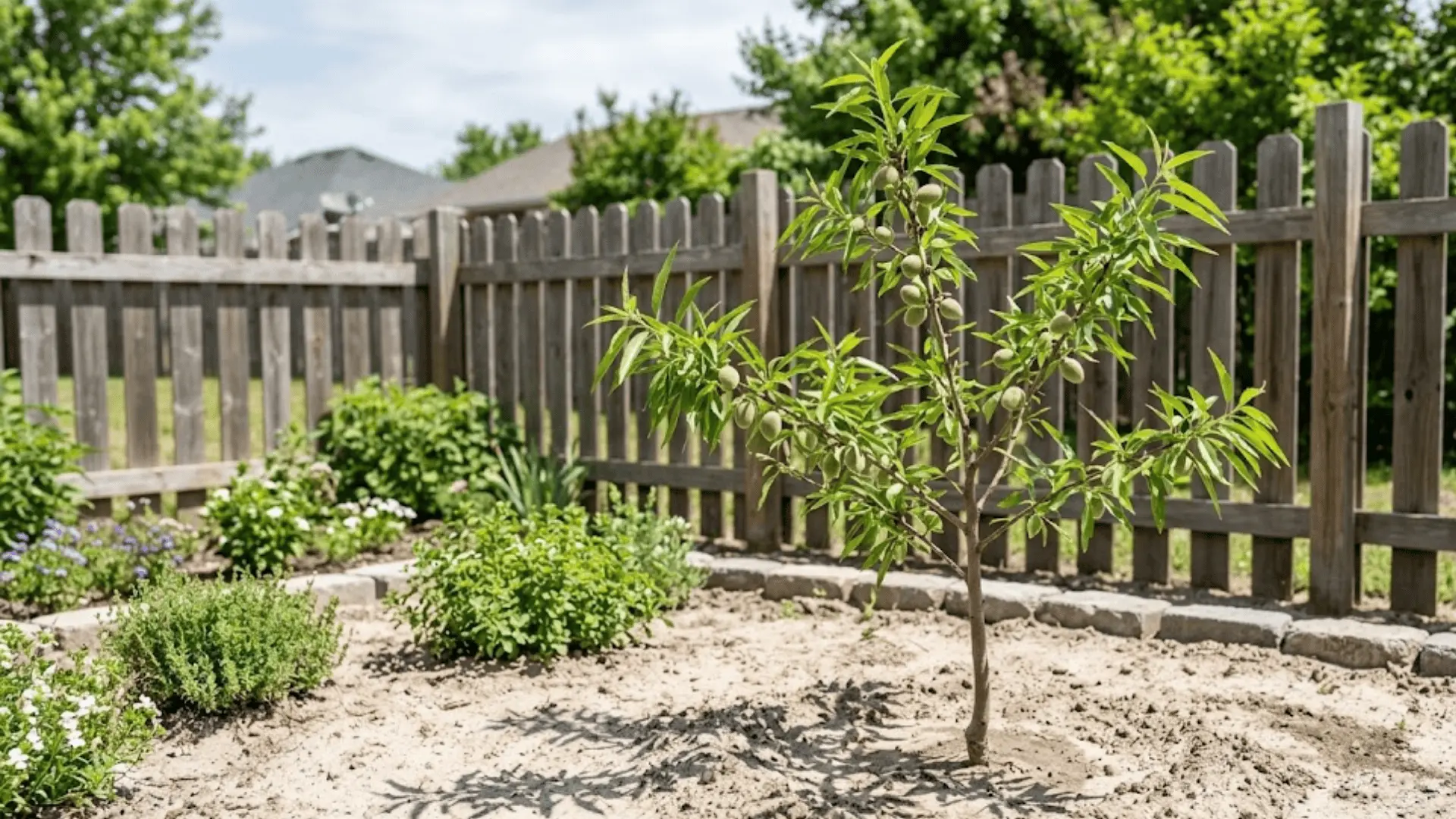
Growing an almond tree at home is doable, just not for every climate. These trees favor warm, dry regions with mild winters, so location matters before anything else.
For smaller spaces, self-fertile varieties are worth looking into since they do not rely on a second tree for pollination.
Good drainage and full sun are non-negotiable. And perhaps most importantly, results take time.
An almond tree is not a quick experiment; it is a slow, rewarding grow that pays off well once it finds its rhythm.
Wrapping It All Up
How almonds grow is genuinely one of those things that sticks with you once you know it.
From a tree that goes completely quiet in winter to blossoms, fruit, and finally that familiar seed, every stage has a purpose. It is a slow process, but a remarkably well-designed one.
Next time you reach for a handful, you will likely think twice about what went into it.
If you are growing your own or just getting started, drop your questions or experiences in the comments below.