Some bugs chew holes in leaves. Others go after roots. Some are so tiny, you barely see them; yet they still ruin your plants.
I’ve been there, staring at chewed-up lettuce or wilted tomato plants, wondering what did the damage. That’s where garden pest identification becomes important.
Knowing what you’re dealing with is the first step to stopping the damage.
You’re about to learn how to tell the difference between good bugs and bad ones. You’ll find out what signs to look for, how to spot different pests, and what you can do about them.
This blog is here to help you see what’s really going on in your garden and what you can do next.
Why You Should Know the Pest Before You Act
Spraying something at the first sign of damage might feel like the fastest fix, but it often makes things worse. If you treat the wrong bug, the real one sticks around.
Or worse, you might end up hurting the helpful bugs that protect your plants naturally. Some pests look alike, but they don’t act the same.
What works for one might not work for another. In fact, it could even help the problem grow.
That’s why knowing what pest you’re dealing with matters. It saves your plants, your time, and your effort. You avoid using the wrong product or method.
You stop wasting money. And you get to the real cause of the damage sooner. Taking a moment to look closely before acting can make all the difference in keeping your garden healthy.
Garden Pest Identification Basics
When your plant looks chewed, droopy, or just plain off, the first thing to check is the damage itself. Are the leaves full of holes? Is something eating the roots?
Does the plant look yellow or curled up? These signs give your first clues.
Most pests don’t show up right away. Many hide under leaves, crawl through soil, or only come out at night. That’s why you might not spot them even when your plant looks like it’s under attack.
You have to look closer, sometimes with a flashlight or by checking early in the morning.
The type of pest can also change based on where you live, the season, and what plant you’re growing. Warm weather brings some pests, cool weather brings others. Tomatoes attract different bugs than cabbage.
Also, not all pests are insects. Some are mites or even tiny worms. Each one causes different problems and needs different ways to stop them.
Identify Pests by the Damage They Leave Behind
Most people look for the bug first. But often, the damage shows up long before the pest itself.
That’s why learning to spot signs on your plants can help you catch problems early, even if you can’t see what caused them yet. Here’s what to watch for:
Chewing Damage
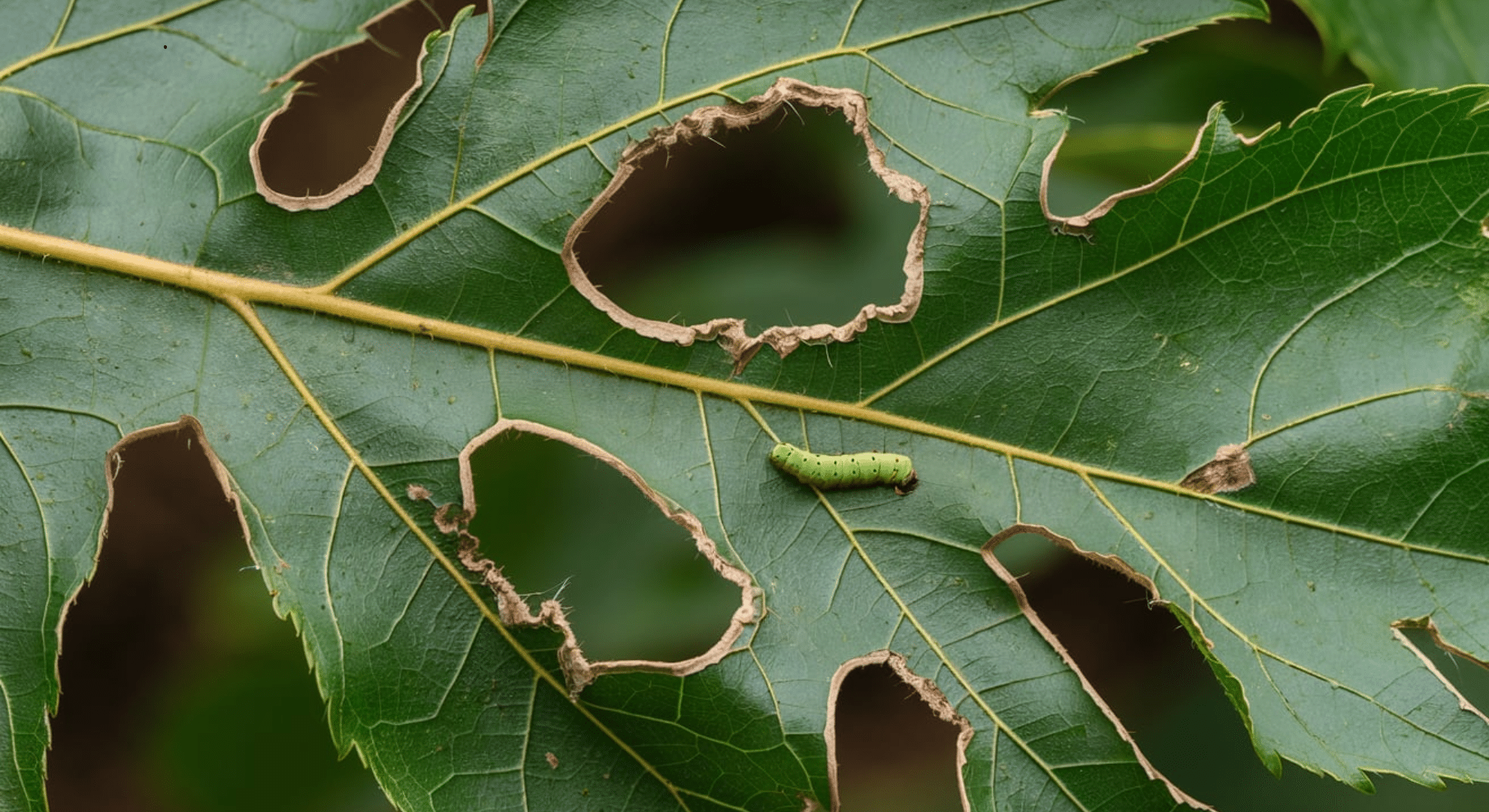
This is one of the most common types of damage. You’ll usually see:
- Irregular holes in leaves
- Missing edges that look like they’ve been bitten
- Leaves that look like lace, with only the veins left
Who causes it?
Caterpillars, beetles, and slugs are often behind this type of damage. Caterpillars leave big, uneven holes. Beetles tend to eat from the edges. Slugs and snails leave slime trails and chew at night. Some bugs chew through fruits too, not just leaves.
Each one leaves a slightly different pattern, which helps you tell them apart even if you never see them in action.
Piercing and Sucking Damage
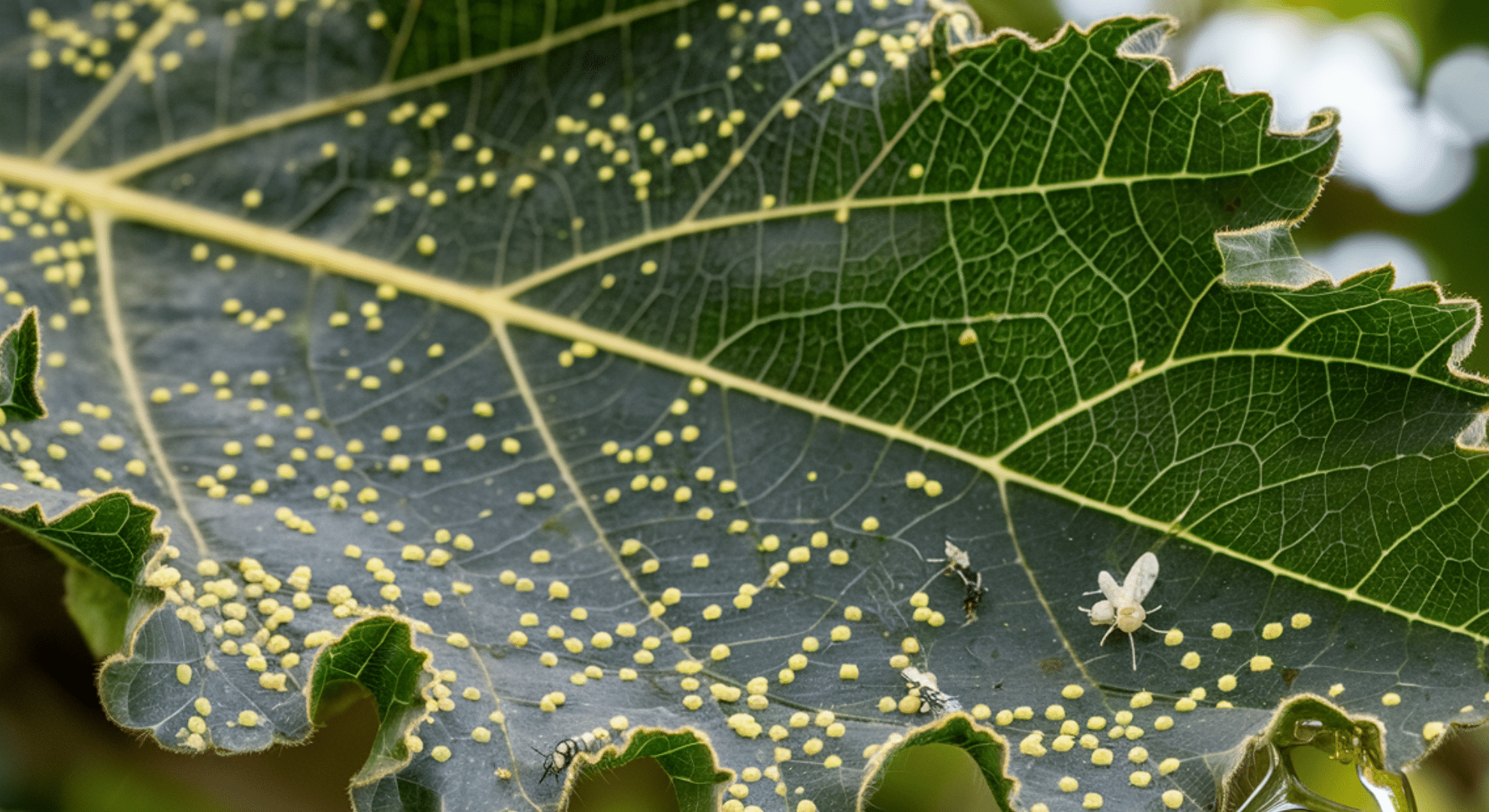
This damage looks different. Instead of bites, you’ll see:
- Leaves curling or folding
- Small yellow or white dots are scattered across the leaf
- Sticky stuff on the leaves, called honeydew
Who causes it?
Aphids, whiteflies, and stink bugs feed by sticking their mouths into the plant and sucking out the juices. They’re often tiny and hide under leaves, so you might not spot them right away.
That sticky residue, honeydew, also attracts ants and can lead to black mold growing on your plants. So if you see shine or stickiness, it’s a strong clue.
Mining and Internal Damage
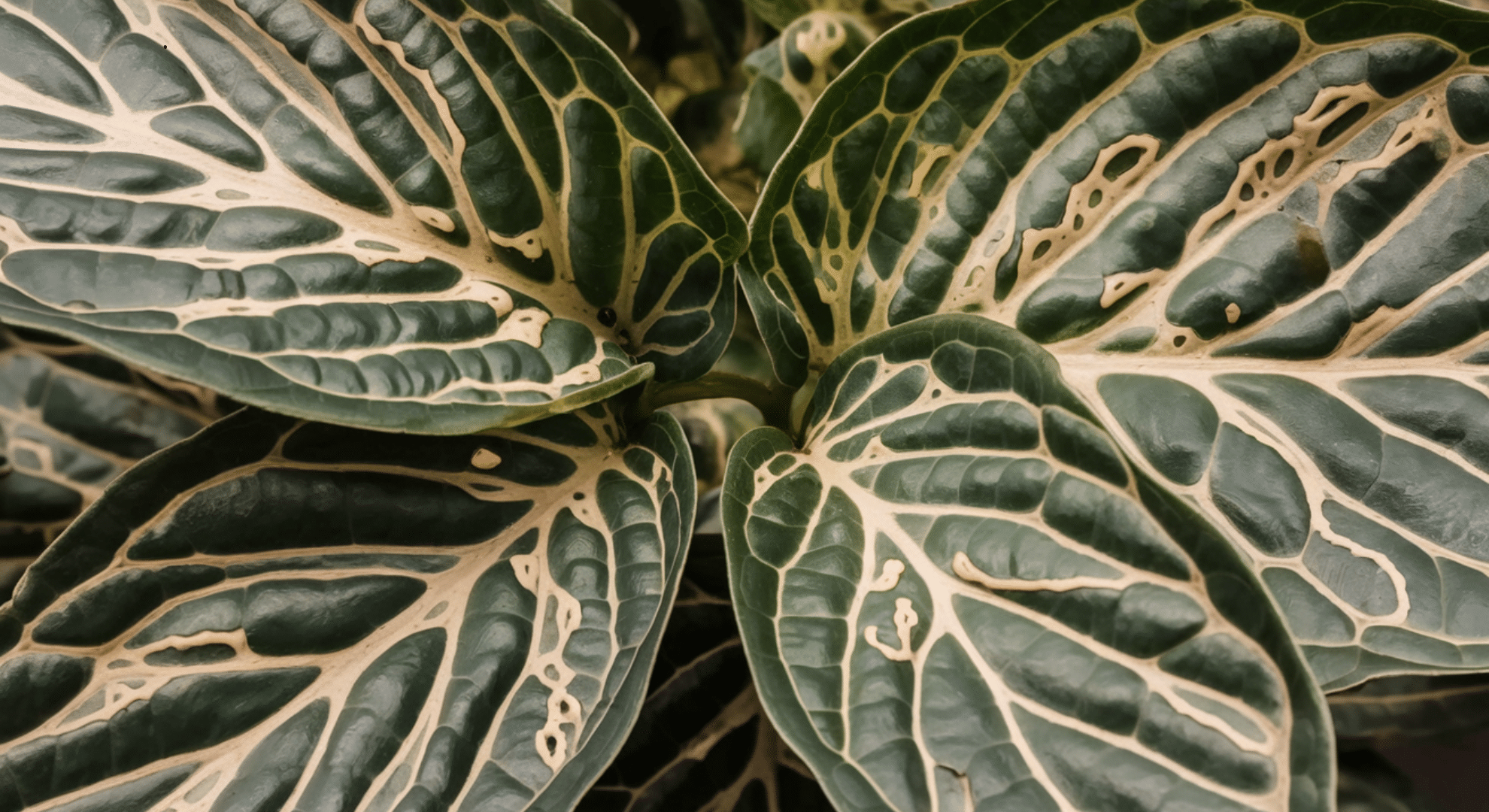
Some pests don’t stay on the surface. They live inside the plant itself. You might notice:
- Thin, winding lines or tunnels inside leaves
- Leaves that look blistered or bubbled
- Plants that grow slowly or stop growing altogether
Who causes it?
Leafminers and some tiny fly or moth larvae burrow through leaf tissue. Because they live inside the leaf, they’re very hard to see. You’ll usually notice their trails first.
Other pests, like root maggots or borers, go deeper into the stems or roots. These pests can seriously weaken a plant before you even realize they’re there. That’s why it’s important to know the signs.
Reading the damage helps you figure out what’s wrong often faster than searching for the pest itself. Once you learn these signs, you can spot problems early and act before your plants take too much damage.
Where to Look for Garden Pests on Plants
Some pests hide in plain sight. Others stay out of view until the damage is done. If you only check the top of the plant, you might miss what’s really going on. To spot the problem early, you need to look in the right places.
Here’s where to check and what to look for:
| Plant Area | What to Check For |
|---|---|
| Undersides of Leaves | Tiny insects like aphids or whiteflies, small eggs, sticky spots, or webbing |
| Stems and Joints | Scale insects, tiny bugs hiding in crevices, signs of chewing or swelling |
| Flowers and Buds | Thrips, beetles, or caterpillars hiding in tight spaces or feeding on petals |
| Soil Surface | Slugs, cutworms, or flea beetles crawling around; look during early morning or dusk |
| Root Zone | Root maggots or grubs that damage from below; look for wilted plants or weak growth |
Pests also change their habits depending on the time of day. Some come out at night, while others move during the day.
For a better chance of spotting them, check in the early morning and just after sunset. A flashlight can help you see pests that only move when it’s dark.
Common Garden Pests and How to Recognize Them
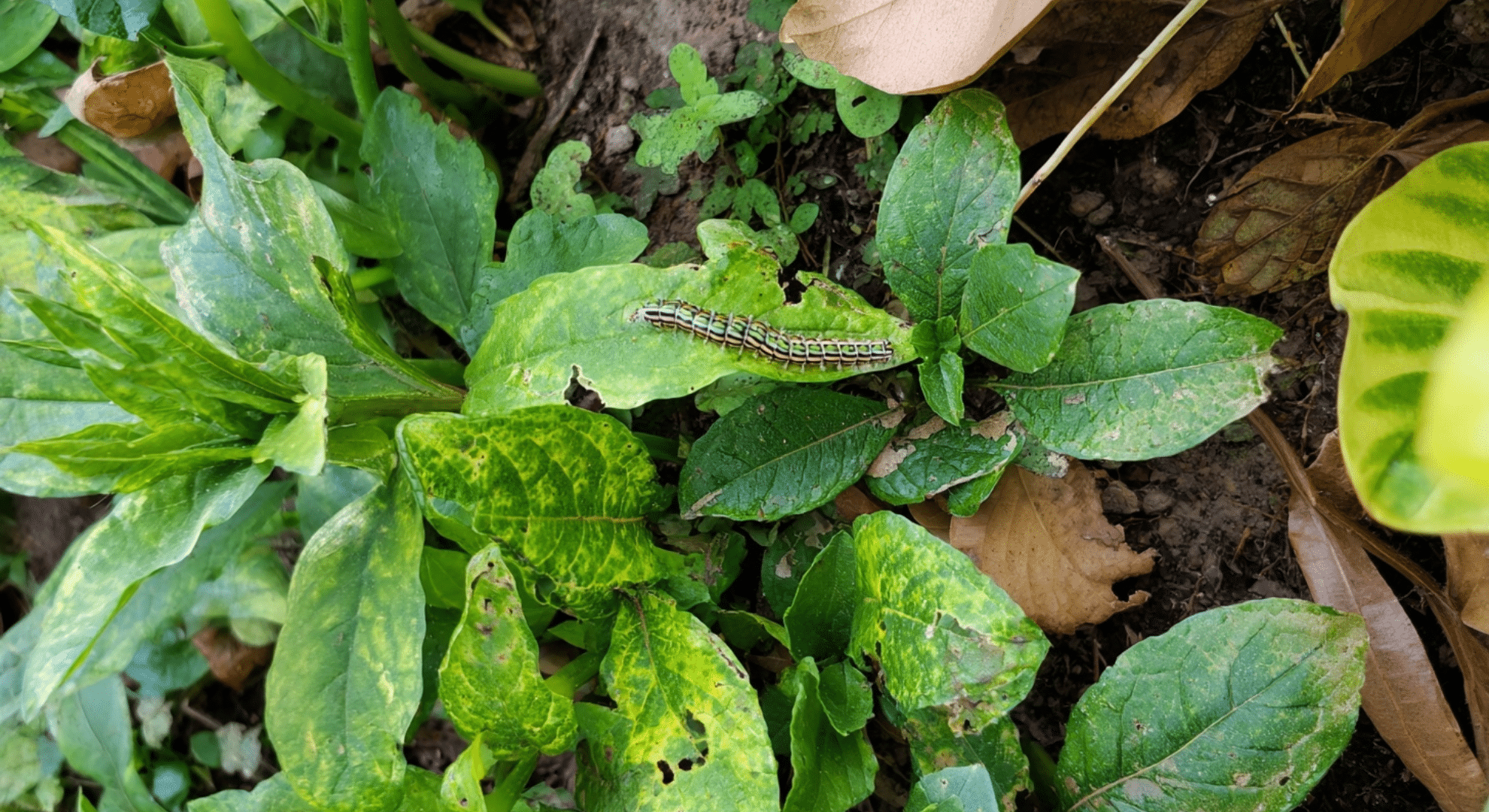
It’s not always easy to tell what’s hurting your plants. Some bugs are small. Some only come out at night. And many hide well.
But if you know what to look for: how they look, where they hide, and what they do—you can catch them early and protect your plants.
Here’s what you need to know about the most common garden pests:
Aphids
Appearance: Tiny, soft-bodied bugs. Can be green, black, yellow, or even pink. Often cluster together.
Typical Damage: Leaves curl or twist. Sticky sap (honeydew) on the plant. Ants may show up nearby.
Where They Hide: Under leaves, around new growth, or on plant stems.
When Active: Most active in the morning and during warm, mild weather.
Caterpillars
Appearance: Soft, worm-like bodies. Often green or brown. Some have stripes or tiny hairs.
Typical Damage: Large holes in leaves. Missing chunks from edges. May eat fruit too.
Where They Hide: On the underside of leaves, along stems, or curled up inside leaves.
When Active: Mostly active during the day, though some feed at night.
Beetles
Appearance: Hard-shelled, with a variety of colors and patterns. Japanese beetles are shiny green and bronze.
Typical Damage: Chewed leaves with jagged edges. Some beetles chew flowers or roots.
Where They Hide: On leaves, stems, or sometimes under plants.
When Active: Usually active during sunny, warm parts of the day.
Slugs and Snails
Appearance: Soft, slimy bodies. Slugs have no shell. Snails carry a spiral shell.
Typical Damage: Irregular holes in leaves and fruit. Silvery slime trails on leaves or soil.
Where They Hide: Under mulch, pots, rocks, or boards—places that stay damp.
When Active: Nighttime and early morning, especially in damp weather.
Spider Mites
Appearance: Tiny, almost invisible. Look like tiny dots, often red or brown. Make fine webbing.
Typical Damage: Yellow speckling on leaves. Leaves may turn brown or fall off. Webbing between leaves.
Where They Hide: Under leaves and in dry, dusty areas.
When Active: Hot, dry weather boosts their activity.
Thrips
Appearance: Slender, tiny insects. Usually brown or black. Hard to see without a close look.
Typical Damage: Silvery or bronze streaks on leaves. Damaged flowers or buds.
Where They Hide: Inside flower buds, under leaves, or along stems.
When Active: Warm, dry days, especially in spring and summer.
Leaf Miners
Appearance: The larvae are tiny and hidden inside leaves. Adults may be small flies or moths.
Typical Damage: Light-colored squiggly trails inside leaves. The leaf may bubble or curl.
Where They Hide: Inside the leaf tissue itself.
When Active: Active in warm weather, especially during early summer.
Knowing what these pests look like and the clues they leave behind can help you take action early.
It’s about reading your plants and understanding the signs they give you. Once you know who’s causing trouble, you can handle it the right way.
Garden Pests That Look Alike And How to Tell Them Apart
Some garden pests can fool you, they look alike but act very differently. If you treat the wrong one, your plants might not get better. That’s why it helps to know the small signs that set them apart.
Here’s a side-by-side look at common pest pairs that often get mixed up:
| Feature | Aphids | Whiteflies | Spider Mites | Thrips | Caterpillars | Beetle Larvae |
|---|---|---|---|---|---|---|
| Size/Shape | Small, round or pear-shaped | Small, white, moth-like with wings | Tiny dots, roundish | Thin, longer bodies | Soft, worm-like, smooth | Stubby or rough, sometimes armored |
| Color | Green, black, yellow, pink | Always white | Red, brown, yellow | Brown or black | Green, brown, striped, or spotted | Dark, segmented, pale, or brown |
| Movement | Move slowly or stay still | Fly up when touched | Hard to see movement | Crawl quickly when disturbed | Wriggle or crawl in a wave-like motion | May crawl stiffly or burrow |
| Damage Type | Curling leaves, sticky sap | Yellow spots, sticky sap | Yellow dots, bronzed leaves | Silvery streaks, distorted flowers | Large holes in leaves, eaten edges | Chewed stems, roots, or burrow holes |
| Where Found | Undersides of leaves, stems | Undersides of leaves | Undersides of leaves | Flower buds, young leaves | On top or under leaves, inside rolled leaves | In soil, inside stems, near roots |
| Clue to Tell | Shake plant, if they stay, aphids | Shake plant, if they fly, whiteflies | Look for webbing on leaves | No webbing, but silver streaks appear | Found on leaves, soft body | Often found in soil or hidden from view |
This table gives a full side-by-side view so you can quickly compare what you see in your garden and make a better guess about what pest is causing the damage.
What to Do After You Identify a Garden Pest
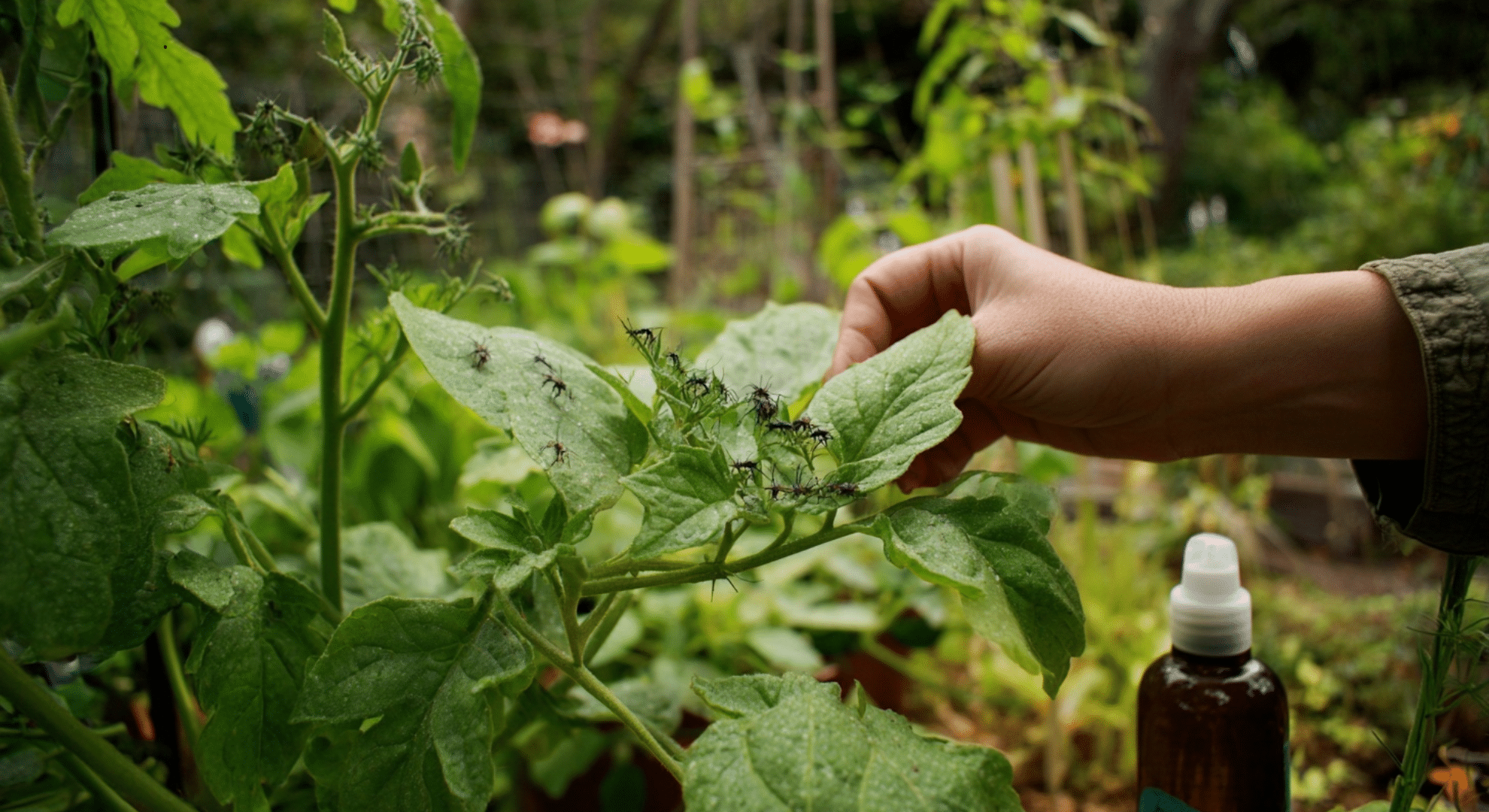
Once you know what pest you’re dealing with, it’s tempting to jump right into action. But sometimes, doing nothing is the best choice. Not all pests need to be treated.
Some cause only small damage and don’t stick around long. Others might be food for helpful bugs already living in your garden. Before reacting, it’s smart to ask: is this pest really a problem?
If the damage is mild, consider starting with these simple steps:
- Watch the plant for a few more days to see if the damage gets worse
- Check for natural predators like ladybugs or lacewings
- Remove pests by hand if there are only a few
- Spray plants with water to knock off bugs like aphids or mites
If the pest population keeps growing, you may need to do more. Organic options like neem oil, insecticidal soap, or diatomaceous earth can help and are safer for the environment.
Still unsure? That’s when asking for help makes sense. Local garden centers, master gardeners, or university extension offices can guide you.
They know your area and what pests are common. Getting advice can save time, plants, and effort and keep you from using the wrong solution.
Preventing Future Garden Pest Problems
Stopping pests after they show up is good, but keeping them from coming back is even better. A few simple habits can make your garden stronger and less inviting to harmful bugs.
- Water plants at the base to avoid soggy leaves that attract pests
- Space out plants so air can move around them and keep moisture down
- Remove dead leaves and plant debris where bugs like to hide
- Clean your tools to avoid spreading pests from one plant to another
- Change where you grow crops each year to confuse soil pests
- Add compost to the soil to help plants grow strong and resist damage
Taking care of your garden before problems show up saves you time and effort later. Healthy plants can fight off more damage, and clean habits help break the pest cycle early.
Conclusion
Once I learned the signs and started checking early, I stopped losing plants to mystery damage. Garden pest identification is about paying closer attention.
Now that you’ve read through what to look for and where to look, you can spot problems sooner and handle them better. Even small changes in how you check and care for your garden can go a long way.
Keep in mind: the best results often come from noticing the small things first.
If you found this helpful, there’s more to learn. Check out other blogs on the website for tips on plant care, natural fixes, and more ways to keep your garden strong and pest-free!