Walk into any growing supply store, and you’ll hear the same pitch: LED is the future, fluorescent is outdated. Here’s what they won’t tell you – fluorescent grow lights still outperform LED in several critical growing situations, and professional growers know it.
BioFloral has spent over 25 years helping Canadian growers find the right solutions for their specific needs. The truth? Fluorescent lighting isn’t obsolete. It’s specialized. And for certain applications, it can’t be beaten.
Why Fluorescent Lights Still Matter in Modern Growing
The LED revolution changed indoor growing, but it didn’t eliminate the need for fluorescent systems. While LED technology excels in flowering and full-cycle growing, fluorescent lights offer advantages that matter for specific applications.
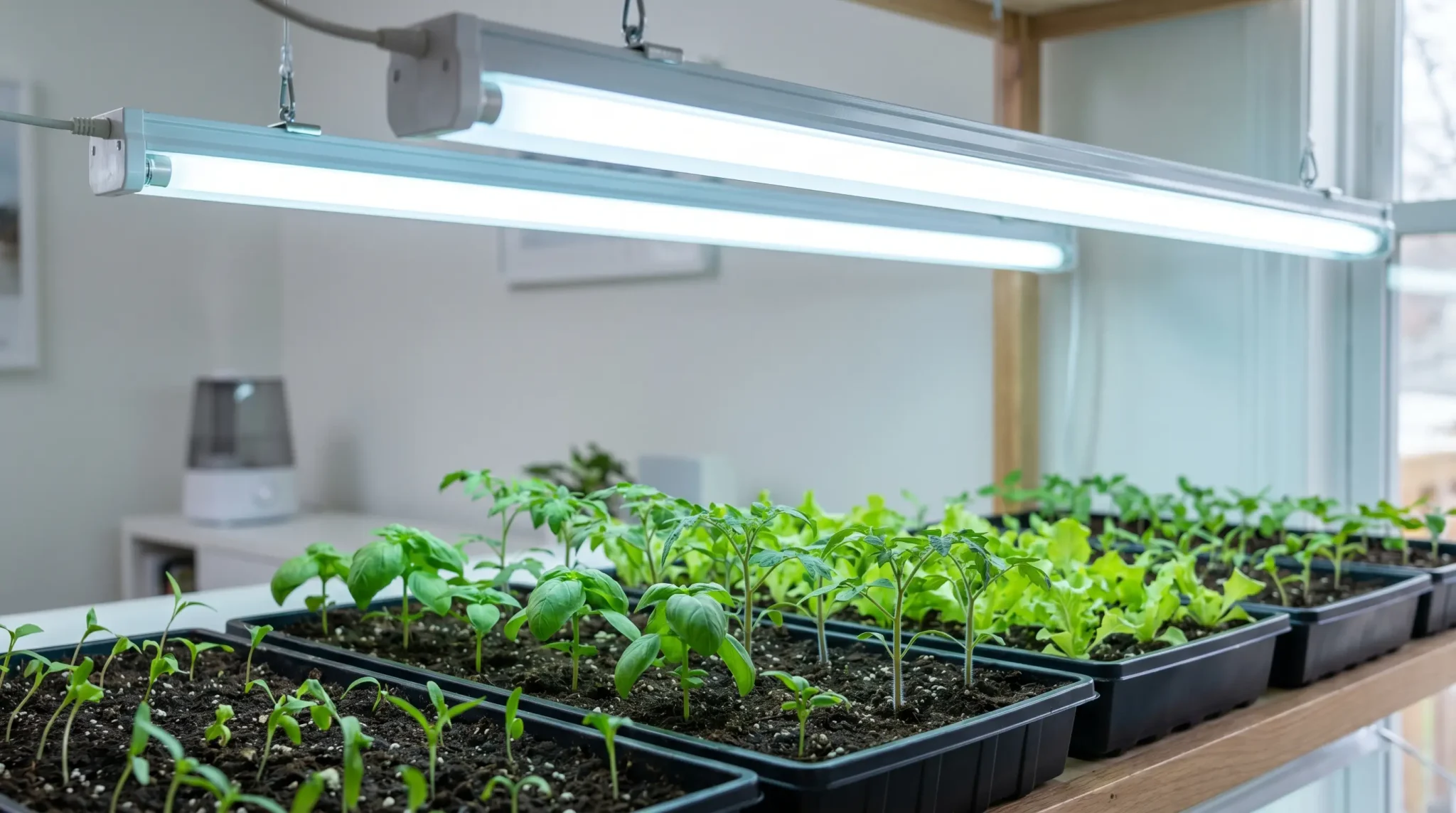
Fluorescent systems produce an even, diffuse light that young plants respond to more effectively than the intense, directional output of LED fixtures. The physics behind this matters: fluorescent tubes emit light across their entire surface, creating uniform coverage without hot spots. For seedlings and cuttings with delicate leaves, this gentle, consistent light prevents burning and stress.
Temperature control tells another part of the story. Fluorescent fixtures run cooler than most LED systems, which matters when lights hang inches above tender seedlings. Expensive LED setups can generate too much heat for propagation work, while fluorescent systems naturally maintain the cooler temperatures young plants need.
Dr. Bruce Bugbee, a crop physiologist at Utah State University and one of the world’s leading experts on controlled environment agriculture, notes that “for young plants and propagation, the uniformity and spectral quality of fluorescent lighting often produces better results than LED systems designed for flowering.” His research on light quality and plant development has influenced growing practices worldwide.
When Fluorescent Systems Beat LED (And It’s More Often Than You Think)
1. Seed Starting and Early Growth
Seedlings need gentle, consistent light – not intensity. Fluorescent tubes provide exactly this. The broad, even coverage prevents stretching without overwhelming delicate cotyledons. T5 fixtures positioned 2-4 inches above seed trays create ideal conditions for germination and early development.
LED systems rated for flowering often prove too powerful for seeds and young seedlings. Even dimmed, many LED fixtures concentrate light in ways that create uneven growth. Fluorescent tubes provide natural light, which is why serious propagators still rely on them.
2. Propagation and Cloning Operations
Rooting cuttings demands specific environmental conditions. Fluorescent lights excel here because they provide adequate light without excessive heat that can stress cuttings before roots develop. The cooler operating temperature of fluorescent fixtures helps maintain the humid environment cuttings need.
Commercial propagation facilities often use fluorescent systems specifically for cloning operations, even after switching to LED for later growth stages. The investment makes sense because fluorescent systems deliver consistent results where it counts most – at the beginning of the growing cycle.
3. Microgreens and Herbs
Growers producing microgreens and herbs at scale often choose fluorescent lighting over LED. Even coverage across large, growing areas, combined with lower initial investment, makes fluorescent systems practical for these quick-turn crops. When you harvest every 7-14 days, the energy-efficiency difference between fluorescent and LED becomes less important than consistent, predictable results.
4. Supplemental Lighting and Low-Light Plants
Not every growing situation requires intense light. Many houseplants, tropical species, and shade-tolerant crops grow better under moderate fluorescent lighting than under intense LED systems. African violets, orchids, and foliage plants respond well to the gentle, consistent light provided by fluorescent tubes.
Fluorescent fixtures work well for overwintering plants, maintaining mother plants, and keeping stock plants in vegetative growth. For these applications, the lower intensity and even spread of fluorescent light perfectly match plant needs.
Understanding T5 vs T8: Which System Fits Your Needs?
Not all fluorescent systems work the same way. The two main types – T5 and T8 – serve different purposes.
| Feature | T5 Fluorescent | T8 Fluorescent |
|---|---|---|
| Light Output | Higher intensity, better for growing | Lower intensity, good for supplemental light |
| Energy Efficiency | More efficient per watt | Less efficient but still economical |
| Tube Diameter | 5/8 inch (thinner) | 1 inch (thicker) |
| Best For | Seedlings, propagation, small growing spaces | Larger areas, less demanding plants, budget growing |
| Initial Cost | Higher fixture cost | Lower fixture cost |
| Bulb Replacement | Every 18-24 months for growing | Every 18-24 months for growing |
T5 systems dominate serious propagation and seedling operations. The higher output and greater efficiency make T5 fixtures worth the additional upfront investment when growth is a priority. T8 systems work well for hobbyists, supplemental lighting, and situations where budget constraints outweigh efficiency concerns.
Spectrum and Color Temperature: What Actually Matters
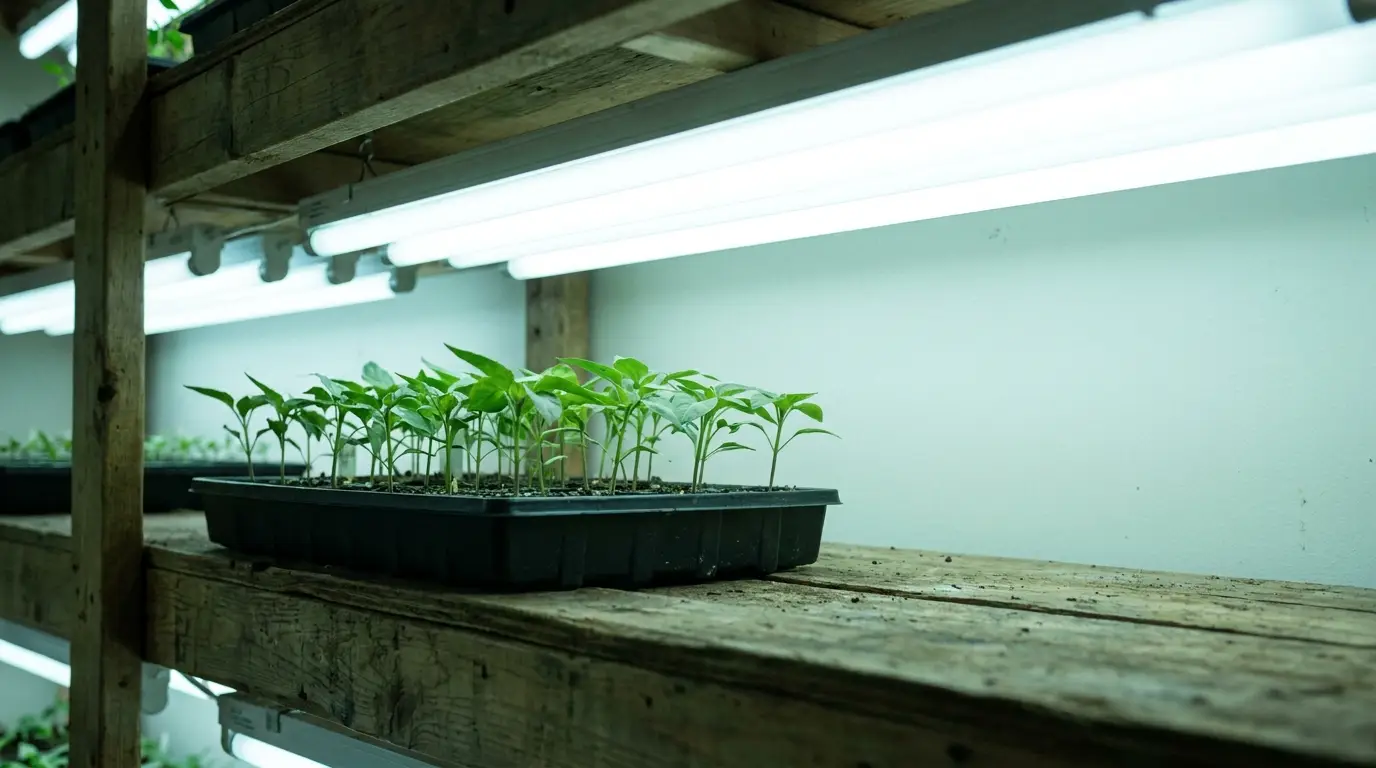
Fluorescent tubes come in different color temperatures, and choosing the right one affects results. For growing applications, select tubes rated at 6500K (cool white/daylight) for vegetative growth and propagation. These provide the blue-heavy spectrum young plants need.
The myth that you need specific “grow light” tubes persists, but standard 6500K fluorescent tubes perform well for plant growth. High-output T5 fixtures with quality daylight tubes deliver results that match or beat specialized grow tubes at a fraction of the cost.
Some growers mix 6500K and 3000K (warm white) tubes in the same fixture to create a broader spectrum of light. This works, but it’s not necessary for propagation and early growth stages. Save spectrum mixing for situations where you’re growing plants through flowering, when LED systems make more sense.
Setting Up Fluorescent Systems for Best Results
Proper setup matters more than fixture choice. Here’s what works based on proven growing practices:
- Distance from plants: Start with tubes 2-4 inches above seedlings and cuttings. Adjust based on plant response – if seedlings stretch, lower the lights; if leaves curl or show stress, raise them slightly.
- Duration: Run lights 14-18 hours daily for seedlings and propagation. Young plants benefit from extended light periods, and the lower intensity of fluorescent systems won’t overwhelm them as extended LED exposure might.
- Coverage: Each 4-foot T5 fixture covers approximately 4 square feet of propagation space. Don’t try to stretch coverage by raising fixtures higher – you’ll lose the intensity young plants need.
- Reflectors: Quality reflectors double the effective light reaching plants. Don’t skip them. A fixture with a good reflector outperforms a bare fixture by significant margins.
When to Switch to LED
Fluorescent systems excel at the start of the growing cycle, but they’re not the best choice for everything. Once plants develop true leaves and enter vegetative growth, LED systems start making sense. The higher intensity and greater efficiency of LED lighting pay off when growing larger plants over longer cycles.
Smart growers match lighting to their needs rather than following trends. For seed starting, propagation, and gentle supplemental lighting, fluorescent fixtures deliver reliable results at a practical price point. For later growth stages and flowering, LED systems offer advantages that justify their higher cost.
Maintenance and Longevity
Fluorescent systems require straightforward maintenance. Replace tubes every 18-24 months for growing applications – even though they’ll still light, their output decreases over time. Mark installation dates on tubes with a permanent marker to track replacement schedules.
Clean reflectors every few months. Dust and residue significantly reduce light output. A simple wipe-down with a damp cloth restores reflector efficiency.
Ballasts last for years under normal use. When a ballast fails, you’ll notice tubes flickering or failing to start. Replacement costs less than buying a new fixture, making it worth repairing quality fluorescent systems.
Practical Applications Across Growing Environments
- Home gardeners use fluorescent systems to start seeds for spring gardens, maintain houseplants through winter, and grow herbs year-round. A simple T5 fixture in a basement or spare room creates a productive growing space for minimal investment.
- Commercial propagators rely on fluorescent systems for cloning operations and seedling production. Even coverage and predictable results matter when producing thousands of plants.
- Vertical farms often use fluorescent lighting for propagation tiers before moving plants to LED-lit growing tiers. This staged approach effectively balances cost and performance.
- Educational facilities choose fluorescent systems for growing labs and classroom projects. The lower cost and proven reliability make them practical for institutional use.
Common Mistakes to Avoid
Using old tubes beyond their effective life wastes electricity and produces poor results. Don’t try to save money by stretching tube life – the declining output defeats the purpose of having lights.
Mounting fixtures too far from plants eliminates the intensity advantage of T5 systems. Keep them close and adjust as plants grow.
Buying cheap fixtures with poor reflectors costs more in the long run. Invest in quality fixtures with good reflectors – the performance difference justifies the small price increase.
Ignoring the spectrum and buying the cheapest tubes often leads to disappointing results. Spend a few extra dollars for quality 6500K tubes rated for growing applications.
FAQs
Q: How long do fluorescent grow lights actually last for growing?
While fluorescent tubes provide lighting for years, their efficacy declines after 18-24 months of regular use. The light output drops gradually, and the spectrum shifts slightly – changes your eyes won’t notice, but your plants will.
Q: Can I use regular shop lights instead of grow lights for seedlings?
Yes – standard T5 or T8 shop lights with 6500K (cool white/daylight) tubes work excellently for seedlings and propagation. The “grow light” label often just means a higher price. Look for high-output fixtures with good reflectors and quality 6500K tubes.
Q: How Close Should Fluorescent Lights Be to Seedlings?
Start with tubes 2-4 inches above seedlings for T5 fixtures, 4-6 inches for T8 systems. Monitor plant response: seedlings that stretch need the lights lowered; leaves that curl or yellow may indicate the lights are too close.
Q: Are Fluorescent Grow Lights Worth It Compared to LED for Beginners?
For propagation and seedling work, fluorescent systems often make more sense for beginners. Lower initial cost, simple setup, predictable results, and easy maintenance make them beginner-friendly. You can start growing successfully for a fraction of the cost of an LED system.