Some flowers wait for spring to settle in before they show up.
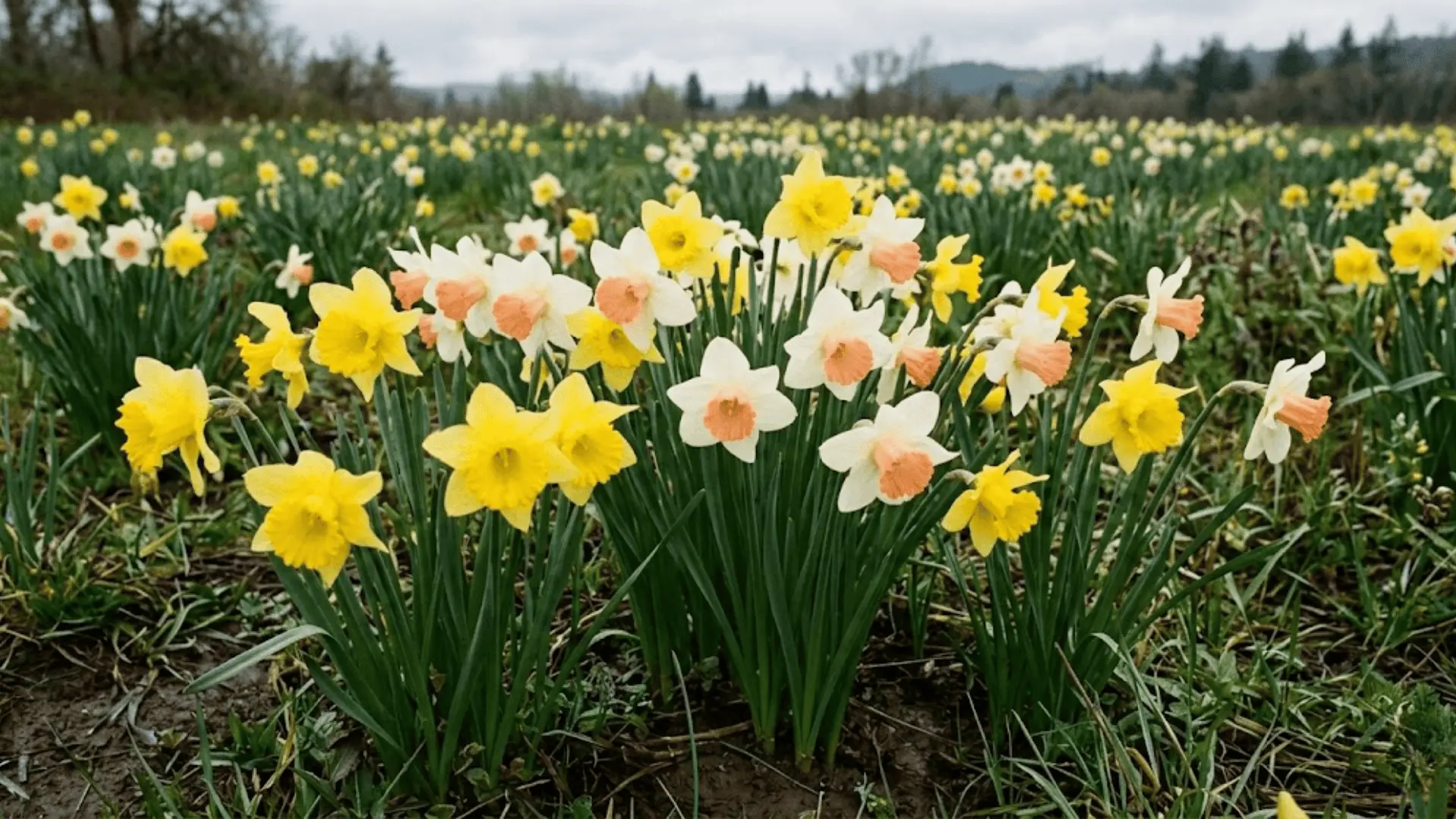
The flower narcissus does not. It arrives early, in cool soil and pale light, with trumpet-shaped blooms in whites, yellows, and soft corals that somehow make the season feel more certain.
People have been growing it, writing about it, and finding meaning in it for centuries across wildly different cultures.
From its most recognized varieties and layered history to its symbolism and care, here is everything worth knowing about one of the most enduring flowers in the world.
The Flower Narcissus: A Genus Worth Knowing
Narcissus is a genus of flowering plants in the Amaryllidaceae (Amaryllis) family, native to meadows and woodlands across Europe and North Africa.
It grows from bulbs, returning season after season as a hardy perennial.
Each bloom is easy to recognize: six petal-like tepals fanned out around a distinct central corona, which takes the shape of a trumpet or cup depending on the variety.
Narcissus, as documented by NC State Extension, encompasses a wide range of species, all sharing this signature structure that sets them apart from most other spring flowers.
One Flower, Two Names: The Narcissus-Daffodil Debate
The short answer is yes, and no. Every daffodil is a narcissus, but not every narcissus gets called a daffodil.
Narcissus is the botanical genus name covering the entire plant family. Daffodil is the common name, one that most people in the UK and North America reach for by default.
In parts of Europe, the same flower goes by jonquil or narcissus without much debate. The naming largely comes down to where you grew up and what your gardener grandmother called it.
Botanically, though, it has always been one genus.
A Field Guide to Narcissus Flower Types
The genus Narcissus runs deeper than most people expect.
What looks like a single flower at the garden center is actually a sprawling family of divisions, each with its own structure, seasonality, and personality worth knowing before you plant.
1. Trumpet Narcissus
Bloom Time: March to April
Height: 16 to 20 inches
Fragrance Level: Mild, grassy undertones
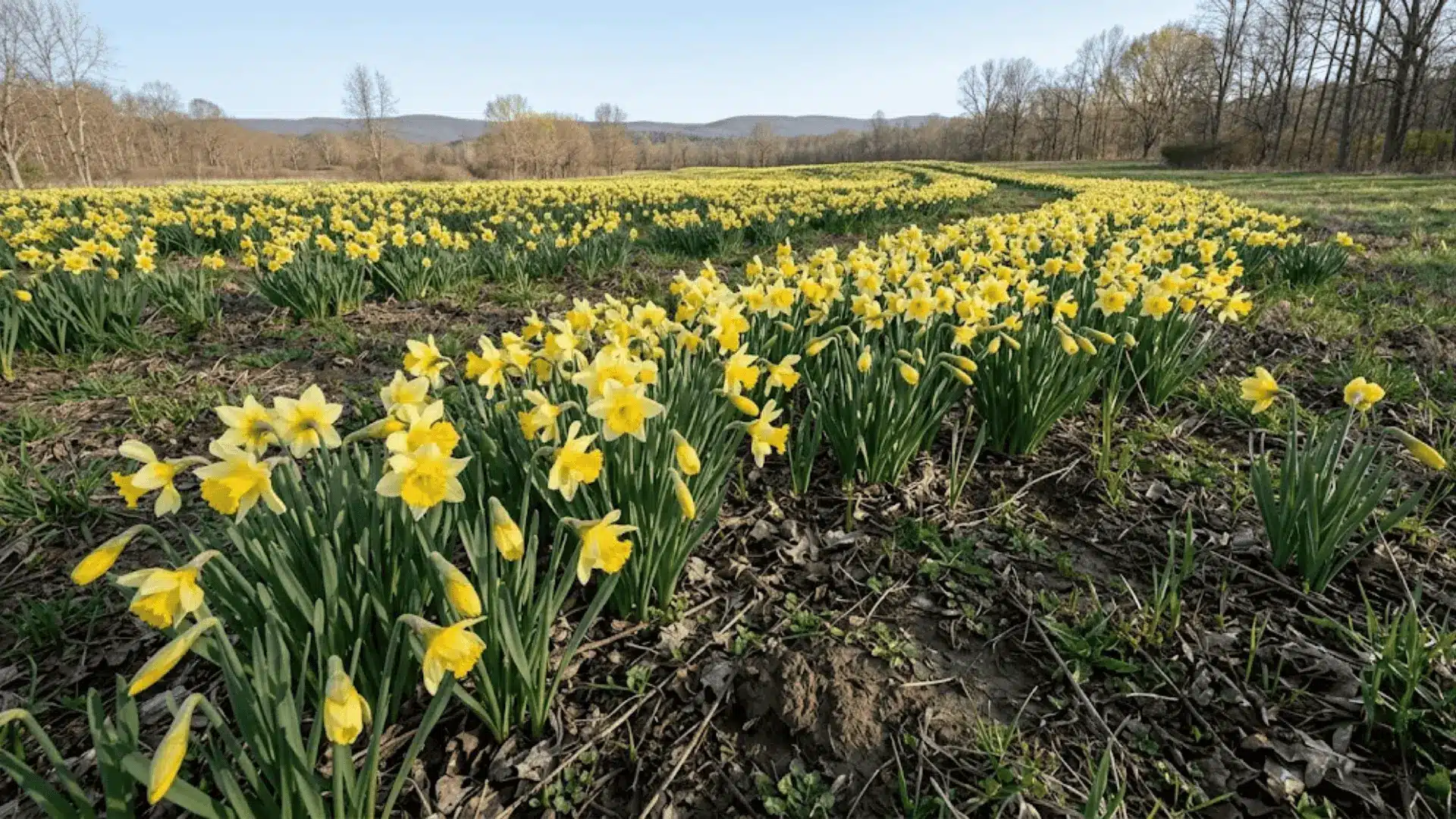
Trumpet narcissus is Division 1 in the Royal Horticultural Society’s classification, and the corona here equals or exceeds the length of the tepals, which is what gives it that unmistakable elongated look.
The variety ‘King Alfred’ became so dominant in commercial growing through the twentieth century that many gardeners still use its name to describe any large yellow daffodil, even when it isn’t one.
It naturalizes well, meaning it multiplies underground and returns larger every season with almost no intervention.
2. Large-Cupped Narcissus
Bloom Time: April
Height: 14 to 20 inches
Fragrance Level: Light to moderate
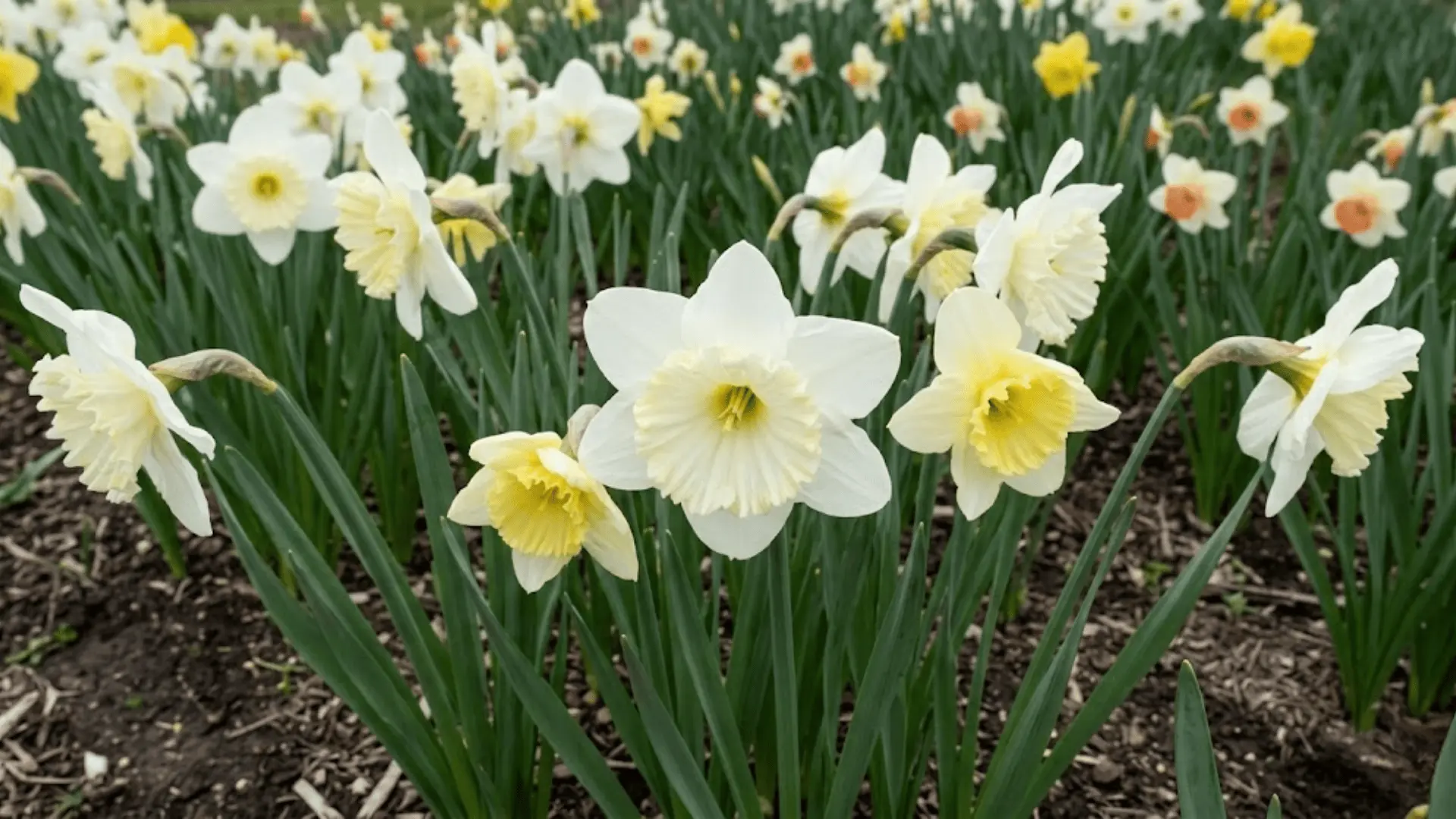
Division 2 narcissus has a cup that measures more than a third of the tepal length but stops short of a full trumpet.
The variety ‘Ice Follies’ remains one of the most commercially produced narcissus cultivars in the world, prized specifically for its white tepals and cream-to-yellow cup that opens wide as it matures.
This division also includes some of the most dramatically bi-colored varieties in the genus, with tepals and cups often appearing in contrasting shades of white, coral, and deep orange.
3. Double Narcissus
Bloom Time: Mid to late April
Height: 14 to 18 inches
Fragrance Level: Strong, sometimes cloyingly sweet
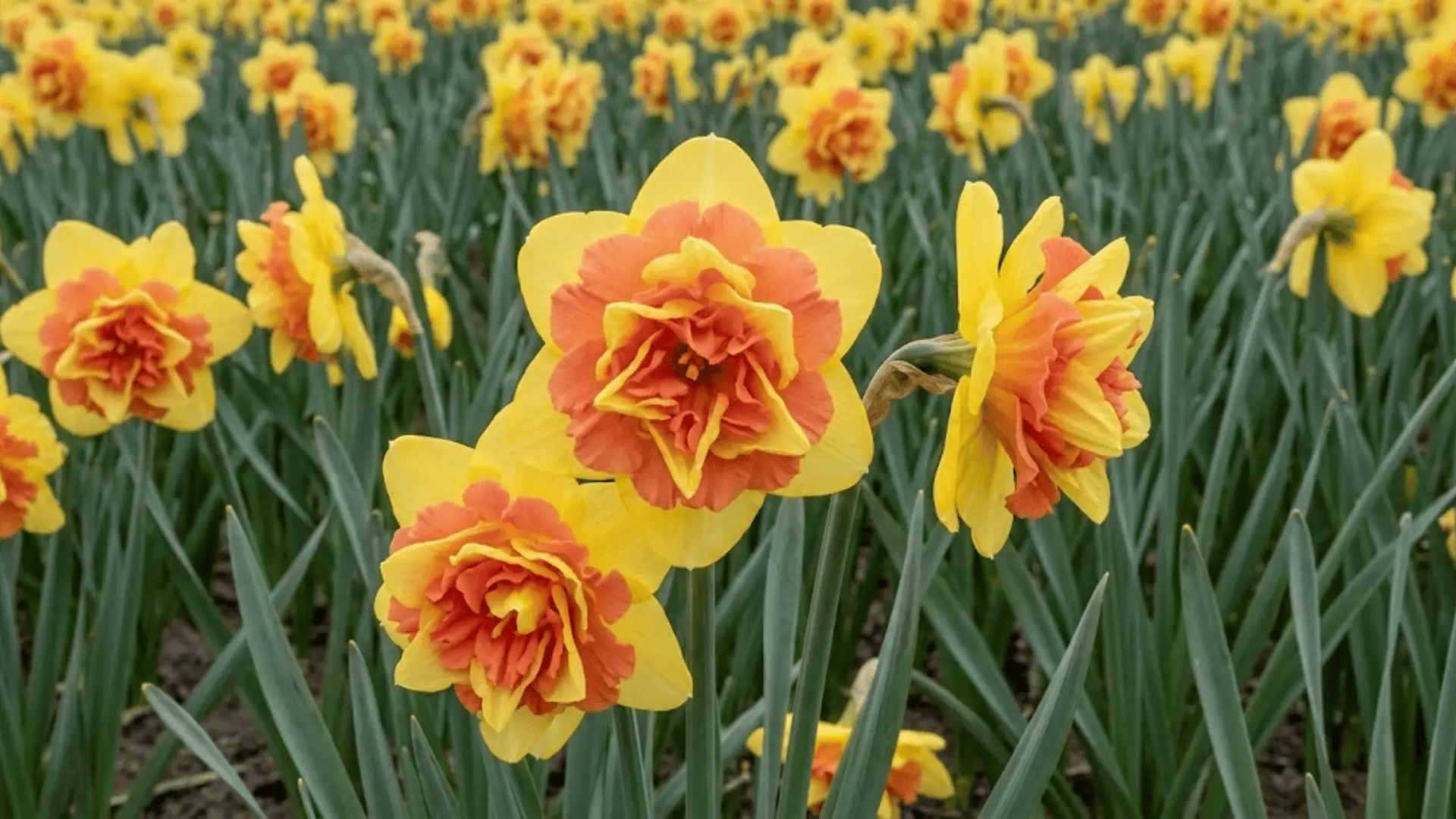
Double narcissus has a mutation in its corona structure where the central trumpet breaks into multiple layers of petaloids instead of forming a single cup.
‘Tahiti’ is one of the most planted doubles globally, displaying yellow outer tepals with soft red-orange petaloids packed through the center.
One thing growers rarely mention is that double-headed blooms are heavier and more prone to drooping after rain, so a sheltered planting spot makes a real difference with this division.
4. Paperwhite Narcissus
Bloom Time: December to February; indoors
Height: 12 to 16 inches
Fragrance Level: Intensely musky, polarizing
Paperwhites (Narcissus papyraceus) are one of the few bulbs that require zero cold stratification to bloom, which is why they are a staple of indoor winter growing.
They will flower in nothing but water and pebbles within 4 to 6 weeks of planting. The fragrance is potent enough to divide opinion sharply.
A common grower’s trick is to add a small amount of diluted alcohol to the water once shoots appear, which stunts stem growth and prevents the notoriously floppy stalks from collapsing under the weight of the blooms.
5. Miniature Narcissus
Bloom Time: February to April, depending on variety
Height: 3 to 8 inches
Fragrance Level: Mild to surprisingly strong for their size
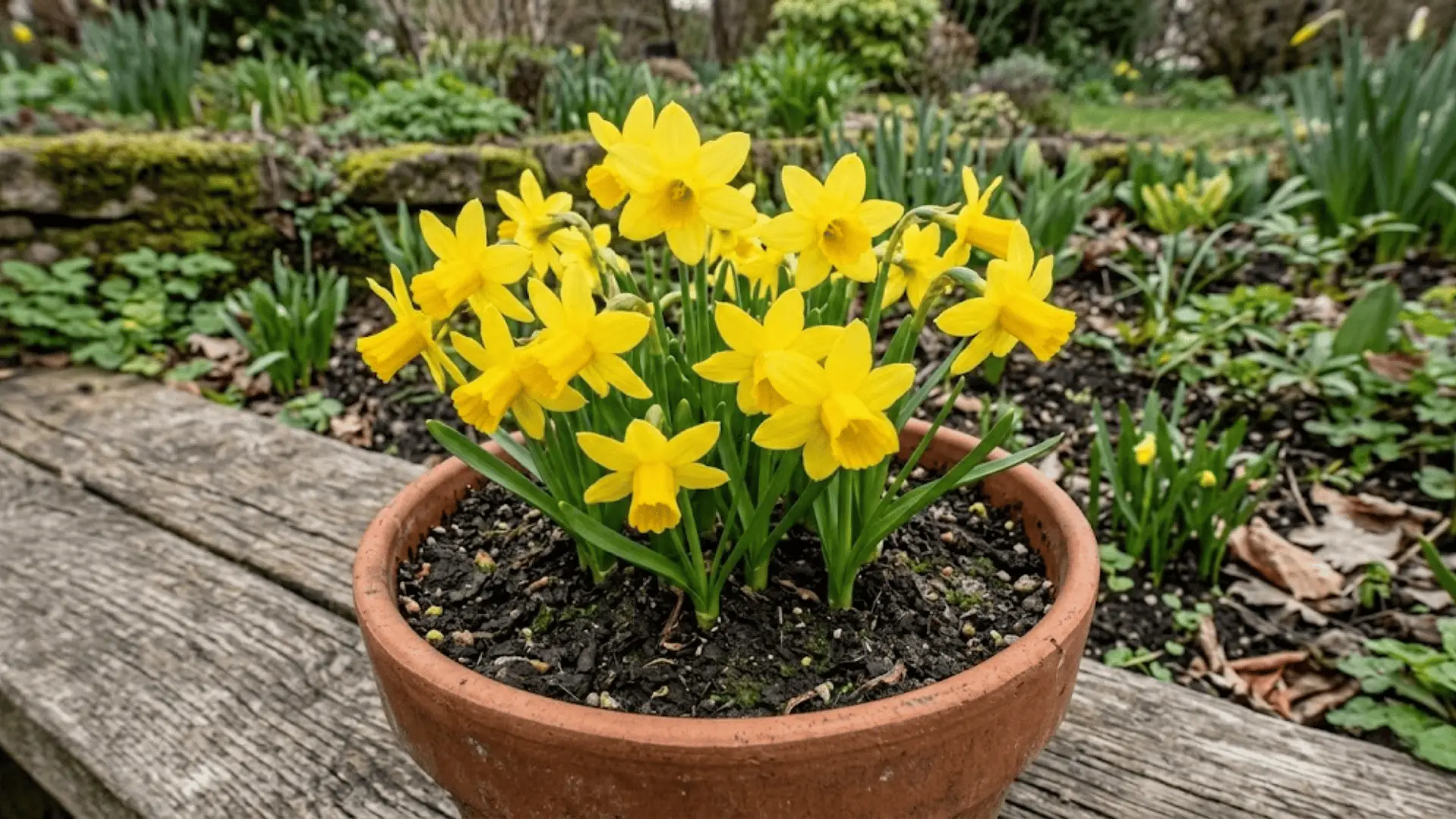
Miniature narcissus varieties such as ‘Tête-à-Tête’ and ‘Jetfire’ are classified under the same thirteen RHS divisions as full-sized cultivars, just scaled down.
‘Tête-à-Tête’ in particular holds the RHS Award of Garden Merit and is consistently among the top-selling potted bulb plants across Europe each spring.
Their shallow root requirement makes them genuinely suited to container growing, and because they are lighter feeders than larger varieties, they tend to perform well even in poor soil with minimal amendment.
Knowing the Flower Narcissus Inside Out
Before you grow it, gift it, or write about it, knowing what the flower narcissus actually brings to the table makes every interaction with it more informed.
Here is what defines it at its core.
- Bloom Season: Flowers from late winter through early spring, typically between February and April, depending on variety and climate.
- Height Range: Grows anywhere from 3 inches in miniature varieties to just over 20 inches in full-sized trumpet cultivars.
- Color Variations: Predominantly yellow and white, with corona accents appearing in shades of orange, coral, and soft pink across hybrid varieties.
- Fragrance: Ranges from light and grassy in trumpet types to intensely musky in paperwhites, making variety selection important for indoor growing.
- Toxicity: All parts of the plant contain lycorine and other alkaloids, with the bulb holding the highest concentration, making it toxic to humans, dogs, cats, and horses if ingested.
What makes narcissus particularly worth understanding is that its characteristics are not uniform across the genus. The variety you choose shapes the entire experience, from how it smells to how long it lasts in the ground.
The Myth That Gave Narcissus Its Name
Few flowers carry a backstory as layered as this one.
The genus takes its name directly from the Greek myth of Narcissus, a youth so consumed by his own reflection that he wasted away beside the water, and a flower rose in his place.
Across Europe, that association with self-reflection and transience shaped how cultures read the bloom for centuries.
By the Victorian era, it had found a formal place in floriography, where gifting narcissus carried a quiet message of egotism or, depending on context, renewal and regard.
Narcissus and the Meanings It Has Carried for Centuries
The flower narcissus has never carried just one meaning, and that is what makes it culturally interesting. At its broadest, it stands for rebirth and renewal, arriving at the precise moment winter loses its hold.
In China, it is closely tied to Lunar New Year celebrations, where blooming narcissus in the home signals good fortune for the year ahead.
In Wales, it holds national flower status, appearing widely on St. David’s Day each March.
Victorian floriography assigned it to hope and new beginnings, a gentler reading that largely overshadowed its older association with vanity.
A Grower’s Honest Guide to Narcissus Flowers
Growing narcissus rewards patience and timing above all else. Get these fundamentals right, and the bulbs will return larger and more prolific every season with minimal effort.
1. When to Plant Bulbs?
Plant between September and November, before the ground freezes solid.
- Plant when soil temperature drops consistently below 60°F for best root establishment.
- Set bulbs at a depth roughly three times their diameter, pointed end facing up.
- Cold exposure through winter is non-negotiable; it triggers the spring bloom cycle.
- In warmer climates, pre-chill bulbs in the refrigerator for six to eight weeks before planting.
2. Soil Requirements
Narcissus is forgiving about soil type but unforgiving about drainage.
- Well-draining soil with a pH between 6.0 and 7.0 is the sweet spot.
- Waterlogged ground through winter is the primary cause of basal rot and failed re-bloom.
- In heavy clay soils, mix in coarse grit or plant in raised beds to improve drainage.
- Avoid freshly manured soil, as excess nitrogen promotes leaf growth over flowering.
3. Sunlight Needs
At least six hours of direct light daily produces the strongest stems and longest-lasting blooms.
- Full sun is ideal, but narcissus tolerates partial shade better than most spring bulbs.
- Planting beneath deciduous trees works well, as narcissus completes its growth before the canopy fills in.
- Avoid north-facing walls and dense evergreen shade, which suppress flowering over time.
4. Watering Tips
Narcissus needs moisture during active growth and very little once it enters dormancy.
- Water consistently from fall through spring during the active growing season.
- In dry winters, light watering every two to three weeks keeps root development on track.
- Reduce watering significantly once foliage begins to yellow and die back naturally.
- Overwatering dormant bulbs in summer is one of the most common causes of rot.
5. After-Bloom Care
What happens after the flowers fade determines how well narcissus performs the following year.
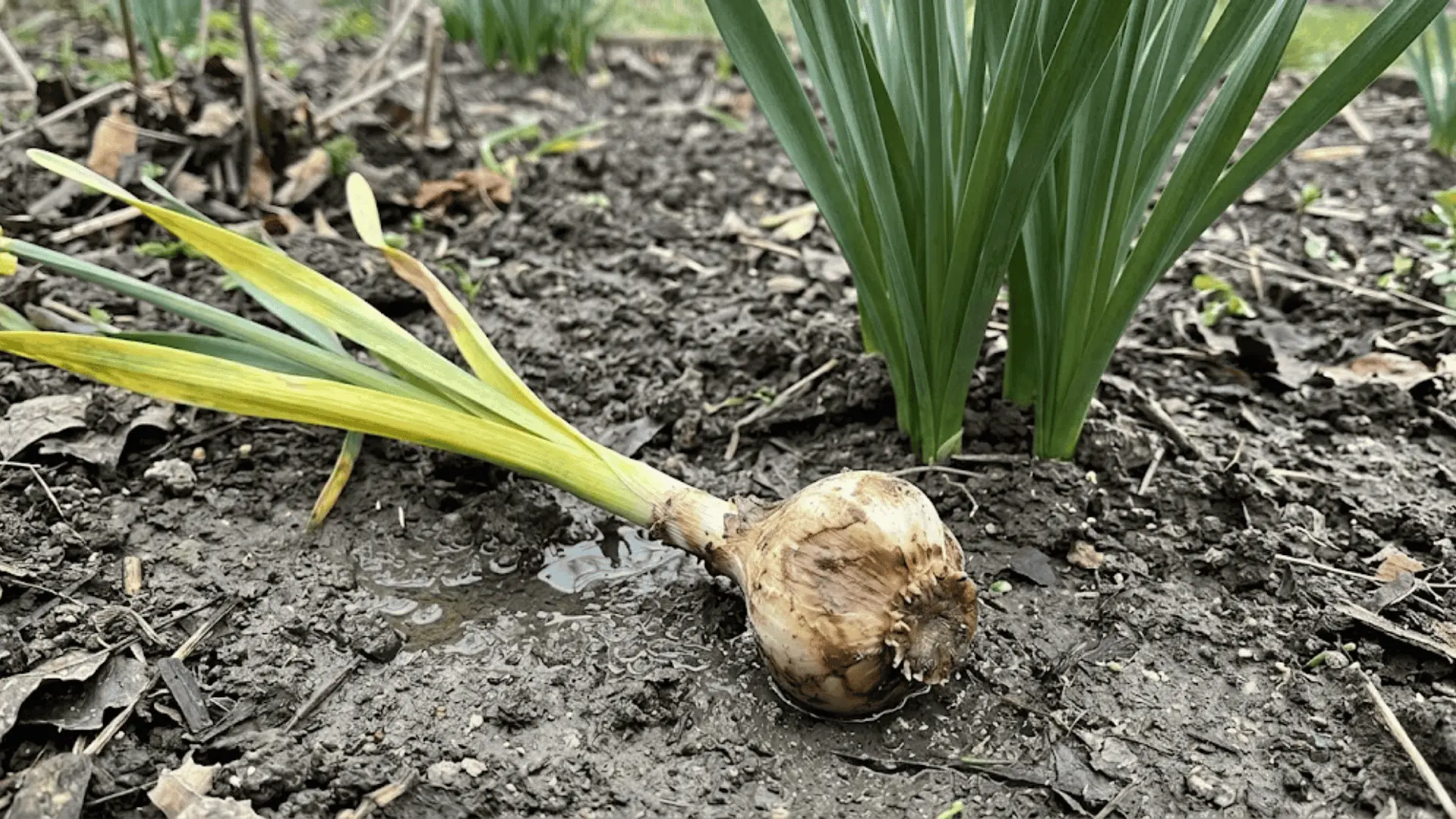
- Allow foliage to yellow and collapse naturally, which takes six to eight weeks post-bloom.
- Cutting leaves too early starves the bulb of energy needed for next season’s flowers.
- If lifting bulbs for storage, wait until foliage has fully died back before digging.
- Store lifted bulbs in a cool, dry, well-ventilated space until fall replanting.
Can You Grow Narcissus Indoors?
The short answer is yes, and paperwhites make it the easiest entry point. Unlike most narcissus varieties, paperwhites require no cold treatment and will bloom in water and pebbles alone within four to six weeks.
For other varieties, forcing bulbs indoors requires chilling them at 35 to 45°F for a minimum of twelve weeks before bringing them into warmth and light.
Container growing works well across most narcissus types, provided the pot has adequate drainage.
One practical note: place indoor paperwhites in a cool room rather than a heated one, as warmth accelerates floppy, top-heavy stem growth.
What Can Go Wrong With Narcissus and Why?
Narcissus is largely low-maintenance, but a few recurring problems tend to catch growers off guard. Knowing what to look for early makes the difference between a recoverable situation and a lost bulb.
- Bulb Rot: Almost always caused by poorly draining soil or overwatering during dormancy; affected bulbs feel soft and smell distinctly musty when lifted.
- Failure to Bloom: Usually traced back to foliage being cut too early the previous season, depriving the bulb of the energy reserves it needs to flower again.
- Rodent Damage: Squirrels and voles occasionally disturb newly planted bulbs, though narcissus is far less targeted than tulips due to its toxic alkaloid content acting as a natural deterrent.
- Yellowing Leaves: Normal after blooming as the plant enters dormancy, but premature yellowing mid-season typically signals waterlogged roots, nitrogen deficiency, or a narcissus bulb fly infestation.
Most of these issues are preventable with the right planting conditions from the start. Soil drainage and post-bloom foliage care alone resolve the majority of problems growers encounter with this genus.
Are Narcissus Flowers Toxic?
Yes, and it is worth taking seriously. All parts of the narcissus plant contain lycorine, a toxic alkaloid that causes vomiting, nausea, and abdominal pain in both humans and animals when ingested.
The bulb holds the highest concentration, which is where most accidental poisonings occur, often because it is mistaken for an onion.
Dogs, cats, and horses are particularly vulnerable.
For safe planting, keep bulbs stored out of reach of children and pets, wear gloves when handling them as the sap can cause skin irritation known as “daffodil itch,” and avoid planting in areas where animals roam freely.
How Narcissus Stacks Up Against Other Spring Flowers?
Choosing between spring bulbs often comes down to more than just appearance.
Bloom time, maintenance demand, and how well a bulb holds up over the years in the ground are all worth weighing before planting season.
| Factor | Narcissus | Tulips | Hyacinths | Crocuses |
|---|---|---|---|---|
| Bloom Time | Late winter to mid-spring | Mid to late spring | Early to mid-spring | Late winter to early spring |
| Maintenance | Low | Moderate; needs replacing every few years | Low to moderate | Very low |
| Longevity | Decades; multiplies over time | Declines after two to three seasons | Several years | Long-lived; spreads naturally |
| Pest Resistance | High; toxic to rodents and deer | Low; highly targeted by squirrels | Moderate | Moderate |
| Fragrance | Mild to intensely musky by variety | Generally unscented | Strongly fragrant | Lightly scented |
Some Flowers Just Stay With You!
The flower narcissus has been growing in gardens, appearing in myths, and outlasting trends for centuries, and it does not seem to be slowing down.
What makes it worth returning to is not just the bloom itself but everything attached to it: the biology, the history, the quiet reliability of a bulb that asks for very little and gives back considerably more.
If you are growing it, considering it, or simply curious about it, it tends to leave an impression.
We would love to know where you are with it. Drop your thoughts, questions, or growing experiences in the comments below.