Fire ants are small insects, but their colonies can quickly change the look and feel of lawns, fields, gardens, and other warm outdoor spaces. You may first notice a raised mound or find a hidden nest after several painful stings.
These ants live in large, organized groups. Each member has a specific job, from raising young to keeping the nest secure.
They also rely on chemical signals to communicate and direct nestmates toward feeding areas or danger. Their coordinated actions help the group survive and expand.
By learning how fire ants live, feed, build nests, and reproduce, you can better understand their life cycle, mound activity, behavior, and place in the surrounding environment.
Fire Ants: Species and Identification
Fire ants belong to a large group of stinging ants called Solenopsis. Several species share this name, and they do not all look identical.
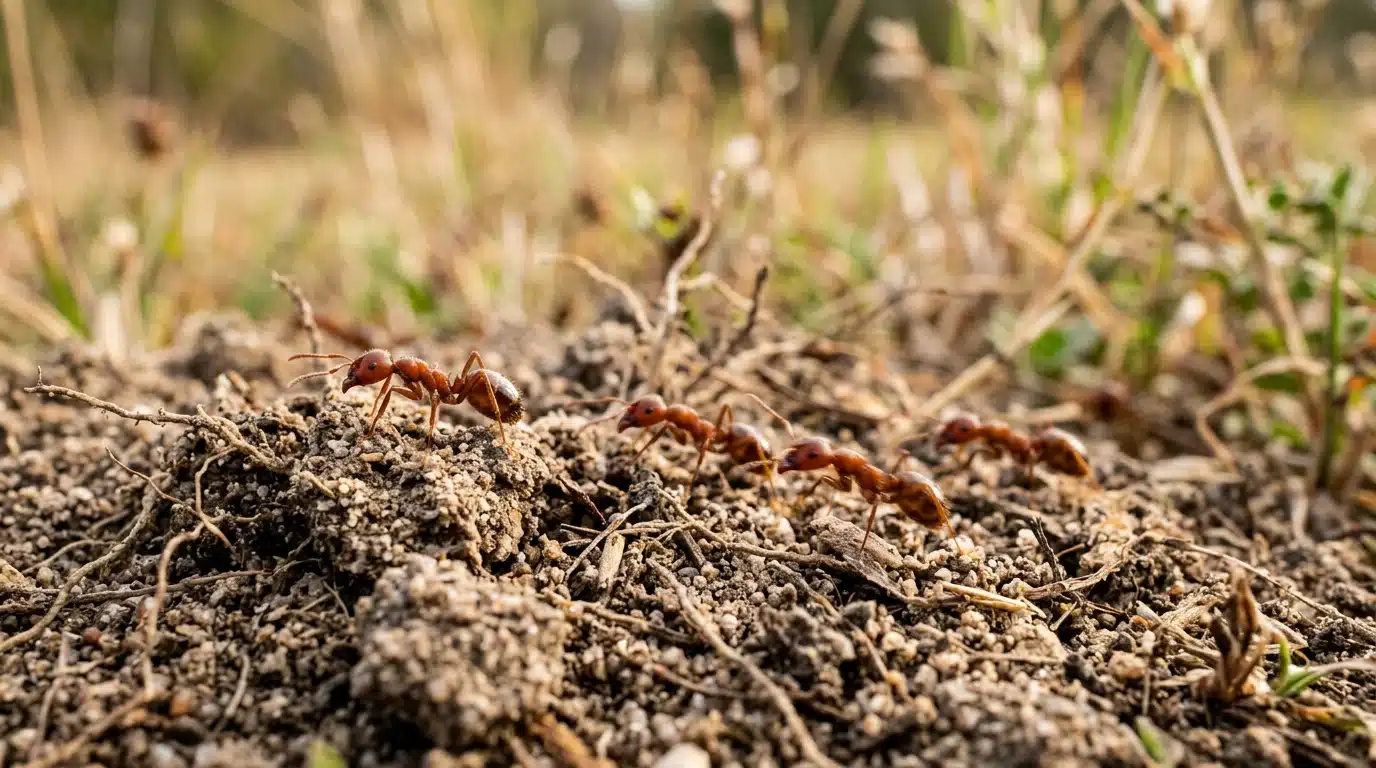
Workers may appear reddish brown, dark brown, or nearly black. Size also varies because one colony can contain both small and large workers. A worker has bent antennae, strong jaws, six legs, a narrow waist, and a stinger.
Color alone does not prove an ant belongs to this group. Imported species came from South America and spread through many warm regions. Native species also live in parts of North America.
They are social insects, so each individual supports the colony through feeding, building, care, or defense.
Anatomy of a Fire Ant
A fire ant’s small body contains several parts that help it move, feed, communicate, and respond to threats. Antennae detect chemical signals, while strong jaws handle materials and help with feeding.
These features also allow individual ants to care for young, travel through tunnels, and react quickly when the nest is disturbed.
| Body Feature | Main Job | Why It Matters |
|---|---|---|
| Antennae | Detect scents, nearby ants, feeding sources, and danger | Help with communication, trail following, and recognition |
| Jaws | Cut material, carry objects, handle prey, and grip surfaces | Useful for feeding, digging, transport, and protection |
| Legs | Support walking, climbing, digging, and carrying | Allow fast travel across soil, plants, and other surfaces |
| Stinger | Injects venom when attacking prey or responding to threats | Provides protection and helps capture small animals |
| Narrow waist | Connects the middle section with the abdomen | Allows the abdomen to bend freely during movement and stinging |
Each feature serves more than one purpose. Together, they allow an individual ant to handle different jobs as conditions inside and outside the nest change.
How Fire Ants Live and Behave
Fire ants survive through shared work, clear roles, and fast communication inside the colony. The following sections explain how they grow, build nests, find food, defend themselves, and affect their surroundings.
1. Body and Identification
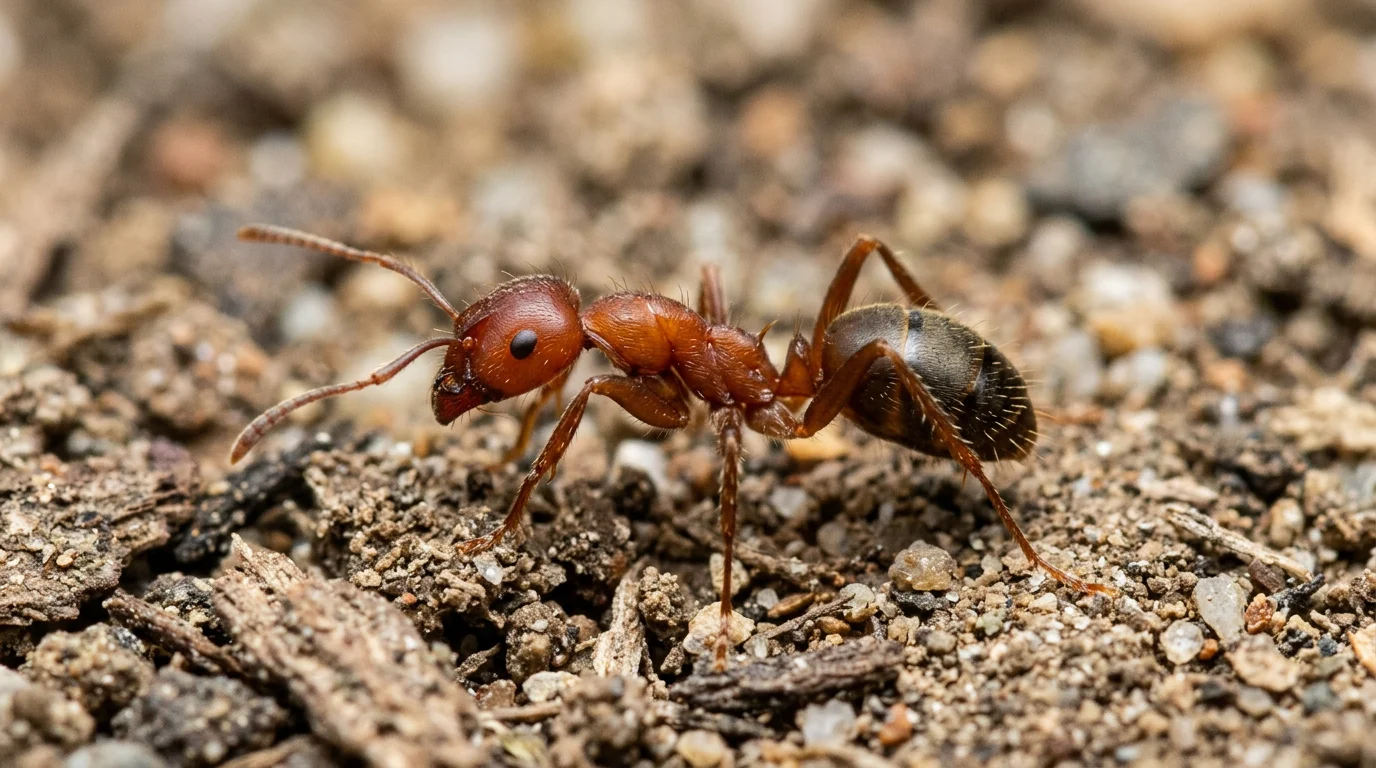
A fire ant has three main body sections: the head, thorax, and abdomen, which work together to support its daily tasks.
Mound shape and nest style can offer additional identification clues beyond the ant itself, since colony structure often varies by species and habitat.
Because several stinging ant species can look similar at a glance, expert identification may still be needed for a reliable species match.
2. The Life Cycle
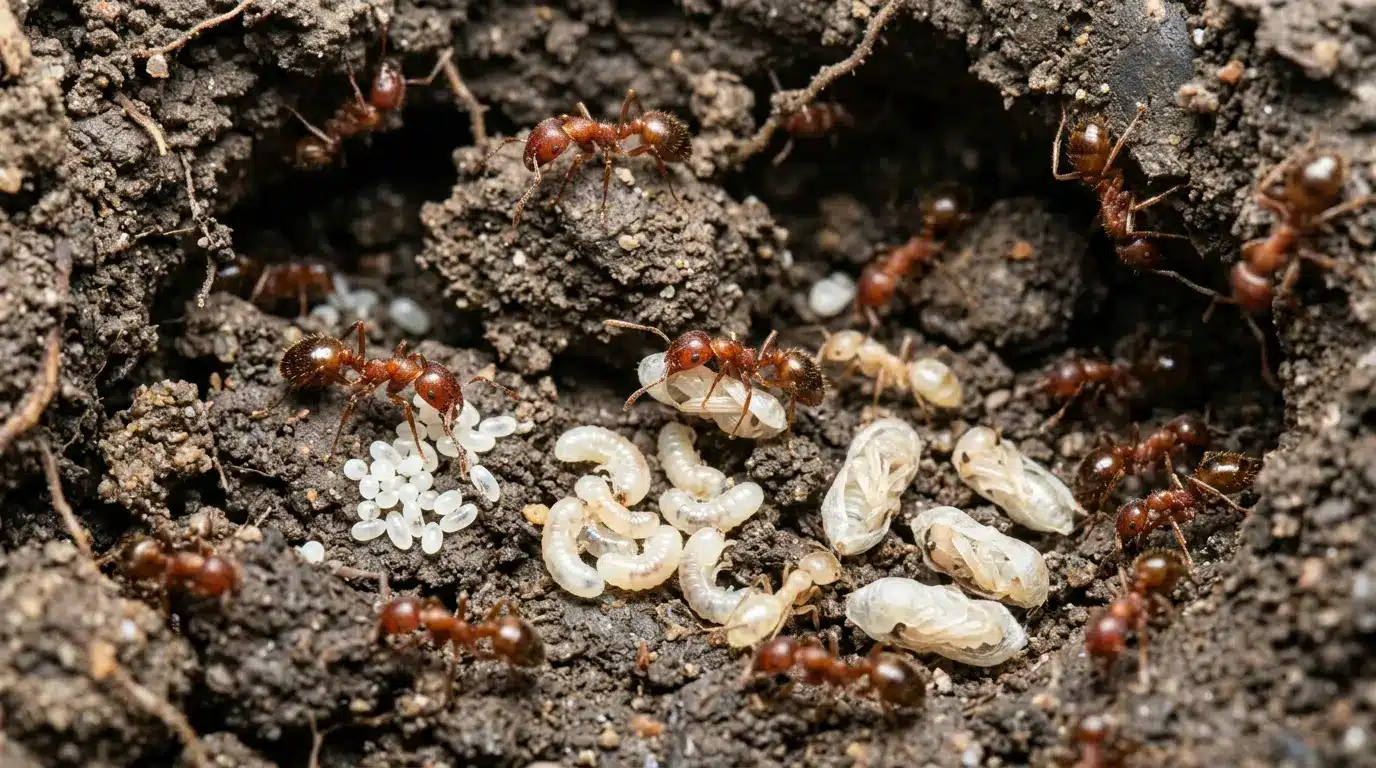
Fire ants pass through four stages: egg, larva, pupa, and adult. A queen lays eggs inside a protected area of the nest. Workers feed the larvae and move them when temperature or moisture changes.
The pupal stage follows before adults emerge and begin colony tasks. Development speed depends on species, season, food supply, and weather. Warm conditions often support faster growth, while cold or dry periods can slow the cycle considerably.
Ongoing colony research from Texas A&M AgriLife Extension notes that a well-cared-for queen can live seven years or more.
3. How the Colony Works
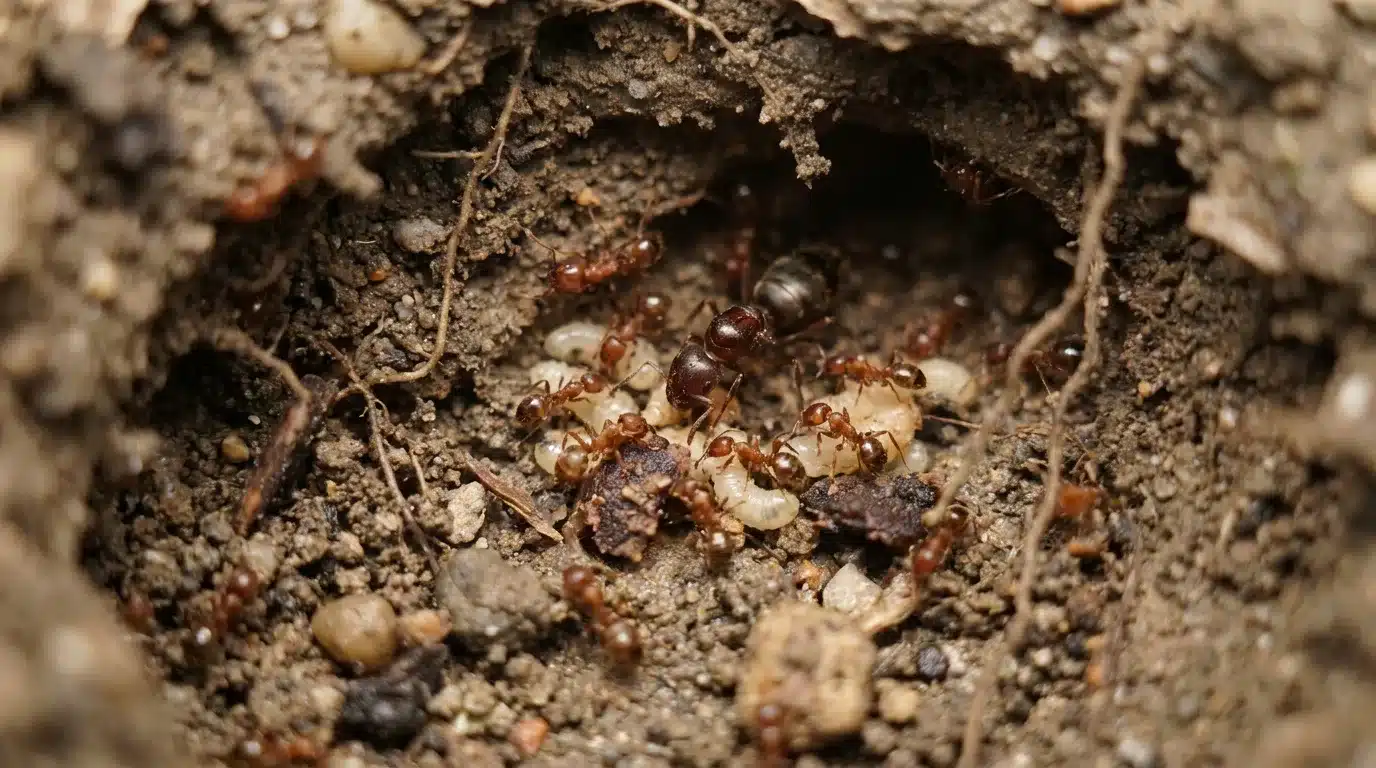
A fire ant colony includes queens, workers, young ants, and winged adults. Each group supports the colony differently. Queens produce eggs, while workers gather food, care for young, build tunnels, and defend the nest.
Winged males and females leave during mating flights. Some colonies have one queen, while others contain multiple queens. The number of queens can affect colony size, mound spacing, and how quickly a population spreads across an area.
4. Nests and Habitats
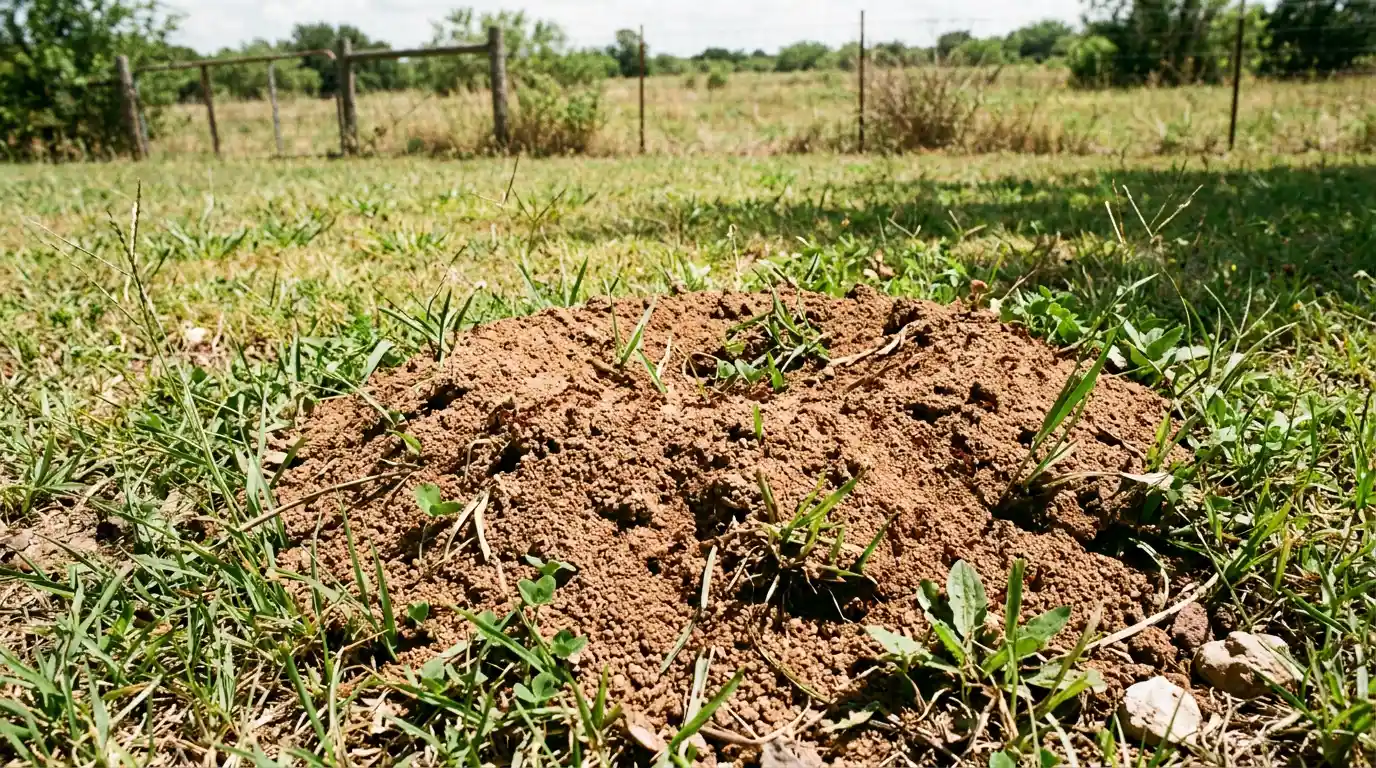
Fire ant nests usually extend underground through tunnels and chambers used for young ants, food, and daily movement. A raised mound may form above the nest. These ants often live in sunny lawns, fields, roadsides, gardens, and disturbed soil.
Warmth and moisture support activity. Workers may reach the surface through hidden tunnels away from the mound. This underground network can make a colony appear smaller or less active than it really is.
5. Food and Foraging
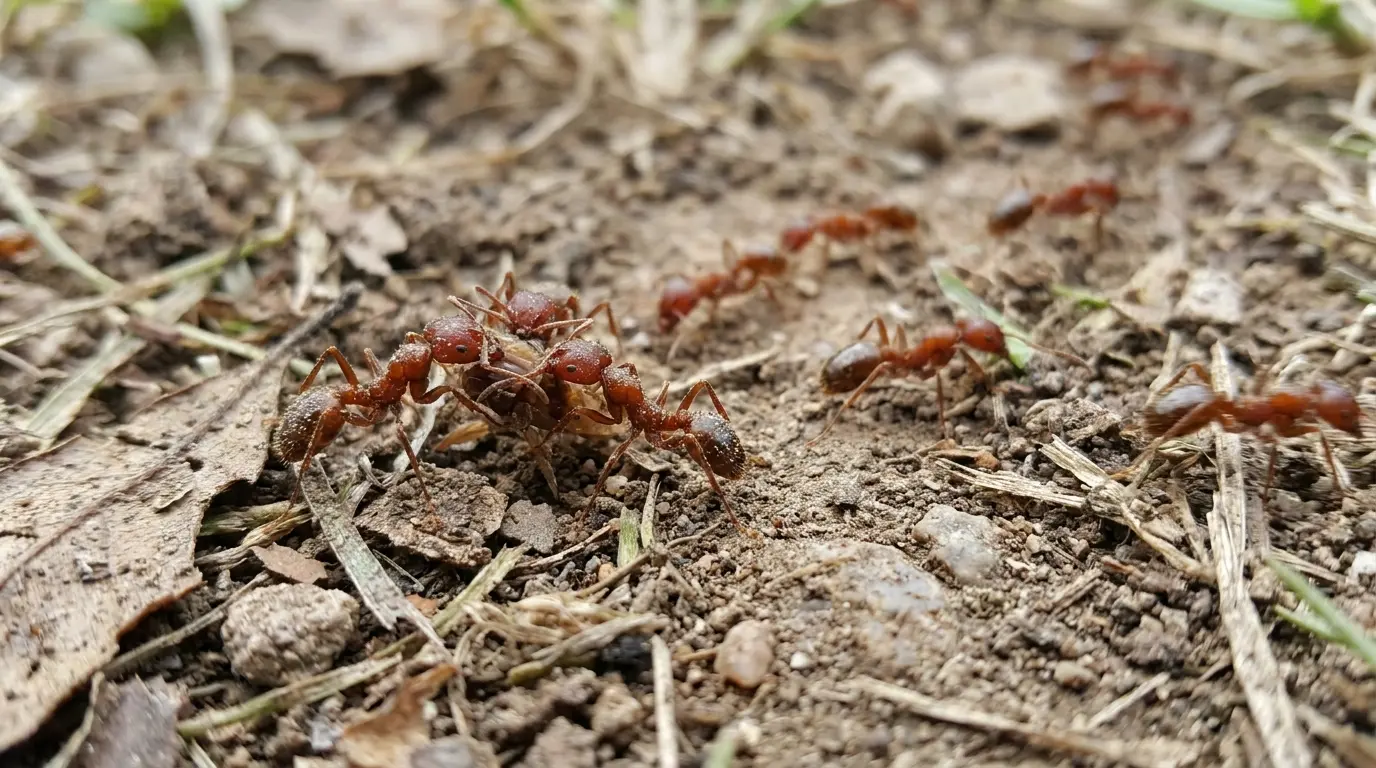
Fire ants eat many plant and animal foods, including insects, seeds, fruit, nectar, honeydew, oils, and dead animals. Their broad diet helps them adapt when one food source becomes limited.
Foragers often leave through underground tunnels and search beyond the mound. They carry solid food back or share liquids with nestmates.
Protein helps growing larvae, while sugary foods give adults quick energy. Feeding patterns can change with weather, season, and local food supply.
6. Communication
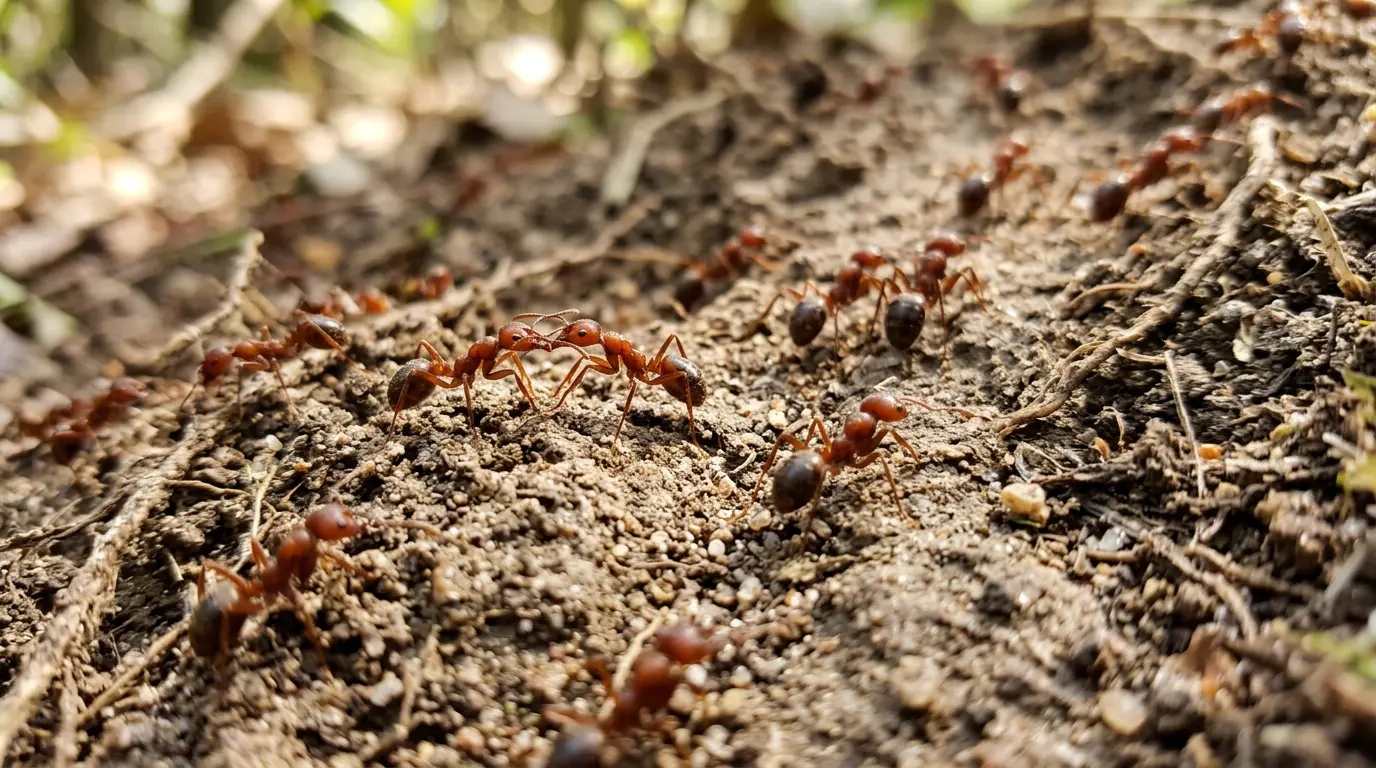
Fire ants use chemical signals called pheromones to share information. These scents help workers mark trails, recognize nestmates, locate food, and respond to danger.
A strong trail can lead more ants toward a useful food source. Alarm signals can also trigger a fast group response near the nest.
No single ant controls the colony. Instead, many workers respond to the same signals, allowing the group to coordinate movement, feeding, care, and defense efficiently.
7. Why They Sting
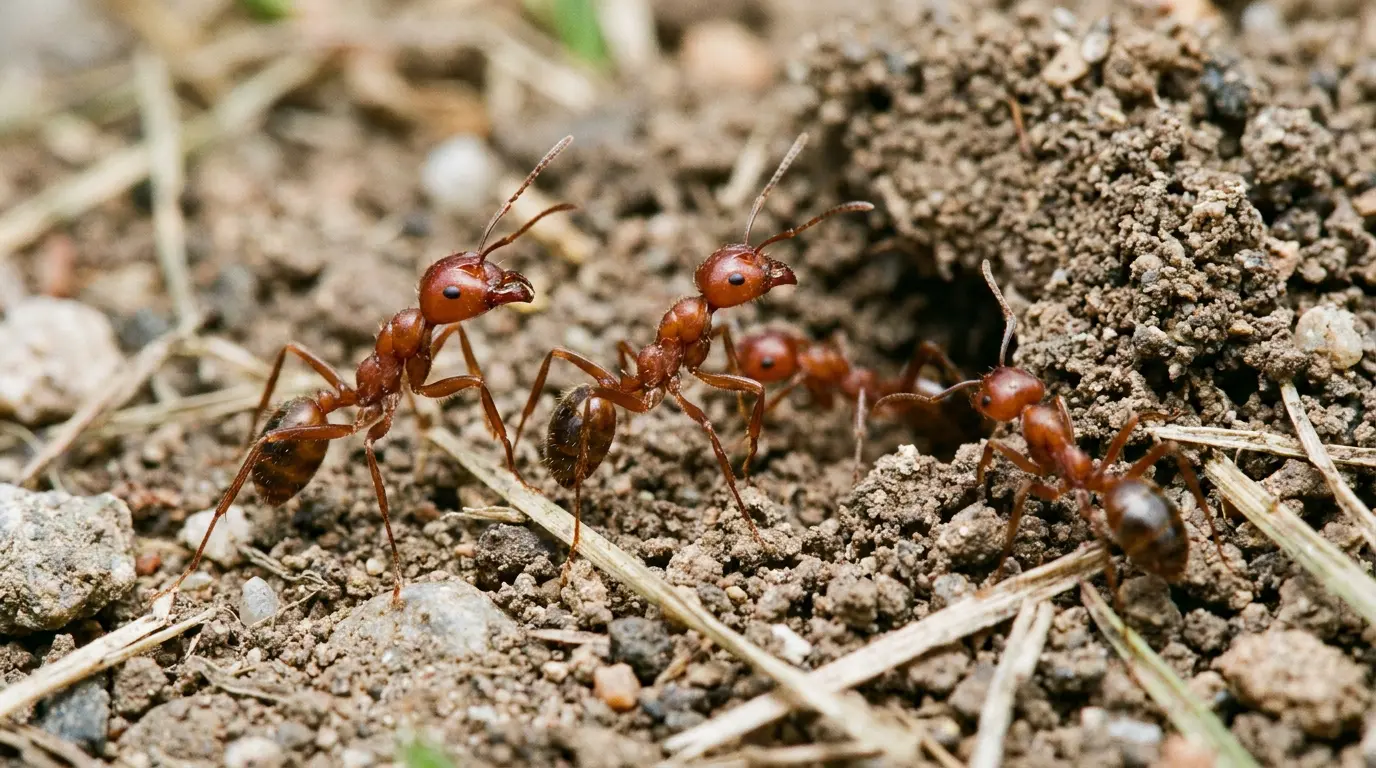
Fire ants usually bite first so they can grip the skin firmly. They then bend the abdomen and inject venom through the stinger.
The sting often causes burning pain, redness, itching, and small white bumps. One ant may sting more than once, and nearby workers may join quickly.
Most reactions stay local, but severe swelling, breathing trouble, or faintness can signal a serious allergic reaction, as described by Mississippi State University Extension. Disturbing a nest can lead to many stings within seconds.
8. Environmental Effects
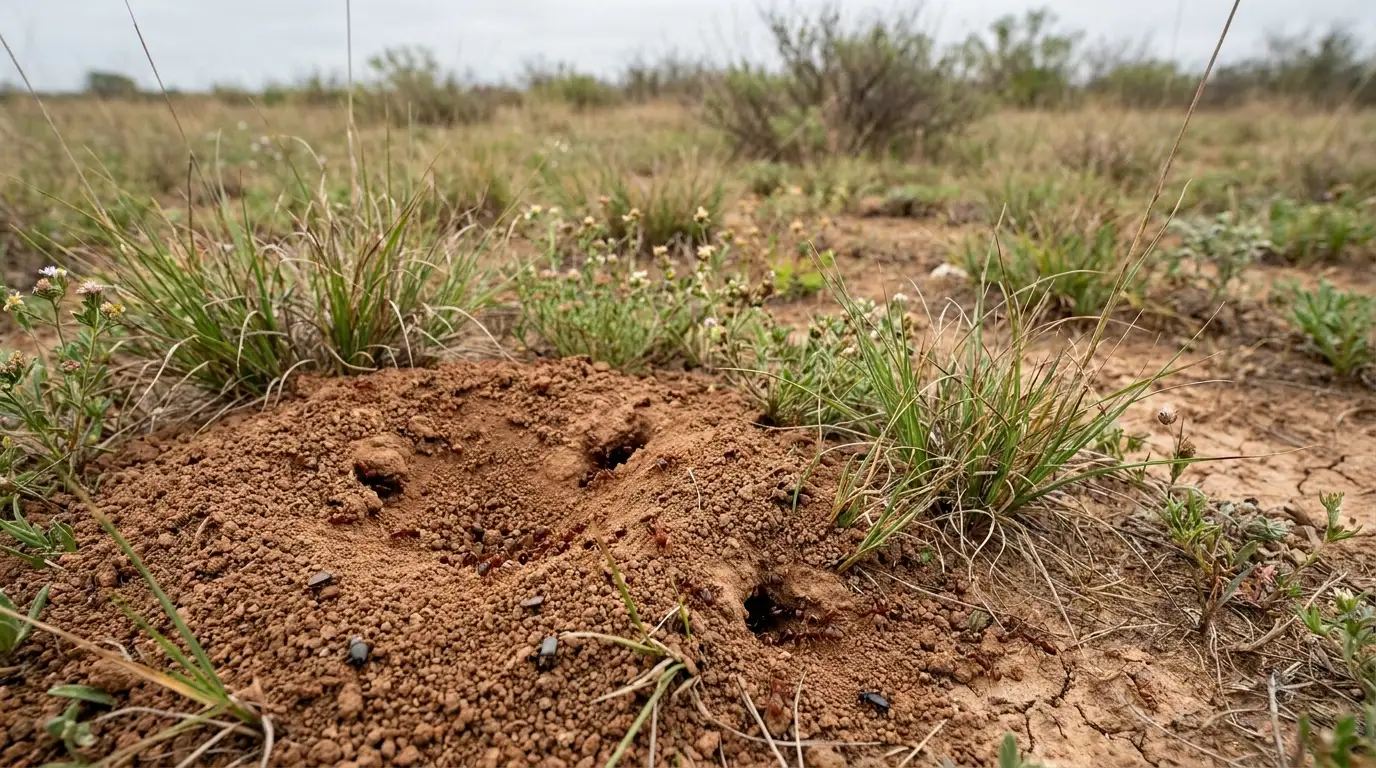
Fire ants affect the environment in both helpful and harmful ways. They hunt insects, remove dead material, and move soil while building tunnels.
Large invasive populations can also displace native ants, harm wildlife, damage crops, and create dense mounds in lawns or fields. Their impact varies by species, climate, and colony numbers.
A small native population may have limited effects, while a crowded invasive population can place much greater pressure on nearby plants and animals.
Key Facts About Fire Ant Colonies
Fire ant colonies depend on shared work, clear roles, and quick communication, and many homeowners eventually turn to a homemade fire ant killer once a mound gets too close to a patio or play area. Each member supports the group differently.
- Social structure: Queens lay eggs, while workers feed young, gather food, and protect the nest.
- Worker sizes: One colony may contain workers of several sizes, each suited to different tasks.
- Food choices: Workers collect protein, fat, seeds, and sweet liquids.
- Nest defense: Many workers can reach the surface within seconds after a disturbance.
- Shared signals: Scents direct movement, feeding, and group defense.
- Colony growth: Warm weather and steady food often support greater activity.
These traits may change with species, weather, food supply, and queen numbers.
What to Do If You Have Fire Ants in Your Backyard
A single mound rarely stays a single mound for long, so acting early makes the job easier. Start by confirming you are looking at an entrance-free mound of loose soil rather than another burrowing pest, then plan treatment around dry, mild weather.
- Broadcast a bait first: Spread a food-based bait across the whole yard rather than only on visible mounds, since foragers carry it back to feed the queen.
- Spot-treat active mounds: Follow the broadcast step with a direct mound treatment, such as a labeled drench or hot water, for any nests still active after a week.
- Keep the area dry and tidy: Fix leaks, clear standing water, and mow regularly, since damp, overgrown spots draw new colonies back in.
- Protect kids and pets: Keep them away from a mound until it stops showing activity, and store any treatment products out of reach.
- Call a professional if needed: Large properties, recurring mounds, or a known allergy in the household are good reasons to bring in licensed pest control.
Consistent light treatment across the whole yard, not just the mounds you can see, tends to work better than treating one mound at a time. Homeowners who want low-toxicity options can try the mound drenches and gentle baits covered in this outdoor ant treatment approach for longer-lasting results.
Frequently Asked Questions
Can they survive floods?
Yes. Workers can join their bodies into floating groups and carry colony members toward dry ground. Flooding can still kill many individuals or break nests apart.
Can they enter homes?
They sometimes enter buildings while seeking food, water, or shelter. Indoor activity often rises during drought, flooding, high heat, or sudden nearby outdoor soil disturbance.
When are they most active?
Activity usually rises during warm conditions when soil is not extremely dry. Workers may stay deeper underground during very hot, cold, or dry outdoor periods.
How long can a queen live?
Queen lifespan varies widely; many live two to six years, though a well-tended queen in a stable colony can survive considerably longer. She may lay thousands of eggs in her lifetime, which is why removing her is the real key to clearing a mound for good.
Final Takeaway
Fire ants are more than small insects known for painful stings. They live in organized groups where different members handle reproduction, feeding, care, construction, and protection.
Their life cycle moves from egg to larva, pupa, and adult. Once mature, individuals take on tasks that help keep the nest active and supplied.
Looking at the whole group makes their behavior easier to understand. Thousands of simple actions can create fast, coordinated responses without one ant directing the others.
These facts can help you recognize their mounds, feeding patterns, underground activity, and reactions to disturbance. Have you seen fire ants or their mounds near your home? Share your experience in the comments below.