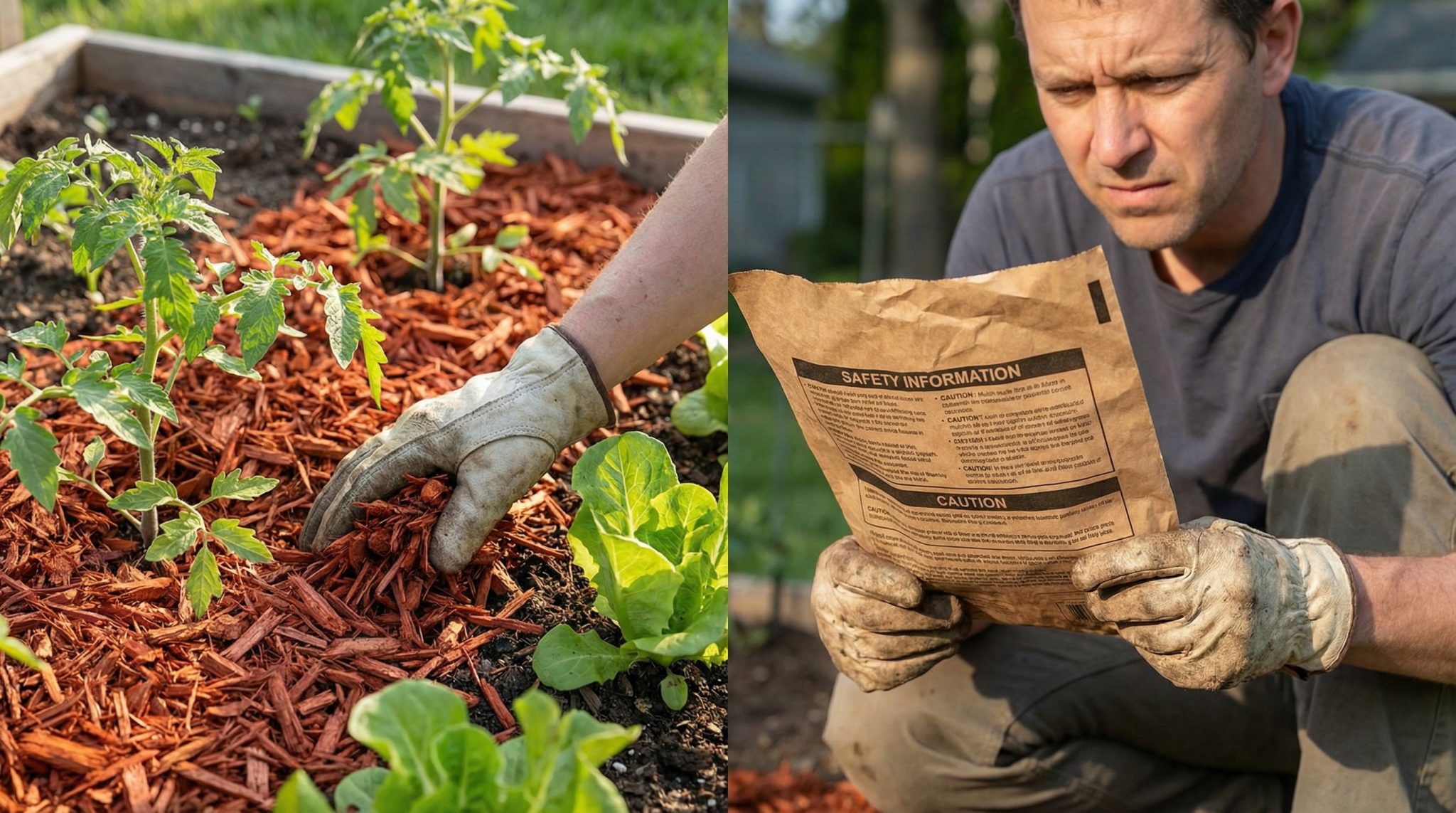
Is Dyed Cedar Mulch Safe? Yep… Mostly. (But Here’s the Catch.)
Let’s talk about that super saturated red mulch and the dramatic, moody black mulch that makes your landscaping look like it has its life together.
If you’ve ever stood in the garden center staring at those bags like, “Is this going to make my yard gorgeous… or poison my tomatoes?” you’re not being paranoid. You’re being smart.
Here’s the real truth, in plain English:
The dye is usually not the problem. The wood source is.
The coloring in dyed mulch is generally pretty low risk. The sketchy part is when the mulch is made from who knows what recycled wood (think old pallets, construction scraps, and demo debris). That’s where you can accidentally bring home chemicals you absolutely did not invite to the garden party.
So let’s break it down.
The Dye Isn’t the Villain (Plot Twist)
Most dyed mulch gets its color from things like:
- Iron oxide (commonly used for red tones)
- Carbon based pigments (common for black/dark brown)
These pigments are considered stable and not particularly reactive in your soil. Basically, they’re not leaching chaos into your flower beds just because they’re bold and beautiful.
So if your worry is “Is the red dye going to melt my petunias?” generally, no.
But… (there’s always a “but”) …the dye can act like a cute outfit on someone with a very questionable personality underneath.
What You Actually Need to Worry About: Mystery Wood
The biggest issue with cheap dyed mulch is what the mulch is made from.
Some low cost dyed mulch is produced using recycled wood waste: pallets, old lumber, demolition debris, scraps from construction sites. And mixed into that stream can be pressure treated wood.
The big one gardeners worry about is CCA treated wood (chromated copper arsenate). It was banned for most residential uses in 2003, but that doesn’t mean it vanished from the planet. Old wood gets salvaged, chipped up, dyed, and surprise! it can end up in mulch.
If that happens, you can be introducing arsenic, chromium, and copper into your soil. And those are not “oopsie” contaminants:
- they can stick around for years,
- they can mess with soil life (worms and beneficial fungi especially),
- and you often won’t realize until plants start acting weird and nothing fixes it.
And yes, it’s extra annoying because the bright dye can hide the fact that the wood underneath is a mixed bag. Literally.
Okay, But What About Cedar Specifically?
Even if your cedar mulch is clean and responsibly sourced, cedar has a personality. It’s not a neutral background character like shredded leaf mulch. Cedar shows up and says, “Hi, I’m here to repel insects and decompose at my own leisurely pace.”
A few cedar specific things I always consider:
1) Cedar breaks down slowly (pretty, but not soil building)
Cedar is fantastic if you want a mulch that sticks around. But if you’re hoping mulch will quickly turn into rich, fluffy organic matter, cedar is… not that friend. It decomposes slowly, so it’s more of a decorative/weed suppressing blanket than a soil improving compost-y situation.
2) It can be a little growth-suppressy around young plants
Cedar contains natural compounds (oils/phenolics) that can inhibit seed germination and slow down tender young roots. Mature shrubs and established trees usually don’t care. But tiny seedlings? Brand new perennials? Veg starts? They can be more sensitive.
3) It can temporarily tie up nitrogen
As wood breaks down, soil microbes use nitrogen to do the job. Sometimes that means your plants look a little pale or yellow mid season even though you’re watering like a responsible adult.
4) If it smells sour, don’t fling it straight onto plants
This is a weird one, but worth knowing: mulch that’s been stored in a big, airless pile can develop a sharp, sour smell (not “fresh forest,” more like “something is not right in the fridge”). If you open a bag and it smells aggressively acidic, let it air out for several days before using it around anything you love.
Where Dyed Cedar Mulch Actually Works (And Where It Doesn’t)
This is where I get opinionated, because mulch is not one size fits all, and I’m tired of pretending it is.
Places I like dyed cedar (if it’s from a reputable source)
- Paths and non-planted areas (pretty + slow breakdown = win)
- Around established trees and mature shrubs
- Along fence lines and foundations if you like the pest repelling vibe cedar has
Cedar shines when plants are already settled and you’re mostly using mulch for looks + weed control.
Places I’d skip cedar (especially dyed cedar)
- Vegetable gardens and herb beds (I don’t want “maybe arsenic” anywhere near my basil, thanks)
- New plantings (first year or two) where roots are still getting established
- Pollinator heavy beds right around flowering crowns (cedar’s natural oils can be a mild “meh, not today” signal for some beneficial insects)
- Raised beds/greenhouses where smells and compounds can concentrate more
If you want an easy rule: Cedar is better for landscaping and when to skip it matters. Compost-y mulches are better for gardening.
How to Buy Safer Mulch Without Becoming a Full Time Detective
You don’t need to interrogate the teenager working the garden center (please don’t). But you do want to buy mulch that isn’t made from mystery lumber.
Here’s what I look for:
1) The easiest shortcut: Mulch & Soil Council (MSC) certification
If you see the Mulch & Soil Council logo, that’s a good sign. It indicates the product has been tested/screened to help prevent CCA treated wood from ending up in the mix.
Is it a magical perfect guarantee against every possible contaminant on earth? No.
Is it a solid step up from “cheap bag with zero info” if you want a pricing and value breakdown? Yes.
2) Red flags that make me put the bag back slowly
- Chemical/petroleum smell (nope)
- Visible junk in the bag (metal bits, plastic, gritty concrete dust absolutely not)
- Weird greenish tint or staining (treated wood vibes)
- Suspiciously cheap price with no sourcing info (your wallet is happy, your soil will not be)
I once bought “budget” mulch years ago and found little shredded bits that looked like painted trim. Painted. Trim. In my garden bed. I stood there holding it like it was a dead mouse and swore I’d never cheap out like that again.
How to Use Cedar Mulch Without Annoying Your Plants
If you’ve got clean mulch and you’re using it in a smart spot, here’s how to apply it like you know what you’re doing (even if you don’t feel like you do).
Keep the depth reasonable
2-3 inches is the sweet spot.
More than that and you can trap too much moisture and reduce airflow. Less than that and weeds will treat it like a light suggestion.
Don’t make a mulch volcano
Keep mulch pulled back from stems and trunks. Always.
Mulch touching bark can cause rot and invite disease. I leave a couple inches of breathing room around most plants, and more around young trees/shrubs.
Help with nitrogen (especially around hungry plants)
If you’re mulching around things that like to eat (hydrangeas, annuals, veggies though I’d skip cedar for veggies), you can:
- add a thin layer of compost under the mulch, or
- give a light feeding early in the season
Protect yourself on mulch day
Mulch is dusty and dye can stain your hands like you just committed a landscaping crime.
- Gloves = yes
- A mask if you’re sensitive to dust = also yes
- Water it in after spreading to settle dust and help the color stay put
- Keep pets off it for a day or two if you can (mostly because they will roll in it like it’s perfume)
“Is This Normal… or Is My Mulch Cursed?” (Troubleshooting)
If plants start looking sad after mulching, don’t panic immediately.
Normal wood mulch nitrogen tie up often looks like:
- yellowing leaves mid season
- improvement after a light fertilizing/feeding
What’s more concerning (and worth investigating) is:
- ongoing decline in a newly mulched area
- symptoms that don’t improve with normal care
- mulch that smelled chemical-y or contained debris
Testing (if you’re really concerned)
If you suspect contaminated mulch, you can get a soil test that includes a heavy metals panel (arsenic, chromium, copper) through:
- a local university extension program, or
- an environmental testing lab
A very important safety note
Don’t burn mulch from unknown sources. Ever.
If it contains treated wood, burning can release nasty compounds into the air. Also don’t compost questionable mulch. If you suspect contamination, bag it and check with your local waste authority for disposal guidance.
If You Want Easier Alternatives (Because I Get It)
If all of this sounds like too much drama for something you literally spread on the ground, here are simpler picks:
- For ornamental beds but without cedar quirks: certified dyed hardwood from virgin wood
- For veggies and new plantings: compost, shredded leaves, or triple shredded hardwood bark
- For paths: natural (undyed) cedar, arborist wood chips (confirm untreated), or gravel where it makes sense
I’m not anti-cedar. I’m just pro-“use the right mulch in the right place.”
Bottom Line: Dyed Cedar Mulch Can Be Safe If You Buy Smart
If you remember nothing else, remember this:
- The dye is usually fine.
- The wood source is the big deal.
- Cedar has its own quirks, so save it for paths, established shrubs, and landscaping zones not your baby seedlings and salad greens.
So next time you’re loading bags into your cart like you’re on a home improvement game show, flip the bag over, look for certification, and trust your nose. If it smells weird or looks sketchy, it probably is.
Your garden deserves better than mystery mulch. So do you.