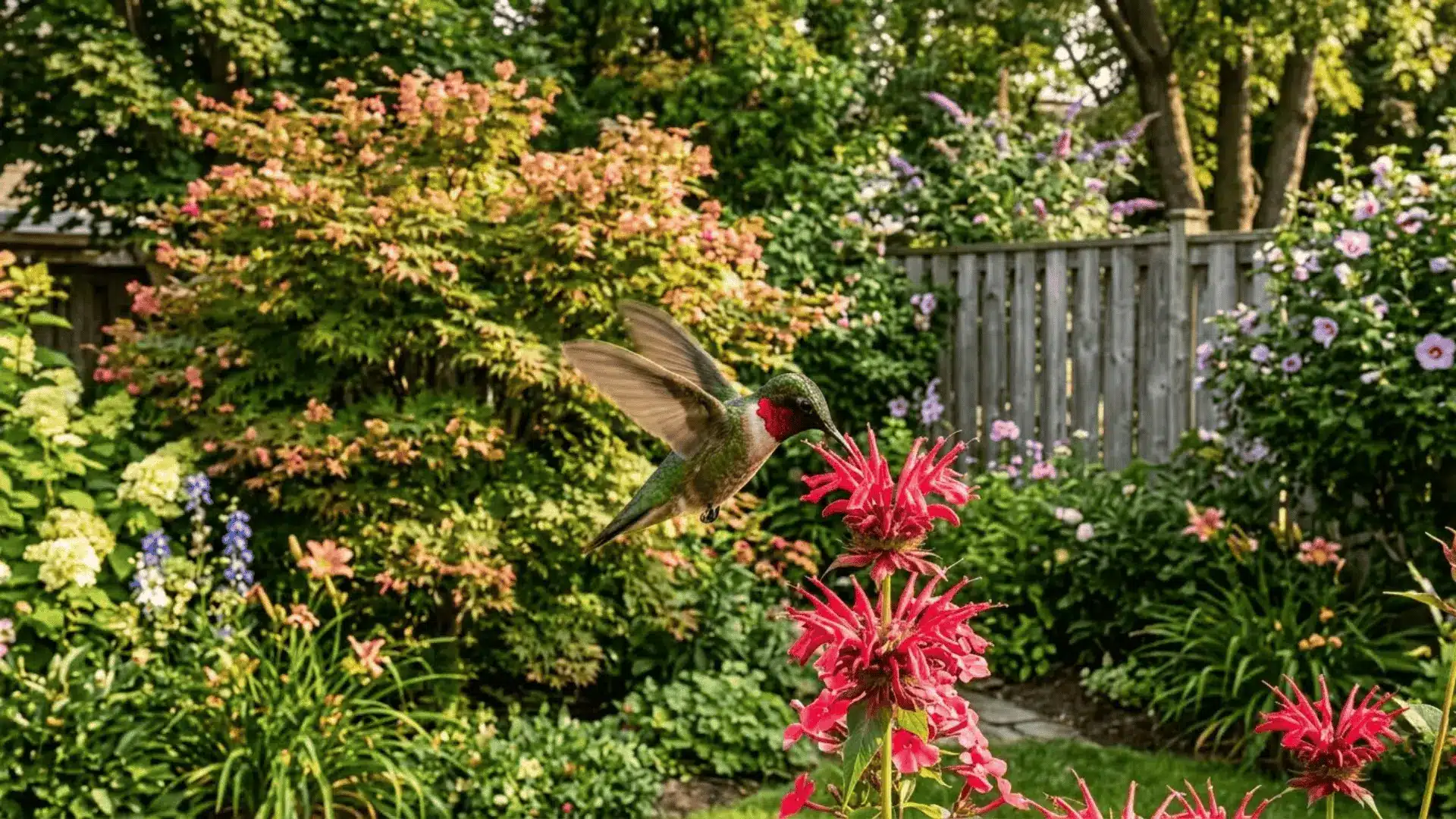
Yes, they absolutely do, and once you know which trees to plant, your yard might just become their favorite stop of the season.
Most people set out a feeder and call it a day, but hummingbirds are quietly drawn to the right flowering trees just as much.
Summer bloomers especially tend to offer exactly what these little birds are looking for, a steady, generous source of nectar right when they need it most.
Ahead, we’re covering which trees bring them in, why they keep coming back, and how to design a yard they’ll genuinely love visiting.
Why Hummingbirds are Attracted to Flowering Trees?
Hummingbirds run on nectar, it fuels their incredibly high-speed metabolism and keeps them going through long flying hours.
What pulls them toward specific trees comes down to a few natural instincts. They’re visually wired to seek out warm, saturated colors like red and orange, which flowering trees offer in abundance during summer.
Height also plays a quiet role here, taller trees give them a sense of safety while they feed, keeping them away from ground-level threats.
And when a tree blooms reliably all season, hummingbirds remember it, returning again and again to a consistent, trustworthy nectar source.
Best Summer Flowering Trees That Attract Hummingbirds
Not all trees are created equal when it comes to hummingbird appeal. These summer bloomers tend to stand out for all the right reasons, color, shape, and a steady flow of nectar.
If you’re starting with Crepe Myrtle, knowing whether to grow it as a bush vs. tree form can shape how well it fits your yard.
1. Crepe Myrtle
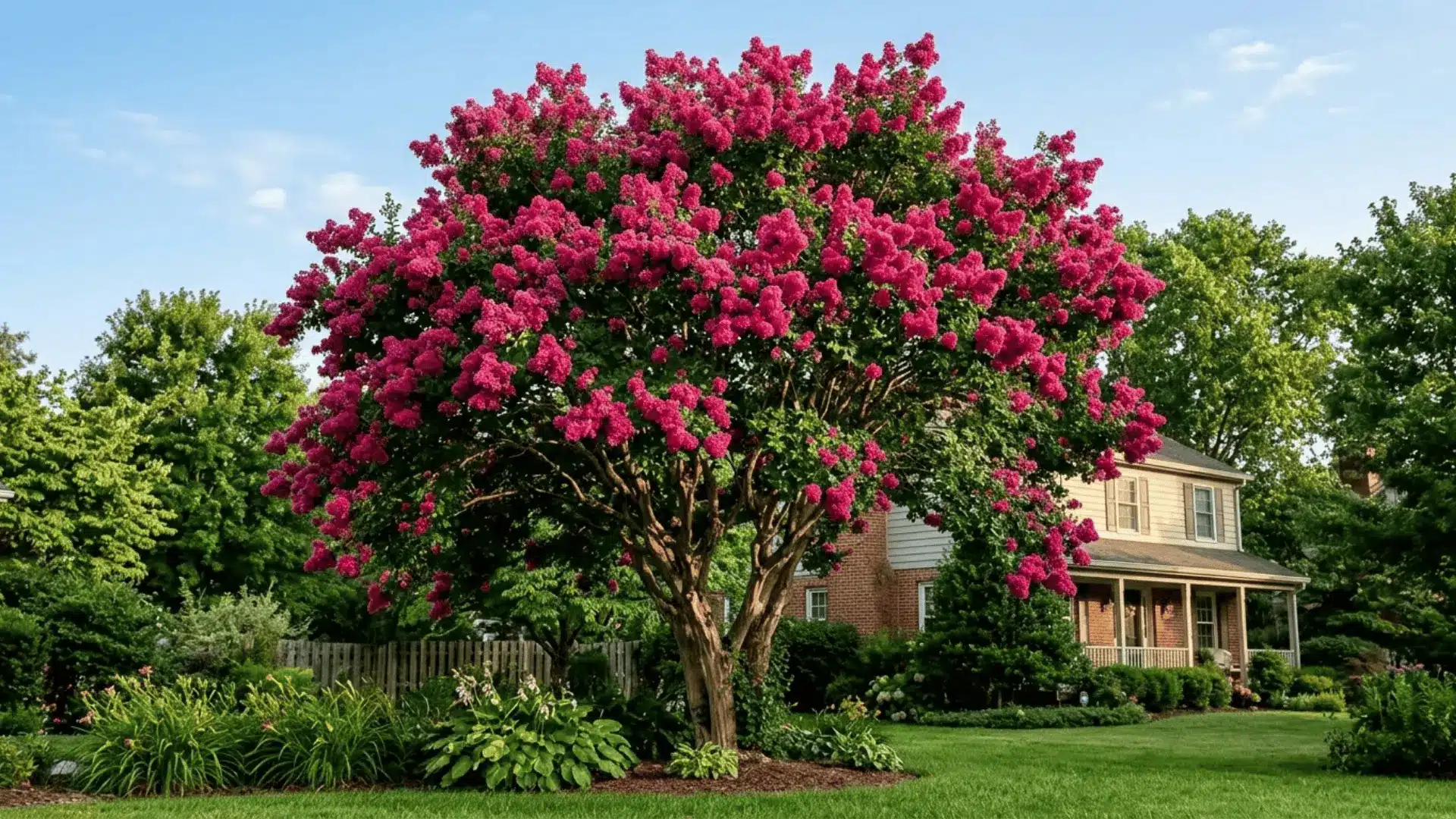
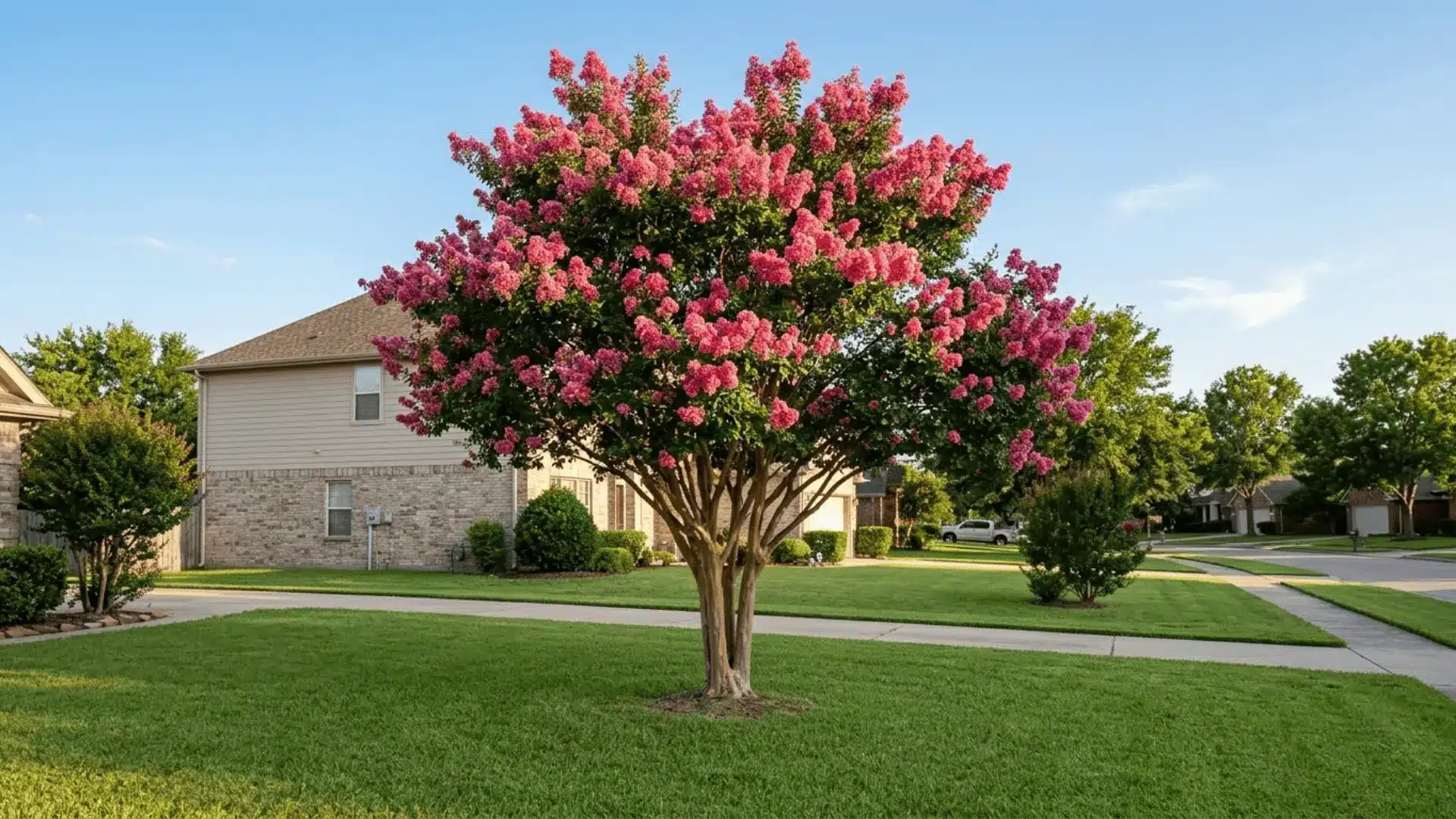
Few trees put on a summer show quite like Crepe Myrtle. Its long, continuous bloom period stretches through the hottest months, offering vibrant clusters of pink, red, and purple flowers that pollinators genuinely flock to.
Hummingbirds are drawn in by the color density and reliable nectar these blooms produce, making it a strong addition to any yard, though placement and safe distances are worth considering before you plant.
2. Trumpet Vine
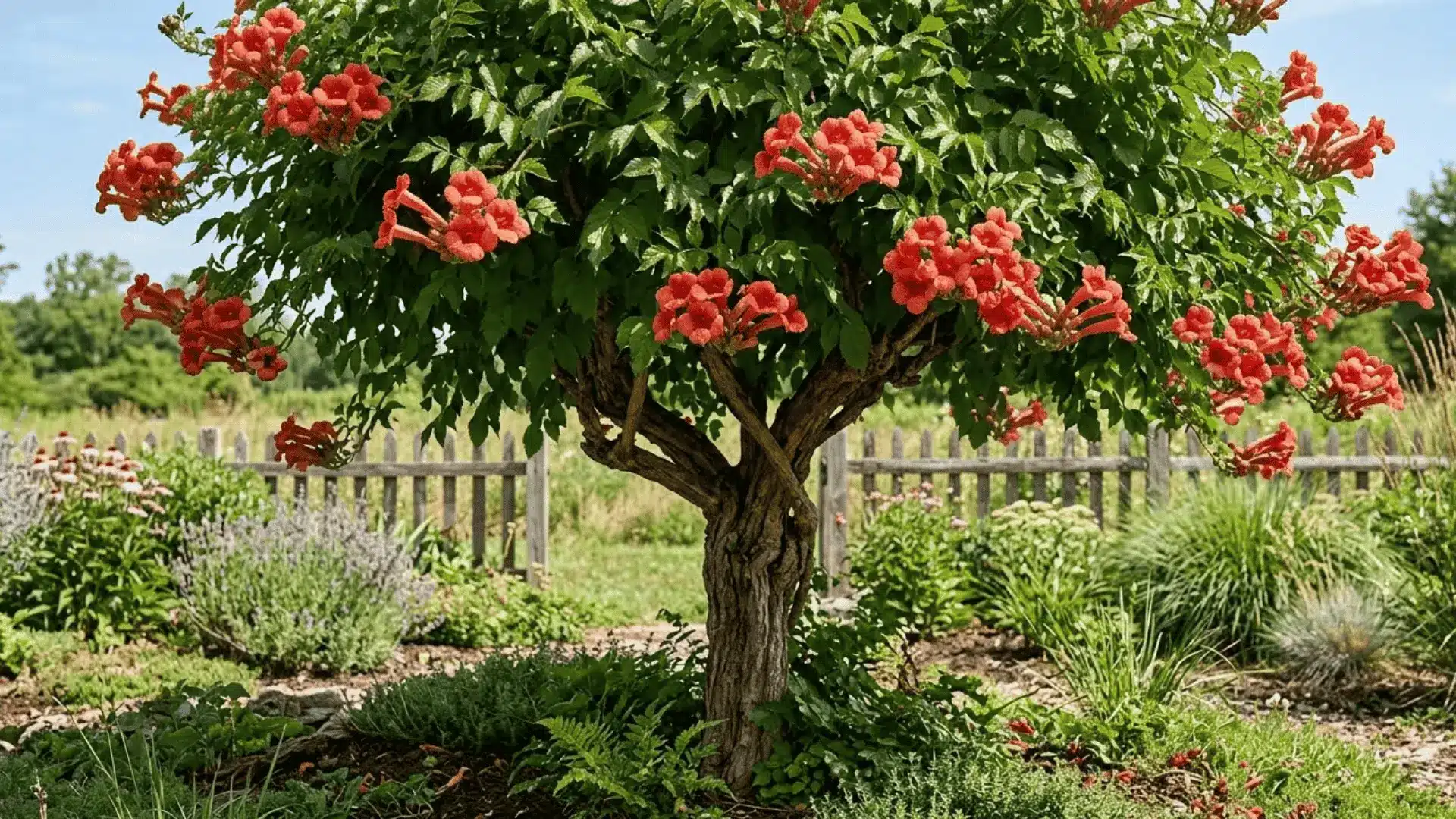
Trumpet Vine is practically designed with hummingbirds in mind. Its deep, tubular orange-red flowers are shaped in a way that aligns almost perfectly with a hummingbird’s bill, allowing easy, efficient feeding.
Trained into tree form, it adds vertical structure to your yard while becoming a dedicated feeding station all summer long.
3. Red Buckeye
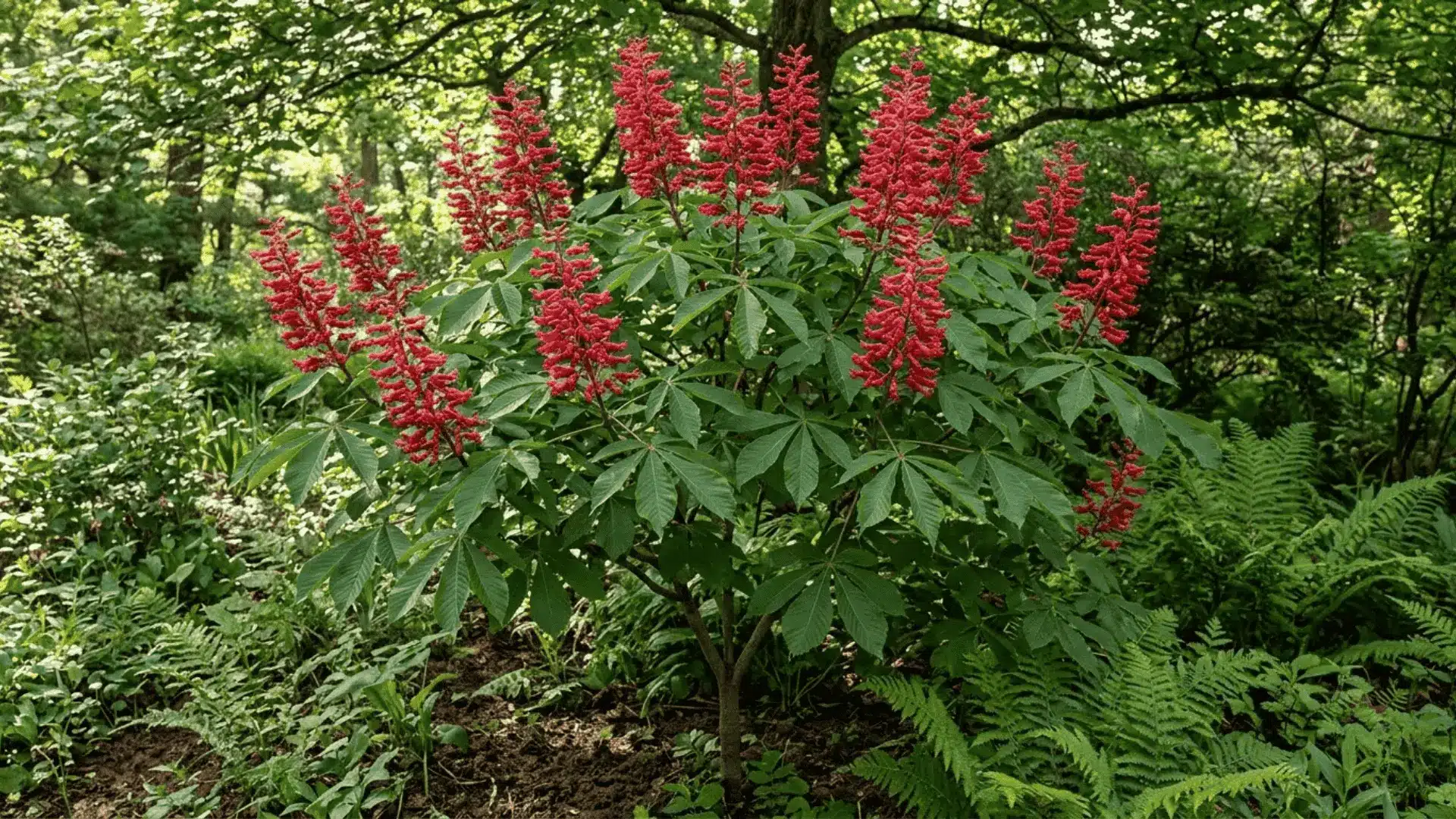
Red Buckeye earns its place on this list by blooming right as hummingbirds begin arriving for the season. The upright red flower clusters are visually striking and rich in nectar, giving early visitors an immediate, welcoming food source.
It tends to thrive in partial shade, making it a versatile fit for yards that don’t get full sun all day.
4. Mimosa
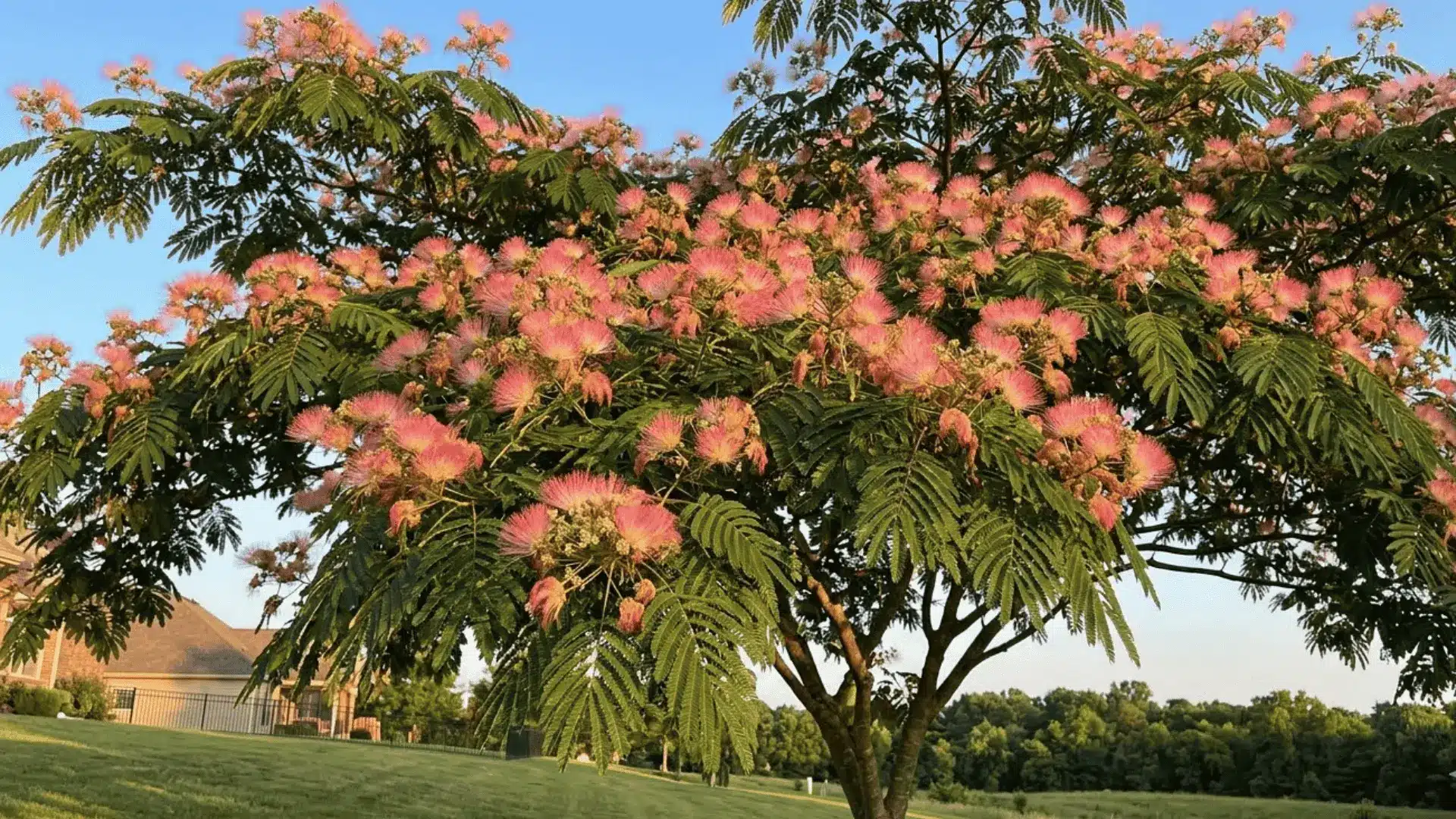
There’s a softness to Mimosa that sets it apart from bolder bloomers. Its feathery pink powder-puff flowers are fragrant, delicate, and surprisingly rich in nectar.
Hummingbirds tend to hover around it with a kind of ease, likely drawn in by both the color and the scent. It also grows relatively fast, so it rewards you with blooms sooner than most flowering trees.
5. Bottlebrush Tree
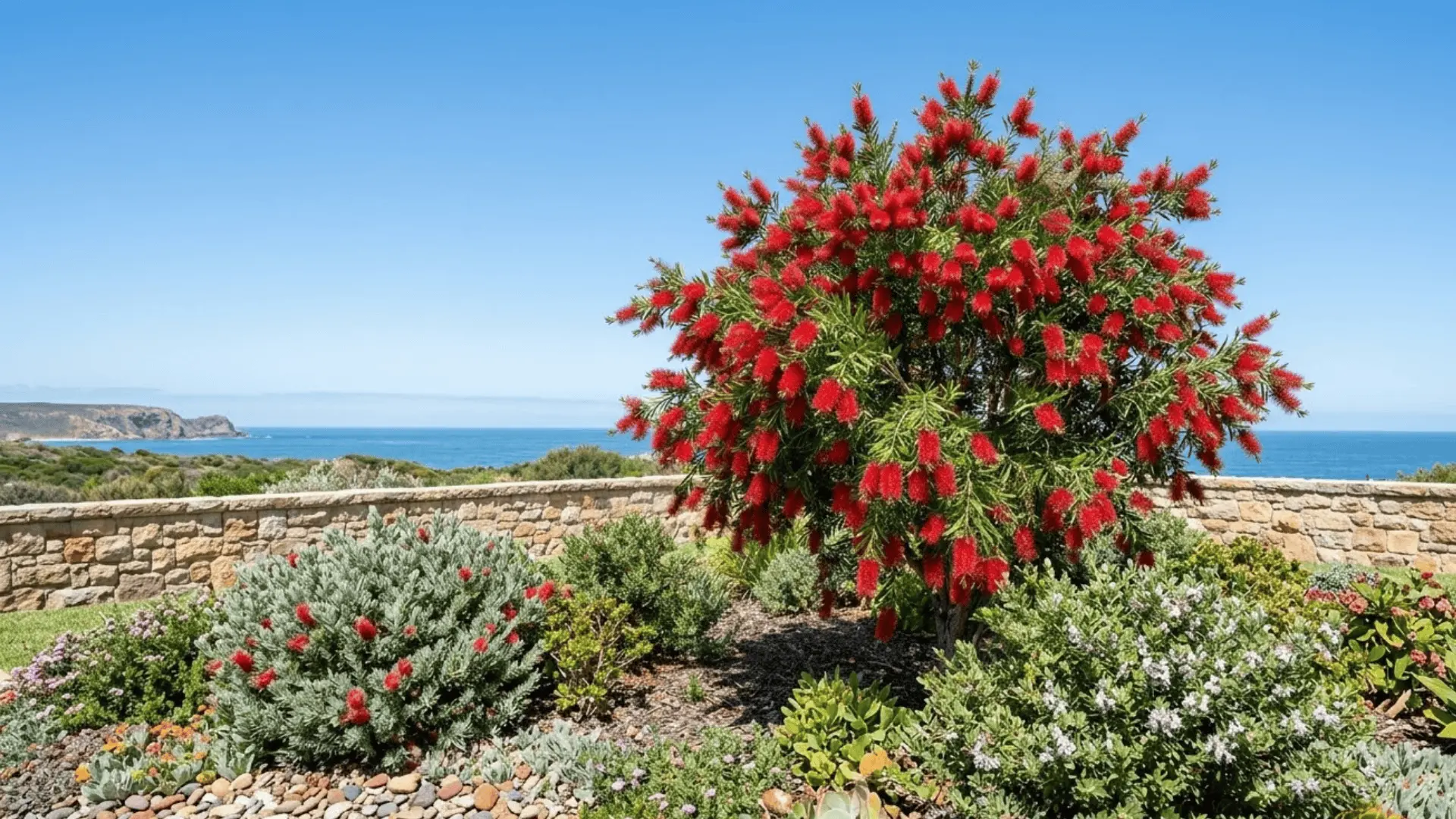
The Bottlebrush lives up to its name in the best way possible. Its vivid crimson, brush-like blooms are absolutely packed with nectar and sit at just the right height for hummingbirds to access comfortably.
It blooms generously through summer and holds up well in warm climates, making it a top pick for Southern and coastal yards where hummingbird activity tends to peak.
6. Desert Willow
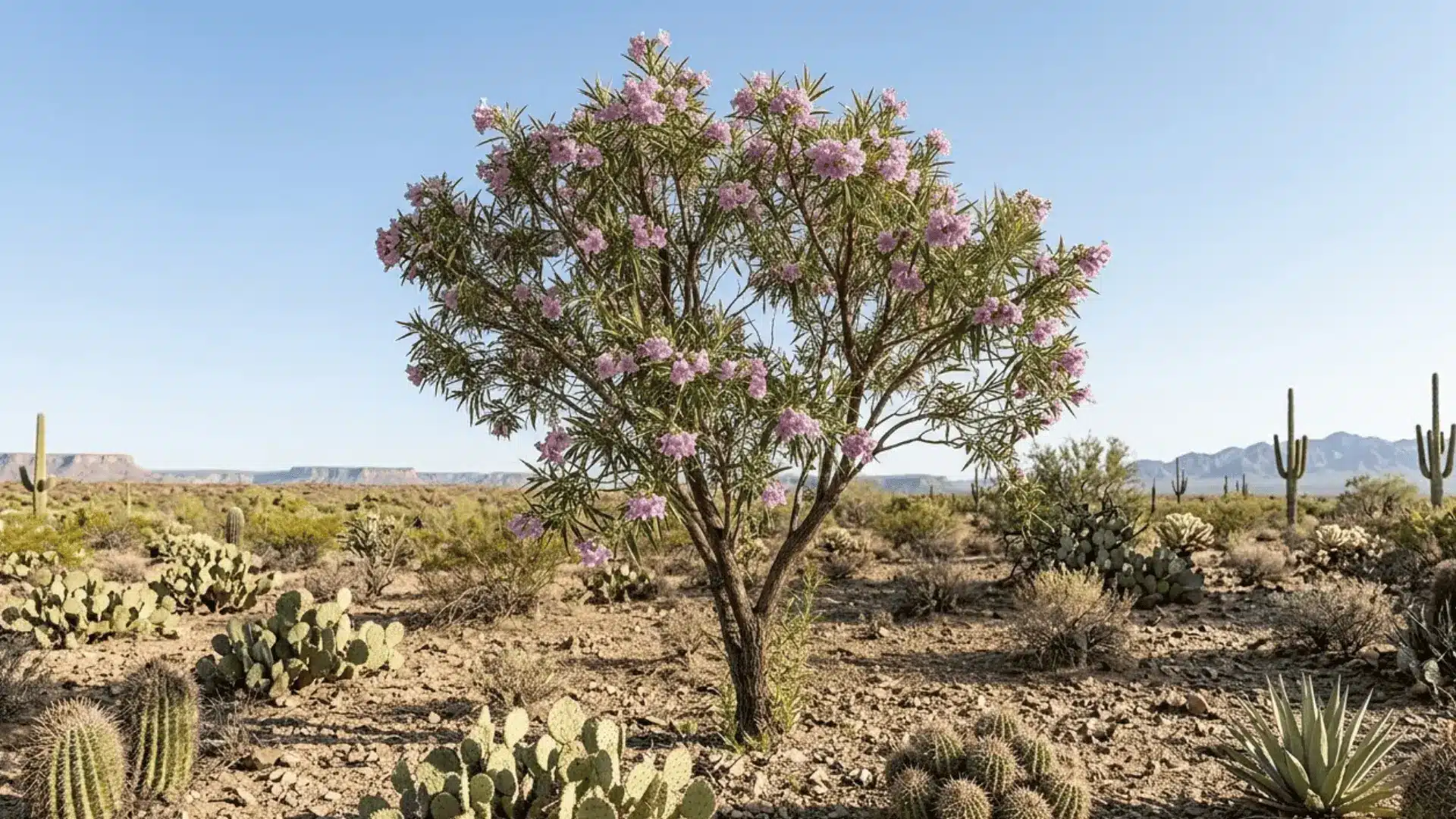
Desert Willow brings a quiet elegance alongside serious hummingbird appeal. Its trumpet-shaped pink and lavender flowers offer an easy entry point for feeding, and it blooms repeatedly through summer with minimal care.
For yards in drier or warmer climates, it’s one of the most drought-tolerant options that still manages to deliver on color and nectar without demanding much in return.
Trees That Do NOT Attract Hummingbirds
Planting with intention matters, and knowing what to skip is just as useful as knowing what to choose. Some trees simply don’t offer what hummingbirds are looking for, no matter how beautiful they are in a yard.
- Oak trees rely on wind for pollination and produce no nectar, making them invisible to hummingbirds.
- Pine trees are entirely needle-based with no flowering blooms that could attract feeding birds.
- Maple trees flower too briefly and offer little to no nectar worth a hummingbird’s visit.
- Elm trees are wind-pollinated and bloom in ways that hold zero appeal for nectar-seeking visitors.
- Birch trees produce catkins rather than flowers, skipping the nectar process altogether.
- Poplar trees follow the same wind-pollination pattern, leaving hummingbirds with nothing to feed on.
If a tree depends on wind rather than wildlife to spread its pollen, chances are it’s not pulling any hummingbirds in.
Sticking to nectar-producing, brightly colored bloomers will always serve your yard better when attracting these birds is the goal.
What Flower Features Attract Hummingbirds Most?
Hummingbirds are selective feeders, and their preferences come down to some very specific flower traits.
Here’s a quick look at what draws them in consistently.
| Feature | Description | Best Example |
|---|---|---|
| Tubular Shape | Fits a hummingbird’s bill perfectly | Trumpet Vine, Desert Willow |
| Warm Colors | Red, pink, orange catch their eye fast | Bottlebrush, Red Buckeye |
| High Nectar Volume | Keeps them coming back reliably | Mimosa, Crepe Myrtle |
| Outward-Facing Blooms | Easy hovering and feeding access | Trumpet Vine, Bottlebrush |
| No Strong Fragrance | They navigate by sight, not scent | Desert Willow, Crepe Myrtle |
How to Design a Hummingbird-Friendly Yard?
Getting hummingbirds to visit consistently is really about creating an environment they feel comfortable returning to.
A few thoughtful choices go a long way.
- Layer your planting by combining flowering trees with shrubs and blooms at varying heights for a natural, inviting habitat.
- Add a mister or shallow fountain since hummingbirds are drawn to moving water for both drinking and bathing.
- Skip the pesticides as they strip away the small insects hummingbirds also rely on as a protein source alongside nectar.
- Stagger your bloom schedule by choosing plants that flower at different points in summer so nectar stays available all season.
- Keep feeders near trees so hummingbirds have a quick, familiar perch to rest on between feeding visits.
A yard that balances food, water, and shelter naturally becomes a space hummingbirds gravitate toward season after season, no guesswork needed.
Best Placement for Flowering Trees
Where you plant matters just as much as what you plant. The right placement helps your trees bloom fuller and makes them far more accessible to visiting hummingbirds.
| Placement Factor | Ideal Condition | Why It Matters |
|---|---|---|
| Sunlight | Full sun, six or more hours daily | Maximizes bloom density and nectar production |
| Spacing | Open, uncluttered surroundings | Gives hummingbirds clear flight paths and easy access |
| Distance from House | Moderate, not too close or far | Allows safe feeding while keeping birds visible from indoors |
| Near Water Source | Close to a mister or fountain | Encourages longer, more frequent visits |
| Wind Protection | Sheltered from strong prevailing winds | Keeps blooms intact longer and makes hovering easier |
Do Hummingbirds Prefer Trees or Feeders?
Hummingbirds don’t really choose one over the other, they work with what’s available and what feels safe. That said, natural nectar from flowering trees tends to offer a broader nutritional profile than sugar water alone.
Feeders are convenient and effective, especially during bloom gaps, but they work best as a supplement rather than a substitute.
The smartest approach for any yard is pairing both together.
Let your flowering trees do the heavy lifting through summer, and keep a feeder nearby to bridge the gaps when blooms slow down or seasons shift.
Seasonal Tips to Attract More Hummingbirds
Timing your garden around hummingbird patterns makes a bigger difference than most people realize. A little seasonal planning keeps your yard relevant from their first arrival to their last visit.
- Start with early bloomers like Red Buckeye to welcome hummingbirds the moment they arrive in late spring.
- Keep mid-summer fed with long-blooming trees like Crepe Myrtle and Bottlebrush that carry the season effortlessly.
- Add late bloomers such as Desert Willow to hold migrating hummingbirds longer as they fuel up for the flowering ahead.
- Overlap your bloom cycles intentionally so there’s never a gap in nectar availability throughout the entire season
A yard that blooms in thoughtful succession essentially becomes a reliable pit stop hummingbirds return to year after year, season after season.
The Closing Note
When you start thinking beyond feeders, the whole dynamic of your yard shifts. Do hummingbirds visit summer flowering yard trees? Genuinely and enthusiastically, yes.
The right trees bring them in naturally, keep them coming back reliably, and make your outdoor space feel alive in a way a feeder alone simply can’t.
Starting fresh or building on what you already have, every intentional planting choice adds up beautifully over time.
Drop a comment below sharing which flowering tree you’re most excited to add to your yard, would love to hear what you’re planning!