Your home’s outside is the first thing anyone sees. Before a word is spoken, it tells a story. And if that story looks outdated or mismatched, it’s hard to shake that first impression.
That’s exactly why so many homeowners are turning to the contemporary modern house exterior style. It’s clean, warm, and highly personal without being over the top.
This guide covers what this style is, where it came from, the key design elements, solid ideas, colors, materials, and real renovation costs, so you can plan with actual clarity.
What Is a Contemporary Modern House Exterior?
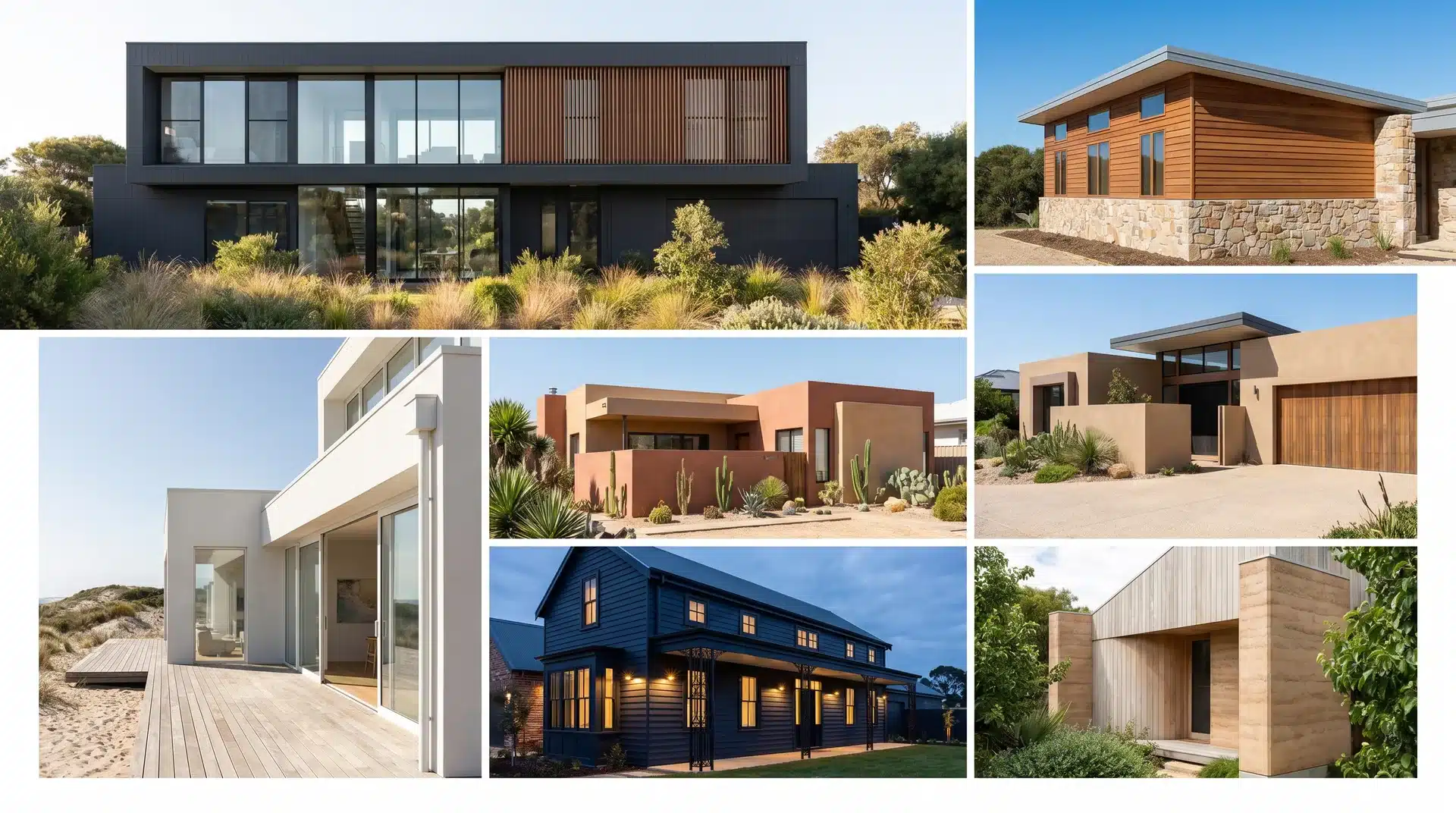
A contemporary modern house exterior blends clean lines, simple shapes, and a mix of natural and man-made materials.
It feels sleek but still warm, thanks to features like wood accents, large windows, and neutral color tones.
Unlike traditional styles, it has no fixed rules; it adapts to current trends and reflects what the homeowner actually wants from their space.
History Behind Contemporary Modern Home Exteriors
The story of the contemporary modern house exterior didn’t happen overnight. It took nearly a century of shifting ideas about what a home should look like.
Early 1900s: Architects began moving away from heavy Victorian ornamentation. Pioneers like Gustav Stickley in the US promoted simplicity, functionality, and the honest use of materials. This became the early seed of modern design thinking.
1920s–1940s: The Bauhaus movement in Germany took hold. Architects like Ludwig Mies van der Rohe designed buildings stripped of all decoration, built around steel, glass, and open space. His 1951 Farnsworth House remains one of the clearest examples of that thinking applied to a home.
1950s: Contemporary architecture formally split from modernism. It kept the clean lines but added more flexibility, mixing materials, breaking symmetry, and borrowing from different periods.
1970s: The term “contemporary architecture” gained wider use as architects moved past the strict rules of mid-century modernism. Frank Gehry, Zaha Hadid, and Norman Foster pushed further, using new technology to create shapes that weren’t possible before.
2000s–Today: Sustainability entered the conversation in a big way. Solar panels, energy-efficient windows, and eco-friendly materials became part of what defines a contemporary modern house exterior. The style today is still evolving, shaped by climate, technology, and individual taste.
Contemporary vs. Modern Exterior: What’s the Difference?
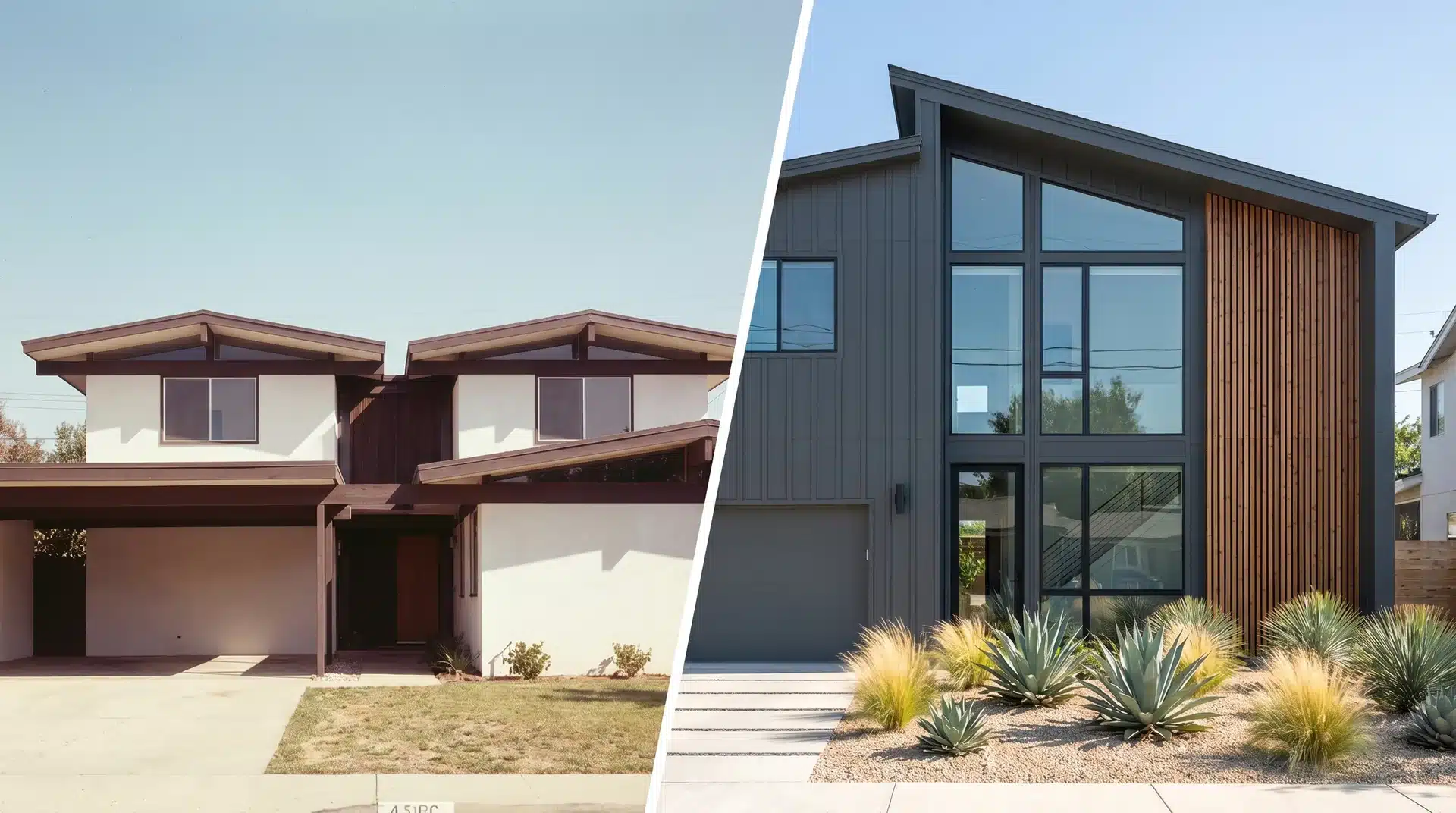
These two terms get used interchangeably, but they’re not the same thing. Here’s a quick way to tell them apart before we go any further.
| Feature | Modern Style | Contemporary Style |
|---|---|---|
| Time period | 1930s to 1960s | Present day, always shifting |
| Shapes | Symmetrical, structured | Asymmetrical, more fluid |
| Materials | Dark woods, chrome, concrete | Light woods, glass, and sustainable options |
| Rules | Follows a defined set | Flexible, no single rulebook |
| Feel | Functional, slightly stark | Warmer, more personal |
Modern refers to a specific design movement from the early to mid-20th century, rooted in fixed principles. Contemporary means whatever is current right now; it borrows, adapts, and changes over time.
Key Elements of a Contemporary Modern House Exterior
Before picking an idea or color, it helps to understand what actually makes this style work. These elements show up in almost every contemporary house exterior, regardless of the specific design direction.
- Clean Lines and Simple Shapes: No ornate moldings, no heavy trim. The structure itself does the visual work, using straight edges and geometric forms.
- Large Windows and Glass Panels: Glass connects the inside to the outside. Floor-to-ceiling windows and sliding glass doors are common features that let in light and frame views.
- Mixed Materials: Stone with wood, glass with metal, stucco with brick. Layering two or three different textures creates depth without clutter.
- Flat or Low-Slope Roofs: One of the most recognizable features. Some homes use shed roofs or butterfly shapes as alternatives. Flat roofs can also hold solar panels or a rooftop garden.
- Neutral and Bold Color Palettes: Soft off-whites, warm grays, and deep charcoals dominate. Earthy tones like olive green and warm brown are growing in popularity.
- Outdoor Living Integration: Patios, covered decks, and sliding doors that open fully to the yard. The inside and outside feel like one space rather than two separate areas.
- Sustainable Features: Solar panels, energy-efficient windows, and low-maintenance materials are now standard in this style, not just add-ons.
11 Contemporary Modern House Exterior Ideas
This style comes in more varieties than people expect. From warm and natural to sharp and urban, here are 11 directions worth considering.
1. Minimalist Box Design
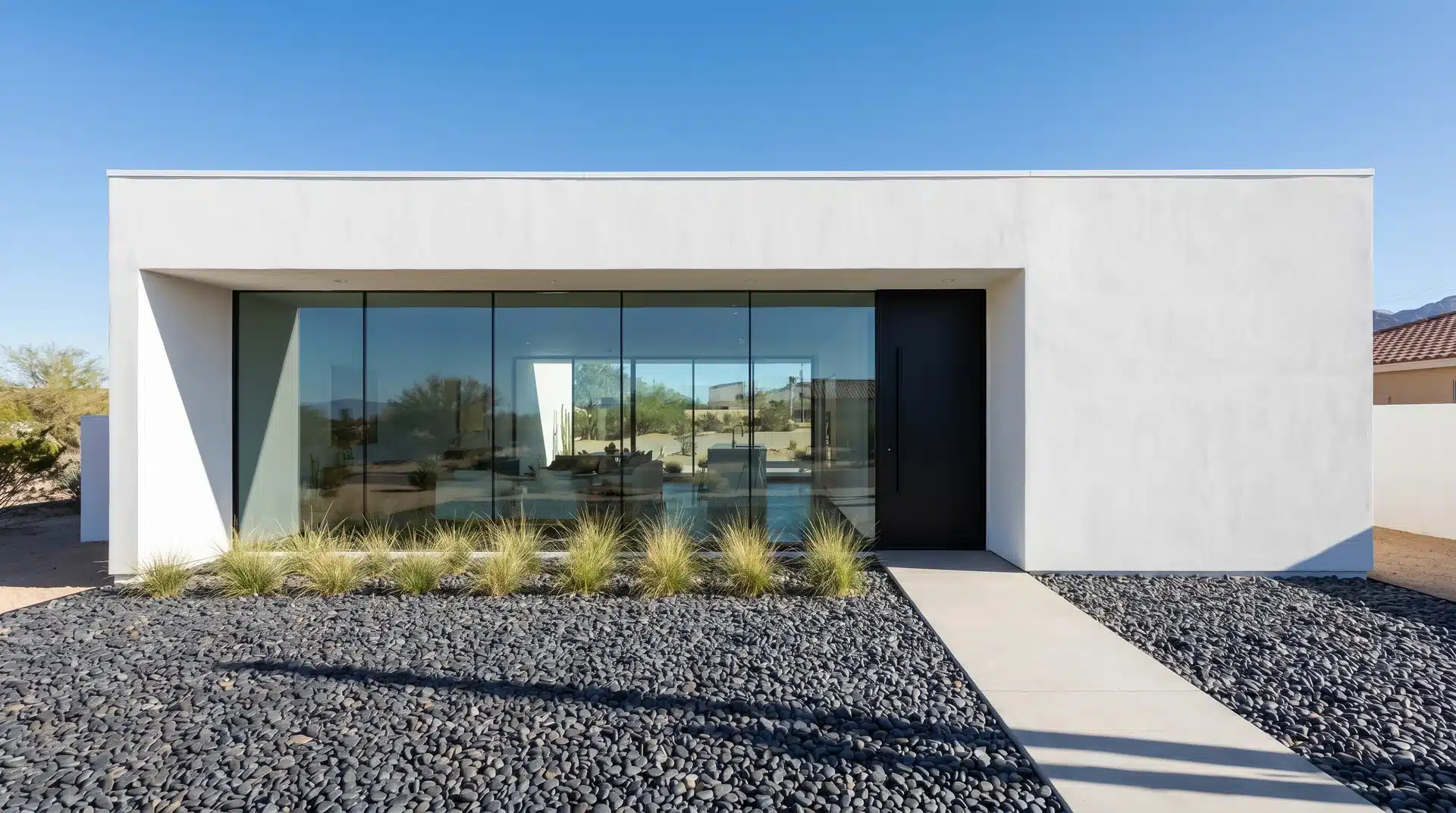
Boxy shapes, flat roofs, and smooth exterior finishes such as stucco or fiber-cement panels define this look.
Large windows keep the facade from feeling too closed off, and a simple two-tone color palette holds it all together. It’s a good pick for anyone who wants a sharp, uncluttered look that doesn’t try too hard.
2. Warm Modern (Wood and Stone Combo)
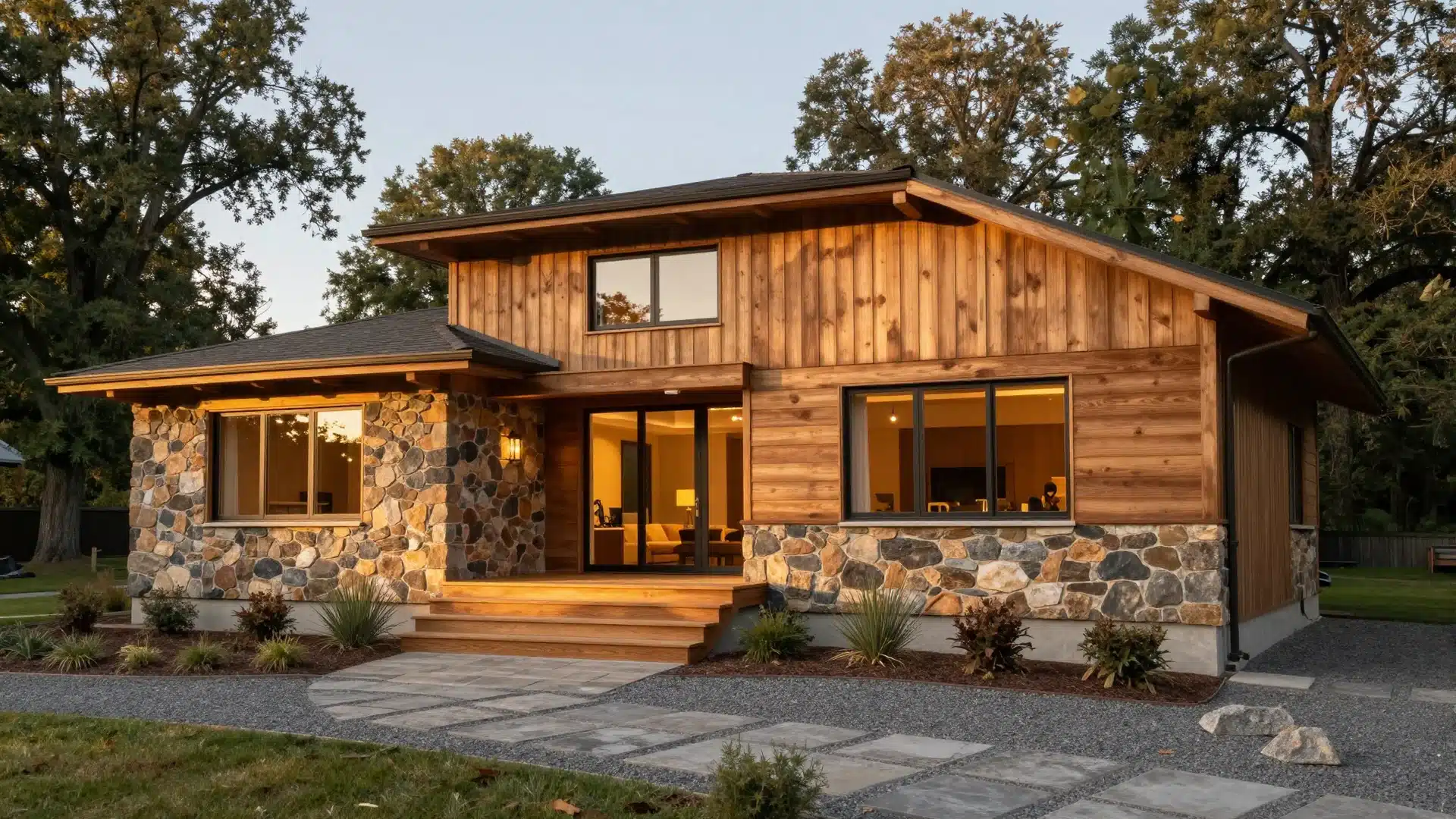
Natural wood slats, stone cladding, and earthy wall tones soften what could otherwise feel cold. This works especially well in wooded or mountain areas where the materials echo the surroundings.
It’s the right choice for homeowners who want a modern look without the exterior feeling cold or corporate.
3. Modern Farmhouse
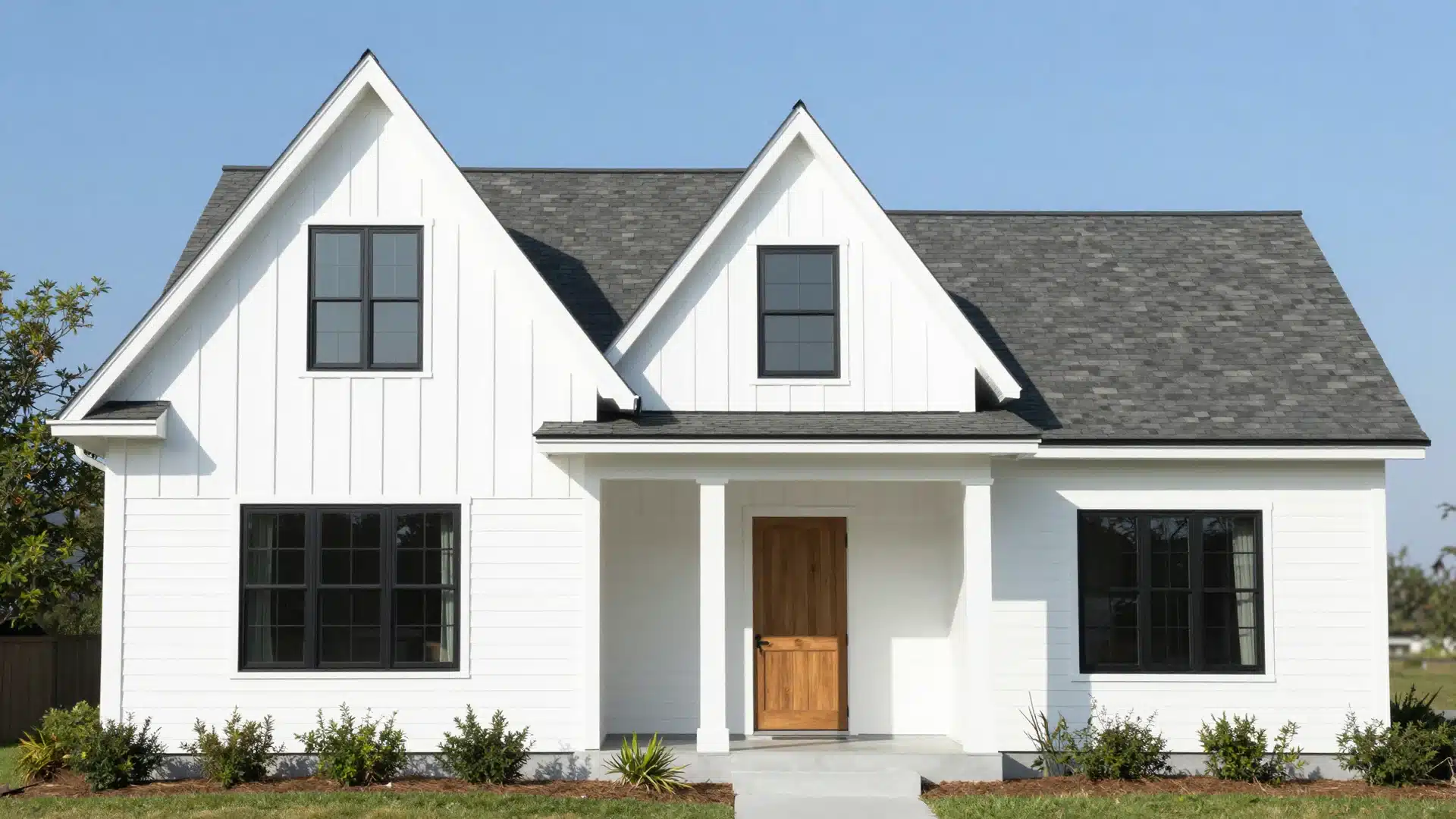
Gable roofs, board-and-batten siding, and black window frames sit alongside clean finishes and simple landscaping.
It keeps the soul of the farmhouse style without the heavy rustic details. This look works in both suburban and rural settings and reads as approachable from the street.
4. Desert Contemporary
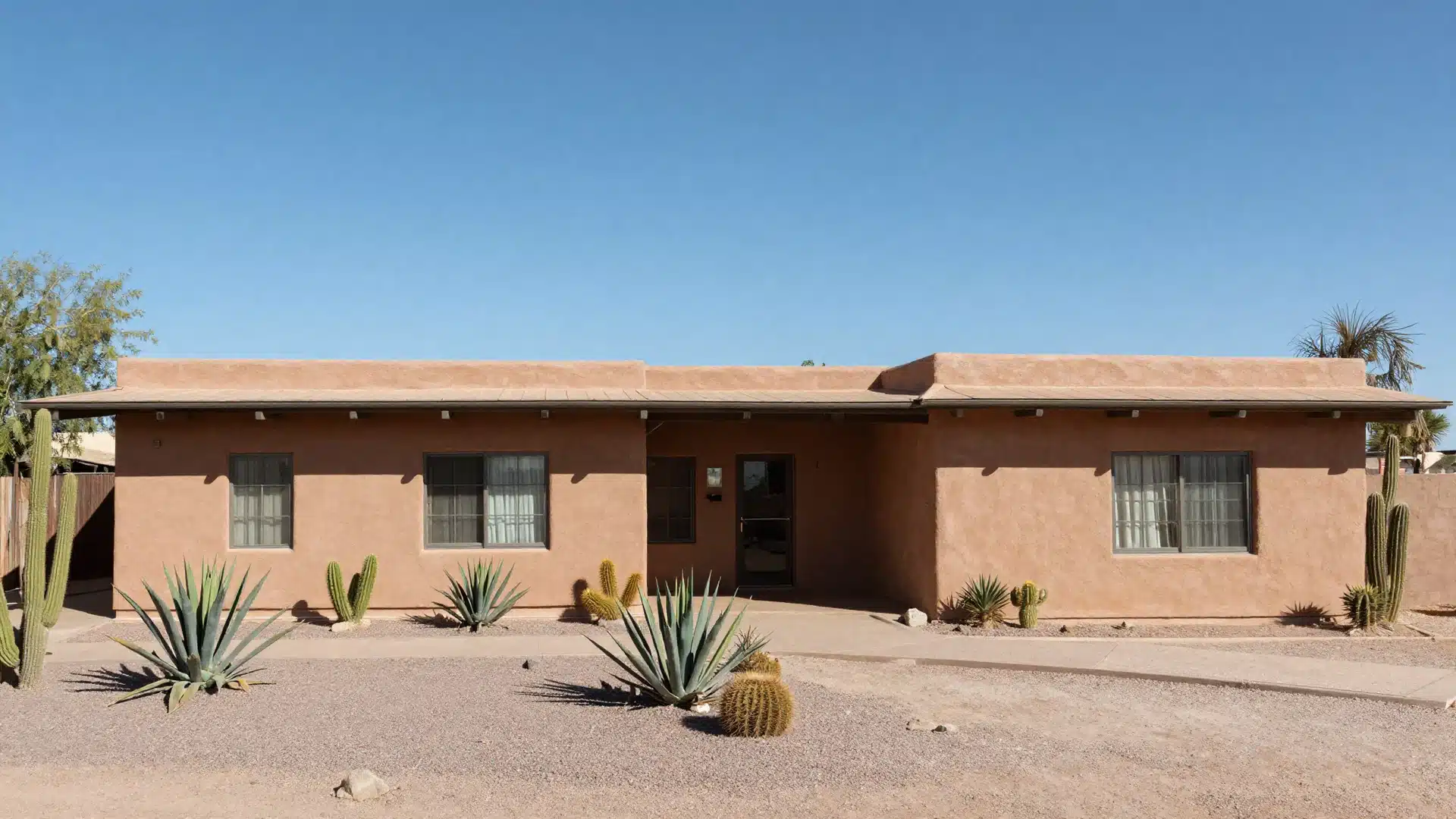
Earth tones, flat roofs, horizontal lines, and drought-tolerant landscaping are the building blocks here. Materials that retain heat well, such as rammed earth, stucco, and terracotta, are common choices.
This design is built for hot, dry climates, particularly in the Southwest US, and it ages well in those conditions.
5. Coastal Contemporary
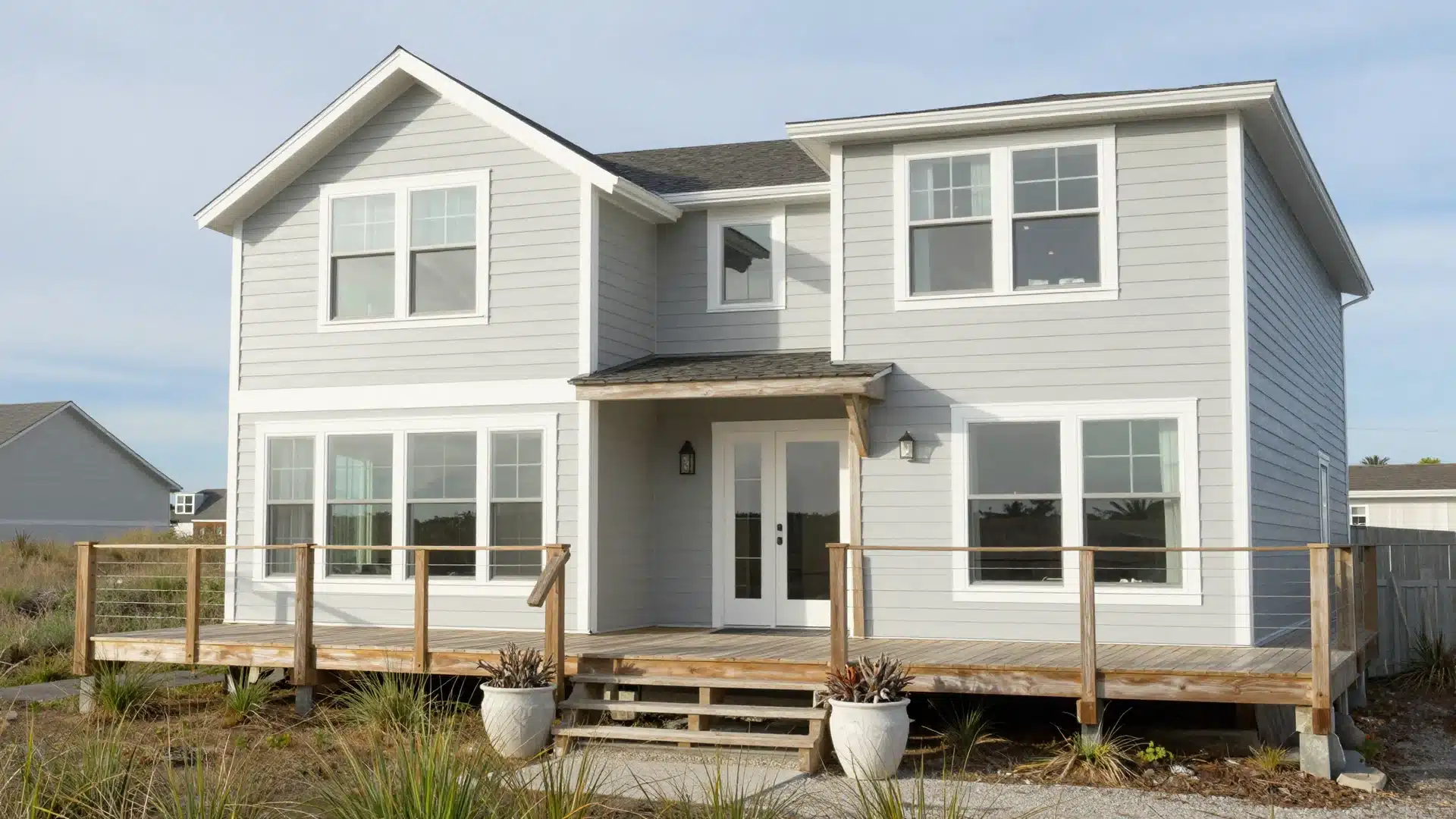
Light siding colors, large windows, and weather-resistant finishes define this version of the style. The palette leans toward soft blues, whites, and sandy neutrals.
It’s designed to withstand sun, wind, and salt air while still looking fresh and open.
6. Scandinavian-Inspired Modern
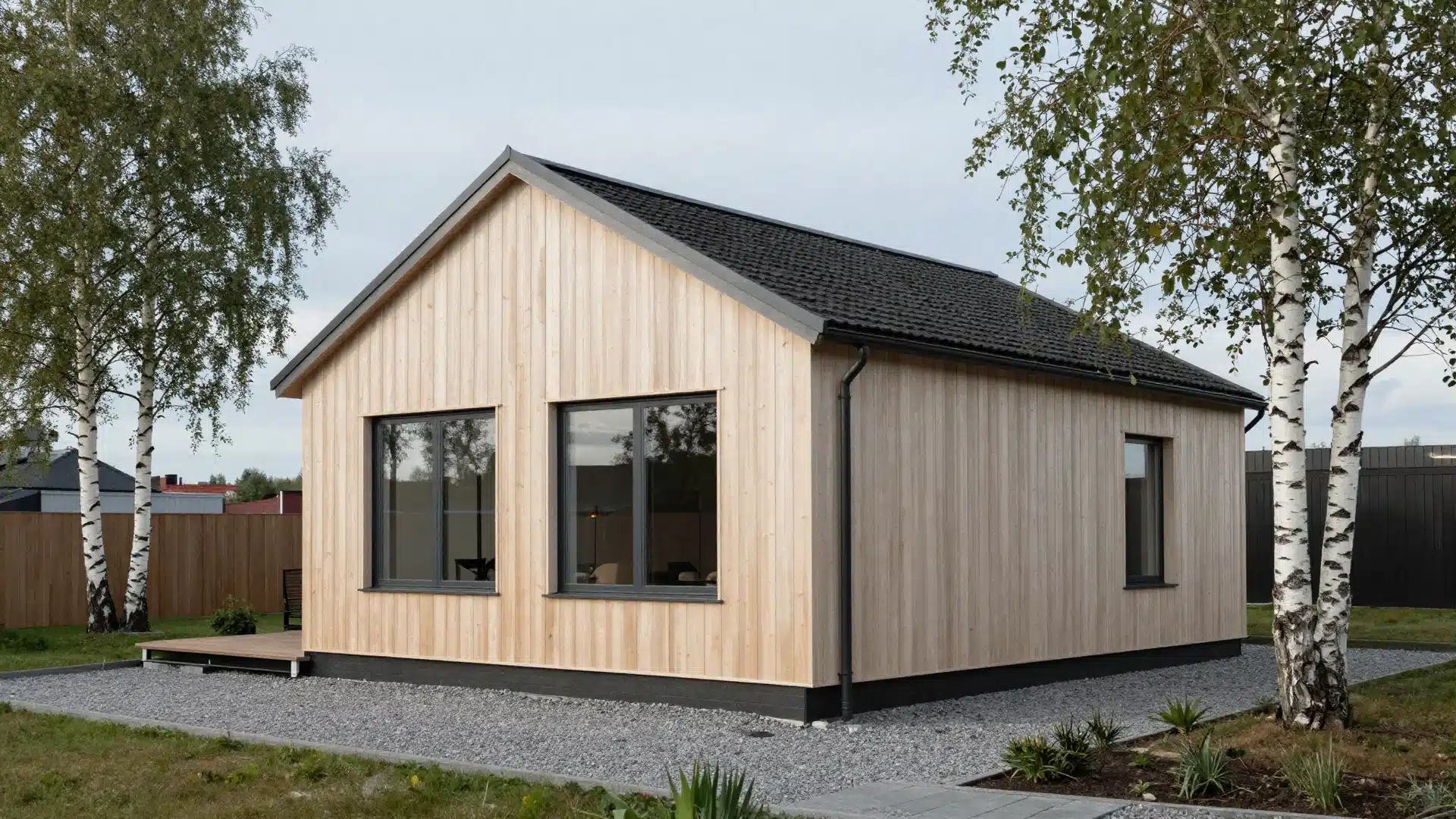
Pale wood, white walls, and clean lines create a calm, airy look. Large windows do a lot of the design work by bringing in natural light.
Minimal exterior details keep the facade uncluttered and easy to maintain.
7. Industrial Modern
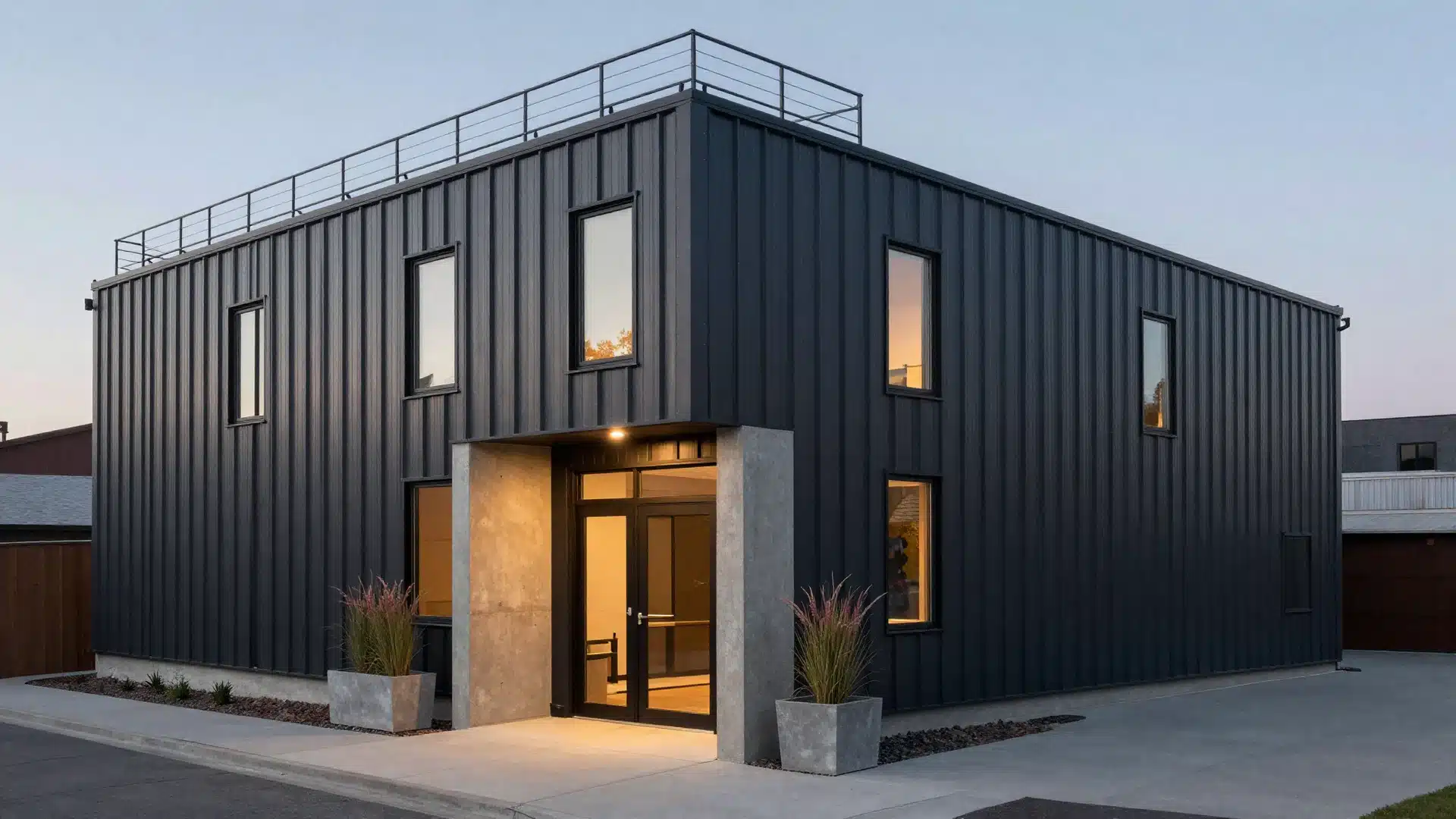
Concrete, corrugated metal panels, and dark window frames give this style a raw, urban character. The shapes stay simple and boxy, but the material choices add a strong visual edge.
It works best in city settings or for homeowners who want something that stands apart from the neighborhood.
8. Tropical Modern
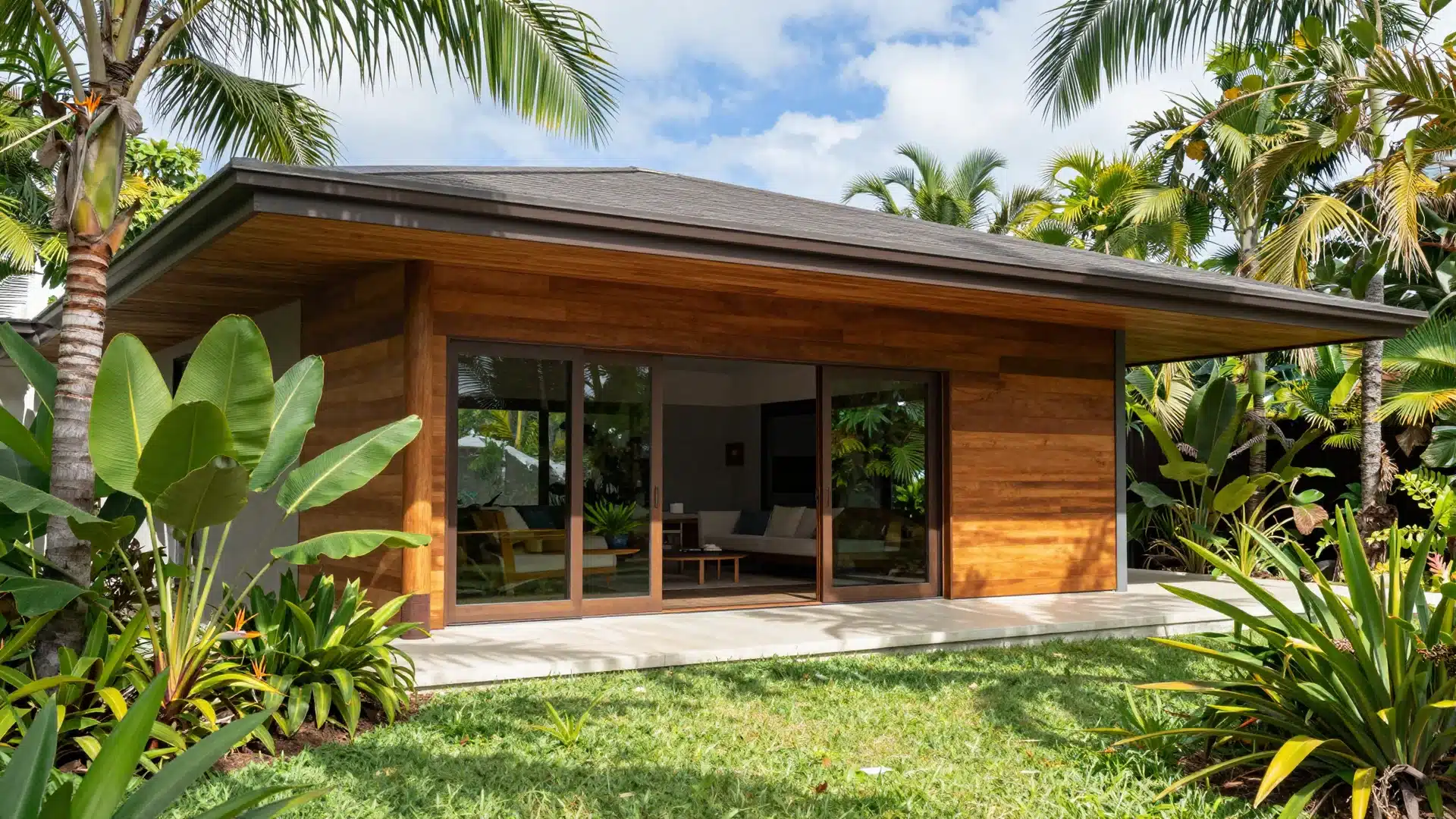
Wide roof overhangs, open layouts, and warm materials such as teak and natural stone define this style. Large sliding doors connect the interior to shaded outdoor areas.
It’s built for warm, humid climates where cross-ventilation and shade matter more than insulation.
9. Mid-Century Modern Revival
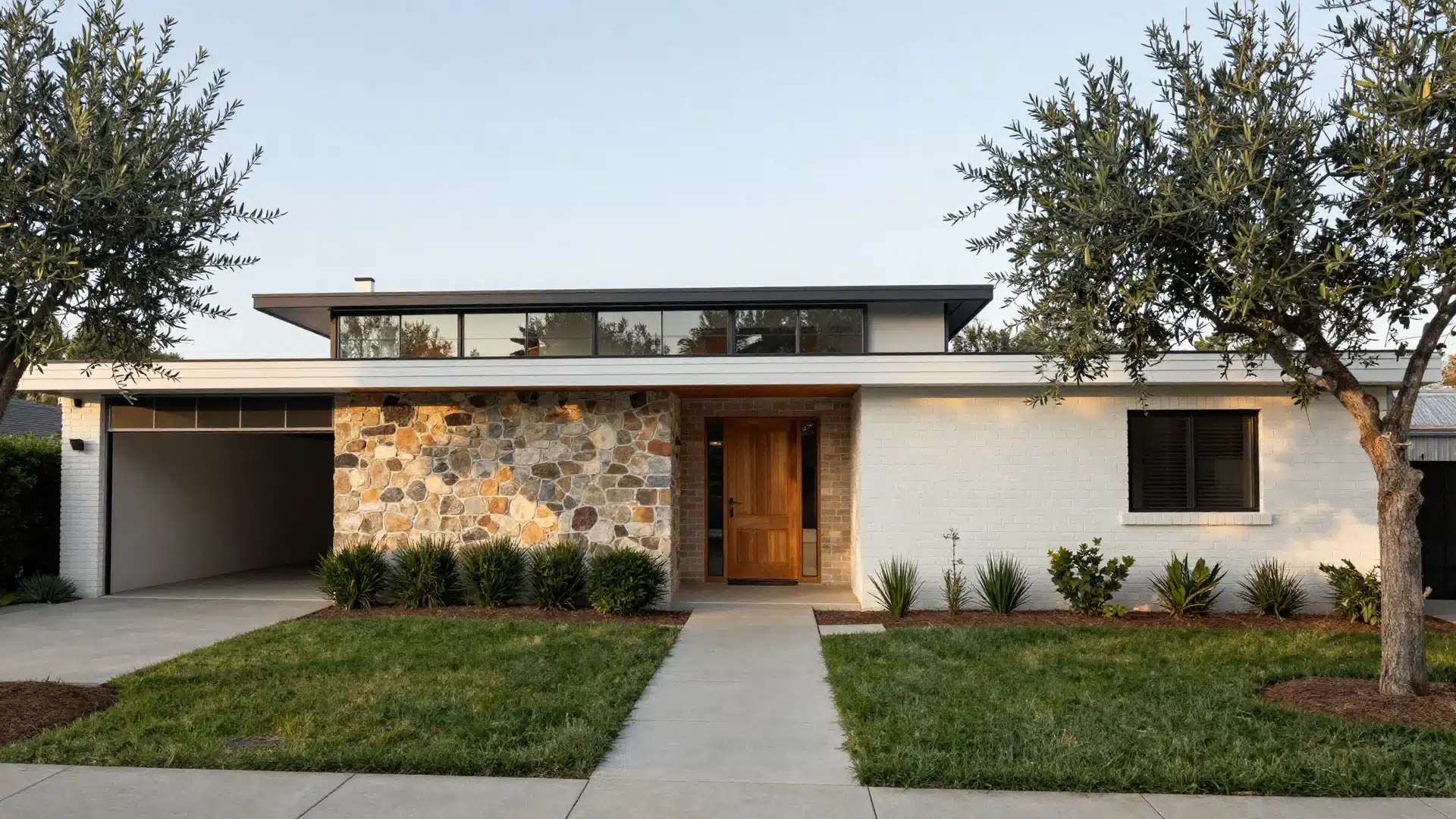
Low horizontal shapes, wide windows, simple rooflines, and carports echo 1950s design but with updated materials and finishes.
Breeze blocks and long front facades are common details. It suits anyone who wants a retro feel with a cleaner, more current finish.
10. Organic Modern (Nature-Led Design)
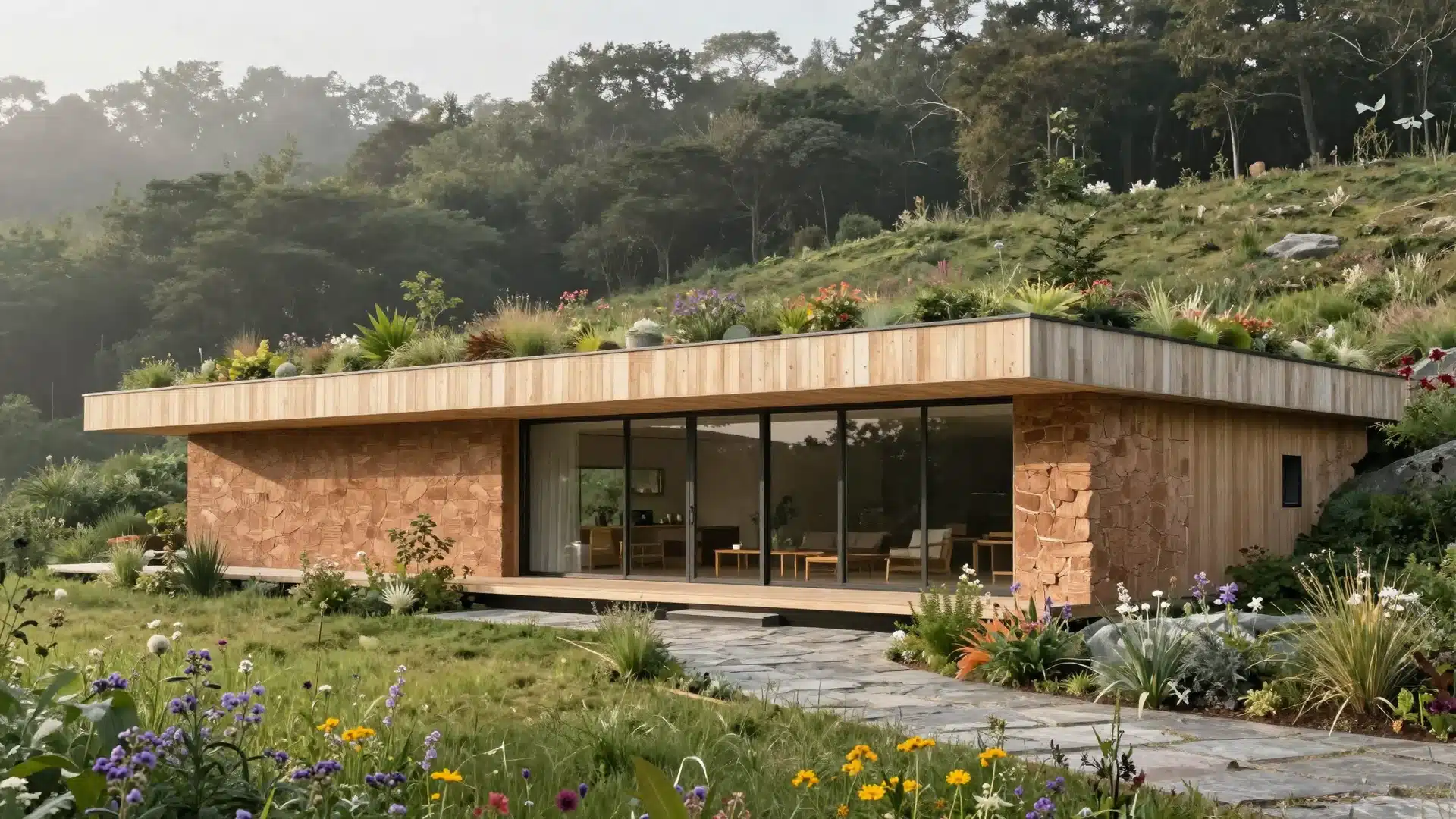
This direction blends modern architecture with warm, grounding materials such as wood, stone, and clay.
Soothing earth tones, lush landscaping, and large windows that frame outdoor views make the home feel rooted in its setting. It’s a natural fit for locations where indoor-outdoor living takes center stage.
11. Dark and Dramatic Exterior
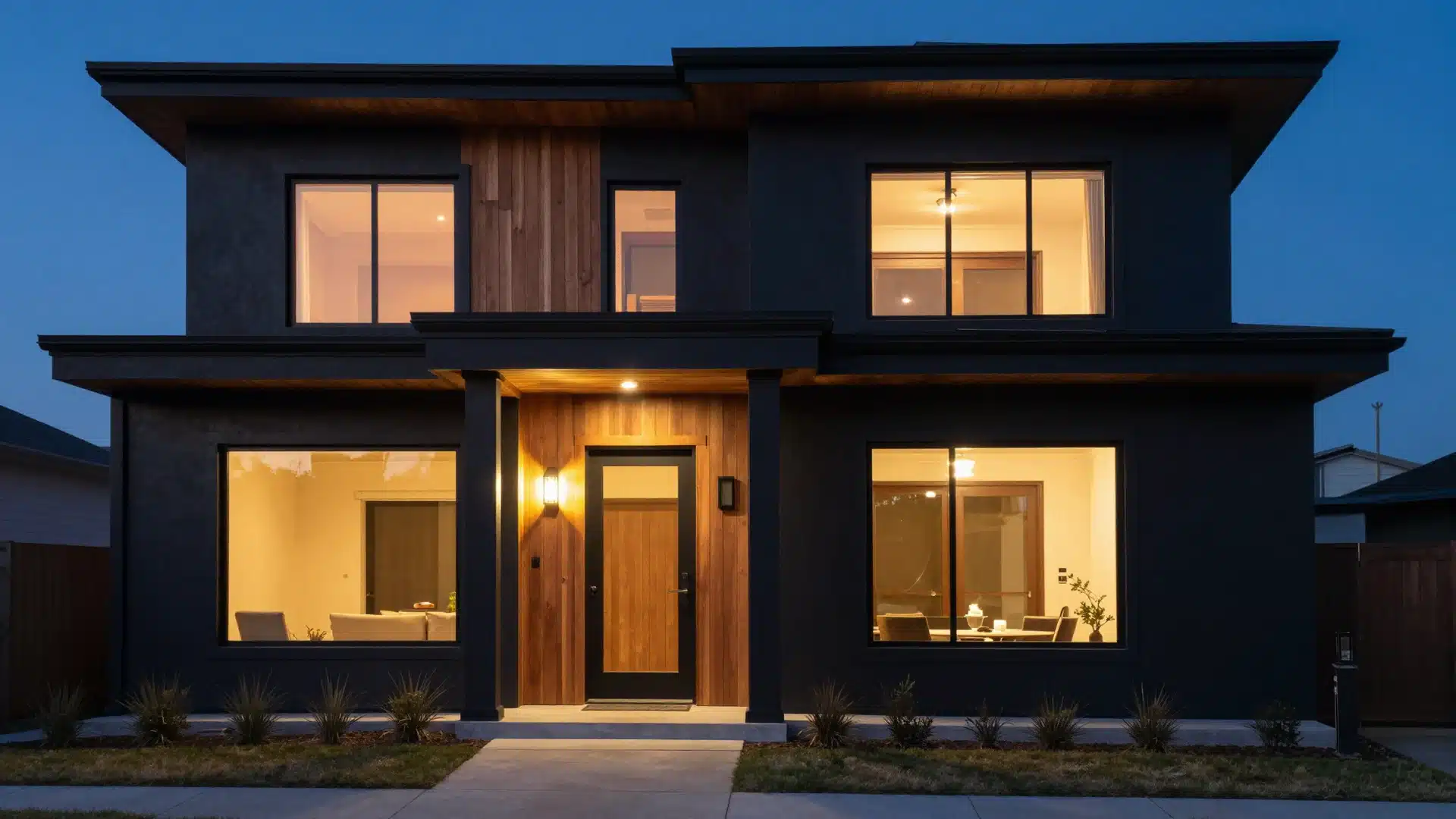
Deep charcoal, slate black, or navy blue siding paired with wood or stone accents creates a bold exterior that reads as confident without being aggressive. Iron columns, contemporary light fixtures, and simple landscaping round out the look.
The key is balancing the dark facade with warm, natural textures so it doesn’t feel heavy.
Best Colors for a Contemporary Modern House Exterior
Color can shift the entire feel of a home’s exterior, from sharp and urban to calm and grounded. Here’s what’s working well right now.
- Charcoal Gray: A bold, dark choice that pairs well with wood and stone. Works as both a primary color and an accent on trim or doors.
- Off-White and Soft White: A clean, timeless base that lets materials like stone or wood do the visual work. Pairs well with black or dark-stained trim.
- Warm Brown and Deep Taupe: Rich, earthy tones that feel connected to the outdoors. A strong alternative for homeowners who find gray too cold.
- Deep Navy Blue: A confident choice for siding or a front door. Reads as modern without being stark.
- Olive Green: A softer, organic option that suits both contemporary and traditional homes. Pairs well with natural stone and wood details.
- Terracotta and Clay: Warm, sun-soaked tones that work well in warmer climates and Mediterranean or Southwestern settings.
- A practical tip: Use the 60-30-10 color rule. 60% goes to the main siding color, 30% to trim and accent areas, and 10% to the front door and smaller details. That ratio creates a balanced, put-together result without overcomplicating the palette.
Materials for a Contemporary Modern House Exterior
Choosing the right material affects how your home looks, how long it lasts, and how much upkeep it needs. Here’s a straightforward comparison.
| Material | Look | Durability | Maintenance | Best For |
|---|---|---|---|---|
| Fiber Cement Siding | Wood-like, smooth or textured | Very high | Low | Most climates, suburban homes |
| Natural Stone | Heavy, textured, organic | Excellent | Low to moderate | Foundations, accent walls |
| Wood Cladding | Warm, natural | Moderate | Higher needs treatment | Warm or dry climates |
| Metal Panels | Sharp, industrial, modern | Very high | Very low | Urban homes, industrial style |
| Stucco | Smooth, clean | Good in dry climates | Low | Southwest, Mediterranean style |
| Glass Panels | Open, light-filled | High with proper glazing | Moderate (cleaning) | Windows, doors, railings |
| Composite Siding | Versatile, wood-like | High | Very low | All climates |
Sustainability note: Recycled materials, responsibly sourced wood, and low-VOC exterior paints are now standard options. Thermally modified wood, reclaimed stone, and solar-integrated roofing are worth discussing with your contractor if sustainability is a priority.
Cost of a Contemporary Modern Exterior Renovation
The honest answer is: it depends on the scope. Small upgrades like a new front door or a fresh coat of paint can start around $2,000. A full exterior redesign can reach $100,000 or more for large homes.
The average US homeowner spends between $5,000 and $30,000 on an exterior renovation, with the national average for a full exterior makeover sitting around $15,000.
Exterior remodeling generally returns about 80% of its cost in home value, with fiber cement siding and new windows consistently among the top-performing projects.
Before starting, get at least three contractor quotes, and prioritize the high-visibility areas first: front door, siding, and windows make the biggest difference per dollar.
Summing It Up
A contemporary modern house exterior is not about following a rigid style guide; it’s about making intentional choices that suit your climate, your lifestyle, and your home’s actual structure.
Whether you lean toward warm wood and stone, a sharp dark facade, or a coastal-light palette, the decisions you make outside your home shape how it feels to live in it every day.
Start with what fits your site and budget, and build from there. If one of the ideas or color combinations in this guide clicked for you, that’s a good starting point. What’s the one element you’d change first?