Tomatoes are the stars of the summer garden, but they shouldn’t grow alone.
When you surround them with the right plant partners, something wonderful happens: pests lose interest, soil gets richer, and your harvest becomes more abundant.
Most gardeners miss this opportunity by randomly placing plants wherever there’s space, or worse, unknowingly pairing tomatoes with neighbors that stunt their growth.
You’ll learn how to create a thoughtful companion planting layout for raised beds, in-ground plots, and container gardens alike.
We’ll cover which plants make tomatoes thrive, which ones to keep far away, and exactly how to space everything for a garden that practically takes care of itself.
Companion Gardening Basics for Tomatoes
Companion planting pairs plants together so they support each other’s growth.
For tomatoes, the right neighbors act as natural pest repellents, drawing harmful insects away or confusing them with strong scents. They can also reduce disease pressure by improving air circulation and soil health.
Some companions even enhance tomato flavor through root interactions in the soil, while others use vertical or ground space efficiently around your tomato plants.
Not every pairing you see online actually works, though. While basil and marigolds have proven benefits, claims about certain plants boosting yields lack solid evidence.
Focus on pest management and space optimization rather than chasing miracle growth promises.
What Tomatoes Need to Thrive: Before Choosing Companions
Before you start pairing plants, understand what tomatoes demand from their growing space. Ignoring these basics leads to overcrowding and competition.
| Need | Requirements | Why It Matters for Companions |
|---|---|---|
| Sunlight | 6-8 hours of direct sun daily | Companions shouldn’t shade tomatoes or block light |
| Root depth | 12-18 inches deep, 2-3 feet wide spread | Shallow-rooted companions avoid underground competition |
| Airflow | 24-36 inches between plants | Proper spacing prevents disease; companions need distance, too |
| Water | 1-2 inches weekly, consistent | Mismatched water needs create competition or stress |
| Nutrients | Heavy feeders (nitrogen, phosphorus, potassium) |
Avoid other heavy feeders unless the soil is very rich |
Your layout determines whether companions help or hinder. Poor placement blocks the sun, steals nutrients, or traps harmful moisture.
Companion Planting Layout Plans for Tomatoes
Picking companions is only half the job. Arranging them correctly turns a random collection of plants into a system where everything supports everything else.
Here are 5 practical layouts with exact dimensions, plant counts, and spacing you can replicate in your own garden.
1. Classic Tomato Row with Companion Border
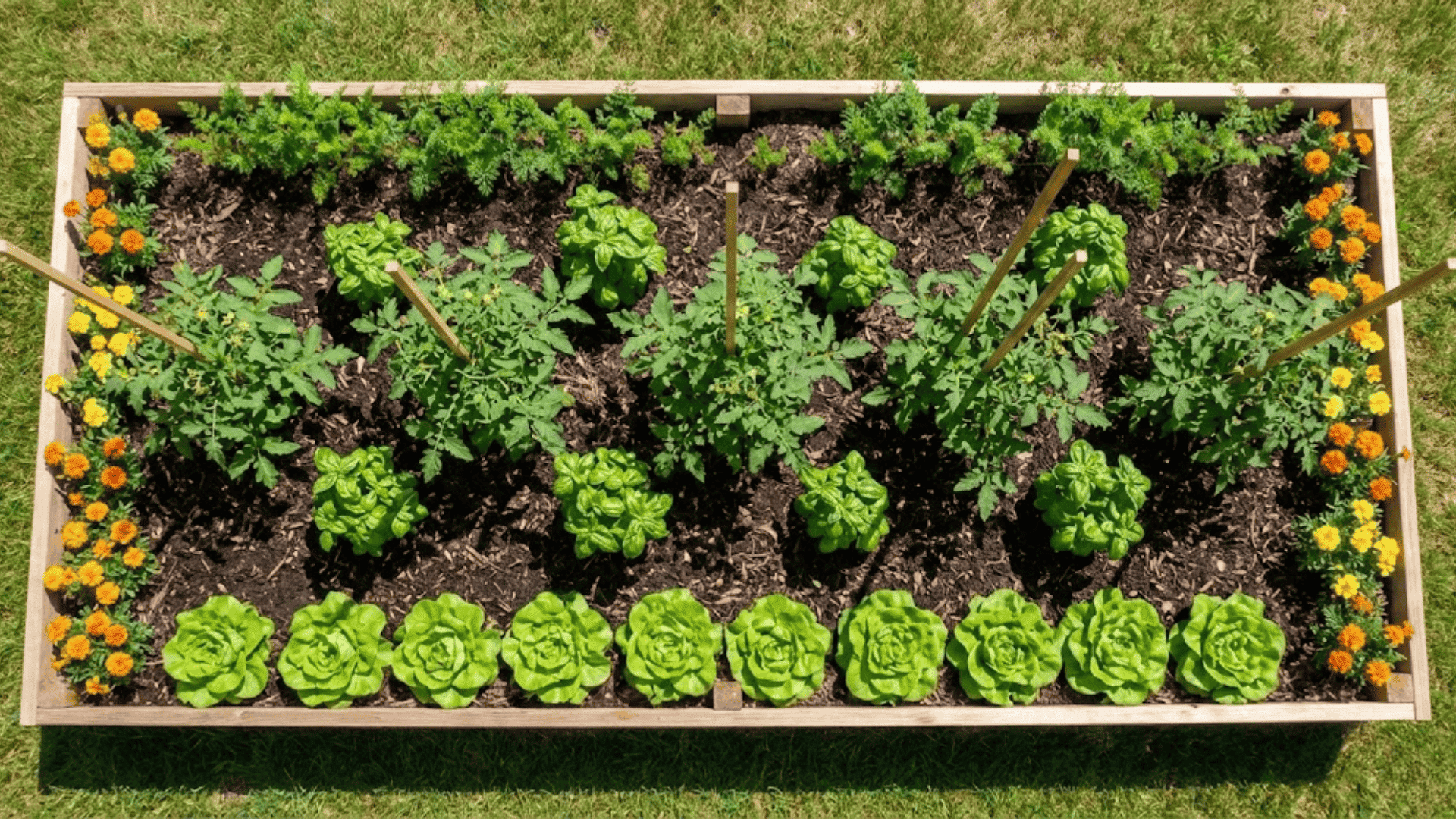
Style: Traditional row planting with protective companion border
Best For: Large in-ground gardens, gardeners who like organized straight lines
Garden Size: 15′ × 6′ plot
Plant List:
- 5 tomato plants (center row)
- 10 marigolds (border on both long sides)
- 8 basil plants (interspersed with tomatoes)
- 12 lettuce heads (front edge)
- 1 row of carrots (back edge, continuous)
Spacing & Arrangement:
Tomatoes down the center at 30 inches apart with basil tucked between at 15 inches. Marigolds line both sides at 12-inch intervals.
Lettuce along the front at 8 inches where shade builds through the day. Carrots fill the back with roots mining deeper soil layers.
2. Intensive Raised Bed Companion Layout
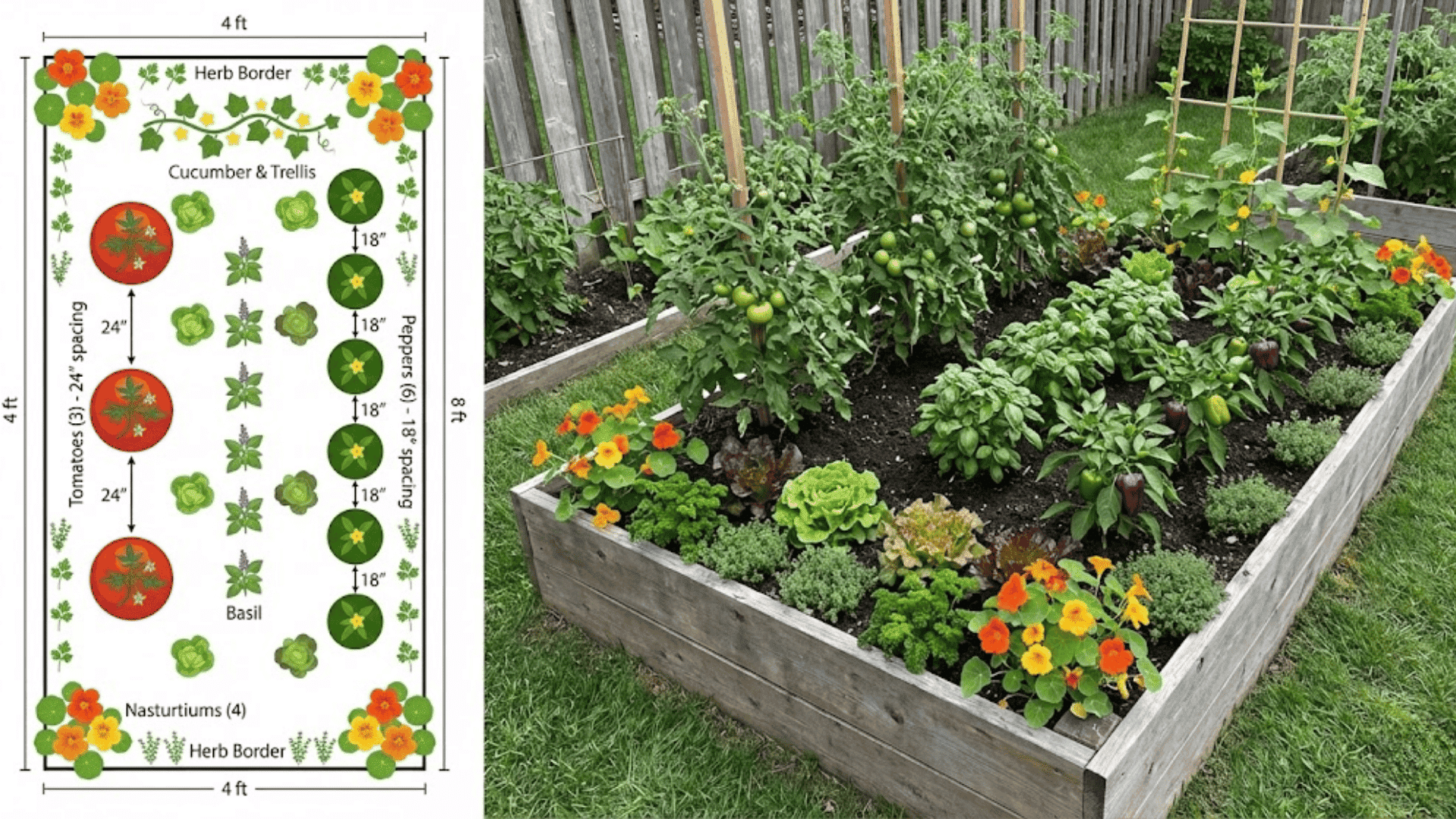
Style: Concentrated block planting with vertical and ground-level companions
Best For: Raised beds, gardeners wanting maximum production per square foot
Garden Size: 4′ × 8′ raised bed
Plant List:
- 3 tomato plants (staked or caged)
- 6 pepper plants
- 8 basil plants
- 4 nasturtium plants (corners)
- 10 lettuce heads
- 1 cucumber (trellised)
- Parsley and thyme along the edges
Spacing & Arrangement:
Tomatoes along one side at 24 inches, peppers opposite at 18 inches. Basil fills the center.
Nasturtiums anchor corners. Lettuce at 8 inches in the remaining gaps. Cucumber climbs at one end. Perimeter gets parsley and thyme as living mulch.
3. Square Foot Tomato Companion Grid
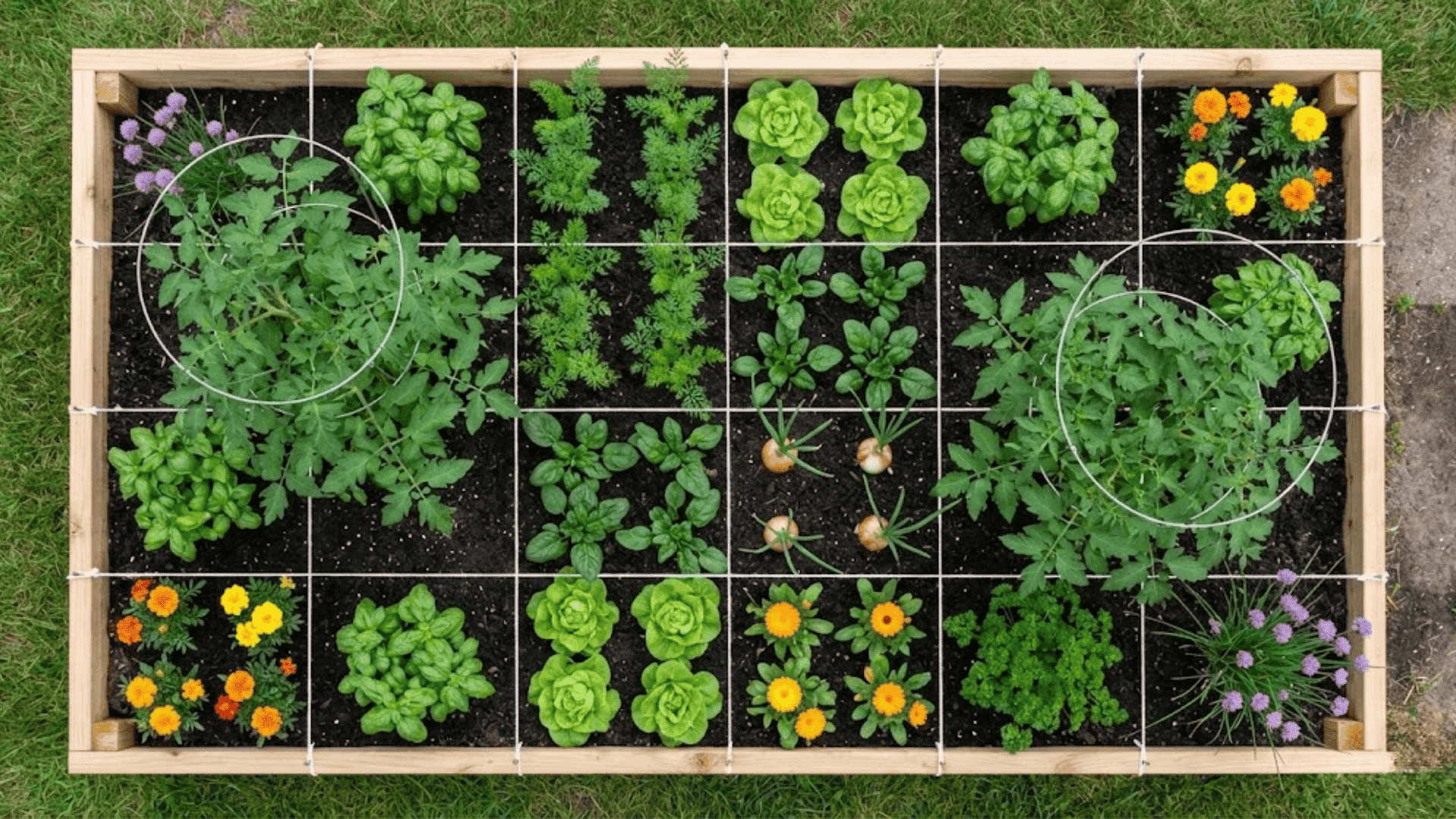
Style: Precise grid system with calculated companion placement
Best For: Beginners, small space gardeners, and anyone who loves organization
Garden Size: 4′ × 4′ bed (16 one-foot squares)
Plant List:
- 2 tomato plants (4 squares total)
- 4 basil plants (2 squares)
- 4 marigolds (2 squares)
- 16 carrots (2 squares)
- 4 lettuce heads (1 square)
- 9 spinach plants (1 square)
- 4 onion sets (1 square)
- Remaining squares: parsley, calendula, chives
Spacing & Arrangement:
Each tomato takes 2 squares in opposite corners. Basil in adjacent squares.
Marigolds occupy one edge. Carrots get 2 squares for deep growth. Lettuce and spinach fill shadier spots. Herbs and flowers checkerboard what remains.
4. Container Companion Cluster
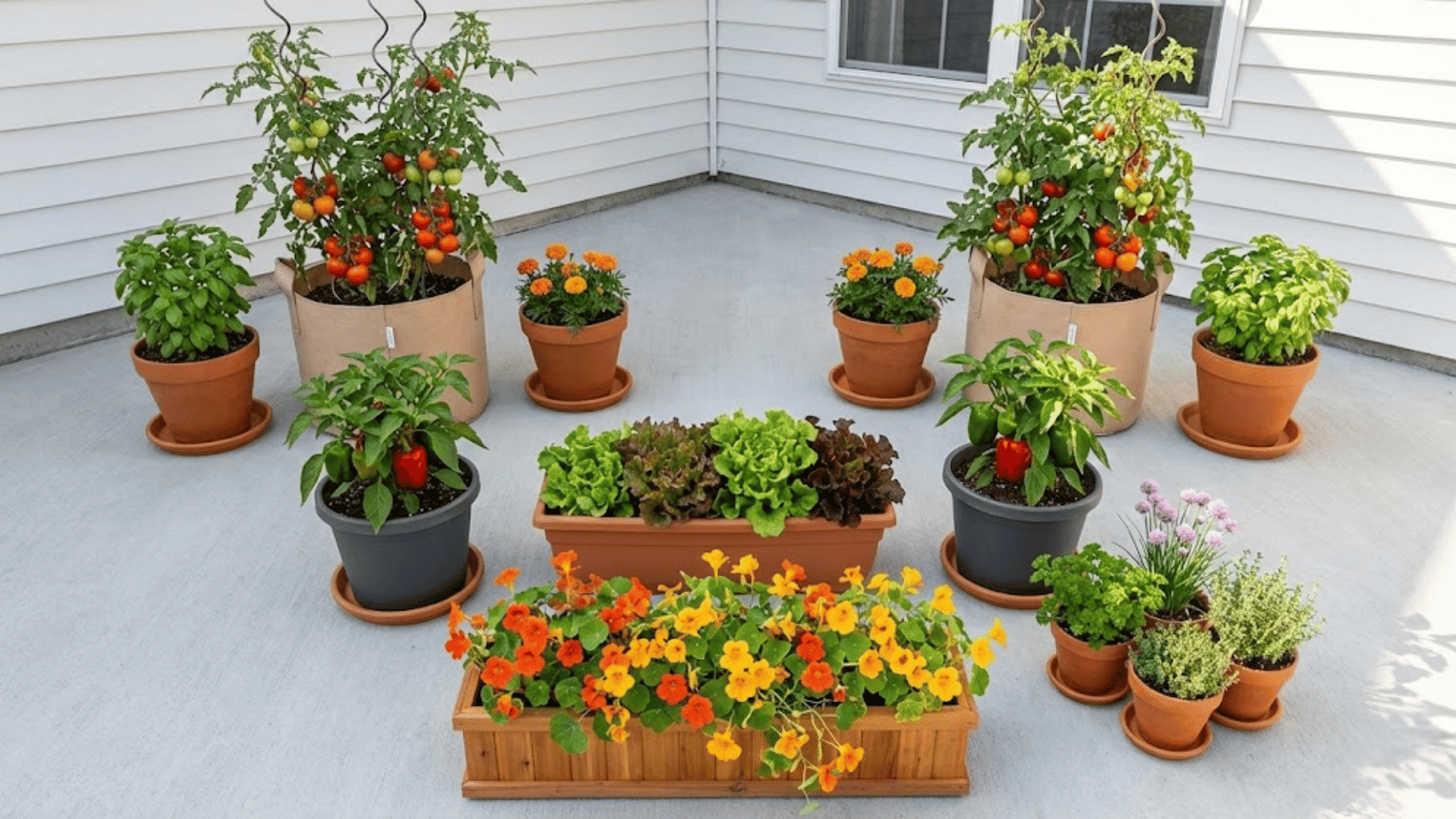
Style: Grouped pots with strategic companion placement
Best For: Patios, balconies, renters, gardeners without ground space
Garden Size: 8′ × 6′ patio area
Plant List:
- 2 tomato plants (5-gallon fabric pots)
- 4 basil plants (1-gallon pots)
- 3 marigolds (1-gallon pots)
- 2 pepper plants (3-gallon pots)
- 1 large planter with lettuce mix
- Window box with nasturtiums
- Small pots clustered with parsley, chives, thyme
Spacing & Arrangement:
Tomatoes in 5-gallon pots toward the back, basil beside them. Marigolds ring the setup. Peppers forward in 3-gallon containers with 18 inches of clearance.
Lettuce planter gets morning sun, afternoon protection. Nasturtium box at the front as a trap crop.
5. Vertical Tomato Companion Garden
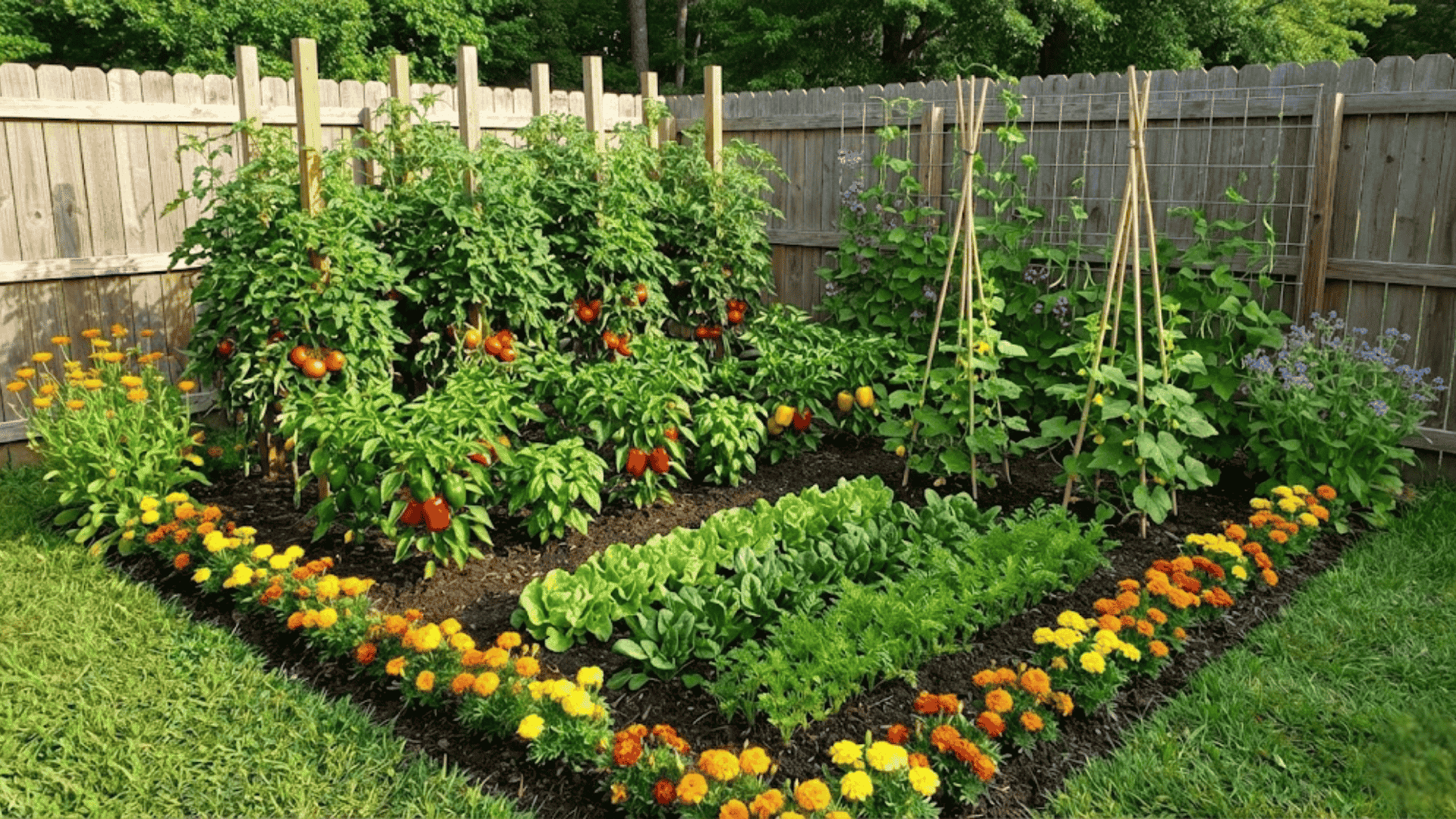
Style: Mixed approach using trellises, stakes, and ground-level companions
Best For: Small yards, urban gardens, maximizing limited square footage
Garden Size: 10′ × 8′ plot (mixed bed and vertical elements)
Plant List:
- 4 tomato plants (staked tall)
- 6 pepper plants
- 10 basil plants
- 8 marigolds
- Pole beans on the back fence trellis
- 2 cucumber plants (climbing supports)
- Ground-level: lettuce, spinach, carrots (continuous rows)
- Calendula and borage (border flowers)
Spacing & Arrangement:
Tomatoes staked 6-7 feet at the back row, 30 inches apart. Beans climb the fence behind. Peppers at 18 inches form middle tier 3 feet forward. Basil between peppers and at tomato bases. Cucumbers on supports in gaps.
Ground level stays low with lettuce, spinach, and carrots. Marigolds wrap borders, calendula, and borage at corners.
Plants That Should NOT Be Planted Near Tomatoes
Some plant pairings look harmless on paper but turn into disasters in the garden. These combinations create pest magnets, spread diseases, or straight-up poison your tomatoes through the soil.
| Plant | Why It’s Problematic | Specific Issues |
|---|---|---|
| Potatoes | Shared diseases | Both catch early and late blight; spreads rapidly |
| Corn | Attracts hornworms | Hornworms and earworms target both; corn lures them in |
| Brassicas (cabbage, broccoli, cauliflower) |
Nutrient competition | Both heavy feeders compete for nitrogen and stunt growth |
| Fennel | Chemical inhibition | Root secretions actively suppress tomato development |
| Walnut trees | Juglone toxicity | Releases toxic juglone within 50-80 feet; causes wilt and death |
| Kohlrabi | Pest magnet | Attracts flea beetles and cabbage worms to your tomatoes |
| Dill (mature) | Growth suppression | Mature flowering dill inhibits tomato development |
Layout Companion Planting Tomatoes
Getting the arrangement right matters as much as choosing the plants themselves. Smart layouts prevent overcrowding, maximize airflow, and let every plant access the resources it needs.
Classic Tomato Companion Layouts
Choose your layout based on available space and how you prefer to work in the garden. Each approach has distinct advantages for companion planting.
| Layout Type | Best For | How It Works |
|---|---|---|
| Single-row | Large gardens, straightforward maintenance | Tomatoes in one line at 30 inches apart; companions flank both sides |
| Double-row or block | Medium gardens maximizing space | Two parallel rows 36 inches apart; companions fill the center and edges |
| Raised bed | 4×8 or 4×4 beds, intensive planting | Tomatoes along one side; companions layered by height throughout the bed |
| Square-foot grid | Beginners, precise planners, small spaces | Each tomato takes 2-4 squares; companions fill the remaining grid by size |
Vertical vs. Ground-Level Layouts
Training tomatoes upward with stakes or cages (5-7 feet) creates ground space underneath for low companions.
Lettuce, spinach, and herbs thrive in tomato shade once plants reach 3-4 feet, using top soil layers while tomato roots spread deeper.
Position shorter companions on the south or east sides for morning sun before afternoon shade arrives. Space tomatoes wide enough that the morning dew dries quickly from the leaves.
Companion Planting Guide by Tomato Type
Not all tomatoes grow the same way, and their growth habits change, which companions work best, and where to place them.
Matching your layout to tomato type prevents overcrowding and wasted space.
1. Determinate Tomatoes
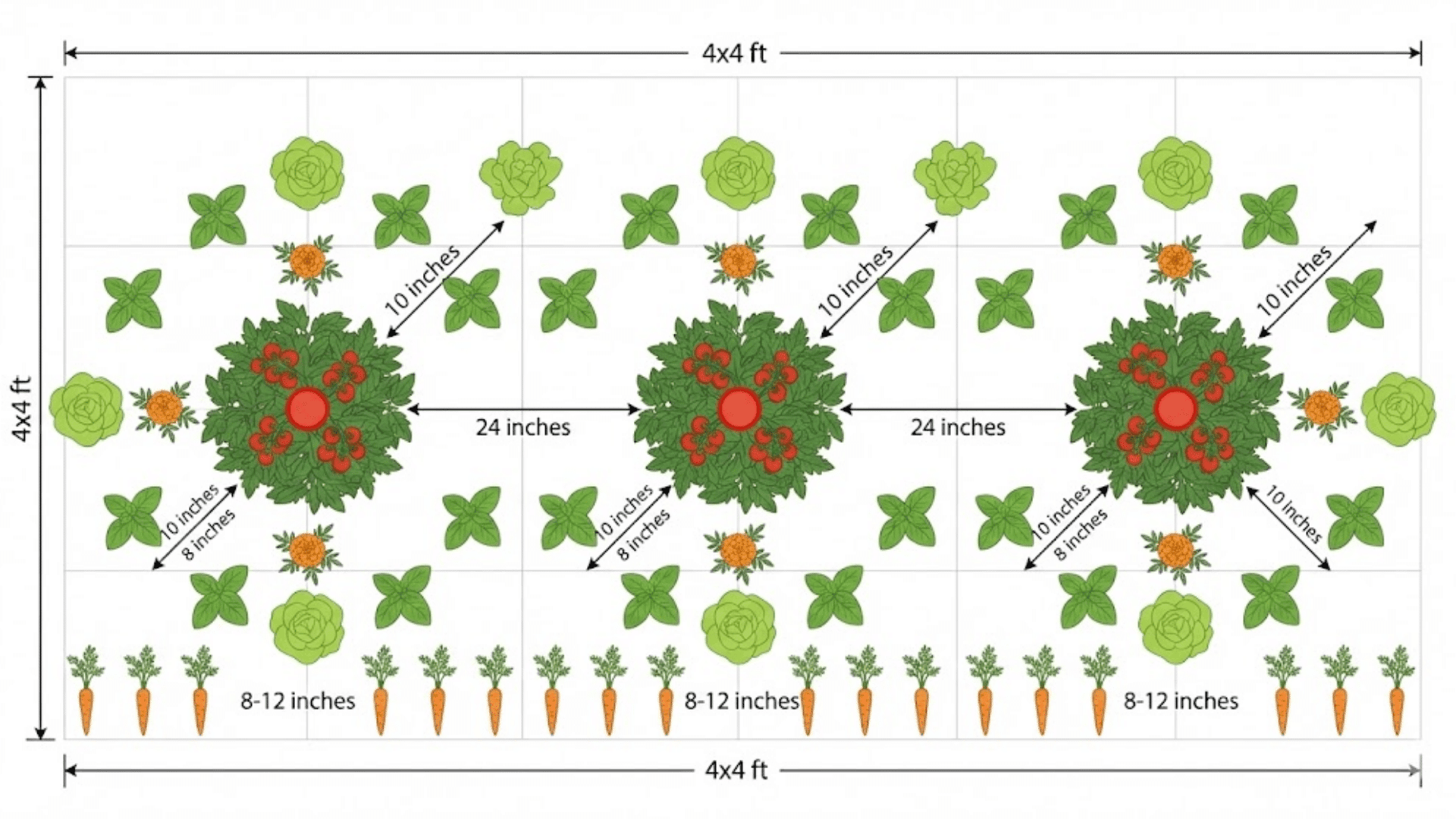
Growth Pattern: Bush-like plants reaching 3-4 feet, setting all fruit at once over 2-3 weeks, then stopping.
Best Companions:
- Marigolds and nasturtiums at base (8-12 inches away)
- Basil and parsley tucked close to stems
- Lettuce and spinach in the surrounding space
- Carrots planted nearby for succession use
Layout Strategy:
Plant 24 inches apart in rows or blocks. Companions sit closer (8-12 inches) since plants stay compact.
After a concentrated harvest, remove and succession plant fall crops while companions remain. Ideal for containers and tight raised beds.
2. Indeterminate Tomatoes
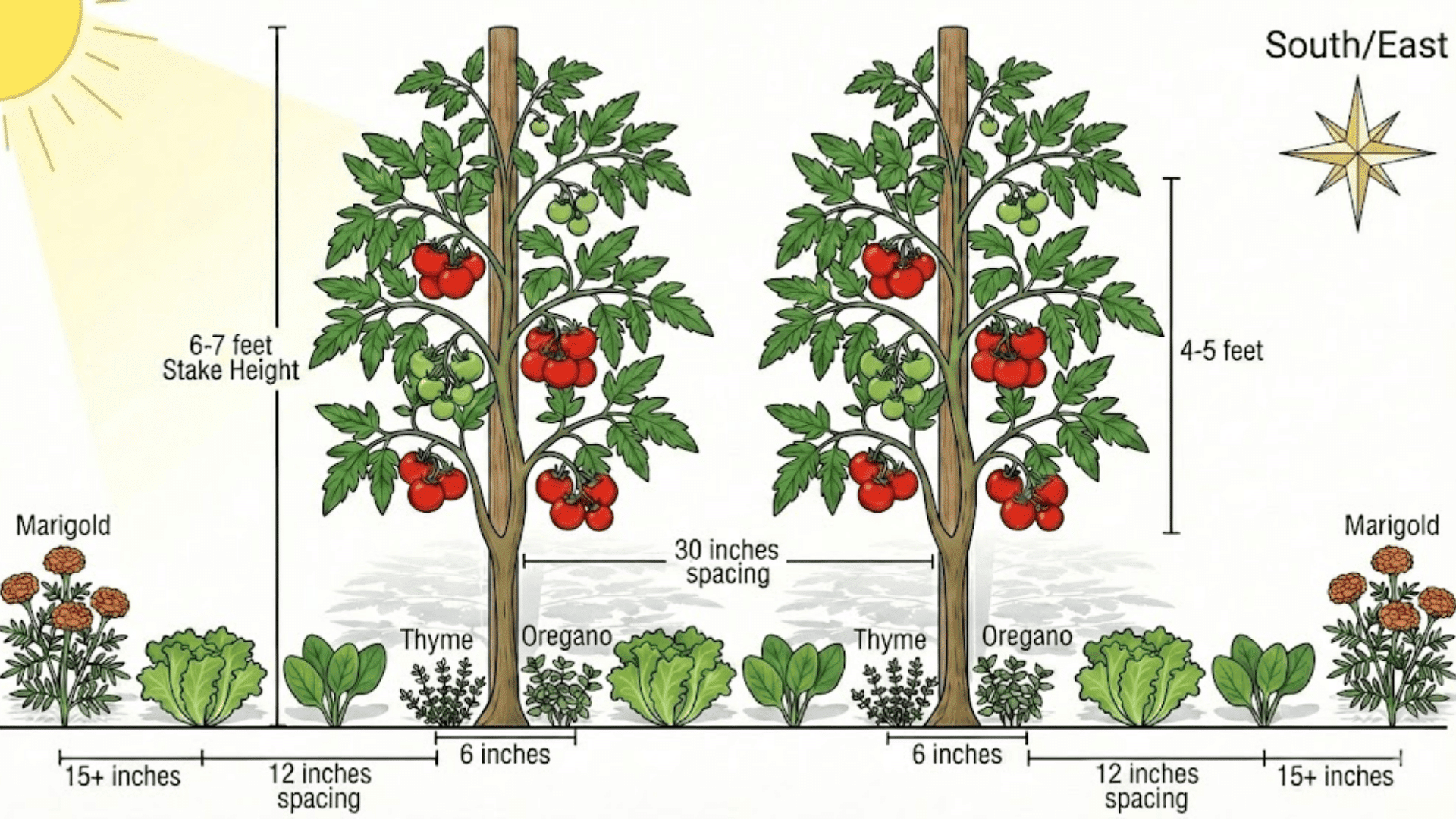
Growth Pattern: Continuous upward growth reaching 6-8+ feet until frost, producing fruit throughout the entire season.
Best Companions:
- Low-growing herbs (thyme, oregano) at the base once the canopy develops
- Lettuce and spinach underneath for shade tolerance
- Carrots and onions 15+ inches away
- Marigolds along the outer perimeter, not directly beside
Layout Strategy:
Space 30-36 inches apart. Stake tall (6-7 feet) to free ground space below.
Position sun-loving companions south or east for morning light; shade-tolerant greens underneath or on the north side. Transition from sun to shade companions as the canopy fills.
3. Cherry vs. Beefsteak Varieties
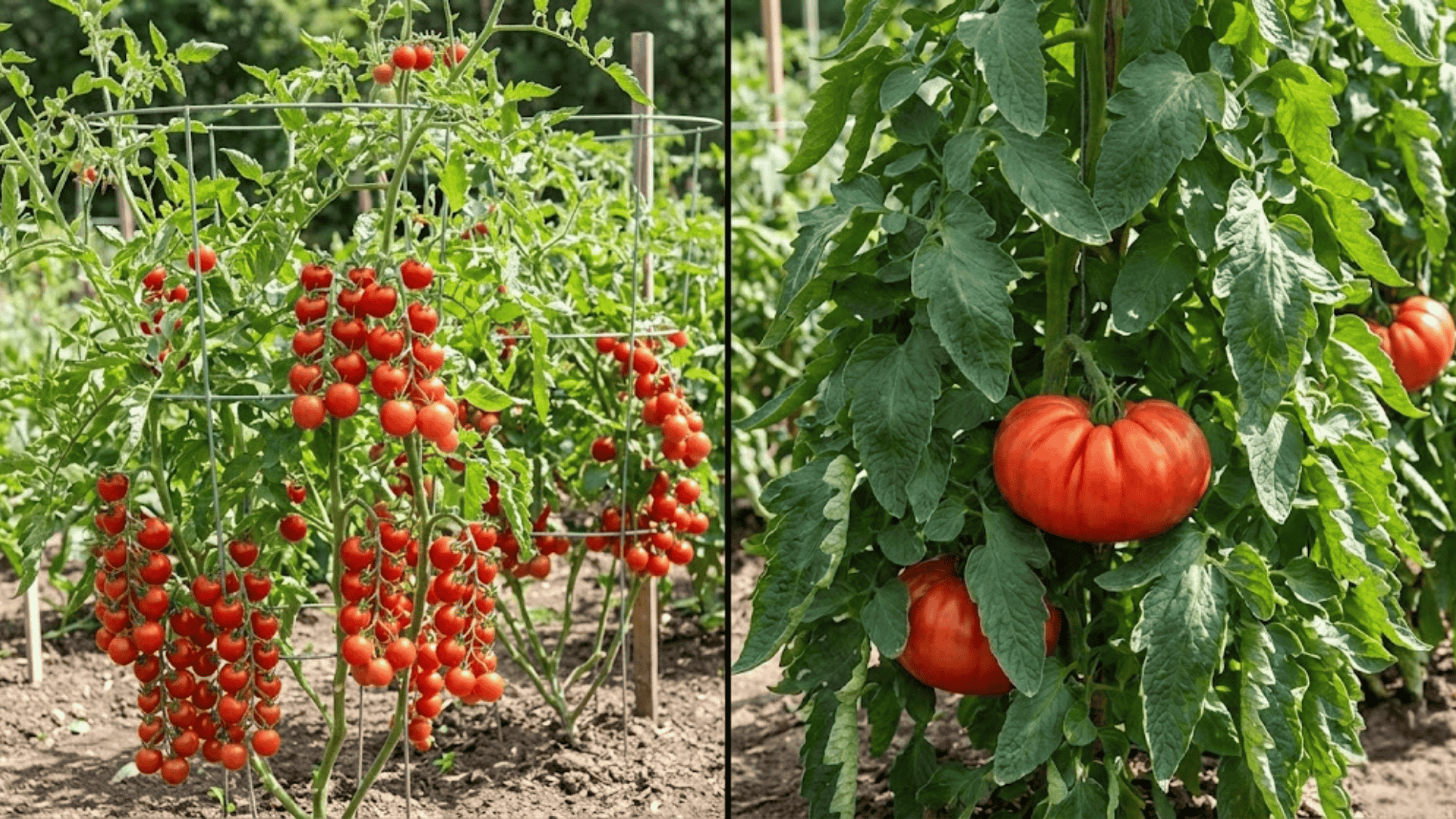
Fruit size dramatically changes how tomatoes interact with their neighbors. Cherry types play well with others, while beefsteaks demand more personal space and resources.
Cherry Tomatoes:
- Produce abundant small fruit on lighter, sprawling vines
- Root systems stay moderate, allowing 18-24 inch companion spacing
- Lighter foliage creates dappled shade rather than a dense canopy
- Pair with: basil, compact flowers, lettuce, radishes, bush beans
Beefsteak Tomatoes:
- Grow massive fruit (1+ pound) on heavy vines with dense foliage
- Extensive root systems demand 30-36 inch spacing
- Heavy feeders compete strongly for nutrients
- Create significant shade below from large leaves
- Pair with: light feeders only (lettuce, herbs, shallow-rooted greens)
Key Difference: Cherry varieties allow closer, more diverse companion planting. Beefsteaks need more space and only tolerate companions that won’t compete for nutrients or require full sun.
Common Companion Planting Mistakes
Even experienced gardeners fall into these traps when arranging companion plants. Avoiding these errors makes the difference between a thriving garden and a frustrating season of stunted growth and disease.
- Overcrowding Tomatoes: Planting companions too close blocks airflow, traps moisture against leaves, and invites fungal diseases, regardless of companion benefits.
- Ignoring Airflow Needs: Dense plantings prevent morning dew from drying quickly, creating perfect conditions for blight and other moisture-loving diseases to spread.
- Mixing Incompatible Root Depths: Pairing shallow-rooted companions with other shallow feeders creates underground competition that starves both plants of nutrients.
- Believing All Companions Help Equally: Not every “recommended” pairing has proven benefits; some popular suggestions lack scientific backing and waste valuable garden space.
Getting companion planting right requires understanding how plants actually interact, not just following generic lists.
Pay attention to spacing, root zones, and airflow first, then choose companions that genuinely serve a purpose in your specific layout.
That’s a Wrap
Growing tomatoes with the right companions turns your garden from a collection of plants into a working ecosystem.
When you pair basil with tomatoes, plant marigolds as pest barriers, and layer vegetables by root depth, you’re building a system where each plant supports the others.
Your layout companion planting tomatoes strategy matters just as much as soil quality or watering schedules.
Start with one of the proven layouts here, adjust spacing to your tomato variety, and watch how companion plants turn pest problems and nutrient competition into natural solutions.
What companion combinations have worked best in your garden? Share your experience in the comments below.