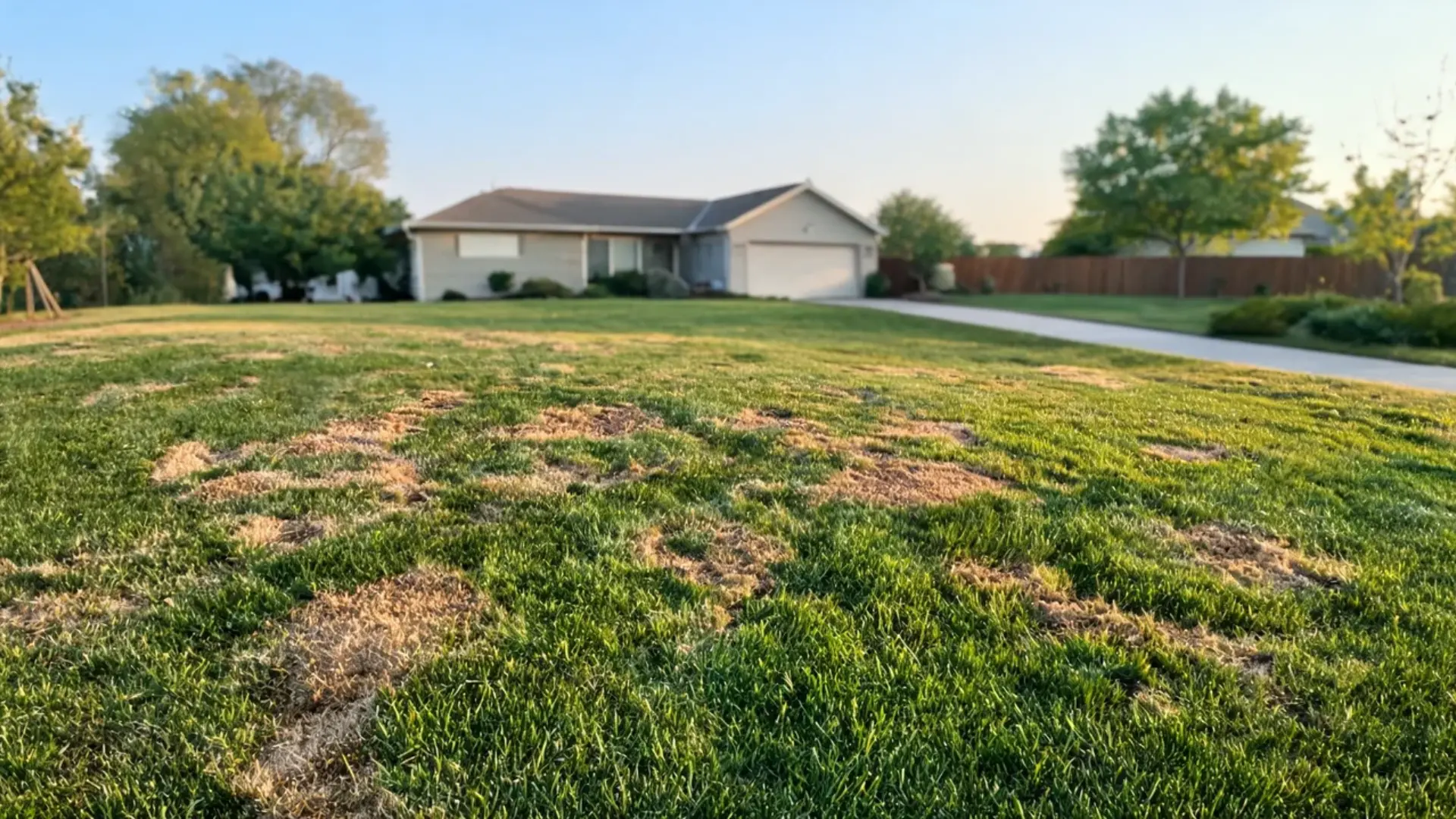
One morning, your lawn looks perfectly green. A few days later, brown patches begin appearing across the grass, and it can feel as though something went wrong overnight, even when you have been caring for the lawn the same way you always have.
Brown patches in the lawn do not have one single cause. What looks like dry grass could actually be poor drainage, insect damage, pet urine, mowing stress, fertilizer burn, or lawn fungus, and choosing the wrong treatment can let the damage keep spreading.
The key is to look closely at the patch shape, soil, roots, and grass blades before deciding what to do. Once you match the signs to the right cause, you can treat the problem properly and help the lawn recover.
Why Your Lawn Develops Brown Patches
Not every brown patch in your yard comes from the same source, which is why a one-size-fits-all fix rarely works.
Brown patches in lawn areas can trace back to weather, watering habits, pests, or a true fungal disease, and each of these leaves slightly different clues behind.
Brown spots in grass caused by drought look and behave differently than spots caused by insects, pet urine, or fungus, even though they can look similar from across the yard.
Reading the soil moisture, root condition, and blade damage together, rather than judging the lawn by color alone, is what separates a quick fix from a repeated problem.
Non-disease causes are usually the easiest to fix once you spot them, while brown patch disease calls for its own timing, treatment, and follow-up care. A closer look at the grass itself will tell you more than the lawn’s color ever could.
Common Causes of Brown Spots in Grass
Brown patches can look almost identical from a distance, but checking the patch shape, soil moisture, roots, and grass blades usually points to one of the causes below.
- Drought or sprinkler gaps: The soil feels dry an inch or two below the surface, and the grass may snap instead of bending. Patches often develop where sprinkler coverage is weak or missing.
- Overwatering or poor drainage: The soil remains damp long after watering, particularly in low or shaded areas. Compacted soil and thick thatch can trap moisture and weaken the roots.
- Grubs and other insects: White grubs feed on grass roots, so heavily damaged turf may feel loose and lift like carpet. Chinch bugs and sod webworms can also create irregular brown areas, though they damage different parts of the grass.
- Dog urine: Small, round spots usually appear in the same locations. A ring of darker green grass may surround the damaged center because the nitrogen is less concentrated around the outside.
- Mowing damage: Brown tips or scalped strips often follow the mower’s path. Dull blades tear the grass rather than cutting it cleanly, leaving ragged edges that turn brown.
- Fertilizer burn: Damage may follow spreader lines, overlapping passes, or places where fertilizer was spilled, and it often becomes visible shortly after feeding the lawn.
- Compacted soil or nutrient problems: Grass may thin out in busy areas where the soil feels hard or crusted. A soil test is the best way to confirm a nutrient issue rather than guessing.
When none of these causes match what you are seeing, a lawn disease may be responsible, so check the blades and recent growing conditions closely before deciding whether brown patch or another fungal problem is involved.
Other Lawn Diseases That Cause Brown Spots
Brown patch is not the only fungal problem that can discolor a lawn, so this table breaks down a few other common lawn diseases and the specific sign on the grass blades that helps you tell each one apart at a glance.
| Disease | Key Sign to Look For |
|---|---|
| Rust | Fine orange or reddish dust on the blades that may rub off onto shoes or hands |
| Leaf spot | Small dark brown or tan marks on individual blades instead of large circular patches |
| Powdery mildew | A white or gray powdery coating, often in shaded areas with poor airflow |
| Yellow patch | Yellow-green or brown rings that usually appear during cool, wet weather |
Confirm the cause before treating the lawn, since each disease responds to a different approach, and when more than one seems possible, a lawn care professional or turf lab can provide an accurate diagnosis for your yard.
How to Fix Non-Disease Causes of Brown Spots
Fungicide will not help grass damaged by drought, and additional watering will not solve an insect problem, so the treatment must match the cause if you want the brown spots to stop returning.
1. Water and Drainage Fixes
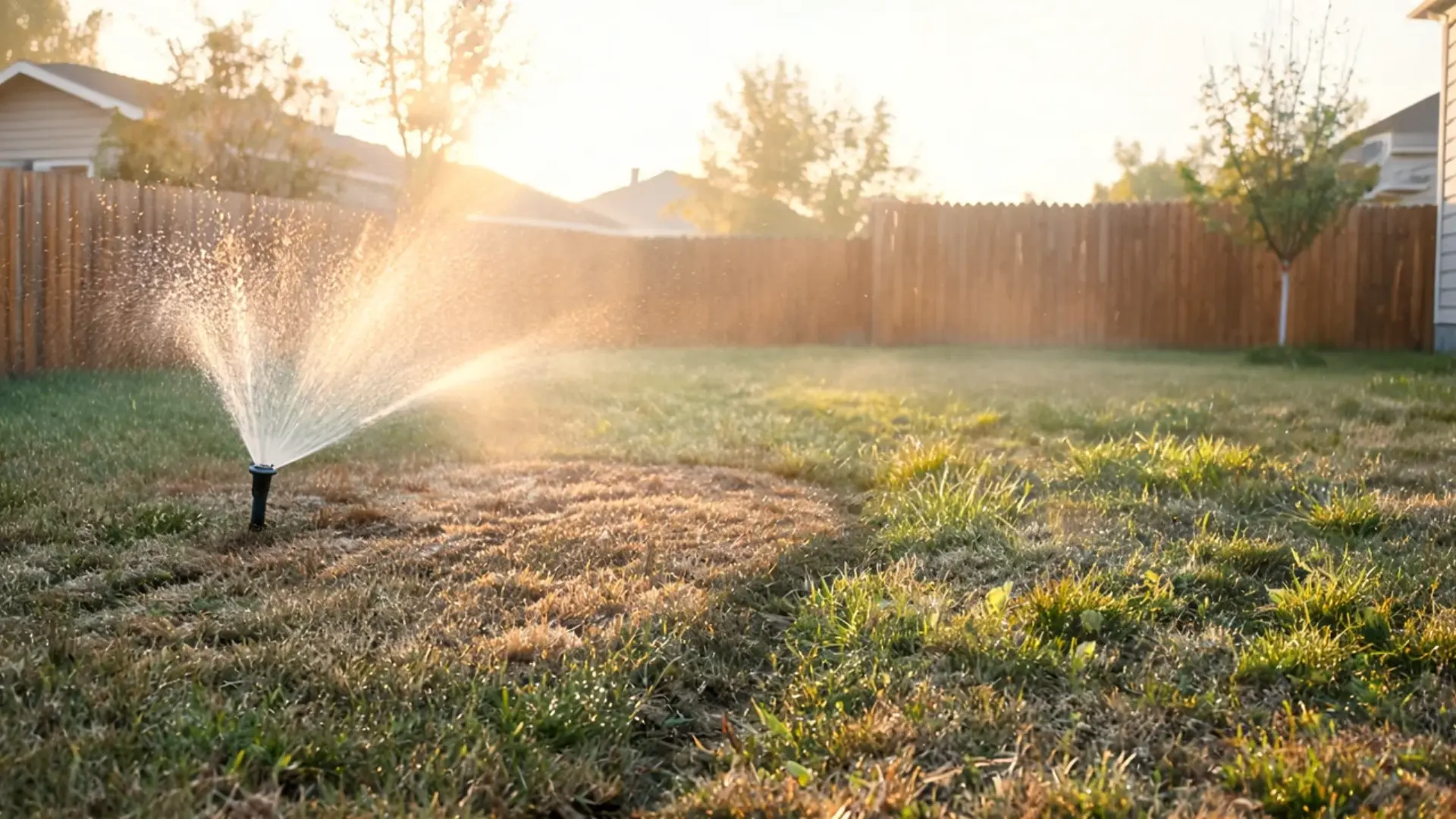
For drought or sprinkler gaps, water early in the morning and inspect each sprinkler head for weak spray, blocked openings, or missed areas.
Once the lawn is established, shift to deep watering two to three times a week instead of daily light sprinkles to help moisture reach the root zone and encourage deeper root growth.
When the soil stays wet instead, cut back the watering schedule and let it dry between sessions, and correct any low spots where water collects after rain or irrigation.
2. Soil and Nutrient Fixes
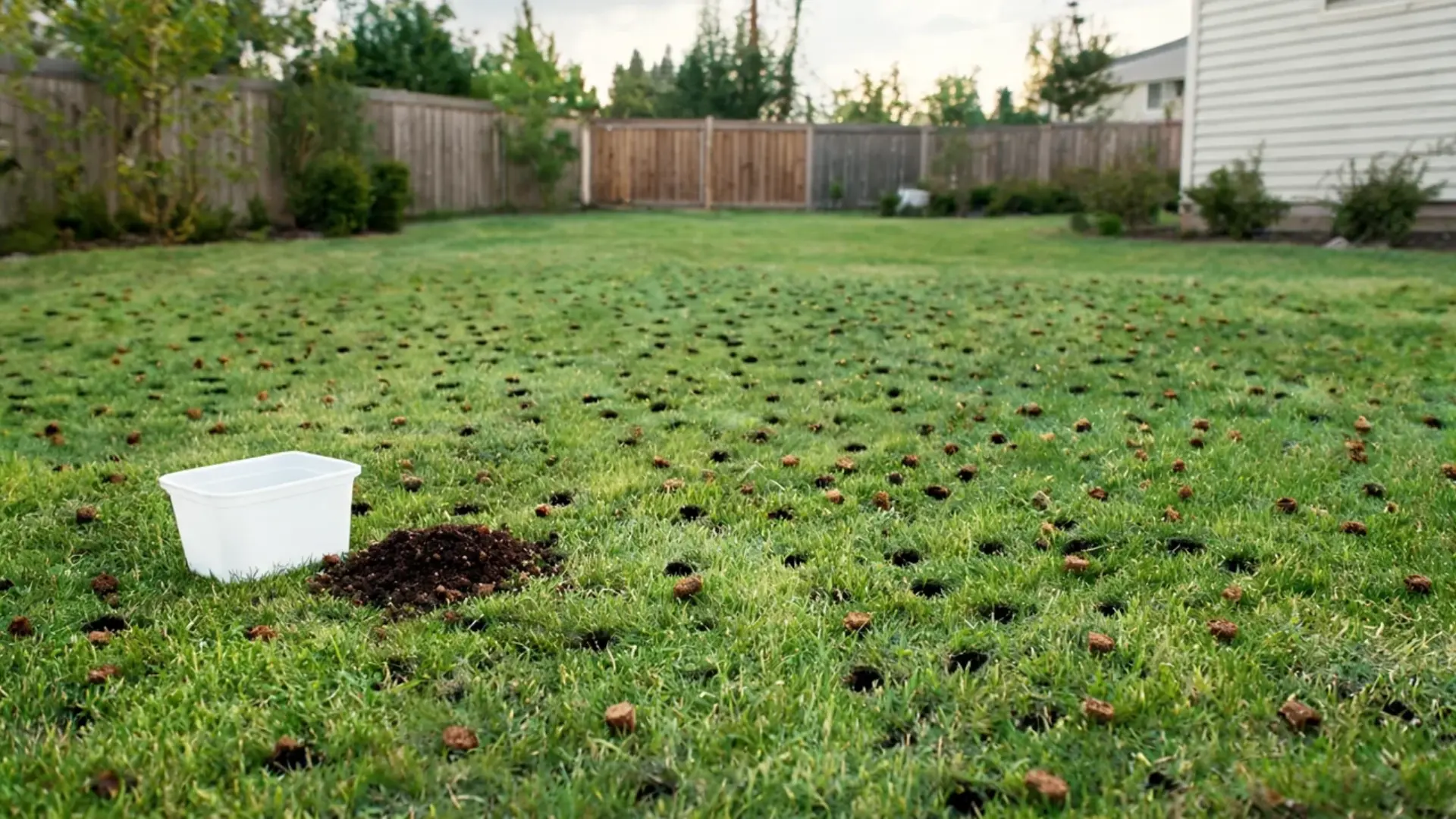
Aerate compacted soil to help water, oxygen, and nutrients reach the roots, and limit foot and pet traffic while weak or thin grass recovers.
Test the soil before applying additional fertilizer, since pale grass does not always mean the lawn lacks nutrients, and feeding a lawn that does not need it can cause fertilizer burn or create conditions that support fungal disease.
3. Fix Damage Not Caused by Disease
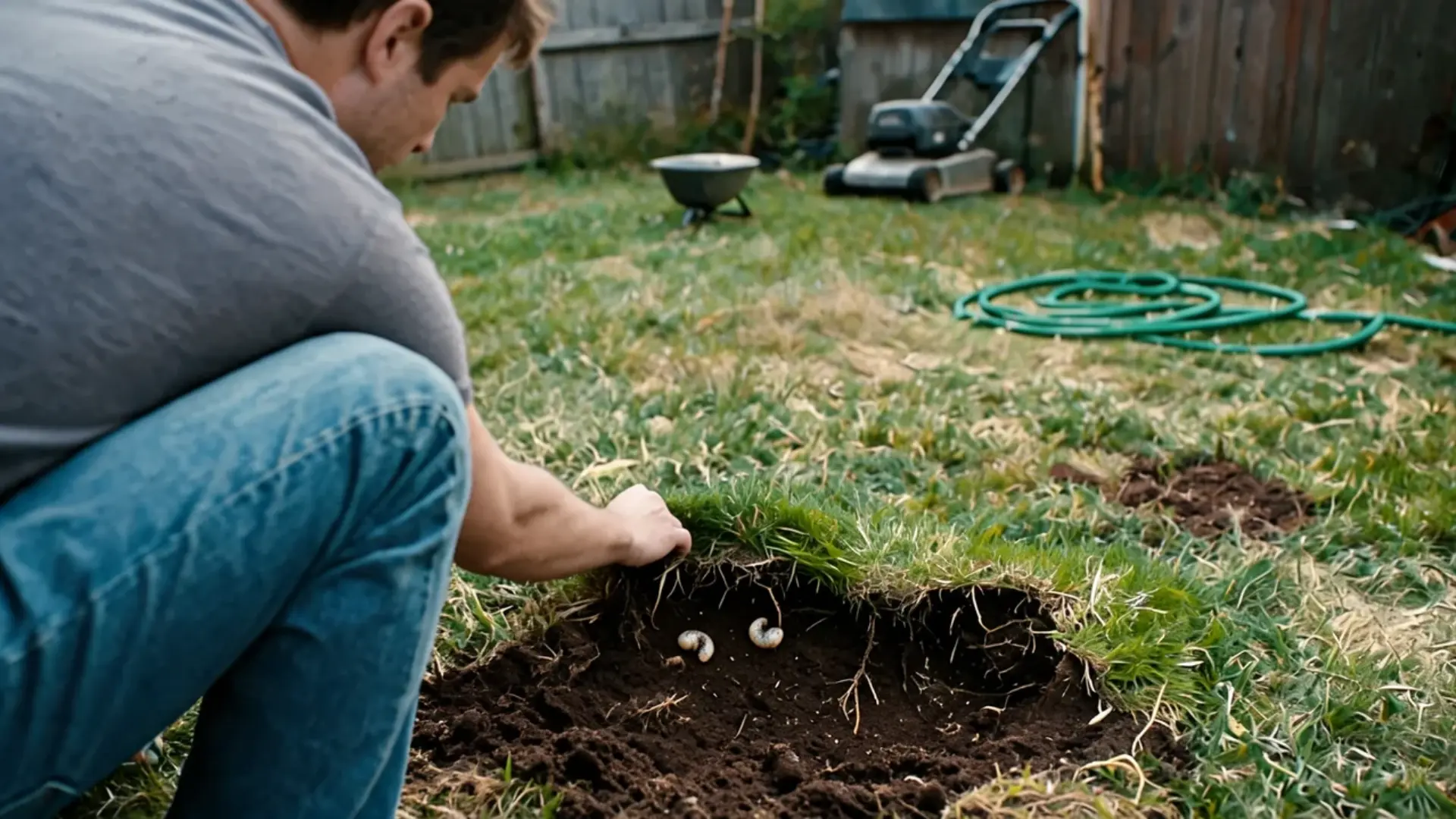
Identify the cause before treating the lawn. Check loose turf and damaged roots for white grubs, and inspect the blades and thatch for chinch bugs or sod webworms, using only a product labeled for the confirmed pest.
Water fresh dog urine spots, raise the mower deck, sharpen dull blades, and stop fertilizing if burn is suspected, then give the damaged grass time to recover.
Common Signs of Brown Patch Disease
Brown grass does not always mean your lawn has brown patch disease. To identify it correctly, look at the shape of the damaged areas, the condition of the grass blades, recent weather, and how much moisture the lawn has received.
Brown patch often appears as round or uneven areas that range from a few inches to several feet wide, and the damage may spread quickly during warm, humid weather. Look for these signs:
- Tan or brown patches across the lawn
- Grass blades with tan spots and dark brown or purple borders
- Rot near the base of the blades
- Gray or whitish fungal growth that may appear during humid mornings
- A dark ring that may appear around the edge of an actively spreading patch
Symptoms can look different depending on the grass type. According to the Clemson University Home & Garden Information Center, brown patch mainly affects cool-season grasses such as tall fescue, ryegrass, bluegrass, and bentgrass.
Warm-season grasses like St. Augustinegrass, zoysiagrass, centipedegrass, and bermudagrass are affected by a related disease called large patch instead. Tall fescue in particular may look dull or tan without developing a clear ring around the damaged area.
How to Control Brown Patches in Lawn and Repair Damaged Turf
Once brown patch has been confirmed, treatment and repair need to happen in order, since reseeding before the disease is under control can cause the new grass to fail too.
Step 1: Reconfirm the Diagnosis
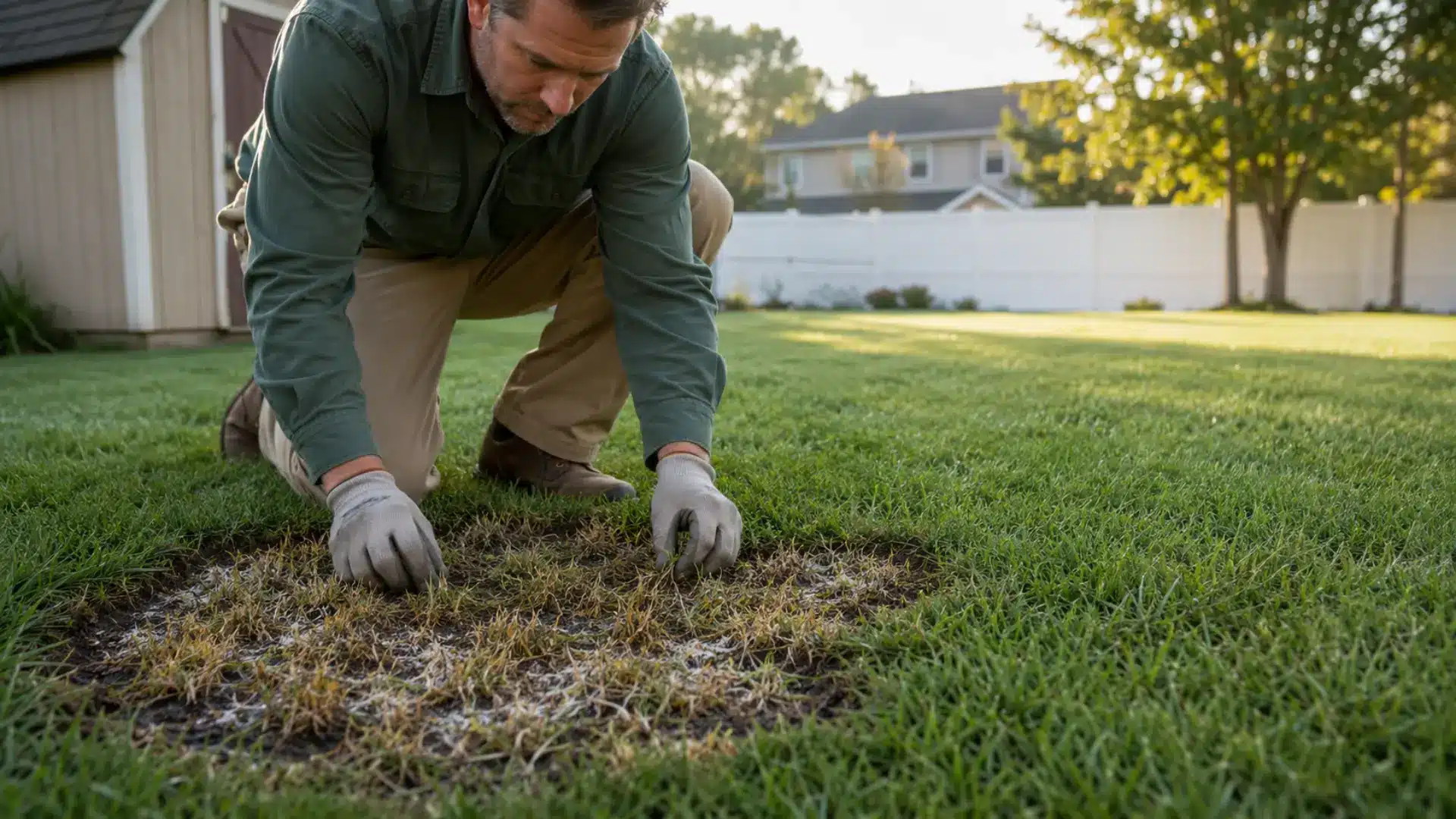
Before using fungicide, confirm that several signs of brown patch appear together. Check the patch shape, grass blades, soil moisture, and recent weather, looking for tan lesions with dark borders, rot near the blade base, or gray fungal growth during humid mornings.
Do not treat the lawn based only on its brown color, since other problems can cause similar damage.
Step 2: Remove Favorable Conditions
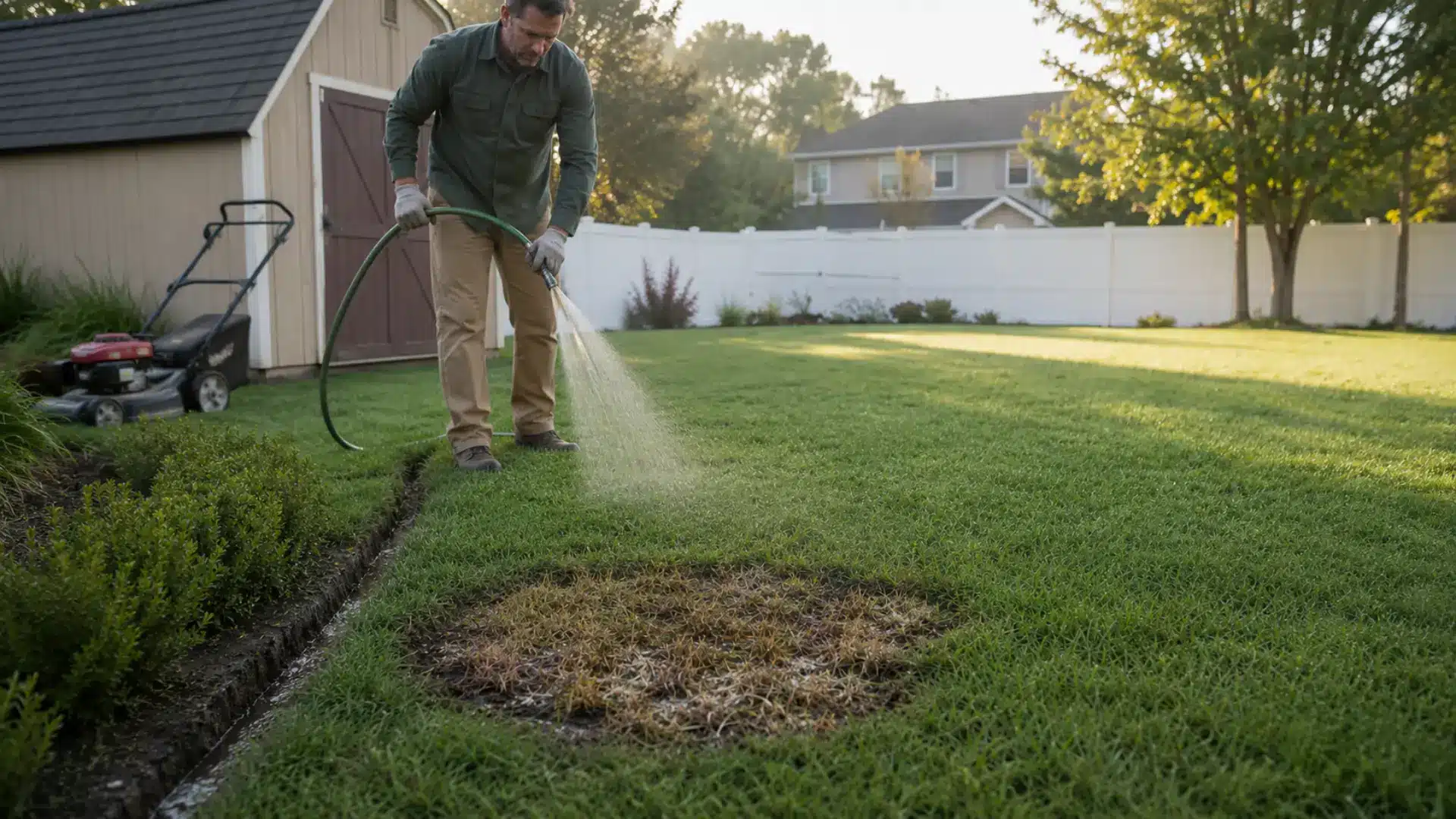
Water early in the morning so the grass has enough time to dry before night, improve drainage in low areas, and increase airflow around shaded parts of the lawn.
Reduce heavy nitrogen applications during warm and humid weather because soft growth is more vulnerable to disease, and avoid mowing wet grass. If excess thatch prevents the lawn from drying properly, plan to remove it during the suitable growing season for your grass type.
Step 3: Apply Fungicide if Needed
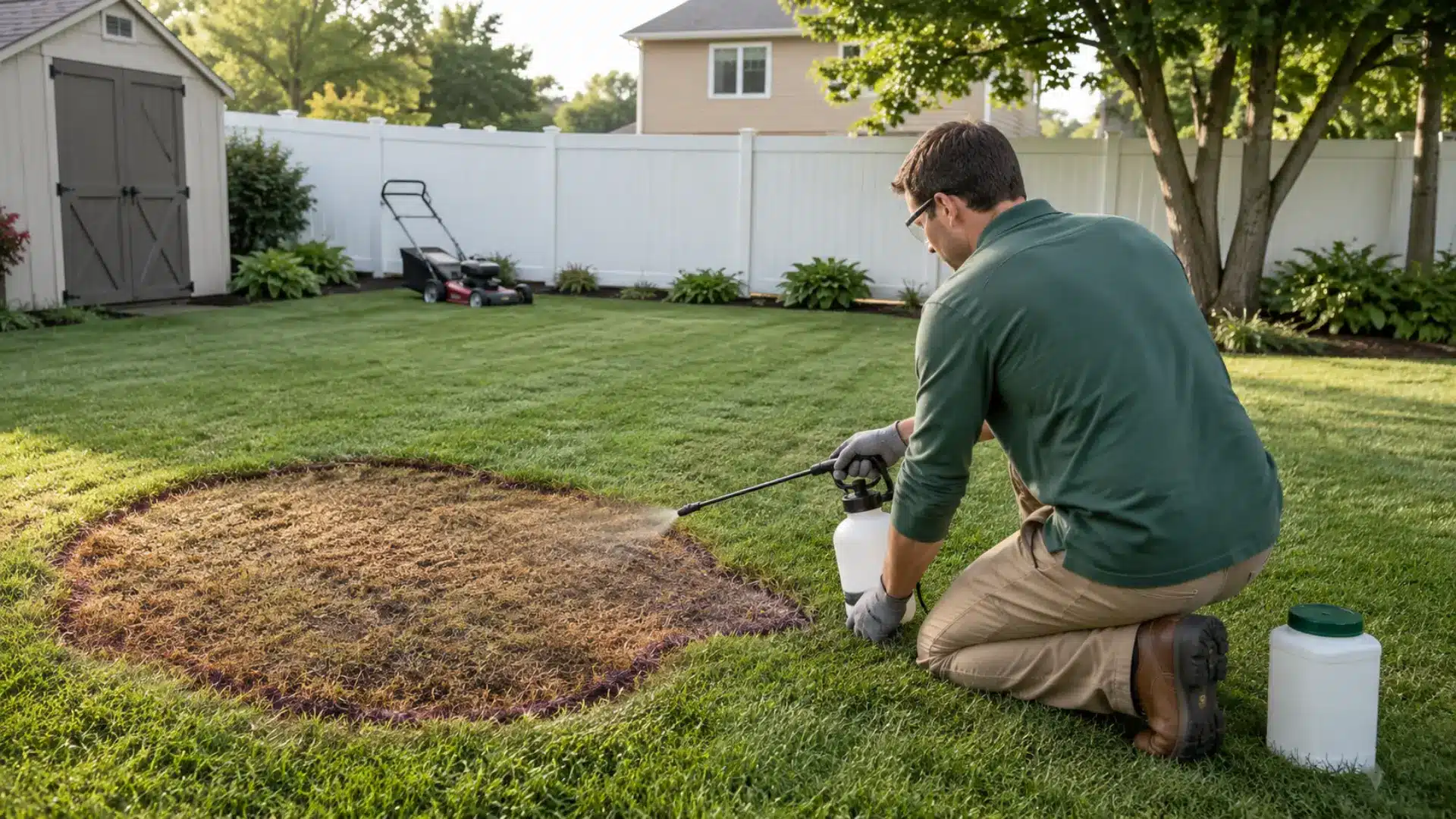
Use fungicide only after the patch pattern, blade symptoms, and weather conditions support a brown patch diagnosis, and choose a product labeled for brown patch and suitable for your grass type.
Follow all label directions for timing, amount, watering, safety, and repeat applications. Fungicide will not turn damaged blades green, so watch the patch edges to confirm that spreading has stopped.
Step 4: Repair Dead or Bare Areas
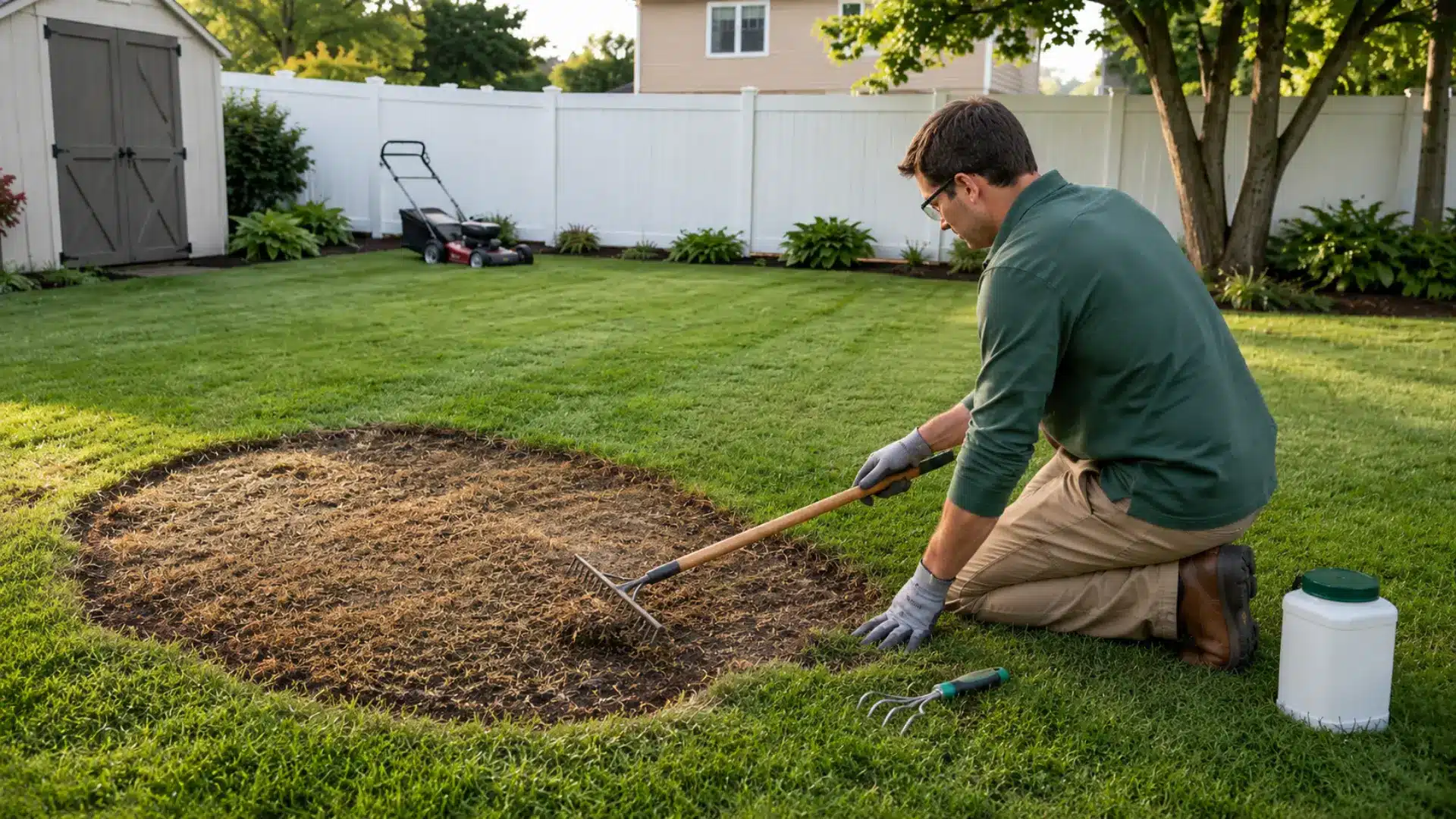
Wait until the disease has stopped spreading before repairing damaged turf, and check whether the crowns and roots are still alive, since firmly rooted grass may recover on its own.
If the turf is dead, rake away loose material, loosen the soil, and correct drainage or compaction. Reseed with a grass type that matches the lawn during its proper growing season.
Step 5: Water and Protect the New Grass
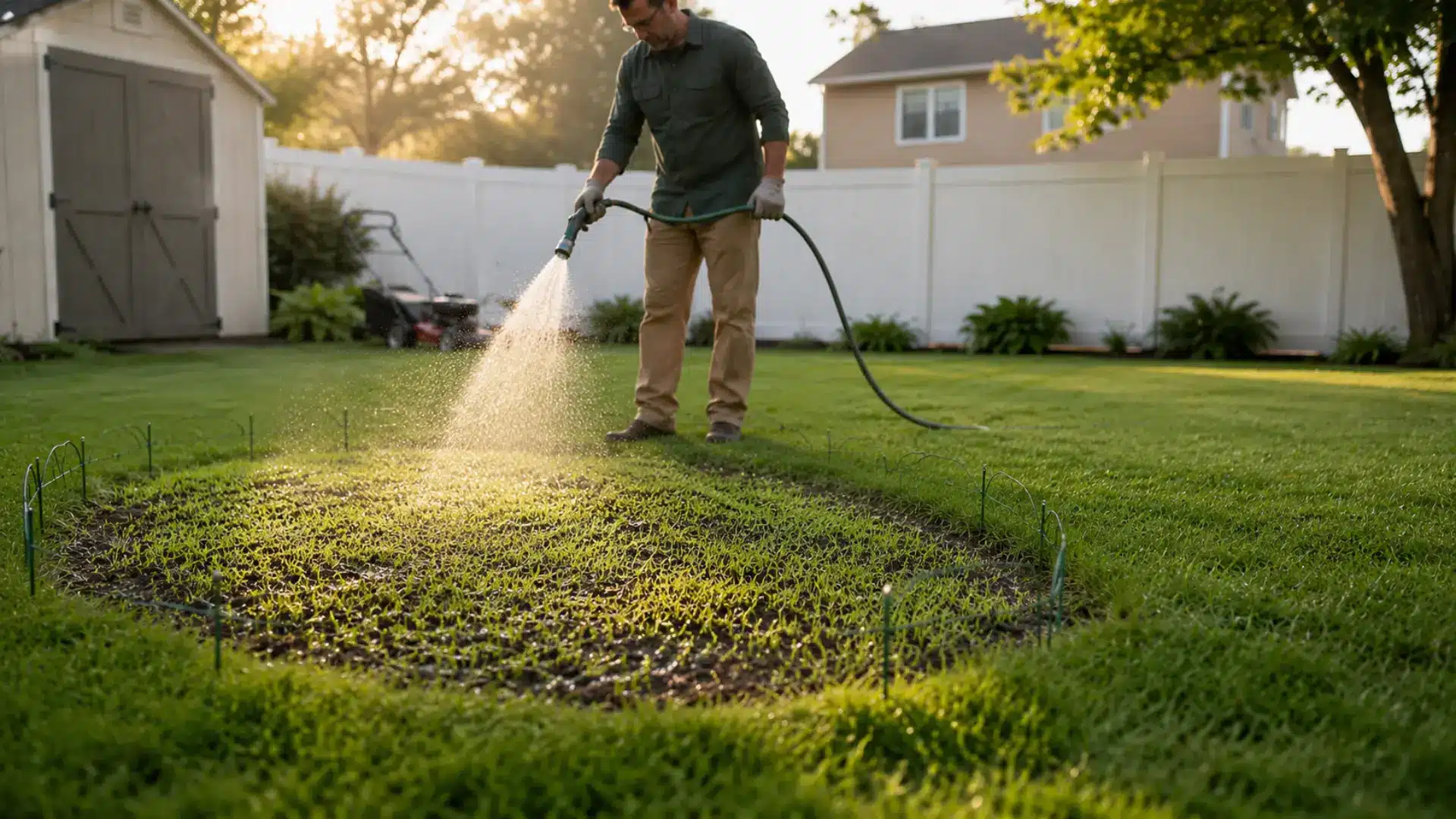
Keep the upper layer of soil evenly moist while new grass becomes established, but do not leave the area soggy.
Protect the repaired section from people and pets until the roots are strong, and wait to mow using a sharp blade until the grass is firmly rooted and tall enough for its first cut, removing no more than one-third of its height.
After the disease stops spreading and the repaired grass begins growing, regular lawn care becomes the best way to prevent another outbreak.
How to Prevent Brown Patches From Returning
Healthy roots and consistent lawn care can reduce the risk of both disease and everyday lawn damage. Begin by checking the sprinkler system each season for weak coverage, blocked heads, and areas that stay wet too long.
Match fertilizer applications to your grass type, season, and soil-test results instead of following the same schedule year-round, and avoid heavy nitrogen during warm, humid weather.
Keep mower blades sharp and use the correct mowing height for your grass, never removing more than one-third of the blade height at once.
Improve drainage in low areas and aerate the soil when it becomes compacted, and limit foot and pet traffic on thin or recently repaired sections of the lawn.
Even with proper care, some lawn problems are difficult to identify without closer testing, and repeated or worsening damage may be a sign that professional help is needed.
Brown Patch Risk Factors and Similar Lawn Problems
Brown patch develops in warm, humid conditions when grass stays wet for long periods. Penn State Extension lists heavy dew, frequent rain, poor drainage, thick thatch, late-evening watering, and excess nitrogen fertilizer among the biggest risk factors for this disease.
Because several lawn problems can look similar from a distance, it is worth checking the pattern and conditions before treating.
| Problem | Main Difference From Brown Patch |
|---|---|
| Drought stress | Soil is dry, and the grass blades are brittle |
| Grub damage | Roots are weakened, so the turf lifts easily |
| Dog urine | Small, repeated spots appear in the same areas |
| Overwatering | Damage shows up in wet, shaded, or low spots |
| Fertilizer burn | Damage follows spills or spreader overlap |
| Mowing damage | Grass is cut too short, or blades are torn |
Carefully checking soil moisture, root health, and damage patterns will help you confirm whether it is brown patch or another issue entirely.
When to Contact a Lawn Care Professional
If the cause remains unclear or the brown patches keep returning, a lawn care professional can help identify the problem before you spend money on unnecessary treatments. Contact a professional when:
- The cause remains unclear after checking the soil, roots, grass blades, watering patterns, and recent weather
- More than one issue seems possible, such as insect damage combined with poor drainage or disease
- Brown patches continue spreading after treatment
- The turf lifts easily from the soil
- The same damage returns every season
- A large portion of the lawn is affected
- Reseeding or repairs have failed more than once
- The lawn may need grading, drainage correction, or major soil improvement
These signs may point to an untreated pest problem, a deeper soil issue, or a disease that requires laboratory confirmation. A professional can inspect the grass, roots, thatch, soil moisture, drainage, and mowing conditions, and may take soil or turf samples when a visual inspection is not enough.
An accurate diagnosis helps you avoid applying the wrong fungicide, insecticide, or fertilizer, and can stop the damage from spreading.
Frequently Asked Questions
Can brown patch spread to nearby areas?
Yes, it can keep expanding while warm, humid conditions remain and the grass stays wet for long periods. Reducing moisture on the blades and treating a confirmed case early can help limit new damage.
Can healthy grass remain inside a brown patch?
Yes, healthy blades may remain inside an uneven patch, so this alone does not rule out brown patch. Inspect several blades and consider recent weather before reaching a conclusion.
Does brown patch affect the roots or mainly the blades?
Brown patch normally appears first on the blades and lower stem tissue, often as tan marks, dark borders, or rot near the base. The roots often remain alive even when surface damage looks serious.
Can brown patch appear almost overnight?
Yes, symptoms can become visible quickly during hot, humid weather, especially after rain, heavy dew, or late watering. Grass that stays wet overnight creates favorable conditions for the disease.
Final Takeaway
Brown patches in lawn areas do not have to take over once you understand what is causing them. The right treatment begins with the soil, roots, and individual grass blades, not a guess based only on how the lawn looks from a distance.
Compare the signs against common causes such as drought, poor drainage, insects, pet damage, mowing problems, fertilizer burn, and fungal disease, then treat only the cause you can reasonably confirm.
Repair bare or thin areas once the underlying problem is under control, not before. Walk your yard, inspect the nearest brown patch closely, and start with the treatment that matches what you find. Drop a comment below and let me know if it helped.