Choosing an exterior color can feel easy until the samples go up beside the roof, trim, brick, stone, and landscaping. That is when small color shifts start to matter. The right shade can make a home feel clean, balanced, and more inviting before anyone reaches the front door.
Benjamin Moore exterior paint colors offer a wide range of options. I’d start by narrowing the palette to a main color, trim color, and one accent so the exterior feels clean.
You’ll find options for soft whites, greiges, navy shades, and deeper tones that work for real homes. A few smart pairings can make the search easier and help you see which colors may actually look right before any paint goes on the wall.
Why Choose Benjamin Moore for Exterior Painting?
Benjamin Moore is a strong choice for exterior painting because its paints are made to handle real outdoor conditions. Premium lines like Aura Exterior and Regal Select Exterior offer strong coverage, weather resistance, and fade and mildew resistance, helping the home look fresh for longer.
These paints are useful for siding, trim, doors, and other exterior surfaces that face sun, rain, wind, and changing temperatures.
Another reason homeowners trust Benjamin Moore is color accuracy. The shades are known for staying consistent, so the color chosen from a sample is more likely to match the final painted surface. This matters when planning house color schemes or doing touch-ups later.
Benjamin Moore paints are available through authorized retailers and local paint stores. Many stores also offer color-matching services, which can help match existing siding, trim, brick, stone, or another paint shade.
Build a House Color Scheme Before Picking Paint
Before choosing a favorite shade, look at the parts of the home that will not change. These fixed details guide the full palette and help prevent color clashes later.
- Roof color: Start with the roof because its tone covers a large area and influences how every exterior paint color appears.
- Fixed materials: Check brick, stone, wood, or existing siding, since these surfaces remain visible and shape the overall color palette.
- Main body shade: Choose the siding color after reviewing permanent materials so the largest painted surface feels connected and balanced.
- Trim color: Pick a trim shade that clearly frames windows, doors, corners, and rooflines without creating harsh contrast.
- Accent color: Use one accent shade for the front door, shutters, or smaller details to add focus without clutter.
- Outdoor view: Review the full palette outside because natural light, shadows, and surroundings can change how colors appear.
| Tip: Even the best exterior paint color can look wrong when paired with mismatched fixed elements. Always build the palette around permanent features first, then choose paint colors that support them naturally. |
Once these details are clear, the paint search becomes much easier. You are not just picking a shade that looks nice on a card. You are building a complete exterior palette that feels balanced, suits the home, and works with the features already in place.
Most Popular Benjamin Moore Exterior Paint Colors
These Benjamin Moore shades cover soft whites, warm neutrals, calm greens, classic blues, and deep charcoals, helping you compare each color with more clarity
1. White Dove OC-17
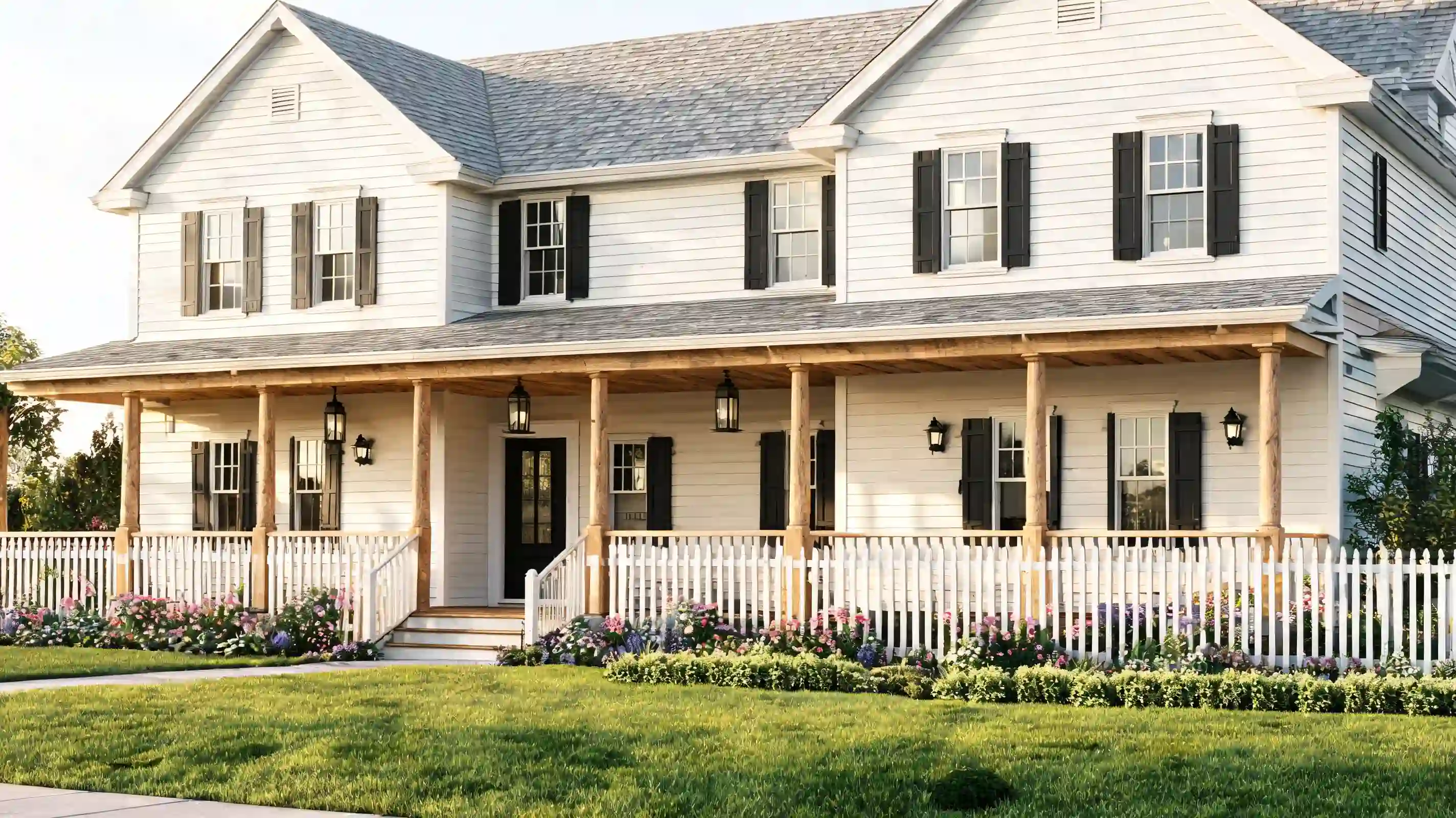
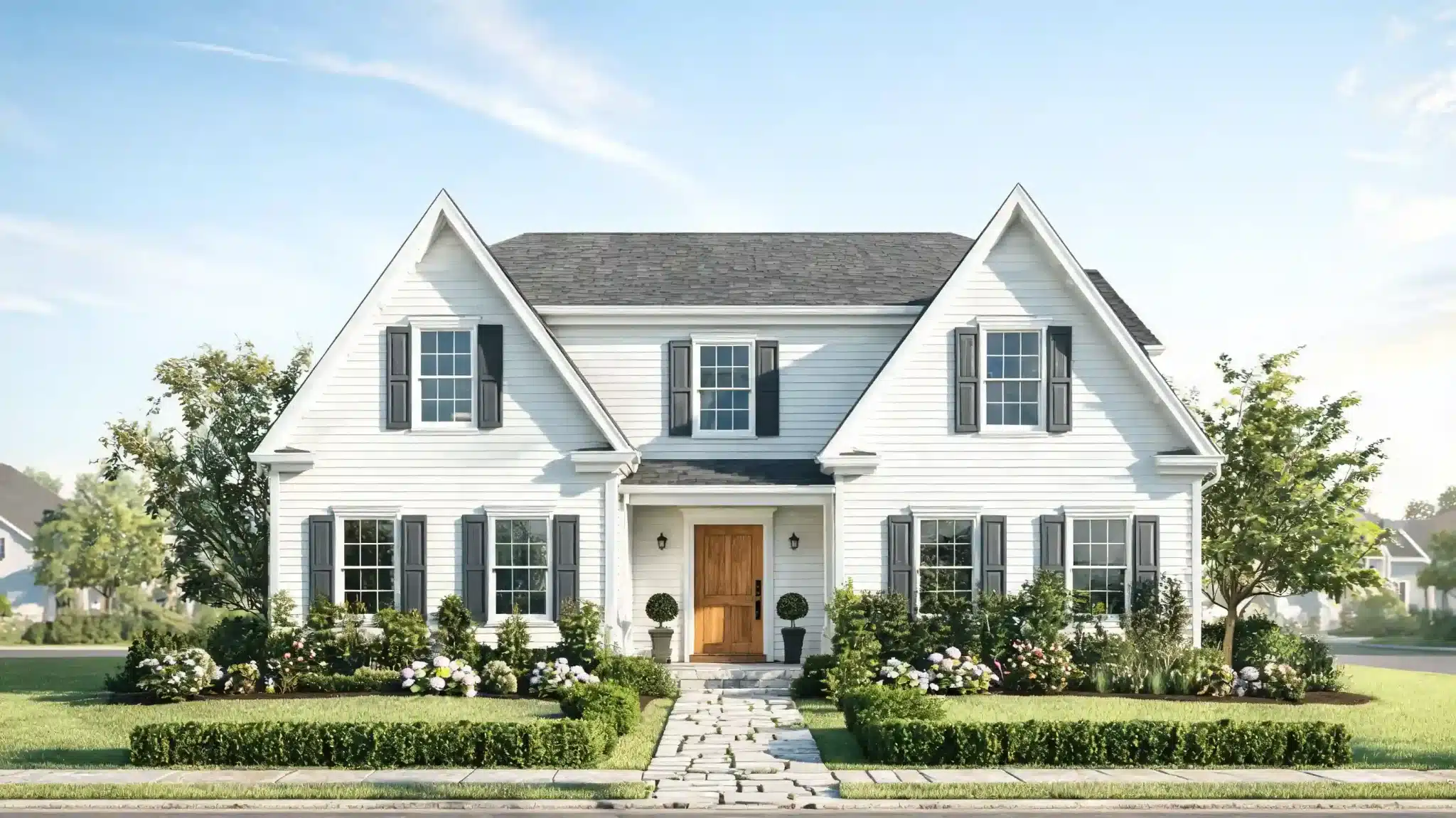
White Dove OC-17 brings a soft, welcoming appearance to exterior surfaces. With an LRV of 83.16, it reflects substantial light while maintaining a gentle character. Its creamy undertone prevents the color from feeling stark in bright daylight.
The shade creates a balanced look that suits farmhouse, cottage, colonial, and other traditional homes where warmth and brightness should coexist naturally.
2. Chantilly Lace OC-65
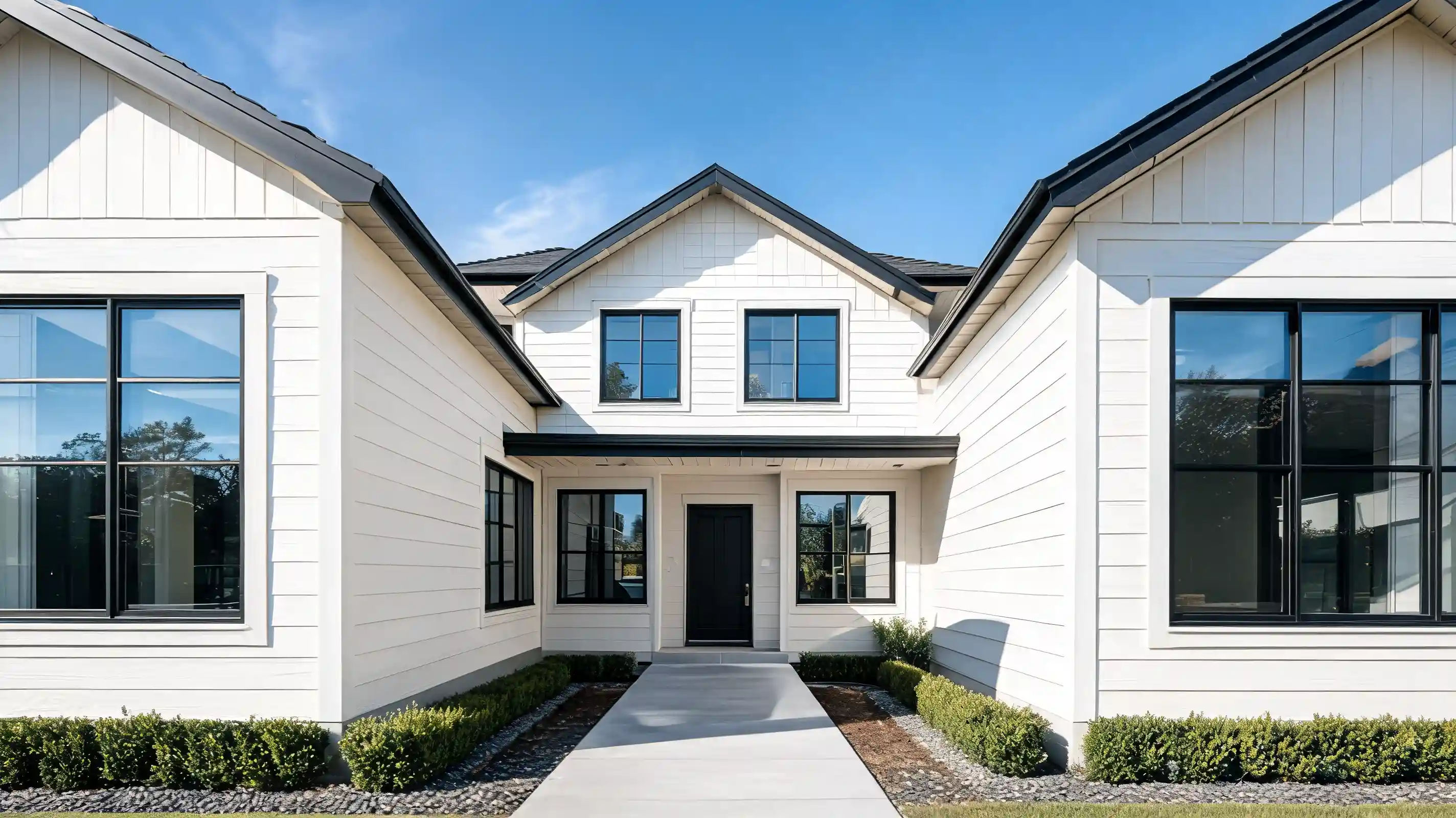
Among Benjamin Moore’s brightest whites, Chantilly Lace OC-65 has an impressive LRV of 90.04. The color has a nearly neutral undertone, making it appear exceptionally crisp and clean outdoors.
It delivers strong visual contrast without looking overly warm. This makes it particularly effective for modern architecture, white trim applications, black accents, and streamlined exterior designs.
3. Simply White OC-117
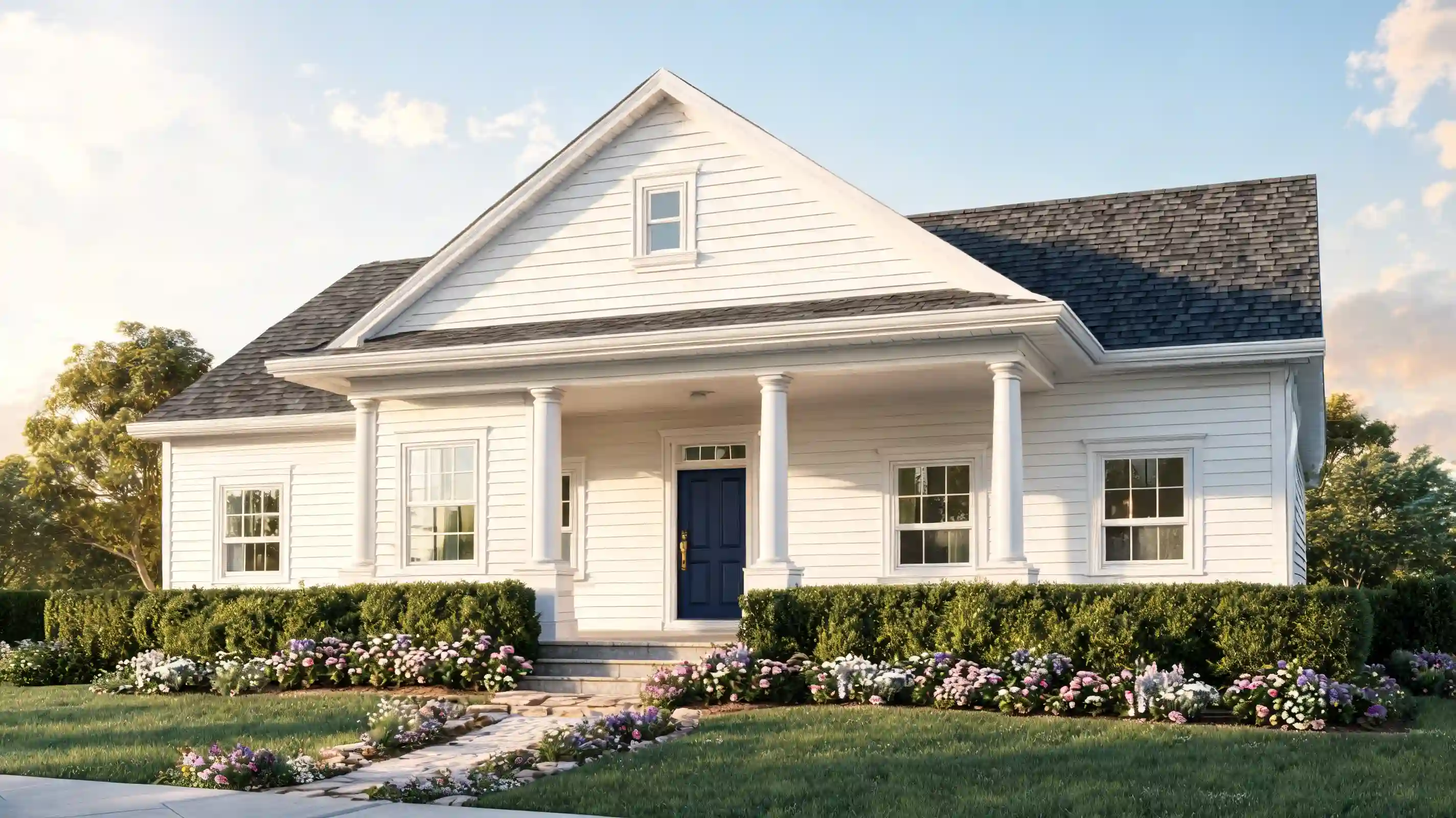
Simply White OC-117 combines brightness with a subtle touch of warmth, creating an inviting exterior finish. Its LRV of 89.52 helps maximize light reflection while avoiding the sterile appearance some whites can produce.
The undertone remains soft and approachable in changing daylight. It works especially well on siding, trim, porch columns, and fresh white exterior palettes.
4. Swiss Coffee OC-45
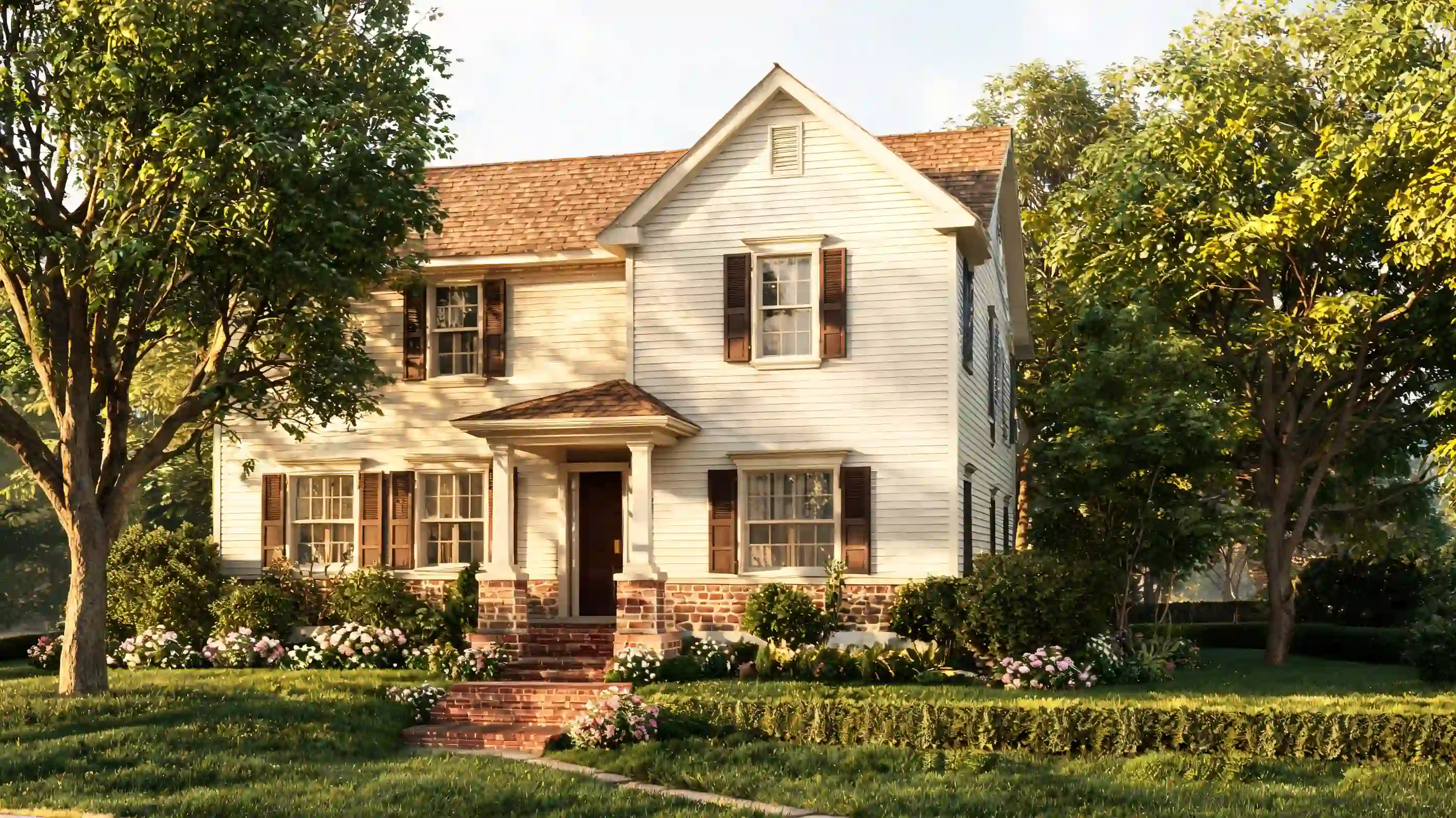
Swiss Coffee OC-45 offers a creamy alternative to brighter whites. Featuring an LRV of 81.91, it keeps exteriors feeling light while introducing additional warmth. Beige and soft yellow undertones create a relaxed appearance that complements natural surroundings.
The color feels comfortable and timeless, making it a strong choice for traditional homes, brick details, and warm roofing.
5. Revere Pewter HC-172
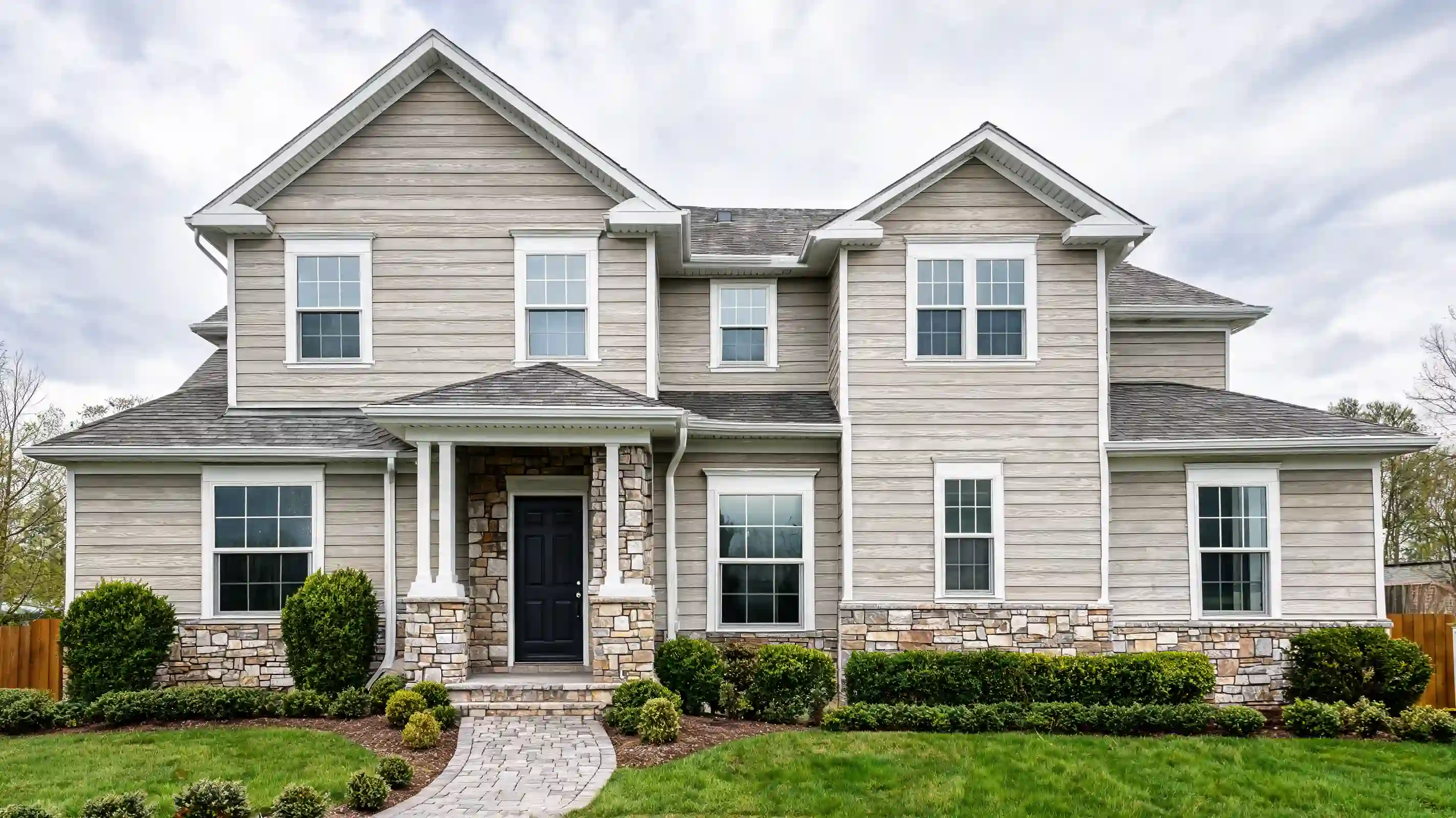
Revere Pewter HC-172 remains one of Benjamin Moore’s most versatile greiges. Its LRV of 55.05 provides noticeable depth without making the exterior appear dark. A blend of warm gray and beige undertones creates a grounded, approachable look.
The shade works comfortably alongside stone, brick, and neutral architectural elements, helping homes achieve enduring curb appeal and balance.
6. Edgecomb Gray HC-173
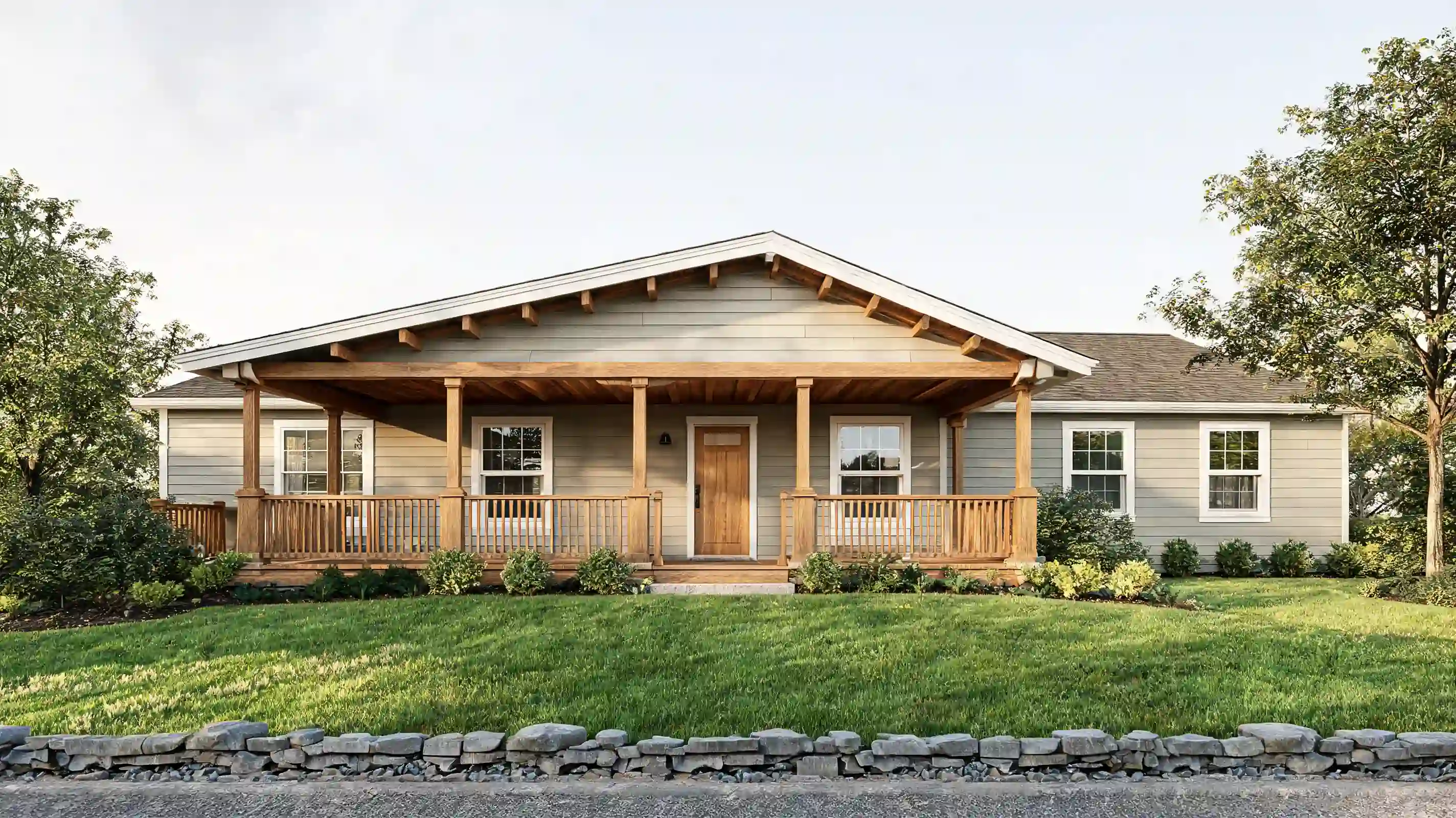
Edgecomb Gray HC-173 gives exterior walls a light neutral look with quiet warmth. Its LRV of 63.09 keeps the color bright enough for large surfaces, while the warm greige undertone adds softness.
It feels smooth in sun and shade, making it useful for ranch homes, warm trim pairings, and subtle neutral house color schemes.
7. Gray Owl OC-52
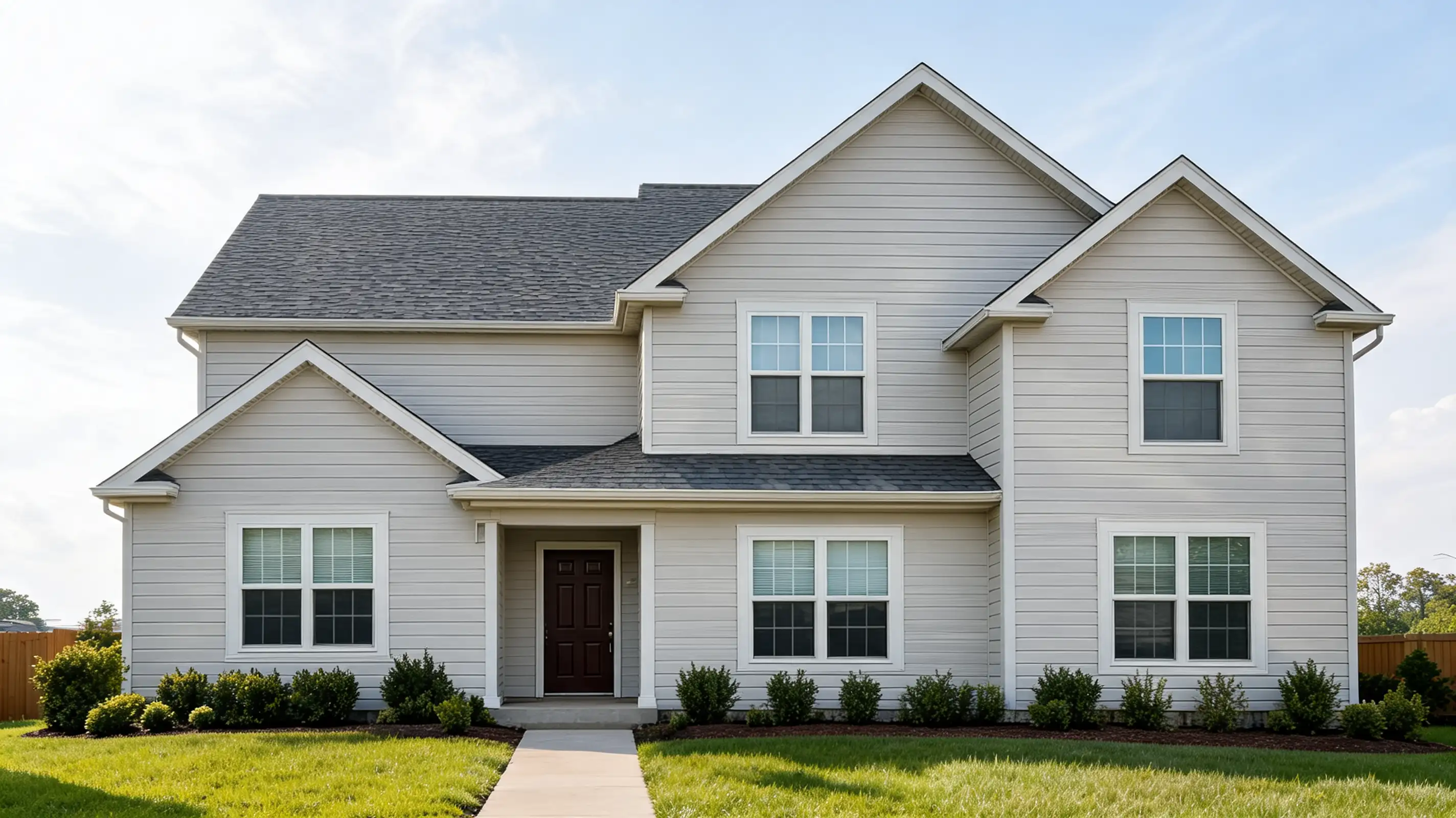
Gray Owl OC-52 creates a clean gray exterior with a light, airy mood. With an LRV of 64.51, it reflects enough light to keep siding open and fresh.
Its cool undertone may reveal soft blue or green notes outdoors. The shade works nicely for coastal homes, modern exteriors, white trim, and relaxed gray palettes.
8. Coventry Gray HC-169
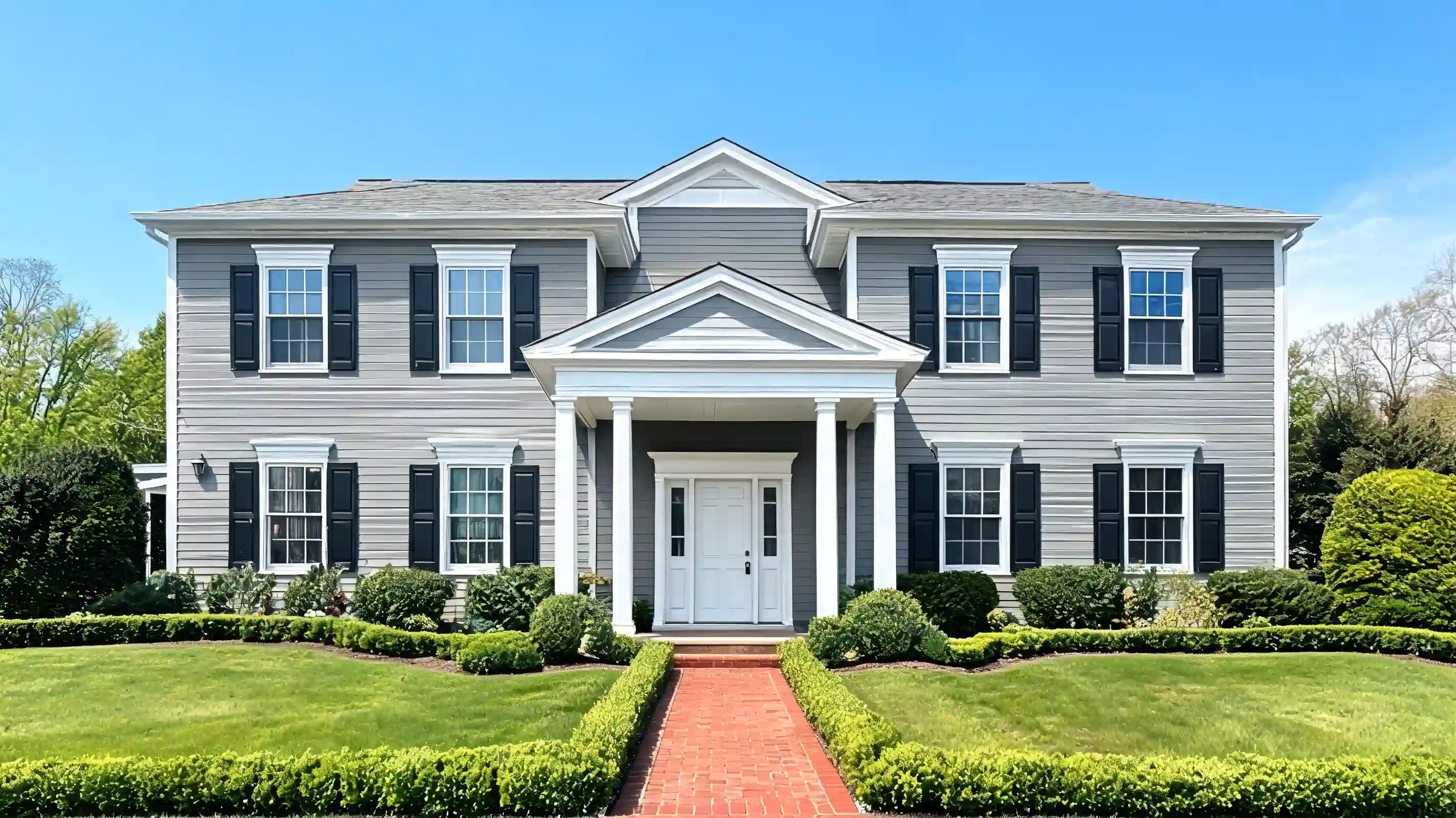
Coventry Gray HC-169 adds structure to exteriors without becoming too dark or heavy. Its LRV of 48.18 places it in a balanced medium-gray range.
The undertone feels steady, which helps the color stay cleaner than many cooler grays. It suits colonial homes, gray siding, black shutters, crisp trim, and neat architectural lines.
9. Boothbay Gray HC-165
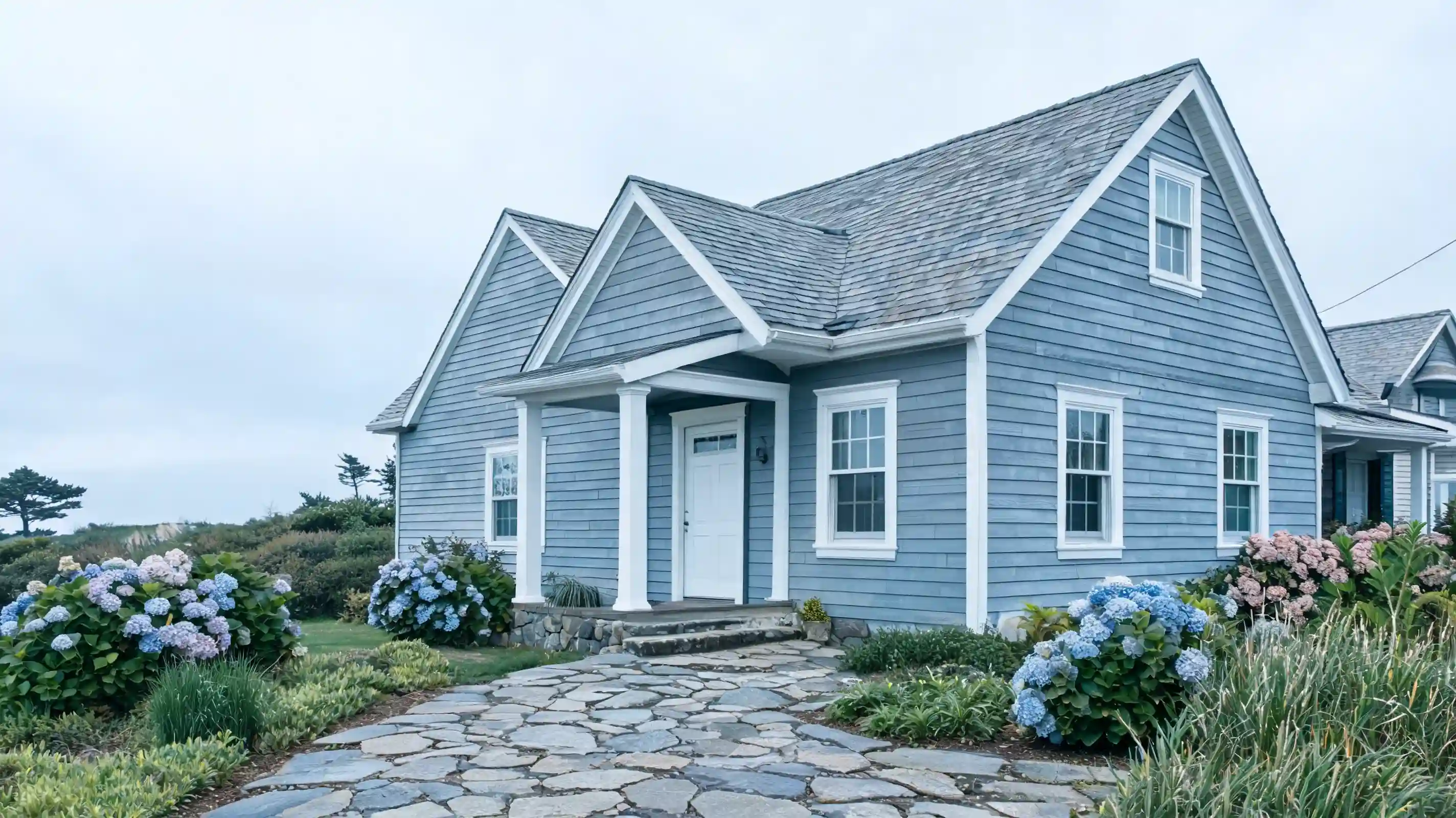
Boothbay Gray HC-165 gives exterior walls a refined blue-gray character. Its LRV of 43.26 adds more depth than lighter grays, while the cool undertone brings a calm coastal touch.
The color feels gentle but not plain. It works well for Cape Cod homes, cottages, coastal properties, and palettes needing a soft personality.
10. Hale Navy HC-154
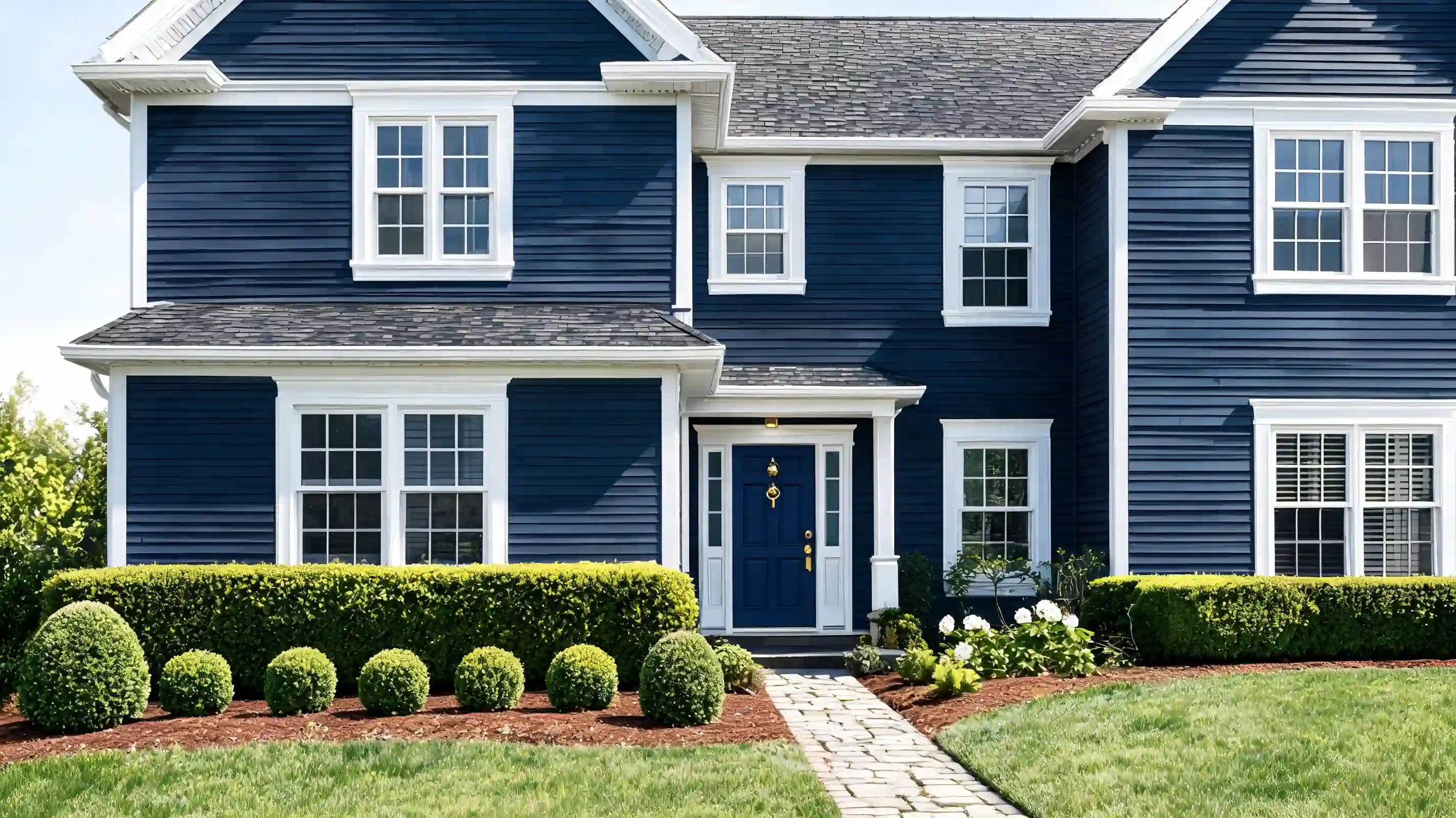
Hale Navy HC-154 gives exteriors a rich, grounded blue with serious depth. Its LRV of 8.36 makes it a dark shade, so lighter trim helps keep the look clear.
The muted navy undertone feels classic rather than bright. It works beautifully on shutters, front doors, full siding, colonial homes, and coastal homes.
11. Newburyport Blue HC-155
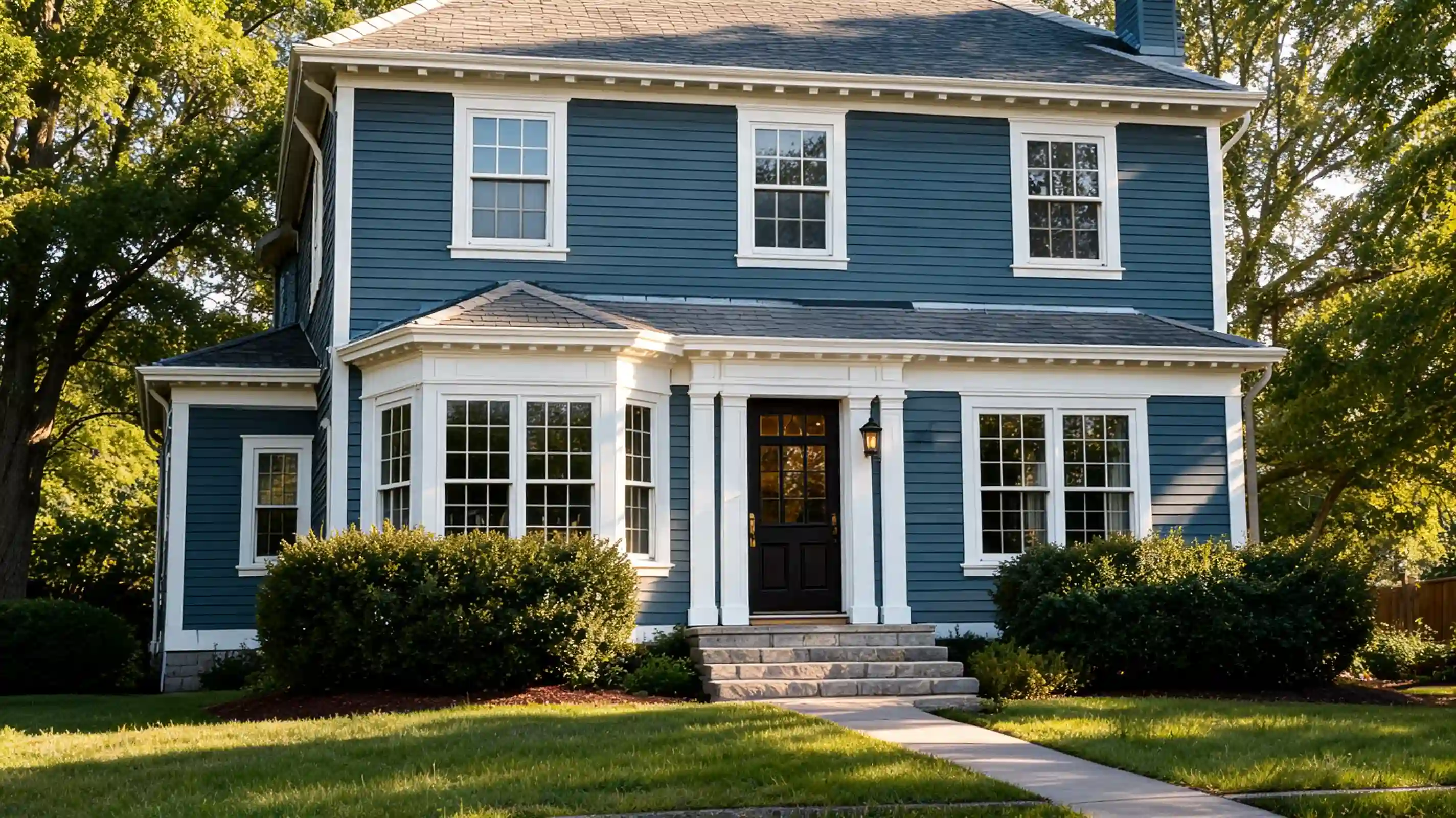
Newburyport Blue HC-155 offers a deep blue look with a slightly softened finish. Its LRV of 10.31 gives it strong presence outdoors, while the cool undertone keeps it controlled and classic.
The shade feels confident without looking flashy. It fits heritage-style homes, entry doors, shutters, and deep blue exterior palettes with quiet depth.
12. Saybrook Sage HC-114
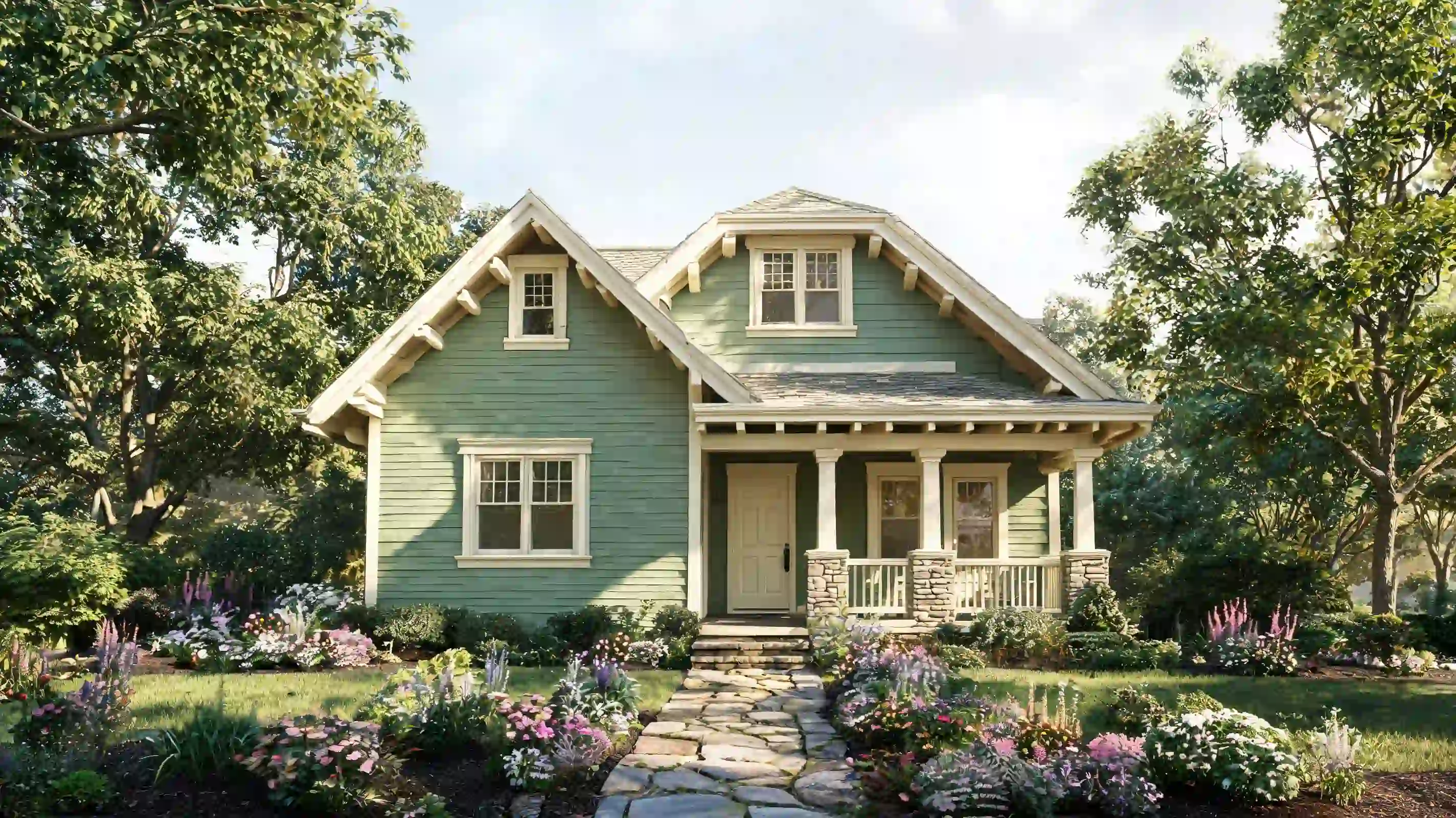
Saybrook Sage HC-114 brings a muted green tone that feels natural beside landscaping. Its LRV of 45.46 gives it enough depth for exterior walls, while the gray-green undertone keeps it soft and easy to view.
It suits craftsman homes, cottages, sage siding, garden settings, and palettes inspired by outdoor materials.
13. October Mist 1495
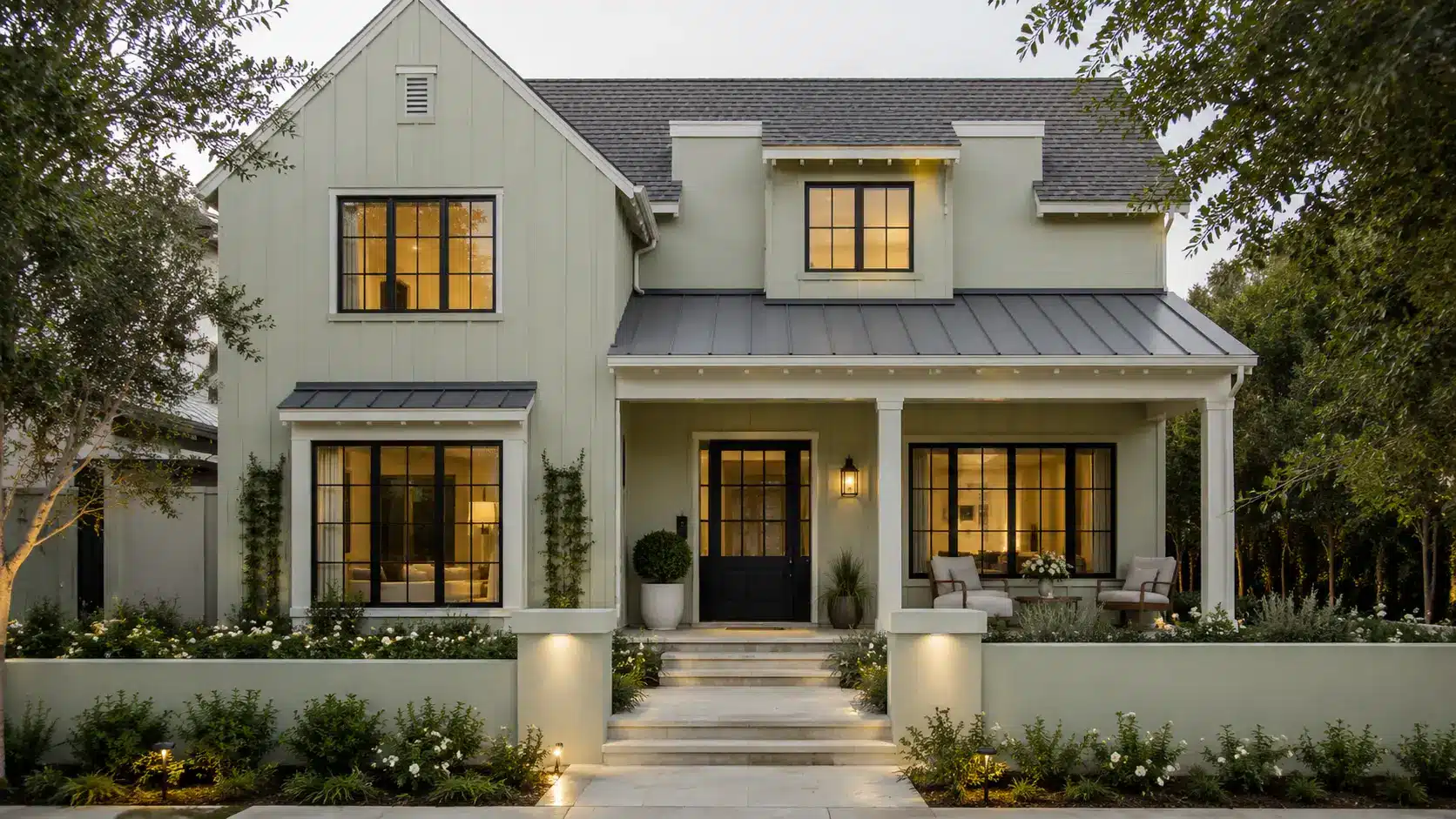
October Mist 1495 feels fresh, quiet, and gently colored on exterior surfaces. Its LRV of 46.54 places it in a soft mid-tone range.
The silvery gray-green undertone keeps the shade airy instead of bright. It works for modern cottages, garden homes, warm white trim, and exteriors that need restrained green character.
14. Kendall Charcoal HC-166
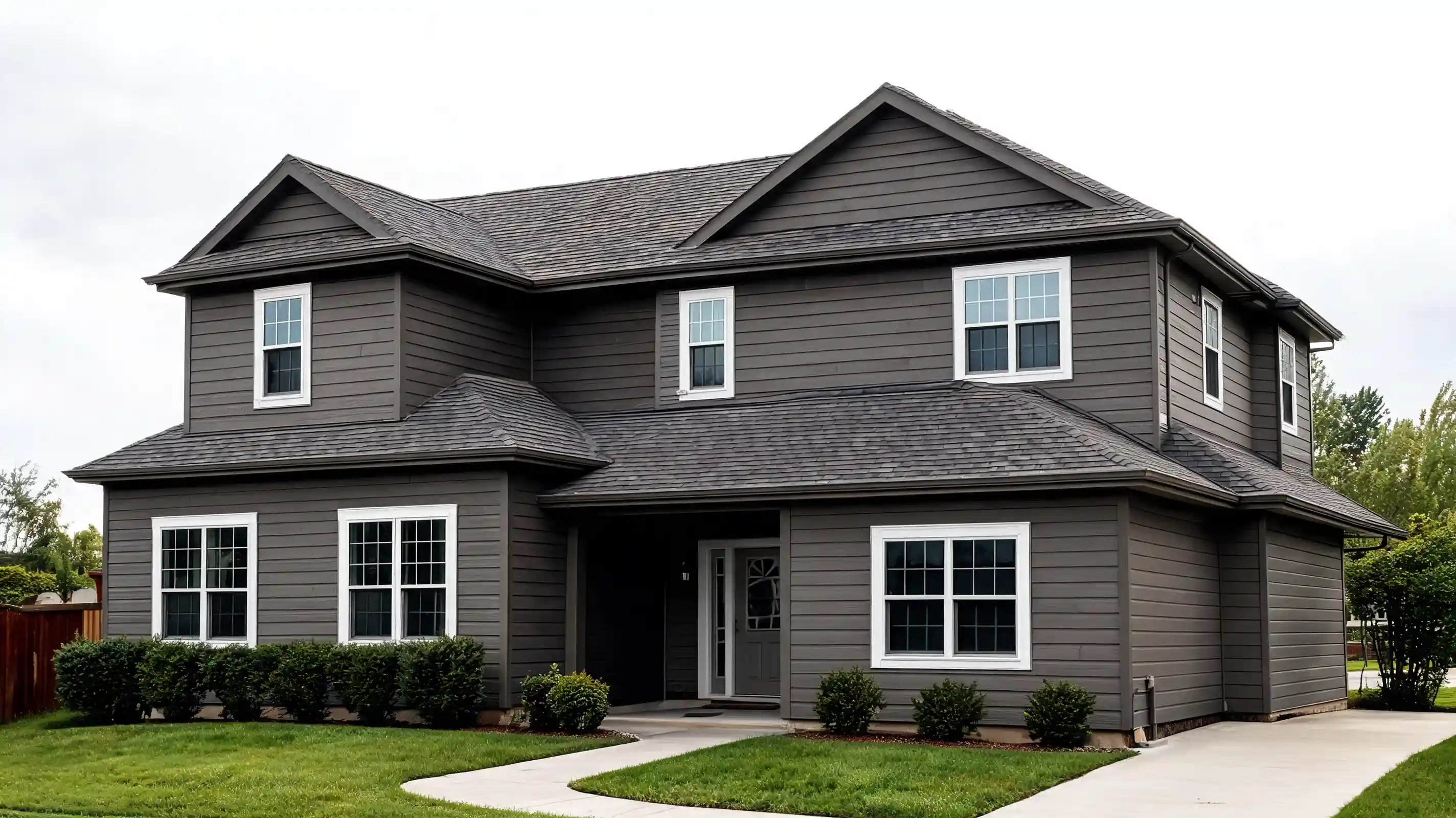
Kendall Charcoal HC-166 creates a strong exterior with warm charcoal depth. Its LRV of 14.61 gives the color weight, while its earthy undertone prevents a cold or flat look.
It can define simple shapes beautifully. The shade suits craftsman homes, modern exteriors, dark siding, wood accents, and palettes needing bold structure.
15. Wrought Iron 2124-10
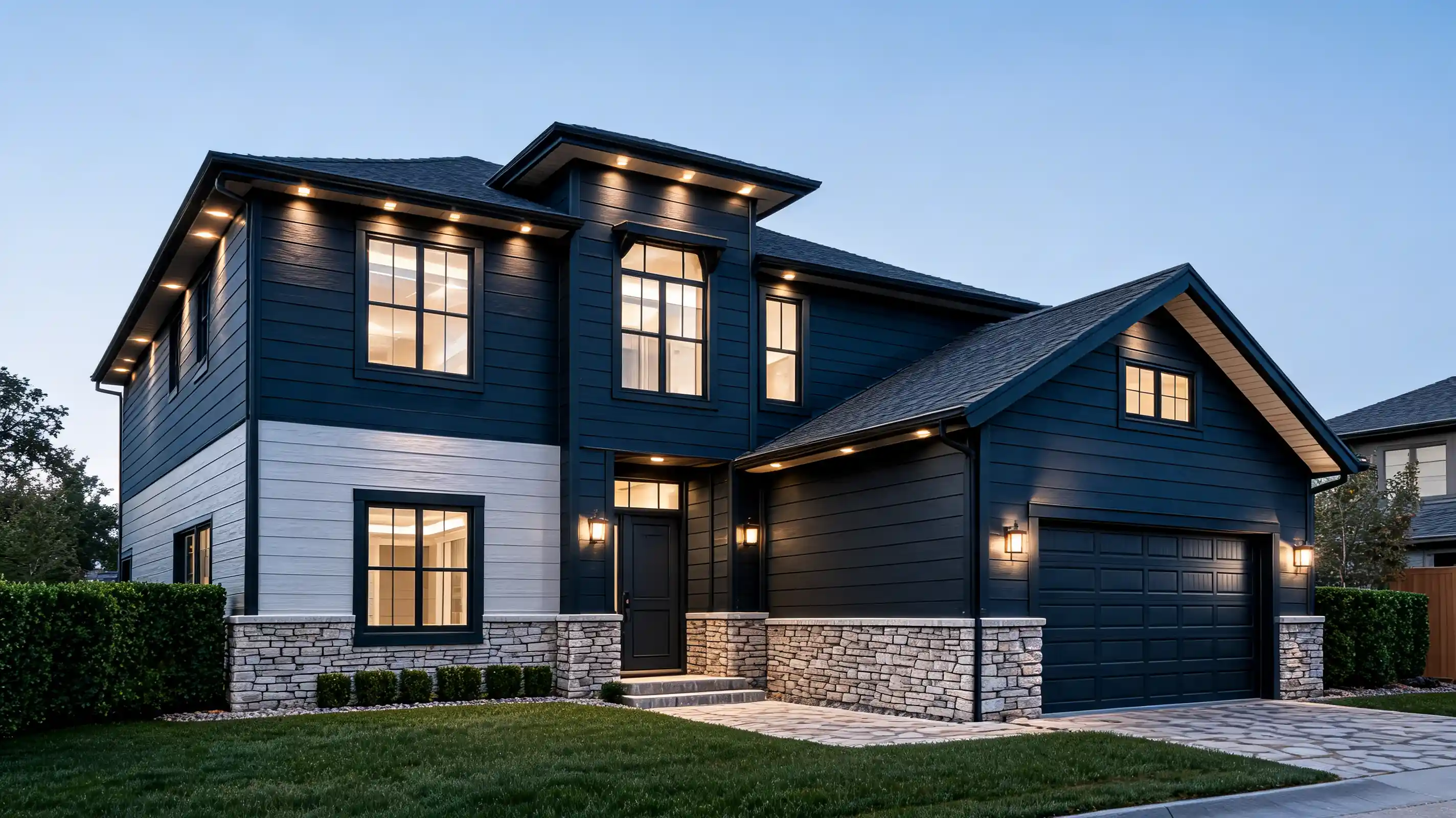
Wrought Iron 2124-10 reads as a dark charcoal with a softer edge than black. Its LRV of 8.17 gives dramatic depth, while the cool blue-gray undertone adds dimension outdoors.
The color sharpens trim, shutters, doors, and bold siding without feeling flat. It suits modern accents, contrast-heavy palettes, and strong exterior statements.
Color Direction by Exterior Feature: Quick Reference
A planned palette keeps the home from looking patched together. Once the fixed materials are taken into account, Benjamin Moore colors become much easier to compare.
| Exterior feature | Safer color direction |
|---|---|
| Black roof | White, gray, greige, charcoal, navy |
| Brown roof | Cream, beige, taupe, sage, warm gray |
| Red brick | Cream, warm white, olive, navy, greige |
| Gray stone | White, blue-gray, charcoal, soft green |
| Wood accents | Warm white, black, sage, taupe, deep gray |
This quick reference helps you narrow the color direction before comparing exact shades. Use it as a starting point, then adjust the final Benjamin Moore palette to suit the light, trim, and the home’s overall style.
Benjamin Moore House Color Schemes You Can Copy
A strong exterior palette feels simple at first glance. These combinations use main color, trim, and accent in a clean way, so the home looks finished and easy on the eye.
1. Classic White and Black
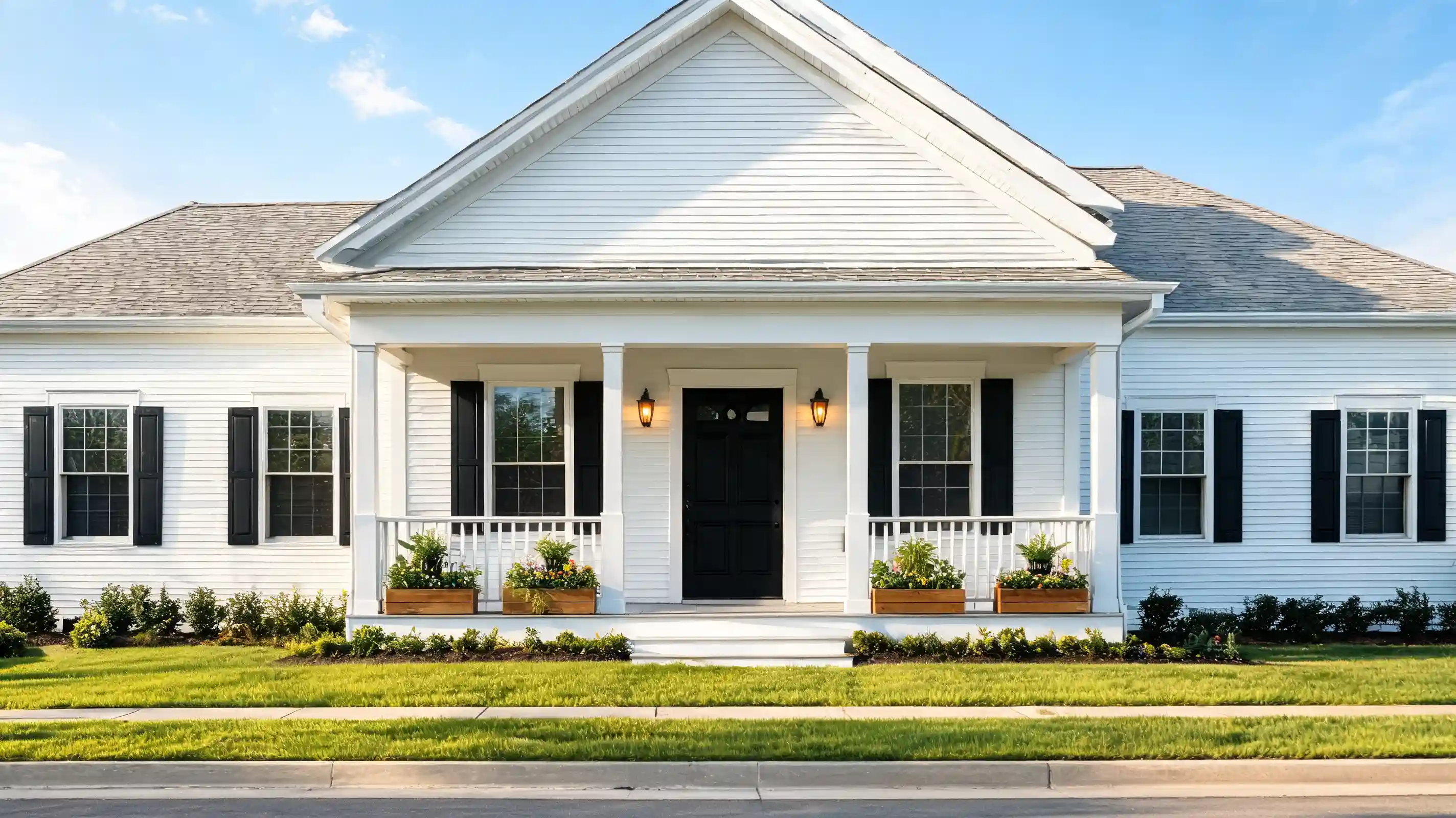
This scheme works beautifully for farmhouse, colonial, and cottage-style homes. The white body keeps the exterior bright. The black accent gives shape to windows, doors, and shutters. Add warm porch lighting or wood planters if the home needs softness.
- Main: White Dove OC-17
- Trim: Chantilly Lace OC-65
- Accent: Wrought Iron 2124-10
2. Warm Greige and Cream
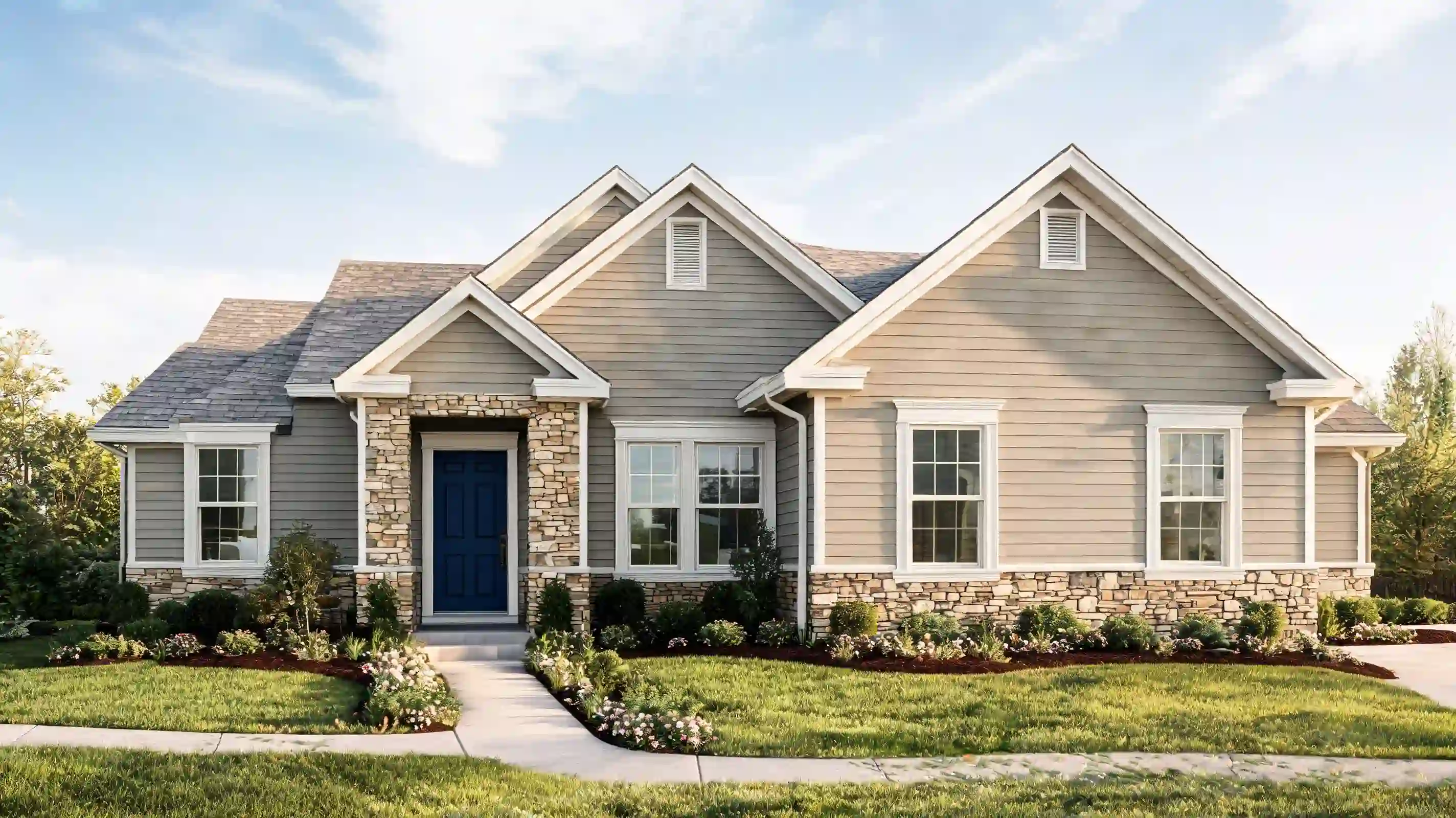
This palette feels steady and inviting. Revere Pewter adds warmth to the home, while White Dove keeps the trim clean. Hale Navy on the door adds interest without making the exterior too bold. It works well with stone and brick.
- Main: Revere Pewter HC-172
- Trim: White Dove OC-17
- Accent: Hale Navy HC-154
3. Charcoal and Wood
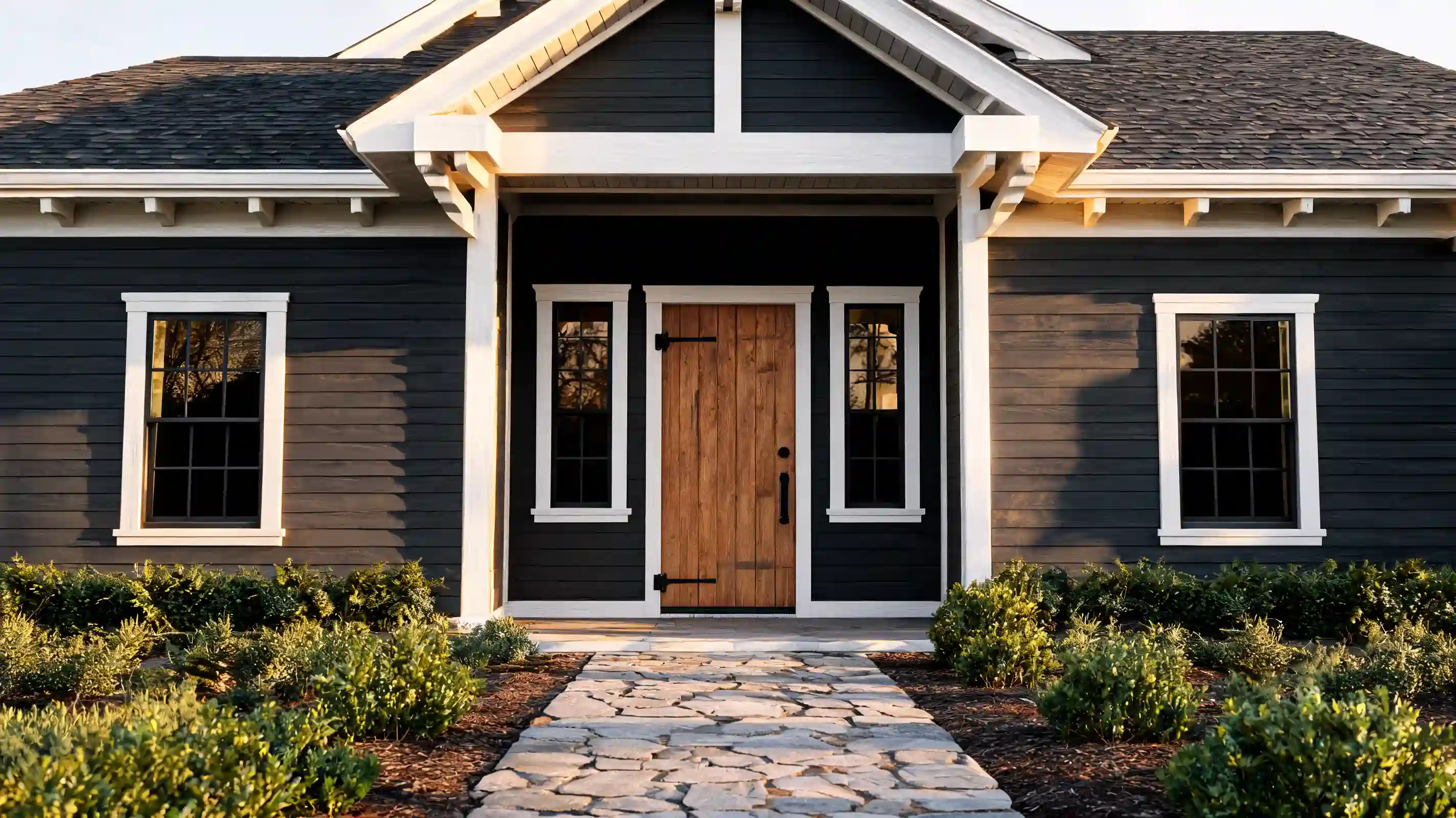
This scheme suits modern and craftsman homes. The charcoal body adds depth. White trim keeps the shape clear. Wood brings warmth, which helps the dark exterior feel less flat. It also pairs well with black hardware.
- Main: Kendall Charcoal HC-166
- Trim: Simply White OC-117
- Accent: Natural wood door
4. Sage Green and Soft White
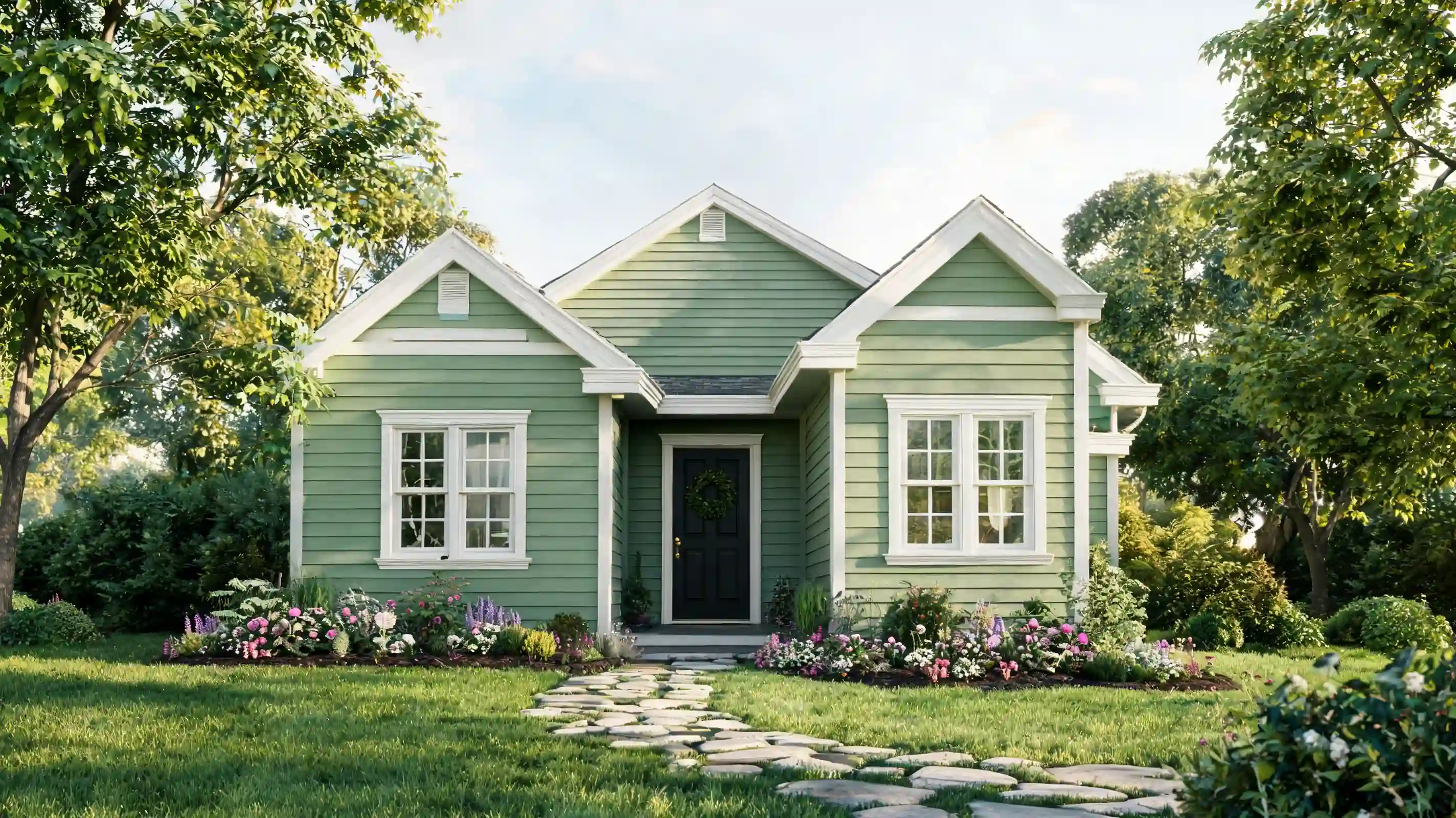
This color mix works well near trees, lawns, and garden beds. The green body feels calm, the white trim adds brightness, and the dark accent gives structure. It is ideal for cottages, ranch homes, and older homes with character.
- Main: Saybrook Sage HC-114
- Trim: White Dove OC-17
- Accent: Wrought Iron 2124-10
5. Deep Blue and Crisp White
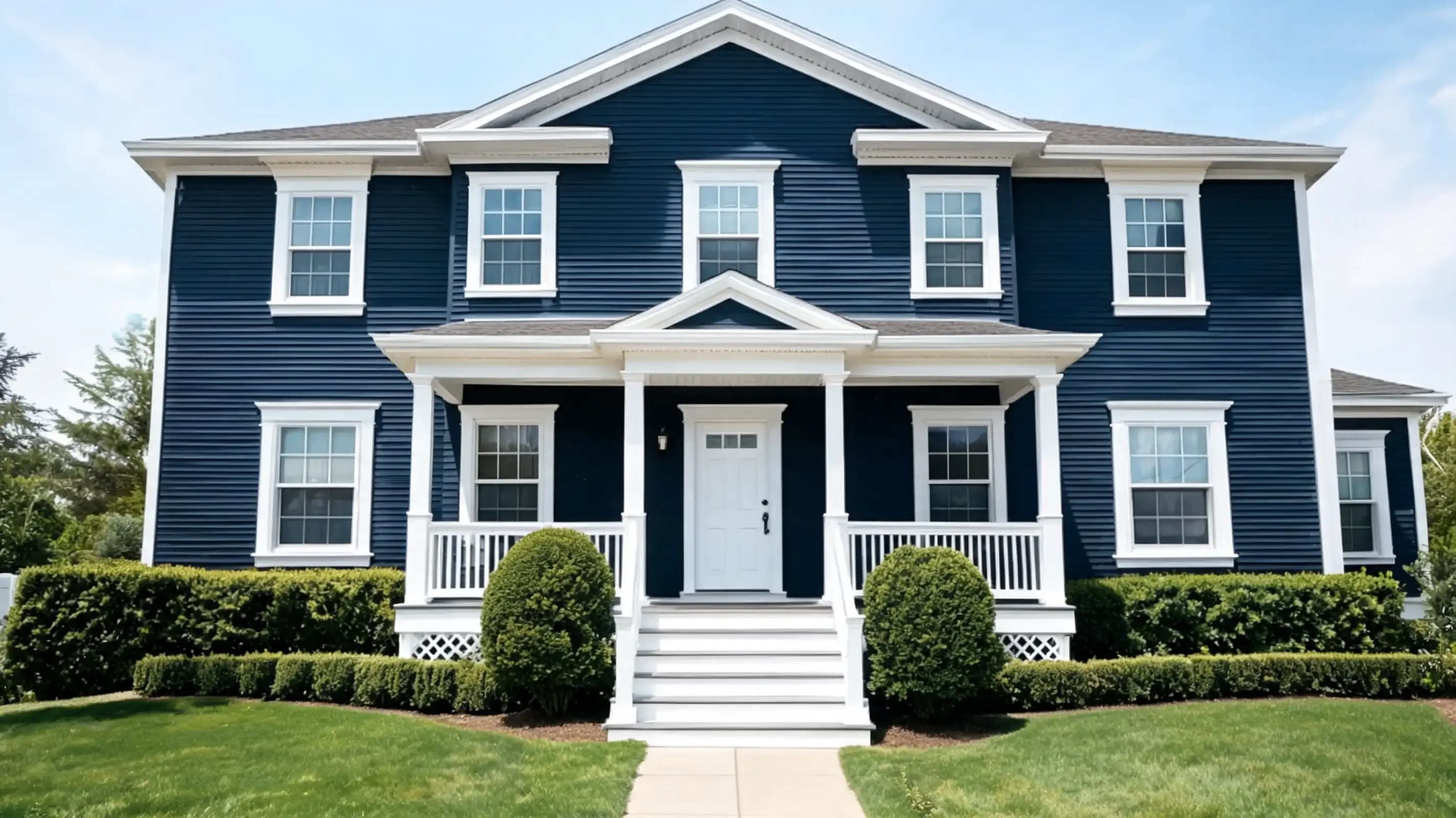
This scheme gives the exterior a rich but classic look. Newburyport Blue adds depth without feeling too sharp, while Chantilly Lace keeps the trim clear and bright. Simply White on smaller accents softens the contrast, making the home feel polished, balanced, and welcoming.
- Main: Newburyport Blue HC-155
- Trim: Chantilly Lace OC-65
- Accent: Simply White OC-117
These house color schemes give you ready starting points. Test each palette outside, then adjust trim or accents to match your home’s fixed features.
Exterior Sheen Matters: What Benjamin Moore Recommends
The right sheen affects both appearance and maintenance. Some finishes hide surface flaws better, while others make doors, shutters, and trim easier to clean.
| Exterior Sheen | Common Uses | Best Fit |
|---|---|---|
| Low Lustre | Siding and trim | A popular choice for broad exterior areas that need a softer, balanced finish. |
| Pearl or Satin | Siding, trim, shutters, and doors | Works well when you want a subtle glow and practical, everyday durability. |
| Semi-Gloss or Soft Gloss | Trim, shutters, doors, and architectural details | Helps highlight details and makes smaller exterior features easier to clean. |
| Gloss or High-Gloss | Doors and architectural details | Creates a polished look for standout areas, but may show more surface flaws. |
As a simple rule, higher sheen usually cleans more easily but shows more flaws. Lower sheen feels softer and helps uneven exterior surfaces look smoother.
How to Test Benjamin Moore Exterior Paint Before Buying
Testing paint outside shows how each shade reacts to light, shadows, trim, and fixed materials before the full exterior project begins.
Testing checklist:
- Paint large sample boards instead of tiny patches.
- Place samples on more than one side of the home.
- Check colors in morning, afternoon, and evening light.
- View samples beside trim, roof, brick, stone, and plants.
- Look at the color from the street, not just up close.
- Compare the main color with the trim and door samples together.
- Wait at least one full day before making a choice.
A color may look warmer on a shaded wall and brighter on a sunny wall. Whites can glow outside. Grays may shift to blue, green, or purple.
Greige shades can look beige in warm light and gray in shade. A careful sample test can prevent color regret and help you choose a Benjamin Moore exterior shade that feels right in real daylight.
Common Mistakes to Avoid When Choosing Exterior Paint Colors
Many exterior paint problems begin before the first coat is applied. Avoiding a few common mistakes can save time, money, and disappointment later.
| Mistake | Why It Can Cause Problems | Potential Result |
|---|---|---|
| Choosing colors from online photos only | Screens can alter undertones and brightness. | The final color may look completely different in person. |
| Ignoring the roof color | Roof tones influence how exterior paint is perceived. | The home can look visually disconnected or mismatched. |
| Skipping large samples | Small swatches do not reveal full color behavior. | Unexpected undertones may become noticeable after painting. |
| Using too many colors | Excessive variation creates visual clutter. | Architectural features may lose their impact. |
| Forgetting landscaping | Surrounding greenery affects color perception. | Exterior colors can appear duller or stronger than expected. |
| Picking accents last | Accent colors influence the overall balance of the palette. | Doors, shutters, and trim may feel like afterthoughts. |
Taking time to evaluate colors in real conditions often leads to better results. A thoughtful approach helps create an exterior palette that feels cohesive, balanced, and lasting.
Frequently Asked Questions
How long should exterior paint dry before rain?
Exterior paint usually needs at least 24 hours of dry weather, but drying time depends on humidity, temperature, surface type, and paint line. Always check the product label before painting, because rain too soon can affect adhesion and final finish.
Can Benjamin Moore exterior paint be used on vinyl siding?
Yes, some Benjamin Moore exterior paints can be used on vinyl siding when the surface is properly cleaned and prepared. The chosen color should be suitable for vinyl, because very dark shades may absorb heat and cause warping.
What temperature is best for exterior painting?
Most exterior painting works best when temperatures stay between 50 and 85 degrees fahrenheit. Very hot, cold, or damp weather can slow drying, weaken adhesion, or leave uneven marks. Mild, dry days usually give the cleanest finish.
Do exterior paint colors affect home resale appeal?
Yes, exterior paint colors can influence resale appeal because buyers often notice curb appeal first. Neutral, well-balanced palettes usually feel safer to more people. Very bold or unusual shades may limit interest unless they suit the home perfectly.
Should gutters and downspouts match the trim?
Gutters and downspouts usually look best when they blend with the trim, fascia, or siding. Matching them to nearby surfaces keeps the exterior cleaner visually. A contrasting color can work, but only when the design feels intentional.
Can one Benjamin Moore color be used for both siding and trim?
Yes, one color can be used for both siding and trim, but the finish should usually change to create subtle separation. Using different sheens can help details show without adding another color to the exterior palette.
Final Thoughts
A good exterior palette comes down to balance, not guesswork. I like starting with the roof, fixed materials, and natural light because they shape how every color will look outside. You can then choose a main shade, a trim color, and an accent that feel connected rather than random.
The Benjamin Moore exterior paint colors covered here give you strong options across whites, greiges, blues, greens, and deep charcoals. You also saw how to test samples, avoid common mistakes, and use ready color schemes with more confidence.
A little planning can save you from repainting regret later. Try these tips on your own exterior, then share your favorite color pairing in the comments.