When people search for art studio ideas, they usually picture rooms that look creative and well put together. A studio that looks good online can still feel awkward when you work in it.
The real issue is not style. It is a function.
Artists need spaces that support focus, movement, and messy thinking. Most advice skips that part. It shows results without explaining why they work.
Today, I’ll explain what turns any space into a studio, how different studio types fit different lives, and why layout matters more than decoration.
Let’s start with the basic question every studio depends on.
What Makes a Space an Art Studio
An art studio is not defined by how it looks. It is defined by what it allows you to do without friction. At its core, a studio supports making, pausing, and returning to work with ease.
The main function is simple. You need space to work without constant setup and teardown. When tools stay within reach and surfaces are ready, your mind stays on the work.
Movement matters here. If you have to step around piles, reach across clutter, or stop to protect other parts of the room, focus breaks.
Studios are task-driven. Every surface, open area, and clear path exists to serve a task. Decor comes later, if at all. When decor leads, functionality of the room takes a hit. The result is a room that looks inspiring but feels tense to use.
Keeping the Main Work Surface Clear
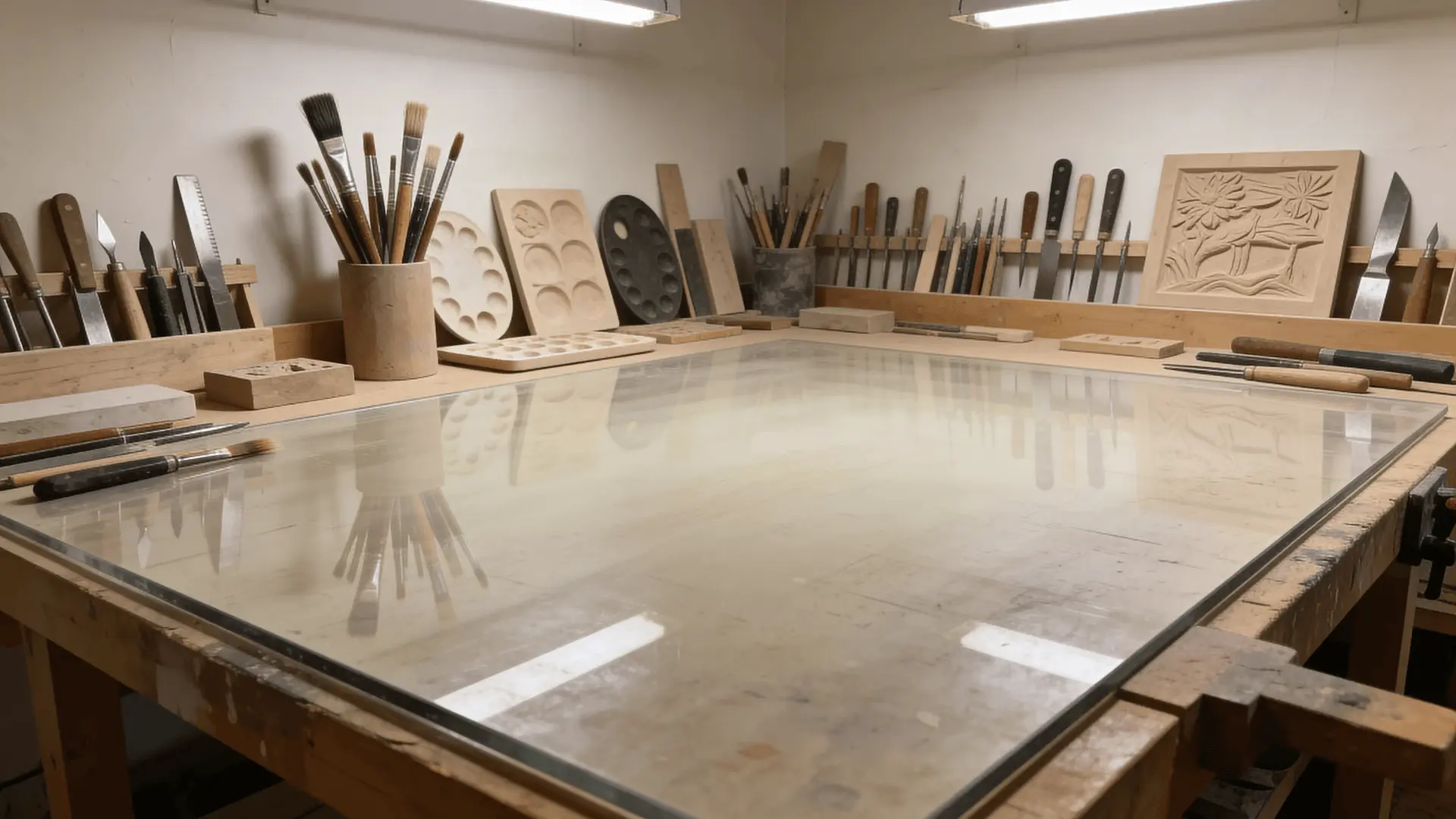
Some days you work fast and spread out. On other days, you move slowly and stay tight. Keeping the main work surface clear makes both possible.
The simplest way to do this is to treat that surface as temporary space, not storage. Only the tools and materials for the current task belong there. Everything else lives somewhere else until it’s needed.
This works because your body and attention don’t have to negotiate around objects. You sit down and start. That ease is what creates a studio feeling. Decoration doesn’t do that. Clear space does
Different Types of Art Studios and When They Make Sense
No single studio type fits everyone. The right setup depends on how often you work, how much space you share, and how fixed your tools are.
1. Home and Spare Room Studios
These studios live inside everyday life. They work best when the art process can pause without full cleanup. The benefit is comfort and access. You can step in and out easily.
A Dedicated Corner that Stays Set Up
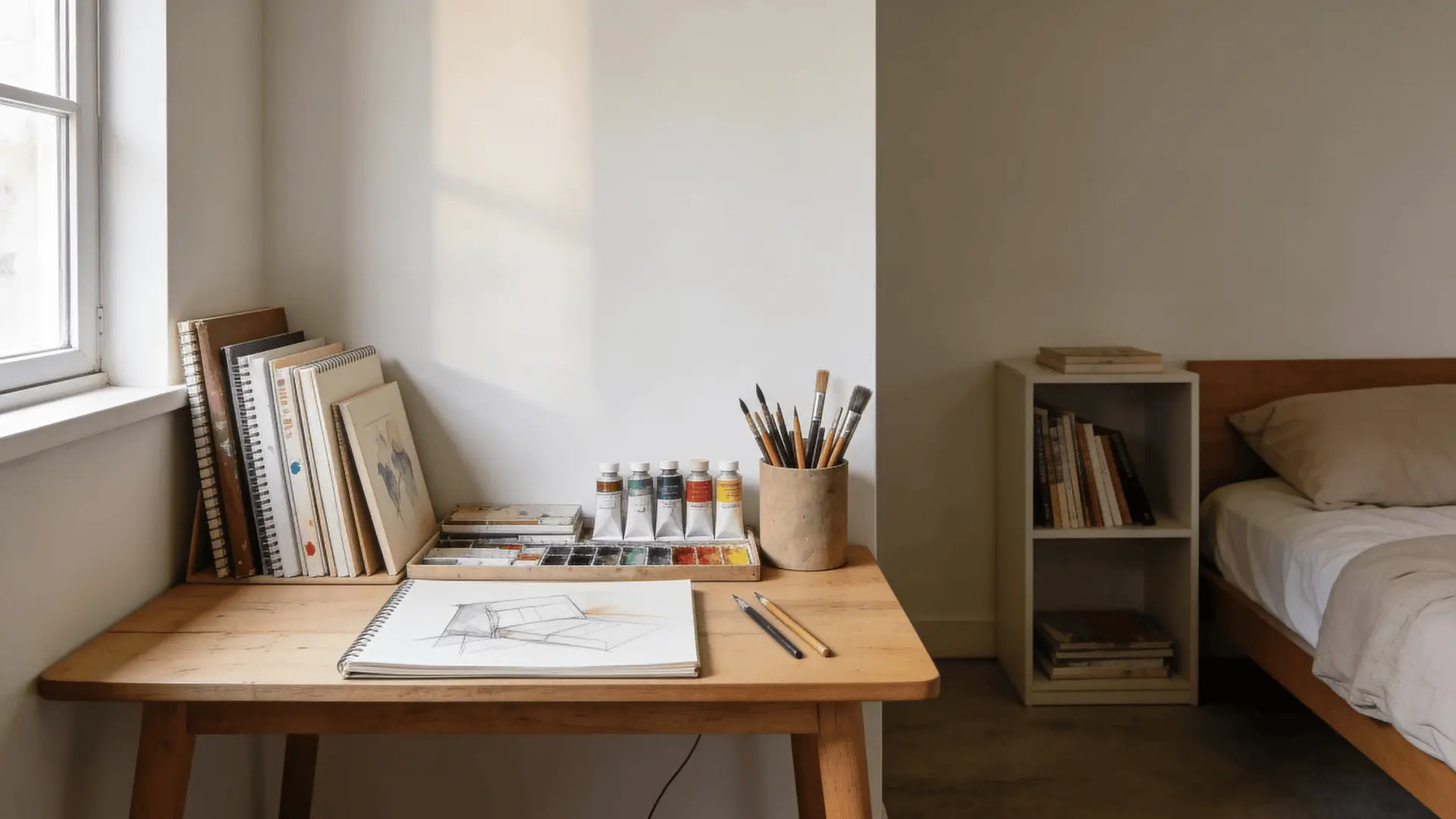
Interruption is the main limit in shared spaces. Noise, foot traffic, or shared use can pull attention away fast.
The way around this is to create simple boundaries. That might mean working at set times, using physical dividers, or keeping tools visible so the space signals “in use.” When boundaries are clear, art time is less likely to blur into household time.
This setup is often seen as temporary or second best. In reality, it’s how many artists work long term. When boundaries hold, a home or spare room studio can stay effective for years, not just as a stopgap
2. Small or Shared Space Studios
These studios solve space limits by priority. You choose what stays out and what packs away. The strength is flexibility. You learn which tools matter most.
A Portable Studio that Appears Only When Needed
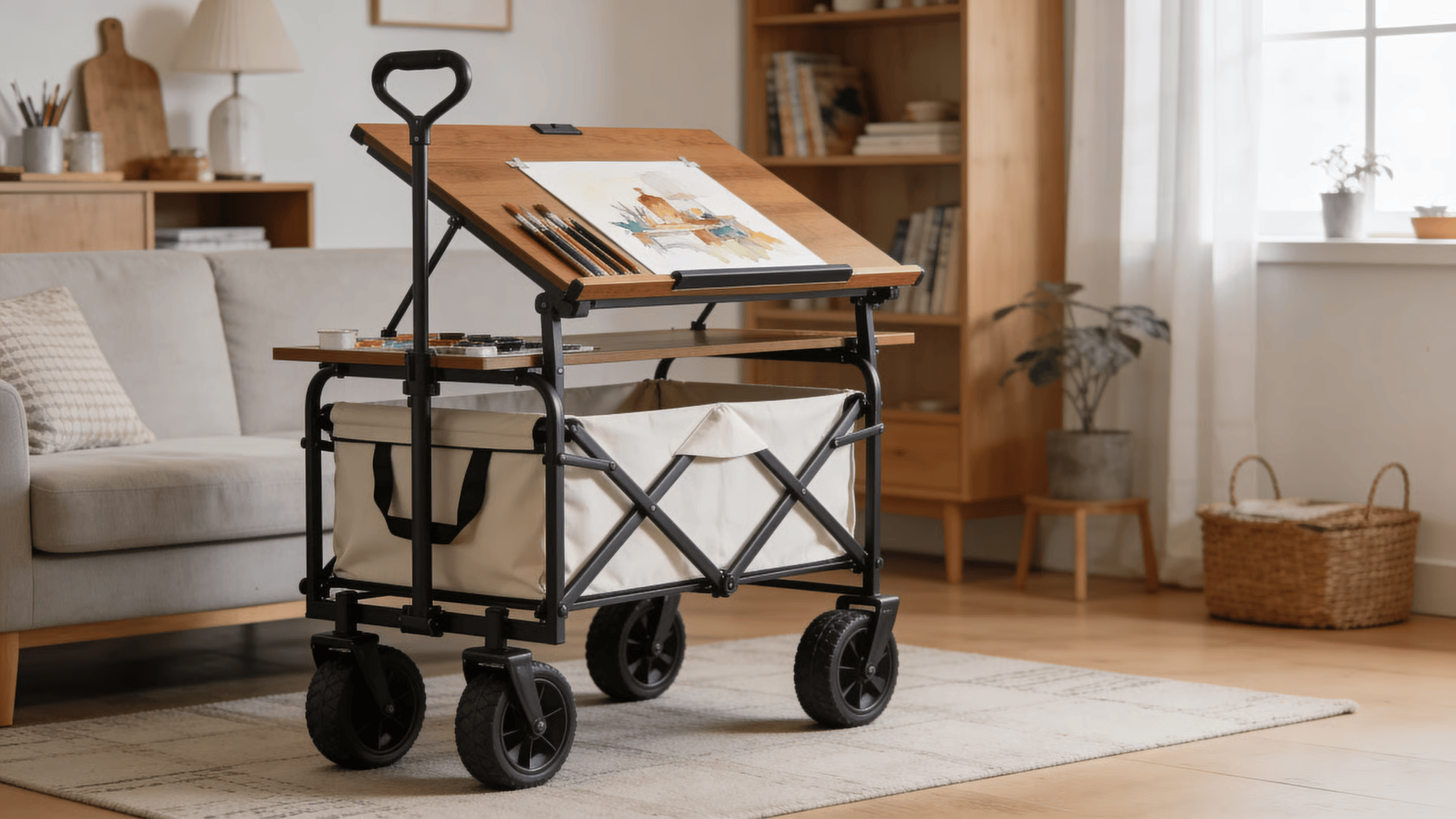
Overlap is the main risk in small or shared spaces. When art zones spill into living zones, every session starts with setup and ends with cleanup. That extra effort adds up and makes work feel heavier.
Keeping the studio contained to one area or one set of tools reduces that friction.
These setups work best when the studio supports one main type of work. Fewer materials mean fewer decisions and less reset time. When focus stays narrow, the space stays usable
3. Dedicated or Long-Term Studios
These studios allow permanence. Tools stay where they are used. Mess can remain between sessions. That reduces mental load.
Leaving In-Progress Work Visible Between Sessions
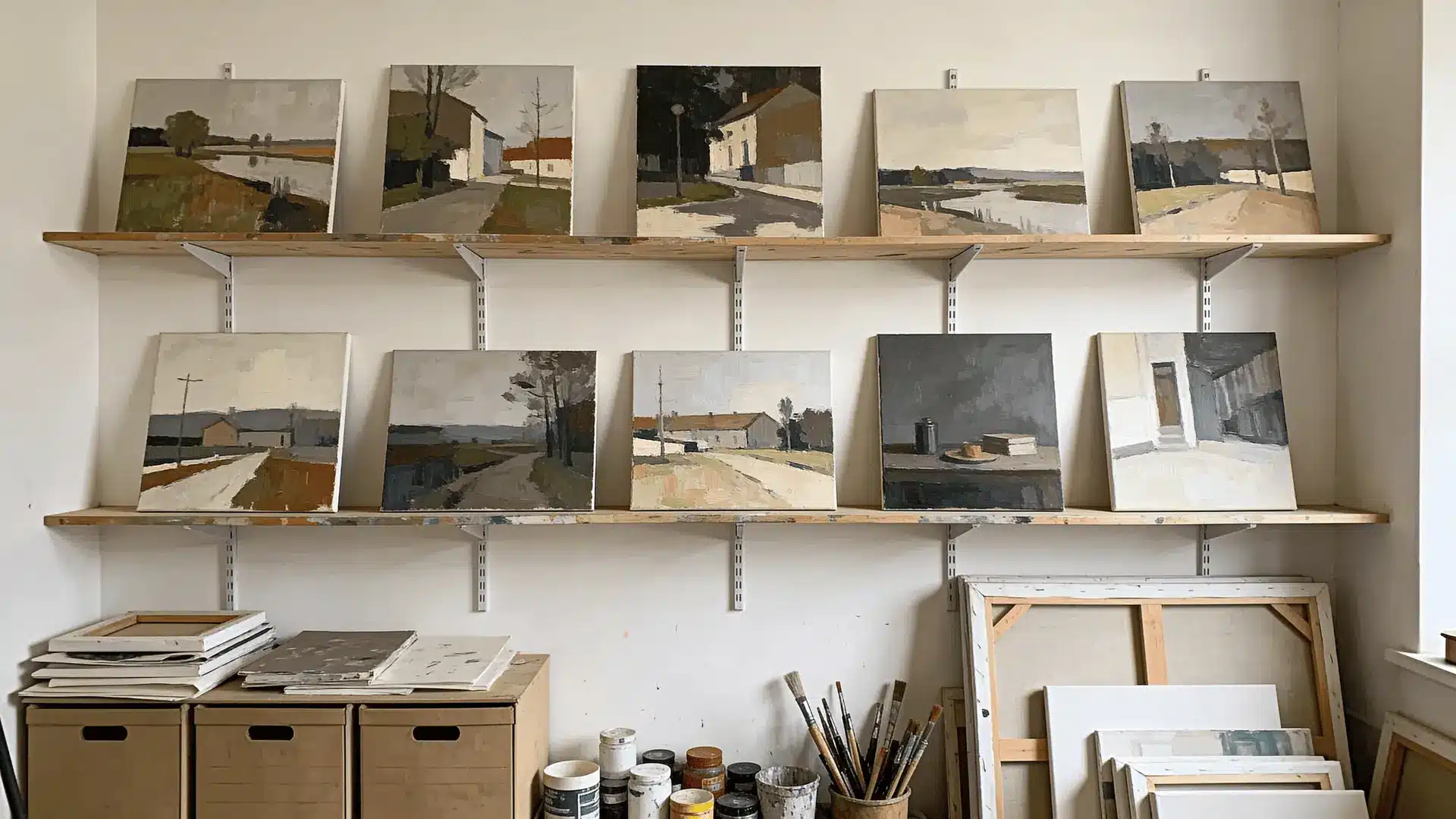
The tradeoff here is commitment. Once a studio is fully set, changing it takes effort.
Fixed layouts, permanent storage, and dedicated zones work best when your process is stable. If your practice shifts often, the space can start to feel restrictive instead of supportive.
It’s easy to assume this is the ideal setup for everyone. But for many artists, it isn’t. If your work changes by season or mood, flexibility can matter more than permanence.
Core Zones Every Art Studio Needs
Studios work best when tasks live in clear zones. This reduces small decisions that drain energy.
1. Making Area
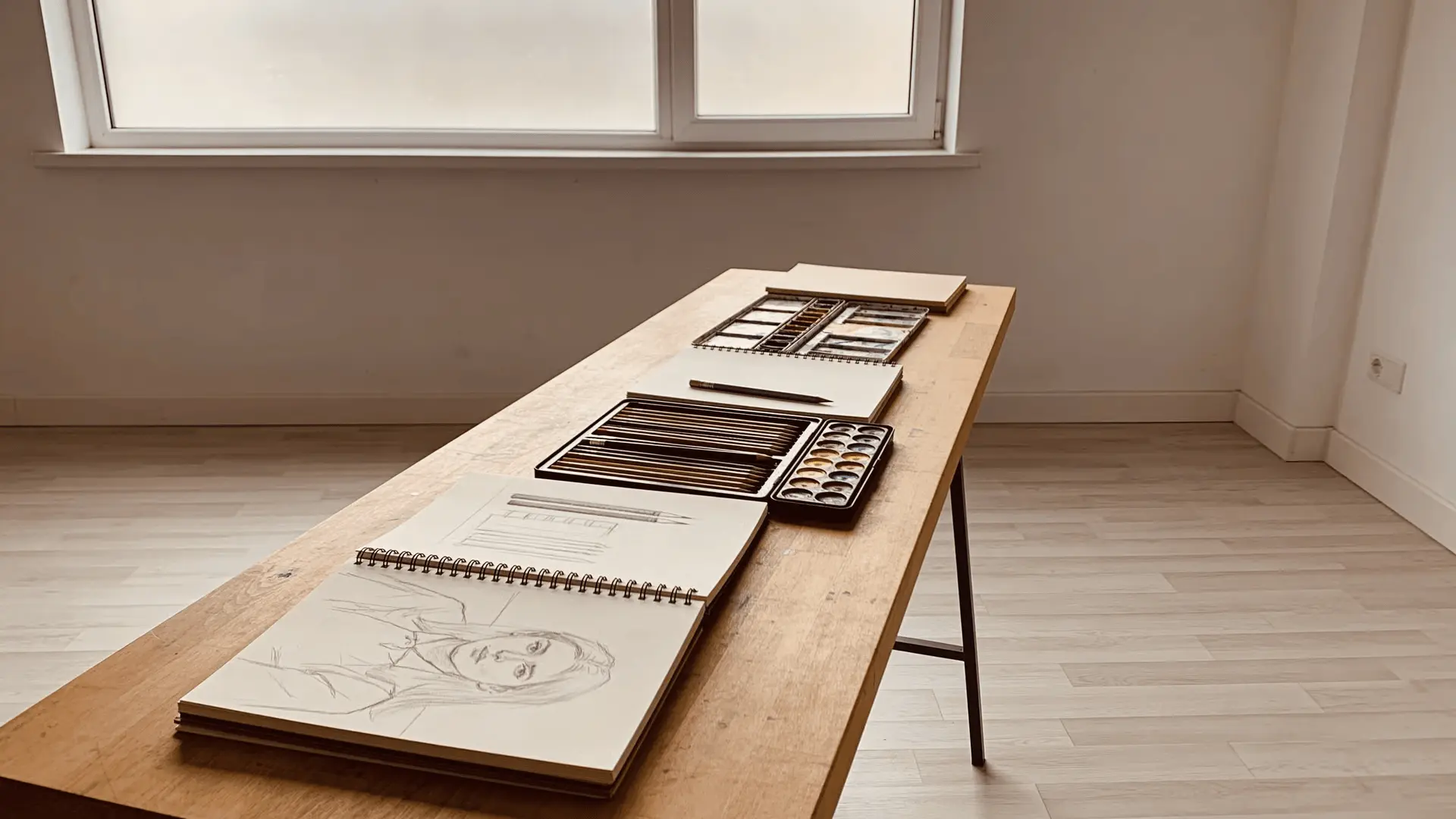
This is where the main work happens. It needs clear surface space and room for your body to move. When this area is crowded with storage or display, work slows.
Limiting the Surface to One Active Task
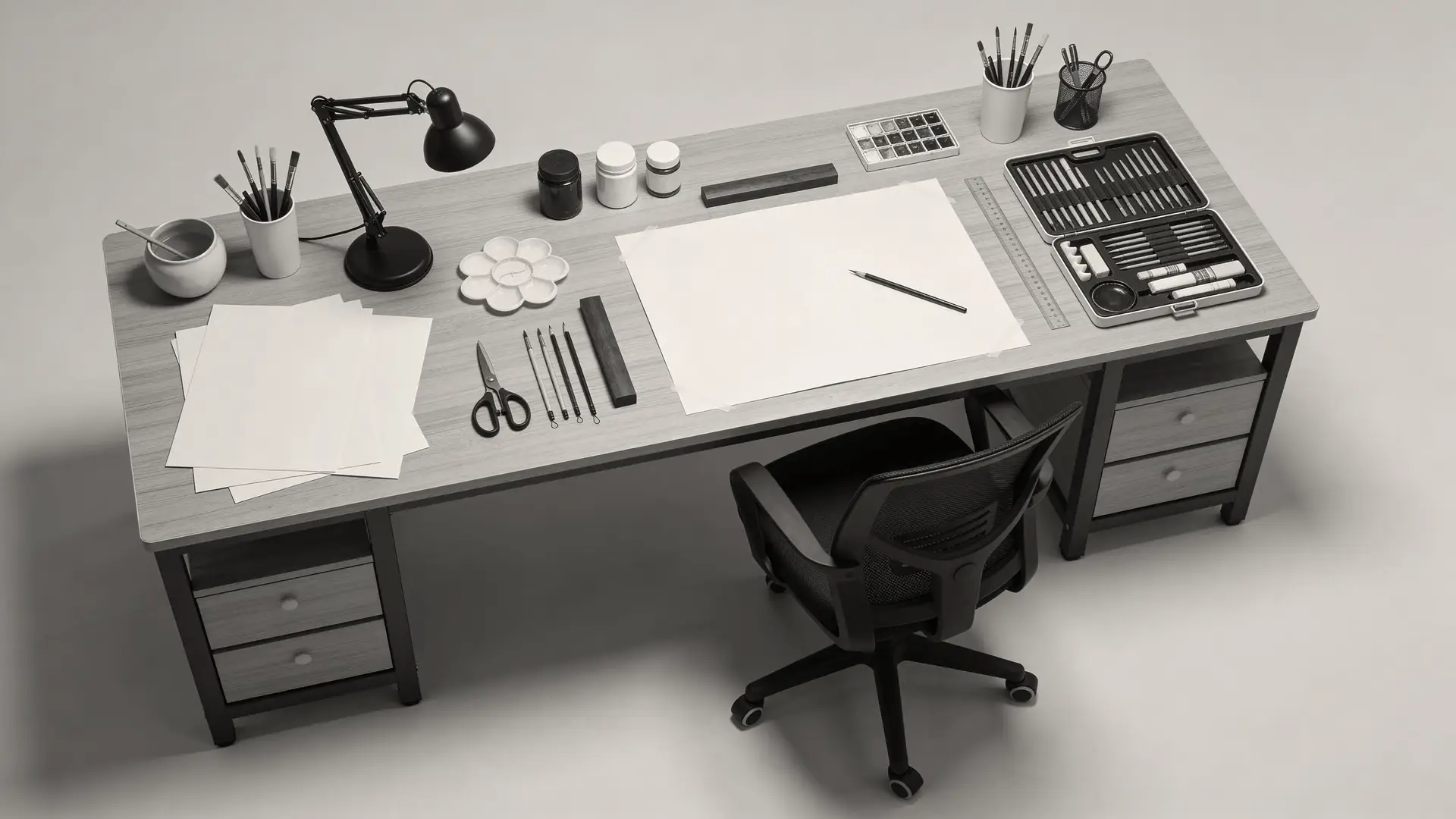
The size of the making area depends on the task. Painting needs space to reach and step back. Drawing needs room to move your arms without hitting the edges.
What matters most is not how big the area is, but whether your body can move freely while you work. When movement feels restricted, focus drops.
2. Storage and Access Zone
Storage should support speed, not hide everything. Tools used often should be easy to grab. Tools used rarely can stay out of the way.
Open Storage for Daily Tools, Closed Storage for the Rest
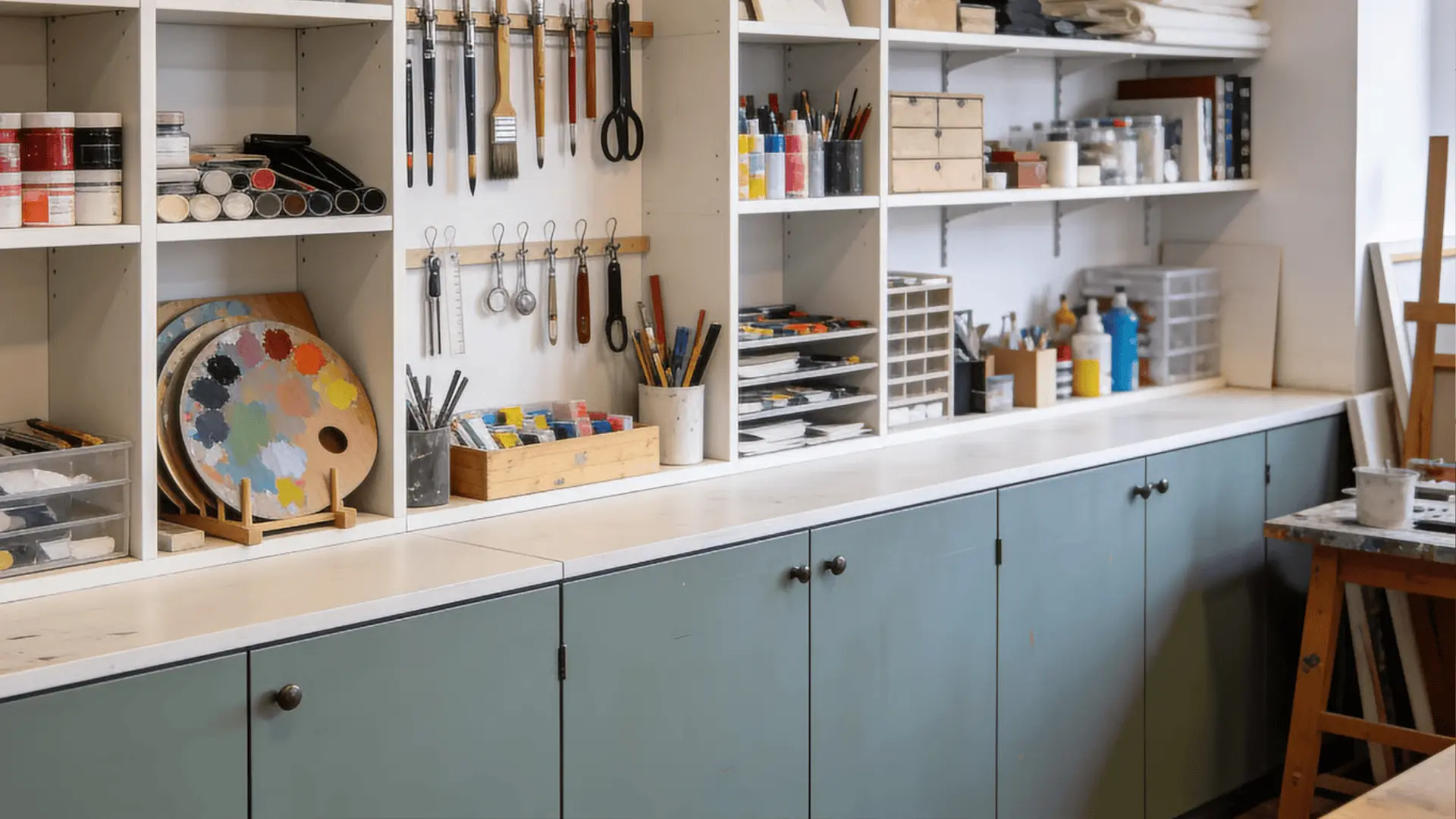
When storage spills into the making area, work surfaces disappear. When storage sits too far away, every session starts with extra setup.
The balance comes from keeping frequently used tools close while letting the rest stay out of the way. When that holds, starting and stopping work feels easier.
3. Drying, Display, or Reset Space
This zone holds work between sessions. It allows you to stop without undoing progress. It also gives your eyes distance from the work.
Reserving One Spot Only for In-Progress Work
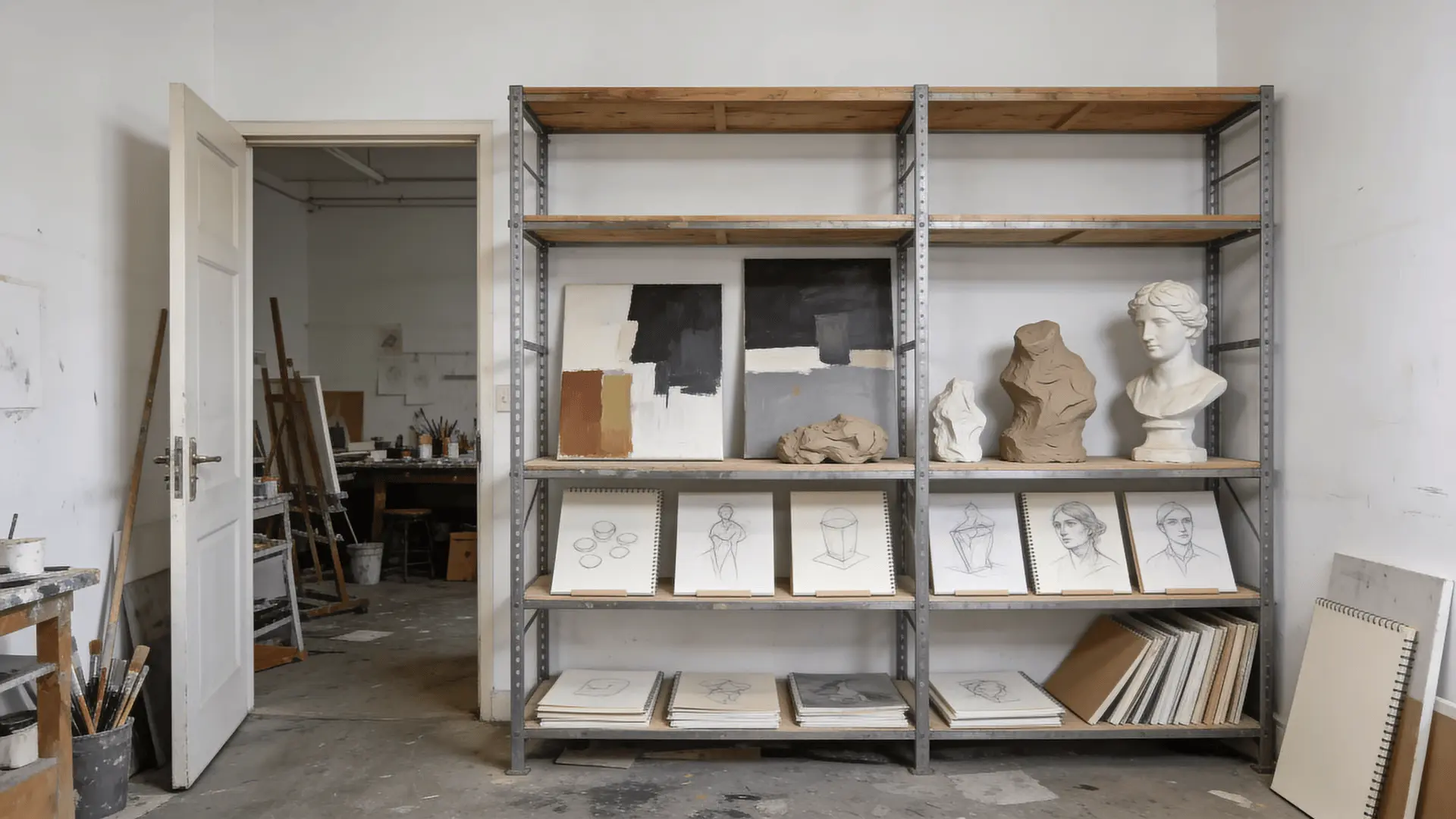
Give unfinished work its own place. Choose one shelf, wall spot, or surface that exists only for pieces you are still working on. When a session ends, move the work there instead of leaving it in the making area.
This keeps active surfaces clear and reduces visual noise. Adding more furniture usually makes the problem worse. Clear zones solve it faster than extra storage.
How a Studio Layout Influences Creative Flow
Layout guides behavior. When movement feels natural, focus stays intact. When movement feels blocked, frustration rises.
If tools sit within arm’s reach, the body stays in one rhythm. If you must step away often, the rhythm breaks. That break pulls attention away from the work.
Designing Reach Instead of Walk Distance
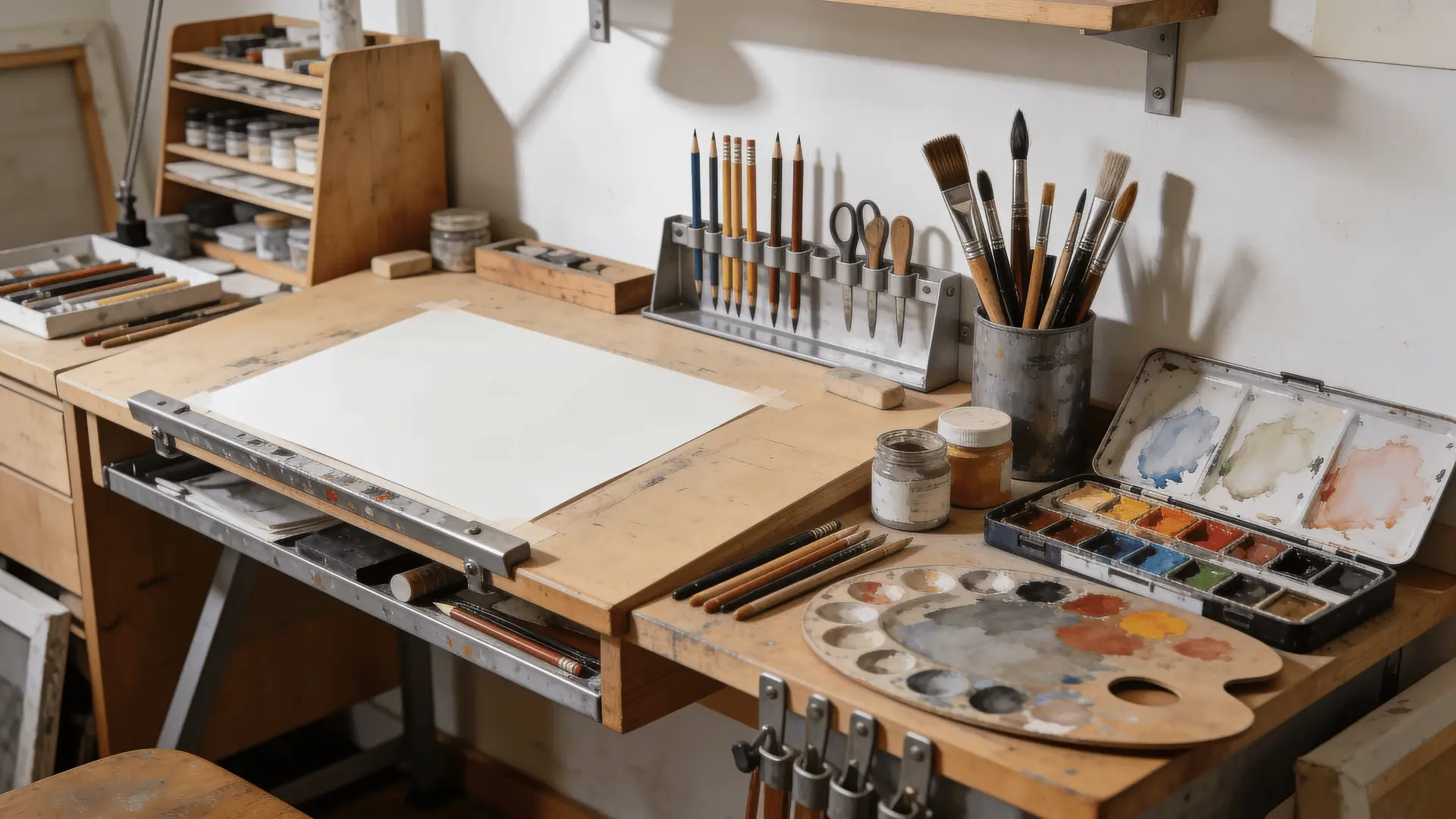
Control what stays in view while you work. Keep only the tools for the current task visible and move everything else out of your direct line of sight. When the visual field stays narrow, your attention narrows with it.
Pay attention to how the layout feels on low-energy days. If the space feels exhausting unless you’re already motivated, the layout is doing too much work. Pushing through does not mean it’s working. It means you’re compensating.
Think of layout as guidance, not storage. Its job is to shape how you move and what you see so focus comes easier
Lighting and Environment Considerations
Light affects accuracy and stamina. Natural light shifts through the day. Artificial light stays steady. Both have roles.
Some tasks need even light to judge color or value. Other tasks benefit from softer light to reduce eye strain. No single setup works for all art forms.
Pairing Natural Light With Consistent Task Lighting
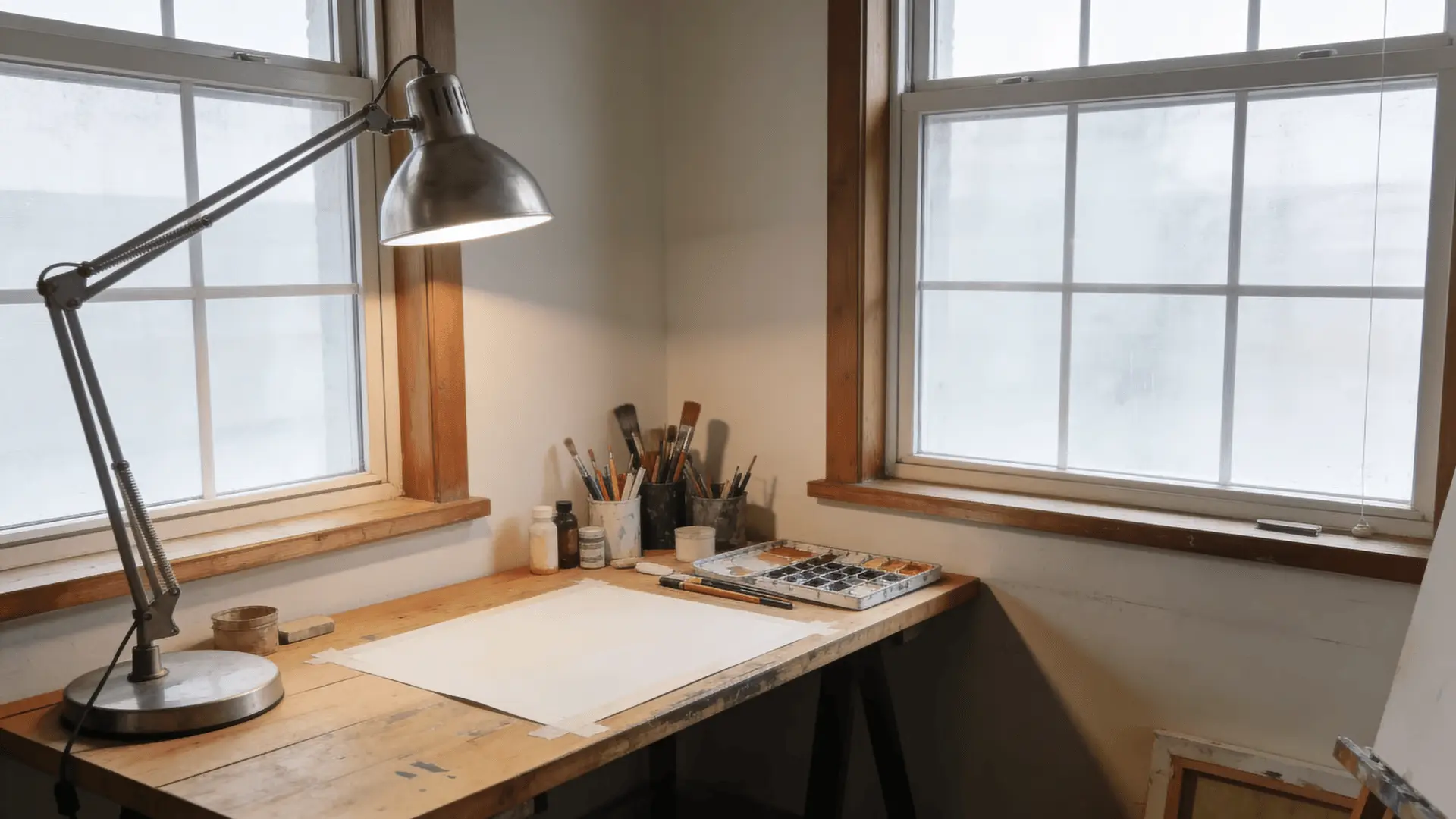
Pay attention to the air while you work. If the space feels heavy, warm, or stale, your energy will drop before you notice the cause. Make room for air to move so that messy work does not linger in the space longer than it should.
Expect conditions to change. A setup that feels fine in the morning may feel draining later in the day or in a different season.
Let the space adapt instead of assuming one lighting or environment choice will work all the time. What supports the work will shift with the task and the moment.
Making an Art Studio Feel Personal Without Hurting Function
Personal touches can support consistency when chosen with care. They remind you why the space exists.
The line appears when visual input competes with the work. Too many images, notes, or objects pull attention outward. Focus scatters.
Placing Inspiration Outside the Direct Line of Sight
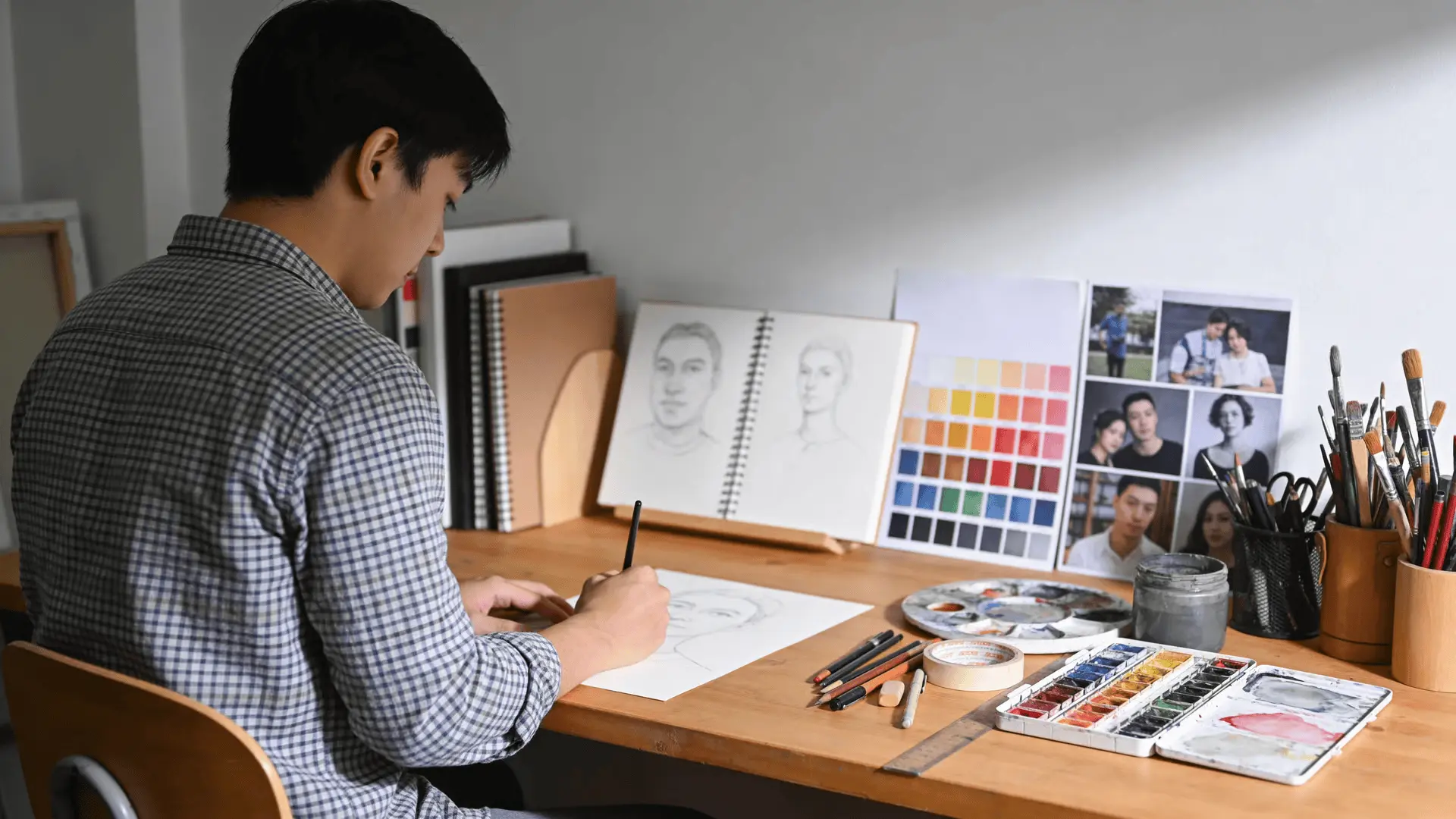
Choose personal elements that stay quiet while you work. Place them at the edges of the space rather than directly in front of you. If something keeps pulling your eyes away from the work, it belongs somewhere else.
Revisit these choices over time. What once felt motivating can start to feel heavy as your needs change.
Adjusting the space is part of keeping it usable. More inspiration is not always better. Often, reducing it brings focus back faster.
Wrapping Up
A studio works when it removes resistance from the act of making. Clear surfaces, supportive zones, and an honest layout do more than any visual upgrade ever could. That is what separates usable art studio ideas from rooms that only look ready.
When the space fits how you think, pause, and return to work; momentum builds naturally. The goal is not perfection or permanence. It is a setup that adapts as your process shifts.
Pay attention to where friction shows up, especially on low-energy days. Change one element that slows you down. Then start working and let the space prove whether it truly supports you.