A tomato cage tips off the railing in the first stiff gust, drops three stories, and lands two feet from a stroller. The neighbor calls the leasing office. The leasing office calls you. By the time the property manager opens the paperwork, the question is no longer whether you can garden on the balcony. It’s whether the deposit you handed over eight months ago is coming back.
A balcony garden is one of the friendlier things a renter can do with a small outdoor space. It’s also one of the easier ways to lose money if you skip past a few decisions that get made long before the first seedling hits a pot. Here’s how to work through them.
Read the Lease Before You Buy a Single Pot
The lease is the first place to look, and most renters don’t. Standard apartment leases usually say something about balconies. Sometimes it’s a single line about not storing items; sometimes a full paragraph on weight, drainage, or anything that hangs off the railing. A rule against attachments to the exterior is the one that catches gardeners most often.
If the lease is silent, don’t read that as a yes. Email the property manager and ask in writing what’s allowed: containers on the floor, planters clipped to the rail, drip trays, a small trellis. A short email with a written reply is the cheapest insurance you’ll ever buy against a deposit dispute. Professional managers, including firms that handle apartment properties, would generally rather answer the question up front than argue about stained concrete a year later.
Know How Much Weight the Balcony Can Actually Carry
Soil is heavier than people think. A single 20-inch container of moist growing medium can weigh around 100 pounds on its own, and that’s before you add the pot, the plant, or standing water in the saucer. Line up four of those along a railing and the load adds up fast.
Residential balconies are engineered for a live load, not a permanent one. Distributing the weight matters more than the total number of pots. A few practical rules:
- Keep heavy containers near the wall. The structure is stiffest where the balcony meets the building, not out at the rail.
- Skip terracotta on high floors. It’s heavy, it shatters, and shards falling from any height are a liability nobody wants.
- Use lightweight potting mix. Bagged container blends with peat, coir, and perlite weigh a fraction of garden soil and drain better.
- Ask before you hang anything. Rail planters, hooks, and brackets are almost always covered by a clause about attachments.
Match the Plant to the Balcony You Actually Have
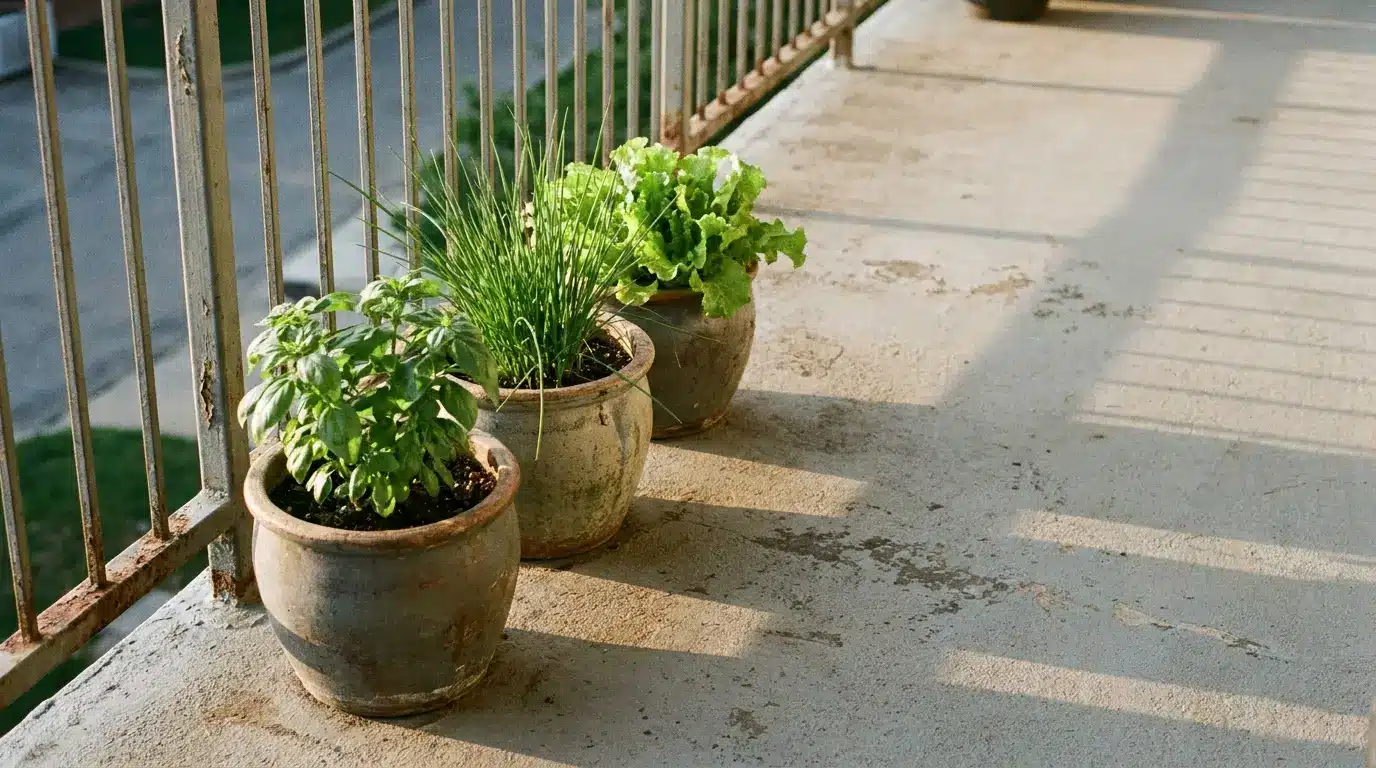
Balconies are strange microclimates. Wind is stronger up high, sun angles shift by season, and a west-facing rail can cook a pepper by August while a north-facing one stays cool through July. Match the plant to the exposure, not the wish list.
A balcony garden guide from the New York Botanical Garden walks through orientation, wind, and container choice in useful detail. As a rough starting point: herbs like basil, chives, thyme, and parsley are forgiving in smaller pots. Salad greens and leafy crops handle partial sun.
Tomatoes, peppers, and eggplant want a 5-gallon container each and the sunniest spot you have. If you get less than six hours of direct sun, skip the fruiting vegetables and lean into greens and herbs.
Protect the Surfaces Before Anything Gets Watered
Deposit deductions rarely come from the plants themselves. They come from what the plants sit on. Iron stains from wet terracotta, rust rings from metal stands, algae under a drip tray, a warped wood deck where a saucer overflowed all winter. These are the marks that show up on the move-out walkthrough.
- Elevate every pot. Pot feet or a cheap plant caddy keeps moisture off the surface and lets air move underneath.
- Use deep saucers, and empty them. Standing water breeds mosquitoes and rings the finish below within weeks.
- Watch the runoff line. If your water drains toward the neighbor below, you have a complaint waiting to happen. Water slowly, or catch the excess.
- Photograph the balcony on day one. Existing stains, chips, and rail damage belong in your move-in documentation, not in a surprise at the end of the lease.
Plan the Exit Before the First Seed Goes In
Move-out is where the deposit gets decided. Containers leave rings. Trellises leave holes. Vines climb into weep holes and pull mortar out with them when you tug.
A garden that took a season to build can take a weekend to undo, if you planned for it. Keep the receipts for anything you attached, patched, or replaced. Give the pots away a week before move-out so you’re not hauling wet soil down a stairwell on the last day.
Scrub the surface underneath with a mild cleaner, not a wire brush. And request the pre-move-out inspection your lease probably allows. It’s easier to fix a stain the manager points out in person than to argue about it on an itemized statement four weeks later.
A renter-friendly balcony garden should be just as easy to remove as it was to build. Keep the weight reasonable, the water contained, and the pots off anything they can stain or damage. If the balcony looks the same when the garden leaves as it did when the garden arrived, your tomatoes shouldn’t have to cost you your deposit.