Effective Exterior Building Care: Modern Technology and a Professional Approach
Maintaining the aesthetic appearance and structural integrity of real estate requires regular and accurate maintenance. The external surfaces of buildings are constantly exposed to negative environmental factors: ultraviolet radiation, temperature fluctuations, increased humidity, and deposition of dust, exhaust gases and soot.
Without proper care on facades, roofs and paved areas organic contaminants such as mold, mildew, algae, moss and lichen develop.
To prevent the destruction of materials and restore the original type of buildings, specialized methods of hydrodynamic and chemical cleaning are used.
To achieve a flawless result and protect surfaces from damage, it is recommended that professionals who provide high-quality pressure washing and soft washing services select the optimal equipment and chemical formulations for the specific type of coating.
Basic Methods of Professional External Cleaning
Two key technological approaches are used in the modern exterior cleaning industry: high-impact pressure washing and delicate soft washing. The choice of a specific method depends on the type of surface to be treated, its age, structure and nature of contamination.
- Pressure level and water flow rate. The pressure washing method uses high pressure levels from 2000 to 4000+ PSI, while soft washing operates at ultra-low values below 500 PSI.
- Surface impact mechanism. High-pressure treatment relies on the physical kinetic energy of the water jet, and gentle washing cleans dirt through a special chemical formula.
- Material compatibility. High pressure is suitable for hard coatings such as concrete and pavers, while delicate wash is used for sensitive asphalt shingles, siding and stucco.
- Organic contamination removal. The mechanical pressure depresses the surface layer, and specialized soft washing solutions completely destroy spores in the material pores.
Each of the methods presented solves a specific range of problems in home maintenance.
Pressure Washing Technology
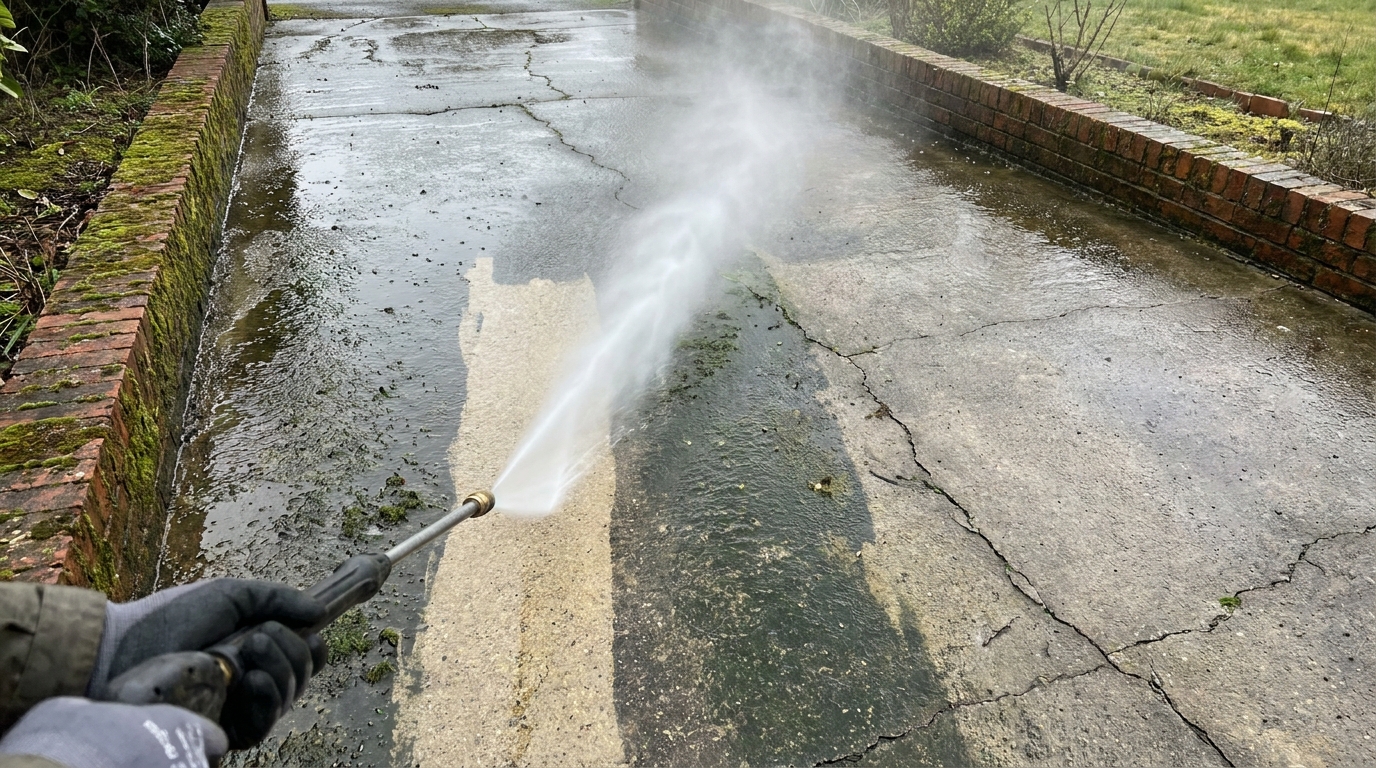
The method of pressure washing is based on the use of a powerful water flow, supplied at high pressure levels from 2000 to 4000+ PSI. The main role here is played by the kinetic energy of the mechanical action of the jet.
- Coatings to be treated. The method is ideal for hard, non-porous and physically wear-resistant materials such as poured concrete, aggregate driveway, brick masonry and stone paving.
- Removal of persistent contaminants. High pressure effectively handles old embedded stains such as oil stains, tire marks, rust stains, paint residue and traces of building mixtures.
- Specialized nozzles. Professional surface cleaners are used for handling large flat areas, such as driveways or patios, which ensure uniform cleaning without the formation of striping strips.
Properly adjusted pressure allows deep cleaning of the material structure, restoring its original color and texture.
Soft Washing Technology
In contrast to standard high pressure washing, the soft washing method is based on using an ultra-low pressure level usually less than 500 PSI in combination with specialized cleaning solutions.
- Delicate surfaces. Technology specially developed for materials sensitive to mechanical damage: asphalt shingles, wood siding, vinyl siding, stucco, EIFS and painted surfaces.
- Chemical composition of solutions. The active components are biodegradable cleaning solutions, which include sodium hypochlorite for organic contamination removal and professional surfactants that retain the compound on vertical surfaces.
- Eliminate the cause, not the symptoms. Chemical reagents dissolve cell membranes of black algae, green algae, fungi and lichen, destroying spores at the microscopic level and preventing their rapid recurrence.
Using low pressure completely eliminates the risk of water seeping under siding or splintering granules from roof shingles surfaces.
Specifics of Processing of Various Real Estate Zones
Each element of the exterior of a building requires individual selection of equipment, chemicals and water supply parameters. Proper separation of technological processes ensures the preservation of all architectural elements.
Clearing the Shingle
The roof of the building is under the most enormous strain. The appearance of black stripes on the ladder is often caused by the spread of bacteria called Gloeocapsa magma.
- Categorical prohibition of high pressure. Applying pressure washing on asphalt shingles washes protective granules, which critically reduces the lifespan of the roof and nullifies the manufacturer’s warranty.
- Application of soft washing. The chemical composition is sprayed on the surface of the roof with the help of specialized low-pressure chemical pumps, neutralizing all the organic compounds without damaging the hydroinsulation layer.
- Treatment of drains. The work also includes washing gutters and downspouts from accumulated waste to ensure proper water drainage.
Certified roof treatment restores its reflective capacity and extends the operating period for years.
Maintenance of Sidewalks and Access Roads
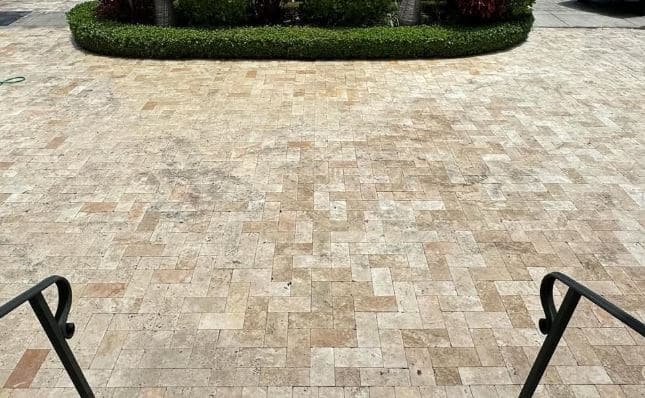
The concrete and paved areas are subject to heavy pollution due to high traffic congestion and contact with motor vehicles.
- Pre-treatment phase. Application of specialized degreasers for oil products and oil stains.
- Main washing process. Use a surface cleaner with two or four rotating nozzles at high pressure level.
- Post-treatment phase. Light solution spraying for organic contamination removal and destruction of residual spores in concrete or paver joints.
This step-by-step approach ensures a long-lasting result and protects concrete from premature spalling.
Benefits of Timely Care by Extension
Systematic professional cleaning of the exterior of the house brings not only aesthetic benefits, but also direct economic benefit to the property owner. Investing in preventive treatment pays off completely.
- Increase in object cost. Clean facades, well-maintained roofing and a neat driveway significantly raise the curb appeal and market value of the building before selling or renting.
- Preventing costly repairs. The removal of biomaterial prevents wood rot, the destruction of stucco plaster cracking and corrosion of metal parts.
- Safety and health. Cleaning walkways from slick algae and moss prevents injuries, while removing mold and spores improves the air quality around the house.
Regular maintenance is always significantly cheaper than major repairs or a complete replacement of the facade and roofing materials.
Final Thoughts
The exterior cleaning industry today is a high-tech process that requires deep knowledge in materials science and chemistry. By entrusting this work to qualified specialists, equipped with modern equipment and correct chemical formulations, you guarantee the safety, beauty and durability of your property for many years.