Basil often looks perfect when you bring it home, then starts struggling within weeks. A few small care mistakes can cause it.
Maybe yours went from bright green to droopy in days. Maybe it flowered early, and the leaves lost some flavor. That does not mean the plant is difficult to save. Basil needs more regular attention than many common houseplants.
Once all the needs work together, basil plant care becomes much easier. You’ll learn how to care for basil plants indoors and keep it full, green, and useful for longer.
What Is a Basil Plant?
Basil (Ocimum basilicum) is a culinary herb in the mint family, Lamiaceae. It is grown mainly for its fragrant leaves, which contain aromatic oils responsible for basil’s sweet, peppery, or spicy scent and flavor.
Most kitchen basil, including Genovese and sweet basil, completes its life cycle in one growing season. As the plant matures, it produces flower spikes, forms seeds, and eventually declines. Basil stems are soft when young but can become firmer and woodier with age.
Different varieties can have green or purple leaves, smooth or ruffled edges, and distinct flavors. Common examples include Thai basil, lemon basil, and purple basil. Knowing basil’s natural growth cycle helps explain why an older plant may change even when it remains healthy.
How to Care for a Basil Plant Indoors
Indoor basil stays healthier with strong light, steady warmth, careful watering, draining soil, and light feeding. Each need affects the others, so balanced care gives the plant a better base for steady leaf growth.
1. Light Requirements
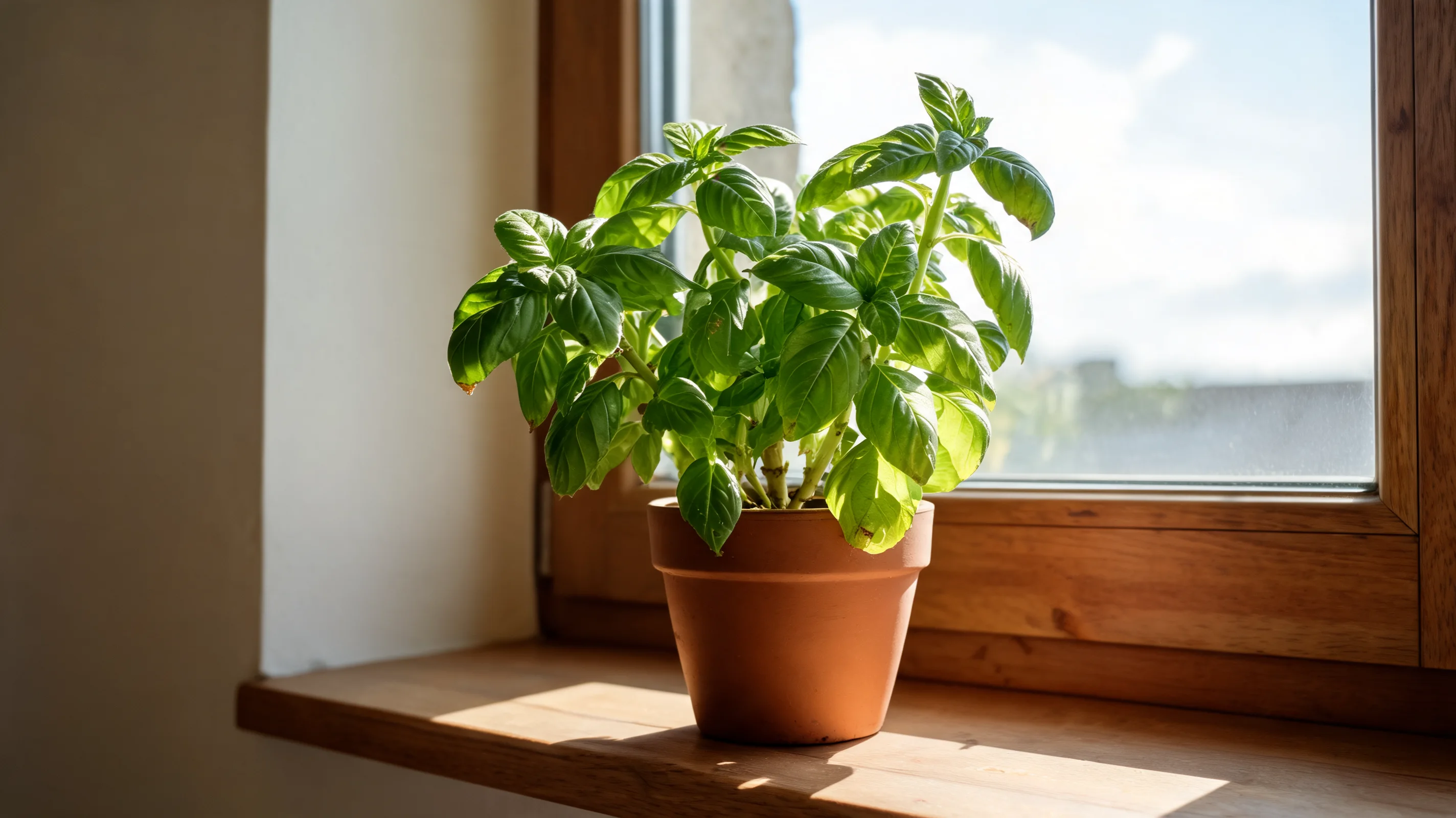
Basil needs plenty of light indoors because weak light quickly affects its shape, color, and growth.
- Daily light: Give basil at least about 6 hours of direct sun when possible. If natural light is weak, use a grow light for longer periods each day because indoor fixtures are generally less intense than sunlight.
- Best location: A sunny south-facing window usually provides the strongest indoor natural light in the U.S.; bright west-facing windows can also work.
- Too little light: Long stems, pale leaves, and slow growth usually mean the plant needs more light.
- Intense sun: Basil generally handles strong sunlight well once acclimated. Scorch is more likely after a sudden move from low light into intense sun, especially when heat or dry soil adds stress.
2. Temperature and Humidity
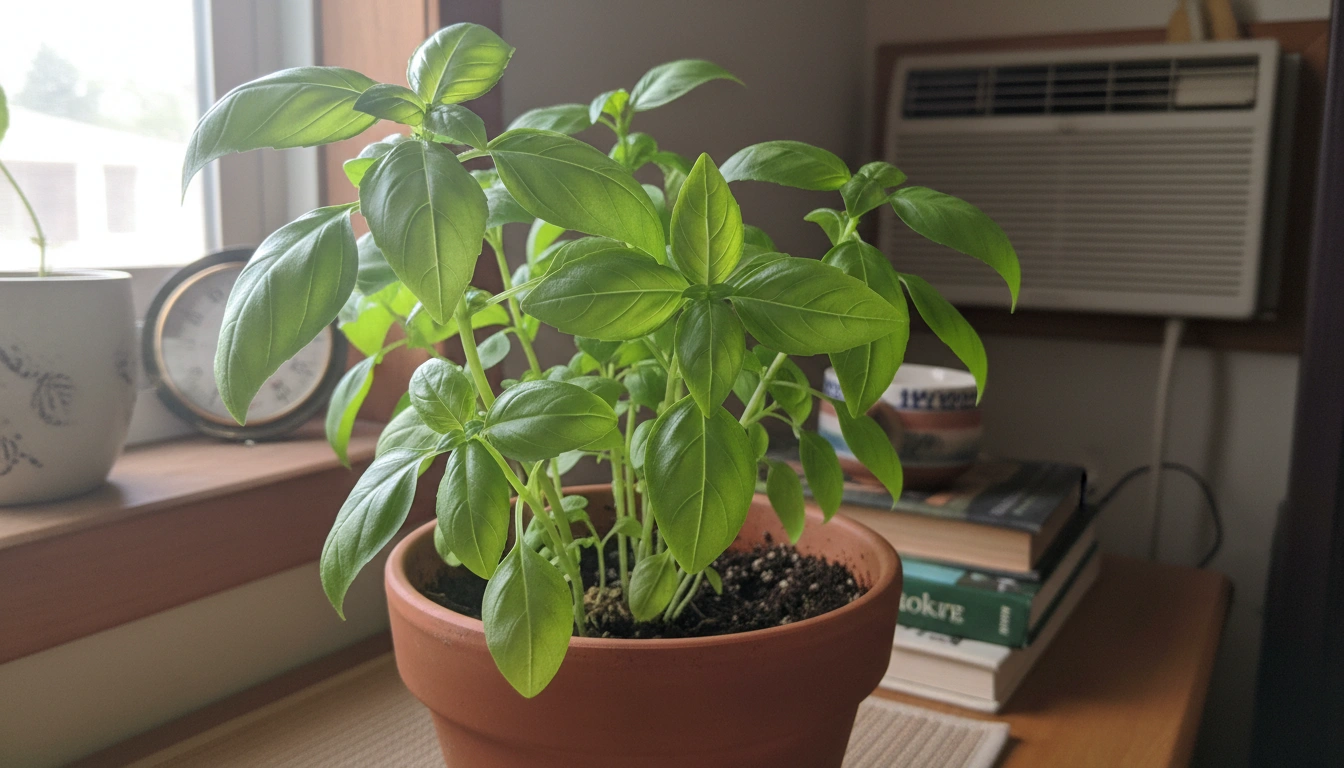
Basil prefers warm, stable conditions, so cold air and sudden temperature changes can quickly slow its growth.
- Best temperature: Keep indoor basil around 70°F to 80°F when possible.
- Cold conditions: Temperatures below 50°F can damage tender leaves.
- Cold drafts: Keep the pot away from air-conditioning vents and chilly windows.
- Humidity: Moderate indoor humidity is usually ideal for basil.
3. How to Water Basil
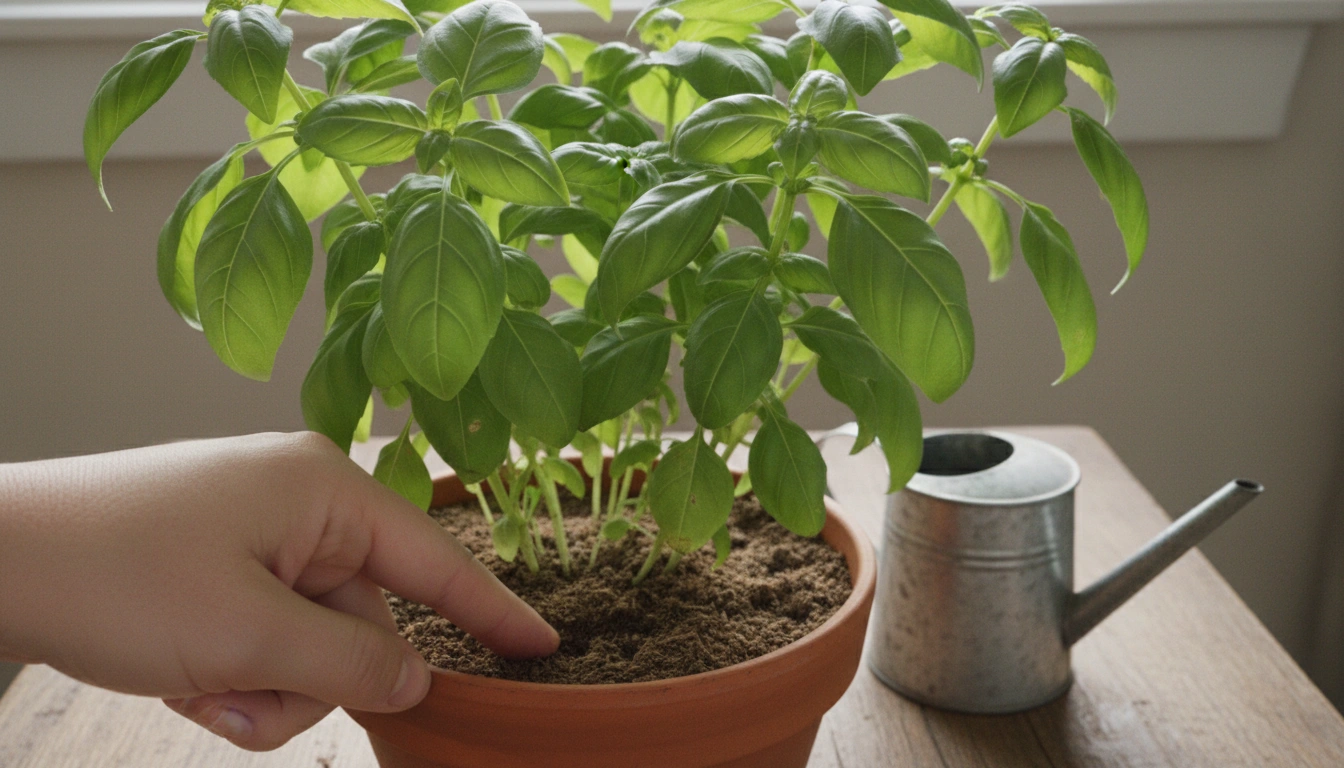
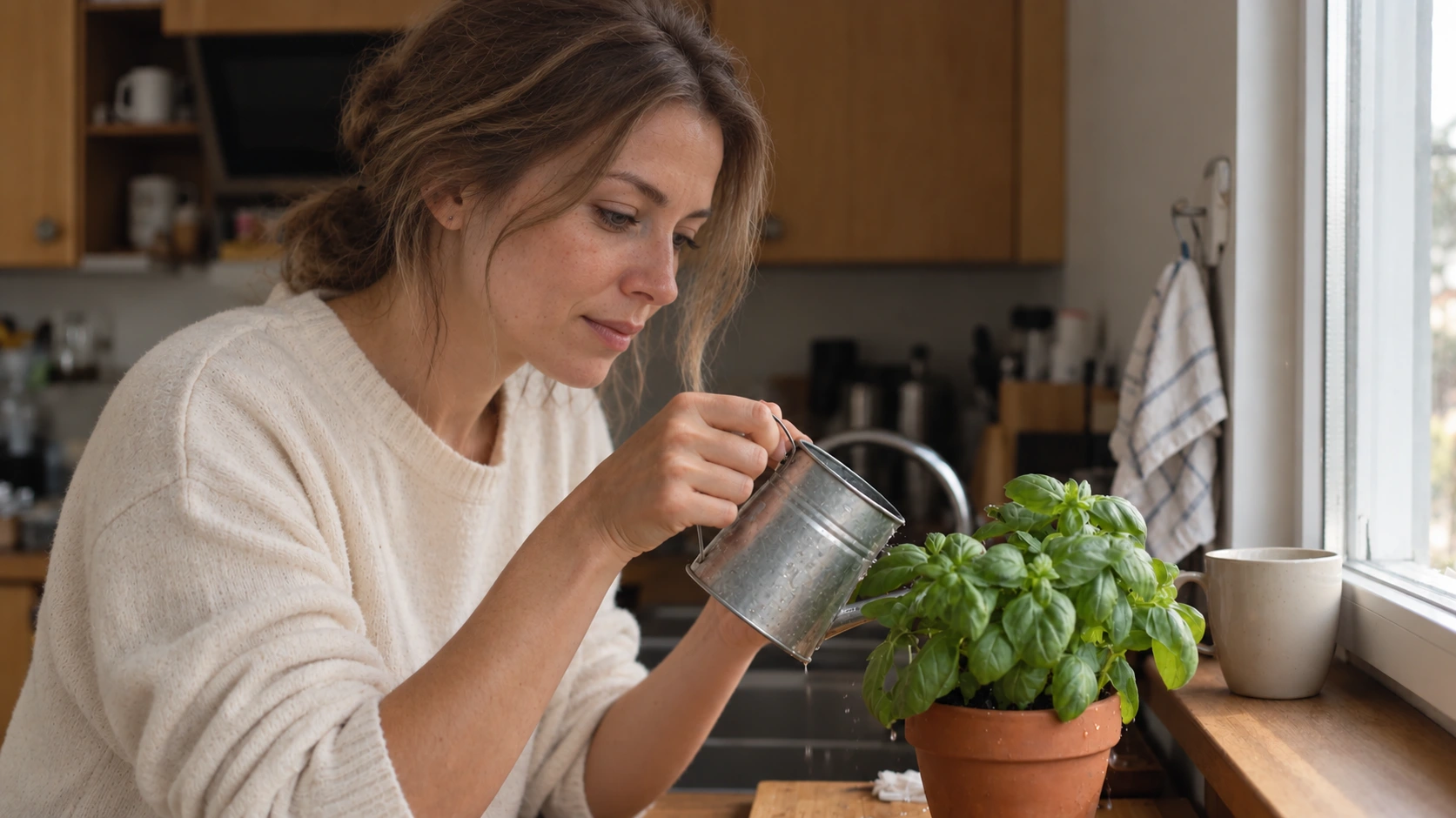
Basil likes steady moisture, but its roots can struggle when the soil stays wet for too long.
- Check the soil: Water when the top inch feels dry.
- Avoid fixed schedules: Heat, light, and pot size change how quickly soil loses moisture.
- Water properly: Soak the soil evenly, then let extra water drain from the bottom.
- Too little water: Drooping leaves and dry edges often appear when the soil becomes too dry.
- Too much water: Yellow leaves and soft stems can point to excess moisture.
- After watering: Empty collected runoff so the pot doesn’t sit in water.
4. Soil, Pot, and Drainage
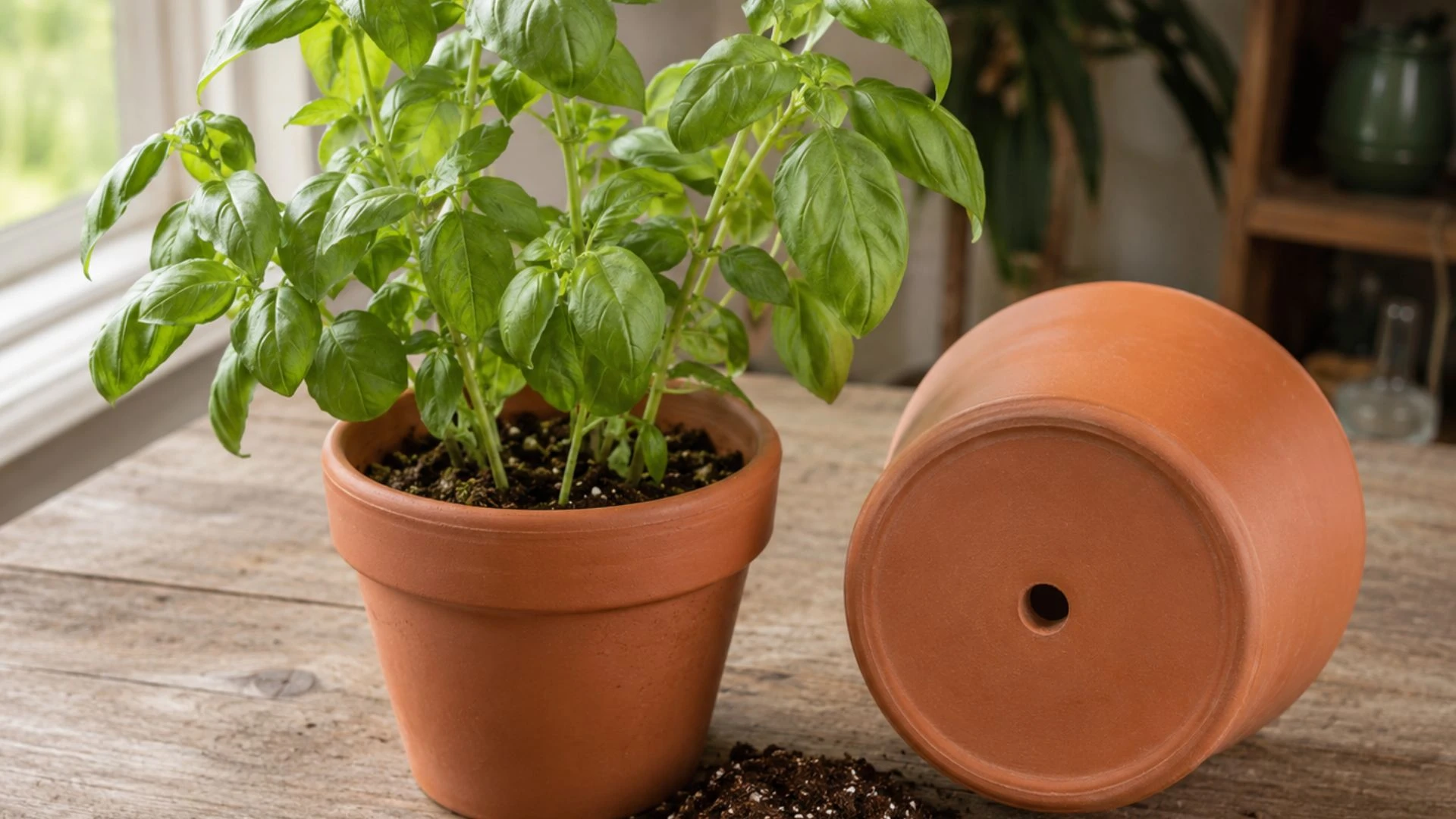
Good soil and proper drainage keep basil roots moist without trapping water.
- Potting mix: Use a loose mix that drains well yet retains some moisture.
- Drainage holes: Always choose a container with open holes at the bottom.
- Pot material: Terracotta dries faster, while plastic retains moisture longer.
- Pot size: Give roots enough space without surrounding them with too much unused wet soil.
5. Feeding Your Basil Plant
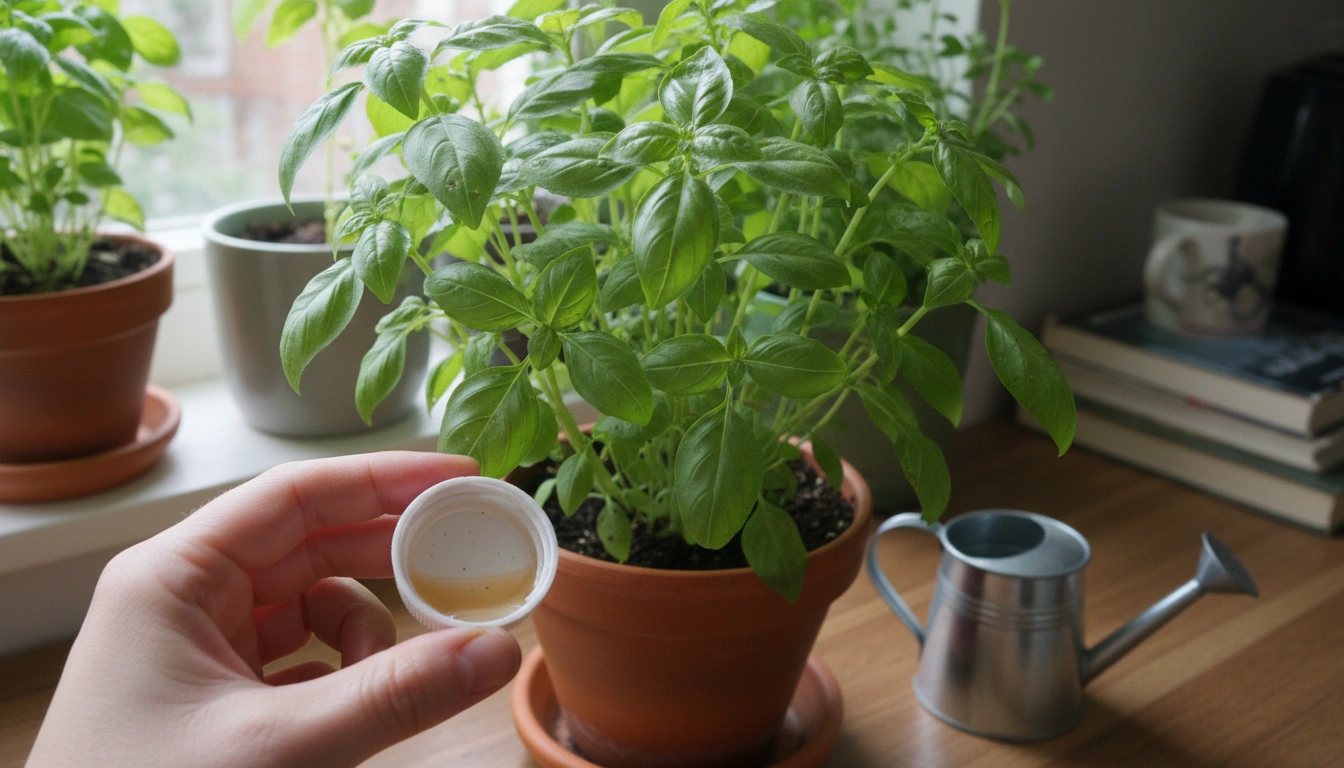
Fast growth and regular harvesting use nutrients, so light feeding can support continued leaf production.
- Fertilizer type: Use a balanced liquid fertilizer at reduced strength.
- Feeding frequency: Follow the fertilizer label and use a light dose during active growth. Fresh potting mixes that already contain fertilizer may not need additional feeding right away.
- Too much fertilizer: Brown edges, weak growth, or crust on the soil can appear.
- Before adding more, check the light and watering first, because fertilizer cannot fix those problems.
How to Prune and Harvest Basil
Pruning keeps basil focused on leaf growth instead of flowers and seeds. Without regular trimming, the plant gets taller, flowers sooner, and leaf quality can drop. Basil responds best when you cut just above a leaf node. A leaf node is the point on a stem where leaves or new side shoots grow.
This encourages new side growth and helps the plant stay fuller. Start pruning once the plant reaches about 6-8 inches tall. Remove the top growth regularly, but avoid cutting away too much at once.
Harvesting can also act as pruning once the plant has branched. Cutting from the top encourages fresh growth below the cut. Remove flower buds early if you want more leaves, since flowering marks the start of bolting, when basil shifts from leafy growth toward seed production. This helps keep the plant productive for longer.
Growing Basil Outdoors

Outdoor basil needs strong sun, warm temperatures, steady moisture, and protection from harsh wind. Here is how to manage each of those once you move it outside.
- Wait for warm nights: move basil outside once nighttime temperatures stay above 50°F.
- Harden it off slowly: let the plant adjust to stronger sunlight and wind over several days.
- Check soil more often: outdoor pots dry faster than indoor ones, so monitor moisture closely.
- Watch afternoon sun: Basil usually prefers full sun, but in very hot climates, container plants may benefit from some afternoon shade to reduce heat and drought stress.
- Bring it back inside: move basil indoors as nights approach 50°F to avoid cold damage.
- Frost: Move basil outdoors after the danger of frost has passed.
Note: Hardening off means gradually exposing an indoor-grown plant to outdoor sun, wind, and temperature changes over several days.
Common Basil Diseases
Basil can develop diseases that look like watering or nutrient problems, so check leaf and stem symptoms more closely.
Basil downy mildew often starts as yellow areas between the leaf veins, followed by gray or purple fuzzy growth on the undersides of leaves. It can spread quickly through the plant. Good airflow and avoiding long periods of wet foliage can help lower the risk.
Heavily infected plants are usually best removed, and resistant basil varieties can be useful where the disease is common.
Fusarium wilt can cause stunted growth, yellowing, and persistent wilting even when soil moisture seems adequate. Infected plants may continue declining despite normal care. Because several problems can cause similar symptoms, check the entire plant before assuming watering is the cause.
Common Basil Problems and Quick Fixes
Most basil problems show up through the leaves, stems, or growth pattern, so the plant usually gives you a clue about what needs attention.
|
Problem |
What It Usually Means |
Quick Fix |
|---|---|---|
|
Yellow leaves |
Yellow leaves can come from excess moisture, low light, aging lower leaves, or disease. |
Let the top layer dry slightly and check the drainage holes. |
|
Drooping leaves |
The soil may be too dry, or the roots may be stressed. |
If the soil is dry, the plant may need water. If the soil is already wet, don’t water again; saturated or damaged roots can also cause wilting. |
|
Long, thin stems |
The plant is likely not getting enough light. |
Move it closer to strong light or use a grow light. |
|
Soft stems |
Too much moisture can weaken the base and roots. |
Reduce watering and inspect the roots if the stem feels mushy. |
|
Visible pests |
Aphids, spider mites, whiteflies, or fungus gnats may be present. |
Inspect both sides of the leaves and treat the pest early. |
Start with the most likely cause, make one change, and watch how the plant responds before adjusting anything else.
How to Keep Grocery-Store Basil Alive
Grocery-store basil often contains many seedlings packed into one small pot, which makes the plant look full but creates heavy competition below the soil. The roots compete for space, water, and nutrients, while crowded stems reduce airflow and limit light reaching lower leaves.
If the pot is extremely crowded, thin some weaker seedlings or carefully divide the root ball into smaller groups before repotting. Move them into containers with drainage holes and fresh potting mix to give each plant more room to grow.
After repotting, keep the plants in bright, indirect light for a short period while they recover. Then increase sun exposure gradually. Avoid placing newly divided basil straight into intense midday sun, because stressed roots and tender leaves may struggle after the move.
Frequently Asked Questions
Why do basil stems turn woody over time, and can it be fixed?
Woody stems happen as basil matures and slows leaf production. Frequent pruning and harvesting from the top help delay this, though very woody plants eventually need replacing.
Can you collect and reuse seeds from a basil plant that flowered?
Yes, mature flower spikes eventually produce seeds you can collect once dried and browned. Store them somewhere cool and dry, and they’ll stay viable for future planting.
Can basil grow indoors year-round?
Yes. Basil can grow indoors beyond the outdoor season if it receives enough light, warmth, and suitable care. However, common sweet basil is an annual, so each plant eventually matures, flowers, produces seed, and declines over time.
Why is my basil wilting even though the soil is wet?
Wilting in wet soil can mean the roots are stressed by excess moisture and low oxygen. Damaged roots cannot absorb water efficiently, so the leaves droop even though the potting mix is wet. Check drainage before watering again.
Does basil come back every year?
Common sweet basil is an annual, so the same plant usually does not return the following year. It completes its life cycle after flowering and setting seed. You can grow new basil from saved seeds or naturally dropped seeds.
Final Thoughts
Good basil plant care comes down to balance, not constant attention. Watch what your plant shows you before changing several things at once.
Small, steady habits can keep basil producing fresh leaves for longer. If you are already growing basil at home, let me know in the comments what problem you are dealing with.