Few landscape plants look as naturally at home on the East Coast as rhododendrons. These broadleaf evergreen shrubs bring together dense foliage, impressive spring flowers and the ability to become substantial landscape features over time.
They work particularly well in wooded yards, older neighborhoods and properties where mature trees create the filtered light many varieties prefer.
While gardeners have plenty of flowering shrubs to choose from, rhododendrons have earned their lasting popularity by delivering color without becoming irrelevant once flowering season ends.
An East Coast Favorite
The rhododendron has a long association with eastern North American landscapes, and several species grow naturally throughout the region.
Rosebay rhododendron, for example, is native across a broad stretch of eastern North America and can form impressive evergreen thickets in suitable environments.
Other species thrive throughout portions of the Appalachian region, where acidic soil, moisture and woodland conditions provide an excellent habitat.
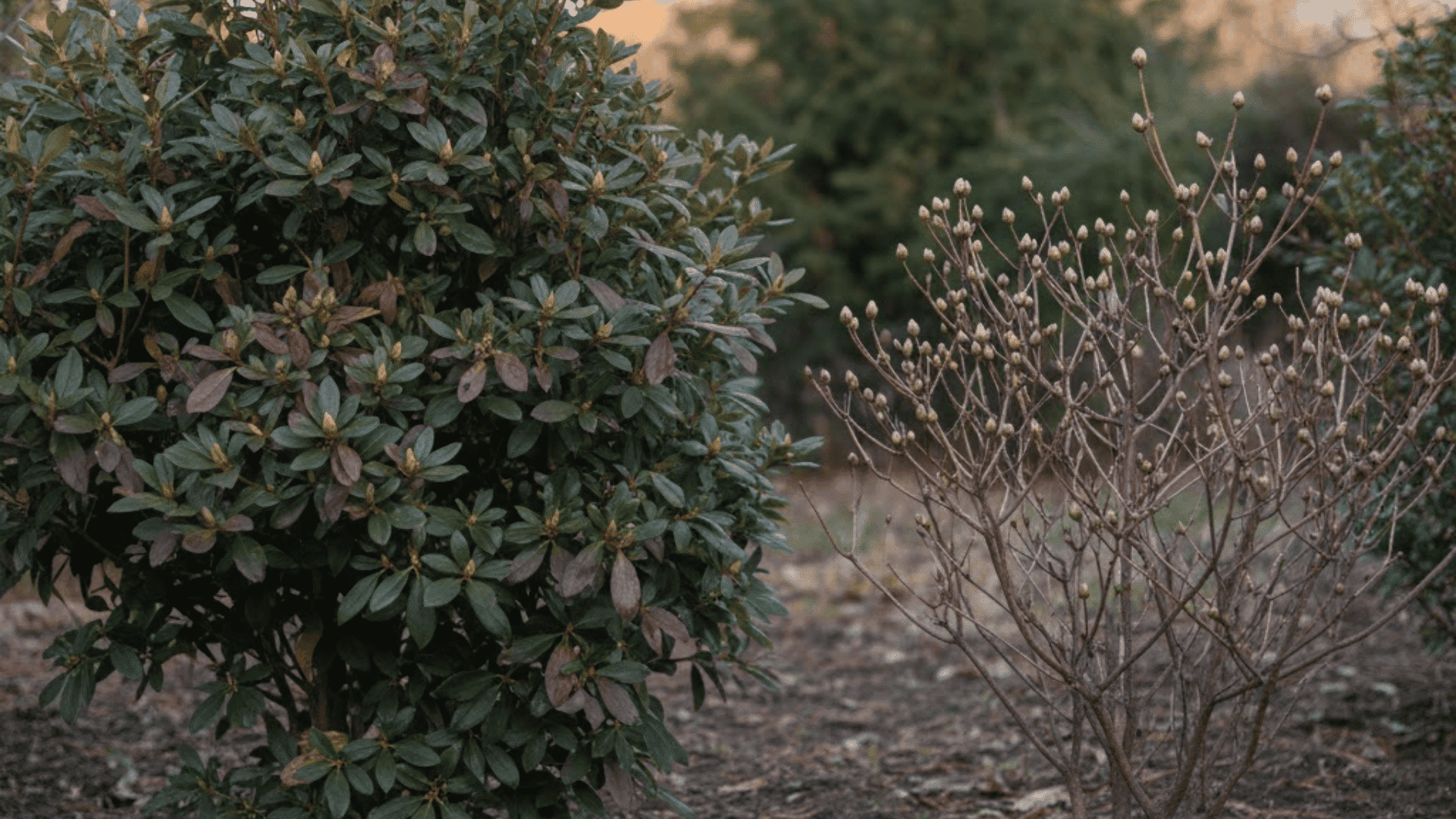
That regional connection makes rhododendrons an appealing choice for gardeners who want a landscape that looks established rather than overly manufactured. Their large evergreen leaves provide substantial visual weight around foundations, woodland borders and shaded garden beds.
Depending on the species and cultivar, plants can remain relatively compact or eventually become towering shrubs that feel almost tree-like.
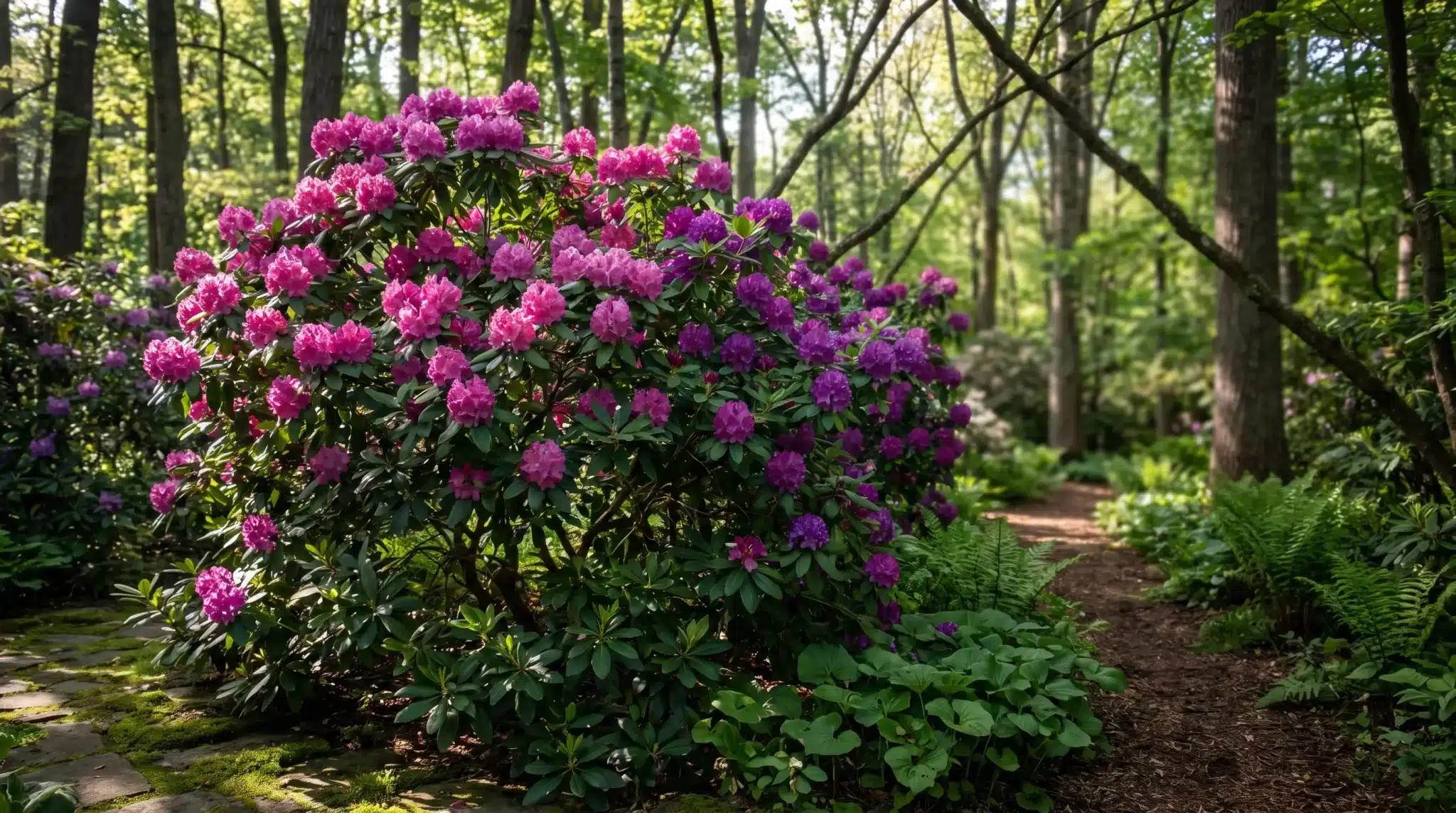
Flowers generally appear in clusters and can range from white and pale pink to purple, red and richer shades of pink. Once those flowers disappear, the foliage continues doing useful work throughout the year.
Getting Planting Right
Rhododendrons can live for decades, but they are considerably less forgiving when planted in the wrong location. Planting shrubs correctly starts with understanding their root systems. Rhododendrons develop relatively shallow, fine roots, so burying the root ball too deeply can create problems.
A planting site with good drainage and loose, organic soil gives those roots a much better environment for establishing themselves.
Soil chemistry matters as well. Rhododendrons generally favor acidic conditions, commonly performing well around a pH of 4.5 to 6.0. Before making major soil amendments, testing the existing soil provides useful information instead of turning gardening into a chemistry guessing game.
Organic matter can improve suitable soils, while mulch helps conserve moisture and protect shallow roots. Keep heavy mulch away from direct contact with the trunk and stems.
Water new plants consistently while they establish, particularly during dry stretches. The goal is evenly moist soil rather than permanently saturated ground. Rhododendrons dislike sitting in waterlogged soil, and poor drainage can undermine an otherwise promising planting surprisingly fast.
Finding the Best Location
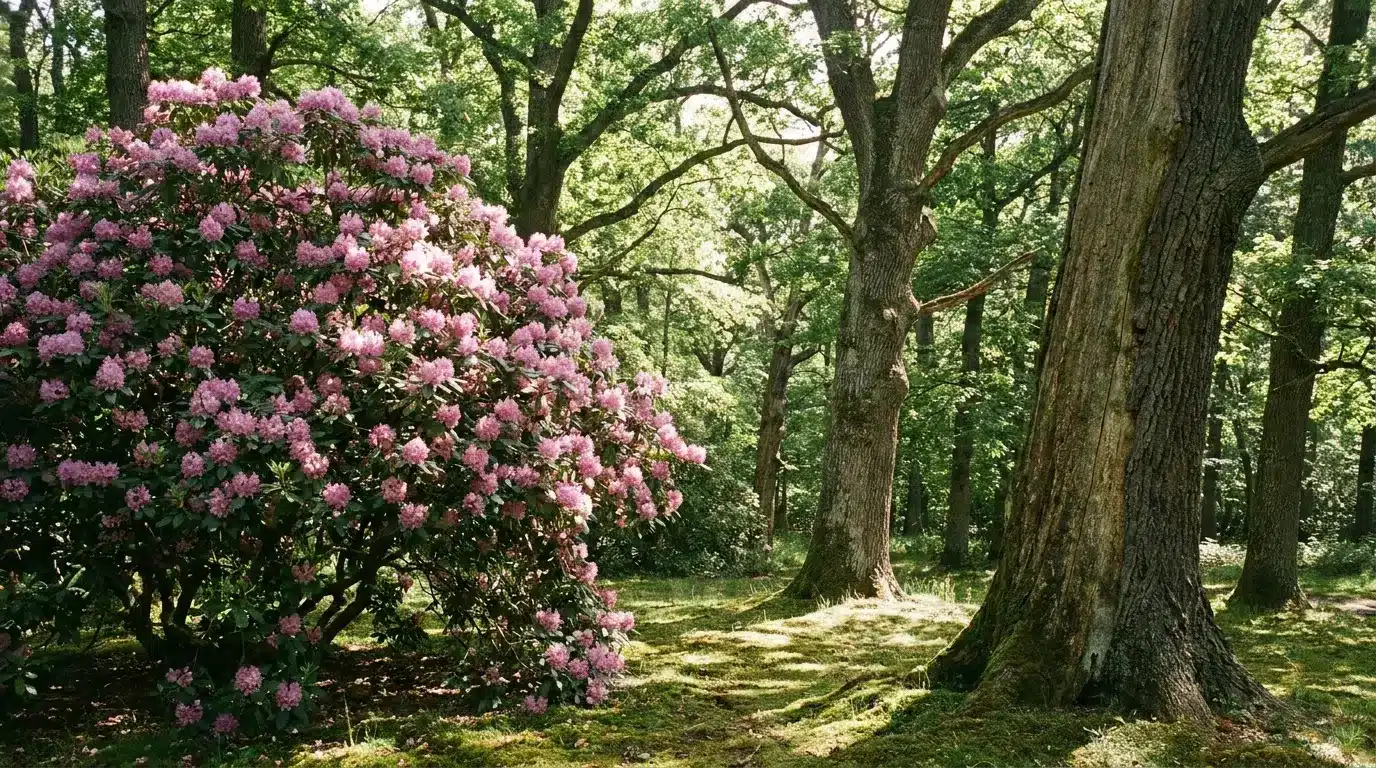
The stereotypical blazing-hot, completely exposed garden bed is rarely the dream address for a rhododendron. Many varieties prefer partial shade or filtered sunlight, particularly where summers become hot. Morning sun followed by some afternoon protection can provide an excellent balance between light exposure and relief from intense heat.
A location beneath high tree canopies can work beautifully, provided the rhododendron does not face overwhelming competition for moisture and nutrients.
Woodland edges are another natural fit. Protection from harsh winter winds can also help evergreen foliage remain attractive through colder months.
Give the mature plant enough room from the beginning. A small nursery shrub can be deceptive because some rhododendrons eventually become very large.
Check the expected mature width and height of the specific cultivar before planting. Cramming a potentially eight-foot shrub into a three-foot opening creates an unnecessary pruning battle later.
Making Year-Round Impact
Spring flowers get most of the attention, but rhododendrons earn their space through structure. Their evergreen leaves provide mass and texture during seasons when deciduous shrubs have dropped their foliage. That makes them useful as foundation plants, background shrubs and anchors within mixed borders.
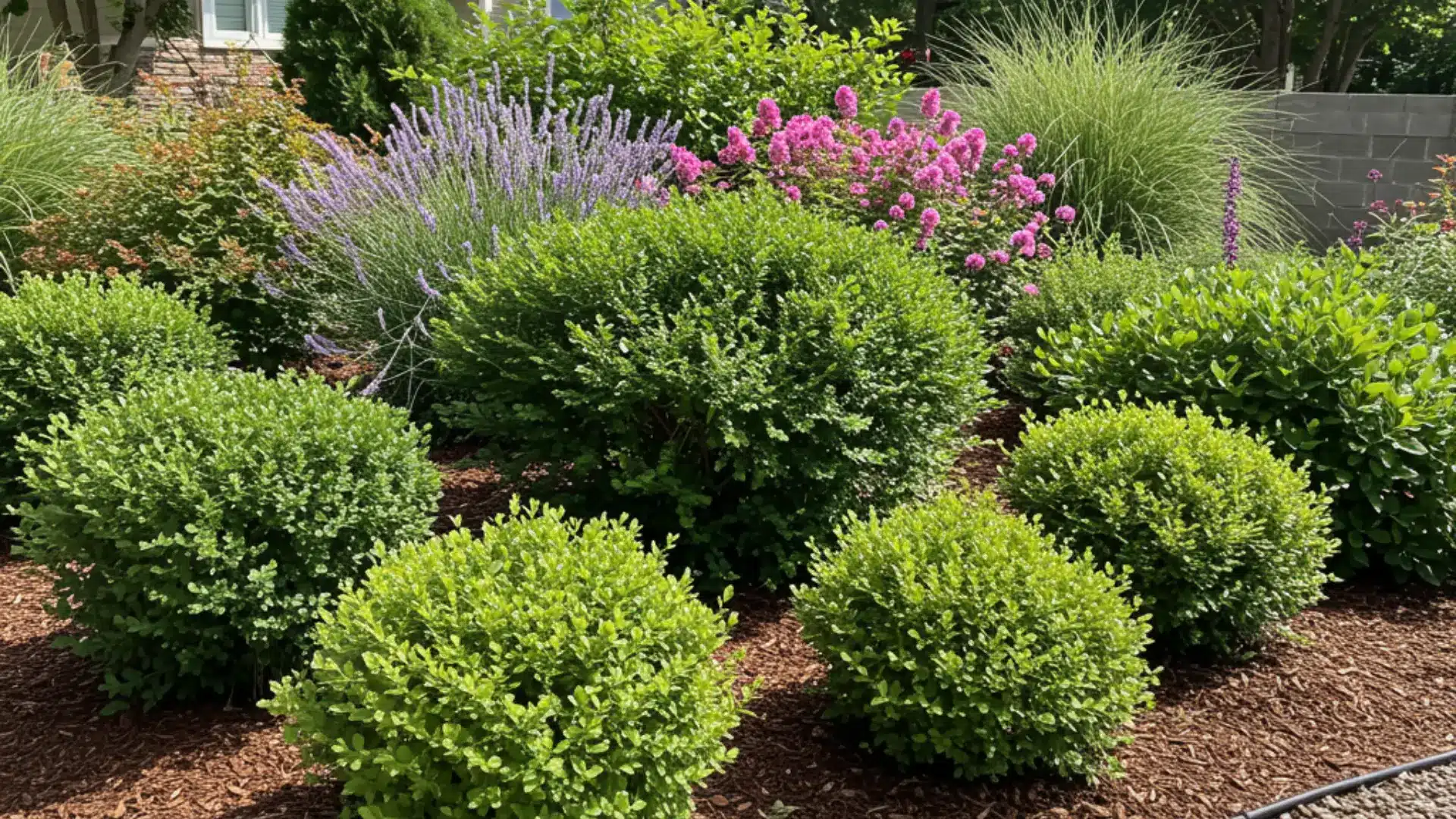
They also pair naturally with other plants that appreciate acidic soil and woodland conditions. Ferns can soften the area around mature specimens, while compatible native woodland plants add layers of height and texture. Azaleas, which belong to the Rhododendron genus, can extend the visual theme with different growth habits and flower forms.
Avoid treating every rhododendron as interchangeable. Cultivars differ in mature size, cold tolerance, flower color and light preferences.
Choosing one for its eventual dimensions and local growing conditions usually produces better results than selecting whichever plant happens to have the prettiest flowers at the garden center that afternoon.
Keeping Rhododendrons Looking Good
Established rhododendrons are not particularly demanding when their basic growing requirements are met. Mulching can help maintain consistent soil moisture while adding organic material as it breaks down.
During prolonged dry weather, deep watering is generally more useful than frequent shallow watering because it encourages a healthier root environment.
Pruning should have a purpose. Remove dead or damaged branches as needed, and tackle major shaping soon after flowering so you are less likely to sacrifice the following season’s buds.
Many rhododendrons develop attractive natural forms without aggressive annual trimming. Letting them grow into those forms often creates a more convincing landscape than forcing them into rigid geometric shapes.
Pay attention to changes in foliage, flowering and overall vigor. Yellowing leaves, poor growth or declining branches can point toward drainage, soil chemistry, root or pest issues that deserve investigation. Catching a problem early is easier than rehabilitating a badly stressed mature shrub.
For East Coast gardens with acidic soil, adequate moisture and some protection from intense afternoon sun, rhododendrons remain hard to beat. Give one the right location and enough room to mature, and it can become a defining part of the yard for decades.