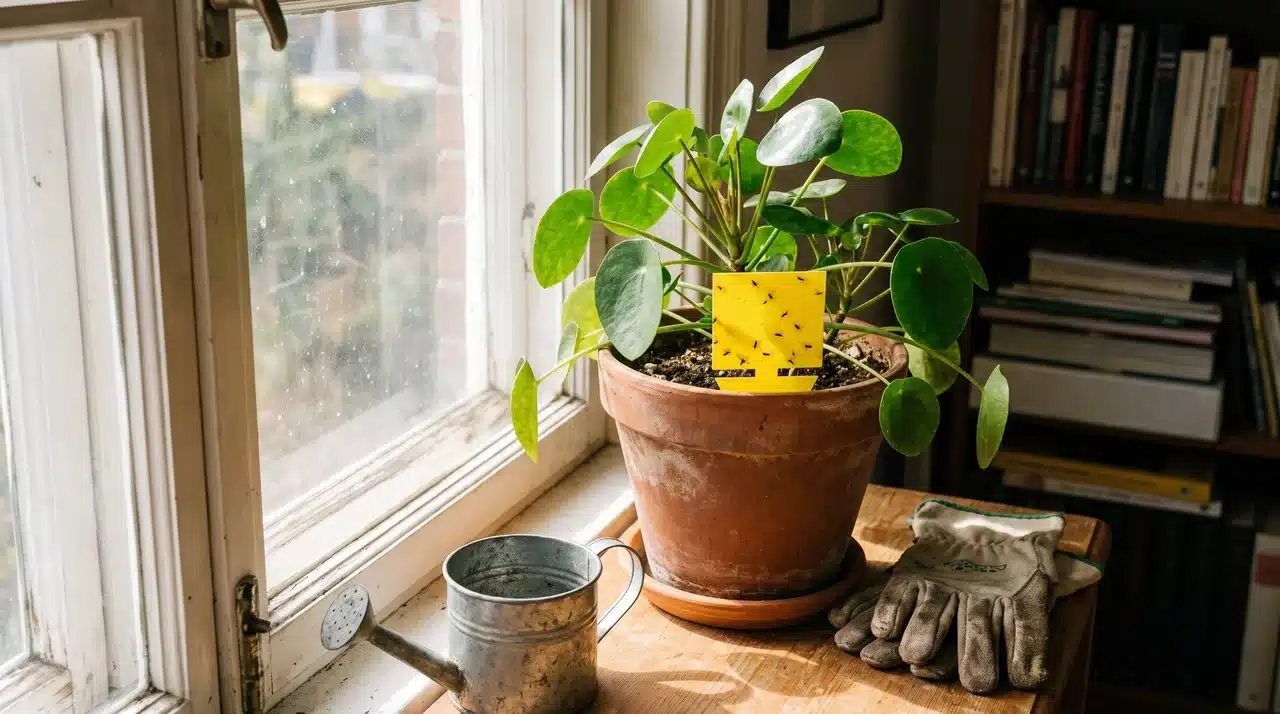
If tiny flies keep appearing over your houseplant pots every time you water, you are not alone. I have managed this exact issue across several houseplants, and it almost always starts with just a few gnats hovering near the soil before it turns into a larger infestation.
Fortunately, learning how to get rid of gnats in plants does not require complicated tools, only consistent habits and the right treatment approach.
I will walk you through why these pests appear, how to recognize an infestation early, and the exact steps I use to clear them out and keep them from returning.
What Are Gnats in Plants?
The tiny insects found flying around houseplants are usually fungus gnats, small, dark-colored flies often seen near the soil surface or around plant containers.
Adult fungus gnats are mostly a nuisance because they fly around the plant area. Their larvae are the stage that can create problems for plants.Fungus gnat larvae live in moist soil and feed on fungi, decaying organic matter, and other materials found in the growing medium.
Fungus gnats prefer damp soil because it provides a suitable place for laying eggs and supporting larval development. Plants that remain consistently wet because of overwatering or poor drainage create the conditions these pests need to multiply.
While healthy mature plants can usually tolerate a small population, a heavy larval presence can disturb the roots of young plants and reduce their ability to absorb water and nutrients.
Signs Your Plant Has a Gnat Problem
Fungus gnats are one of the most common houseplant pests, and catching them early makes it easier to bring the population back under control.
Since adult gnats are easy to spot but the real damage happens underground, it helps to know the full range of signs.
- Small flies around plant pots, especially after watering or disturbing the soil.
- Larvae in the soil, appearing as small white or clear specks with dark heads.
- Weak or slow growth from roots that cannot absorb nutrients efficiently.
- Yellowing leaves caused by root stress or unhealthy soil conditions.
- Wilting despite adequate watering, since damaged roots cannot absorb moisture.
- More flying activity right after watering, when soil moisture rises.
Spotting two or more of these signs together strongly suggests an active gnat problem, and addressing soil moisture early usually keeps the infestation from spreading into the root system.
Choose Your Method Based on Infestation Severity
Not every gnat sighting calls for the same response, and treating a mild case the same way as a severe one wastes effort. Matching your treatment to the actual severity saves time and avoids unnecessary soil disruption.
|
Severity |
Common Symptoms |
Recommended Action |
|---|---|---|
|
Mild |
A few adult gnats, no visible plant stress |
Dry out soil and add yellow sticky traps |
|
Moderate |
Frequent adults, occasional larvae near the surface |
Add a sand or grit top layer and monitor weekly |
|
Severe |
Large numbers of larvae, yellowing or wilting leaves |
Apply a BTI or hydrogen peroxide soil treatment, then repot if needed |
Expert tip: When severity is unclear, treat for the higher level. Larvae are often hidden below the surface, so a moderate infestation can behave like a severe one if left untreated.
How to Get Rid of Gnats in Plants Step by Step
Removing gnats effectively means managing both the adult insects and the larvae developing in the soil. Combining several methods below produces more reliable results than any single step alone.
Step 1: Allow the Soil to Dry Between Watering
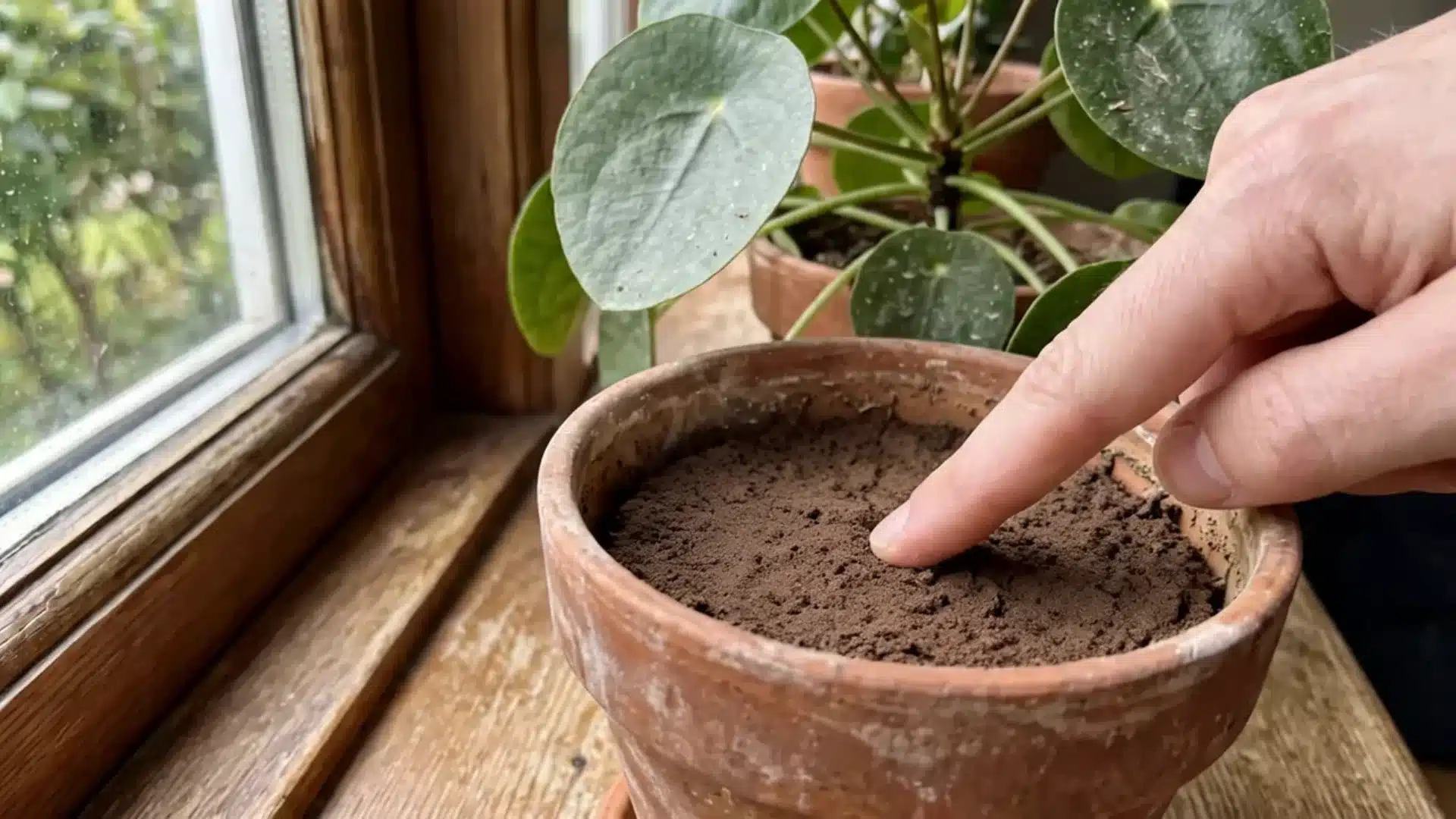
Check the soil with your finger before watering again, and if the top few inches still feel damp, wait longer. A wooden skewer inserted into the pot works well too, since damp soil clings to the wood.
Avoid keeping soil constantly wet, since this creates favorable conditions for eggs and larvae, while balancing this against your plant’s actual moisture needs.
Step 2: Use Sticky Traps for Adult Gnats
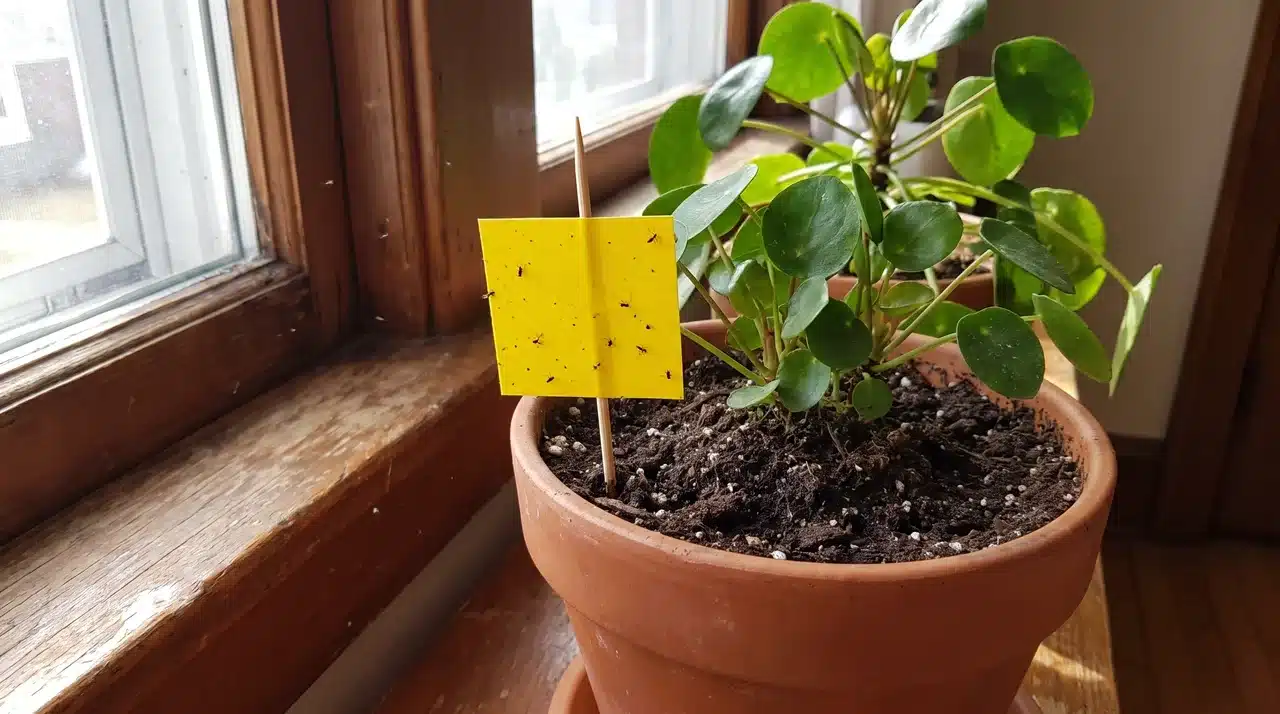
Place yellow sticky traps close to the soil surface where adult gnats move, to help monitor and reduce the population.
Check traps every few days, and replace them once the surface fills up so new gnats keep sticking. Traps only catch flying adults and do not remove eggs or larvae, so pair them with soil treatment.
Step 3: Treat the Soil to Remove Larvae
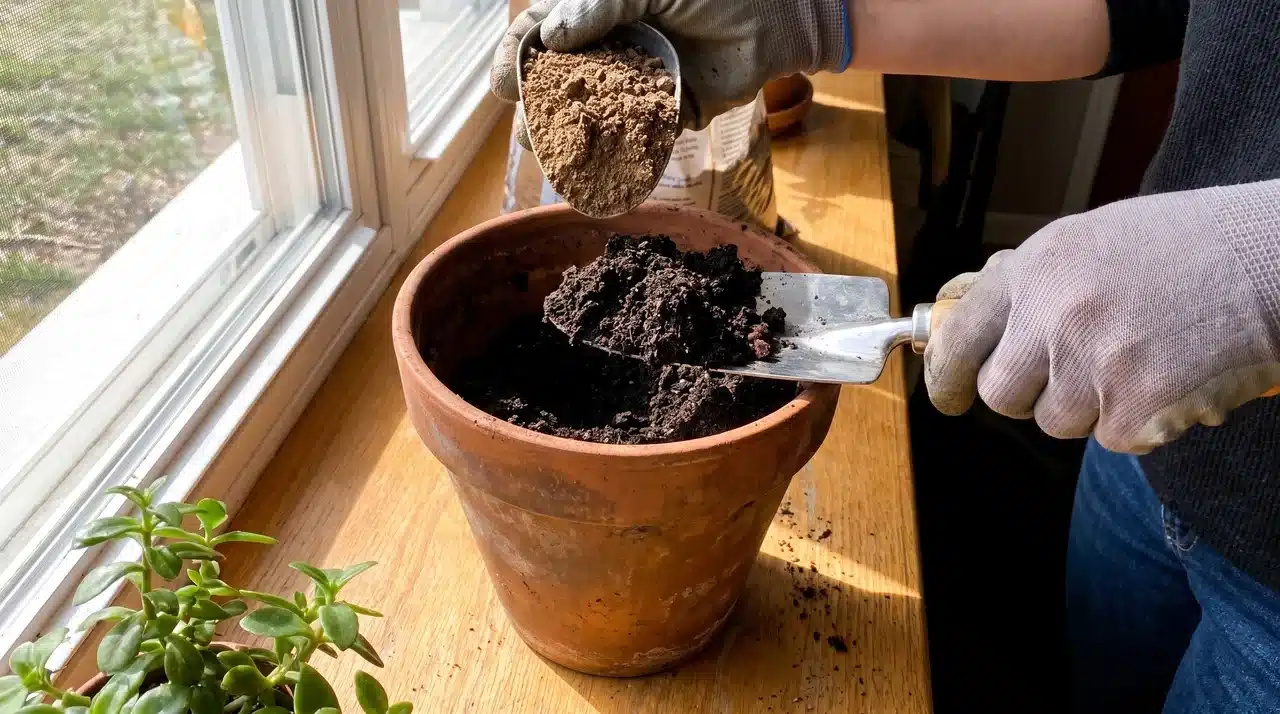
For mild cases, remove the top layer of soil and replace it with fresh potting mix. For larger infestations, apply a soil larvicide such as BTI (Bacillus thuringiensis israelensis), or use a diluted hydrogen peroxide drench for fungus gnats, following label or dosing instructions closely.
These treatments target fungus gnat larvae hidden in the soil, which often cause recurring infestations. Follow product instructions carefully and avoid combining treatments unless compatibility is confirmed.
Step 4: Clean the Plant Area
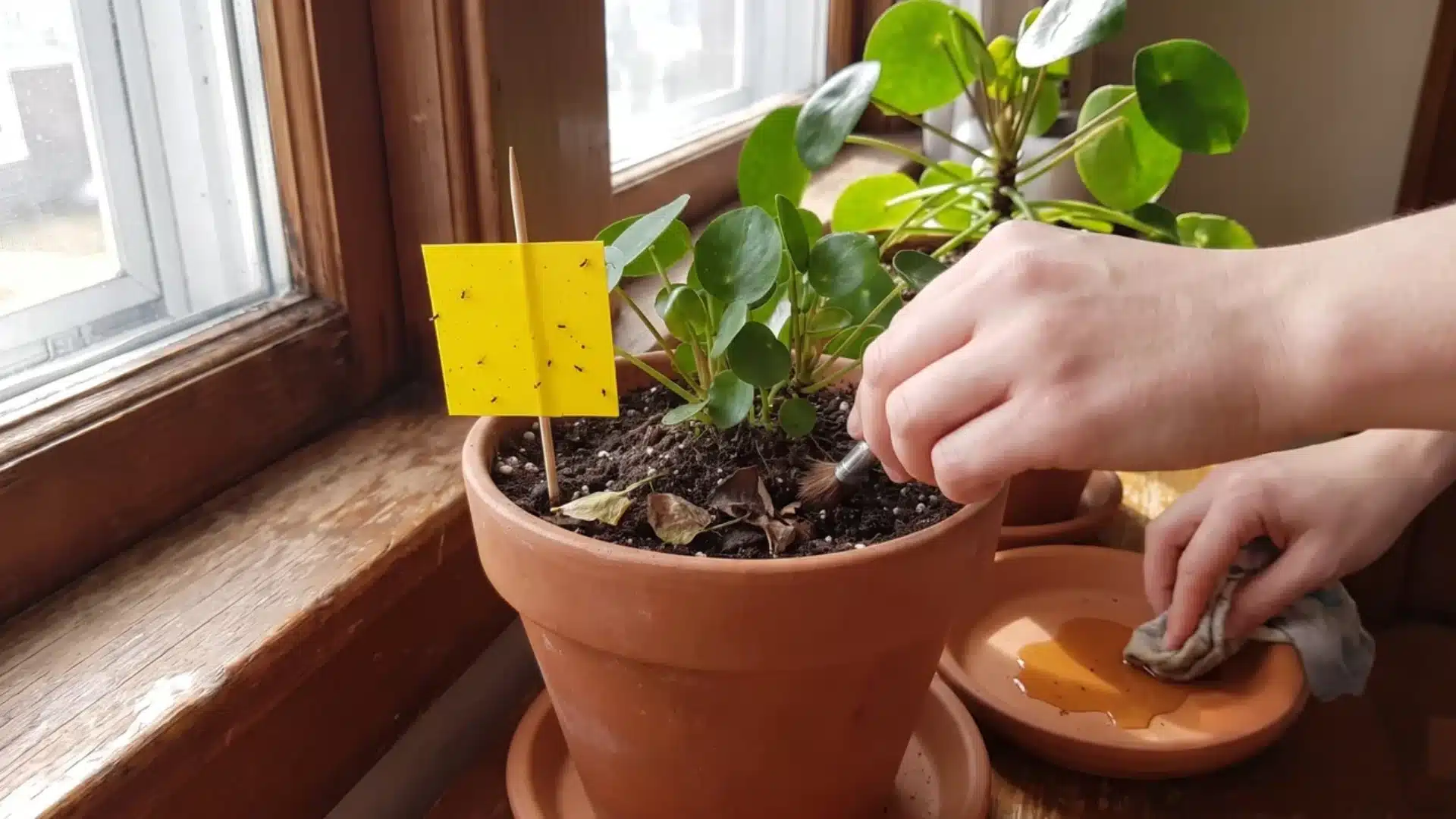
Remove dead leaves, fallen flowers, and other debris from the soil surface, since decaying matter encourages fungal growth that attracts gnats.
Empty drainage trays regularly, since standing water raises nearby moisture levels. Wiping down nearby windowsills and shelves also removes resting adults before they lay more eggs.
Step 5: Repot the Plant When Necessary
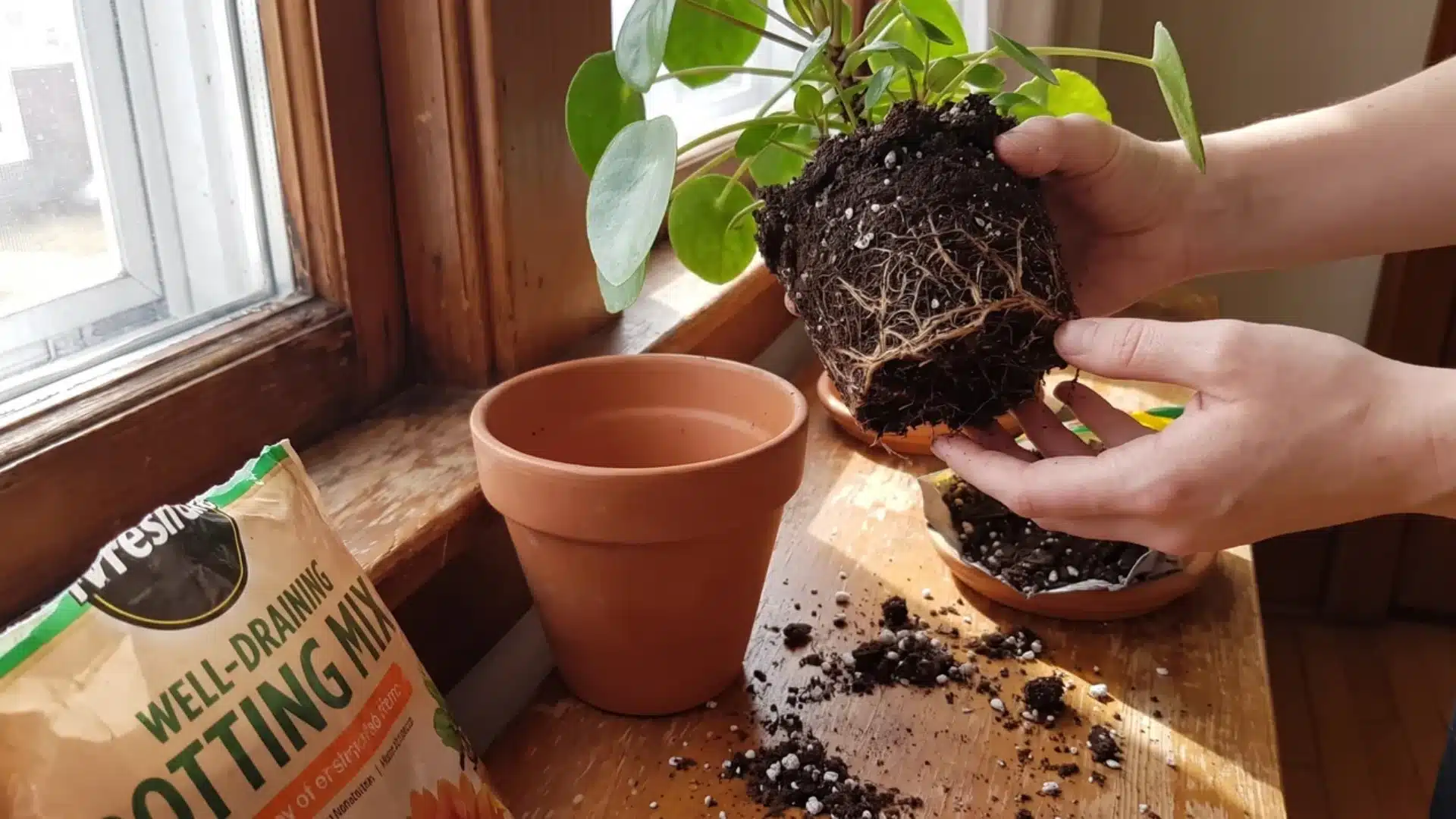
If gnats keep returning despite treatment, repotting may be needed, especially when the existing soil holds a large number of larvae. Discard the old soil, clean the pot, inspect the roots, and add fresh, well-draining potting mix.
Repotting is most useful when repeated treatments fail because it removes soil that may contain hidden eggs and larvae. Hold off on heavy watering for the first few days so the new soil can dry properly and avoid recreating the same conditions.
Best Treatments Compared
Several treatment options work well against fungus gnats, but each one suits a different stage of the problem. Knowing when to use each method helps you match the treatment to your specific situation instead of guessing.
|
Treatment |
Best For |
How It Works |
|---|---|---|
|
Drying the soil |
Mild, early-stage infestations |
Removes the moisture larvae need to survive |
|
Yellow sticky traps |
Monitoring and reducing adults |
Traps flying gnats before they lay more eggs |
|
BTI, sold as products like mosquito bits |
Moderate to severe larvae presence |
A naturally occurring bacterium that targets fly larvae specifically, as confirmed by the Environmental Protection Agency |
|
Hydrogen peroxide for fungus gnats |
Fast knockdown of visible larvae |
A diluted soil drench that kills larvae on contact but has no lasting effect |
|
Sand or grit top layer |
Preventing new egg-laying |
Creates a less suitable surface for egg-laying when applied correctly |
|
Quarantine of new plants |
Preventing introduction of new gnats |
Keeps eggs or larvae in new soil from spreading to healthy plants |
Important: Combining a larvicide with soil drying and sticky traps works better than relying on any single treatment, since each method targets a different stage of the gnat life cycle.
Natural Ways to Prevent Gnats From Returning
Preventing future infestations depends on maintaining conditions that do not support gnat growth in the first place, since consistent habits work better long-term than repeated treatment after an infestation has already taken hold.
|
Method |
How It Helps |
|---|---|
|
Improve drainage |
Use pots with drainage holes so excess water escapes and soil does not stay wet for long periods |
|
Check before watering |
Test soil moisture instead of following a fixed schedule, since plant needs vary |
|
Remove organic debris |
Clear fallen leaves and dead material from the soil surface regularly |
|
Use clean potting soil |
Fresh, quality potting soil reduces the chance of introducing unwanted insects |
|
Maintain air circulation |
Good airflow helps soil dry properly and prevents overly damp conditions |
Combining these habits creates soil conditions that no longer support gnat activity, making future infestations far less likely even if a few adults occasionally wander in from outside.
How to Check if Gnats Are Still Present in Plant Soil
After treating a gnat infestation, monitor your plants to confirm the problem is under control, since adult gnats may disappear before the larvae in the soil are fully gone.
- Check the soil surface for larvae: Gently inspect the top layer of soil, especially in moist areas. Fungus gnat larvae are small, pale-colored, and may have dark heads. Finding larvae means the infestation is still active.
- Watch for new adult gnats: Pay attention to small flies around plant pots, windows, or the soil surface. Continued appearances after treatment suggest eggs or larvae are still developing.
- Use sticky traps for monitoring: Track adult gnat activity with yellow sticky traps near the plant. Fewer trapped gnats over time usually indicates the population is decreasing.
- Observe plant changes after treatment: Healthier growth and fewer signs of stress show improvement. If yellowing, wilting, or slow growth continues, check the soil again for remaining larvae.
Expert tip: If gnats keep returning, check nearby plants, reused containers, old potting soil, and recently added plants, since these can reintroduce eggs or larvae.
Regular monitoring for a few weeks after treatment helps confirm the infestation is controlled and reduces the chance of the problem returning.
How Long Does It Take to Get Rid of Plant Gnats?
The time needed to remove fungus gnats depends on the severity of the infestation and how consistently you manage the problem. Most cases require several weeks of consistent treatment because eggs and larvae may remain in the soil even after visible adults are reduced.
How long do fungus gnats live? Adult fungus gnats live about seven to ten days, but the full life cycle from egg to adult takes about four weeks, according to NC State Extension. This overlapping cycle is why a single treatment often is not enough to fully resolve an infestation.
Expect gradual improvement rather than an overnight fix. Most people notice fewer adults within the first week or two, with full control following once every hatching wave has been treated.
Common Mistakes That Make Gnat Problems Worse
Certain everyday plant care habits can unintentionally create the exact conditions fungus gnats need to multiply. Recognizing these missteps early makes it easier to break the cycle before a minor issue becomes a full infestation.
- Overdoing organic matter: Too much compost or organic matter can attract more gnats.
- Treating adults only: Removing flying adults while leaving eggs and larvae untreated in soil.
- Skipping moisture checks: Skipping regular inspection of soil moisture between waterings.
Fixing even one or two of these habits can significantly reduce how quickly a minor gnat problem turns into a persistent infestation across multiple plants.
Frequently Asked Questions
Can gnats survive in artificial soil mixes?
Yes, fungus gnats can survive in artificial soil mixes when moisture and organic material are available. The growing medium matters less than the conditions it creates, especially moisture levels and organic matter.
Do fungus gnats become active at a certain time of year?
Fungus gnats are more common during warmer, more humid periods because these conditions support faster development. Indoor plants can still have gnat problems throughout the year if the growing environment stays consistently moist and warm.
Can I move an infected plant outside to remove gnats?
Moving a plant outside may reduce the number of gnats indoors, but it does not remove the infestation itself. The soil still needs direct treatment because eggs and larvae can remain inside the pot regardless of location.
Why are some plants more affected by gnats than others?
Plants that need frequent watering or that sit in soil that stays moist for long periods are more likely to attract fungus gnats. Watering habits typically play a bigger role in attracting gnats than the specific plant type.
Can fungus gnats damage plant roots?
Yes, fungus gnat larvae can damage roots, particularly in seedlings and young plants. Large numbers of larvae may interfere with nutrient and water absorption, which can lead to weaker growth and slower recovery over time.
Final Thoughts
Dealing with gnats in your houseplants can feel like a small daily annoyance, but it does not have to stay that way.
Once you understand what draws these pests in, the fixes become much more manageable, and you start noticing results within a few weeks rather than wondering if anything is working.
I always find that a little consistency goes further than any single product. If you have been searching for how to get rid of gnats in plants, start with the steps mentioned above and stay patient through the process.