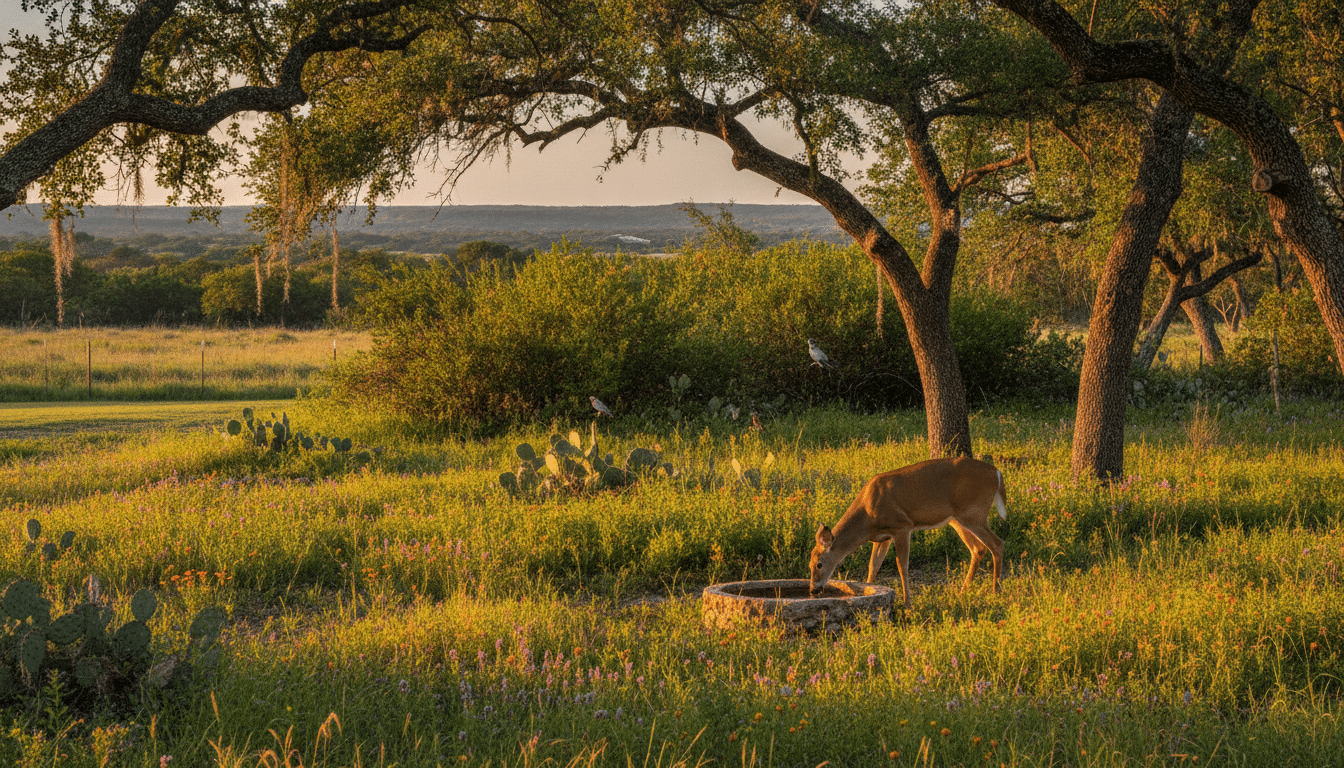
Improving a Texas property for wildlife does not necessarily require a major habitat restoration project. Some of the most useful changes are surprisingly ordinary: planting the right vegetation, leaving selected areas of cover, managing water, protecting soil and paying attention to how wildlife actually uses the property.
That can apply to a suburban acreage property outside Houston just as easily as a larger rural tract.
A landscape designed entirely around neat turf, aggressive clearing and ornamental plants may look attractive but provide relatively little food or shelter for native wildlife. A more varied property can remain attractive while supporting birds, pollinators, rabbits, squirrels, dove, deer and other Texas species.
Here are seven practical places to start.
1. Plant for Wildlife, Not Just Appearance
Plants can do much more than fill a flower bed.
A diverse landscape can provide nectar, seeds, berries, insects, browse, shade and protective cover throughout the year. Native and well-adapted plants are particularly useful because they tend to fit local rainfall, soils and wildlife better than plants selected purely for appearance.
Think vertically as well as horizontally.
Grasses and groundcover create one habitat layer. Shrubs create another. Trees provide an upper layer. Different species use each level for different purposes.
This does not mean abandoning landscape design. Native trees, grasses, flowering plants and shrubs can create an attractive property while also making it considerably more useful to wildlife.
2. Leave Selected Areas of Natural Cover
It is easy to assume that every brush pile, fallen limb and dense patch of vegetation should be cleaned up.
Wildlife often sees those same features differently.
Dense shrubs may provide nesting habitat. Brush piles can offer escape cover for rabbits, reptiles and small mammals. Fallen wood supports insects and other organisms that become food for birds and other wildlife.
On larger properties, field edges, creek corridors, fence lines and low-use corners are often good places to preserve some natural structure.
The objective is not to let the entire property become overgrown. It is to avoid eliminating every bit of cover simply because it looks less manicured than a lawn.
3. Manage Brush Selectively
Brush management and brush removal are not necessarily the same thing.
Texas wildlife frequently depends on woody vegetation for browse, shade, nesting areas and escape cover. Removing everything can create an open landscape that looks clean but offers relatively little habitat.
Before clearing, identify what is growing.
Selective removal of undesirable or overly dense vegetation while retaining beneficial native trees and shrubs can improve the property without stripping away useful habitat.
A mixture of open areas, grasses, shrubs and trees generally provides more habitat diversity than either an entirely cleared property or an impenetrable wall of brush.
4. Provide Reliable Water
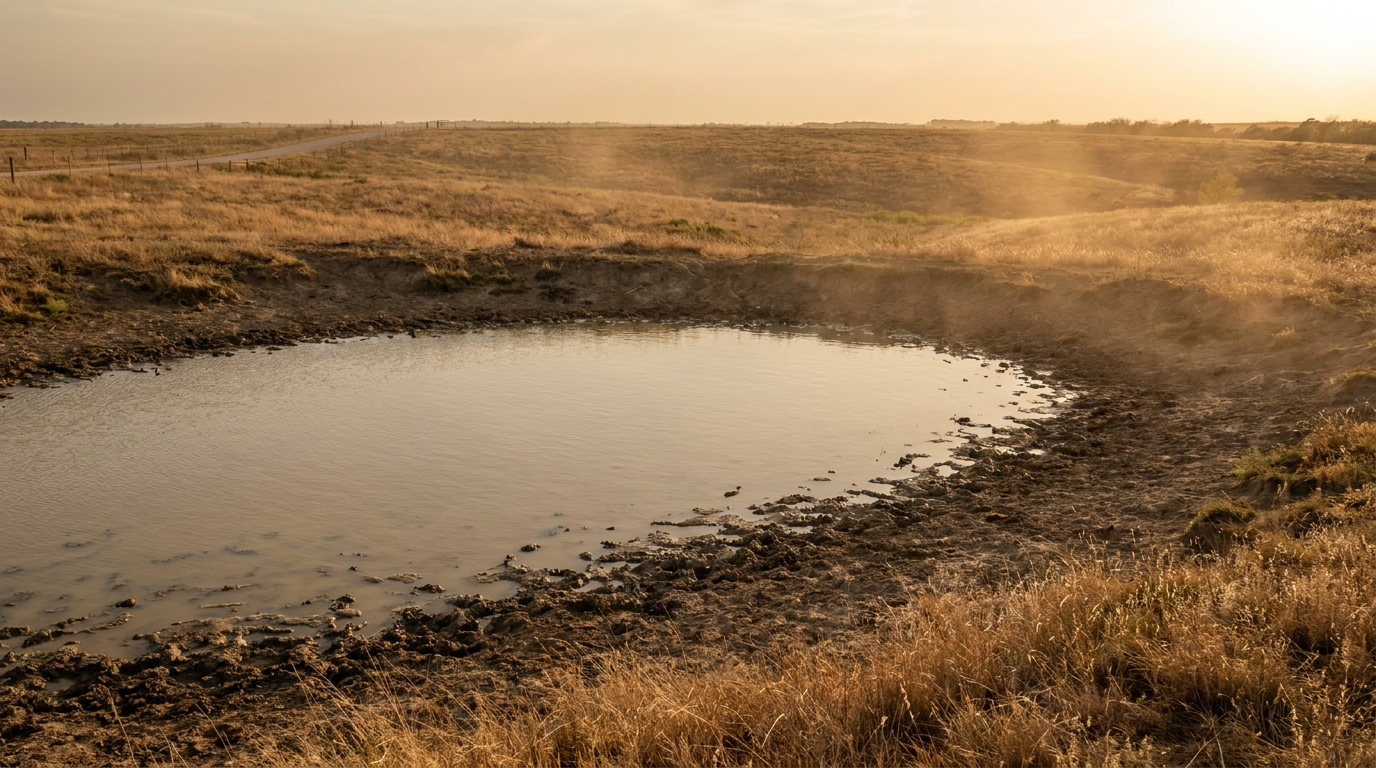
Water can become one of the limiting resources for wildlife during a Texas summer.
Existing ponds, creeks and livestock troughs may already provide substantial value. Smaller properties can also use shallow basins or other managed water sources.
Accessibility matters.
A livestock trough with steep sides may contain plenty of water but be difficult for small animals to use safely. Where appropriate, wildlife escape ramps or other simple modifications can make existing water infrastructure more useful.
Small water features should also be maintained rather than allowed to become stagnant mosquito habitat.
The objective is a dependable source of usable water, particularly during dry periods.
5. Control Erosion and Protect Soil
Soil loss eventually becomes habitat loss.
When runoff strips away topsoil, vegetation has a harder time becoming established. That reduces food, cover and the biological activity that supports the rest of the ecosystem.
Bare slopes, gullies and heavily disturbed areas are therefore worth addressing early.
Depending on the property, solutions may include establishing vegetation, modifying drainage, reducing repeated disturbance or using erosion-control structures to slow concentrated runoff.
Healthy soil supports healthy plant communities, and those plant communities form much of the foundation of wildlife habitat.
6. Think About Food Across the Entire Year
A property that produces flowers and berries for a few weeks may still have long periods when wildlife food is scarce.
A better habitat plan considers the seasons.
Flowering plants can support pollinators during warm months. Seed-producing grasses provide another food source. Fruiting shrubs add seasonal variety. Mature trees may produce nuts or other mast.
The exact plants will vary enormously across Texas, so local soil, rainfall and climate matter.
The broader principle is simple: diversity tends to create a longer and more dependable food supply than relying heavily on one plant or one supplemental food source.
7. Keep Track of What Uses the Property
Observation is one of the easiest land-management tools available.
Trail cameras, photographs, bird observations and simple written records can tell you whether changes to the property are actually producing results.
Perhaps wildlife consistently uses one water source but ignores another. Maybe a patch of restored vegetation begins attracting birds that were previously uncommon. A brush-management project might increase deer use of an area — or inadvertently remove cover they had been using.
Monitoring lets you adjust rather than guess.
For some rural Texas landowners, these activities can have another application as well. Texas law recognizes seven wildlife management practices for qualifying agricultural land: habitat control, erosion control, predator control, supplemental water, supplemental food, supplemental shelter and census counts.
A property does not qualify for wildlife management appraisal simply because its owner plants native vegetation or puts out water. There are specific eligibility and management requirements. But the overlap illustrates an important point: many of the practices that make land more useful to wildlife are also straightforward, practical forms of land stewardship.
Start With What Is Already There
Before buying plants or beginning a major clearing project, walk the property.
Identify existing native vegetation. Look for erosion. Find the areas wildlife already uses. Note where water and cover are available and where they are missing.
You may discover that the property already contains valuable habitat that simply needs to be preserved or managed differently.
Good wildlife habitat does not always come from adding more.
Sometimes it comes from recognizing what the land is already doing well — and being a little more deliberate about what you remove, plant and maintain.