Shading Your AC Unit Saves Energy, But Most People Do It the Wrong Way
Sometime in July you walk past the condenser on the side of the house and put your hand on the cabinet. It’s hot enough to make you pull back. The fan hasn’t shut off since lunch.
So you do the obvious thing and decide the poor machine needs shade, and by the weekend there’s a row of arborvitae going in, or a lattice panel with a clematis started at the base, or one of those slatted “AC hideaway” boxes from the garden center.
The instinct is right. What happens next usually isn’t. Shading a condenser buys you a few percent on the electric bill in the best case. Choking it costs you a great deal more than that, and the two look identical from the patio.
Two weeks after the hedge goes in, the house stops keeping up by four in the afternoon, somebody calls an AC repair service, and the technician finds a clean, mechanically sound machine that simply cannot breathe. Nobody mentions the shrubs. Nobody connects them.
I want to walk through why that happens, which four shading setups cause it, what to plant and build instead, and a test you can run this weekend with a thermometer and a strip of paper.
Why the Shade Idea Isn’t Wrong, Just Incomplete
Your outdoor unit doesn’t make cold. It takes the heat your indoor coil pulled out of the house and dumps it into the yard air. How well it does that depends on the temperature gap between the refrigerant in the coil and the air it’s dumping into.
Here’s the piece almost nobody explains: afternoon sun heats the air around the equipment far more than it heats the sheet metal. The number that changes your electric bill is the temperature of air entering the coil, not the temperature of the cabinet you touched.
Field measurements on shaded condensers have landed all over the place, from low single-digit savings down to something close to nothing.
Which means the whole goal shifts. You want to cool the air arriving at the machine and cool the ground it sits on. The box itself can bake.
The Airflow Math Nobody Explains
A typical residential condenser pulls several thousand cubic feet of air per minute through its coil. That air comes in through every side panel, all the way around, and leaves straight up through the fan. Straight up, with nothing over it.
Block any part of that path and the machine starts inhaling its own hot discharge. Head pressure climbs. The compressor draws more amps, runs longer cycles, and delivers less cooling while doing it. Every few degrees of rise in intake air temperature costs you measurable capacity.
Run the comparison. Shade was worth maybe three or four percent. Restricted airflow can take double digits, and it takes them on the hottest day of the year, which is exactly when you notice.
Recirculation, the Failure Nobody Sees
Watch for a unit that never cycles off during a heat wave. Air from the registers goes lukewarm by late afternoon. Sometimes the breaker trips. Sometimes there’s frost on the copper suction line, which always surprises people, because ice on a system that isn’t cooling seems backwards.
Underneath, the contactor pits, the run capacitor weakens, and the compressor lives every summer day at pressures it was never meant to hold for hours. That’s how a nine-dollar shrub turns into a four-figure repair three seasons later.
The Four Shading Mistakes That Bring Out a Truck
Every one of these starts as a reasonable weekend project. The homeowner wants the equipment hidden, or cooler, or both, and picks whatever the garden center had in stock that Saturday. Two summers later the same four setups keep showing up on service calls, and they fail for the same reason: each one puts something solid where moving air needs to be.
The Privacy Hedge
Boxwood, arborvitae, holly, privet. All of them get planted eighteen inches off the cabinet because that looks generous in April. By the second season the branches are pressed against the side panels, leaf litter is in the fins, and roots have started tilting the pad.
Vines on a Lattice Screen
Clematis, jasmine, ivy, honeysuckle. From the deck it looks wonderful. Inside the coil, leaves plaster the fins from the back side where you never look, and tendrils find their way into the fan grille. I’ve seen ivy growing through a condenser like it owned the place.
Solid Enclosures and Decorative Covers
Store-bought screen kits with a roof. Fence panels closed on three sides. Pergolas built low over the equipment. The top is the sin. Discharge air has to go vertical and keep going, and a lid sends it right back down into the intake.
Shade That Sheds
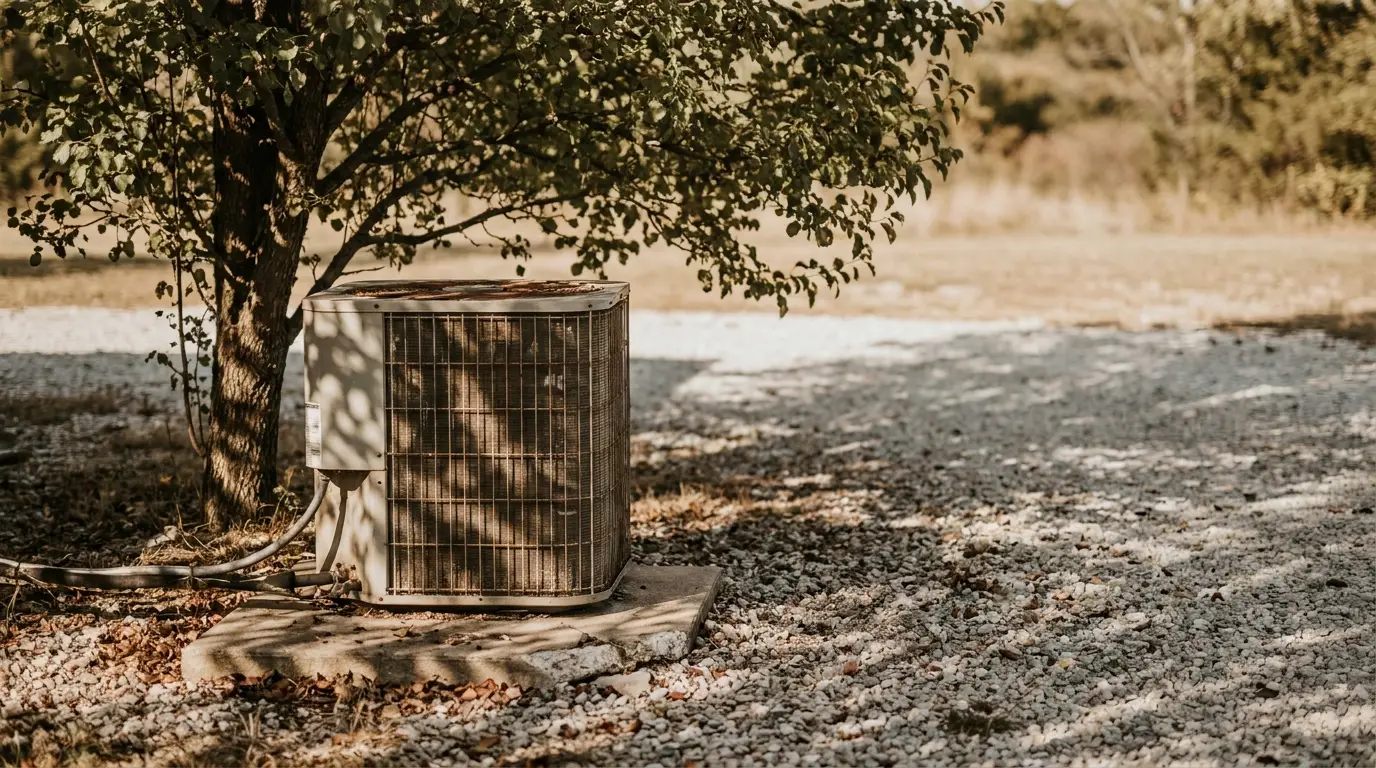
Cottonwood in June, maple samaras in May, pine needles year-round, ornamental grass plumes in fall, and mulch piled above the base of the pad. You got your shade. You also signed up for constant debris delivery straight into the coil.
What Actually Works
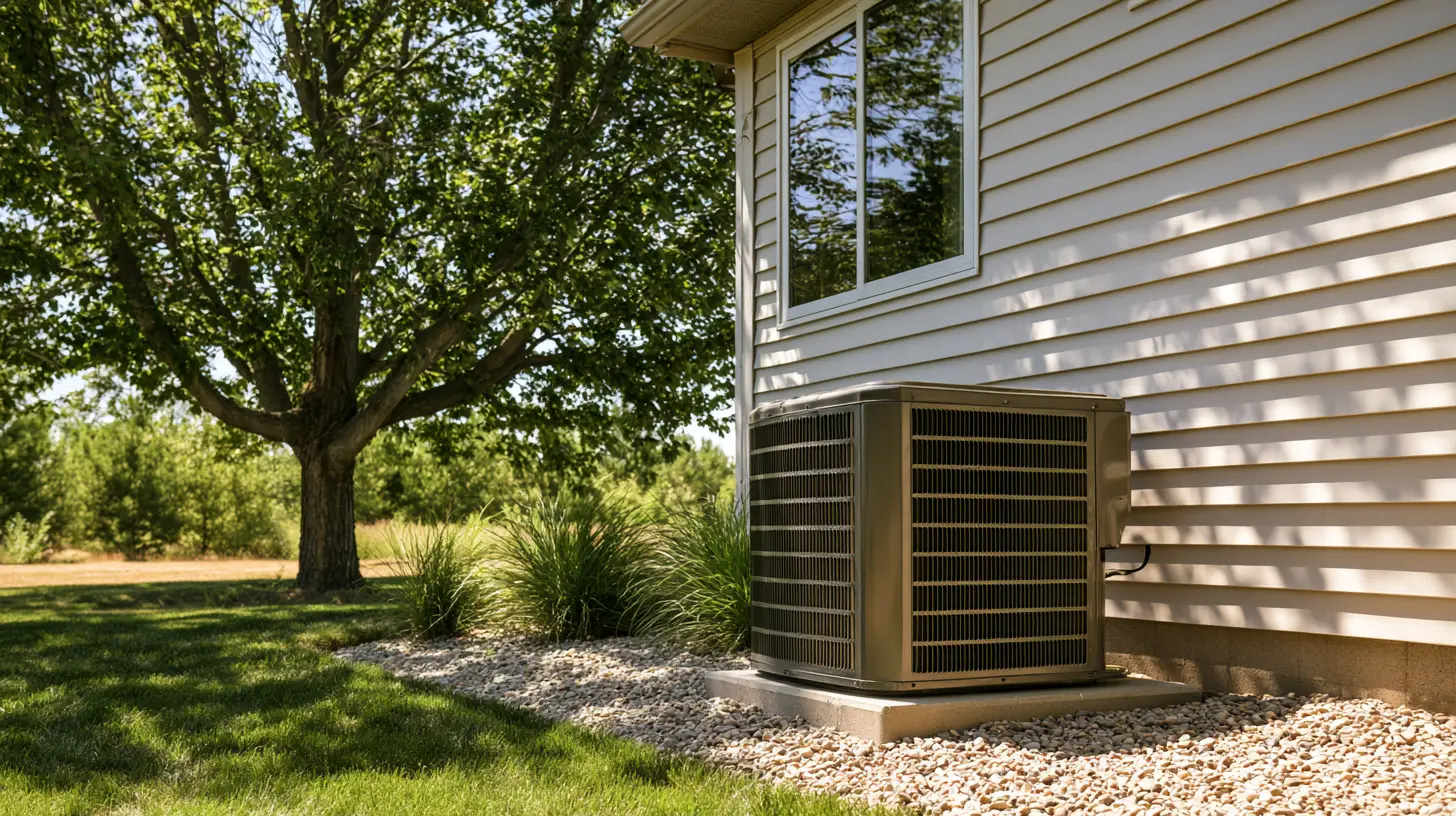
Clearance numbers to build around. Twenty-four to thirty-six inches of open space on the service sides. Roughly five feet of nothing overhead. About a foot off the house wall. Your specific machine has its own figures printed on the data plate, and those beat any rule of thumb, including mine.
Shade the air, not the box. A deciduous tree set ten to fifteen feet out on the west or southwest side does the real work. The canopy drops the temperature of air moving toward the equipment, restricts nothing, and conveniently sheds its leaves after cooling season ends.
Light gravel or pale stone under and around the pad beats dark mulch and asphalt, both of which soak up sun all day and radiate it back at the intake in the evening.
If you want a screen, build an honest one. Slatted, at least half-open area, one side only, the side people actually see. Three feet of setback minimum. Nothing across the top. And make one panel removable, because a technician needs to pull the service panel and get a gauge set on there.
Plants that behave. Low ornamental grasses, compact perennials, clipped ground cover, all kept three feet back and all shorter than the cabinet at mature size.
That last part trips up more gardeners than anything else on this page. Nursery tags list mature dimensions for a reason, and a one-gallon holly does not stay a one-gallon holly.
The Weekend Test
Fifteen minutes, a cheap thermometer, a strip of paper.
One. Measure air temperature right at the side panel while the unit runs, then measure it in open shade twenty feet away. More than about five degrees of difference means the machine is drinking its own exhaust.
Two. Hold the paper strip against each side panel in turn. A strong, steady pull on three faces and a limp strip on the fourth tells you which side is blocked or fouled.
Three. Shine a flashlight through the coil from outside and look for light coming through the fins. If you can’t see daylight, that’s not dust; that’s a plugged coil.
When the Damage Is Already Done
Things you can handle yourself: cut everything back to clearance, rake mulch away from the base, and rinse the coil with a garden hose from the inside outward, power off at the disconnect, low pressure, no pressure washer. Ever. Fins fold over at surprisingly little force, and folded fins block air just as well as boxwood does.
Things that need somebody with gauges: refrigerant pressures, fins that need combing straight, a burnt contactor, a compressor pulling high amps, frost on the suction line.
Worth saying plainly, since it’s the part homeowners get sold past: cleaning restores airflow. It doesn’t undo the wear a season of high head pressure already put on the compressor.
A Rhythm That Prevents All of It
Early spring, clear the winter drift, restore your clearances, check whether the pad has gone off level. Late spring, rinse the coil before the first real heat, right around pollen and cottonwood season.
Midsummer, mow away from the equipment instead of toward it, and re-trim whatever grew eight inches while you weren’t looking. Fall, stay on top of leaf drop, and if you cover anything, cover the top only.
Wrapping the whole cabinet traps moisture and gives mice a winter apartment. Every few years, let a tech do a proper chemical coil cleaning, because the hose only reaches so far into the fin pack.
Shade is worth chasing. Just chase it in the air and on the ground, and leave the path the machine breathes through completely alone.
Techs who spend their summers on “it’s running but it’s not cooling” calls will tell you landscaping ranks among the most common causes they see and the least suspected by homeowners.
Region Home Services, a family-run heating and cooling outfit working out of Bensalem, Pennsylvania, since 1974, keeps a stack of maintenance and diagnostic write-ups at regionserviceco.com if you want to read further before you dig.