Finding mold in your home is unsettling, and if you don’t know what comes next, the uncertainty makes it worse. This isn’t a quick spray-and-wipe situation. Remediation is a structured, multi-step procedure that demands time, specialized equipment, and real planning to execute properly.
Raleigh’s warm, humid summers and wet winters create near-perfect conditions for mold growth, particularly inside crawl spaces, attics, and basements. Knowing each phase ahead of time helps you prep your home, protect your family, and understand exactly what you’re paying for.
The Initial Inspection and Moisture Source Identification
Before any physical work starts, a qualified technician inspects the property to understand the full scope of the problem. Moisture meters and infrared cameras are commonly used to find hidden dampness behind walls and under flooring.
This helps locate mold that may have spread beyond what’s visible, and it’s an approach used by https://www.summitmoldremediationnc.com/ and similar companies. Here’s the thing: treating mold without fixing the underlying moisture source almost always leads to regrowth within weeks.
The inspection produces a written remediation plan covering the affected areas, the containment strategy, and the removal methods crews will use.
What Gets Tested During the Inspection?
Air quality testing and surface sampling are standard at this stage. Air sampling captures mold spore counts across different rooms and compares them to outdoor baseline levels. Surface swabs identify the specific species present, which directly shapes what products get used during treatment.
In Raleigh homes, Cladosporium, Aspergillus, and Stachybotrys (black mold) show up most frequently, each requiring slightly different handling. Your inspector should hand you a clear written report before work begins; a verbal summary isn’t enough.
And if a contractor skips testing and jumps straight to removal without documenting what they found, that’s a red flag worth acting on immediately.
Containment Setup and Air Pressure Control
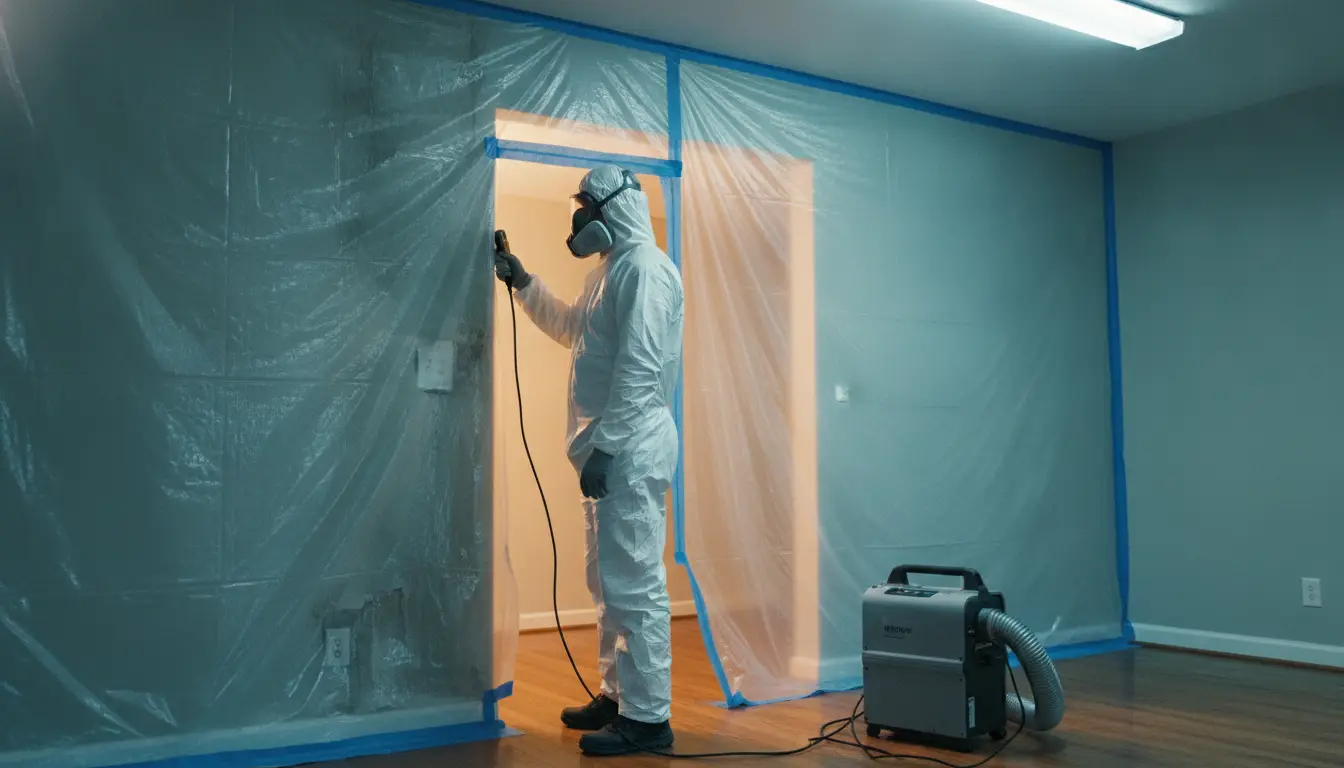
Containment is the step most homeowners don’t see coming, and it’s one of the most consequential parts of the entire project. Crews seal off the affected area with heavy-duty plastic sheeting to stop mold spores from drifting into unaffected rooms during removal.
Doorways, HVAC vents, and any gaps in walls or ceilings get covered and taped down. Negative air pressure machines then draw air out of the containment zone, filtering it through HEPA units before exhausting it safely outside.
This keeps airborne spores out of your living space. Depending on how large the affected area is, containment setup alone can take two to four hours before actual mold removal even starts.
Do You Need to Leave Your Home?
Whether you vacate depends on the location and severity of the mold. Small, localized jobs in a basement or crawl space often let residents stay in unaffected parts of the house.
But larger projects, ones involving multiple rooms, HVAC systems, or black mold, typically mean you’ll need to stay elsewhere for the duration of active remediation. Your contractor should tell you upfront, before work starts, whether temporary relocation is necessary.
Raleigh families with young children, elderly residents, or anyone dealing with respiratory conditions should discuss their specific situation with the remediation team before the job begins; don’t wait until crews are already setting up.
The Physical Mold Removal Process
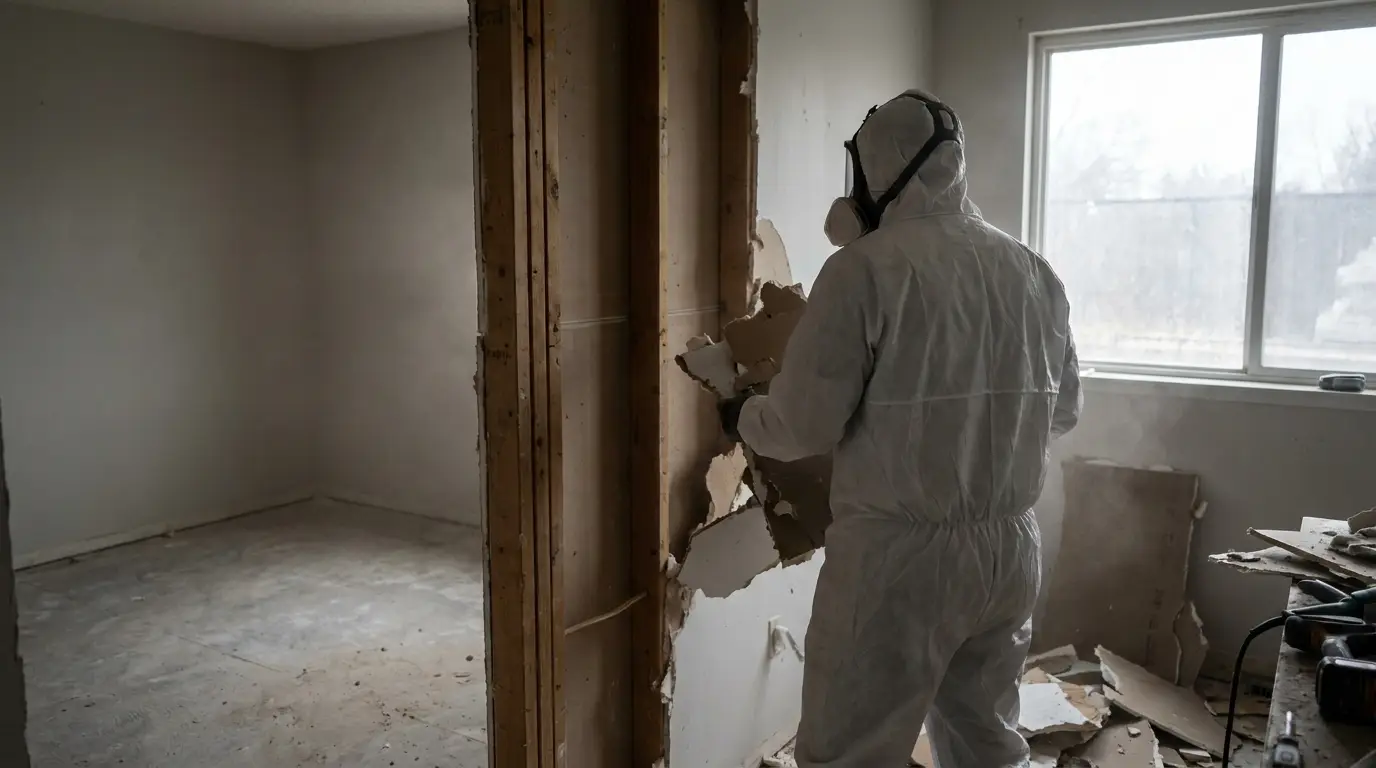
Actual mold removal goes well beyond scrubbing surfaces. Porous materials, drywall, insulation, carpeting, and wood showing heavy contamination are often pulled out and disposed of entirely rather than cleaned in place.
Non-porous surfaces like concrete, metal, and glass get treated with EPA-registered antimicrobial products, followed by HEPA vacuuming to capture residual spores. Throughout this phase, crews wear full personal protective equipment: respirators, disposable coveralls, and gloves.
Materials removed from the containment zone get double-bagged in heavy plastic before transport to prevent cross-contamination. This is typically the longest stretch of the project, and how long it runs depends on how far the mold has spread.
How Raleigh’s Climate Affects Removal Decisions
Raleigh’s humidity has a direct effect on how mold behaves inside a structure. High moisture content in wood framing lets mold push deeper into the material, so surface cleaning alone won’t cut it. Technicians take moisture readings on structural wood before deciding whether to clean in place or pull it out entirely.
Wood with moisture content above 19% generally can’t be effectively remediated without first drying it down to an acceptable level. In crawl spaces under older Raleigh homes, where standing water and vapor movement are common, that drying process sometimes adds a full day or more to the timeline before removal work can even proceed.
Post-Remediation Treatment and Encapsulation
After removal, the treated area gets a coat of antimicrobial coating or encapsulant on any remaining structural surfaces. This step isn’t just about killing residual spores; it builds a protective layer that discourages future growth if moisture levels climb again.
In crawl spaces, a full encapsulation system, vapor barrier across the ground, sealed foundation vents, is frequently added as a long-term moisture management measure. Attic remediation often includes treatment of roof sheathing and rafters, followed by ventilation improvements to keep humidity in check.
Every treated area gets documented with photos before and after work wraps up, so you have a clear record of what was done.
Clearance Testing and Final Air Quality Checks
The job isn’t officially done until post-remediation clearance testing confirms that spore counts have dropped to acceptable levels. A third-party inspector, separate from the remediation crew, collects air and surface samples after the containment comes down.
Those results get compared against the baseline testing from the original inspection. If spore counts are still elevated, additional cleaning happens before clearance is granted. Ask your contractor upfront whether clearance testing is included in the quote or billed separately.
In Raleigh’s real estate market, clearance documentation is routinely requested during home sales, so keeping your report on file is smart regardless of whether you plan to sell anytime soon.
Timeline, Disruption, and What to Prepare For
Most residential mold remediation projects in Raleigh take one to three days for moderate cases, though large jobs involving multiple rooms, attic decking replacement, or crawl space encapsulation can run four to seven days. You’ll need to clear the affected area of personal belongings before work begins.
Furniture, clothing, and stored items in contaminated zones should be inspected, cleaned, or discarded depending on exposure level; honestly, don’t skip this step. Crews need unobstructed access to the work area throughout the project.
Plan for noise, equipment running continuously, and the smell of antimicrobial products during the active phases. Once work is complete, a thorough cleaning of adjacent rooms is a good idea to clear out any dust or particulates that may have settled nearby.
Conclusion
Mold remediation in a Raleigh home follows a clear sequence: inspection, containment, removal, treatment, and clearance testing. Each phase has a specific job, and cutting any one of them short raises the odds that mold comes back.
So yes, the process disrupts daily life for a few days, but that’s a far smaller headache than dealing with recurring growth or structural damage from moisture problems that were ignored. Know what to expect, ask sharp questions before signing anything, and make sure clearance testing is baked into your remediation plan from day one.