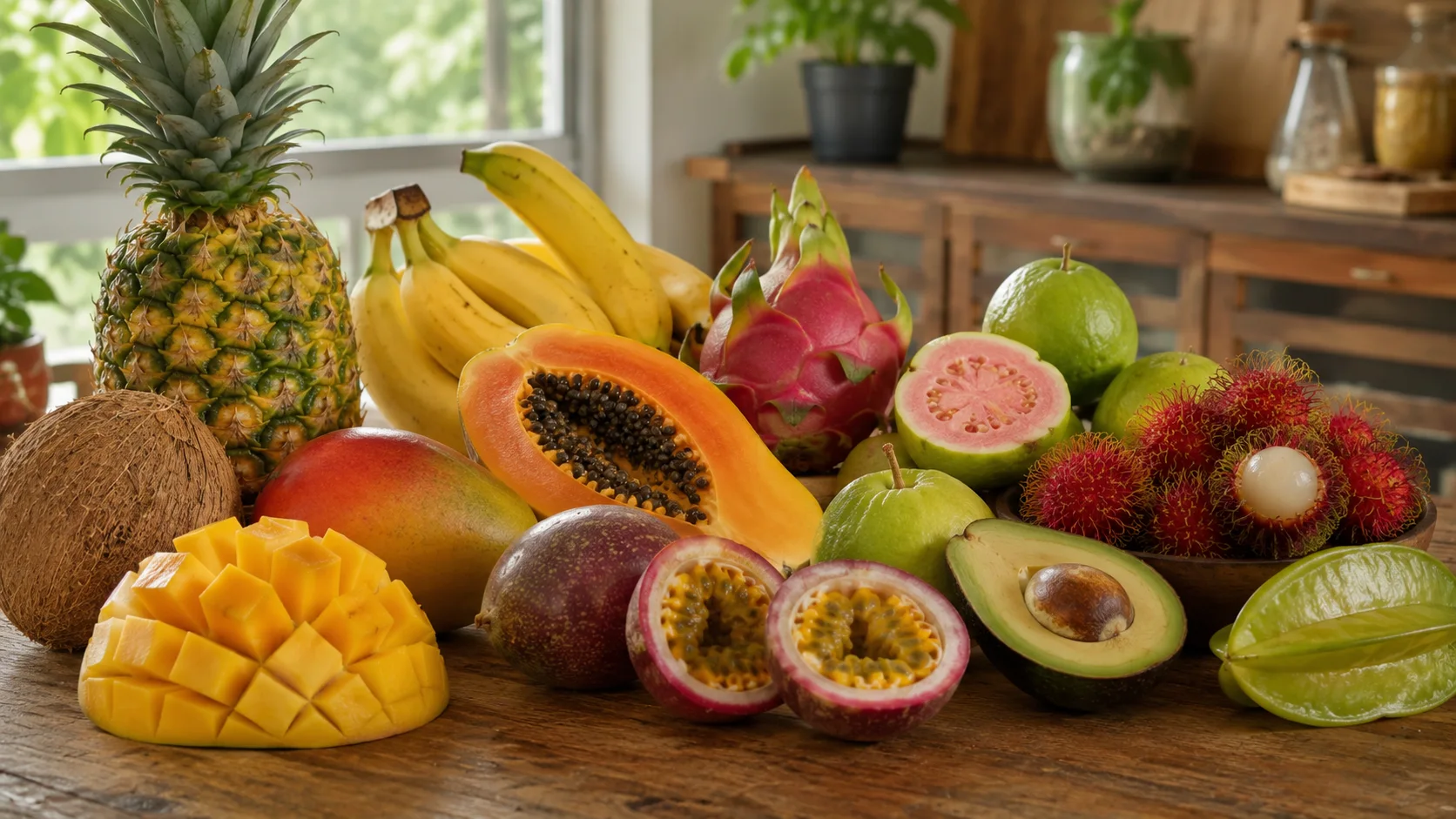
Some fruits sit quietly in the produce aisle looking exactly like what they are. Others look like they showed up with their own security system: spiky shells, hairy skins, thick rinds, or colors bright enough to make you do a double take before picking one up. That moment of hesitation is usually where a good tropical fruit list earns its place.
I find this topic genuinely fun to dig into because tropical fruit is not just about pretty produce displays. It is about knowing what tastes creamy versus what turns sharply sour, what needs careful slicing, what belongs in a smoothie, and what should probably sit far away from your bananas on the counter.
This piece keeps things useful instead of overwhelming. You will find tropical fruits grouped by flavor and texture, each with a name, a quick description, common uses, and a simple buying note.
What Is Considered a Tropical Fruit?
A tropical fruit is one that typically grows in warm, frost-sensitive climates near the equator, where consistent heat and humidity support year-round growth. That definition covers a lot more ground than most people expect, since fruits like mango, banana, coconut, avocado, and papaya all count as tropical even though they feel like everyday grocery store staples in the United States.
The confusion usually comes from assuming tropical means rare or exotic. It does not. According to the University of Florida’s Gardening Solutions program, tropical fruit refers to plants suited to warm growing regions, while subtropical fruit can tolerate slightly cooler conditions and brief temperature dips.
Some fruits straddle that line depending on the specific variety and growing region, so the category is more about climate than novelty.
Once that distinction is clear, the next useful step is to group fruits by what actually matters when you are standing in front of them, deciding what to buy: how they taste and what you would do with them.
Tropical Fruits List by Flavor, Texture, and Use
A useful tropical fruit list should do more than name fruit after fruit in a long scroll. This section groups options into five flavor and texture categories so you can compare them quickly.
Each one includes what it tastes like, where it commonly grows, how people typically use it, and one practical benefit worth knowing.
Sweet and Creamy Picks
1. Mango
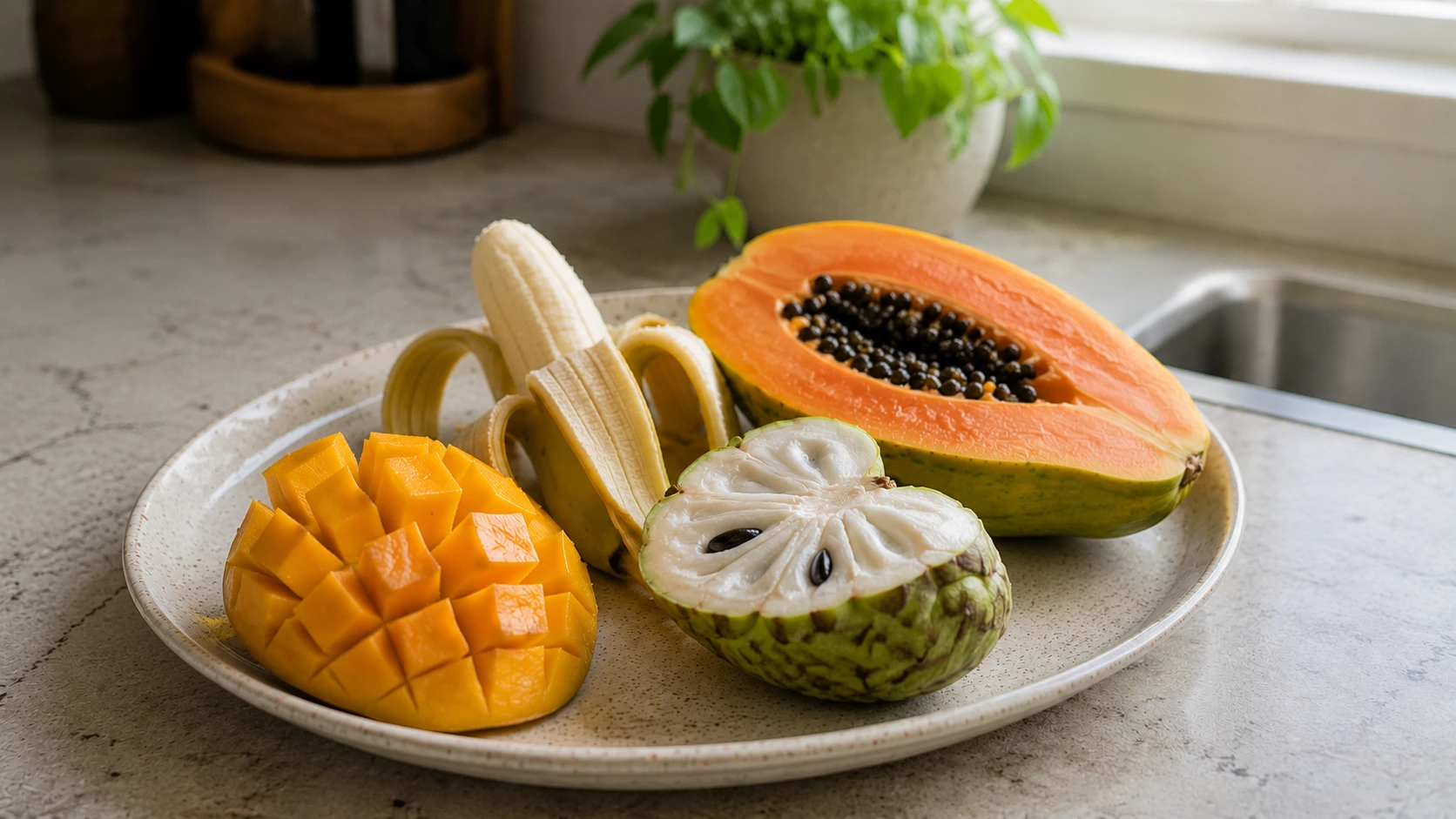
Mango is juicy, fragrant, and naturally sweet, with a flavor that changes a lot by variety. Some mangoes are smooth and honey-like, while others have more fiber and a stronger floral taste.
- Native range: South Asia originally, now grown across many tropical regions
- Form: Oval or kidney-shaped fruit with yellow, orange, red, or green skin
- Best use: Smoothies, salsas, fruit bowls, fresh eating
- Benefit: A good source of vitamin C
2. Banana
Banana is one of the easiest tropical fruits to recognize and use. Its soft texture and mellow sweetness increase as it ripens, making it useful in both snacks and baking.
- Native range: Southeast Asia
- Form: Curved fruit with peel color changing from green to yellow or spotted brown
- Best use: Snacking, baking, smoothies, oatmeal topping
- Benefit: A convenient source of potassium and quick energy
3. Papaya
Papaya has soft orange flesh with a mellow, musky sweetness. It is easy to cut, scoop, and add to breakfast bowls, especially when fully ripe and tender.
- Native range: Central America and southern Mexico
- Form: Oval fruit with orange flesh and small black seeds
- Best use: Breakfast bowls, fresh eating, smoothies
- Benefit: Offers notable vitamin C content
4. Cherimoya
Cherimoya has a custard-like texture that feels closer to dessert than regular fruit. Its flavor is often compared to banana, pineapple, and vanilla mixed together.
- Native range: Andean valleys of South America
- Form: Green, heart-shaped fruit with creamy white flesh and large black seeds
- Best use: Chilled and eaten with a spoon
- Benefit: Worth trying for its rare creamy texture
5. Sapodilla
Sapodilla looks plain from the outside, but the ripe flesh is sweet, grainy, and often compared to brown sugar or root beer. It must soften fully before eating.
- Native range: Mexico and Central America
- Form: Small brown fruit with rough skin and caramel-colored flesh
- Best use: Fresh eating once fully soft
- Benefit: A less common fruit with a rich dessert-like flavor
Tangy and Citrusy Picks
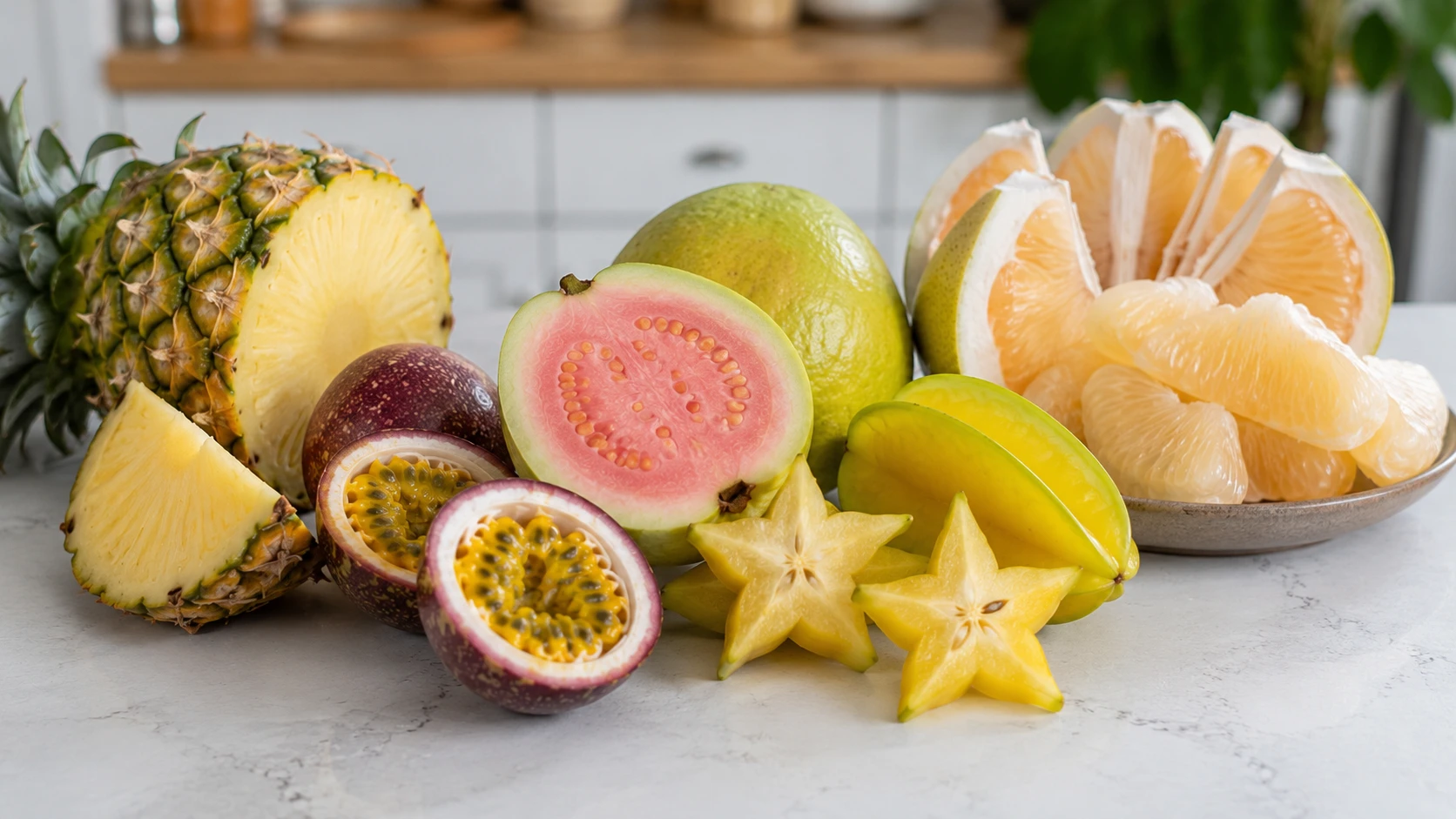
6. Pineapple
Pineapple has bright yellow flesh that balances sweetness with sharp acidity. Its firm texture makes it useful raw, grilled, blended, or paired with savory food.
- Native range: South America
- Form: Large fruit with spiky skin, green crown, and juicy yellow flesh
- Best use: Grilling, fruit bowls, drinks, salsa
- Benefit: Widely available and easy to use in many dishes
7. Passion Fruit
Passion fruit has a wrinkled rind when ripe and a seed-filled pulp inside. Its flavor is bold, tart, fragrant, and strong enough to flavor a whole drink.
- Native range: South America
- Form: Round fruit with purple or yellow skin and jelly-like pulp
- Best use: Drinks, yogurt topping, sauces, desserts
- Benefit: Adds strong flavor with a small amount
8. Guava
Guava has pink or white flesh, small edible seeds, and a strong floral smell. It tastes sweet, musky, and slightly tart depending on variety and ripeness.
- Native range: Central America
- Form: Round or pear-shaped fruit with green skin and pink or white flesh
- Best use: Juice, fresh eating, jams, sauces
- Benefit: Known for strong vitamin C content
9. Star Fruit
Star fruit is crisp, juicy, and lightly sweet-sour. When sliced crosswise, it forms star-shaped pieces, which makes it one of the easiest fruits to recognize.
- Native range: Southeast Asia
- Form: Yellow-green ridged fruit that forms stars when sliced
- Best use: Garnish, fruit platters, salads
- Benefit: Adds shape and freshness with very little prep
10. Pomelo
Pomelo is a large citrus fruit with thick skin and mild, sweet segments inside. It tastes less sharp than grapefruit and works well in fresh salads.
- Native range: Southeast Asia
- Form: Large round citrus fruit with thick rind and pale yellow or pink flesh
- Best use: Fresh eating, salads, citrus bowls
- Benefit: A gentler citrus option for people who find grapefruit too bitter
Juicy Exotic Fruit Names Worth Knowing
11. Lychee
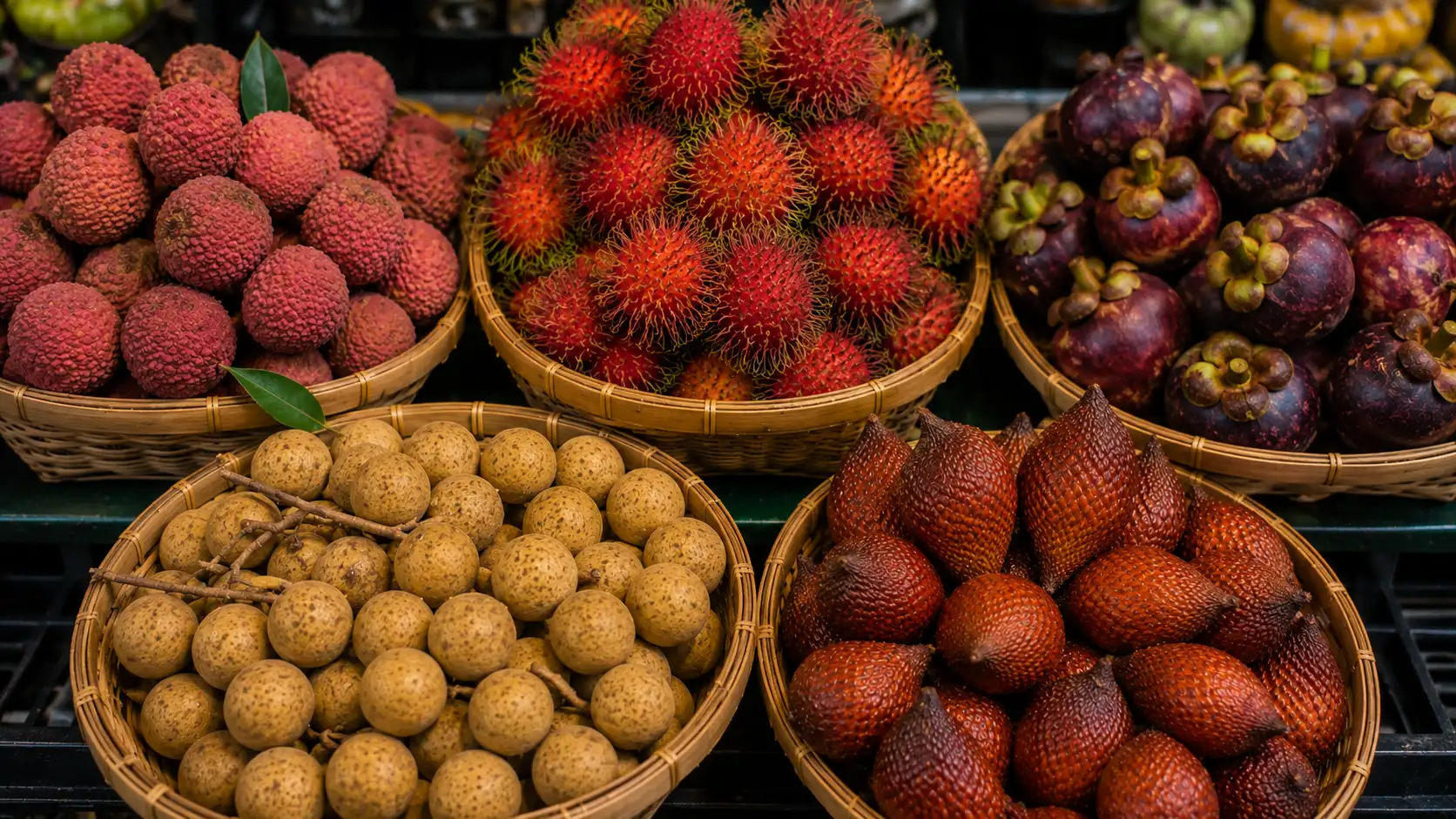
Lychee has a rough pink-red shell and translucent white flesh inside. The flavor is sweet, floral, and juicy, with notes often compared to rose and cherry.
- Native range: Southern China
- Form: Small round fruit with rough red skin and glossy white flesh
- Best use: Fresh eating, desserts, fruit platters
- Benefit: A good starting point for learning exotic fruit names
12. Rambutan
Rambutan looks dramatic because of its hairy red skin, but it is easy to open by hand. The fruit inside is sweet, juicy, and grape-like.
- Native range: Malaysia and Indonesia
- Form: Red or yellow fruit with soft hair-like spines and translucent flesh
- Best use: Fresh eating, fruit trays, desserts
- Benefit: A low-effort fruit that looks unusual but tastes familiar
13. Mangosteen
Mangosteen has a thick purple rind and soft white segments inside. Its flavor is sweet, tangy, and hard to compare with common grocery-store fruit.
- Native range: Southeast Asia
- Form: Small, round, purple fruit with white segmented flesh
- Best use: Fresh eating
- Benefit: A memorable choice for anyone interested in exotic fruit names
14. Longan
Longan is related to lychee but tastes milder and less floral. Its small brown shell opens to a translucent fruit with a gentle honey-like sweetness.
- Native range: Southeast Asia
- Form: Small, round, brown fruit with a thin shell and clear flesh
- Best use: Fresh eating, desserts, fruit bowls
- Benefit: A softer introduction for readers who find lychee too floral
15. Salak
Salak is called snake fruit because of its scaly, reddish-brown skin. Inside, the fruit is crisp, sweet-tart, and firmer than most tropical fruits.
- Native range: Indonesia
- Form: Small scaly fruit with pale, firm segments inside
- Best use: Fresh eating
- Benefit: Offers a crunchy texture that feels different from softer tropical fruits
Large, Rich, and Starchy Picks
16. Coconut
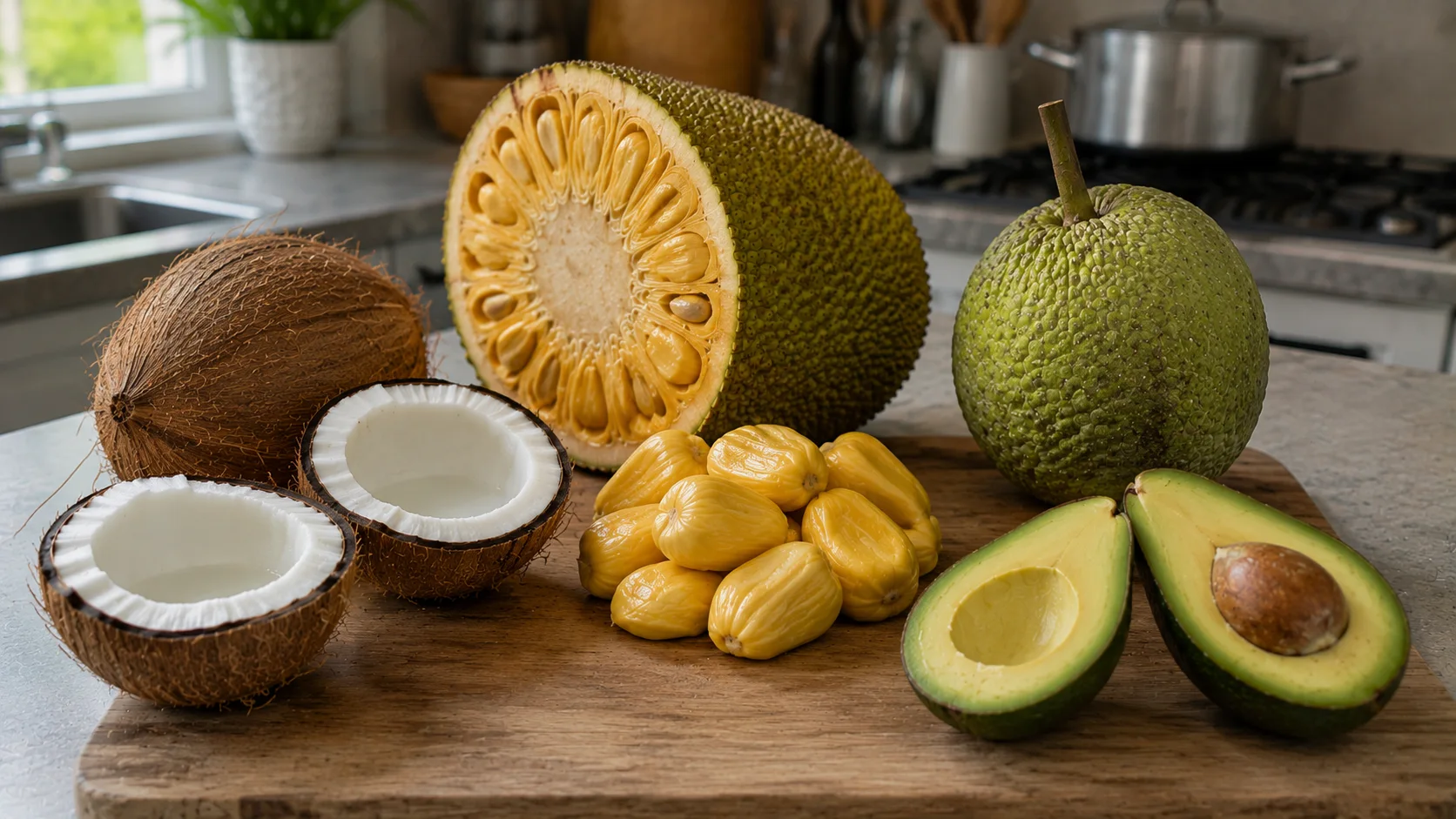
Coconut gives both refreshing water and rich white meat. It can move between sweet and savory cooking better than most fruits, which makes it very flexible.
- Native range: Likely Indo-Pacific, though exact origin is debated
- Form: Hard-shelled fruit with coconut water and white flesh inside
- Best use: Drinks, baking, curries, chutneys
- Benefit: Useful in both fresh and pantry-style cooking
17. Jackfruit
Jackfruit is huge, heavy, and packed with yellow pods when ripe. Ripe jackfruit tastes fruity and sweet, while unripe jackfruit is often cooked in savory dishes.
- Native range: South and Southeast Asia
- Form: Very large green fruit with edible yellow pods inside
- Best use: Ripe for snacks, unripe for savory meals
- Benefit: Works for both dessert-style eating and dinner recipes
18. Breadfruit
Breadfruit is starchy and filling, more like a potato than a sweet fruit. It is usually cooked before eating and often works as a meal base.
- Native range: New Guinea and Pacific Islands
- Form: Round green fruit with starchy pale flesh
- Best use: Roasted, fried, mashed, or added to savory meals
- Benefit: A filling alternative to common starches
19. Plantain
Plantain looks like a large banana but behaves very differently in the kitchen. It is usually cooked, and its flavor changes from starchy to sweet as it ripens.
- Native range: Southeast Asia, now grown widely in Latin America and Africa
- Form: Long, firm banana-like fruit with thick skin
- Best use: Fried, baked, boiled, or used in savory dishes
- Benefit: A staple ingredient in many everyday meals
20. Avocado
Avocado is technically a fruit, but its creamy texture and savory flavor make it feel different from sweeter tropical picks. It works best in meals, not desserts.
- Native range: Central America
- Form: Pear-shaped or round fruit with green flesh and a large seed
- Best use: Toast, salads, dips, bowls, sandwiches
- Benefit: Provides filling monounsaturated fat
Colorful Fruits Worth Knowing
21. Dragon Fruit
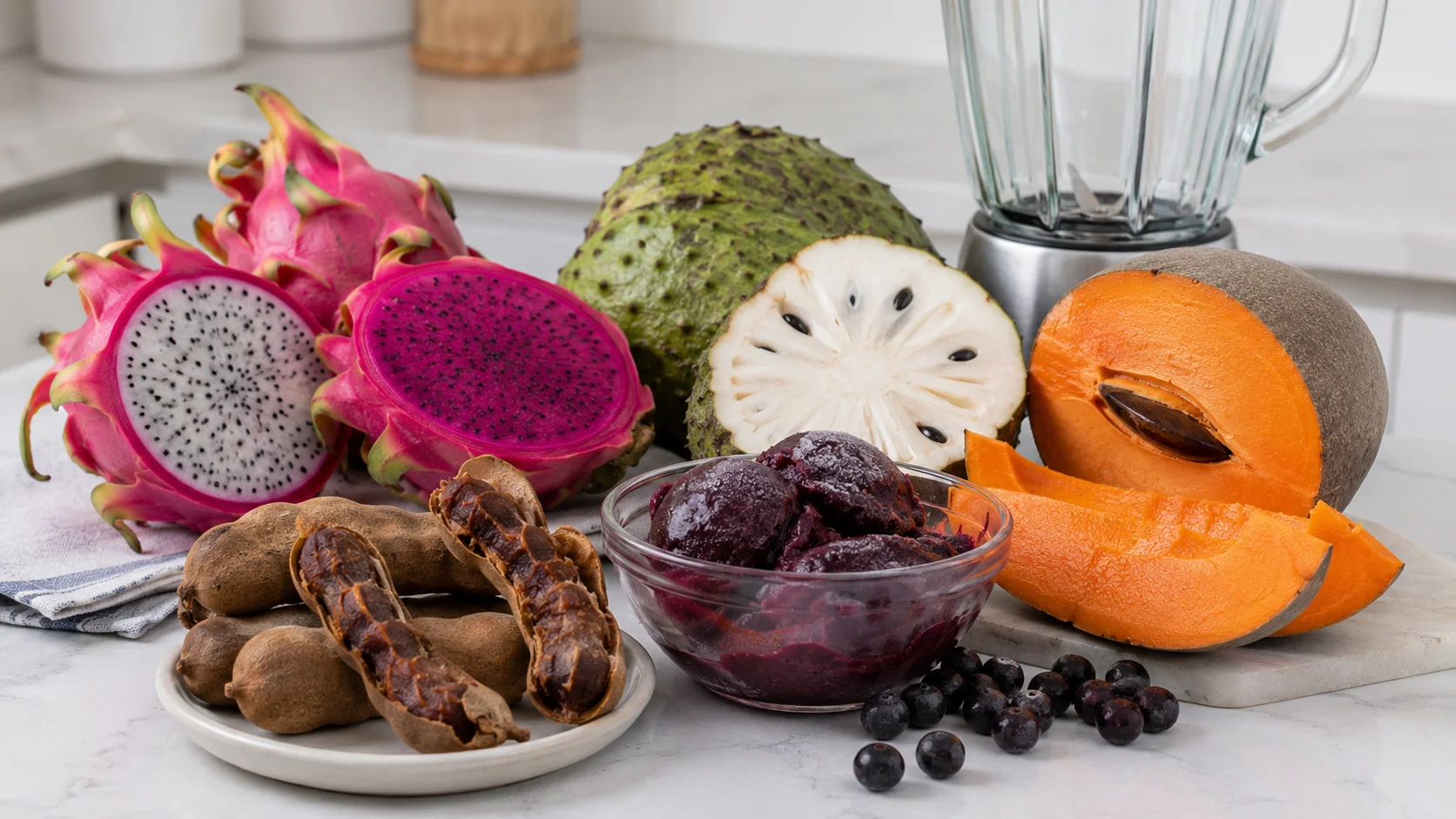
Dragon fruit has bright skin and speckled flesh, but its flavor is usually mild. It is more about texture, color, and easy prep than intense sweetness.
- Native range: Central America
- Form: Pink or yellow skin with white or pink flesh and black seeds
- Best use: Smoothie bowls, fruit platters, chilled snacks
- Benefit: Adds color and light texture without much effort
22. Soursop
Soursop has green spiky skin and creamy white flesh with a tart, fruity flavor. It is often blended into drinks and desserts rather than eaten plain.
- Native range: Caribbean and Central America
- Form: Large green fruit with soft white flesh and dark seeds
- Best use: Smoothies, drinks, desserts
- Benefit: A strong base flavor for blended fruit drinks
23. Mamey Sapote
Mamey sapote has dense orange flesh with flavor notes often compared to sweet potato, pumpkin, or almond. It feels richer than most fresh fruit.
- Native range: Central America
- Form: Brown rough-skinned fruit with thick orange flesh
- Best use: Smoothies, milkshakes, fresh eating
- Benefit: A filling choice for readers who want more substance
24. Tamarind
Tamarind grows in pods and contains sticky brown pulp with a sweet-sour flavor. It is used in sauces, drinks, candies, and savory dishes across many cuisines.
- Native range: Africa, now widely grown in tropical Asia
- Form: Brown pod with sticky pulp around seeds
- Best use: Chutneys, sauces, drinks, candies
- Benefit: Adds a strong sweet-sour flavor in small amounts
25. Acai
Açai is a small dark berry that is rarely sold fresh in the United States. Most shoppers find it frozen, pureed, or blended into smoothie packs.
- Native range: Amazon rainforest region
- Form: Small dark purple berry, usually sold as frozen pulp
- Best use: Smoothie bowls, blended drinks
- Benefit: Easy to keep on hand in frozen form
This shorter tropical fruits list works because each fruit earns its place with real detail instead of a thin one-line mention. You get the name, taste, native range, form, best use, and a clear reason to try it. The next logical question is simpler: out of all these, where should you actually start?
Which Tropical Fruit Should You Try First?
After scanning through names, the real question becomes which one belongs in your cart first. This table turns the tropical fruits list into a quick decision tool based on what you already know you like.
| Your Preference | Best First Picks | Why It Works |
| Sweet and familiar | Mango, banana, papaya | Easy to eat, widely available everywhere |
| Tart and bold | Passion fruit, pineapple, guava | Strong flavor, great for drinks and bowls |
| Mild and visual | Dragon fruit, star fruit | Easy for platters and photos |
| Creamy and rich | Avocado, cherimoya, mamey sapote | Smooth texture, satisfying feel |
| New and unusual | Rambutan, lychee, mangosteen | Solid starting exotic fruit names |
| Cooking-friendly | Plantain, breadfruit, jackfruit | Better suited for meals than snacking |
Picking by flavor keeps things simple and avoids disappointment. Someone who loves creamy textures should not start with sharply tart passion fruit, and a person looking for a smoothie mixer probably does not need to start with breadfruit. Once taste preference is sorted, the next practical filter is whether you can actually find the fruit nearby.
Which Tropical Fruits Are Easiest to Find in Stores?
Availability varies a lot depending on what kind of store you are walking into. Some tropical fruits are everyday grocery staples, while others require a trip to a more specialized market.
Mango, banana, pineapple, papaya, avocado, coconut, and guava are typically the easiest picks to find in standard supermarkets, often stocked year-round or close to it.
Rambutan, lychee, longan, mangosteen, mamey sapote, and soursop tend to show up more reliably in Asian, Latin American, or Caribbean specialty markets rather than mainstream chains.
Açai, passion fruit pulp, jackfruit, and tamarind frequently appear in frozen, canned, dried, or pureed form rather than fresh, which actually makes them easier to keep on hand.
Some fruits also show up seasonally rather than consistently, so a fruit that was easy to find last month might disappear for a while. And rarer fruits often cost more simply because of shipping distance and a shorter shelf life, not necessarily because they offer more value.
Once you know where to actually find these fruits, the next concern becomes keeping them from going bad before you get the chance to use them.
How Should You Store Tropical Fruits at Home?
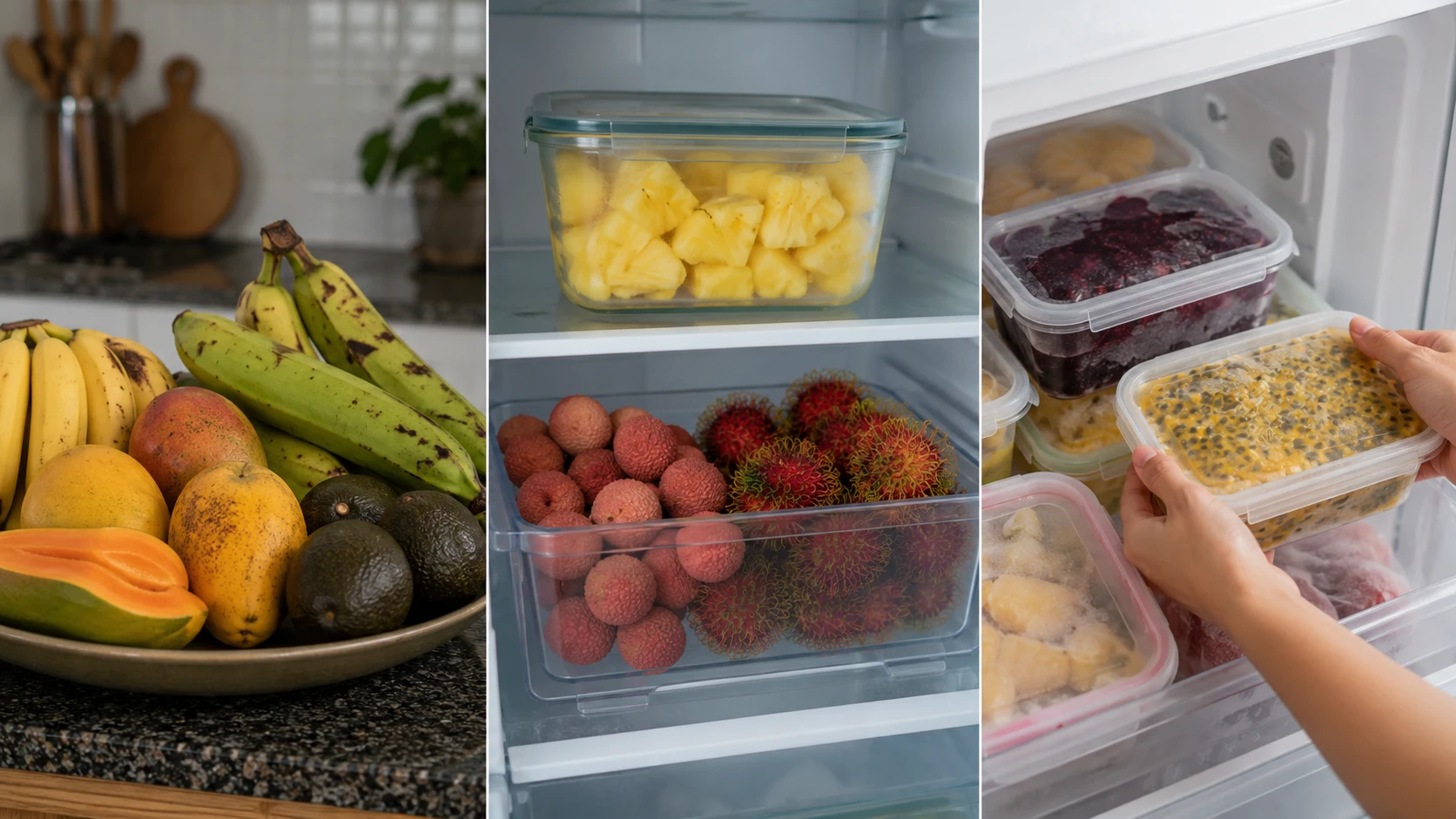
Tropical fruit often changes quickly after you bring it home, so storage is less about being perfect and more about timing. The goal is to let flavor develop without letting the fruit become overripe before you use it.
A simple rule helps: keep whole fruit visible, check it daily, and move it only when the texture, smell, or skin gives you a reason.
| Fruit Type | Storage Rule | Why It Helps |
| Bananas and plantains | Keep on the counter until ripe | Continues ripening after purchase |
| Mango, papaya, avocado | Ripen at room temperature, then refrigerate | Cold slows softening once ripe |
| Pineapple and cut fruit | Refrigerate after cutting | Cut fruit spoils much faster |
| Passion fruit | Let it wrinkle slightly, then chill | Wrinkling often signals a stronger flavor |
| Lychee and rambutan | Refrigerate soon after buying | Skins dry out quickly at room temperature |
| Frozen pulp or purée | Keep frozen until ready to use | Texture changes fast once thawed |
The easiest way to avoid waste is to plan fruit by ripeness. Use the softest fruit first, keep cut pieces in sealed containers, and freeze anything you know you will not finish in time. Once storage is handled, the next step is knowing how to use these fruits beyond a plain bowl.
How Can You Use Tropical Fruits Beyond a Plain Fruit Bowl?
A tropical fruit list becomes much more helpful when each fruit has a purpose. Some work best blended, some need cooking, and some taste best left almost alone. These quick-use ideas help turn unfamiliar fruit into something easier to buy and actually eat.
- Smoothies: Mango, papaya, pineapple, banana, passion fruit, and açai add body, sweetness, acidity, or color without needing much prep
- Savory meals: Plantain, breadfruit, jackfruit, avocado, and tamarind work well in cooked dishes, sauces, bowls, and stews instead of snack trays
- Drinks: Passion fruit, guava, tamarind, pineapple, and soursop can flavor agua fresca, iced tea, mocktails, or blended drinks
- Simple desserts: Lychee, rambutan, mangosteen, cherimoya, and mamey sapote taste best chilled, peeled, and served with very little added
- Salsas and salads: Mango, pineapple, pomelo, star fruit, and avocado balance heat, salt, herbs, and citrus in quick, fresh dishes
- Make-ahead prep: Pineapple, mango, papaya, and dragon fruit hold well when sliced ahead for snacks, breakfast plates, or packed lunches
Thinking by use makes the fruit easier to remember later. Mango is no longer just a snack; it can become salsa, a smoothie base, or a salad ingredient. That practical link keeps the list useful after the produce aisle moment passes.
Are Tropical Fruits Nutritious?
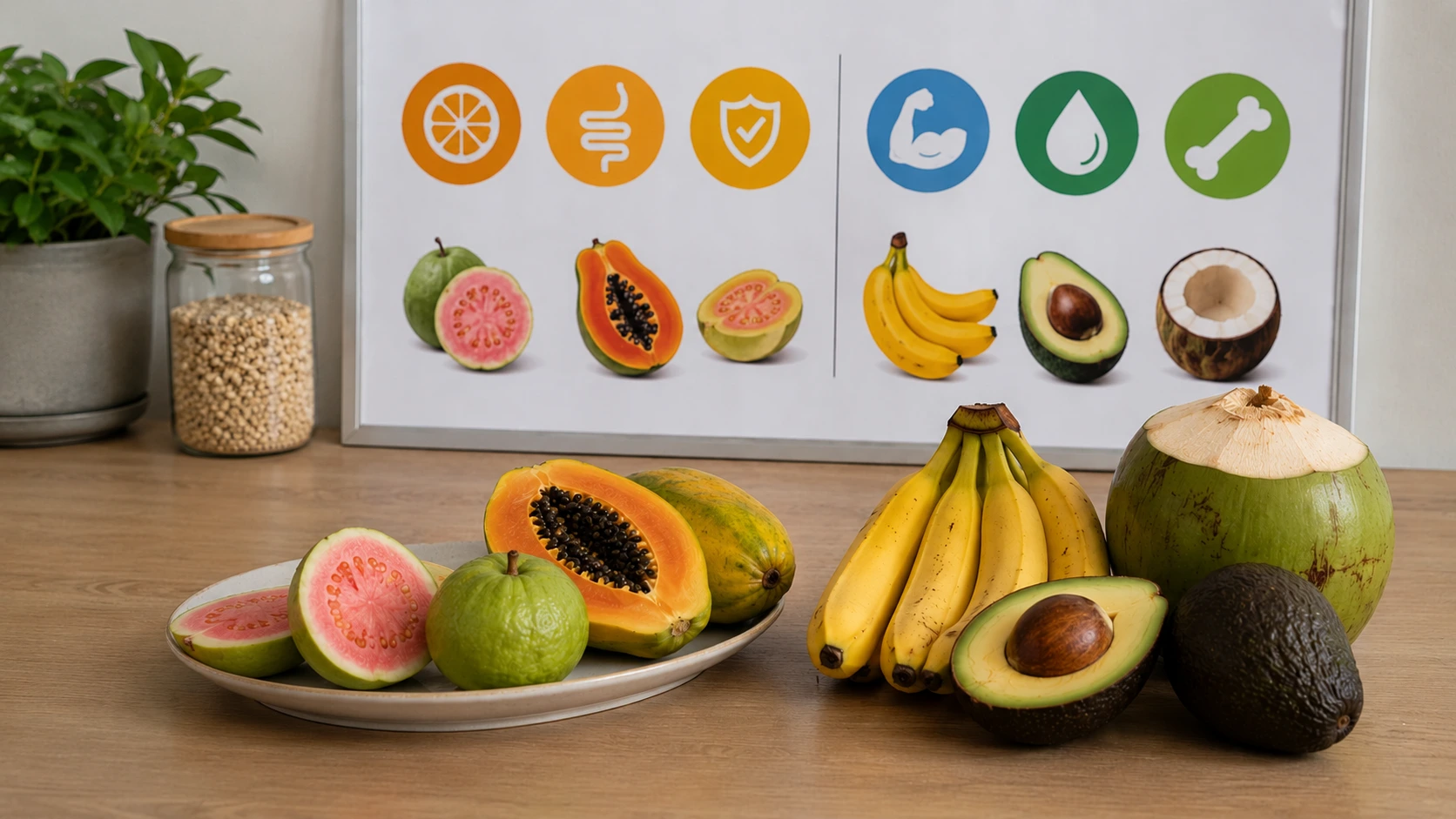
Yes, many tropical fruits offer real nutritional value, though the specifics vary quite a bit from fruit to fruit. Guava and papaya both rank notably high in vitamin C, bananas are a solid source of potassium, and most fresh tropical fruit provides fiber and water content that juice versions lose during processing.
Whole fruit tends to be more filling than juice precisely because it retains its fiber, which slows digestion and helps with feeling satisfied. According to USDA’s MyPlate guidance, choosing whole fruit over fruit juice when possible is generally recommended for getting more nutritional value per serving.
Tropical fruit is not automatically healthier or unhealthier than other fruit categories. It depends entirely on the specific fruit, the serving size, and how it is prepared.
With nutrition covered, a few smaller, specific questions usually come up next, mostly around names, storage, and shopping decisions.
Frequently Asked Questions
What are five common tropical fruits?
Five common tropical fruits are mango, banana, pineapple, papaya, and coconut. These are widely recognized, easy to find in most grocery stores, and simple to use in smoothies, fruit bowls, snacks, or savory cooking depending on ripeness and the specific fruit’s texture.
What are five exotic fruit names worth knowing?
Five exotic fruit names worth knowing are rambutan, lychee, mangosteen, salak, and mamey sapote. These fruits show up less often in standard supermarkets but appear regularly in specialty markets, and they are worth recognizing by their distinct skin, shape, and flavor profiles.
Is orange a tropical fruit?
Orange is typically grown in warm and subtropical climates, but it usually gets grouped with citrus fruits rather than being listed as a classic tropical fruit example. On a tropical fruits list, mango, papaya, coconut, guava, and pineapple are clearer, more representative examples of the category.
What tropical fruit tastes the sweetest?
Sweetness depends heavily on ripeness and specific variety, but mango, lychee, sapodilla, fully ripe banana, and cherimoya are often considered among the sweetest tropical fruits. If you prefer soft, dessert-like fruit, these make better starting points than tart options like passion fruit or star fruit.
Can tropical fruits be frozen?
Yes, many tropical fruits freeze well once peeled, cut, and packed properly. Mango, pineapple, papaya, banana, passion fruit pulp, and guava all freeze especially well for smoothies. Fresh fruit should ideally be frozen at peak ripeness to preserve better flavor and texture for later use.
Takeaway
Choosing between dozens of fruit names can feel more overwhelming than helpful, which is exactly why this tropical fruits list sticks to 25 well-explained picks instead of stretching toward 70 or more thin entries.
Each fruit here comes with enough detail, flavor, texture, native range, and a real use case, so you walk away actually knowing what to do with that mango or rambutan sitting in your cart, not just what it is called.
The next time you spot something unfamiliar at the store, whether it is a spiky soursop or a snake-skinned salak, hopefully this list takes away some of that initial hesitation.
Which fruit have you seen in a market but never actually tried? Drop it in the comments, and maybe it ends up added to this list next.