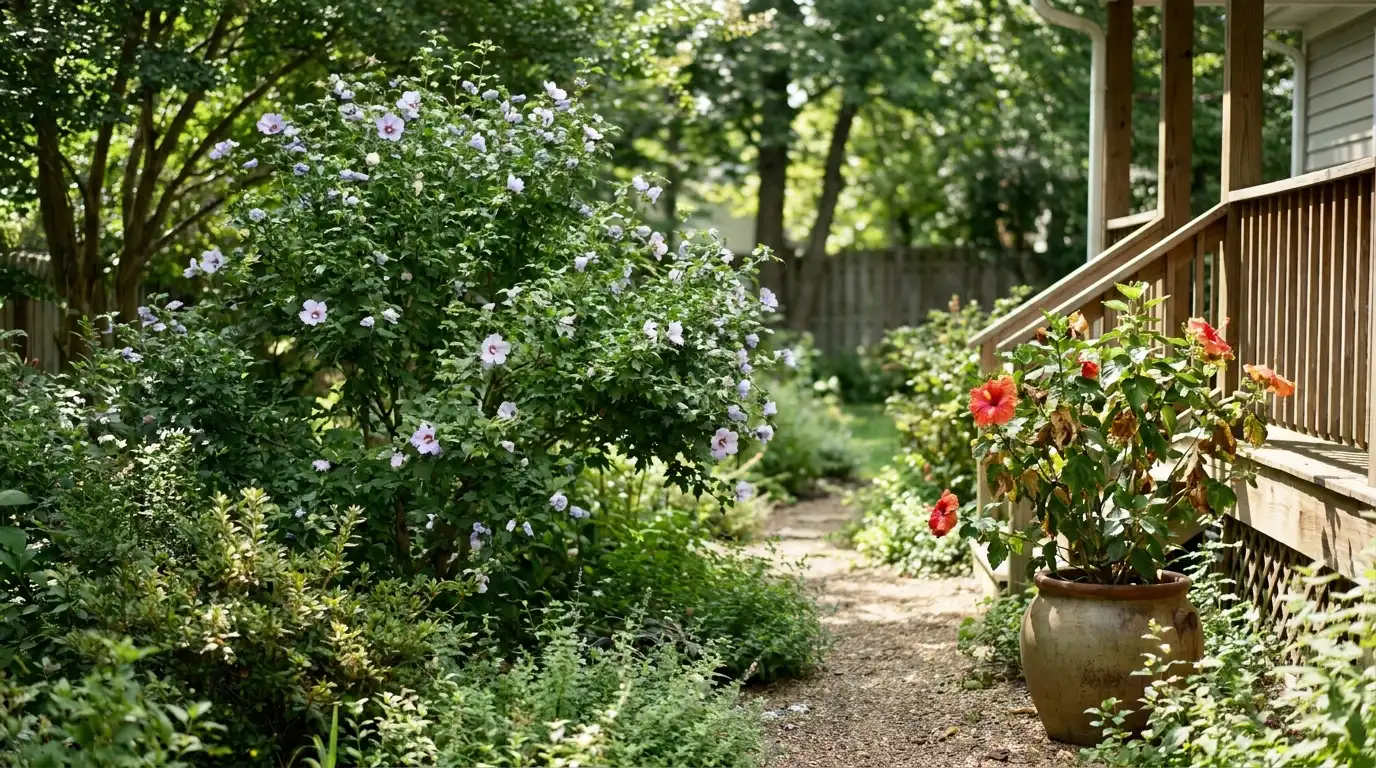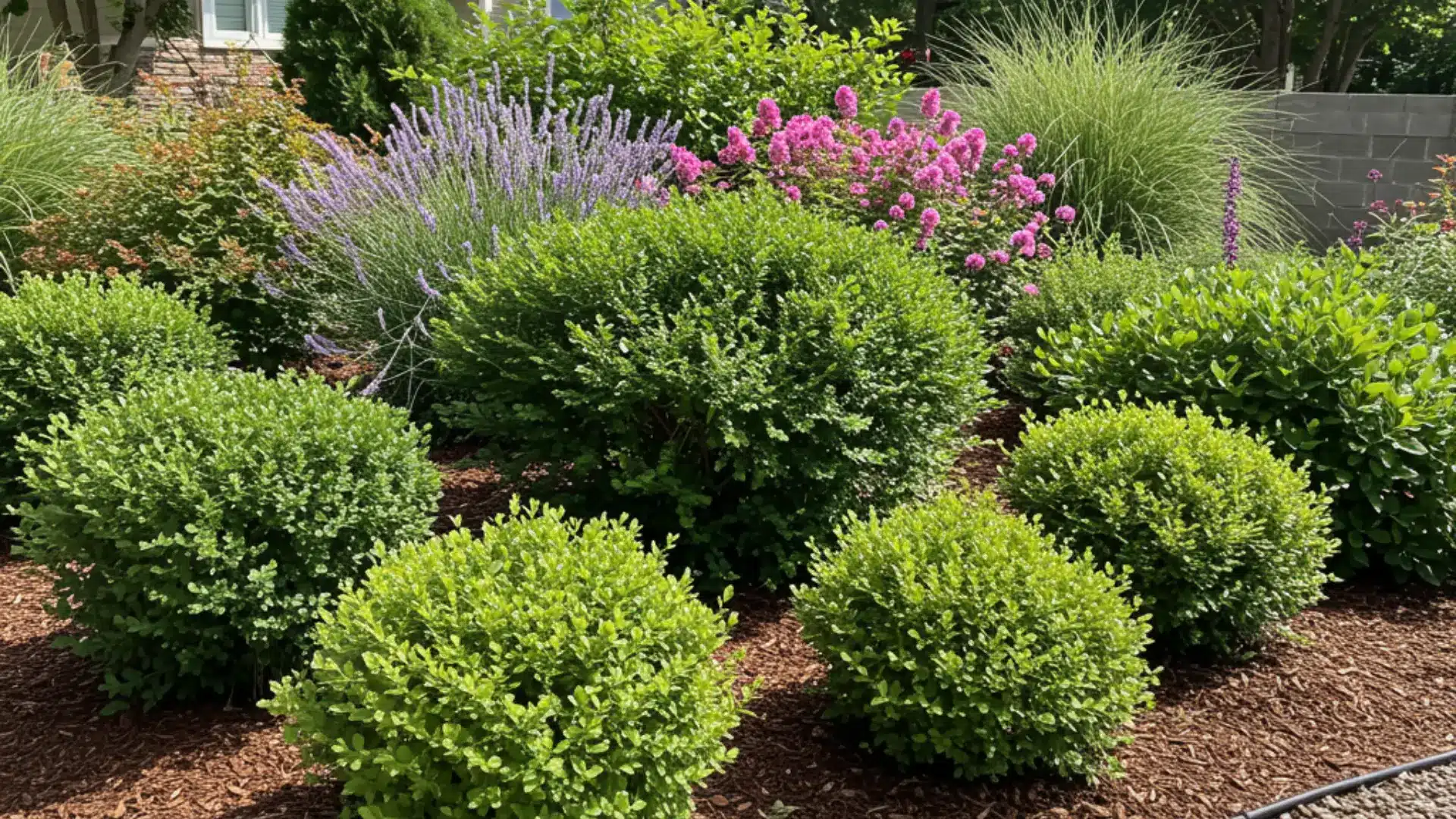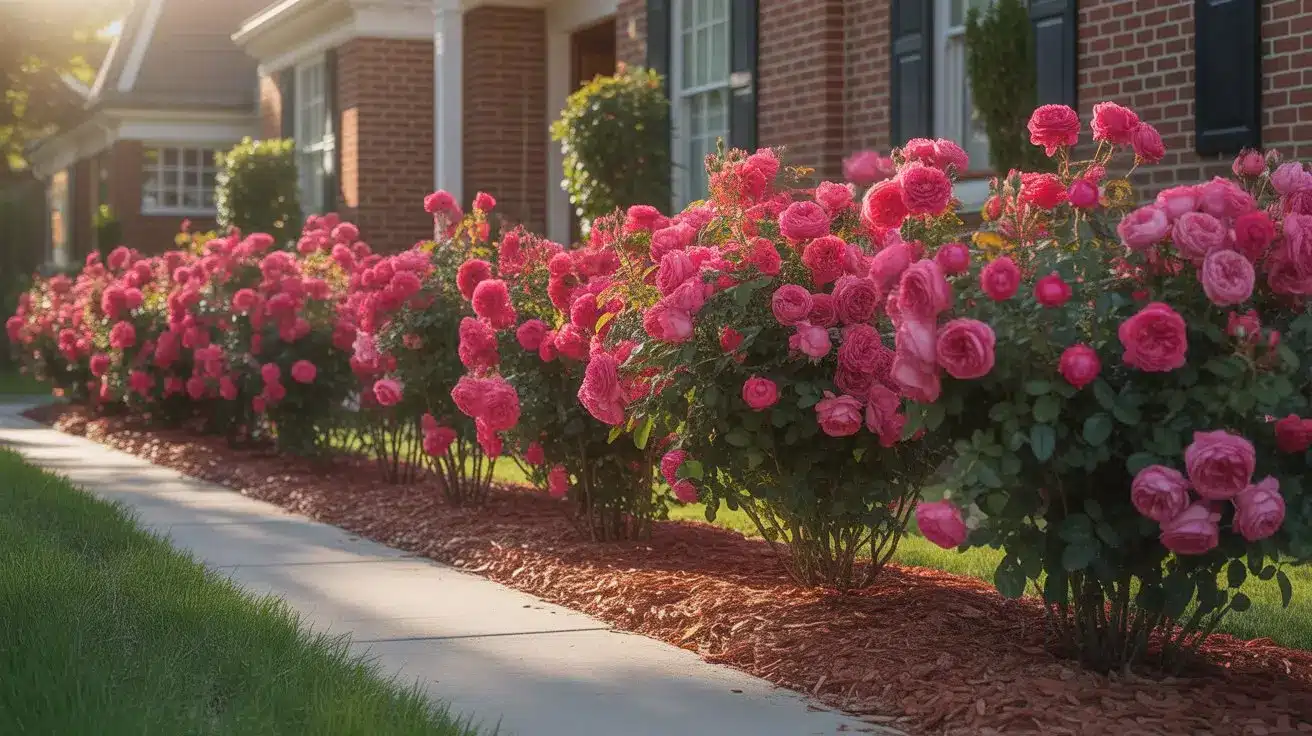
Your yard should look good without taking up your whole weekend. Many homeowners want plants that stay healthy, look neat, and do not need constant trimming or watering.
That is where low-maintenance shrubs make a big difference. The right shrubs can give you color, privacy, and year-round structure with very little effort.
Most of the options below grow well in USDA hardiness zones 3–9, which covers most of the United States. They are also beginner-friendly and work well in front yards, backyards, and foundation plantings.
You will find low-maintenance shrubs below that are drought-tolerant, pest-resistant, and easy to grow, all picked to save you time and keep your yard looking great all year.
Low-Maintenance Shrubs You Can Have
Here are low-maintenance shrubs that work hard so you don’t have to. Each one was picked for its ability to stay healthy, look good, and handle real-world conditions like heat, drought, and cold.
1. Boxwood
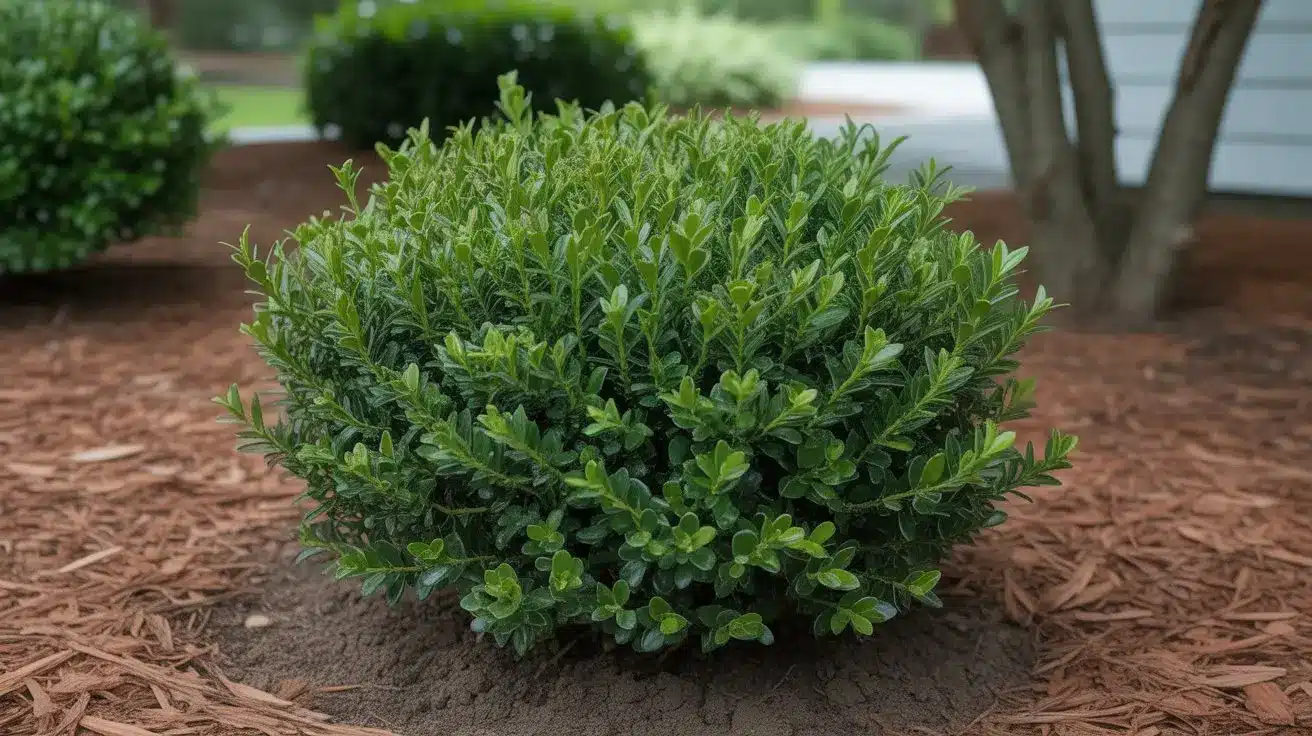
Boxwood is a classic landscaping shrub that earns its place in almost any yard. It grows slowly and holds a clean, dense shape with very little effort on your part.
A light trim once or twice a year is usually all it needs. It handles both sun and partial shade well and stays reliable season after season.
- USDA Zones: 5–9
- Bloom Time: Spring (small, not showy)
2. Hydrangea (Panicle & Smooth)
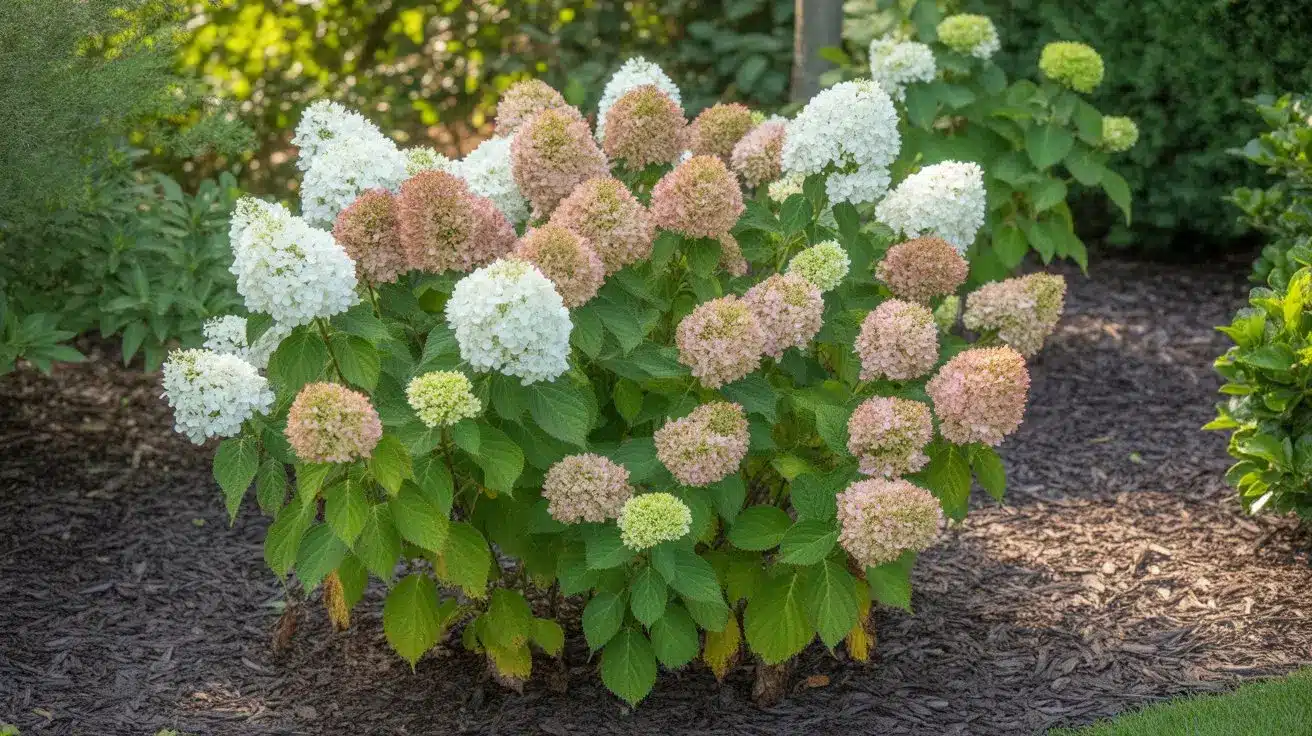
Panicle and smooth hydrangeas are the most beginner-friendly hydrangea types you can grow. They bloom on new wood each year, so you never have to worry about pruning at the wrong time.
Both handle heat, cold, and a range of soil types better than other hydrangea varieties. Expect big, showy blooms from summer into early fall with very little effort.
- USDA Zones: 3–9
- Bloom Time: Summer to early fall
3. Spirea
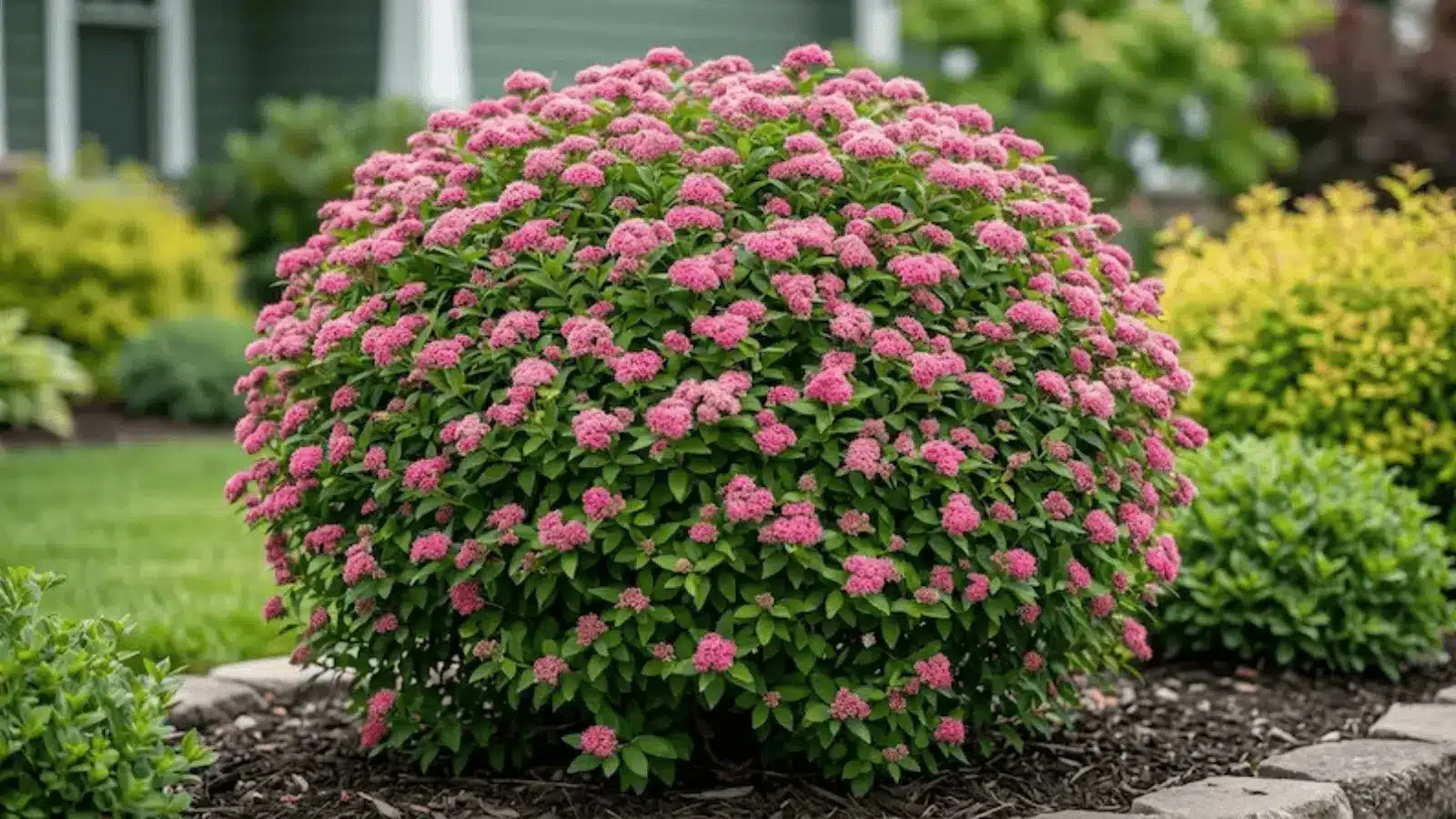
Spirea is a reliable, fast-growing shrub that handles heat and cold without complaint. It puts on a strong show of flowers in late spring and only needs a light trim after blooming to stay tidy.
Most varieties stay compact and fit naturally into borders or small front yards. It is one of the most forgiving shrubs you can plant.
- USDA Zones: 3–8
- Bloom Time: Late spring to summer
4. Potentilla
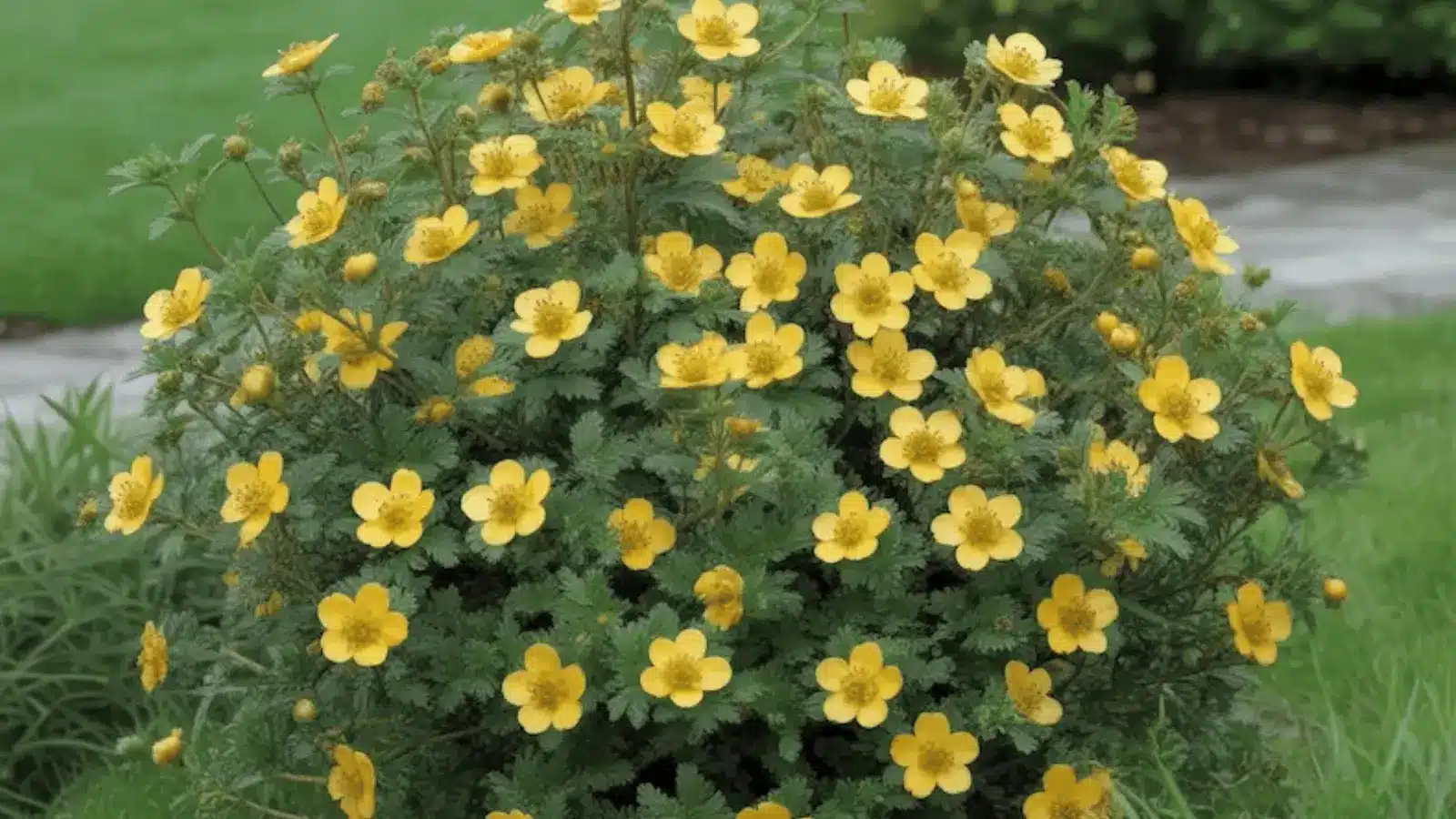
Potentilla is a compact, cheerful shrub that blooms longer than almost anything else in your yard. It starts flowering in late spring and keeps going well into fall with very little help from you.
It handles drought, poor soil, and cold temperatures without missing a beat. If you want color for months without the maintenance, this one delivers.
- USDA Zones: 2–7
- Bloom Time: Late spring through fall
5. Inkberry Holly
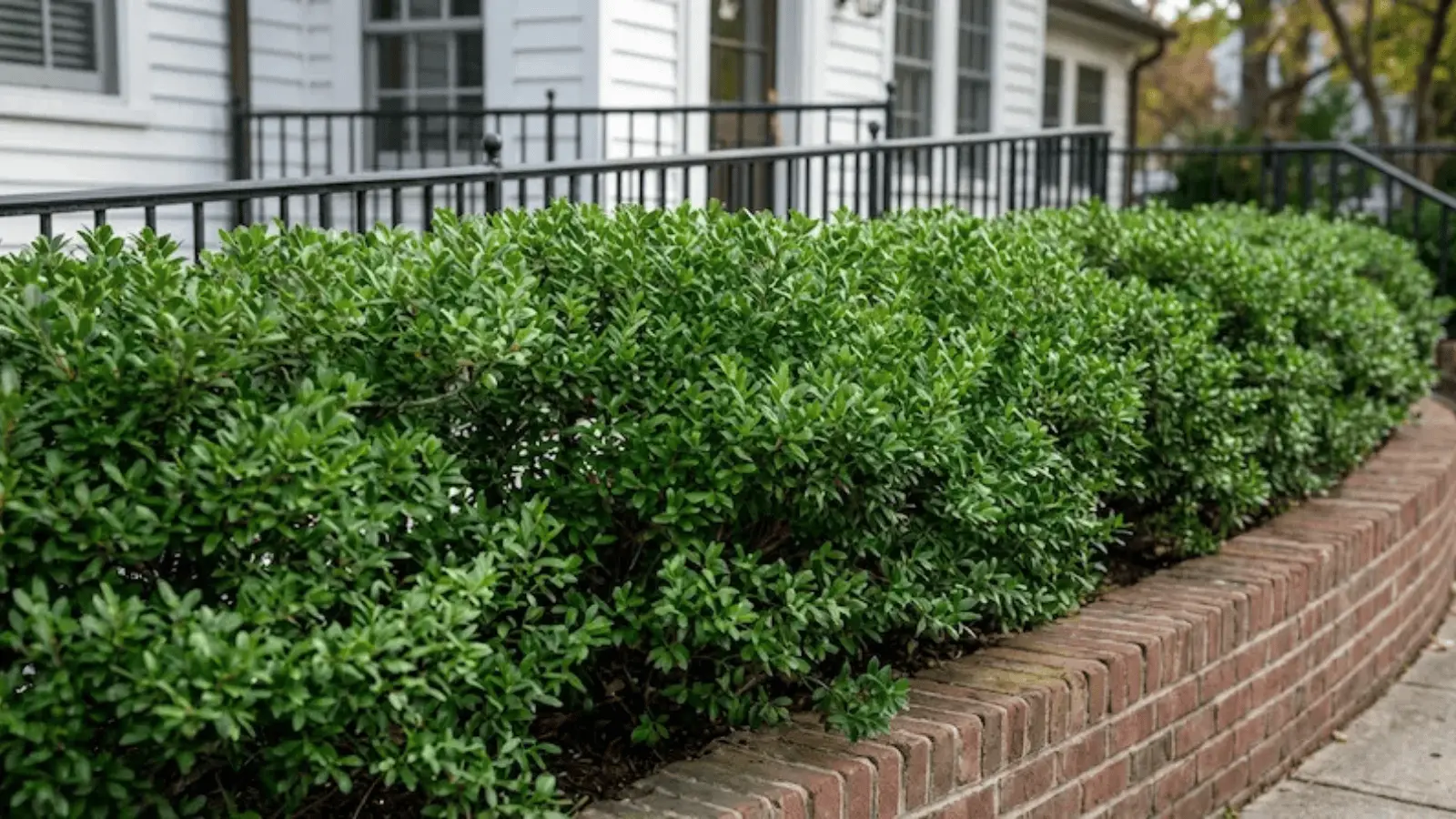
Inkberry Holly is a native evergreen that keeps a naturally rounded shape without much pruning. It stays green year-round and produces small white flowers in spring, followed by dark berries that birds love.
Unlike many hollies, it tolerates wet soil and part shade well. It works as a great alternative to boxwood with even less upkeep.
- USDA Zones: 4–9
- Bloom Time: Spring
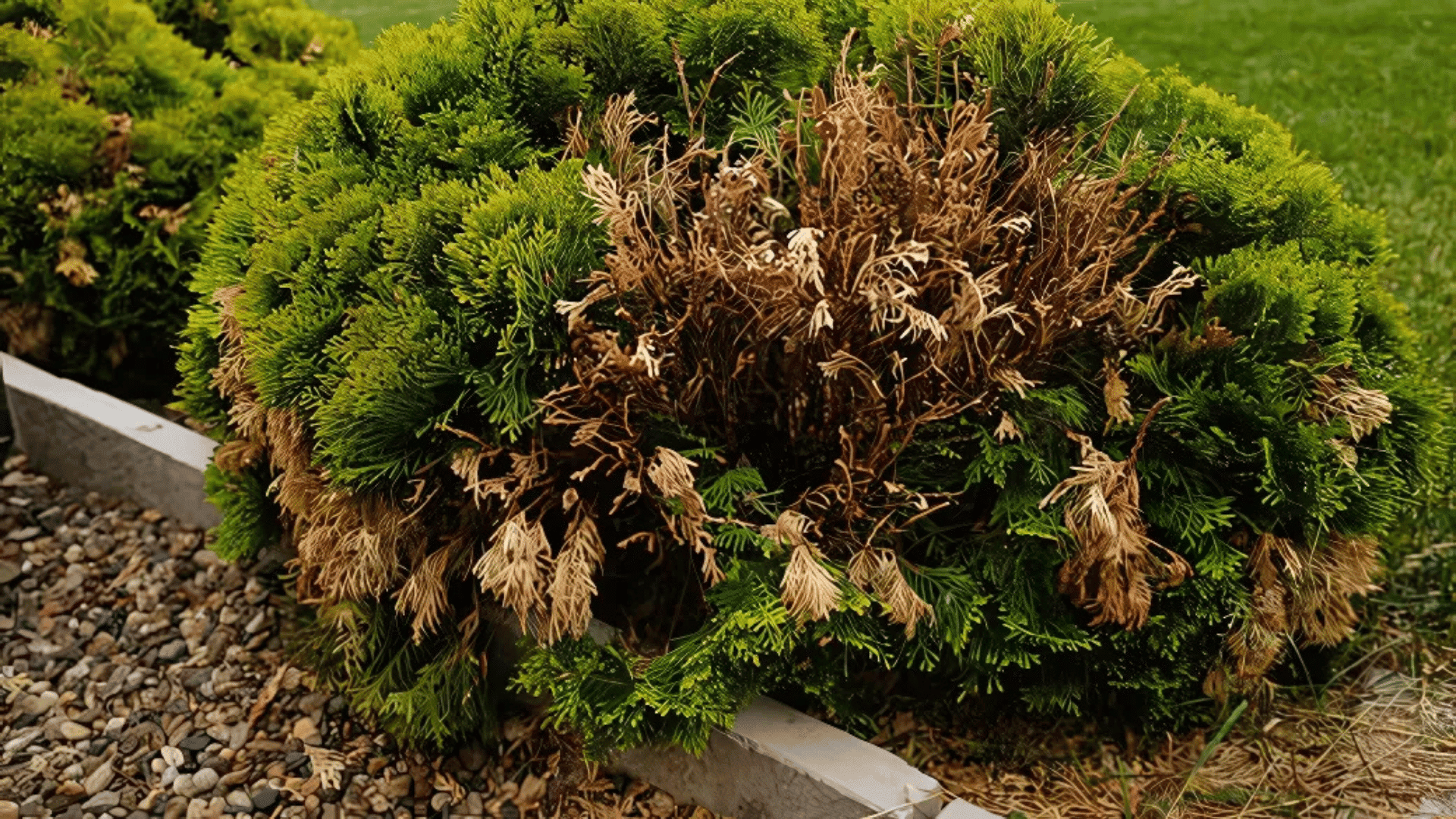
6. Globe Arborvitae
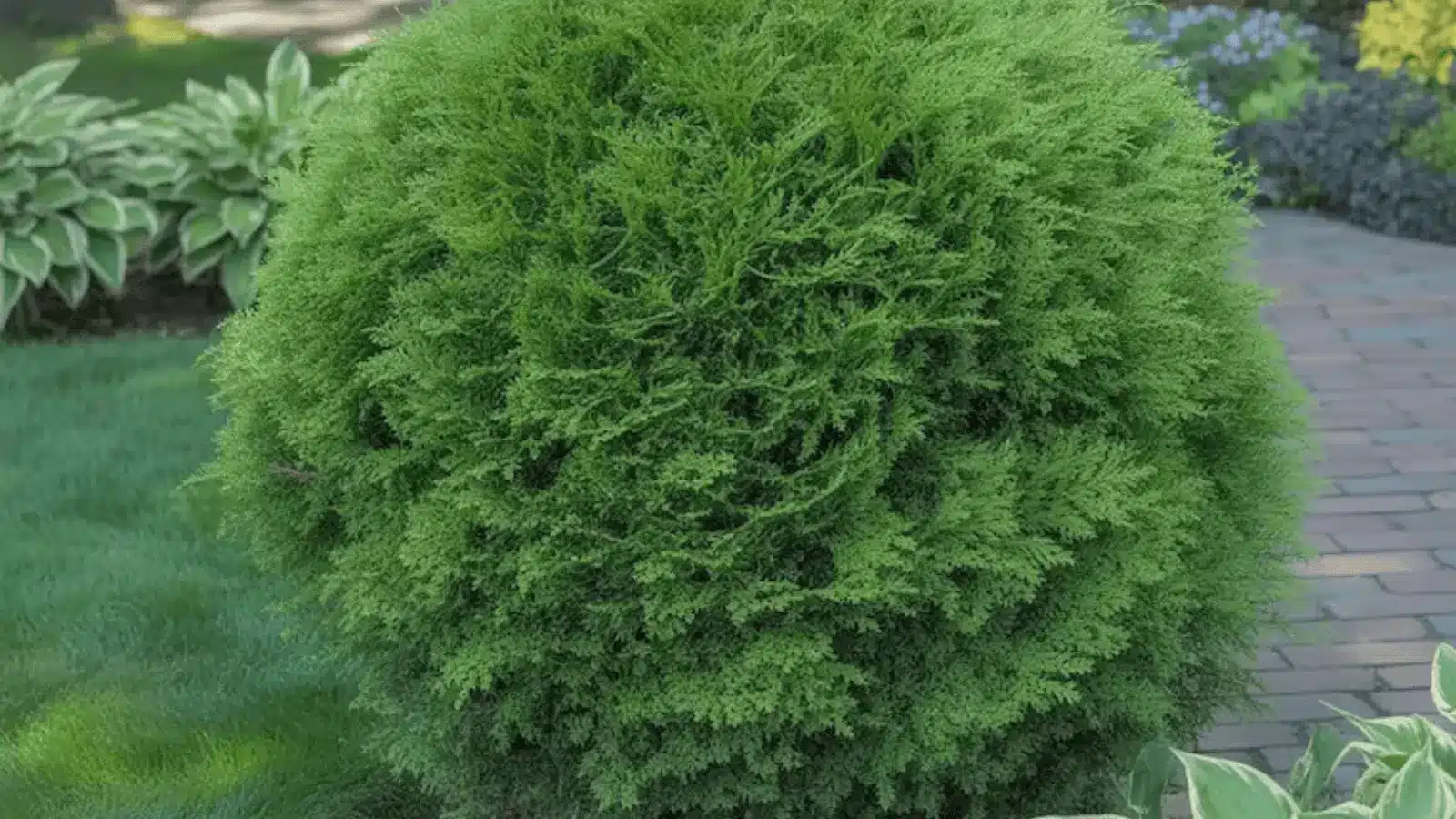
Globe Arborvitae is an evergreen that does the work for you. It grows into a tidy, rounded shape on its own without heavy trimming or shaping.
It handles cold winters and moderate drought once established. Because it stays small and symmetrical, it is a natural fit near walkways, entryways, or anywhere you want a clean, structured look year-round.
- USDA Zones: 3–8
- Bloom Time: Non-flowering evergreen
7. Juniper
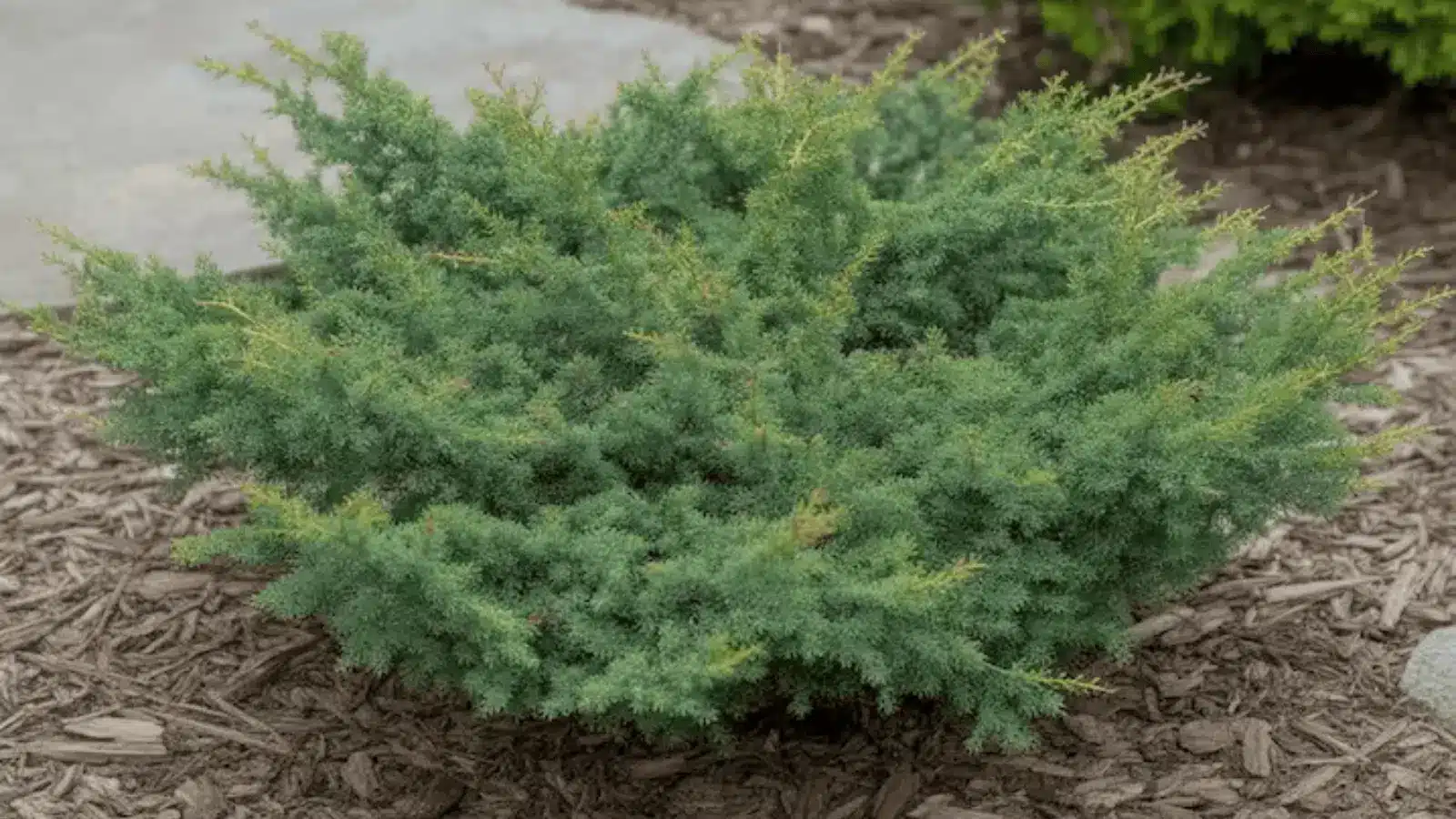
Juniper is one of the toughest shrubs on this list. It thrives in full sun, handles drought exceptionally well, and is rarely bothered by pests or disease.
Once it is in the ground and established, it needs almost no attention. Spreading varieties work especially well on slopes or dry areas where other plants struggle to survive.
- USDA Zones: 3–9
- Bloom Time: Non-flowering evergreen
8. Dwarf Lilac
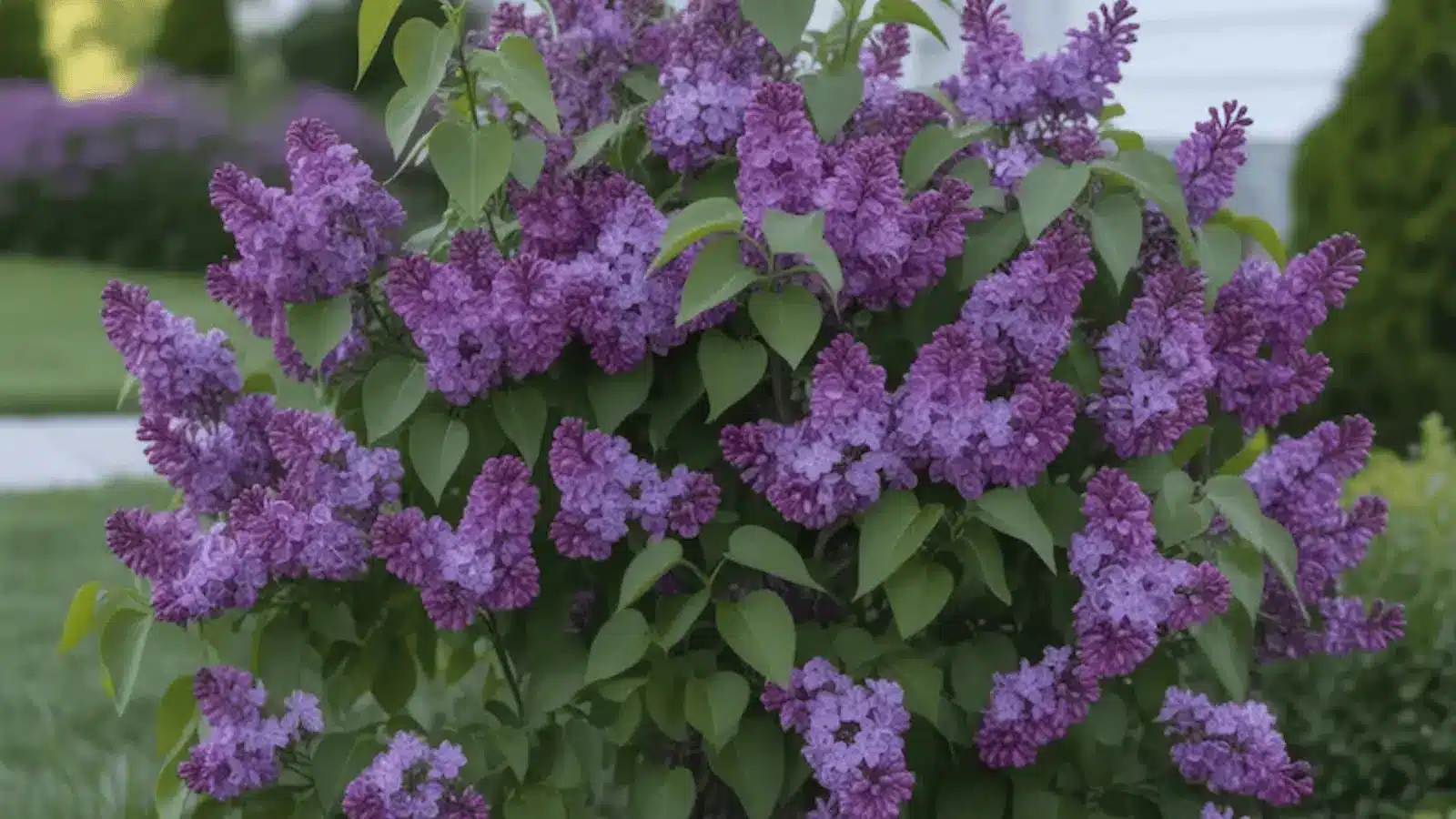
Dwarf Lilac gives you everything people love about traditional lilacs in a much more manageable size. It stays compact, needs minimal pruning, and fills the area around it with a strong, sweet fragrance each spring.
It is a great fit for smaller yards or tight spaces where a full-sized lilac would quickly outgrow its spot.
- USDA Zones: 3–7
- Bloom Time: Late spring
9. Weigela
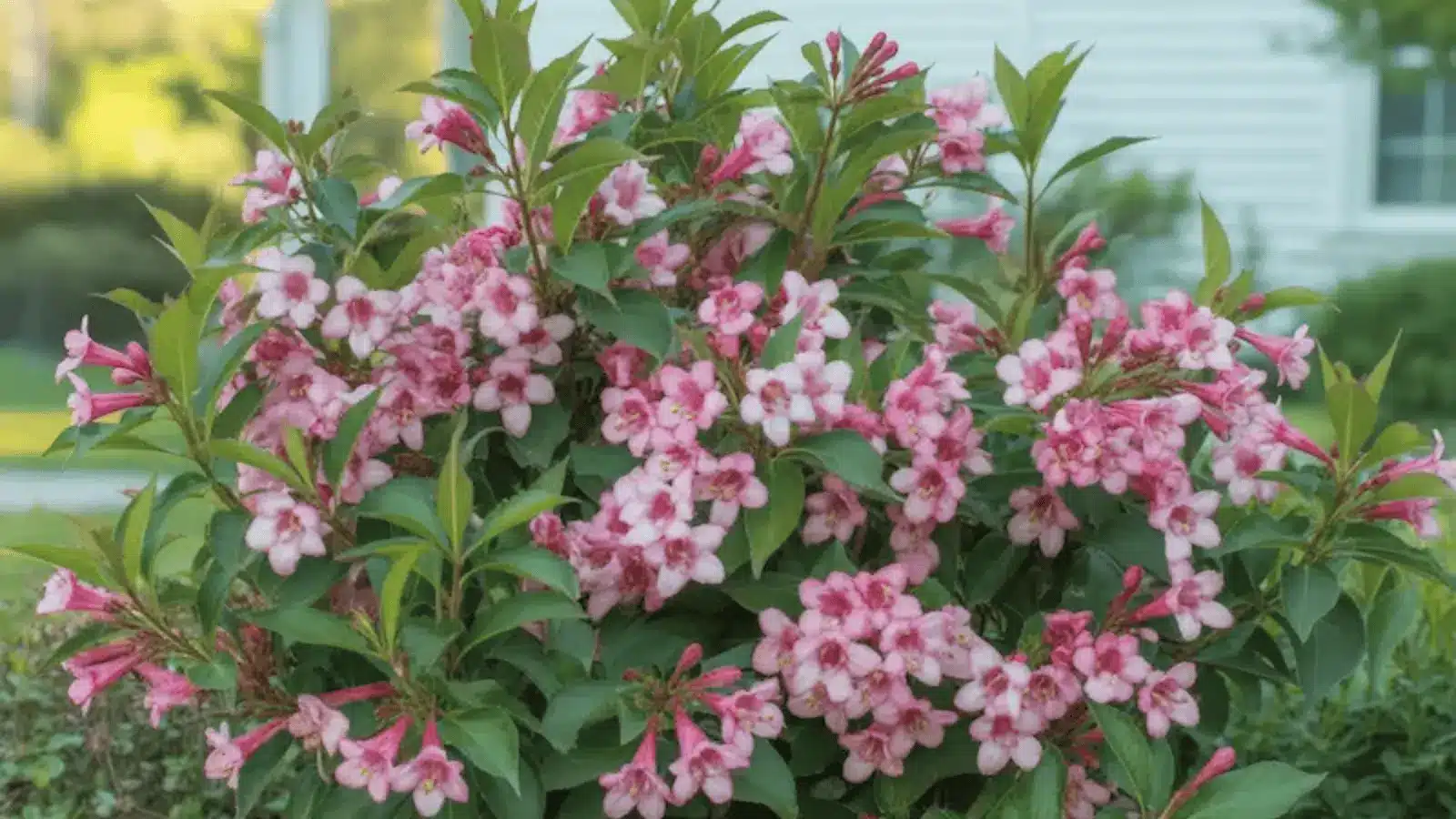
Weigela is a fast-growing shrub that puts on a heavy flush of trumpet-shaped blooms each spring. wide newer varieties rebloom again in summer, giving you two seasons of color with very little extra effort.
It grows well in most soil types and handles heat without struggle. Colorful foliage varieties also add visual interest even when the plant is not in bloom.
- USDA Zones: 4–8
- Bloom Time: Late spring; some rebloom in summer
10. Forsythia (Dwarf Types)
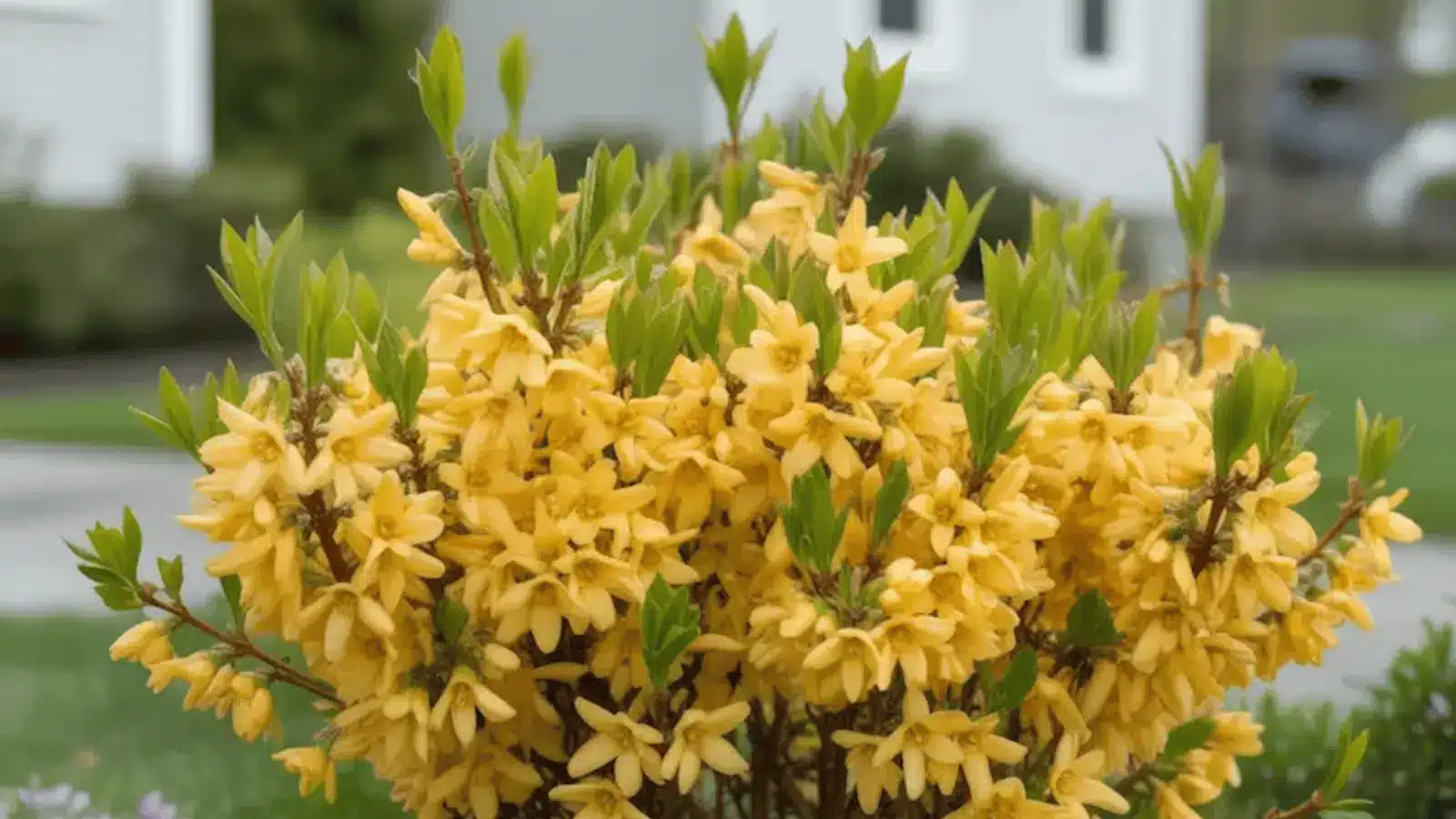
Dwarf Forsythia is one of the first shrubs to wake up in spring, covering itself in bright yellow blooms before most plants even leaf out. It is hardy, adaptable, and needs pruning only once a year, right after flowering.
Dwarf varieties stay between 2 and 4 feet, making them much easier to manage than older, larger types.
- USDA Zones: 5–8
- Bloom Time: Early spring
11. Yew
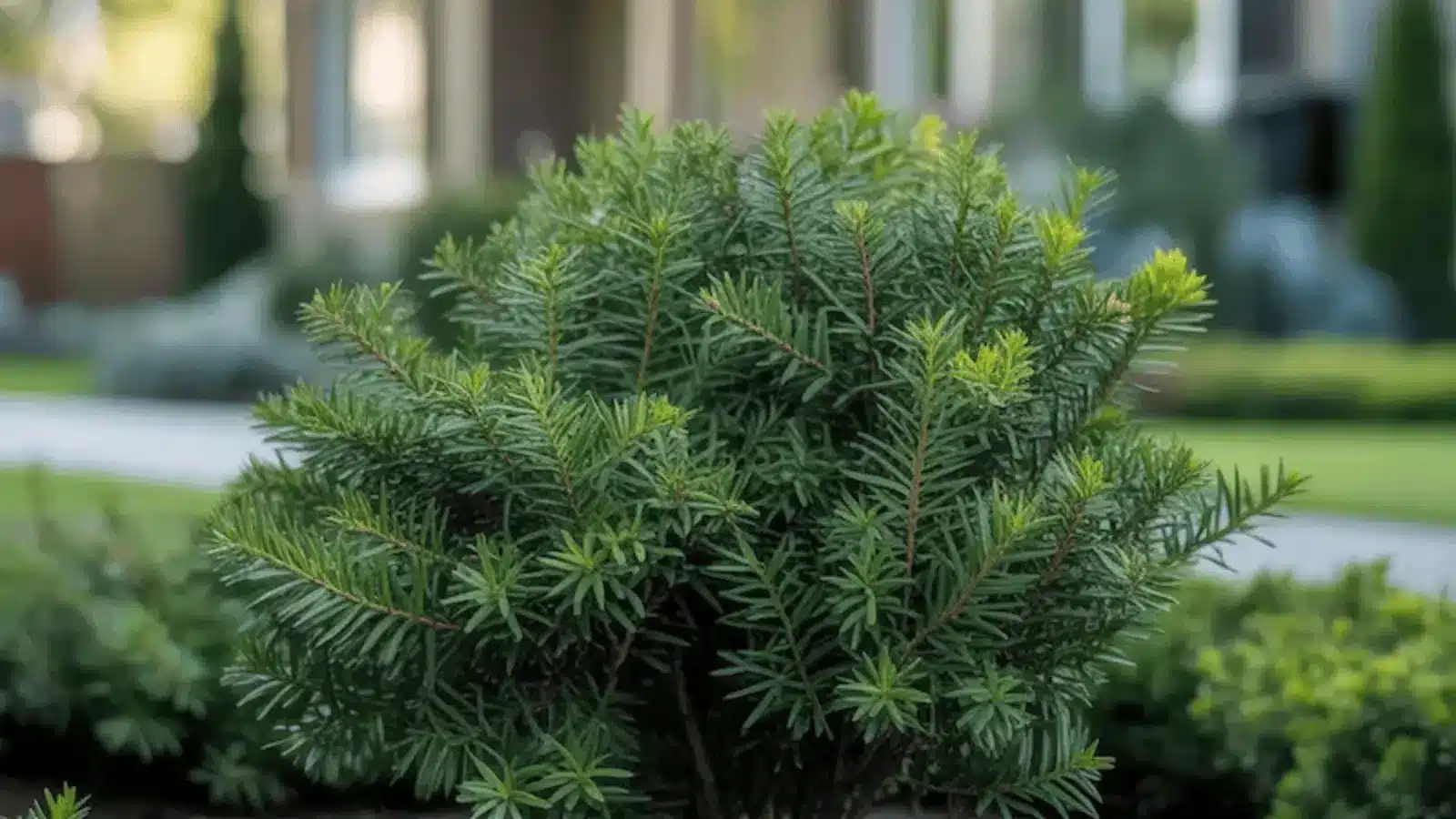
Yew is a tough, dependable evergreen that handles conditions many shrubs cannot. It grows well in shade, tolerates a range of soil types, and stays green through winter without any special care.
It responds well to pruning if you want a formal shape, but it also looks clean left to grow naturally. Few evergreens are this adaptable or this easy to maintain.
- USDA Zones: 4–7
- Bloom Time: Non-flowering evergreen
12. Rose of Sharon
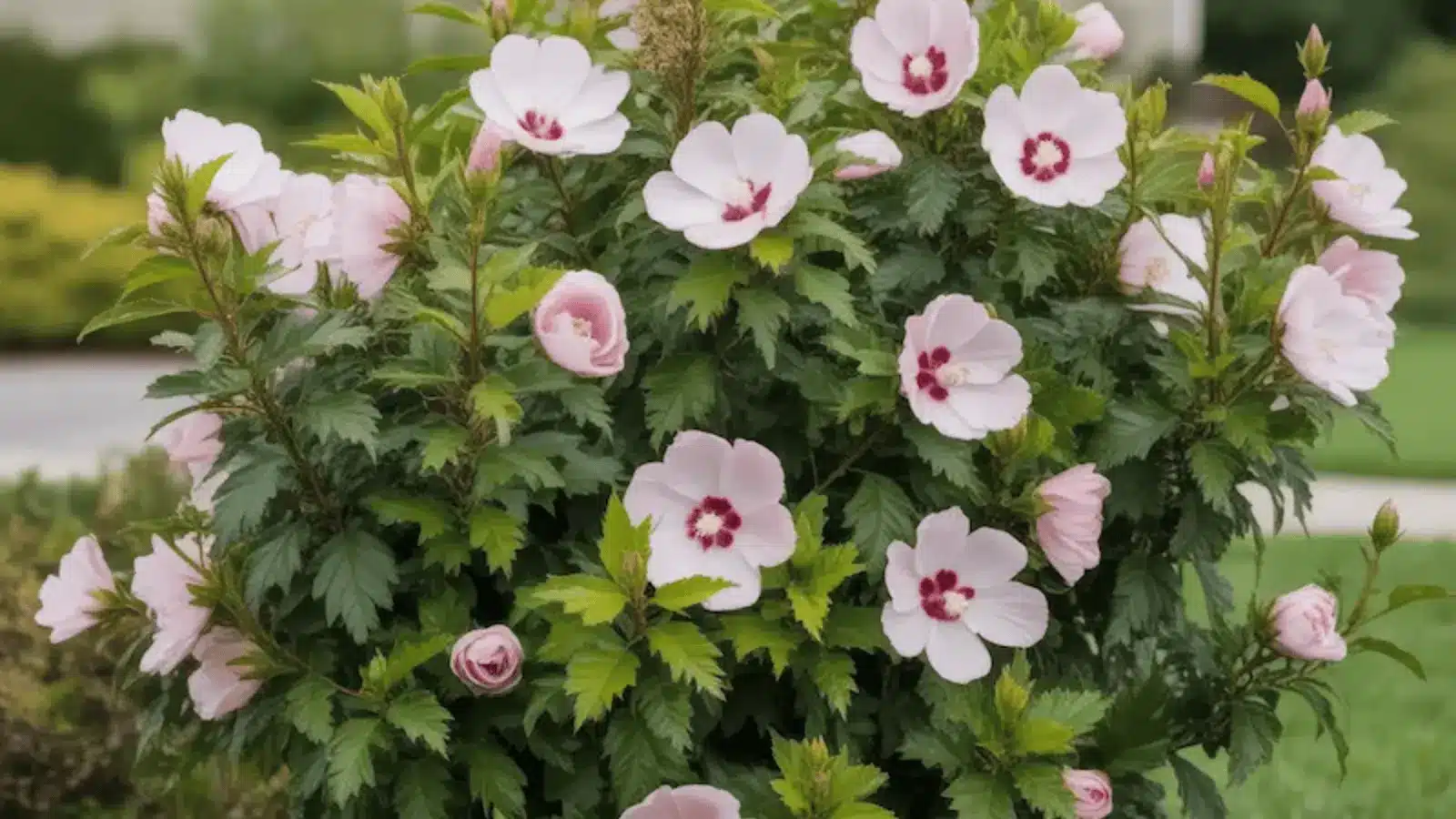
Rose of Sharon blooms in mid to late summer when most other flowering shrubs have already faded. It is heat-tolerant, grows upright, and adds real height and vertical structure to open spaces.
The funnel-shaped flowers come in white, pink, purple, and red, depending on the variety. It needs very little pruning and handles tough summer conditions without extra watering once established.
- USDA Zones: 5–9
- Bloom Time: Mid to late summer
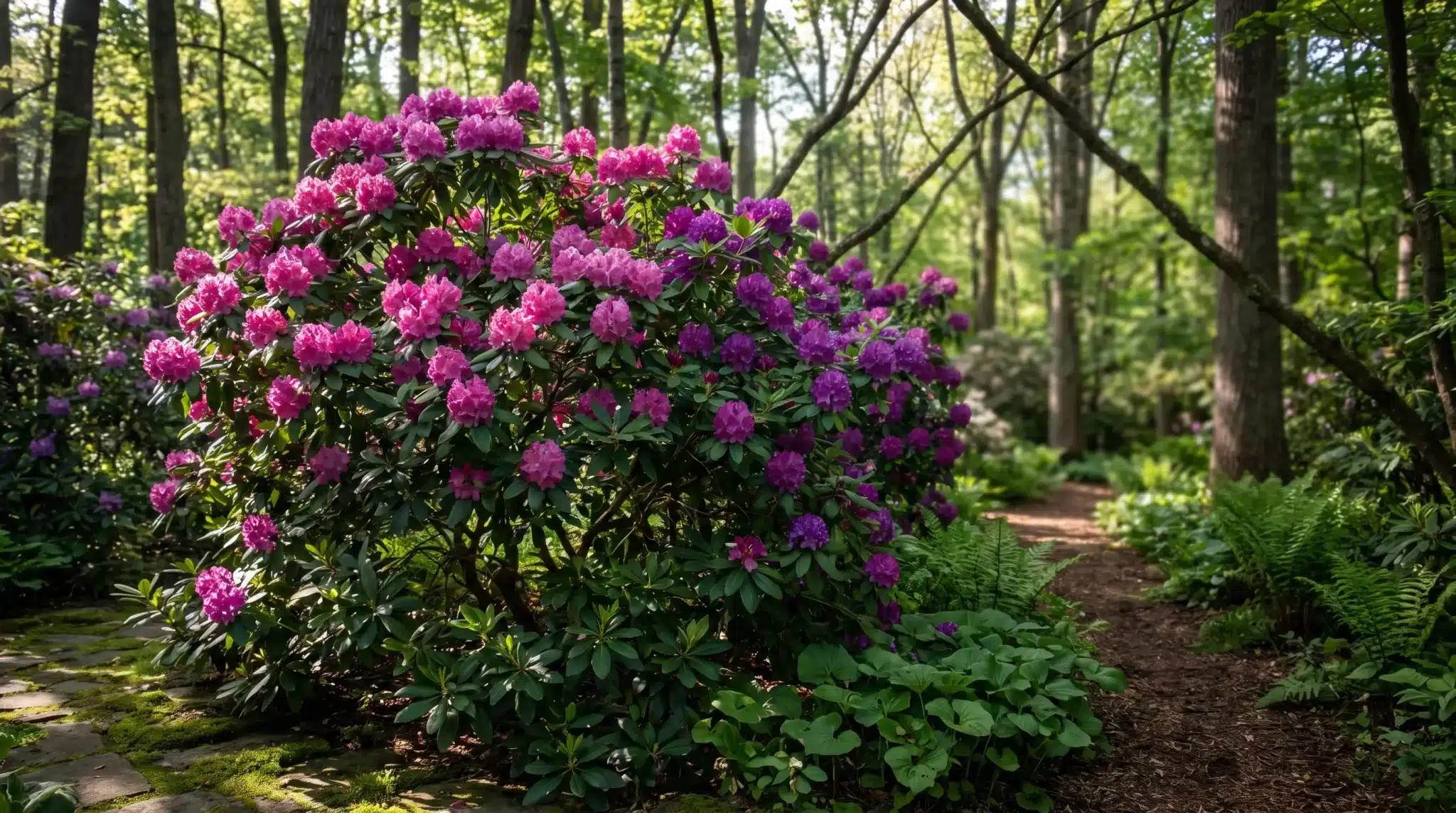
13. Azalea (Reblooming Types)
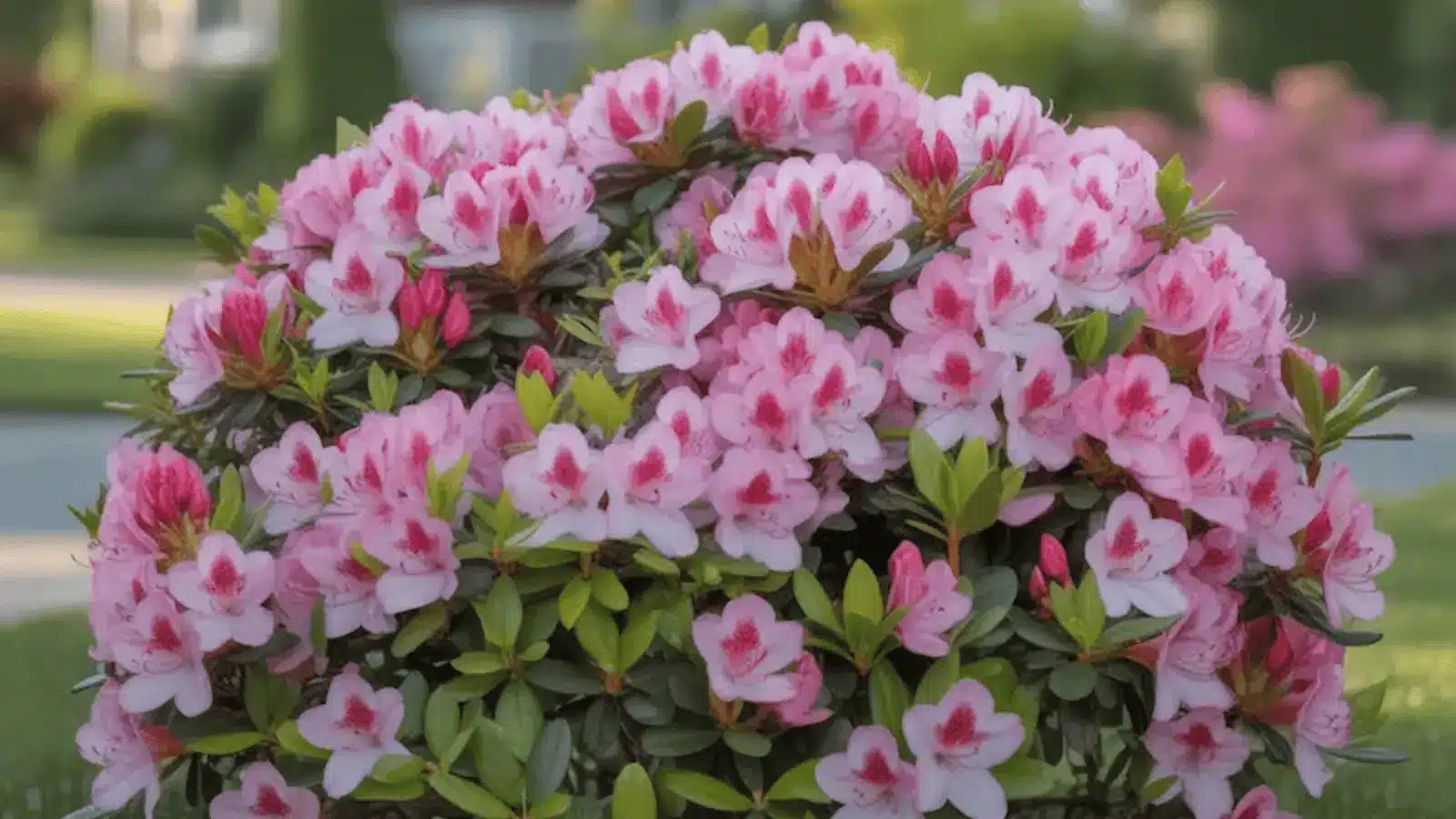
Reblooming Azaleas give you the classic spring color azaleas are known for, plus a second flush later in the season. They stay compact and low, making them easy to fit into foundation plantings or shaded borders.
They need very little pruning and thrive with minimal care once they settle into the right spot with part sun and well-drained soil.
- USDA Zones: 5–9
- Bloom Time: Spring; some rebloom in summer
14. Smokebush
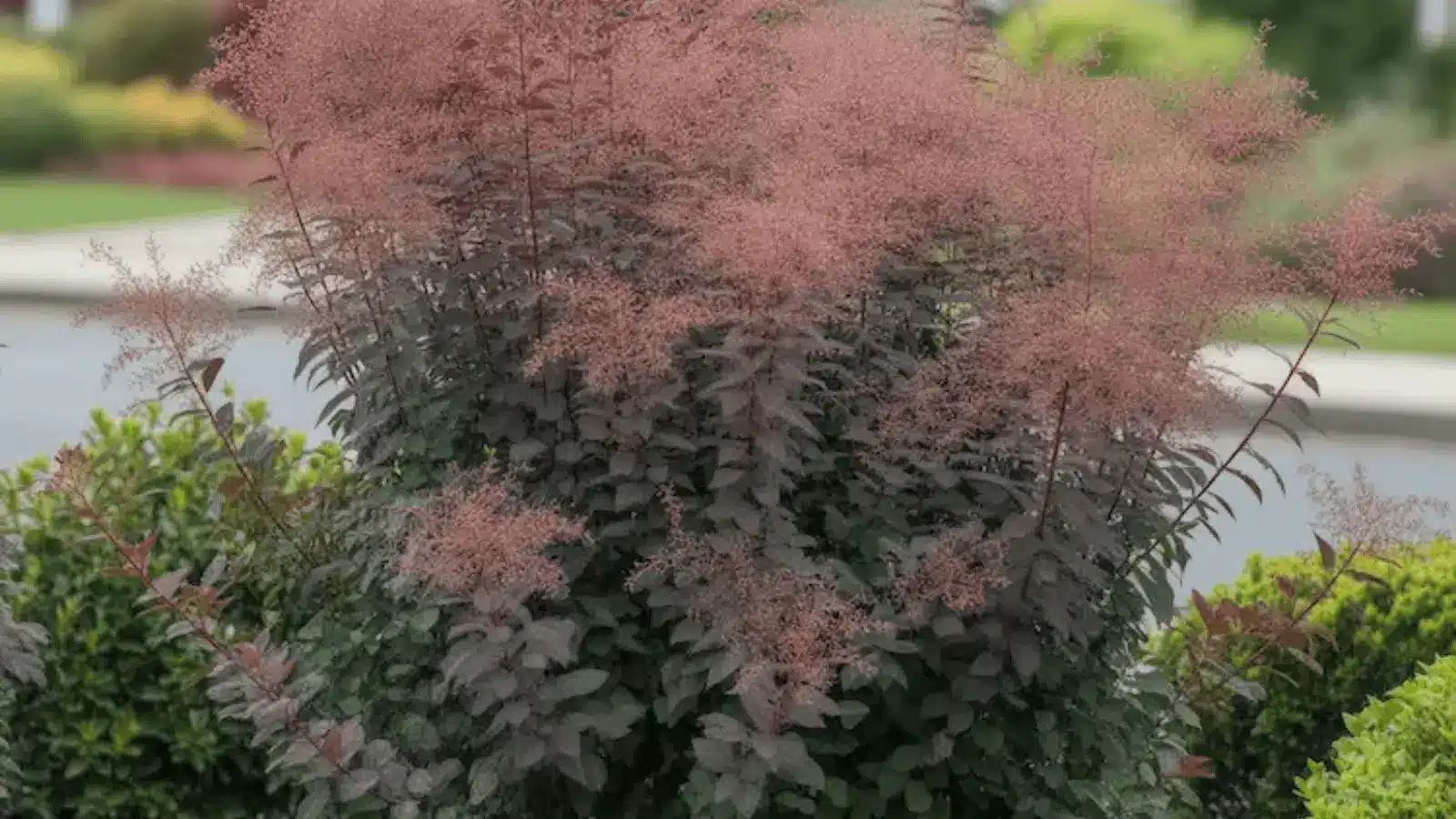
Smokebush earns its name from the cloud-like plumes that appear in early summer, giving your yard a soft, dramatic look unlike any other shrub.
It is drought-tolerant once established and rarely affected by pests or disease. Deep purple varieties also offer bold foliage color all season long. It needs very little attention once it finds its spot in a sunny, open area.
- USDA Zones: 4–8
- Bloom Time: Early to mid-summer
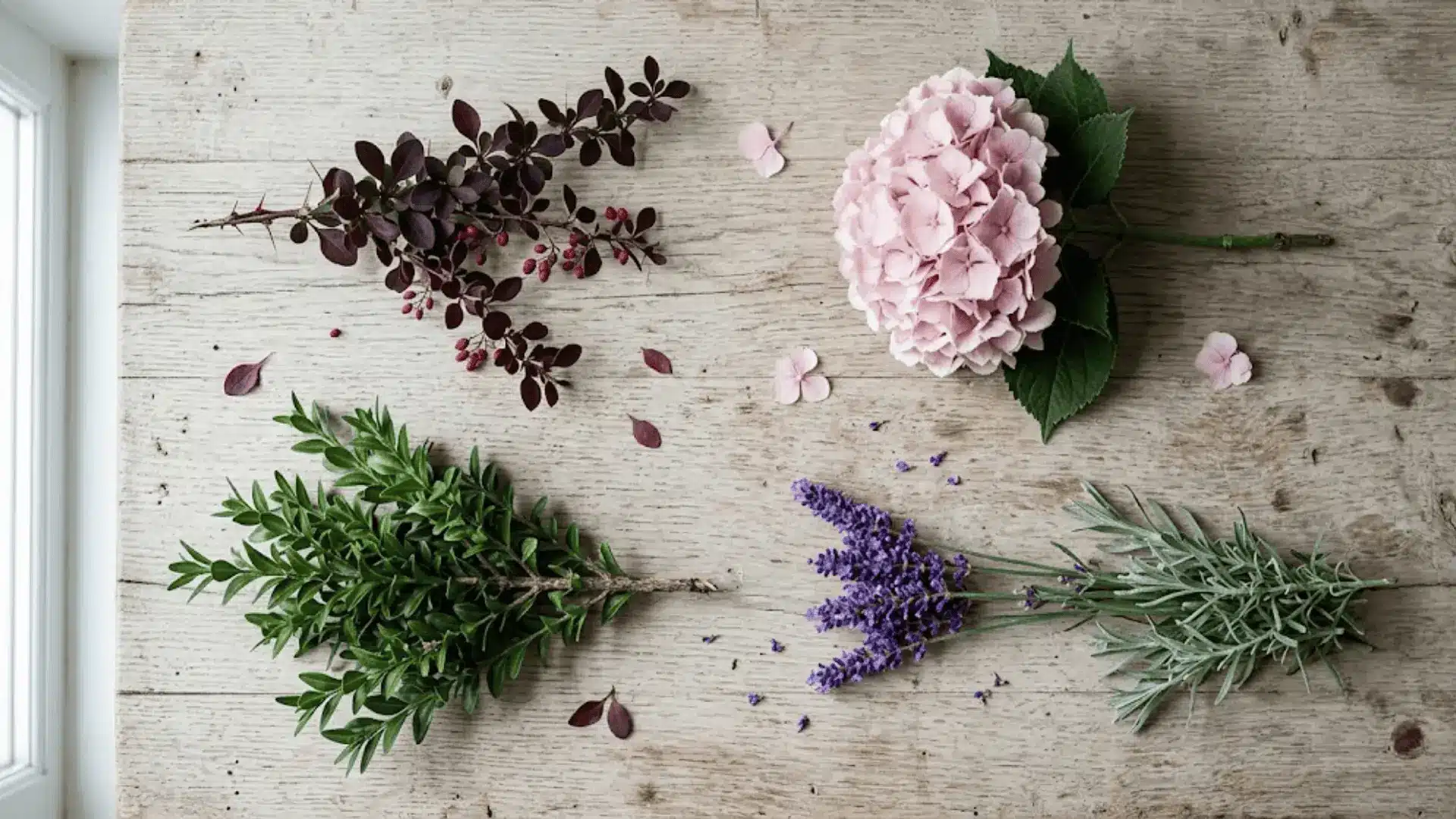
15. Barberry
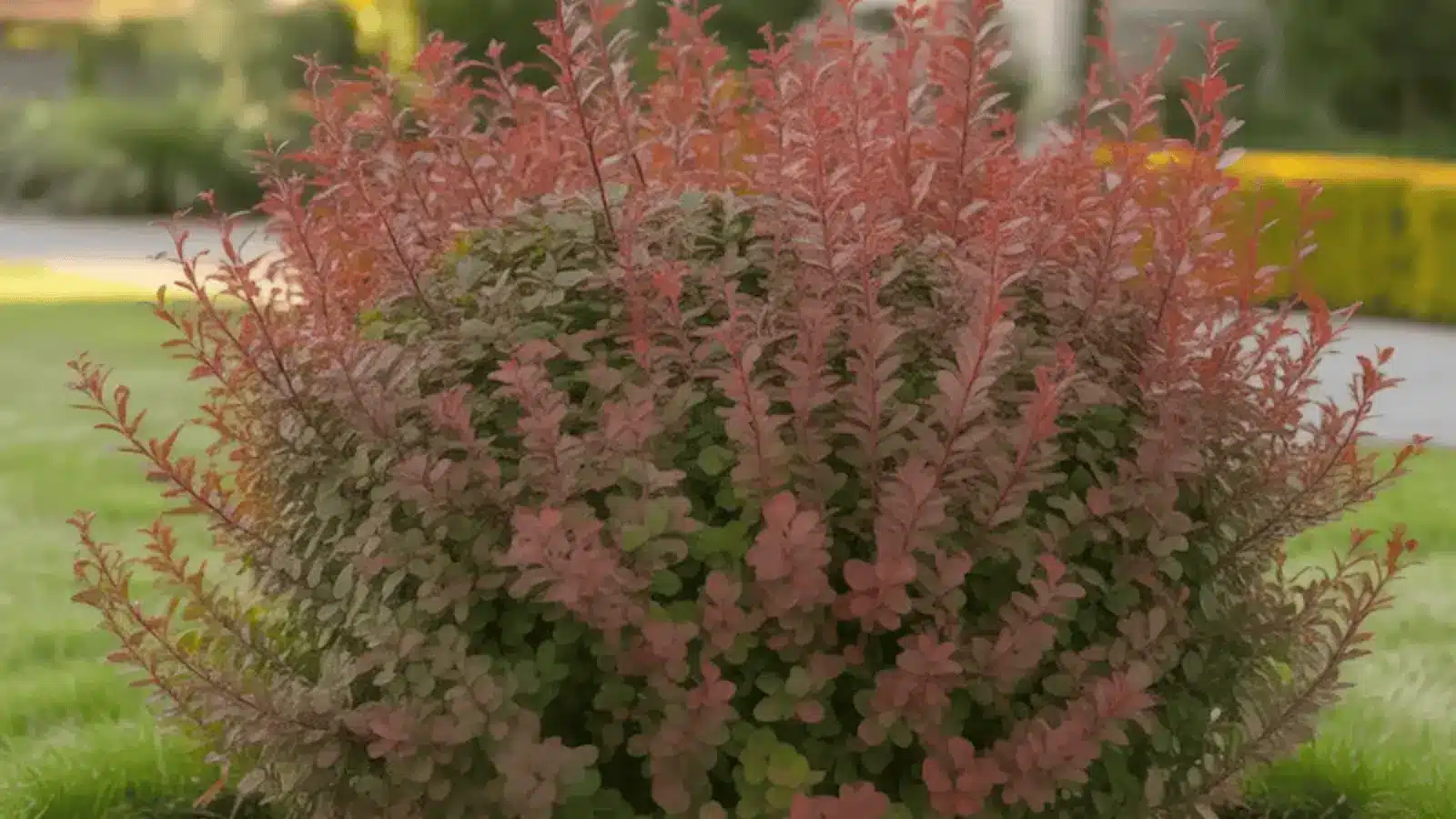
Barberry is one of the most adaptable shrubs you can plant. It tolerates drought, poor soil, heat, and cold without much complaint. The thorny branches also make it a natural deterrent for unwanted foot traffic along borders or property edges.
Bold foliage in deep red, gold, or green adds strong color contrast to your yard even when it is not in bloom.
- USDA Zones: 4–8
- Bloom Time: Spring (small yellow flowers)
16. Knock Out Rose
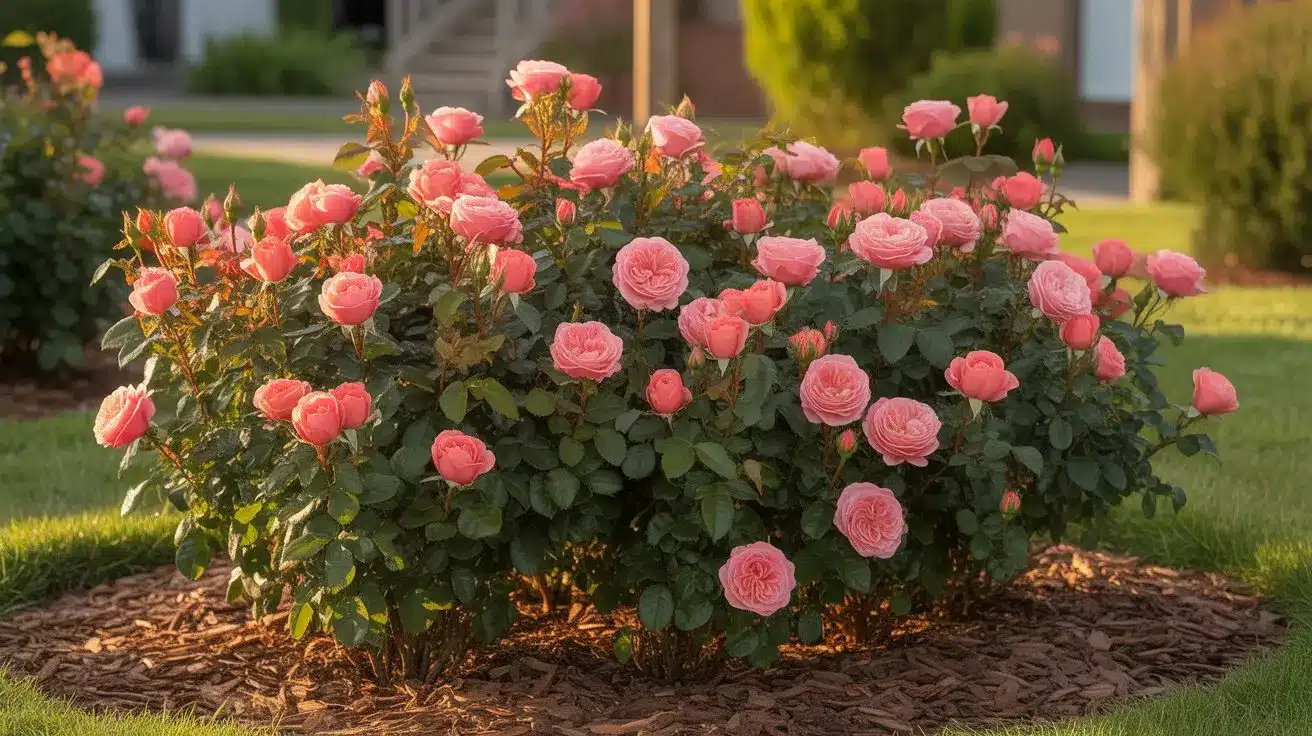
Knock Out Roses are one of the easiest flowering shrubs you can grow. Unlike traditional roses, they resist common diseases on their own and rebloom continuously from spring through fall without any deadheading.
Once established, they handle heat and drought well and stay compact with very little pruning needed.
- USDA Zones: 4–9
- Bloom Time: Spring through fall
17. Ninebark
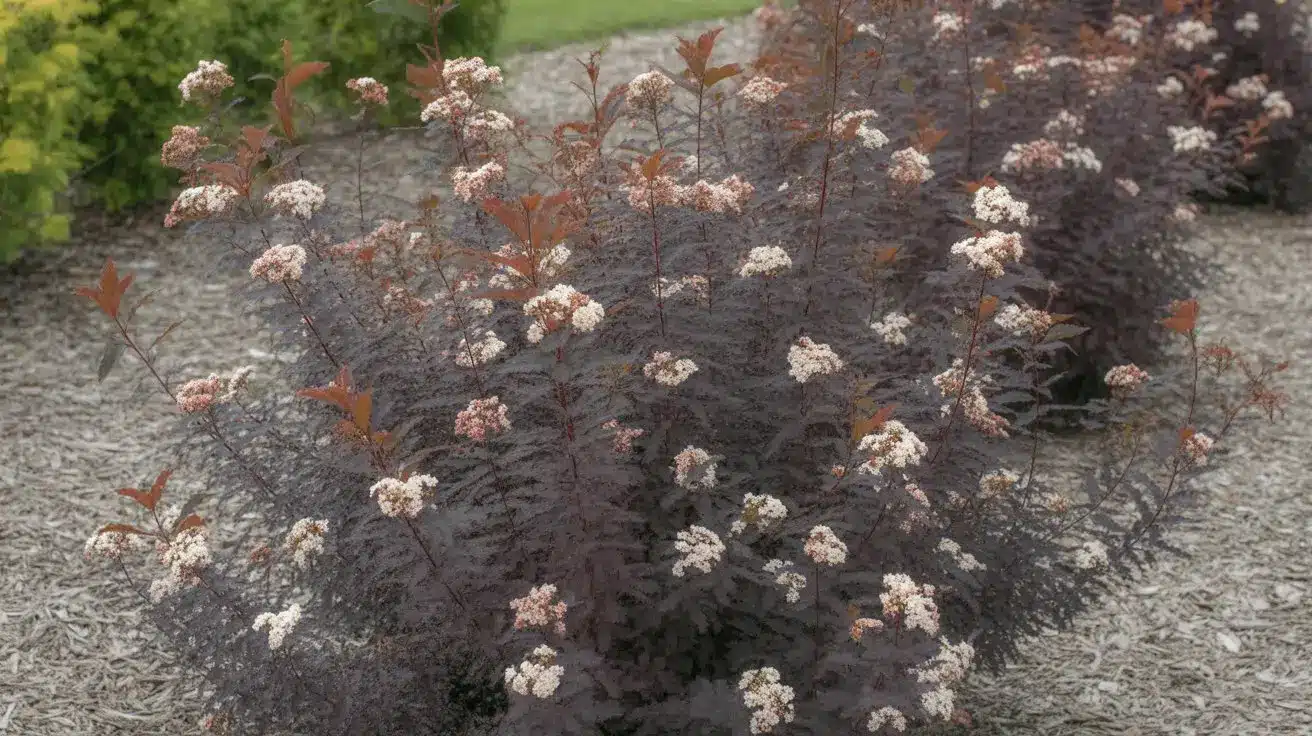
Ninebark is a tough, native shrub that thrives even in poor soil and harsh conditions. It offers year-round interest, clusters of small white or pink flowers in late spring, bold burgundy or gold foliage through summer, and peeling cinnamon-colored bark in winter.
Dwarf varieties stay manageable at 3–5 feet with almost no care.
- USDA Zones: 2–8
- Bloom Time: Late spring to early summer
What to Look for When Buying Low-Maintenance Shrubs
Picking the right shrub at the nursery is just as important as planting it correctly. A healthy plant from the start means less trouble later. Here is what to check before you buy:
| What to Check | What to Look For | Why It Matters |
|---|---|---|
| Roots | Healthy roots that are not circling the pot or growing through drainage holes | Prevents root-bound plants and helps establish faster after planting |
| Leaves | Full, green foliage with no yellowing, spots, or wilting | Indicates good overall plant health |
| Stems | Firm, clean stems without cracks, soft spots, or discoloration | Reduces the risk of disease or structural weakness |
| Size | Mid-sized shrubs rather than oversized specimens | Easier to establish, often healthier, and more budget-friendly |
| Plant Label | USDA hardiness zone matches your growing area | Increases the chances of long-term survival and low maintenance |
Taking five minutes to check these things before you buy saves a lot of time and money later.
Pro Tips for Growing Shrubs
Even low-maintenance shrubs need a little care in the beginning to get established the right way. A few simple habits in the first growing season can make the difference between a shrub that struggles and one that thrives for years.
1. Watering Schedule
Water deeply once or twice a week during the first growing season. A slow, deep soak encourages roots to grow down into the soil, which makes the plant far more drought-tolerant over time.
Always water at the base, not the leaves, to reduce disease risk. Here is what to keep in mind based on the season:
- Spring and fall: Once a week is usually enough
- Summer heat: Water twice a week during dry spells longer than two weeks
- After year one: Most shrubs only need water during extended dry periods
A soaker hose for 30 to 45 minutes works much better than a quick sprinkler pass.
2. Mulching
A 2 to 3 inch layer of mulch around the base does three things at once, holds moisture, regulates soil temperature, and suppresses weeds. Use organic options like shredded bark, wood chips, or pine needles for the best results.
A few rules to follow:
- Keep mulch a few inches away from the stem to prevent rot
- Refresh the layer once a year, ideally in spring
- Never pile mulch against the trunk; this traps moisture and invites disease
3. Pruning at the Right Time
Most shrubs need very little pruning, but timing matters more than how much you cut. Pruning at the wrong time can cost you a full season of blooms.
Follow this simple guide:
- Spring bloomers (lilac, spirea, forsythia): Prune right after flowers fade
- Summer and fall bloomers (hydrangea, rose of sharon): Prune in late winter before new growth starts
- Evergreens (boxwood, juniper, yew): Light shaping in early spring or midsummer
Always use clean, sharp pruners and remove dead or crossing branches first before shaping.
4. Fertilizing
Most established shrubs do not need heavy feeding. Too much fertilizer pushes fast, soft growth that attracts pests and is more vulnerable to frost damage. Less is more here.
- Use a balanced slow-release granular fertilizer like 10-10-10 in early spring
- Water it in well after applying
- Skip fertilizing after midsummer; late growth does not harden off before winter
- If your soil is already healthy, compost at planting time may be all your shrubs ever need
5. Soil Preparation
Planting into unprepared soil is a shortcut that always costs more time and effort later. Loosen the soil at least 12 inches deep and mix in compost to improve drainage and moisture retention.
Most shrubs prefer a pH between 6.0 and 7.0, while azaleas and inkberry holly do better in slightly more acidic soil around 5.0 to 6.0.
- Loosen soil at least 12 inches deep before planting
- Mix compost into the planting area to improve structure, drainage, and nutrients
- Most shrubs prefer a pH between 6.0 and 7.0 — test before planting if unsure
- Azaleas and inkberry holly prefer more acidic soil around 5.0 to 6.0
Getting the pH right from the start helps shrubs absorb nutrients properly and reduces future problems.
6. When to Plant
Timing your planting correctly gives new shrubs the best chance of settling in before facing heat, cold, or drought stress.
- Early spring: Gives roots a full season to establish before summer heat
- Early fall: Cooler air reduces stress while soil stays warm enough for root growth
- Avoid: Midsummer planting or planting just before a hard frost
If you must plant in summer, water more frequently and add extra mulch to protect the roots.
7. Seasonal Maintenance at a Glance
A simple seasonal routine keeps shrubs healthy without turning yard work into a second job. A few minutes each season is all it takes.
- Spring: Refresh mulch, apply fertilizer, and prune winter damage
- Summer: Water during dry spells, check for pests monthly
- Fall: Stop fertilizing, clean up fallen leaves, and add mulch around young plants
- Winter: Leave shrubs alone, avoid heavy pruning until spring
These habits take very little time but make a big difference in the long run. Get them right from the start, and your shrubs will take care of themselves for years to come.
Conclusion
Low-maintenance shrubs make it easy to have a yard that looks great without constant work. When you pick shrubs that match your USDA zone, sunlight, and soil type, they stay healthy with very little effort on your part.
Focus on drought-tolerant, pest-resistant varieties that fit your space and climate. The right shrub in the right spot means less watering, less pruning, and fewer problems season after season.
Pick one or two from this list and get them in the ground this season. Small choices like these add up to a yard you’ll actually enjoy spending time in.
Found this helpful? Have a question about a specific shrub for your yard? Drop it in the comments below, I’d love to help you find the right fit!
Frequently Asked Questions
How Long Does It Take for Low-Maintenance Shrubs to Get Established?
Most shrubs take one full growing season to establish. Water regularly that first year, and they become largely self-sufficient after that.
Can Low-Maintenance Shrubs Survive Winter without Protection?
Most are cold-hardy within their USDA zones. Younger plants benefit from a mulch layer in their first winter for added insulation.
How Many Shrubs Should I Plant Together for Privacy Screening?
Plant shrubs 2 to 3 feet apart, depending on mature width. A staggered double row gives you the densest coverage
Do Low-Maintenance Shrubs Attract Pollinators?
Yes. Flowering varieties like spirea, weigela, and rose of sharon attract bees and butterflies. Evergreens provide shelter and nesting spots for birds.
Can I Grow Low-Maintenance Shrubs in Containers?
Yes. Dwarf lilac, potentilla, and spirea do well in large containers. Choose a pot at least 12 to 16 inches wide with good drainage.