Ask anyone about juneberries, and you’ll mostly get a blank stare. And honestly, that’s a little surprising given how wonderful they are.
Most people have walked right past a juneberry bush without ever knowing it.
So to answer the question sitting in your head, yes, juneberries are completely real.
Coming up, we’re talking about what they actually are, where they grow, what they taste like, and all the little reasons people who do know about them absolutely swear by them.
What is a Juneberry?
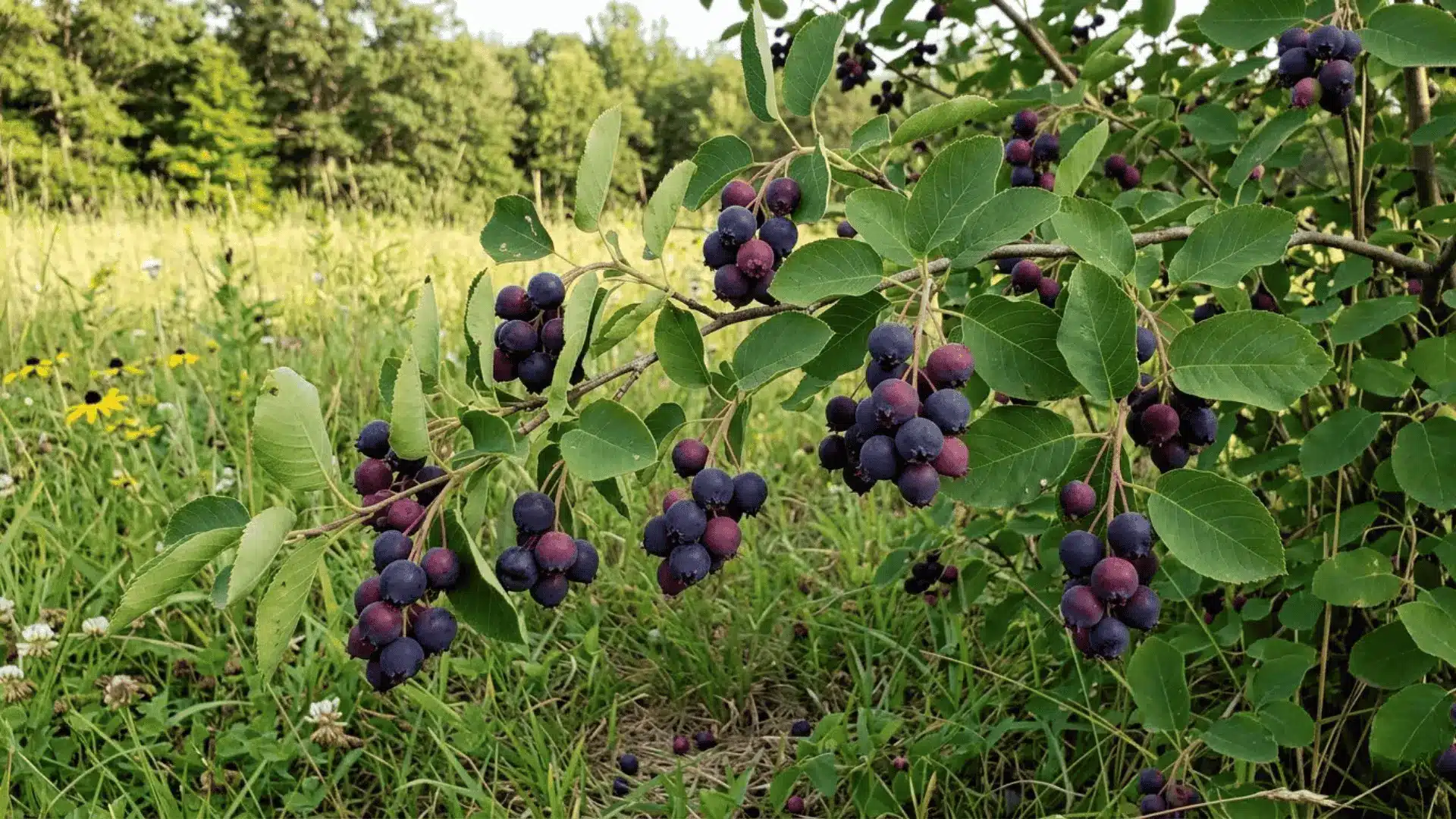
Juneberry belongs to the rose family, Rosaceae, and grows on shrubs or small trees that are pretty easy to spot once you know what you’re looking for.
The plant itself is as pretty as the fruit, which makes it a quiet favorite in both wild landscapes and home gardens.
You might have already come across this fruit without realizing it, because juneberries go by quite a few names.
Serviceberry, Shadbush, and Saskatoon berry are all the same fruit, just called differently depending on where you are in the world.
Where Do Juneberries Grow?
Juneberries are native to North America, growing across both the United States and Canada.
They naturally thrive in temperate climates, and you’ll usually find them along forest edges, open meadows, and wild landscapes where they’ve been quietly growing for centuries.
They aren’t particularly fussy plants, which is part of what makes them so charming. The fruit ripens somewhere between late spring and early summer, right around June, which is exactly how they got their name.
If you’re lucky enough to live near a patch, that short harvest window is genuinely worth watching out for.
What Do Juneberries Taste Like?
If you’ve been curious about juneberries but never had the chance to try one, the flavor is genuinely one of the nicest surprises. They are partly familiar and unique, making them memorable.
| Feature | Juneberry | Blueberry | Blackberry |
|---|---|---|---|
| Sweetness | Rich and deep | Mild to sweet | Sweet with tartness |
| Undertones | Nutty, almond-like | Floral, earthy | Earthy, slightly tangy |
| Texture | Soft, slightly grainy | Smooth, firm | Juicy, seedy |
| Appearance | Dark purple to reddish | Blue-purple | Deep black-purple |
| Overall Profile | Complex, warm sweetness | Light and fresh | Bold and juicy |
Are Juneberries Good for You?
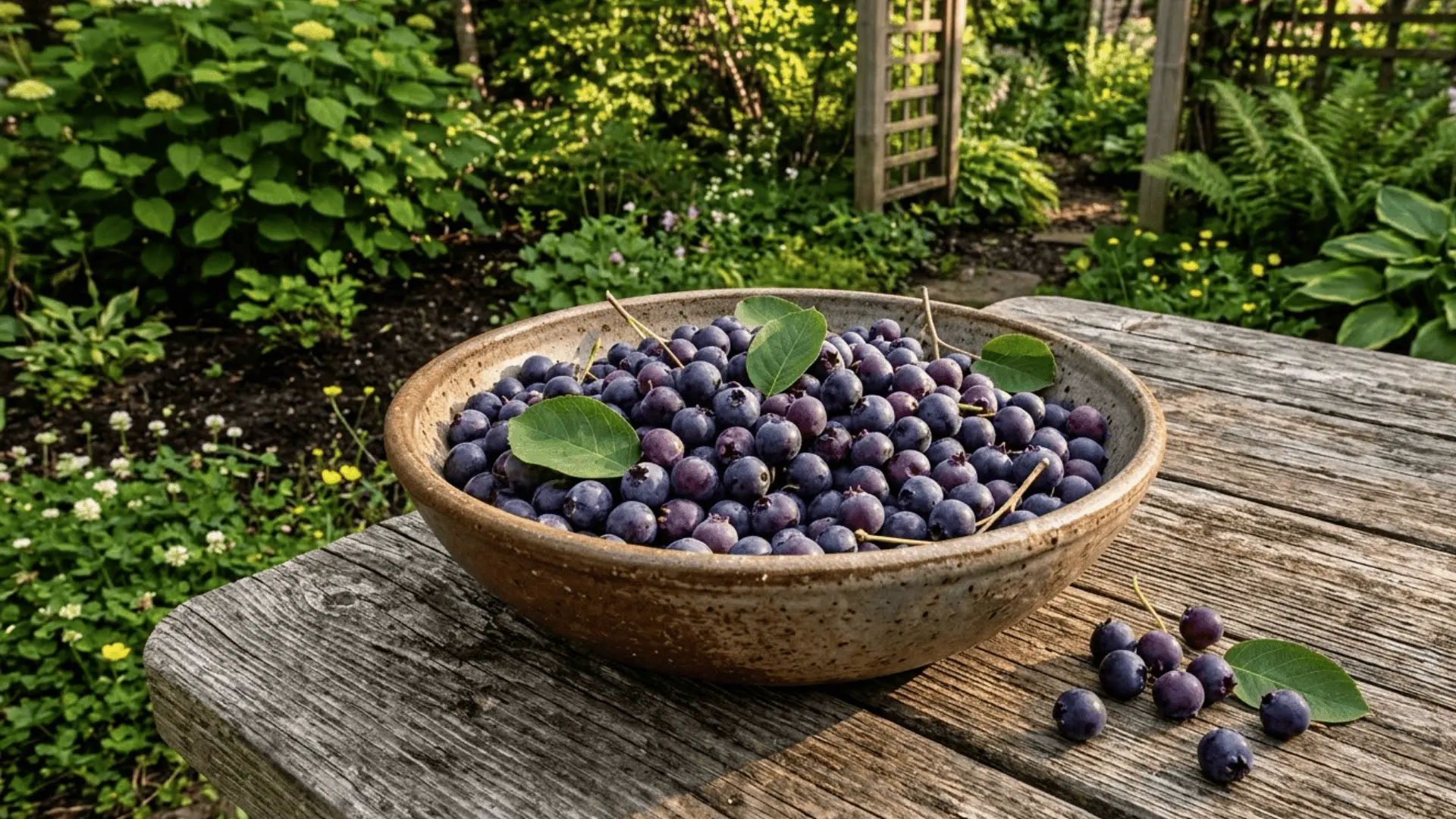
Juneberries aren’t just a pretty fruit; they actually bring a lot to the table nutritionally. Small as they are, they pack quite a bit of goodness into every handful.
Nutritional Benefits
Juneberries are loaded with a surprising range of nutrients that you wouldn’t necessarily expect from such a small fruit.
- Antioxidants: Help your body fight oxidative stress and keep your cells healthier over time.
- Dietary Fiber: Supports a well-functioning digestive system and keeps you feeling fuller for longer.
- Vitamin A: Contributes to healthy vision and skin.
- Vitamin C: Gives your immune system a reliable, natural boost.
- Minerals (Calcium and Iron): Support bone health and healthy blood circulation.
Health Benefits
Beyond the individual nutrients, juneberries tie together into a fruit that genuinely supports your overall wellness.
- Digestive Health: The fiber content keeps your gut happy and your digestion running smoothly.
- Immune Support: Vitamin C works consistently in the background to strengthen your body’s natural defenses.
- Heart Health: The antioxidants in juneberries have been linked to reduced inflammation and better cardiovascular health over time.
How are Juneberries Used?
Juneberries are one of those fruits that translate beautifully across different uses. From keeping things simple to getting a little creative in the kitchen, they fit right in.
Fresh Consumption
The easiest way to enjoy juneberries is straight off the bush. They’re soft, sweet, and ready to eat just as they are, no prep needed.
A lot of people compare the experience to eating a really good blueberry, only with that subtle nuttiness that makes juneberries a little more interesting. When they’re in season, eating them fresh is genuinely hard to beat.
Popular Recipes
Juneberries are surprisingly versatile in the kitchen and show up in quite a few beloved recipes.
| Recipe | Flavor Contribution | Best Form to Use | Similarity To |
|---|---|---|---|
| Jams and Jellies | Deep, rich sweetness | Cooked with sugar | Blueberry jam |
| Pies and Desserts | Warm, nutty undertones | Fresh or frozen | Blueberry pie |
| Smoothies | Naturally sweet base | Fresh or frozen | Mixed berry smoothie |
Commercial Uses
Juneberries haven’t quite made it to mainstream grocery shelves yet, but they have their own quiet presence in the market.
- More commonly found at local farmers’ markets during their short seasonal window.
- Occasionally available at specialty or health food stores in select regions.
- Sold in frozen or processed forms like jams by small-scale or artisanal producers.
- Still largely considered a seasonal, regional fruit rather than a commercial staple.
Why Aren’t Juneberries More Popular?
For a fruit this good, it’s fair to wonder why juneberries haven’t taken off the way blueberries or blackberries have.
A few things work against them. Their shelf life is very short, which makes large-scale distribution tricky.
Commercial farming of juneberries is still quite limited, so supply never really builds up enough to meet broader demand.
And then there’s simply the matter of awareness; most people have never heard of them, so there’s no demand pushing things forward either.
It’s a quiet cycle that keeps this lovely fruit well off the mainstream radar.
Can You Grow Juneberries at Home?
Juneberries are actually one of the more low-maintenance fruits you can grow at home, which makes them a great starting point even for beginner gardeners. They’re hardy, adaptable, and don’t ask for much beyond the basics.
If you have a reasonably sunny spot and decent soil, this juneberry tree guide covers the finer details of care and harvest worth knowing before you get started.
Basic Growing Tips
Getting started with juneberries at home is simpler than most people expect.
- Plant in full to partial sunlight for the best fruit yield.
- Use well-drained, slightly acidic soil for healthy root growth.
- Water consistently but moderately, avoiding waterlogged conditions.
- Prune occasionally to encourage new growth and better harvests.
Are Juneberries Safe to Eat?
Juneberries are completely safe for human consumption and have been eaten for centuries by indigenous communities across North America.
There’s nothing to worry about here, though the same cannot be said for every berry that looks similar. Juneberries are often confused with juniper berries, which are a different story safety-wise.
For pets, juneberries are generally considered non-toxic, but moderation is still the sensible approach since every animal reacts differently to new foods.
Eating juneberries is as safe and wholesome as reaching for any other common berry.
Common Myths About Juneberries
Juneberries have been under the radar long enough to collect a few misconceptions along the way. Here’s what’s actually true.
Myth 1: Juneberries Aren’t Real Fruits
Fact: Completely false. Juneberries are very much real and have been growing across North America for centuries. They’re well-documented botanically and have a long history of culinary and medicinal use.
Myth 2: They Only Grow in the Wild
Fact: Not entirely. While juneberries grow wild along forest edges and open landscapes, they are also suitable for home gardens and cultivated spaces, making them accessible to anyone willing to grow them.
Myth 3: Juneberries Taste Bland
Fact: This one usually comes down to timing and ripeness. A fully ripe juneberry is sweet, nutty, and genuinely delicious. Catching them before they’re ready is where the bland reputation likely comes from.
Final Thoughts
So, is juneberry a real fruit? Absolutely, and a rather wonderful one at that. It’s the kind of fruit that rewards the people who take a little time to discover it.
The sweet, nutty flavor, the ease of growing it at home, the rich history behind it, juneberries genuinely have a lot going for them.
They just need a little more of the spotlight.
If you’ve tried juneberries before or you’re now curious enough to go looking for them, drop a comment below and share your thoughts!