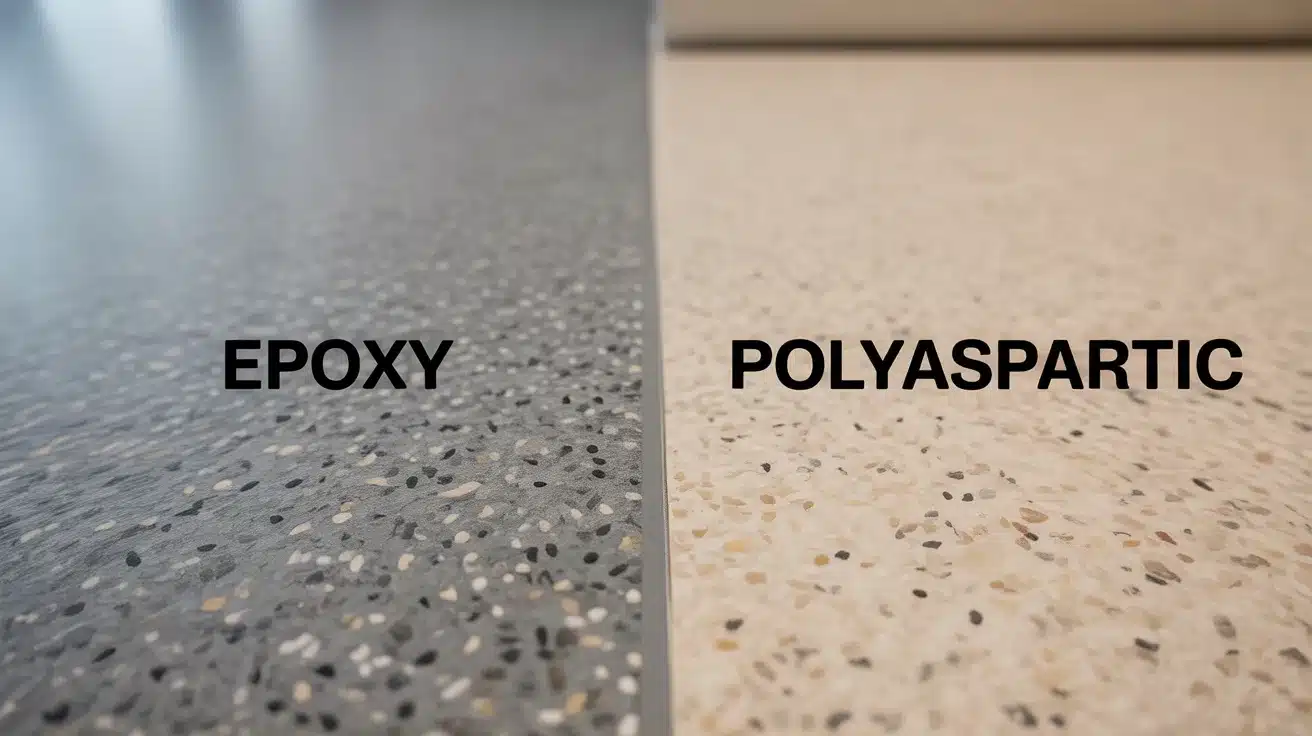
Picking the right floor coating sounds simple. Then you end up in a hardware store staring at two very different products. No one tells you which one actually holds up.
Epoxy has been around for decades. Polyaspartic is newer, costs more, and claims better results. But does it live up to that?
It really comes down to your space, your budget, and how long you need the floor to last.
This guide gives you a straight comparison of polyaspartic vs epoxy floor coatings. No confusing chemistry.
No sales pitch. Just a clear look at what each one does, where it works, and which one fits your needs.
What Is Epoxy Floor Coating?
Epoxy is a resin-based floor coating made by mixing epoxy resin with a hardener. When the two parts combine, they create a hard, rigid surface that bonds directly to concrete.
It has been used in garages, basements, and warehouses for decades. You can get it in many colors and finishes, and decorative chips can be added for extra texture and style.
It is widely available and costs less than most other professional-grade coatings.
Pros and Cons of Epoxy Floor Coating
Epoxy has been a go-to floor coating for years, and it is easy to see why. But like most things, it comes with trade-offs worth knowing before you commit.
| Pros | Cons |
|---|---|
| Lower upfront cost | Yellows under UV light and sunlight |
| Wide color and design options | Takes 24 to 72 hours to fully cure |
| Good chemical resistance | Brittle when dry, it can crack under heavy impact |
| DIY-friendly option | Sensitive to humidity during application |
| Works well in controlled indoor settings | Higher maintenance and recoating costs over time |
What Is Polyaspartic Floor Coating?
Polyaspartic is a type of polyurea coating first developed in the 1990s. It was originally used on steel bridges for corrosion protection and later adapted for concrete floors.
Today, it is widely used in garages, retail stores, showrooms, and industrial spaces. It dries clear with a glossy finish and can be colored or topped with decorative chips.
Compared to epoxy, it cures much faster and holds up better against UV light and physical wear.
Pros and Cons of Polyaspartic Floor Coating
Polyaspartic costs more than epoxy, but the list of advantages is hard to ignore. Here is a quick look at what you gain and what to watch out for.
| Pros | Cons |
|---|---|
| Cures in 1 to 2 hours, same-day use | Higher upfront cost |
| UV stable, no yellowing over time | Requires professional installation in most cases |
| Flexible, resists chips and cracks | Short working window for applicators |
| Can be applied in hot and cold conditions | Can be slippery without a non-slip additive |
| Very low VOCs, nearly odorless | Less available for DIY projects |
Polyaspartic vs Epoxy: 6 Key Differences
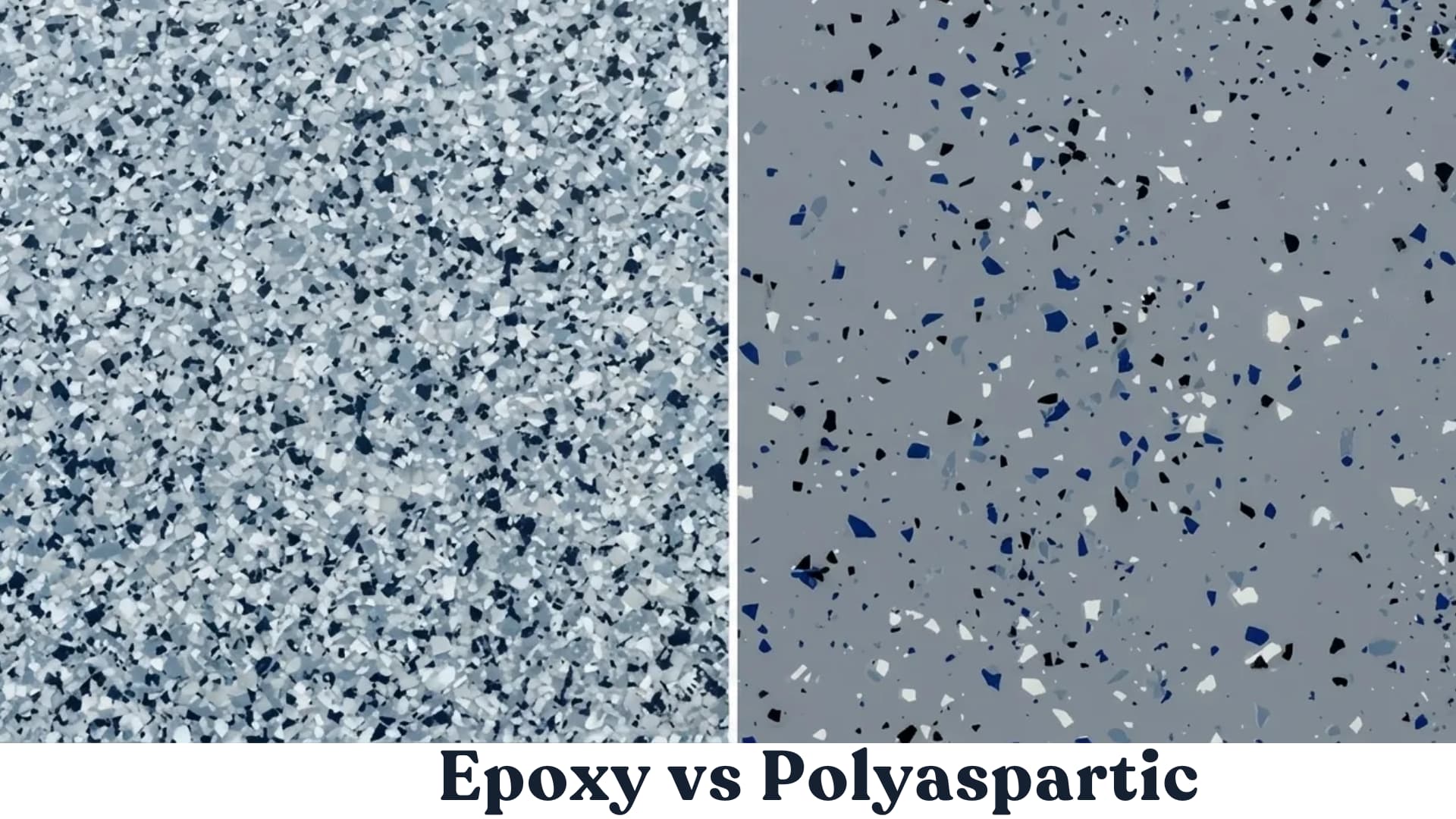
Both coatings protect concrete floors, but they do it in very different ways. Here are the six key differences that matter most when choosing between the two.
1. Curing Time
Epoxy takes 24 to 72 hours to fully cure. Polyaspartic can be walked on in 30 to 60 minutes and driven on within 24 hours. For anyone who needs the floor back in use fast, this difference alone can decide the choice.
2. UV Resistance
Epoxy is not UV stable. Over time, sunlight causes it to turn yellow and look worn. Polyaspartic stays clear and holds its color for years, even in sunlit garages or outdoor spaces.
3. Durability
Epoxy dries hard and rigid, which makes it more likely to crack under heavy impact. Polyaspartic stays slightly flexible when cured. That flexibility helps it resist chips, scratches, and scuffs much better over time.
4. Temperature and Weather Tolerance
Epoxy needs controlled conditions during application. Humidity and extreme temperatures can cause it to fail. Polyaspartic can be applied over a much wider temperature range, making it suitable for year-round installations in most climates.
5. Cost Over Time
Epoxy costs less upfront and is easy to find at most hardware stores. Polyaspartic costs more initially, but its longer lifespan and lower maintenance requirements often make it the better financial choice over time.
6. Odor and VOC Levels
Epoxy has a strong odor that can linger for hours after application. Polyaspartic has very low VOC levels and is nearly odorless. This makes it a better fit for homes with children, pets, or anyone sensitive to fumes.
How Epoxy and Polyaspartic Are Applied to Your Floor
The way each coating is applied is quite different, and knowing the steps helps you better prepare your space. Here is how each process works from start to finish.
Epoxy Installation:
- Surface Prep: The concrete is ground or shotblasted to open its pores for better bonding.
- Primer Coat: A primer is applied first to ensure the epoxy adheres firmly to the concrete surface.
- Base Color Coat: The color coat is spread evenly across the entire prepared floor.
- Decorative Chips: Color flakes are scattered onto the wet base coat for texture and style (optional).
- Top Coat Layers: Two layers of polyurethane are applied on top to seal and protect the floor.
- Cure Time: The floor needs 24 to 72 hours before it is safe to walk or drive on.
Polyaspartic Installation:
- Surface Prep: The concrete undergoes the same grinding process as the epoxy before anything else is applied.
- Coating Application: The product is poured in ribbons directly across the prepared concrete floor.
- Spreading: A squeegee or roller is used to push the coating evenly across the entire surface.
- Decorative Chips: Color flakes are broadcast onto the wet surface for added grip and appearance (optional).
- Second Coat: The second coat goes on once the first layer sets, usually within an hour.
- Ready to Use: The floor can be walked on in 30 to 60 minutes and driven on within 24 hours.
Important: Both coatings require a completely dry concrete surface. Always check moisture levels before starting either installation. Skipping this step is the most common reason coatings fail.
DIY vs Professional Installation: What You Need to Know
Epoxy is often sold as a DIY product, and technically, you can apply it yourself. But the results between a DIY job and a professional installation are rarely the same.
| Factor | DIY (Epoxy) | Professional Installation |
|---|---|---|
| Skill level required | Basic tools, some prep knowledge | Trained, certified installers |
| Surface preparation quality | Often incomplete or rushed | Proper grinding equipment and technique |
| Product quality | Hardware store grade (lower solids %) | Professional grade (85 to 100% solids) |
| Risk of peeling or bubbling | Higher, especially in humid conditions | Much lower with correct prep |
| Polyaspartic as a DIY option | Very limited due to fast cure time | Highly recommended for best results |
| Long-term outcome | Moderate, depends heavily on prep | Consistent, durable, and reliable |
How Much Care Do Epoxy and Polyaspartic Really Need?
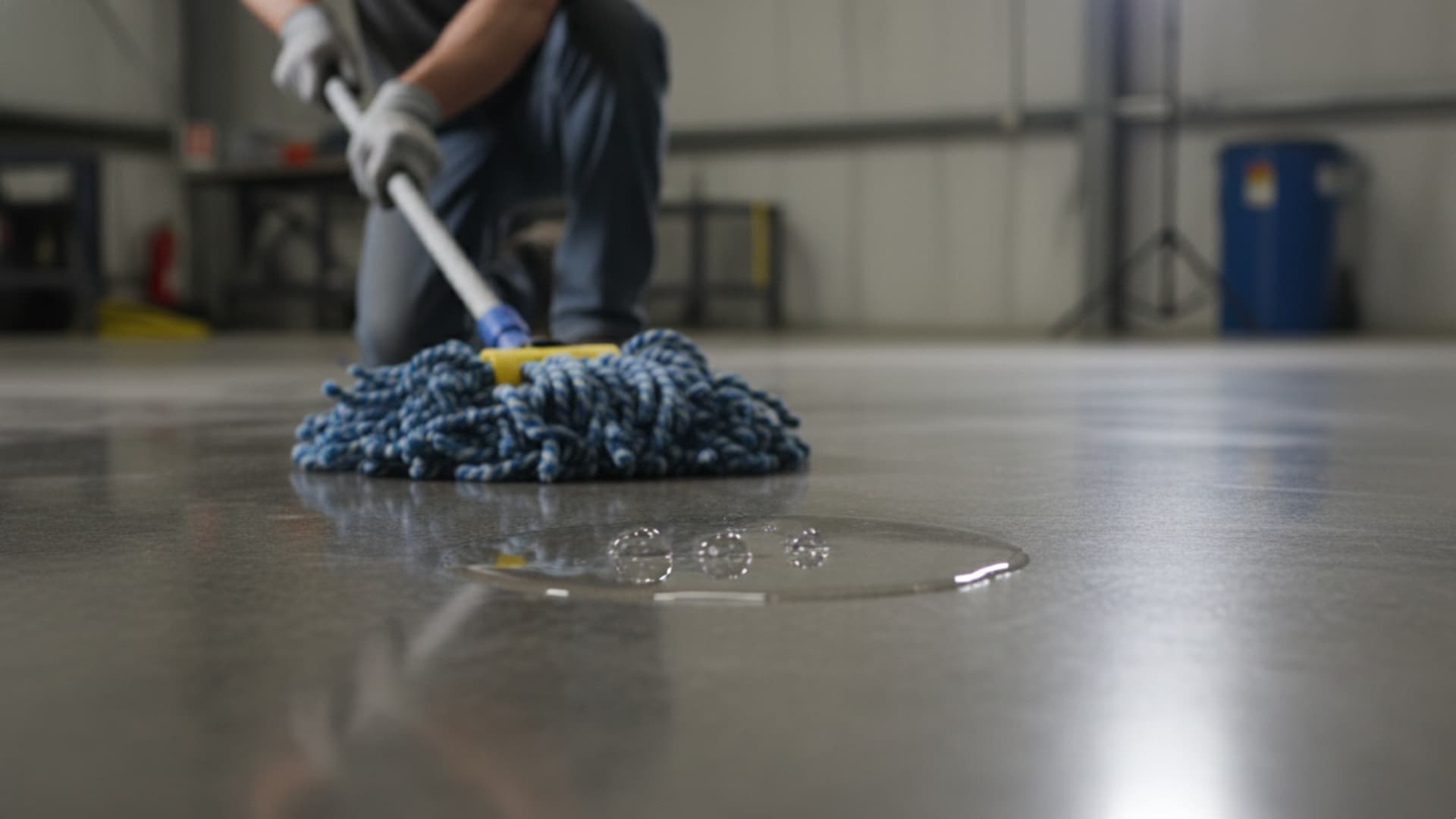
Once your floor is coated, the work is not quite over. How you care for it directly affects how long it lasts and how well it keeps looking good.
Epoxy Floor Maintenance:
- Sweep regularly: Dirt and grit scratch the surface over time if left sitting
- Clean spills quickly: Oil, gasoline, and chemicals can stain if not wiped up fast
- Avoid dragging heavy items: Sharp or heavy objects cause surface damage
- Plan for recoating: Expect to recoat every 5 to 10 years in high-traffic areas
Polyaspartic Floor Maintenance:
- Sweep and mop as needed: A mild floor cleaner is all it takes for routine care
- Check for wear spots yearly: Focus on areas with heavy vehicle or foot traffic
- No regular recoating needed: It holds up much longer without extra layers
- Check traction over time: Confirm the non-slip additive still grips, especially in wet conditions
Which One Should You Choose?
If your garage gets sunlight or sees heavy daily use, go with polyaspartic. It holds up longer and needs very little upkeep. If you are on a tighter budget or planning a DIY project, epoxy is a practical choice.
It also works well in indoor spaces with little to no sunlight. And if you want the best performance, ask a professional about a hybrid system. That means epoxy as the base coat and polyaspartic as the top coat.
You get the bonding strength of epoxy with the durability and UV resistance of polyaspartic in one complete system.
Final Thoughts
At the end of the day, both coatings get the job done. Epoxy is cost-effective and works great for indoor spaces. Polyaspartic costs more upfront but holds up longer, resists yellowing, and gets your garage back in use faster.
For a sunlit garage or high-traffic floor, polyaspartic is the smarter long-term spend.
For a basement, a budget project, or a DIY job, epoxy is still a reliable choice. Want the best of both? A professional can layer epoxy underneath and polyaspartic on top.
Either way, your concrete gets real protection. Got questions about which coating is best for your floor? Drop them in the comments below.
Frequently Asked Questions
Is Polyaspartic Coating Better Than Epoxy?
For most garages, yes. Polyaspartic resists UV light, scratches, and chemicals better than epoxy and cures in a fraction of the time.
What Is the Strongest Garage Floor Coating?
A hybrid system wins here. Epoxy as the base coat, combined with a polyaspartic top coat, gives you the strongest, longest-lasting garage floor.
Is Polyaspartic Worth the Money?
If your floor takes daily wear, vehicle traffic, or sits in a sunlit space, yes. The longer lifespan and lower upkeep costs make up for the higher price.
Can Epoxy Go Over Polyaspartic?
No. Epoxy does not bond well over a polyaspartic surface. The correct order is epoxy first as the base, then polyaspartic on top.
Which Is Better, Polyurea or Polyaspartic?
Polyaspartic is actually a modified form of polyurea. Standard polyurea dries in minutes and is very hard to apply correctly. Polyaspartic slows that process, making it far more practical without sacrificing performance.