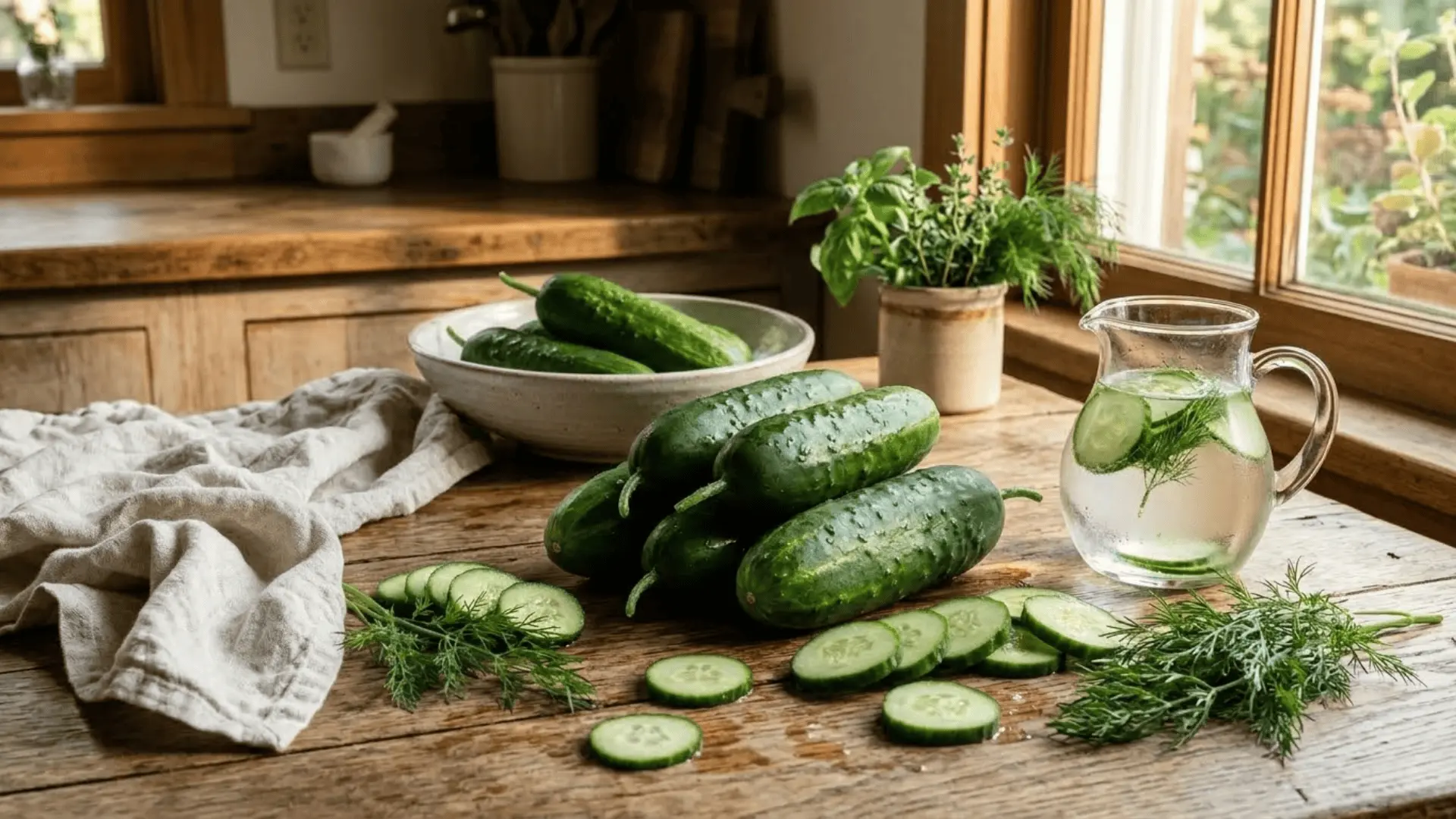
Cucumbers are one of those vegetables that just make sense for a home garden, quick to grow, easy to love, and so wonderfully versatile in the kitchen.
Slicing them into salads, pickling a fresh batch, dropping them into a glass of cold water, Cucumis sativus always finds its way to the table.
Coming up, we’re covering everything from choosing the right types of cucumbers for your space to planting, caring, and harvesting them at their very best.
Why Grow Cucumbers in Your Garden?
Cucumbers are genuinely one of the most rewarding crops you can grow at home.
They move fast, meaning you’re not waiting around for months before seeing results, and they adapt well to both garden beds and containers, so space is rarely a dealbreaker.
The flavor difference between a store-bought cucumber and one pulled fresh from your own garden is honestly worth the effort alone.
For anyone just getting into gardening, cucumbers are a solid starting point.
They’re forgiving, relatively low-maintenance, and respond well to consistent care, making the whole growing experience feel encouraging rather than overwhelming.
Types of Cucumbers
Picking the right variety before you plant makes a bigger difference than most people expect.
Here’s a look at the main types of cucumbers and what each one brings to the table.
1. Slicing Cucumbers
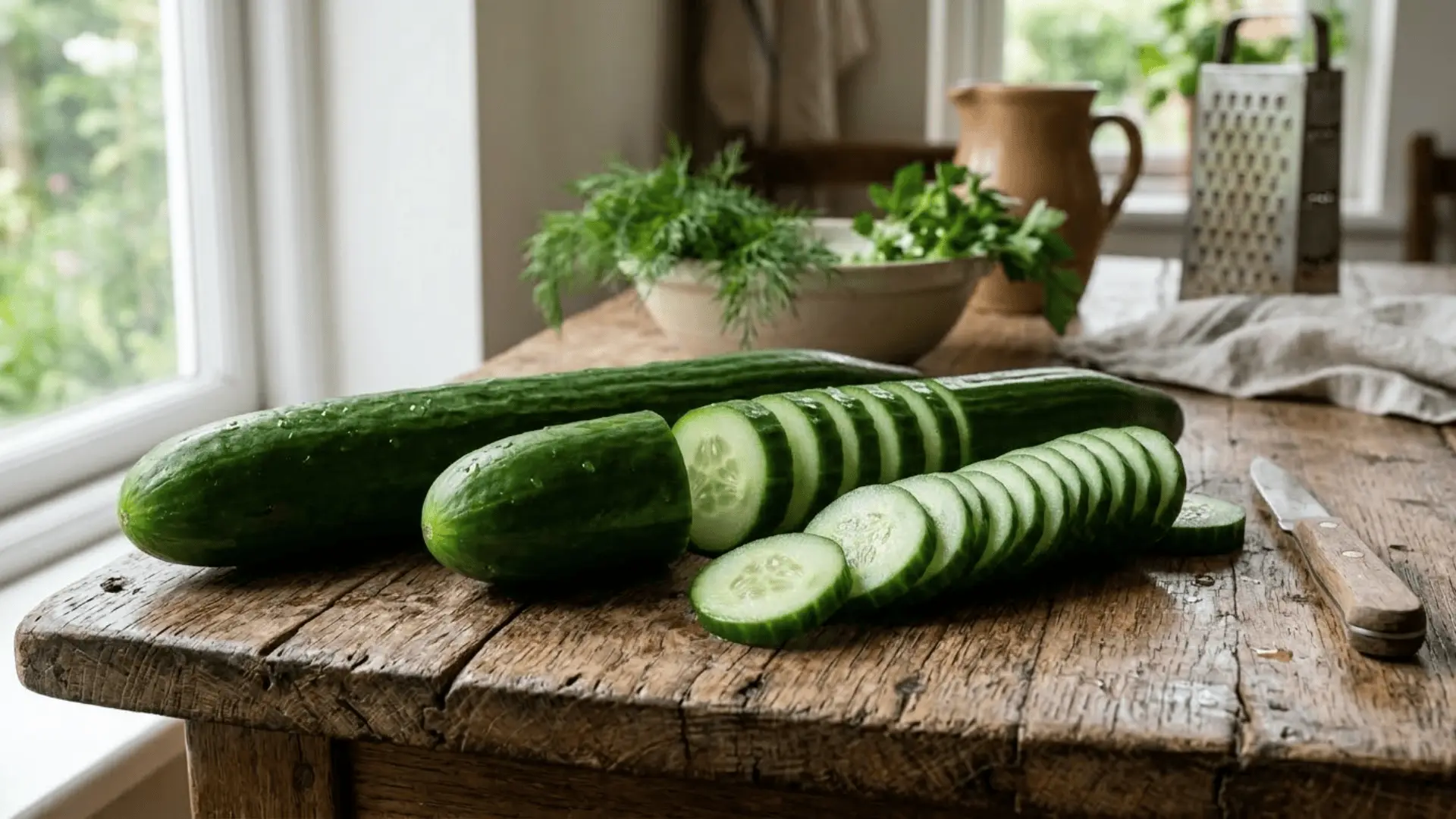
These are your classic, everyday cucumbers, the kind you reach for when putting together a salad or a fresh snack plate.
They tend to grow longer, with smooth skin and a crisp bite. Varieties like Straight Eight and Marketmore are popular picks among home gardeners for good reason.
2. Pickling Cucumbers
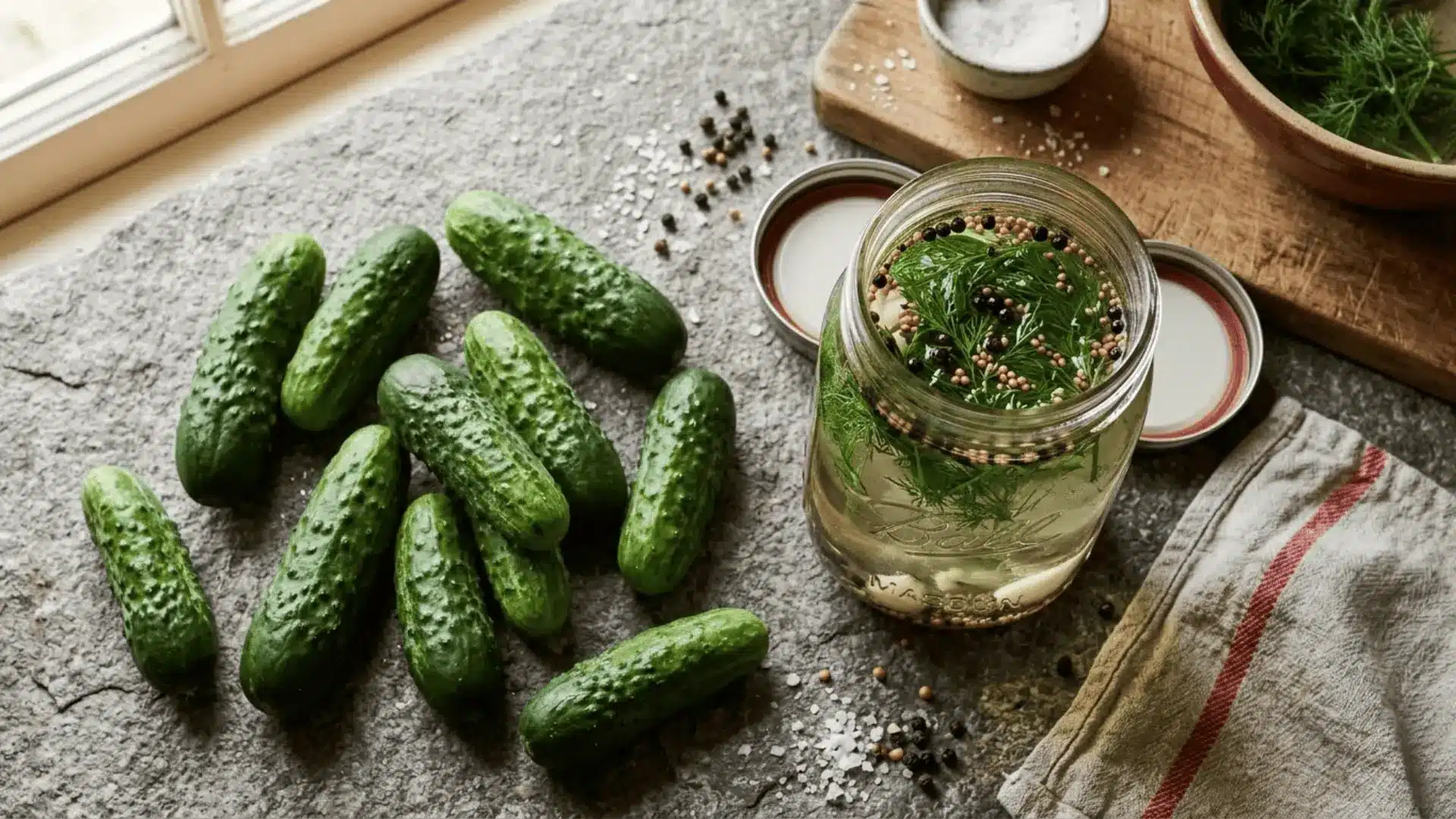
Smaller and a little bumpier than slicing varieties, pickling cucumbers are bred to hold up well in brine without turning soft or mushy.
They have a thinner skin, which helps them absorb flavor quickly. If you love having homemade pickles stocked in your fridge, this is the variety to grow.
3. Seedless or Burpless Cucumbers
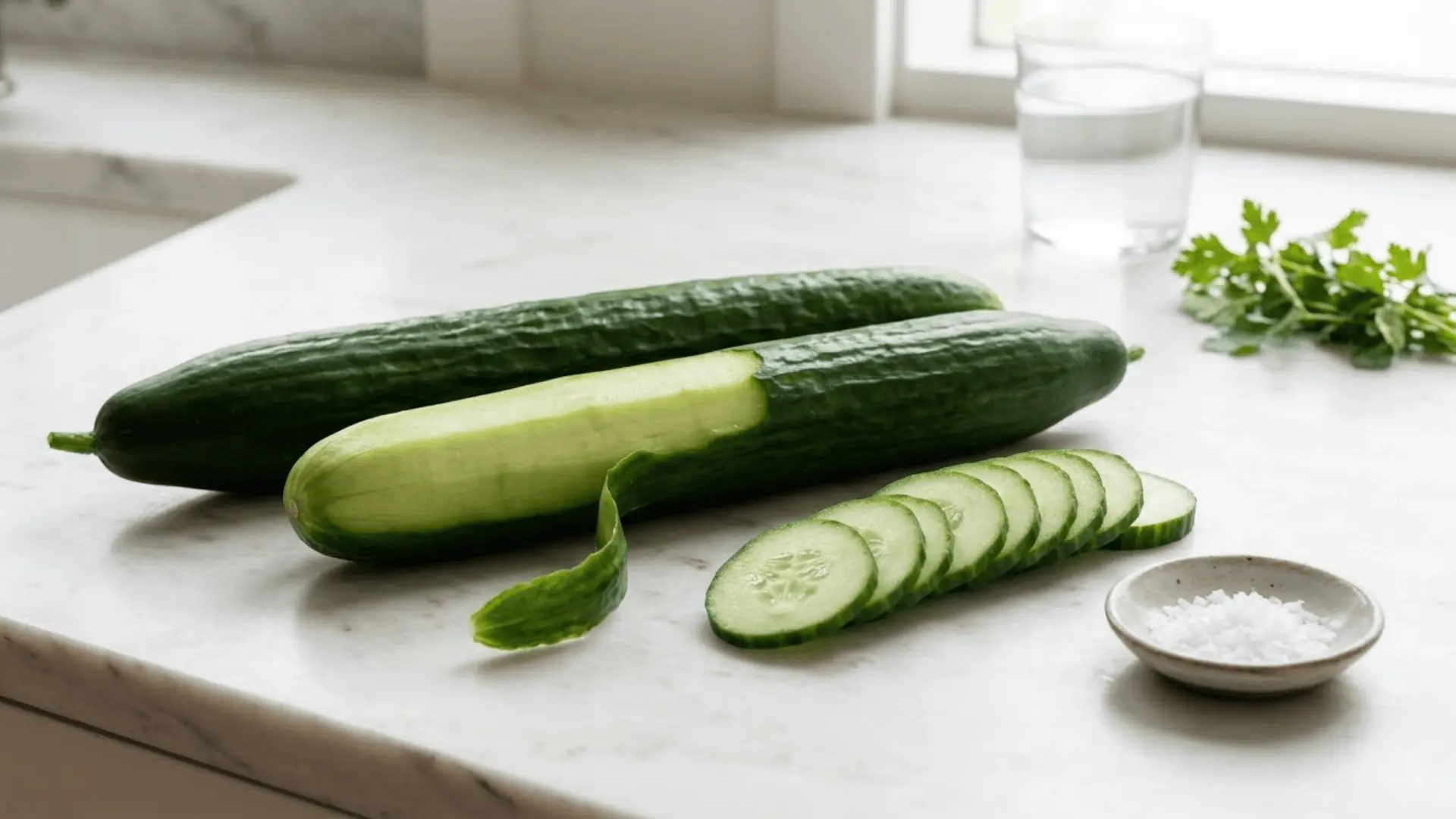
These cucumbers are known for their mild, gentle flavor and thin skin that doesn’t need peeling.
With fewer seeds and lower cucurbitacin levels, they’re much easier to digest, which is exactly where the “burpless” name comes from. English cucumbers fall into this category and are a favorite for fresh eating.
4. Bush vs. Vining Cucumbers
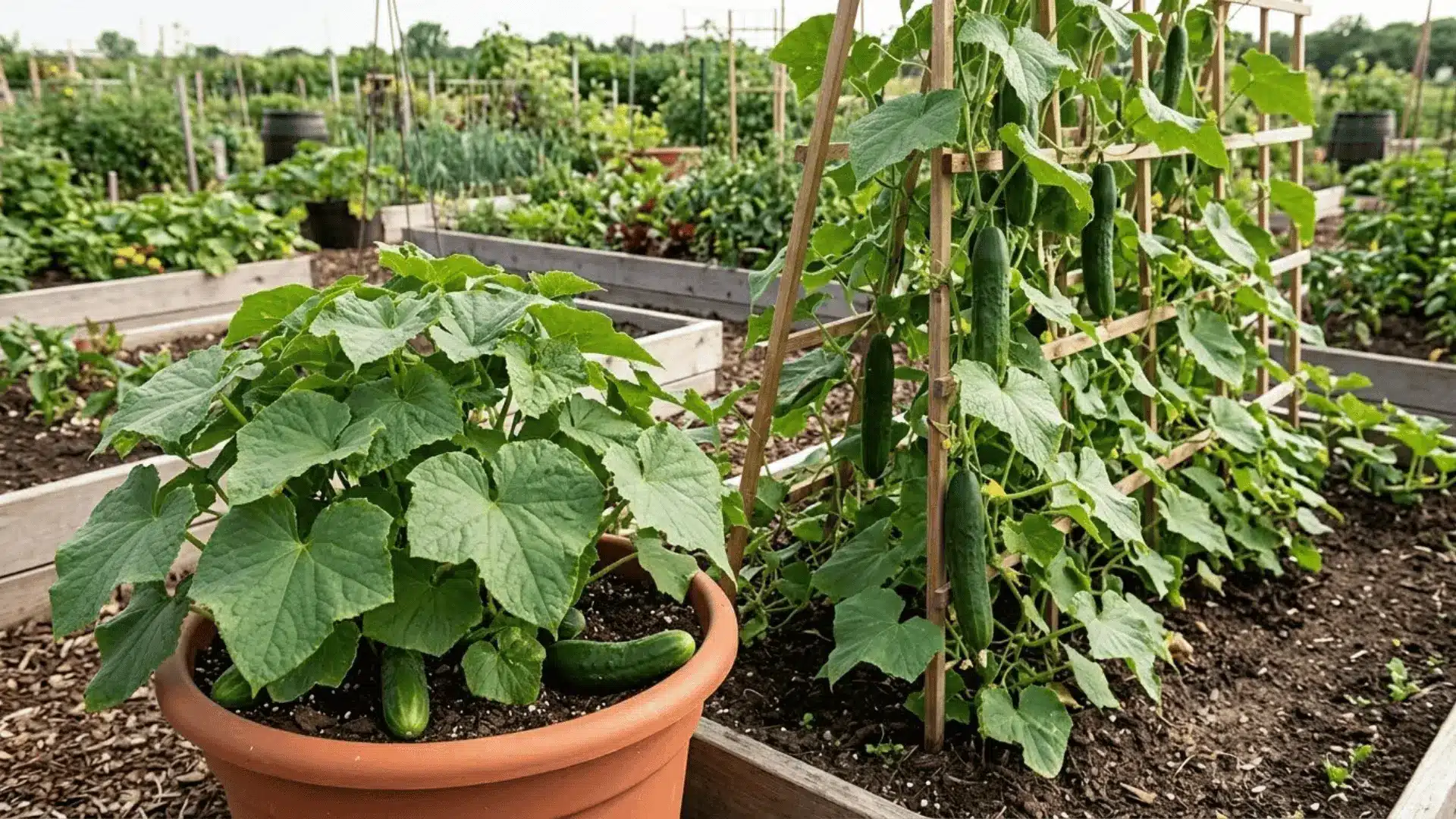
Bush cucumbers stay compact and work beautifully in raised beds, containers, or smaller garden plots. Vining cucumbers, on the other hand, spread generously and do best with a trellis or some kind of vertical support.
Vining varieties tend to produce a heavier yield, while bush types trade volume for convenience and space efficiency.
Best Growing Conditions for Cucumbers
Cucumbers are not particularly fussy, but they do have a clear preference for warm, sunny, and well-prepared growing conditions.
Get these basics right, and the plants tend to take care of the rest.
Sunlight Requirements
Cucumbers are sun-loving plants through and through. They need a solid 6 to 8 hours of direct sunlight daily to grow well and produce fruit consistently.
Planting them in a spot that gets good morning sun is ideal, as it also helps dry off any moisture sitting on the leaves, which keeps disease at bay.
Ideal Soil Conditions
Good soil makes a noticeable difference with cucumbers.
Here’s what to aim for:
- Loose, well-draining soil so roots can spread without sitting in water.
- A slightly acidic to neutral pH, ideally somewhere between 6.0 and 7.0.
- Soil enriched with compost or organic matter for steady nutrition.
- Avoid compacted or heavy clay soils, as they tend to slow growth and cause root issues.
Temperature Needs
Cucumbers are warm-weather crops and genuinely struggle in the cold.
Here’s what to keep in mind:
- Soil temperature should be at least 60°F before planting seeds or transplants.
- They grow best when daytime temperatures sit between 70°F and 90°F.
- Cold snaps and frost can damage or kill the plants quickly.
- In cooler climates, starting seeds indoors a few weeks early gives them a helpful head start.
When to Plant Cucumbers?
Timing your cucumber planting well sets the tone for the entire growing season. Get it right, and you’re looking at a healthy, productive harvest with minimal setbacks.
Planting After the Last Frost
Cucumbers are sensitive to cold, so timing your planting around the last frost date in your area is important. The soil needs to be consistently warm before seeds go in or transplants go out.
Rushing this step often leads to slow germination or stunted seedlings that never quite recover, so patience here genuinely pays off.
Starting Seeds Indoors vs. Direct Sowing
Both approaches can work well, depending on your location and prep time before the growing season. If you’re considering starting indoors, check out this guide on sowing cucumber seeds indoors before you begin.
Here’s a side-by-side look to help you figure out which one suits your setup better.
| Factor | Starting Indoors | Direct Sowing |
|---|---|---|
| Best for | Cooler climates with short growing seasons | Warmer climates with long growing seasons |
| When to start | Two to four weeks before the last frost date | After the last frost, once the soil is warm |
| Soil temperature | At least 60°F for germination | At least 60°F to 70°F for best results |
| Transplant shock | Possible if not hardened off gradually | Not applicable |
| Ease | Requires a little more attention and setup | Simpler and more straightforward |
| Root disturbance | Roots are sensitive during transplanting | No disturbance since seeds grow in place |
| Recommended for | Beginners in colder regions | Beginners in warmer, stable climates |
Step-by-Step: How to Grow Cucumbers?
Growing cucumbers is pretty straightforward once you break it down into steps. Follow this process from the beginning, and you’ll set your plants up for a genuinely strong, productive season.
Step 1: Prepare the Garden Soil
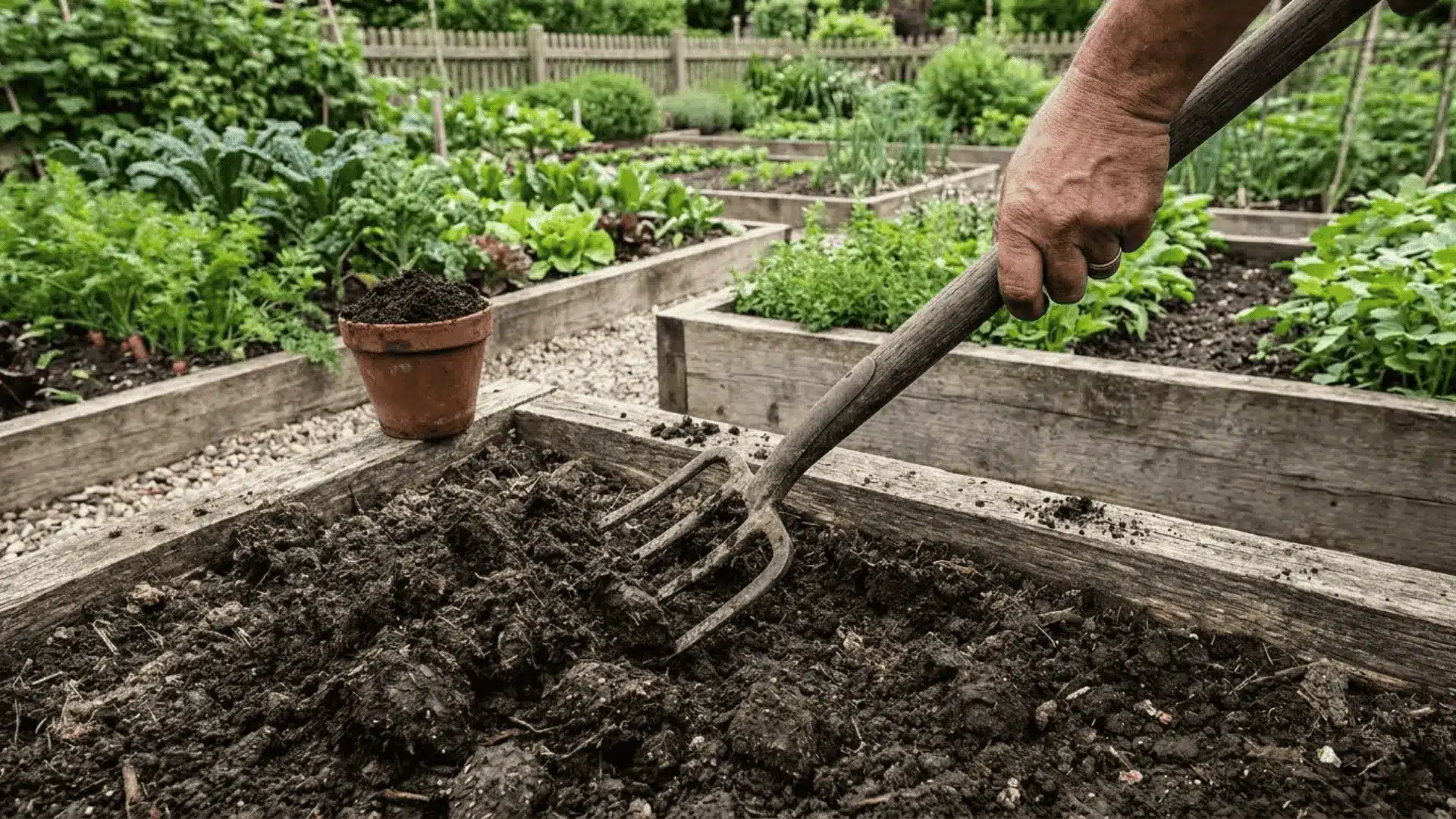
Before anything goes into the ground, the soil needs some attention. Loosen it to about a foot deep, clear out any debris, and work in a generous amount of compost or aged manure.
This gives your cucumber plants the nutrient-rich, well-draining foundation they need to establish quickly and grow without unnecessary stress.
Step 2: Plant Cucumber Seeds
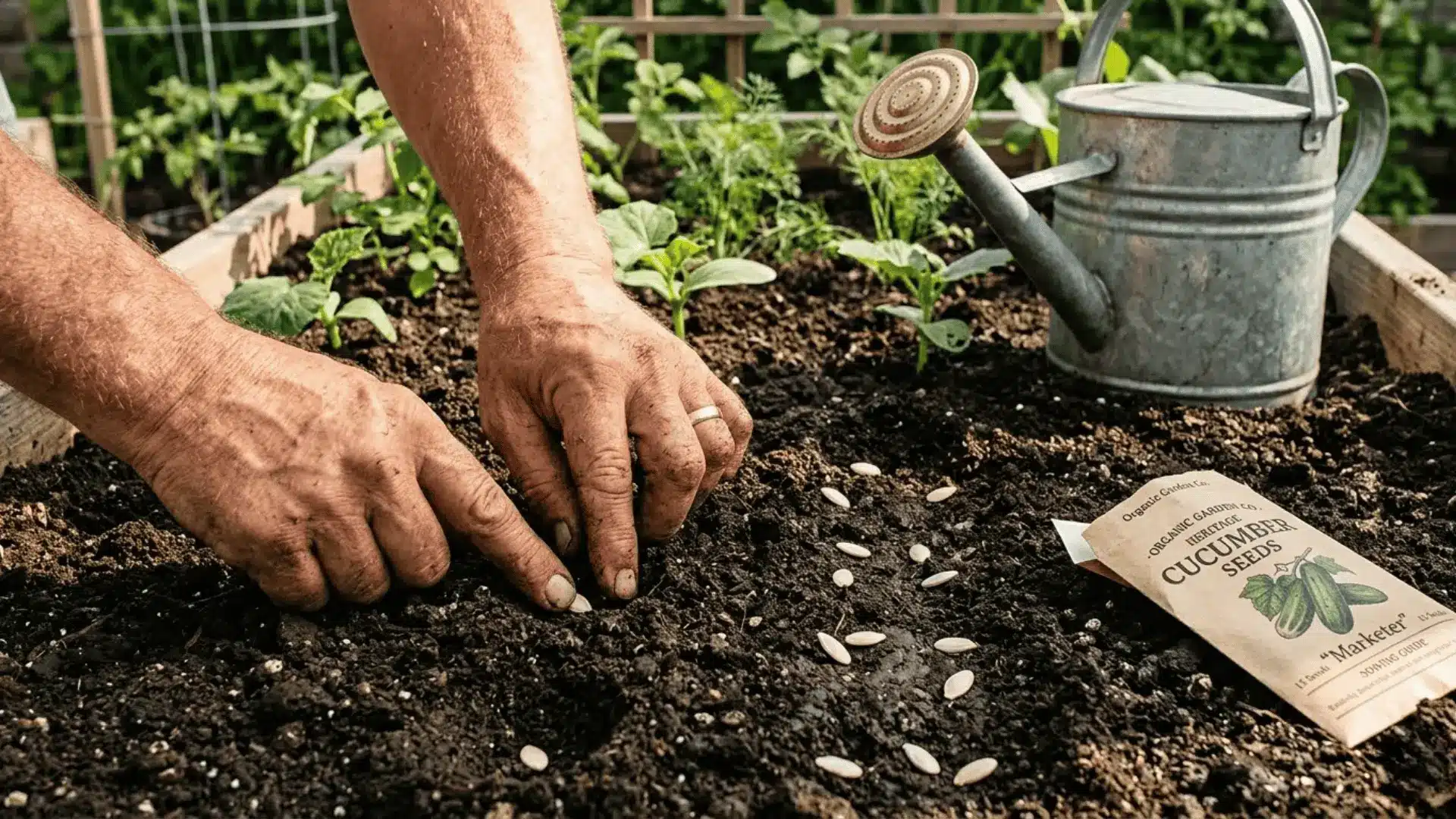
Sow seeds about an inch deep directly into warm soil, or transplant seedlings started indoors once the weather has settled.
Plant in hills or rows depending on your garden layout, and water gently right after planting. Avoid burying seeds too deep, as cucumbers germinate best when they’re close enough to the surface to catch warmth easily.
Step 3: Space Plants Properly
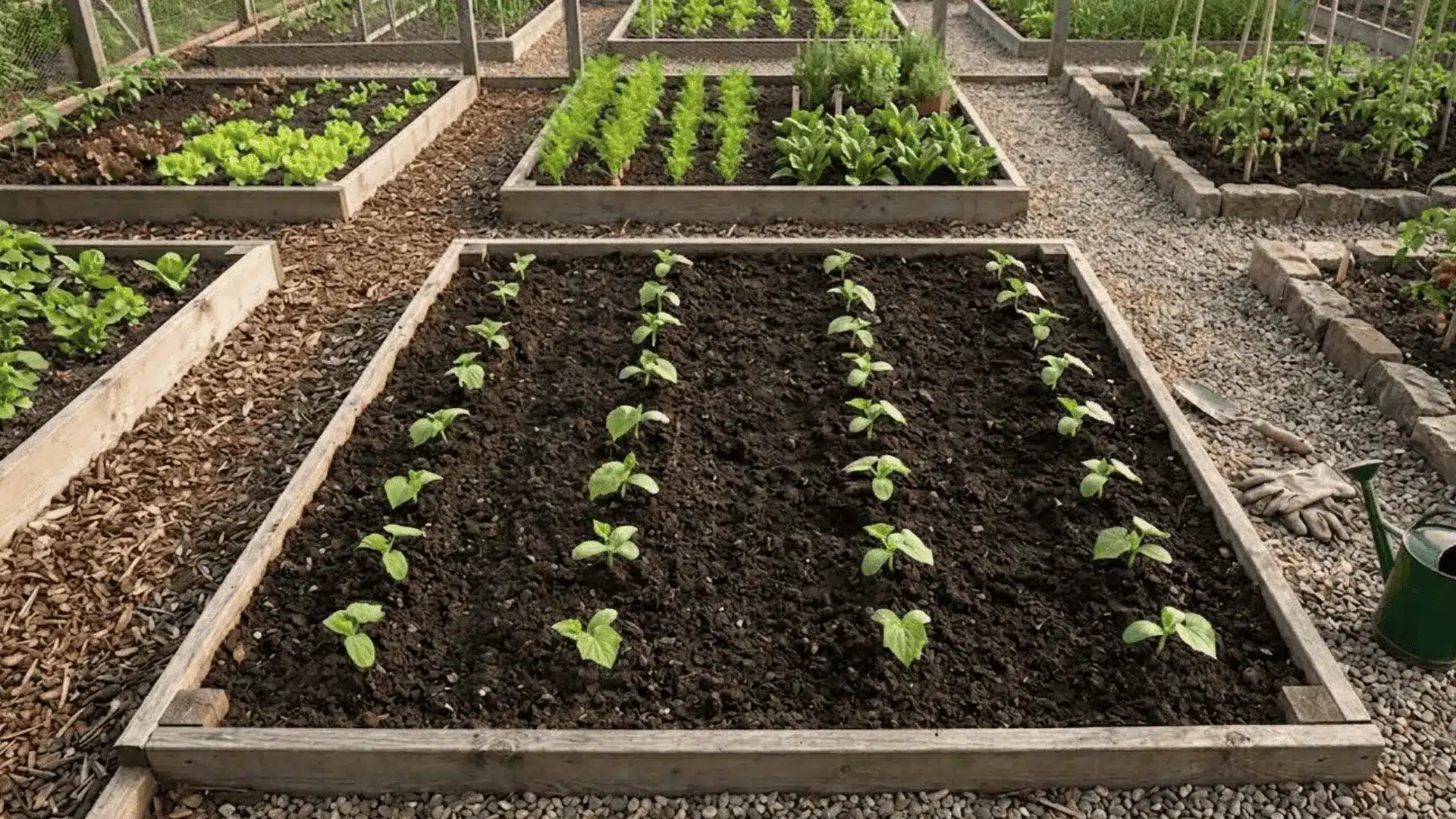
Spacing matters more than it might seem with cucumbers. Crowded plants compete for nutrients, airflow, and sunlight, which creates the kind of environment where disease spreads quickly.
Give vining varieties plenty of room to spread, and even bush types appreciate breathing space between them. Proper spacing almost always results in healthier plants and a noticeably better yield.
Step 4: Provide Support With Trellises
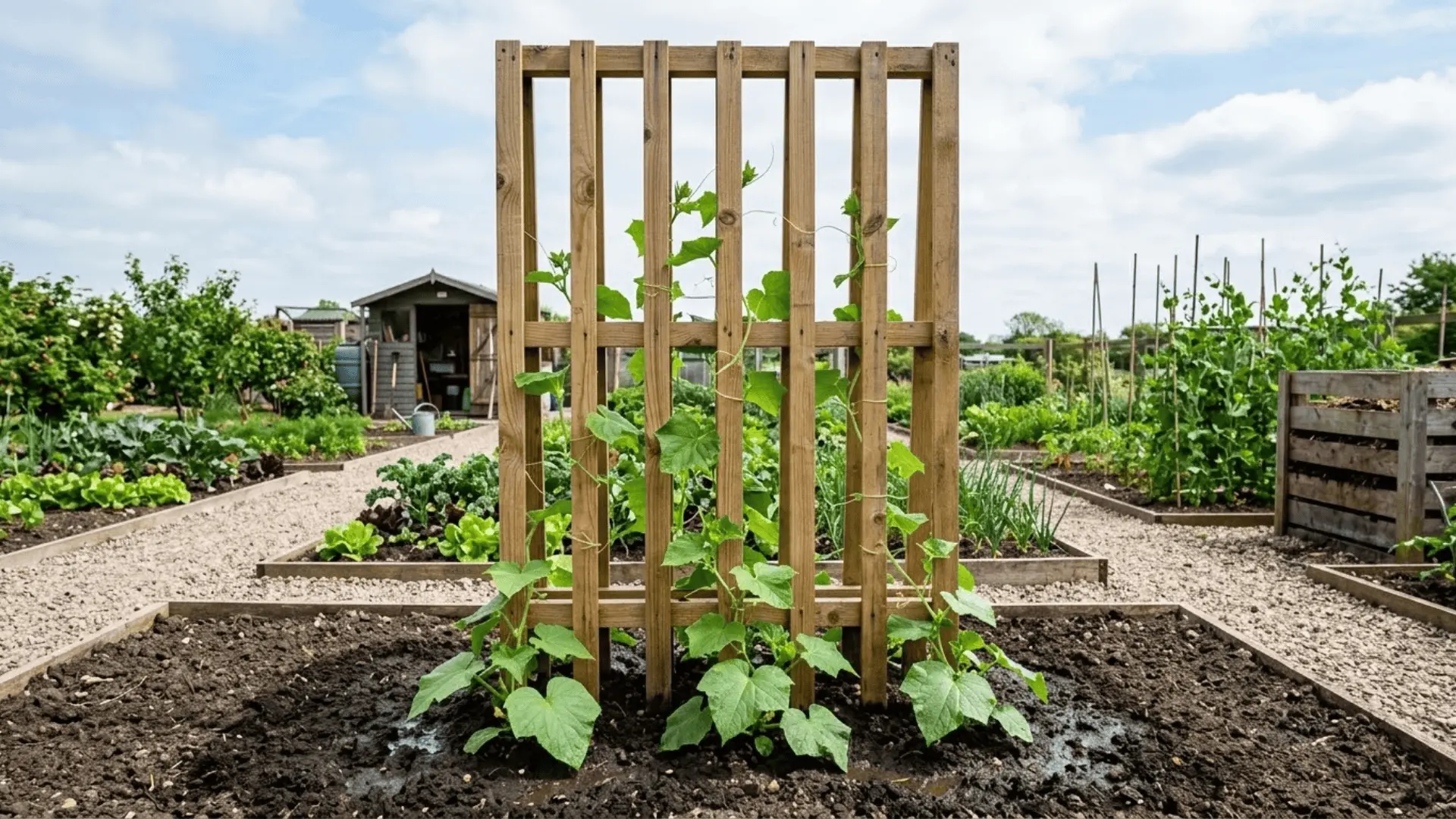
Vining cucumbers do significantly better with vertical support. A trellis, garden netting, or even a simple stake setup keeps the vines off the ground, improves air circulation, and makes harvesting much easier.
Fruits grown vertically also tend to grow straighter and cleaner. Set up your support structure at planting time so you’re not disturbing the roots later.
Step 5: Water Consistently
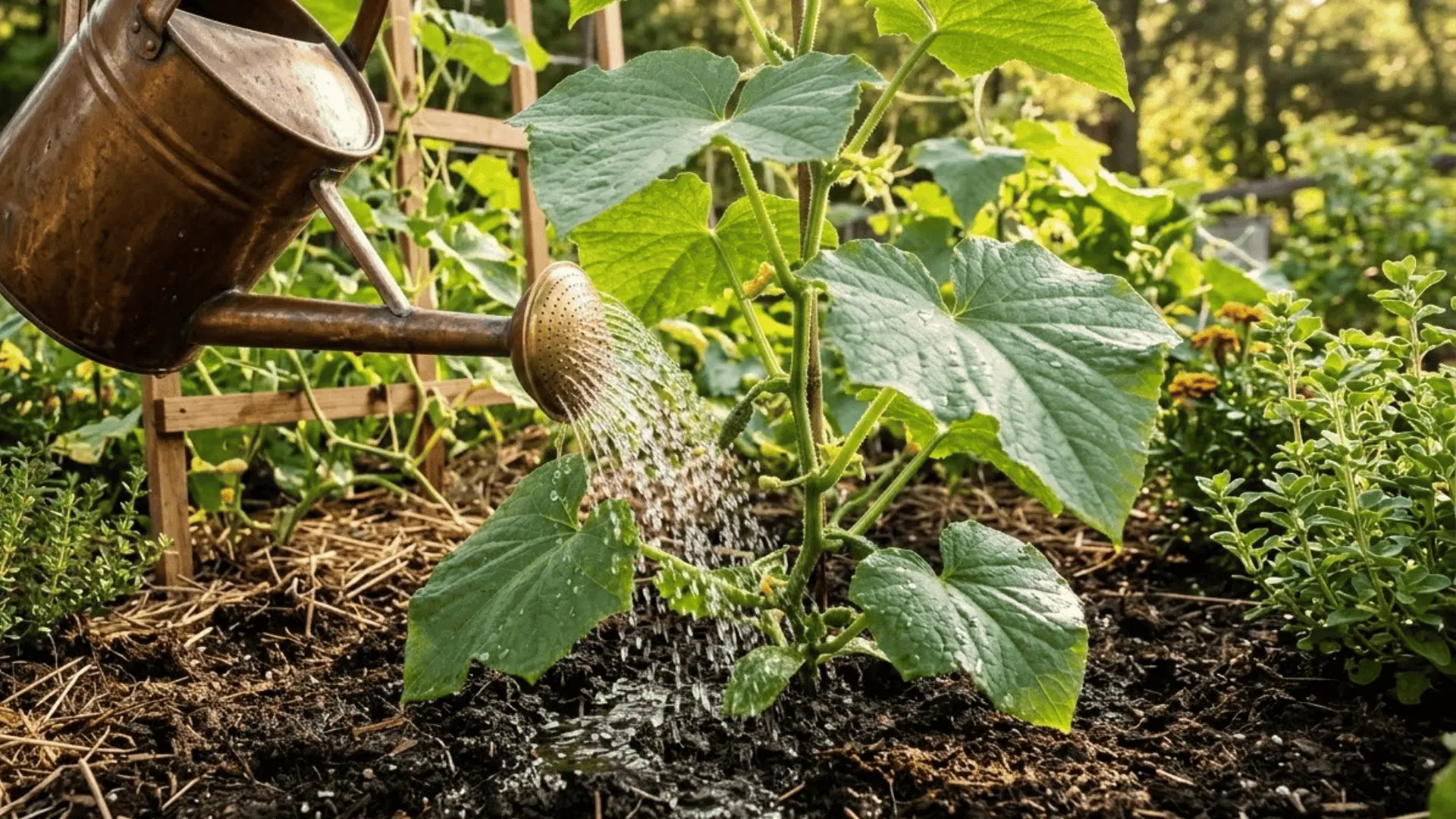
Cucumbers are mostly water, so it makes sense that they need consistent moisture to thrive. Deep, regular watering is far better than frequent shallow sessions, as it encourages roots to grow downward.
Aim to keep the soil evenly moist without letting it become waterlogged. Watering at the base of the plant rather than overhead also helps prevent common fungal issues.
Caring for Cucumber Plants
Once your cucumbers are in the ground, consistent care is what keeps them productive and healthy through the season.
A little attention to watering, feeding, and mulching goes a long way.
Watering Requirements
Cucumbers have a high water content, and that need shows up in how thirsty the plants get during the growing season. Keeping moisture levels steady is key to avoiding bitter fruit and cracked skin.
Here’s what good watering practice looks like:
- Water deeply and consistently, aiming for at least an inch of water per week.
- Always water at the base of the plant to keep the leaves dry and disease-free.
- Avoid letting the soil dry out completely between watering sessions.
- Use a drip irrigation system or soaker hose for the most efficient and consistent results.
Fertilizing Cucumber Plants
Cucumbers are relatively hungry plants and respond well to regular feeding throughout the season. Start with a balanced fertilizer at planting time to support early root and leaf development.
Once flowering begins, shift to a fertilizer that’s a little lower in nitrogen and higher in potassium and phosphorus to encourage fruit production rather than just leafy growth.
Mulching Around Plants
Mulching is one of those simple steps that quietly does a lot of work in the background.
Here’s why it’s worth doing:
- Retains soil moisture, so you’re watering less frequently.
- Keeps soil temperature stable and warm, which cucumbers genuinely appreciate.
- Suppresses weed growth around the base of the plant.
- Reduces the risk of soil-borne diseases splashing up onto the leaves during watering.
Training and Supporting Cucumber Vines
Giving your cucumber vines something to climb is one of the best decisions you can make for your garden.
A trellis or vertical support structure keeps the vines organized, improves airflow around the plant, and makes spotting and harvesting fruit significantly easier.
Vertical growth also tends to produce straighter cucumbers and reduces contact with soil, which lowers the risk of rot and disease.
As the vines grow, guide them gently toward the support and trim back any overcrowded or unruly growth to keep the plant focused on producing fruit rather than spreading in every direction.
Pollination and Fruit Development
Pollination is one of those behind-the-scenes processes that directly determines how much fruit your cucumber plants actually produce.
Understanding how it works makes it a lot easier to troubleshoot when things aren’t going as expected.
Importance of Pollinators
Cucumber plants rely heavily on pollinators, particularly bees, to transfer pollen from male to female flowers and trigger fruit development.
Without enough pollinator activity, flowers drop off without setting fruit, which can be frustrating when your plants otherwise look healthy. Planting flowers nearby and avoiding harsh pesticides helps keep pollinators returning.
Male vs. Female Flowers
Cucumber plants grow both male and female flowers, and knowing the difference helps you understand what’s happening at each stage of growth.
Here’s a clear comparison of the two.
| Factor | Male Flowers | Female Flowers |
|---|---|---|
| Appearance | Slim stem, no swelling at base | Small fruit-like swelling at the base |
| Purpose | Produce and release pollen | Receive pollen and develop into fruit |
| Bloom timing | Appear first, often a week or two earlier | Appear after male flowers are established |
| Quantity | Grow in larger numbers | Fewer in count compared to male flowers |
| Fruit production | Do not produce fruit | Develop into cucumbers once pollinated |
| Hand pollination | Pollen is collected from these | Pollen is transferred onto these |
Common Problems When Growing Cucumbers
Even the most well-tended cucumber garden runs into occasional trouble. Knowing what to look for and how to respond quickly makes all the difference between a minor setback and a lost harvest.
Problem 1: I think I see tiny clusters of insects gathering on my cucumber leaves.
Solution: These are likely aphids. Knock them off with a strong stream of water or treat the plant with neem oil. Catching them early keeps the population from spreading to the rest of your garden.
Problem 2: There’s a white powdery coating showing up on my cucumber leaves.
Solution: That’s powdery mildew, and it usually shows up when airflow around the plant is poor. Improve spacing between plants, avoid overhead watering, and apply a diluted neem oil or baking soda spray to slow its spread.
Problem 3: My cucumbers taste really bitter, and I’m not sure what I did wrong.
Solution: Bitterness in cucumbers is usually tied to inconsistent watering or prolonged heat stress. Keep soil moisture steady and harvest fruits promptly once they reach the right size, as overripe cucumbers tend to turn bitter quickly.
Growing Cucumbers in Containers
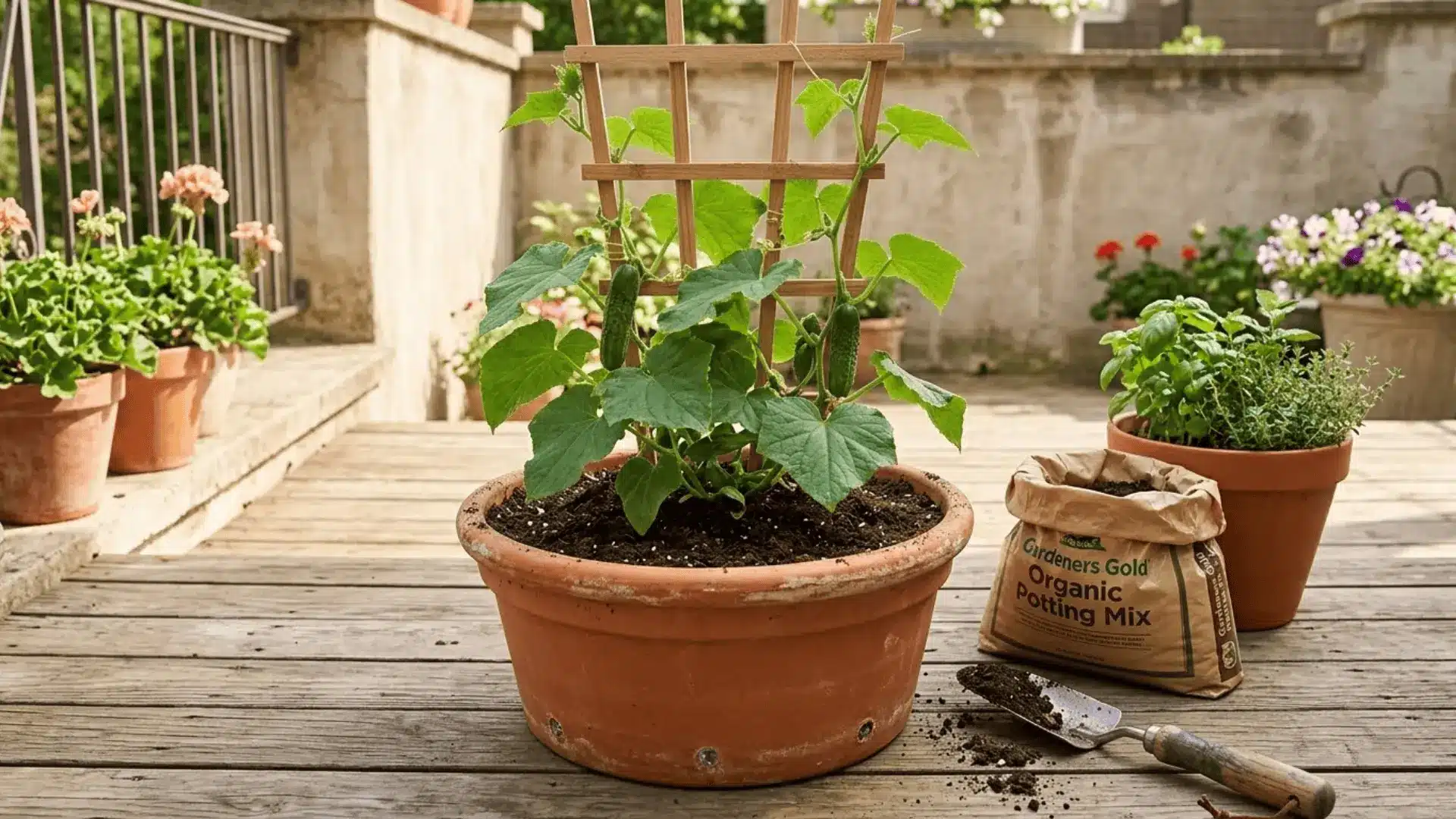
Cucumbers adapt surprisingly well to container growing as long as you set them up with the right conditions from the start.
- Choose a container that holds at least five gallons with drainage holes at the bottom to prevent waterlogging.
- Use a lightweight, well-draining potting mix enriched with compost rather than heavy garden soil.
- Opt for bush varieties like Bush Pickle or Spacemaster since they stay compact and thrive in confined spaces.
- Set up a small trellis or stake inside the container early on to support vining growth as the plant matures.
With the right setup, a container cucumber plant can be just as productive and rewarding as one grown in an open garden bed.
When and How to Harvest Cucumbers?
Knowing when to harvest is just as important as knowing how to grow. Cucumbers are ready to pick when they’ve reached a firm, evenly colored, and adequately sized state for their variety.
Don’t wait too long, as overripe cucumbers turn seedy, bitter, and signal the plant to slow down production.
Harvesting frequently actually encourages the plant to keep producing, so check your vines every couple of days during peak season.
When picking, use a clean pair of scissors or pruning shears and cut the stem cleanly rather than pulling, which can stress or damage the vine.
Tips for a Bigger Cucumber Harvest
A few small, intentional habits practiced consistently through the season can make a noticeable difference in how much your cucumber plants produce.
- Always plant in a spot that receives full sun for the majority of the day to fuel steady, vigorous growth.
- Water deeply and regularly, keeping the soil evenly moist without swinging between dry and waterlogged.
- Harvest cucumbers as soon as they’re ready rather than leaving them on the vine to overripen.
- Feed plants with a potassium and phosphorus-rich fertilizer once flowering begins to push fruit production.
- Train vines vertically on a trellis to improve airflow, maximize space, and make harvesting far easier.
Put these habits together, and you’ll likely find yourself with far more cucumbers than you initially expected, which is honestly a very good problem to have.
The Bottom Line
Growing cucumbers at home is one of those experiences that genuinely rewards the effort you put in.
From preparing your soil to watching the first fruits develop on the vine, every step has something satisfying about it. The more attention and consistency you bring to the process, the better your harvest tends to be.
If you’re figuring out how to grow cucumbers for the first time or looking to improve on a previous season, hopefully this guide gave you something useful to work with.
Drop a comment below and tell us how your cucumber garden is coming along!
Frequently Asked Questions (FAQs)
How Long Do Cucumbers Take to Grow?
Most varieties are ready to harvest between fifty and seventy days after planting, depending on the variety and consistency of care.
Can Cucumbers Grow in Pots?
Yes, and they do quite well as long as the container is large enough and drains properly. Bush varieties are the most practical choice for container growing.
How Many Cucumbers Does One Plant Produce?
It varies by variety and growing conditions, but a healthy plant can produce quite generously, especially when you keep up with regular harvesting.