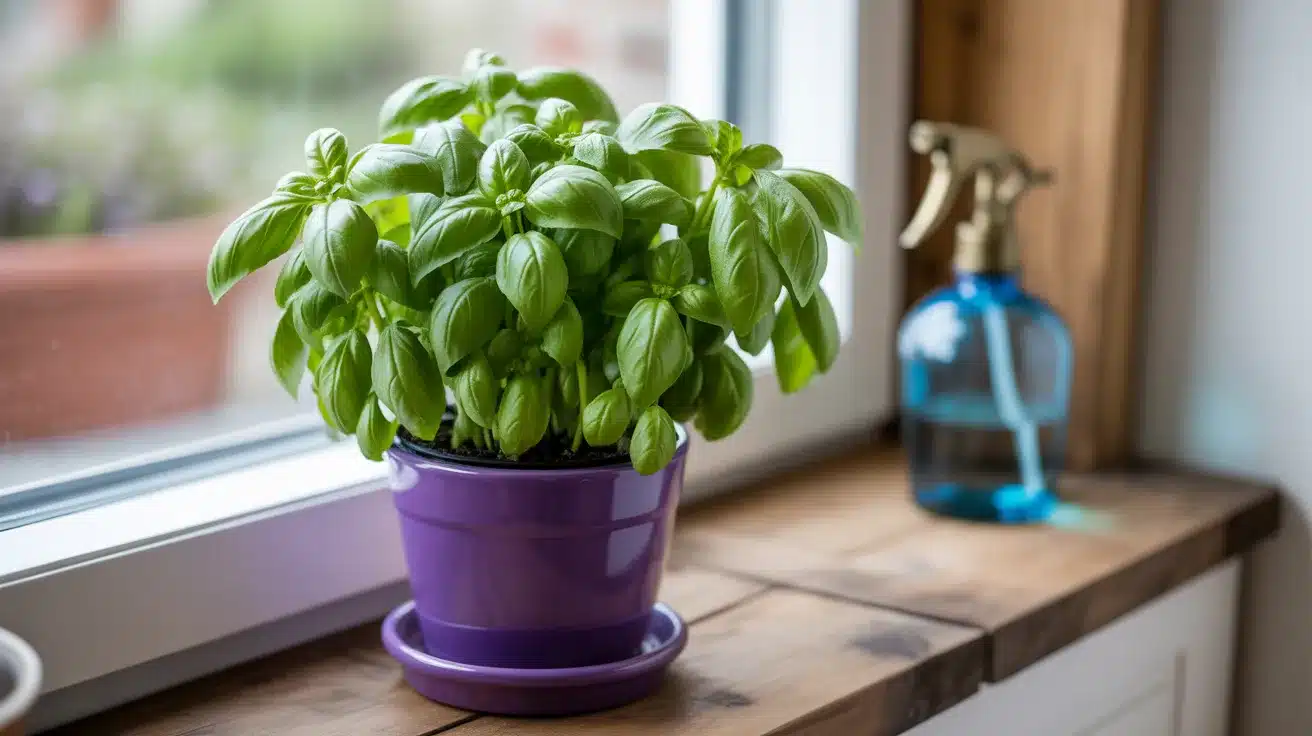
That little basil plant sitting on your windowsill? It is trying to tell you something.
Most home cooks spend more on grocery store basil than they should. It wilts before the week is out and barely has any flavor. Growing your own fixes all of that.
Basil is one of the easiest herbs to grow at home. But many people kill it fast because of a few simple mistakes. They overwater it. They pull off single leaves instead of pruning properly. They plant it too early in cold spring soil.
Get the basics right, and one small plant becomes your fresh supply all season long. This guide shows you how to grow basil the right way.
What Is Basil and Why Should You Grow It at Home?
Basil (Ocimum basilicum) belongs to the mint family, Lamiaceae, and is a warm-weather annual in most parts of the US, though it grows as a perennial in USDA zones 10 and 11.
A single healthy plant produces about half a cup of fresh leaves per week, and one $4 plant can easily save you $40 or more in a single growing season.
Store-bought basil is often picked early, stored cold, and loses most of its flavor before it reaches you. When you grow it yourself, you cut it fresh, right when you need it, and the difference in taste is clear.
Types of Basil You Can Grow
Not all basil tastes the same, and the variety you choose will shape how you use it in the kitchen. Here is a quick look at the most popular types worth growing at home.
- Sweet Basil (Genovese): The most popular variety in the US with a classic Italian flavor. Best for pesto, pasta, and salads.
- Thai Basil: Has a strong licorice-like flavor and holds up well in cooked dishes. Popular in Asian cooking.
- Lemon Basil: Bright citrus scent and taste. Great in seafood, teas, and light salads.
- Purple (Opal) Basil: Less sweet than Genovese. A beautiful addition to the garden, but it gives pesto an odd, dark color.
- Holy Basil (Tulsi): Spicy, clove-like flavor used in teas and traditional remedies. Also attracts pollinators when it flowers.
How to Grow Basil: Step-by-Step
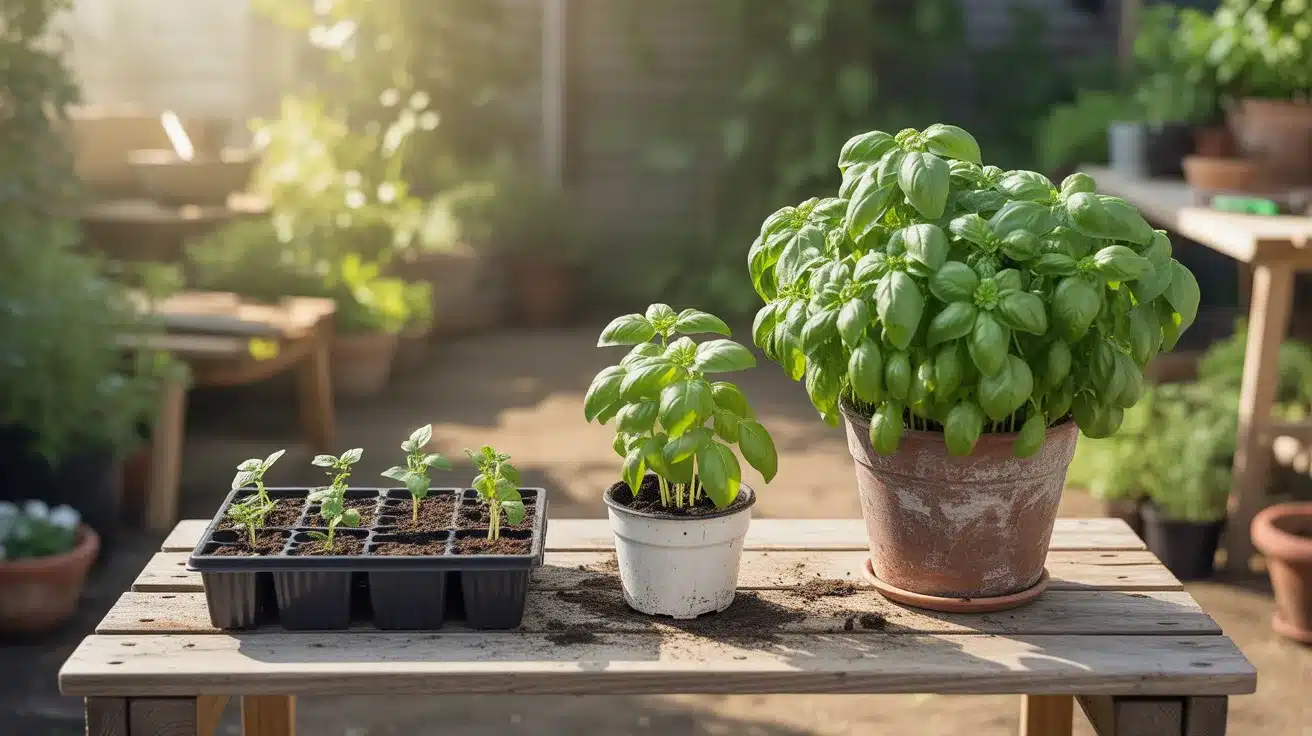
Before you put a single seed in the ground, there are a few things worth having ready. Getting set up properly from the start makes the whole process much smoother.
What You Need Before You Start
| Item | Why You Need It |
|---|---|
| Basil seeds or a starter plant | Your starting point for growth |
| Seed-starting mix or well-draining potting soil | Supports healthy root development |
| Pot with drainage holes (8 to 12 inches wide) | Prevents waterlogging |
| Watering can or drip system | For gentle, controlled watering |
| Grow lights (if growing indoors) | Replaces natural sunlight when needed |
| Balanced liquid fertilizer | Feeds the plant through the season |
| Pruning scissors or herb shears | For clean cuts when harvesting and pruning |
Step 1: Pick the Right Time to Plant
Do not plant basil until soil temperature reaches at least 50°F (10°C) and nighttime temps stay consistently above that. Planting too early is one of the biggest reasons basil fails in spring. If starting seeds indoors, begin 6 to 8 weeks before your last frost date.
Step 2: Prepare Your Soil and Container
Use fertile, well-draining soil with a pH between 6.0 and 7.5. For pots, choose one that is at least 8 to 12 inches wide with drainage holes at the bottom. For in-ground planting, loosen the soil well and mix in compost before planting.
Step 3: Plant Your Seeds or Seedlings
Place 1 to 2 seeds per cell in a tray. Cover lightly with soil, about a quarter inch deep. Water gently and keep in a warm spot around 70°F. Seeds germinate in 7 to 10 days. If transplanting seedlings, space them 12 to 18 inches apart. Harden them off first by setting them outside in a shaded spot for a few hours each day over one week.
Step 4: Place in the Right Spot
Basil needs 6 to 8 hours of direct sunlight per day. A south-facing windowsill works well for indoor plants. If natural light is limited, use a compact LED grow light. Keep the plant away from cold drafts and air conditioning vents.
Step 5: Water and Watch
Water deeply when the top inch of soil feels dry. Always water the plant at the base. Do not wet the leaves or stems. Container plants dry out faster than ground soil, so check them more often.
How to Care for Your Basil Plant
Growing basil is the easy part. Keeping it healthy and productive all season takes a few regular habits. Here are six care points that make a real difference.
- Sunlight: Give your plant 6 to 8 hours of sun per day. Less light means weaker stems and less flavor in the leaves.
- Watering: Water in-ground plants deeply once a week. Check the container soil every 2 to 3 days and water only when the top inch feels dry.
- Fertilizing: Feed every 2 to 4 weeks with a balanced liquid fertilizer. Container plants need more frequent feeding because nutrients wash out of the soil faster.
- Pruning: Start when the plant reaches 6 inches tall. Cut just above a leaf node to encourage two new stems to grow from that same spot.
- Pinching Off Flowers: Remove flower buds the moment they appear. Once basil flowers, it shifts energy from leaves to seeds, and leaf production drops off quickly.
- Temperature: Keep indoor basil above 65°F at all times. Outdoors, bring containers inside or cover plants if overnight temps drop below 50°F.
Growing Basil in Pots vs. In the Ground
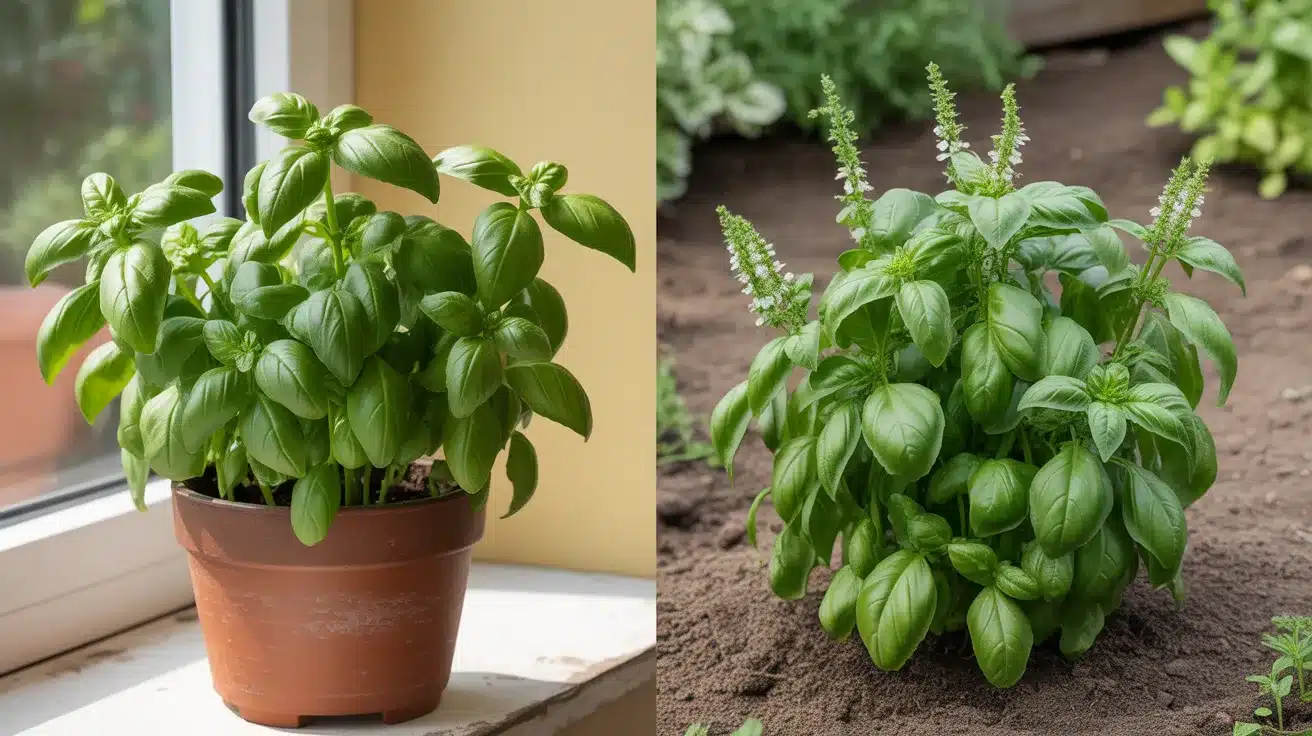
Both options work well for growing basil at home. The right choice really comes down to how much space you have and how much control you want over the conditions.
| Feature | Growing in Pots | Growing in the Ground |
|---|---|---|
| Drainage Control | Easy to manage | Depends on your native soil |
| Watering Frequency | More often (dries out quickly) | About once a week |
| Mobility | Yes, move to better light or shelter | Cannot be moved |
| Space Required | Minimal, great for balconies | Needs more dedicated garden space |
| Pot or Spacing Size | 8 to 12 inches in diameter | Space plants 12 to 18 inches apart |
| Soil Type | Use a light potting mix | Loosen and amend with compost |
| Best For | Kitchens, patios, small spaces | Larger harvests, raised beds, garden rows |
How to Harvest Basil Without Killing the Plant
Harvesting correctly is what separates a plant that thrives all season from one that fizzles out after the first pick. It is not just about when you cut. It is mostly about how.
- Start at the Right Time: Wait until the plant is at least 6 to 8 inches tall with several sets of leaves. Cutting too early puts stress on a young plant before it has developed strong roots.
- Cut Stems, Not Individual Leaves: Do not pull off single leaves. Instead, cut whole stems just above a leaf node. Two new stems will grow from that spot, and over time, your plant becomes much bushier and more productive.
- Harvest in the Morning: The essential oils in basil leaves are at their strongest in the morning. Cutting then gives you the most flavorful leaves for cooking.
- Do Not Take Too Much at Once: Harvest no more than 20% of the plant at a single time. Leaving enough leaves behind lets the plant bounce back quickly and keep growing.
- Harvest Before Flowering: Leaves have the best flavor before the plant starts to flower. As soon as you spot small flower spikes forming at the top, pinch them off right away.
Common Basil Problems and How to Fix Them
Even with good care, basil plants sometimes run into trouble. Spotting the issue early is most of the battle.
| Problem | Signs to Look For | Fix |
|---|---|---|
| Root Rot | Black stems at the base, wilting in moist soil | Improve drainage, cut back on watering immediately |
| Yellowing Leaves | Pale or yellow leaves, mostly at the bottom | Check drainage, feed with a balanced fertilizer, and check soil temperature |
| Downy Mildew | Gray fuzzy growth on the underside of leaves | Improve air flow, stop wetting leaves, and remove affected parts |
| Aphids | Small soft insects on new growth, sticky film on leaves | Spray with water, apply diluted neem oil |
| Slugs | Jagged holes in leaves, especially after rain | Pick off by hand at night, and place copper tape around containers |
| Japanese Beetles | Leaves look skeletonized with only veins remaining | Pick off by hand, use row covers to protect plants |
| Leggy Growth | Tall, thin stems with sparse leaves | Move to brighter light, prune more frequently |
How to Store Fresh Basil After Harvesting
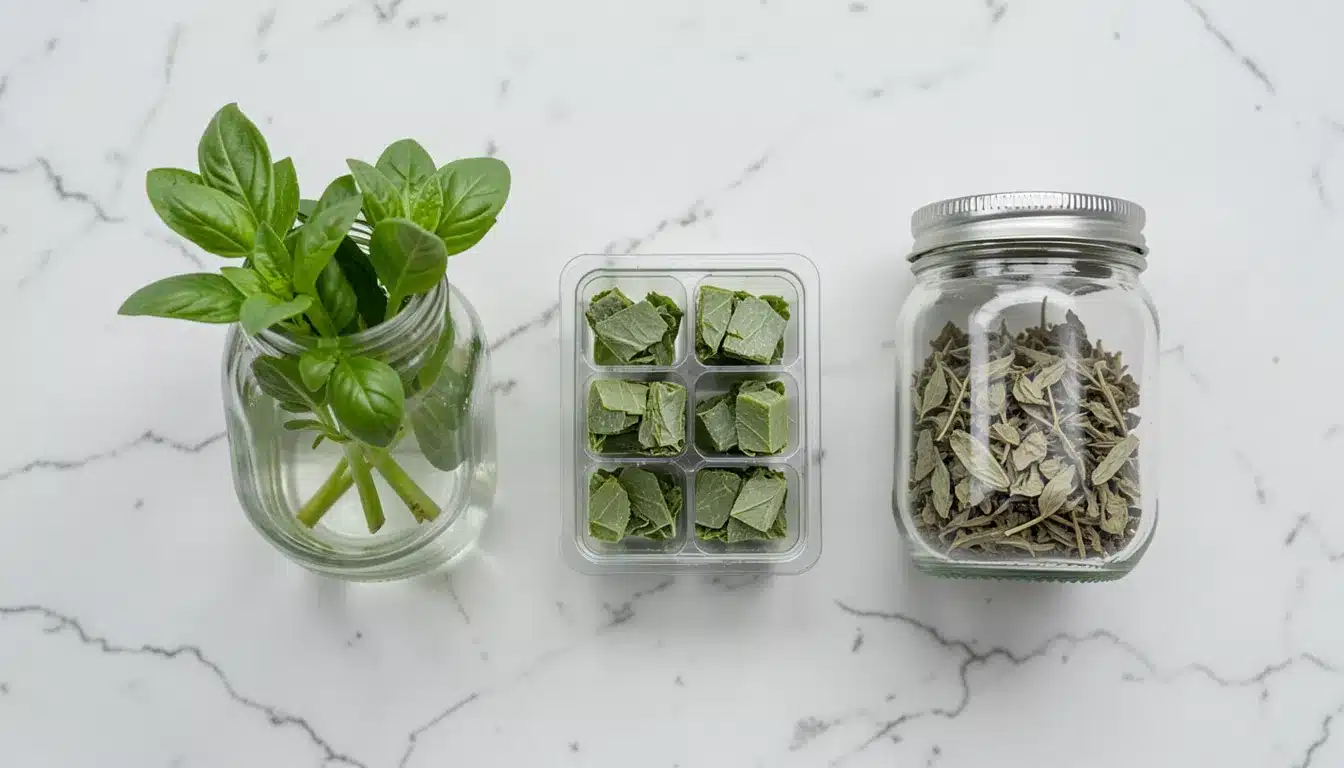
The work does not stop at harvest. Fresh basil needs a little attention after cutting to stay usable and flavorful for as long as possible.
- Room Temperature in Water: Trim stems and stand them in a glass of water like a small bunch of flowers. Keep out of direct sunlight. Leaves stay fresh for 1 to 2 weeks this way.
- Loose Plastic Bag: Cover the leaves loosely with a plastic bag to retain moisture while still allowing some airflow around them.
- Frozen Cubes: Blend fresh basil with a small amount of water or olive oil and pour into ice cube trays. Once frozen, transfer to a sealed bag. Good for up to 6 months.
- Air Drying: Hang cut stems upside down in a warm, dry, well-ventilated spot for 1 to 2 weeks. Crumble the dried leaves into a sealed glass jar. Stays good for up to a year.
- Homemade Pesto: Blend a large harvest into pesto and freeze in small portions. An easy way to preserve a big batch for use through winter.
Important: Do not refrigerate fresh basil leaves directly. Cold temperatures turn them black within a day or two.
How to Save Basil Seeds for Next Season
Let a few stems flower and dry out completely at the end of the growing season. Once the seed pods on the plant turn brown and crisp, snip those stalks off. Place them in a paper bag.
Shake the bag gently to release the seeds, then remove any leftover plant material. Store the seeds in a cool, dry spot inside a paper envelope or small glass jar.
Most heirloom varieties will grow true to the parent plant the following year, but hybrid varieties may not, so check your original seed packet before saving.
Stored properly, basil seeds stay viable for 2 to 5 years.
Final Thoughts
Growing basil at home is one of the most satisfying things you can do with a small garden space or a sunny windowsill. It costs almost nothing to start.
It takes just a few minutes of care each week. And the reward is fresh leaves whenever you need them, which makes every meal taste better.
The key things to remember are simple. Give it enough sun. Do not overwater it. Prune it regularly.
Pinch off the flower buds before they open. Do those things consistently, and your basil will keep producing well past what most people expect.
Have a tip that worked really well for you? Or a question about growing basil at home? Drop it in the comments below. We would love to hear what is growing in your garden.
Frequently Asked Questions
What Is the Best Way to Grow Basil?
Plant basil in well-draining soil, give it 6 to 8 hours of sunlight daily, water at the base when the top inch of soil feels dry, and prune it regularly to keep it bushy and productive.
How to Pick Your Basil So It Keeps Growing?
Always cut full stems just above a leaf node rather than pulling off single leaves. This encourages two new stems to grow from that spot, giving you more leaves with every harvest.
Can I Plant Supermarket Basil Outside?
Yes, but wait until nighttime temperatures stay consistently above 50°F. Separate the crowded roots carefully before planting, as most store-bought pots hold several seedlings tightly packed together.
Will Basil Grow Back Every Year?
Basil is an annual in most US climates, so it completes its life cycle in one season. You can keep it going year after year by saving seeds at the end of each season or taking stem cuttings to grow indoors over winter.