You eat the same fruit every single week. Maybe an apple on Monday. A banana in your cereal. Grapes, if you are feeling fancy. And that is pretty much it.
But here is something most people do not realize: there are over fruits in the world that most of us will never try. Some taste like chocolate pudding.
Some smells are so strong that they are banned on public transport. Some cost thousands of dollars for a single piece.
This list of exotic fruits covers all of them. You will find where each one grows, what it tastes like, and why it is worth knowing about.
Let us get into it.
What Makes a Fruit “Exotic”?
A fruit is called exotic when it is not commonly grown or found in your region. Most exotic fruits come from tropical or subtropical areas and stand out for unusual tastes, textures, or appearances.
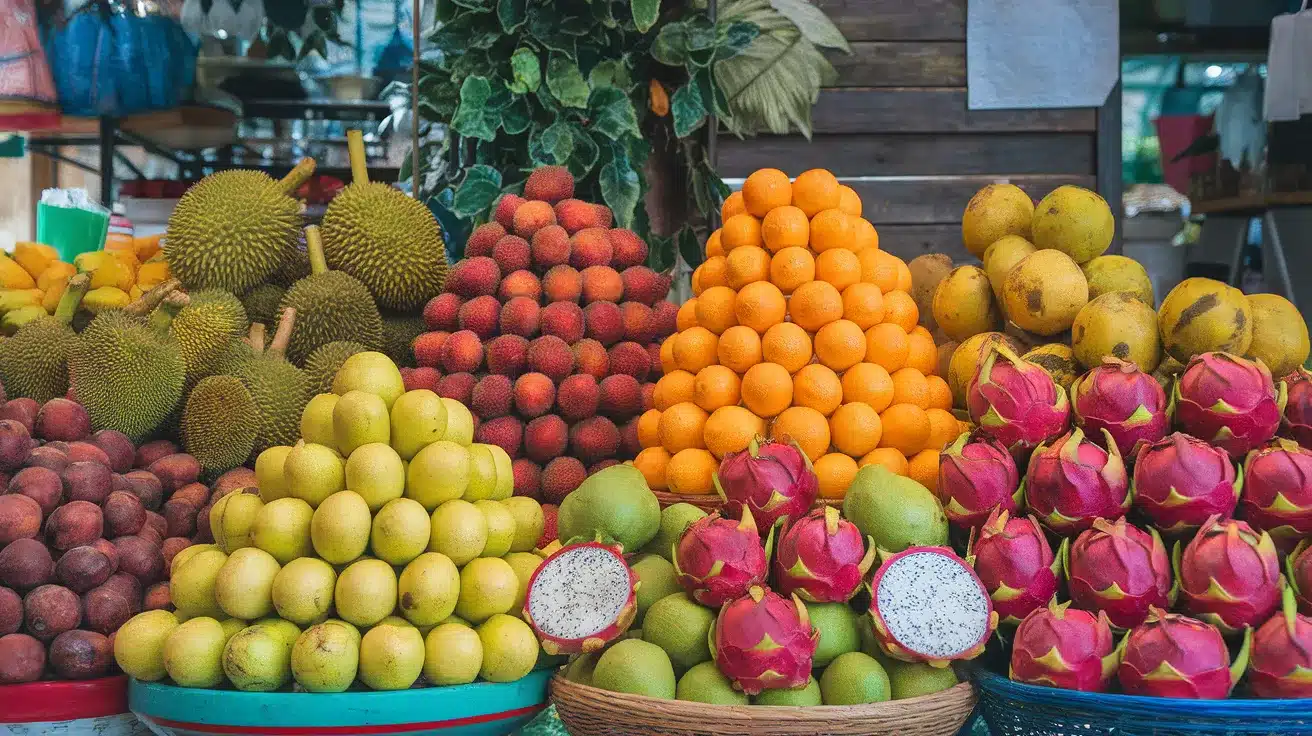
The word is relative. A mango is exotic in Canada but completely ordinary in India. Many exotic fruits are now available in the USA through Asian grocery stores, Latin American markets, and online retailers.
Exotic Fruits From Asia
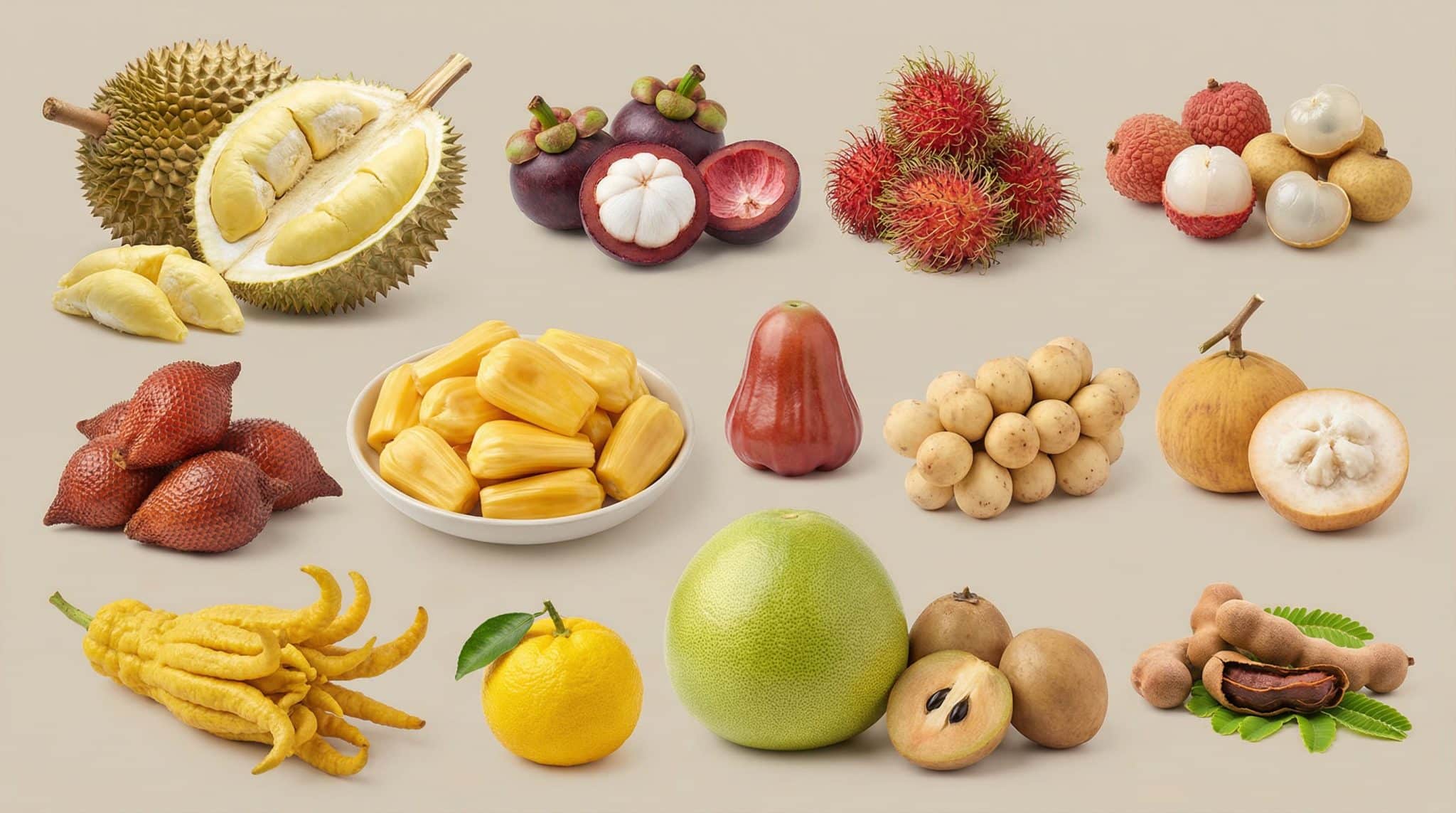
Asia produces more fruit varieties than any other region on the planet. From the famously pungent durian of Malaysia to the fleeting two-week season of Japan’s akebi, here are Asian exotic fruits worth knowing about.
1. Durian
Durian splits people right down the middle. You either love it deeply, or you leave the room the moment it arrives.
- Origin: Malaysia and Indonesia
- Taste: Rich and creamy, like almond custard with a savory undertone
- Good to Know: Banned on public transport in Singapore due to its powerful smell. High in B vitamins, potassium, and healthy fats.
2. Mangosteen
Mangosteen has earned its title as the Queen of Fruits. Once you cut open the deep purple rind, the snow-white segments inside are a genuine surprise.
- Origin: Indonesia and Thailand
- Taste: Sweet and tangy, close to a combination of peach and lychee
- Good to Know: Rich in antioxidants called xanthones, which are studied for anti-inflammatory properties. Widely available in Asian grocery stores in the USA.
3. Rambutan
Do not let the hairy red shell put you off. Inside is a soft, juicy fruit that many people say reminds them of a large, floral grape.
- Origin: Malaysia
- Taste: Sweet with a slight tart edge, similar to lychee but with a firmer bite
- Good to Know: The name comes from the Malay word for “hair.” A good source of vitamin C and iron.
4. Lychee
Lychee is one of the few exotic fruits that has made it to most major grocery stores in the USA. It has fully earned its place there.
- Origin: South China, widely grown across Southeast Asia
- Taste: Floral, juicy, and sweet with a slight rose-water note
- Good to Know: One cup of fresh lychees gives more than 100% of the daily recommended vitamin C intake.
5. Longan
Longan is the quieter, less floral cousin of the lychee. It is sweeter in a more straightforward way and just as addictive.
- Origin: South China and Southeast Asia
- Taste: Honey-sweet and mild, with less floral intensity than lychee
- Good to Know: Called “Dragon Eye” in Chinese because the dark seed is visible through the translucent flesh. Used in traditional Chinese medicine for centuries.
6. Salak (Snake Fruit)
The moment you see salak, you understand the nickname. The scaly brown skin looks exactly like it belongs on a reptile.
- Origin: Indonesia
- Taste: Sweet like honey, tangy like pineapple, with a dry, apple-like crunch
- Good to Know: Three lobes of flesh sit inside, shaped like garlic cloves. High in potassium and calcium.
7. Jackfruit
Jackfruit holds a record that most people do not know about. It is the largest fruit that grows on a tree, anywhere in the world.
- Origin: South and Southeast Asia
- Taste: Ripe jackfruit tastes like mango. Unripe jackfruit has a neutral, meaty texture widely used as a plant-based meat substitute.
- Good to Know: A single fruit can weigh up to 80 pounds. Rich in fiber, vitamin B6, and potassium.
8. Wax Apple (Water Apple)
A wax apple looks like a miniature red bell pepper on the outside. The inside is all about texture: light, watery, and crisp.
- Origin: Malaysia and Thailand
- Taste: Mild and lightly sweet, like a very watery, refreshing pear
- Good to Know: High in water content, making it a popular cooling snack in hot climates. Also called rose apple in parts of the Caribbean and South Asia.
9. Langsat
Langsat grows in clusters that hang from tree trunks, almost like tiny pale bunches of grapes. The inside delivers a sharp, clean flavor.
- Origin: Malaysia and the Philippines
- Taste: Sweet and tart, close to a mild, less bitter grapefruit
- Good to Know: The outer skin has a milky latex that can taste slightly bitter, but the inner flesh is always clean and refreshing. A good source of riboflavin.
10. Santol
Santol is a polarizing fruit. The thick, spongy rind confuses first-timers, but the sweet-sour pulp inside keeps them coming back.
- Origin: Southeast Asia, especially Thailand and the Philippines
- Taste: Sour and sweet pulp, similar to a tart apple with a hint of peach
- Good to Know: Used in Filipino and Thai cooking, often added to soups and spicy curries. The rind can also be candied into a sweet treat.
11. Buddha’s Hand
Buddha’s Hand looks like something out of a fantasy. It is entirely composed of finger-like yellow segments, with no pulp or seeds inside.
- Origin: China and Northeast India
- Taste: No flesh to eat directly. The rind is used for its intense lemon-floral fragrance in cooking and baking.
- Good to Know: Used to flavor food, fragrance rooms, and as a traditional offering in Buddhist ceremonies across Asia.
12. Yuzu
Yuzu is small, uneven in appearance, and one of the most prized citrus fruits in Japanese cooking. Chefs around the world pay a premium for it.
- Origin: Japan, Korea, and China
- Taste: Very tart, with a complex layering of lemon, grapefruit, and mandarin
- Good to Know: Rarely eaten as a fresh fruit. Mostly used for its zest and juice in sauces, salad dressings, and desserts. High in vitamin C.
13. Akebi
Akebi is one of the most seasonal fruits in the world. You have exactly two weeks in early fall to try it, and then it is gone.
- Origin: Japan
- Taste: The white interior pulp tastes like a mild, sweet pear. The purple pod exterior is bitter and cooked as a vegetable.
- Good to Know: Considered a culinary rarity in Japan. Both the sweet interior and the bitter exterior are used in traditional Japanese cooking.
14. Jujube (Chinese Date)
Jujube has been eaten for over 4,000 years. That kind of track record says something about how good it is.
- Origin: China
- Taste: Fresh jujubes taste like crisp apples. Dried jujube is sweet and chewy, much like a medjool date.
- Good to Know: A staple in traditional Chinese medicine. High in vitamin C and commonly used as a natural sleep and stress remedy.
15. Pomelo
Pomelo is essentially the grandfather of all citrus. Many of the citrus fruits we eat today, including grapefruit, were partially bred from it.
- Origin: Southeast Asia and Southern China
- Taste: Milder and far less bitter than grapefruit, with a clean and sweet finish
- Good to Know: The largest citrus fruit in the world. A single pomelo can weigh up to five pounds. High in vitamin C and fiber.
16. Wood Apple (Bael)
Break open a wood apple, and you will find a sticky, amber-colored pulp with a smell that hits you before you even take a bite.
- Origin: India and Sri Lanka
- Taste: Tangy and slightly sweet with a very strong, distinctive aroma
- Good to Know: The pulp is traditionally blended with water and sugar to make a cooling summer drink popular across South Asia.
17. Chikoo (Sapodilla)
Chikoo tastes like someone put brown sugar and caramel directly into a fruit. It is hard to find outside South Asia, but worth seeking out.
- Origin: India and South Asia
- Taste: Sweet and malty, like a blend of brown sugar, honey, and caramel with a soft, grainy texture
- Good to Know: Very high in dietary fiber. The tree also produces chicle, the natural gum used in original chewing gum recipes.
18. Tamarind
Tamarind shows up in cuisines from India to Mexico to Thailand. Very few fruits cross cultural lines as confidently as this one.
- Origin: Tropical Africa, widely cultivated across South Asia and Latin America
- Taste: Intensely sour and sweet at the same time, with a sticky, pulpy texture
- Good to Know: Used in cooking, chutneys, sauces, candy, and drinks worldwide. Also acts as a natural digestive aid in traditional medicine.
19. Star Apple (Caimito)
Cut a star apple in half, and you will see exactly where the name comes from. The cross-section forms a perfect star every single time.
- Origin: Caribbean, also widely grown across Southeast Asia
- Taste: Creamy and sweet, like a mild grape mixed with fresh cream
- Good to Know: The skin is not edible; only the creamy flesh inside is consumed. Best eaten chilled straight from the fridge.
20. Karonda (Bengal Currant)
Karonda is the kind of fruit that sneaks up on you. One bite and you will instantly understand why it is used almost entirely in pickles and chutneys.
- Origin: India and Southeast Asia
- Taste: Very sharp and tart when raw, used in spicy pickles, chutneys, and tangy sauces
- Good to Know: One of the richest plant sources of iron. Widely used in Ayurvedic medicine for managing anemia.
Exotic Fruits From the Americas
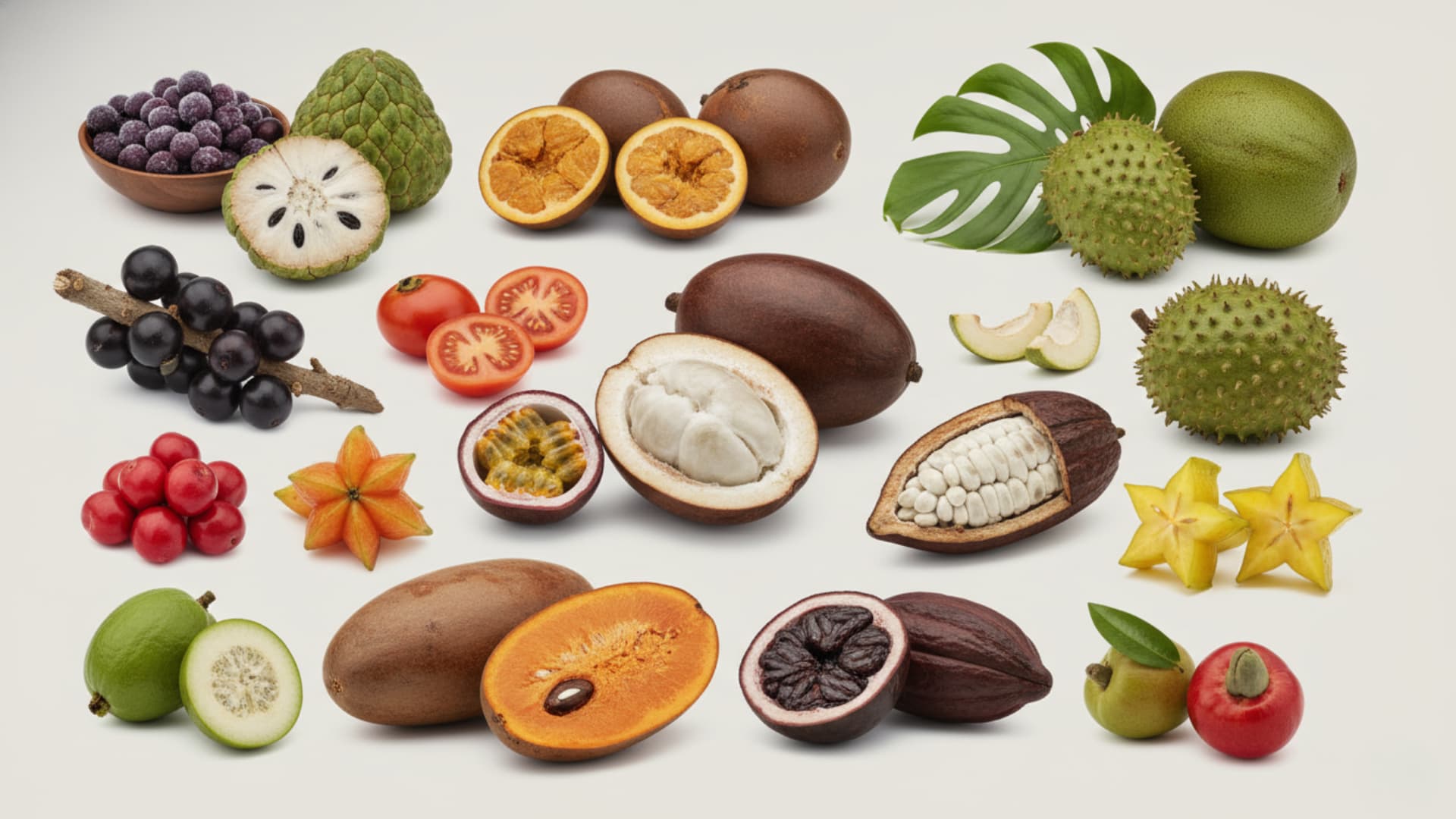
The Americas stretch from the Arctic tundra all the way down to the southern tip of Patagonia. That range gives this region one of the most varied fruit collections on the planet.
21. Açaí Berry
Açaí blew up on menus and in smoothie bowls a few years back. The attention was not wrong.
- Origin: Amazon rainforest in Brazil, Colombia, and Peru
- Taste: Slightly tart with a faint chocolate note, similar to a blackberry with an earthy finish
- Good to Know: Goes bad within 24 hours of being picked. Almost always sold frozen or as a dried powder outside Brazil.
22. Cherimoya
Mark Twain once called cherimoya the most delicious fruit known to men. Most people who try it for the first time tend to agree.
- Origin: Andean valleys of South America
- Taste: Like banana, pineapple, and vanilla all blended together in a single soft mouthful
- Good to Know: The texture is creamy like pudding. The large black seeds inside are not edible and should be removed before eating.
23. Lúcuma
Lúcuma is Peru’s favorite flavor. It shows up in ice cream, milkshakes, and pastries all across the country.
- Origin: Peru, Chile, and Bolivia
- Taste: Dry and starchy with warm hints of maple syrup and sweet potato
- Good to Know: Used widely as a natural low-glycemic sweetener. High in beta-carotene and iron.
24. Jabuticaba
Jabuticaba is unlike almost any other fruit in the world. The fruit grows directly out of the tree trunk, not from its branches.
- Origin: Brazil, especially the states of Minas Gerais and São Paulo
- Taste: Tart and slightly sweet, like a dark, more complex grape with a thicker skin
- Good to Know: Starts to ferment within 3 to 4 days of being picked. Local Brazilians use it to make wine, liqueur, and jelly.
25. Cupuaçu
Cupuaçu is the Amazon’s best-kept secret. It smells like a bakery and tastes like nothing else you have ever tried.
- Origin: Amazon Basin, Brazil
- Taste: A rich, tropical blend of chocolate and pineapple with a creamy, custard-like pulp
- Good to Know: The pulp is used to make a cocoa-free chocolate product called cupuaçu butter. Seen as a sustainable alternative to cacao in some food products.
26. Tamarillo (Tree Tomato)
Tamarillo looks like a tomato on the outside, but tastes like something else entirely. It is egg-shaped, smooth-skinned, and packed with flavor.
- Origin: South America, now also grown in New Zealand and parts of Europe
- Taste: Ranges from sour to sweet depending on variety. Red ones are more tart; yellow ones are milder.
- Good to Know: High in vitamins A and C. Often eaten with a little sugar or salt to balance the natural intensity of the flavor.
27. Granadilla
Granadilla is the sweeter, calmer version of passion fruit. It is hugely popular in Colombia and slowly gaining attention worldwide.
- Origin: Colombia and the wider Andean region
- Taste: Sweet and mild, with a gentle floral note and crunchy edible seeds inside
- Good to Know: Has a hard orange shell outside and a gelatinous pulp with edible seeds inside. Very high in fiber and vitamin C.
28. Camu Camu
Camu camu is not a fruit you eat for pleasure. It is a fruit you eat for what it does.
- Origin: Amazon rainforest in Peru and Brazil
- Taste: Extremely sour and tart. Very rarely eaten raw because of the intensity.
- Good to Know: One of the highest natural sources of vitamin C in the world. Mostly consumed as a powder or dietary supplement outside South America.
29. Pitanga (Surinam Cherry)
Pitanga looks like a tiny, bright-red ribbed pumpkin. The flavor depends entirely on how ripe it is when you eat it.
- Origin: Brazil and surrounding South American countries
- Taste: Very tart when red. Sweet with a slightly resinous, pine-like note when dark purple and fully ripe.
- Good to Know: Rich in vitamin A and lycopene. Often used to make jams and lightly fermented drinks.
30. Feijoa (Pineapple Guava)
Feijoa has a dedicated fan base in New Zealand and South America. Outside those regions, very few people have even heard of it.
- Origin: South America, now widely grown in New Zealand and coastal California
- Taste: Like mint, guava, and pineapple all at once with a slightly floral finish
- Good to Know: The skin is edible, but most people scoop out the white flesh. One of the few fruits naturally high in iodine.
31. Mamey Sapote
Mamey sapote is hugely popular in Cuba, Mexico, and Florida. One spoonful of the flesh and you will understand why.
- Origin: Mexico and Central America
- Taste: Like sweet potato mixed with pumpkin, with a warm, natural hint of cinnamon
- Good to Know: The salmon-colored flesh is very creamy. Widely blended into milkshakes and ice cream across Latin America and the Caribbean.
32. Black Sapote (Chocolate Pudding Fruit)
Black sapote earns its nickname completely. Scoop out the dark flesh of a ripe one and it looks, smells, and tastes just like chocolate pudding.
- Origin: Mexico and Central America
- Taste: Rich and sweet, like chocolate pudding, with no bitterness at all
- Good to Know: Low in fat and high in vitamin C. A popular choice for those who want something indulgent but genuinely nutritious.
33. Cacao Fruit
Most people know cacao only as the source of chocolate. The fresh white pulp around the cacao seeds is an entirely separate treat most people never get to try.
- Origin: Central and South America
- Taste: The white pulp is sweet and tropical, like lychee, mango, and fresh citrus combined
- Good to Know: The seeds are fermented and processed into cocoa and chocolate. The fruity white pulp is now sold in juices and drinks in specialty stores in the USA.
34. Guanabana (Soursop)
Soursop is one of the most popular exotic fruits across the Caribbean and Latin America. It has a strong and loyal following worldwide.
- Origin: Caribbean and Central America
- Taste: Tart and creamy, like strawberry, pineapple, and coconut cream all in one glass
- Good to Know: Widely used in juices, ice cream, and hard candy. Some early research points to possible health benefits, though more studies are still needed.
35. Sapodilla
Sapodilla is the kind of fruit that stops you mid-bite. The sweetness comes out of nowhere and lingers for a while after.
- Origin: Mexico and Central America
- Taste: Sweet like a combination of brown sugar, ripe pear, and warm honey
- Good to Know: Soft and grainy in texture, similar to a very ripe pear. The tree also produces chicle, the original natural base for chewing gum.
36. Mamoncillo (Spanish Lime)
Mamoncillo is everywhere at street markets across the Caribbean. Vendors sell them in bags by the dozen for very little money.
- Origin: Caribbean and Central America
- Taste: Sour, tangy, and lime-like on the outside, with a slightly sweet and starchy pulp hiding inside
- Good to Know: You eat it by biting the thin skin open and sucking the pulp directly off the large seed. High in vitamin C and iron.
37. Breadfruit
Breadfruit is one of the most filling fruits on the planet. Island communities across the Caribbean and Pacific have relied on it as a staple food for centuries.
- Origin: Pacific Islands, now widely grown in the Caribbean and Central America
- Taste: Starchy and mild when unripe, similar to a potato. Mildly sweet when fully ripe.
- Good to Know: Very high in complex carbohydrates and fiber. Often roasted, boiled, or fried as a starchy side dish in place of rice or potatoes.
38. Monstera Deliciosa Fruit
You have probably seen the monstera plant sold as a trendy houseplant. Fewer people know it actually produces an edible fruit.
- Origin: Central America
- Taste: Like banana, pineapple, and coconut all at once, in a creamy, soft texture
- Good to Know: The fruit must be fully ripe before eating. Unripe monstera contains oxalic acid crystals that cause irritation in the mouth and throat.
39. Starfruit (Carambola)
Starfruit is one of the most visually satisfying fruits to cut open. Every single slice is a clean, five-pointed star.
- Origin: Southeast Asia, widely grown across the Caribbean and Latin America
- Taste: Sweet and slightly sour, like a cross between apple and light citrus
- Good to Know: The brighter and yellower the skin, the sweeter the fruit. Low in calories and a solid source of vitamin C.
40. Cashew Apple
Almost everyone has eaten a cashew nut. Almost no one has tried the bright red or yellow fruit that the cashew nut actually grows on.
- Origin: Brazil and the Caribbean
- Taste: Sweet and juicy with an astringent, slightly tart finish
- Good to Know: Very high in vitamin C. In Brazil, the juice is more popular than the nut itself. The cashew nut hangs below the apple on a curved stem.
Exotic Fruits From Africa and the Middle East
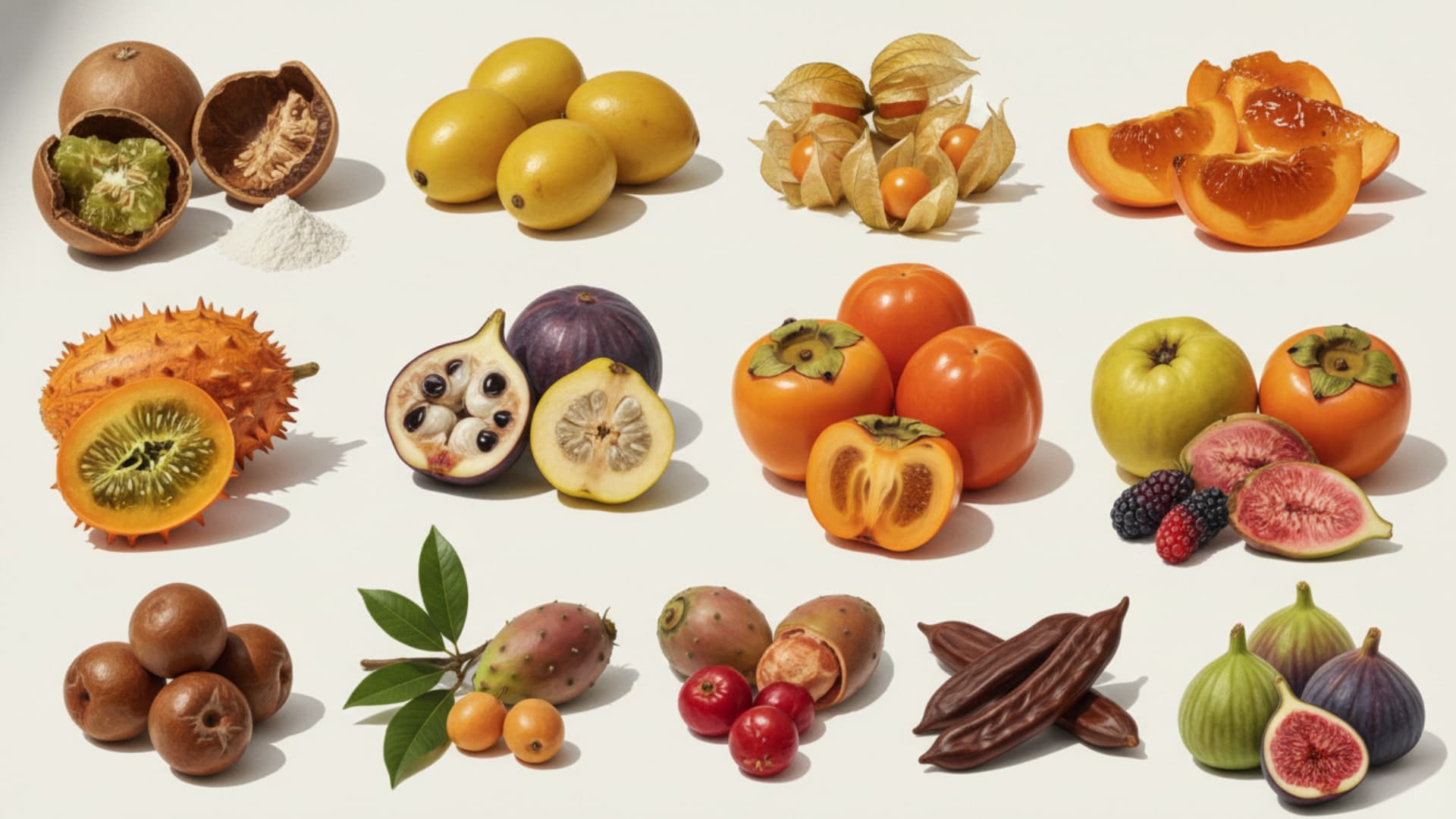
Africa and the Middle East together hold some of the oldest and most overlooked fruits in the world. Many have been eaten for thousands of years, but are only now getting wider attention. Here are some of the most interesting ones.
41. African Horned Melon (Kiwano)
Kiwano looks like it belongs in a science fiction film. The orange spiky shell and vivid green jelly interior are unlike anything else in the fruit world.
- Origin: Sub-Saharan Africa, now also grown in New Zealand and parts of the USA
- Taste: A mix of kiwi, cucumber, banana, and light citrus all in one mouthful
- Good to Know: High in vitamin A, vitamin E, zinc, and fiber. Relatively affordable and available in some specialty stores across the USA.
42. Baobab Fruit
Baobab fruit grows inside one of the most iconic trees in Africa. The fruit itself is dry, chalky, and packed with nutrients that most people’s bodies rarely get.
- Origin: Sub-Saharan Africa
- Taste: Tangy and chalky, similar to cream of tartar with a slightly citrusy edge
- Good to Know: Very high in vitamin C, calcium, and fiber. Sold worldwide as a superfood powder used in smoothies and health drinks.
43. Marula
Marula has a famous and unusual fan base. Elephants travel significant distances specifically to eat fallen marula fruit off the ground.
- Origin: Southern and East Africa
- Taste: Tart and tropical, with a naturally fermented, slightly wine-like note when fully ripe
- Good to Know: Used to make Amarula, a popular South African cream liqueur sold globally. High in oleic acid and vitamin C.
44. Cape Gooseberry (Physalis)
Cape gooseberry is easy to spot. It comes wrapped in a thin, papery, lantern-like husk that makes it look almost gift-wrapped by nature.
- Origin: South Africa, now grown across Europe, Asia, and the Americas
- Taste: Sweet and tart at the same time, like a tomato crossed with vanilla and a hint of pineapple
- Good to Know: High in antioxidants and vitamin A. Only the small orange berry inside is eaten; the husk is not.
45. African Star Apple (Agbalumo)
Agbalumo is a seasonal fruit. You either catch it between November and March, or you wait another full year.
- Origin: West Africa, especially Nigeria and Ghana
- Taste: Sweet and slightly tart with a chewy, sticky pulp and a mild wine-like finish
- Good to Know: Each fruit contains 4 to 6 seeds. High in vitamin C and calcium. Very popular as everyday street food across West Africa.
46. Ackee
Ackee is the national fruit of Jamaica and comes with one of the most important safety notes in this entire list. Read it carefully.
- Origin: West Africa, now the national fruit of Jamaica
- Taste: Mild, creamy, and buttery when cooked, with a texture that closely resembles scrambled eggs
- Good to Know: Unripe ackee contains a toxin called hypoglycin A that can be life-threatening. Only eat ackee that is fully ripe and has opened naturally on its own.
47. Quince
Quince is one of the oldest fruits in human history. You cannot eat it raw. But cook it and it becomes one of the most fragrant fruits you will ever taste.
- Origin: Caucasus region and the Mediterranean
- Taste: Very astringent and hard when raw. Sweet, fragrant, and soft when cooked with sugar.
- Good to Know: Turns a deep rose-pink color when cooked due to its natural tannins. Used in jams, pastes, and slow-cooked meat dishes across Europe and the Middle East.
48. Medlar
Medlar is the fruit that time forgot. It was common in medieval Europe but has almost completely disappeared from modern kitchens.
- Origin: Southwest Asia and Southeast Europe
- Taste: Sweet and wine-like, with a thick applesauce texture when it is ready to eat
- Good to Know: Must go through a process called bletting, which is a controlled softening through frost or storage, before it becomes edible. High in natural pectin.
49. Persimmon
Persimmon looks like a tomato from the outside. It tastes like a spoonful of honey with cinnamon. The two have nothing in common.
- Origin: China, widely grown in Japan and across the Middle East
- Taste: Honey-sweet with warm notes of cinnamon and apricot when fully ripe
- Good to Know: Two main varieties: Hachiya (very astringent until soft) and Fuyu (can be eaten firm). High in vitamin A and dietary fiber.
50. Loquat
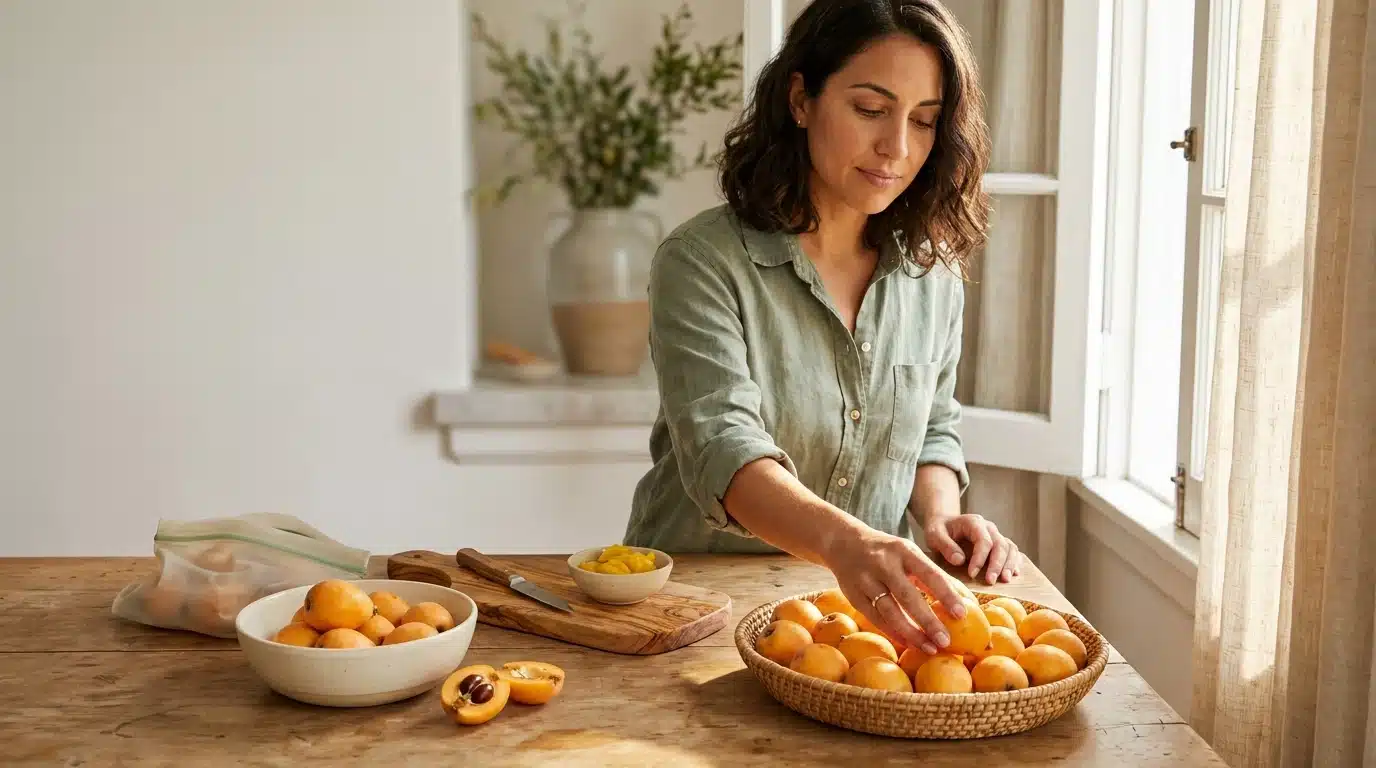
Loquat trees grow in many Mediterranean and Middle Eastern gardens, yet most people walk right past the fruit without knowing what it is.
- Origin: China, widely grown across the Mediterranean and parts of the Middle East
- Taste: Sweet and tangy, like a blend of peach, apricot, and a very light mango
- Good to Know: Very high in vitamin A and dietary fiber. The seeds inside are not edible. Best eaten fresh when slightly soft to the touch.
51. Prickly Pear (Cactus Fruit)
Prickly pear grows on cacti. The spines on the outside can draw blood if you are not careful, but the fruit inside makes the effort very much worth it.
- Origin: Americas, now widely grown across the Mediterranean, the Middle East, and North Africa
- Taste: Sweet and mild, similar to a light watermelon with a hint of berry
- Good to Know: High in magnesium, antioxidants, and fiber. Used in juices, syrups, and candy across Mexico, Italy, and the Middle East.
52. Cornelian Cherry
Cornelian cherry is not a true cherry. It is a small, olive-shaped fruit that grows on a dogwood shrub across parts of Europe and Western Asia.
- Origin: Southeast Europe and Western Asia
- Taste: Very tart and sour when raw. Sweet and complex when fully ripe or cooked slowly into jam.
- Good to Know: Used to make a traditional Turkish drink called kizilcik serbeti. One of the highest sources of natural vitamin C among small fruits.
53. Mulberry
Mulberries look like elongated blackberries. They stain your fingers within seconds and taste far better than most people ever expect.
- Origin: Middle East and China, now grown widely across Europe and the USA
- Taste: Sweet and slightly tart, like a cross between a blackberry and a red grape
- Good to Know: High in vitamin C, iron, and resveratrol. The white mulberry variety is milder and sweeter than the black or red varieties.
54. Carob
Carob is the most common chocolate substitute that most people have never actually tried on its own terms.
- Origin: Mediterranean coastline, widely grown across Southern Europe and North Africa
- Taste: Naturally sweet with a mild, cocoa-like flavor and no bitterness at all
- Good to Know: Naturally caffeine-free, unlike chocolate. High in fiber and calcium. Sold as carob chips, powder, and syrup in health food stores worldwide.
55. Fig (Rare Varieties)
Most people have eaten a basic fig from the supermarket. Very few have tried the rare heritage varieties that taste like completely different fruits.
- Origin: Middle East and Western Asia, one of the oldest cultivated fruits in human history
- Taste: Ranges from rich and honey-sweet (Black Mission) to dry and nutty (Calimyrna) to pale and mild (Kadota)
- Good to Know: Figs are technically an inverted flower structure called a syconium, not a true fruit in the botanical sense. High in calcium and potassium.
Exotic Citrus Fruits From Around the World
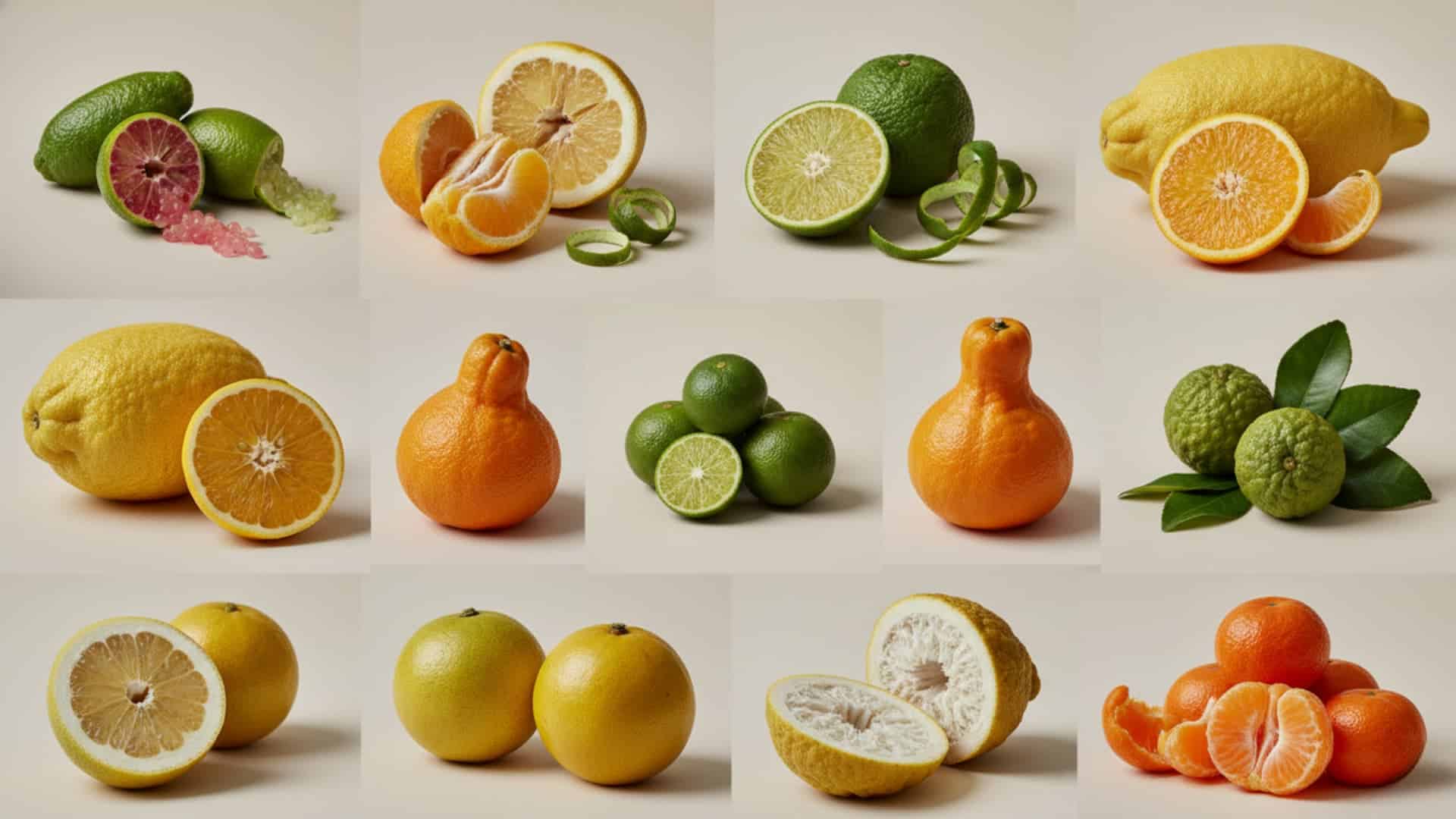
Most people stop at lemon, lime, and orange when they think of citrus. But the citrus family is far larger and far more interesting than that. Here are exotic citrus fruits most people have never tasted.
56. Finger Lime (Caviar Lime)
Finger lime is the kind of fruit that makes people stop and stare. Cut one open, and tiny round citrus pearls spill out like fish roe.
- Origin: Australian rainforest, now also grown in California and parts of Europe
- Taste: Intensely tart and citrusy, with each pearl bursting individually in your mouth
- Good to Know: Used as a garnish in high-end restaurants worldwide. Available in pink, green, and yellow varieties, each with a slightly different flavor profile.
57. Ugli Fruit
The name is honest. Ugli fruit looks rough, wrinkled, and uneven. The taste is a completely different story.
- Origin: Jamaica
- Taste: Sweet and very juicy, with far less bitterness than a grapefruit
- Good to Know: A natural hybrid of grapefruit, orange, and tangerine. High in vitamin C. Found in some specialty grocery stores across the USA during the winter months.
58. Bergamot Orange
Bergamot is famous for one thing most people already love without even knowing it. It is the citrus flavor that makes Earl Grey tea what it is.
- Origin: Calabria, Italy
- Taste: Sour and bitter like grapefruit, with a very strong, almost perfume-like floral quality
- Good to Know: Rarely eaten fresh. The rind oils are used in tea, perfumes, and marmalades. Italy produces around 80% of the world’s supply.
59. Sudachi
Sudachi is small, green, and packs a flavor punch that is very hard to replace in Japanese cooking once you have tasted it.
- Origin: Tokushima Prefecture, Japan
- Taste: Very sour and bright, with more depth and complexity than a standard lemon
- Good to Know: Used to season grilled fish, noodles, and hot pot dishes across Japan. Contains more vitamin C per gram than most common citrus fruits.
60. Citron
Citron is one of the three original citrus fruits from which nearly all modern citrus varieties were eventually bred. You almost never eat it fresh.
- Origin: South Asia, now widely grown across the Mediterranean
- Taste: Very sour with very little juice. Almost entirely used for its thick, heavily scented rind.
- Good to Know: The rind is candied and used in holiday baking across Europe and the Middle East. The Buddha’s Hand is actually a variety of citron.
61. Tangelo
Tangelo sits between two citrus worlds. It carries the sweetness of a tangerine and the size of a small orange in a single, easy-to-peel package.
- Origin: USA (a natural or cultivated cross between tangerine and grapefruit or pomelo)
- Taste: Sweet, very juicy, and easy to peel, with a clean citrus flavor and almost no bitterness
- Good to Know: Recognized by a small nipple-like bump at the top of the fruit. Often sold under the name Minneola in American stores.
62. Kabosu
Kabosu is one of Japan’s most beloved citrus fruits for cooking, yet it is almost entirely unknown outside the country.
- Origin: Oita Prefecture, Japan
- Taste: Sour and tart, with more depth and warmth than a regular lemon
- Good to Know: Used heavily in ponzu sauce and to season hot pot dishes. Harvested while still green in late summer for the highest acidity and flavor.
63. Kaffir Lime
Kaffir lime is rarely eaten as a fruit. The leaves and rind are where the real flavor lives, and they punch well above their weight in cooking.
- Origin: Southeast Asia, widely used in Thai and Indonesian cooking
- Taste: Very sour and bitter if eaten directly. The rind is intensely floral and fragrant.
- Good to Know: The distinctive double-lobed leaves are a key ingredient in Thai green curry and many Southeast Asian soups and sauces.
64. Minneola (Honeybell)
Minneola is one of the easiest exotic citrus fruits to find in the USA, especially during January and February when it is in peak season.
- Origin: USA (a cross between Duncan grapefruit and Dancy tangerine)
- Taste: Very sweet, very juicy, with almost no bitterness and a clean, bright citrus finish
- Good to Know: Has a distinctive bell shape with a prominent neck at the top. The season is very short, just a few weeks in late winter.
65. Oroblanco (Sweetie)
Oroblanco was developed specifically to give people the grapefruit experience without any of the bitterness. It delivers on that promise.
- Origin: Developed jointly in California and Israel (a hybrid of grapefruit and pomelo)
- Taste: Sweet and mild like an orange, with a very faint grapefruit note and almost no bitter aftertaste
- Good to Know: High in vitamin C. The thick white pith is unusually sweet compared to other citrus fruits. Available in some US specialty stores in winter.
66. Yuko
Yuko is one of the rarest citrus fruits in the world. It nearly went extinct and exists today only because of active conservation efforts in Japan.
- Origin: Kochi Prefecture, Japan
- Taste: Similar to yuzu but slightly milder, less tart, and with a softer aroma
- Good to Know: Grown in very limited quantities. Almost never available outside Japan. Conservation programs now actively protect the remaining trees.
67. Pompia
Pompia is so specific to its home island that even many Sardinians have never seen one in person.
- Origin: Sardinia, Italy
- Taste: Very bitter, with an extremely thick and strongly fragrant rind
- Good to Know: Used almost entirely in traditional Sardinian sweets and liqueurs. Considered one of the most ancient citrus varieties still in existence anywhere in the world.
68. Clementine (Heritage Varieties)
Most people know the seedless grocery store clementine. Heritage varieties from North Africa tell a very different, more flavorful story.
- Origin: Algeria and Morocco, first documented in the early 1900s
- Taste: Heritage varieties are more intense, complex, and aromatic than the commercial seedless varieties found in supermarkets
- Good to Know: Commercial clementines were developed specifically to be seedless and easy to peel. Heritage varieties often have seeds but significantly more natural flavor depth.
The World’s Rarest and Most Expensive Exotic Fruits
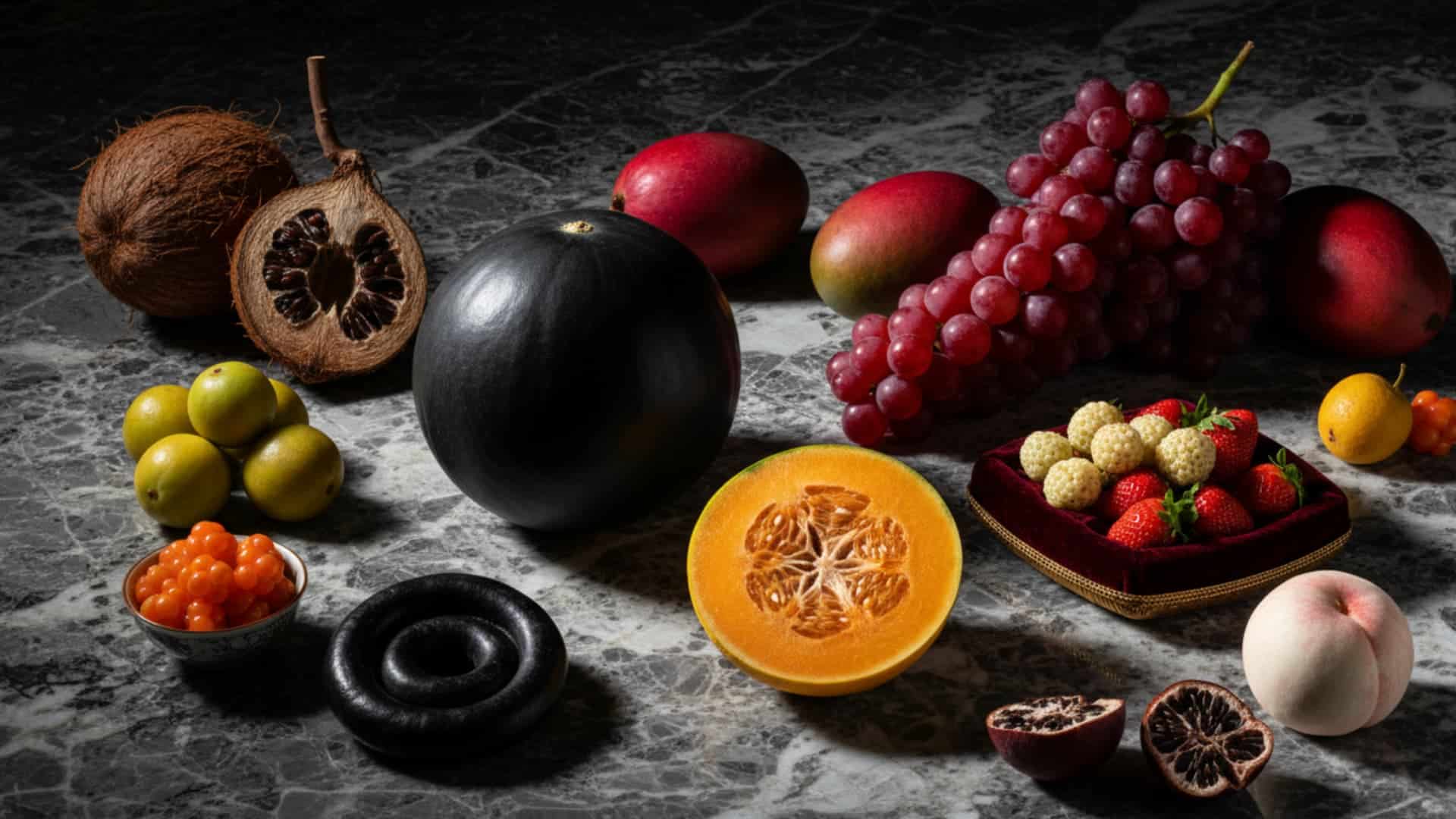
Some fruits are rare not because of their taste but because of where they grow, how long they take to produce, or how few of them exist at any one time. Here aresome of the rarest and most expensive fruits on the planet.
69. Densuke Watermelon
Densuke watermelon looks nothing like the striped melons you have seen your whole life. The rind is solid, smooth, and completely black.
- Origin: Hokkaido, Japan (grown only in the small town of Toma)
- Taste: Said to be noticeably sweeter and crunchier than any standard watermelon variety
- Good to Know: Only a few thousand are grown each year. A single fruit has sold for up to $6,000 at auction in Japan.
70. Ruby Roman Grapes
Ruby Roman grapes are the most exclusive grape variety in the world. Each individual grape can be the size of a ping pong ball.
- Origin: Ishikawa Prefecture, Japan
- Taste: Very sweet, rich, and juicy, with notably low acidity compared to other red grapes
- Good to Know: A single bunch has sold for over $10,000 at auction. Quality is graded strictly by size, sugar content, and color. Available only within Japan.
71. Yubari King Melon
Yubari King is the most recognized luxury fruit in Japan. Matched pairs of melons are sold at department stores as premium gifts.
- Origin: Yubari City, Hokkaido, Japan
- Taste: Extremely sweet, smooth, and evenly juicy throughout, with no fibrous texture
- Good to Know: Some matched pairs have sold for over $27,000 at auction. Each melon is grown in a controlled greenhouse and handled carefully throughout the entire growing process.
72. Miyazaki Mango (Egg of the Sun)
Miyazaki mangoes are the opposite of the stringy, pale mangoes found on most grocery store shelves.
- Origin: Miyazaki Prefecture, Japan
- Taste: Intensely sweet with smooth, fiber-free flesh and a very rich, full flavor
- Good to Know: Deep red skin turns full crimson when ripe. Paired gift sets can sell for several hundred dollars. Strict sugar content requirements must be met before they can be sold under the Miyazaki label.
73. Coco de Mer
Coco de Mer holds a record that no other plant comes close to. It produces the largest seed of any plant in the world.
- Origin: Praslin and Curieuse islands in the Seychelles (found nowhere else naturally on earth)
- Taste: The jelly-like flesh inside is soft and rich, similar to young coconut but with more body
- Good to Know: A single seed can weigh up to 25 kilograms. The tree takes 25 years to bear fruit. Exporting one without a government certificate is illegal.
74. Sembikiya Queen Strawberry
Sembikiya strawberries are not just a fruit. They are a piece of produce so uniform in size, color, and shape that they are sold in velvet-lined gift boxes.
- Origin: Japan, sold at Sembikiya fruit parlors in Tokyo
- Taste: Extremely sweet with very low acidity, almost like candy in a strawberry’s shape
- Good to Know: Each berry is hand-checked for quality before sale. A single strawberry can cost several dollars. Given as high-end gifts, not eaten as an everyday snack.
75. Pineberry
Pineberry flips everything you know about a strawberry. It is white on the outside with red seeds on the surface. It is not an albino strawberry; it is a separate species.
- Origin: Originally from South America, commercially developed in the Netherlands
- Taste: Like a blend of fresh pineapple and strawberry in a single small bite
- Good to Know: Smaller than a standard strawberry. Now available in some specialty stores in the UK and the USA during late spring.
76. Cloudberry
Cloudberry cannot be commercially farmed. It only grows wild in arctic and subarctic conditions, which makes it both rare and highly sought after.
- Origin: Norway, Finland, Canada, and other subarctic regions
- Taste: Sharp and tart when not fully ripe. Warm, honey-like, and almost creamy when completely ripe.
- Good to Know: Highly prized in Scandinavia. Used in jams, liqueurs, and traditional desserts. In some parts of Norway, picking large quantities from the wild is legally restricted.
77. Araza (Amazon Guava)
Araza is one of the very few exotic fruits that has never successfully grown outside its native region in the Amazon jungle.
- Origin: Amazon jungle in Brazil, Peru, and Ecuador
- Taste: Very acidic and tart. Far too sour to eat raw. Best blended into juice, ice cream, or smoothies.
- Good to Know: Rich in nitrogen and potassium. Early research suggests it may help control blood pressure and carries strong antioxidant properties.
78. White Strawberry (Omakase)
White strawberries look like something went wrong in the field. They are pale, almost cream-colored, with none of the red you expect from a strawberry.
- Origin: Saga Prefecture, Japan
- Taste: Very sweet with almost no acidity, giving a lighter and more subtle flavor than a red strawberry
- Good to Know: Grown in low-light conditions to prevent the fruit from developing red pigment. A single berry can cost over $10 in the USA when it is available.
79. Lardizabala (Coil Fruit)
Lardizabal is one of the least-known edible fruits in the world. It grows on a climbing vine deep in the forests of central Chile.
- Origin: Central Chile
- Taste: Sweet and mild, similar to a lighter, less intense version of passion fruit
- Good to Know: Rarely, if ever, exported. Almost exclusively eaten by local communities in its native region. The bark of the vine has been used for traditional basket weaving in Chile.
80. Square Watermelon
Square watermelons are grown in Japan by placing young fruits inside square molds while they are still developing on the vine.
- Origin: Zentsuji City, Kagawa Prefecture, Japan
- Taste: Often bland and unripe because they are harvested early to hold the cube shape before the fruit has time to fully sweeten
- Good to Know: Sold primarily as decorative objects and can cost several hundred dollars each. The visual novelty is the entire point; the flavor is secondary.
81. Sembikiya White Peach
Japan’s premium white peaches are grown with a level of care that most fruit farming never comes close to. Each one is often wrapped individually on the tree.
- Origin: Japan, sold at Sembikiya luxury fruit parlors in Tokyo
- Taste: Extremely sweet and floral, with almost no acidity and a very soft, melt-in-your-mouth texture
- Good to Know: Sold in luxury gift boxes during summer only. Some premium varieties sell for over $50 per fruit. Available only for a very short window each year.
Health Benefits of Eating Exotic Fruits
Eating beyond the same five or six fruits opens up a much wider range of nutrients that most people’s diets regularly miss out on. Here is a quick look at what different exotic fruits can offer.
- Highest in vitamin C: Camu camu, baobab, and acerola cherry contain far more vitamin C than a standard orange.
- Highest in antioxidants: Açaí, mangosteen, and jabuticaba rank among the top antioxidant-rich fruits measured in nutritional research.
- Good for digestion: Jackfruit, tamarind, and soursop are high in fiber and support healthy gut function.
- High in healthy fats: Açaí and cupuaçu contain beneficial fatty acids that support heart health.
- Rich in iron: Karonda and mulberry are strong plant sources of iron, particularly useful for those with low iron levels.
- Natural energy sources: Lúcuma and breadfruit provide complex carbohydrates that offer steady, lasting energy without a quick sugar spike.
- Traditionally used for immunity: Noni, jujube, and elderberry have been used in traditional medicine for centuries for their reported immune-supporting properties.
Note: These are general nutritional highlights. Exotic fruits are not a substitute for medical advice or treatment.
How to Pick, Store, and Eat Exotic Fruits
Picking exotic fruits is mostly about using your senses rather than following a fixed rule. Smell the fruit first, since most ripe tropical fruits have a noticeable aroma that tells you they are ready.
Press the skin lightly, because a slight give usually signals ripeness. Check the color, as most fruits shift from green toward yellow, orange, or red as they ripen fully.
For storage, keep most tropical fruits at room temperature until ripe, then move them to the fridge to slow ripening. Powdered forms like baobab and camu camu store well at room temperature for months.
To eat them: cut and scoop fruits like dragon fruit and cherimoya; peel and pull apart fruits like rambutan, lychee, and longan; blend tart ones like camu camu and tamarind into drinks or smoothies; and cook starchy ones like breadfruit and unripe jackfruit.
Final Thoughts
A whole lot of flavors most people never try. The point is simple: the world grows far more than what sits in your local grocery store.
Some of these exotic fruits are just one click away. Some are at your nearest Asian market. Some of you may need to travel. And honestly, that makes them worth it.
They each carry a story, a place, and a taste that nothing else can copy. So next time you spot something unfamiliar at a market, just grab it. You might love it.
Now, which fruit from this exotic fruit list are you going to try first? Tell us below.