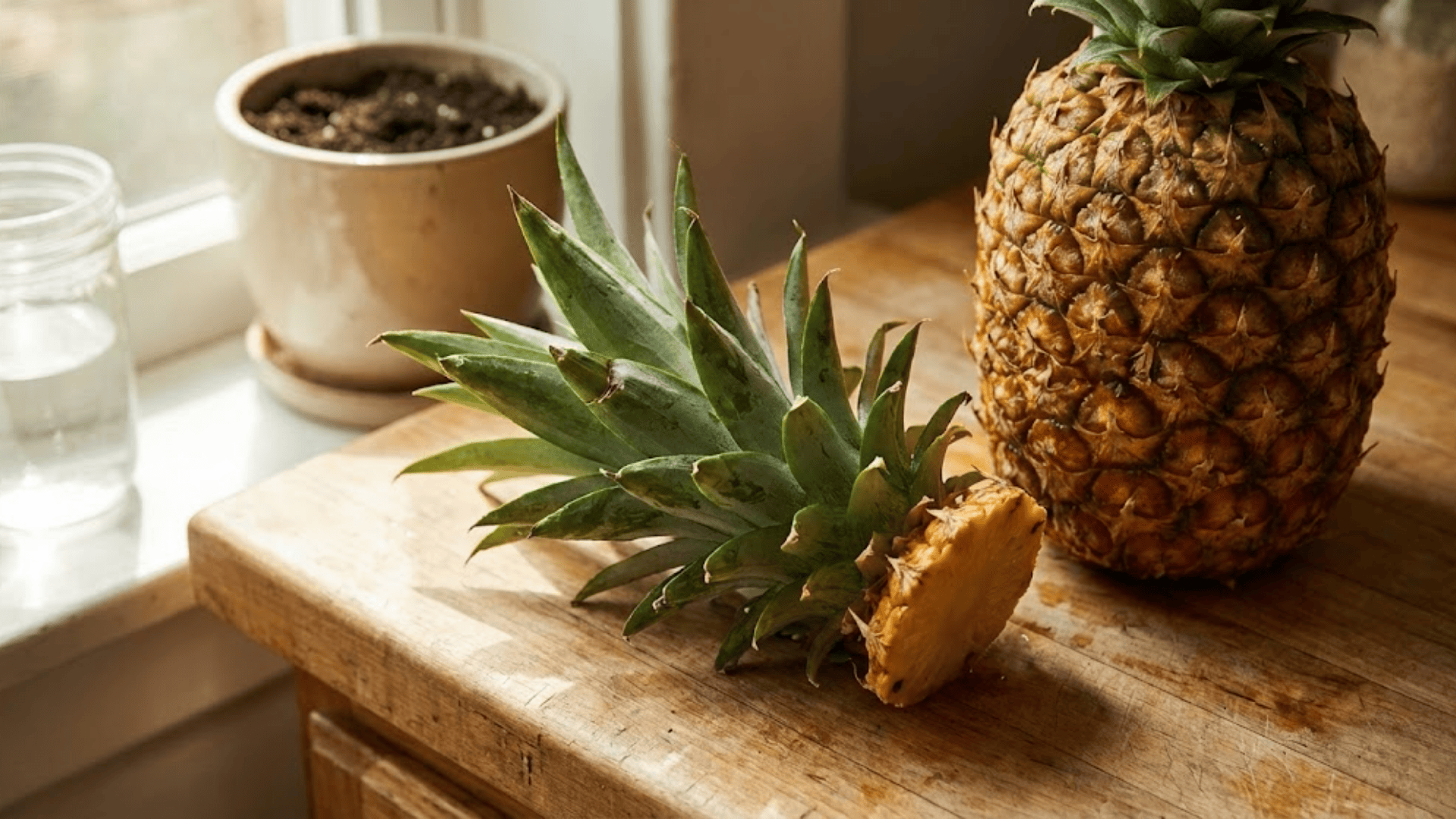
There’s a quiet thrill in turning kitchen scraps into something alive and thriving.
Growing a pineapple at home captures that exact feeling, taking the leafy crown of a store-bought fruit and coaxing it into a tropical plant that actually produces another pineapple.
It’s slower than most gardening projects, sure, but that’s part of its charm.
You get to watch something entirely unexpected unfold on your windowsill or patio, and yes, it really works.
We’ll walk you through everything: choosing the right crown, getting it to root, nurturing it through its quirky growth stages, and eventually harvesting your very own homegrown pineapple.
What You’re Actually Growing
A pineapple plant isn’t a tree or a vine. It’s a low-growing tropical perennial with stiff, spiky leaves that fan out from the center.
The fruit develops right in the middle of those leaves, sitting on a thick stalk like a crown jewel. These plants are surprisingly hardy once established, but they do need warmth and patience.
From the moment you plant that crown to the day you harvest a ripe pineapple, you’re looking at anywhere from 18 months to 3 years.
It sounds like forever, but watching those stages unfold is genuinely rewarding.
Can You Grow a Pineapple at Home?
Absolutely, and it works in more places than you’d think.
Pineapples thrive outdoors in warm, frost-free climates where temperatures stay consistently above 60°F, such as tropical or subtropical zones.
If you live somewhere colder, indoor growing works beautifully with enough sunlight or a grow light.
Your homegrown pineapple will likely be smaller than the grocery store giants, but the flavor? Often sweeter and more aromatic.
The plant itself becomes a striking houseplant even before it fruits, so you’re getting something beautiful either way.
What You Need to Grow a Pineapple?
You don’t need much to grow a pineapple, just a few basics and a little know-how.
Here’s what to gather before you begin:
- A healthy pineapple crown from a store-bought fruit, or skip the wait and grab a starter plant from a nursery.
- Well-draining potting mix with added perlite or sand, pineapples hate sitting in soggy soil.
- A container with drainage holes, at least 10-12 inches wide, to give those roots room to spread.
- Bright, direct sunlight for 6-8 hours daily, or a strong grow light if you’re going the indoor route.
- Warm temps between 65-85°F and decent humidity, though they’re surprisingly forgiving once established.
Get these sorted, and you’re already halfway to growing your own tropical stunner.
How to Grow a Pineapple from a Crown?
Starting from a store-bought pineapple crown is the most satisfying route.
Here’s how to pick the right fruit, prep that leafy top, and coax it into growing roots.
Step 1: Pick a Pineapple with a Healthy Crown
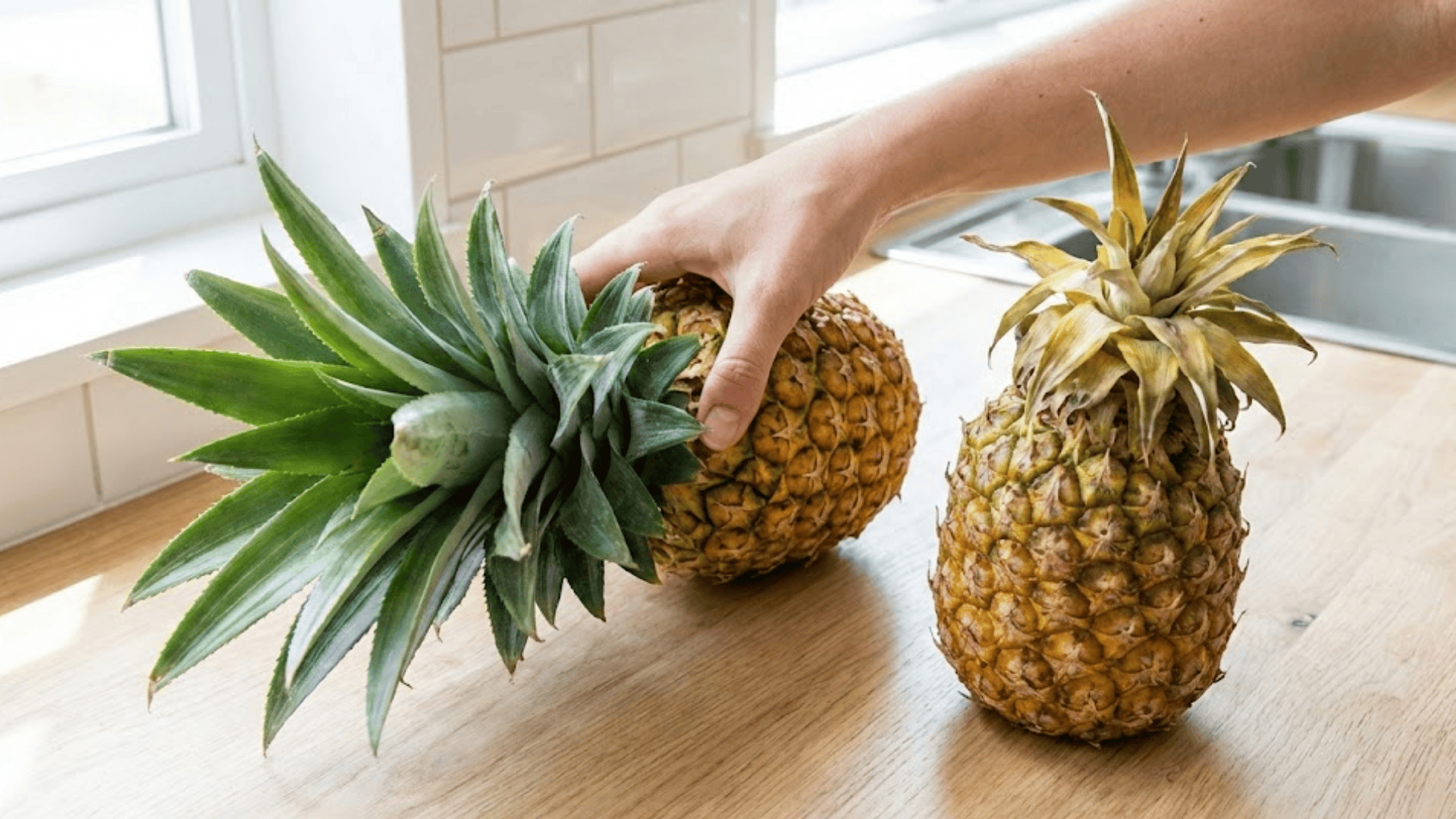
Look for a pineapple with firm, green leaves at the center that aren’t brown or wilted. Give the crown a gentle tug; it should feel secure, not loose.
The fruit itself should smell sweet at the base and have golden-yellow skin. Avoid any with soft spots or moldy areas. A healthy pineapple means a healthy crown.
Step 2: Twist Off the Crown
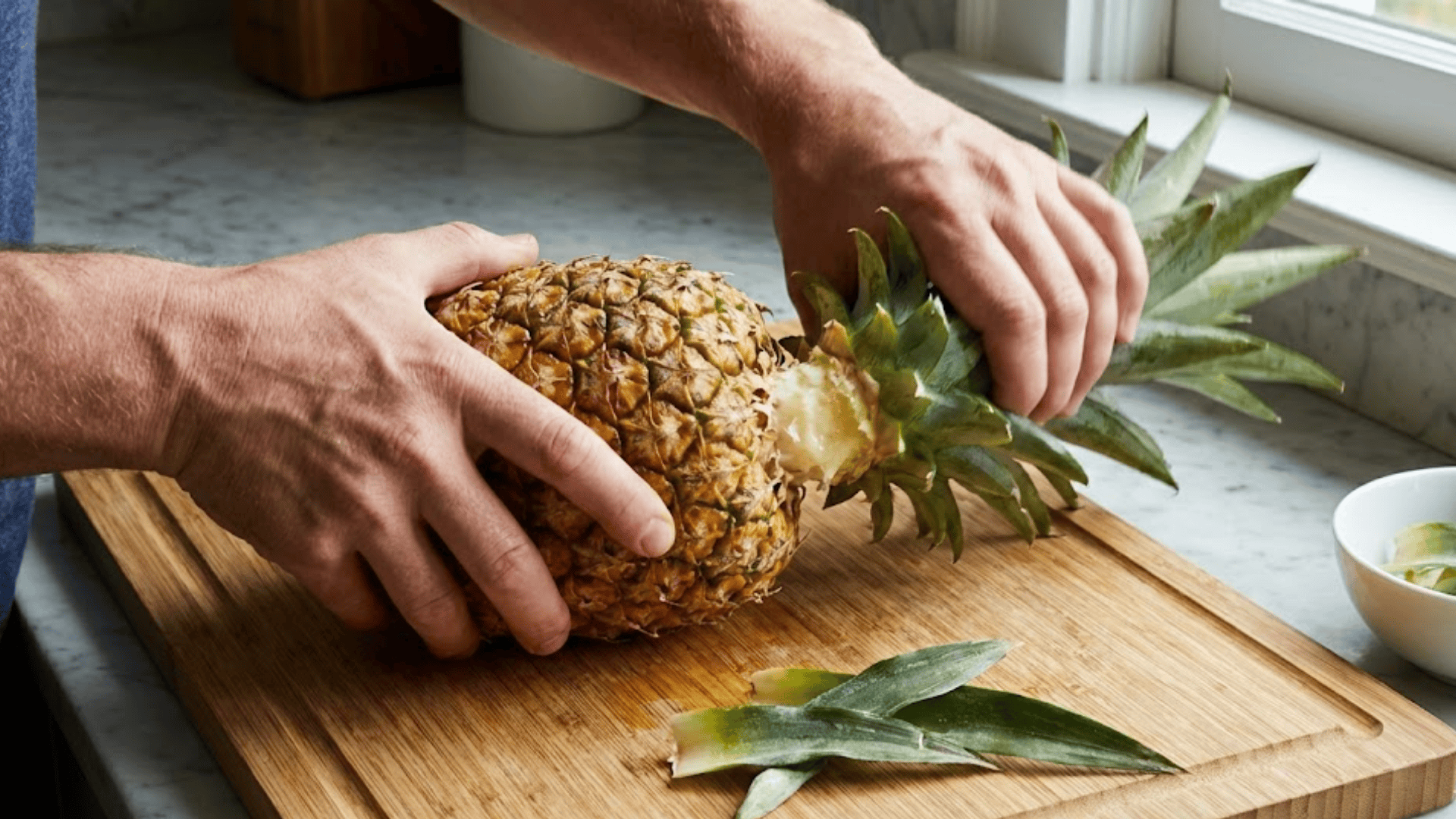
Grip the pineapple firmly with one hand and the leafy crown with the other. Twist the crown steadily until it separates from the fruit.
You can also slice off the top and carefully cut away the flesh, leaving just the core. Strip off the lower leaves to expose about 2 inches of the stem. This bare section is where roots will emerge.
Step 3: Let It Dry Out
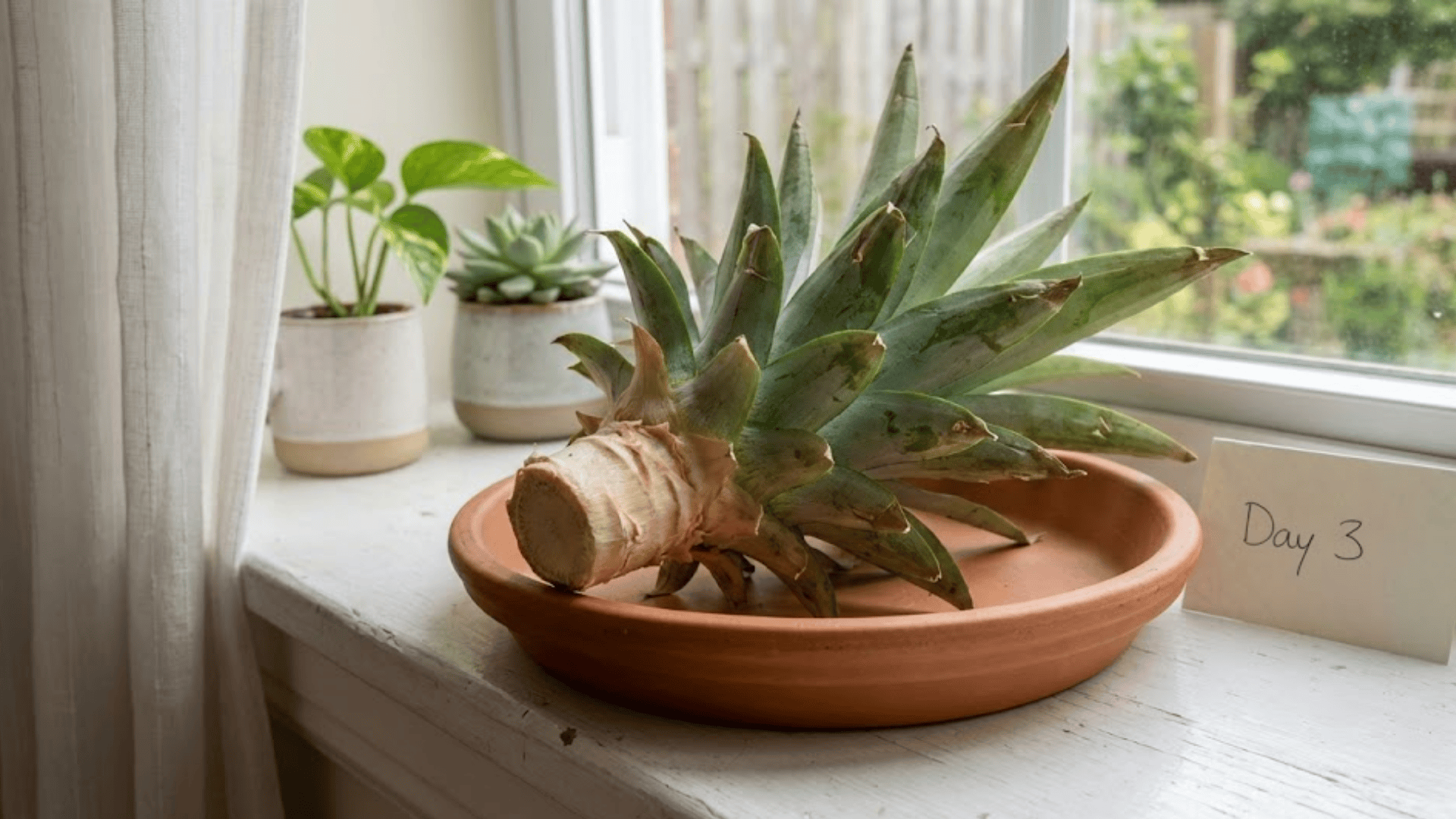
Place the crown in a dry, shaded spot for 3-5 days. This curing period lets the cut end callus over, which prevents rot when you eventually plant or root it.
Don’t skip this step, soggy stems invite bacteria and fungus. Just let it sit and do its thing until the bottom feels dry to the touch.
Step 4: Root It in Water or Soil
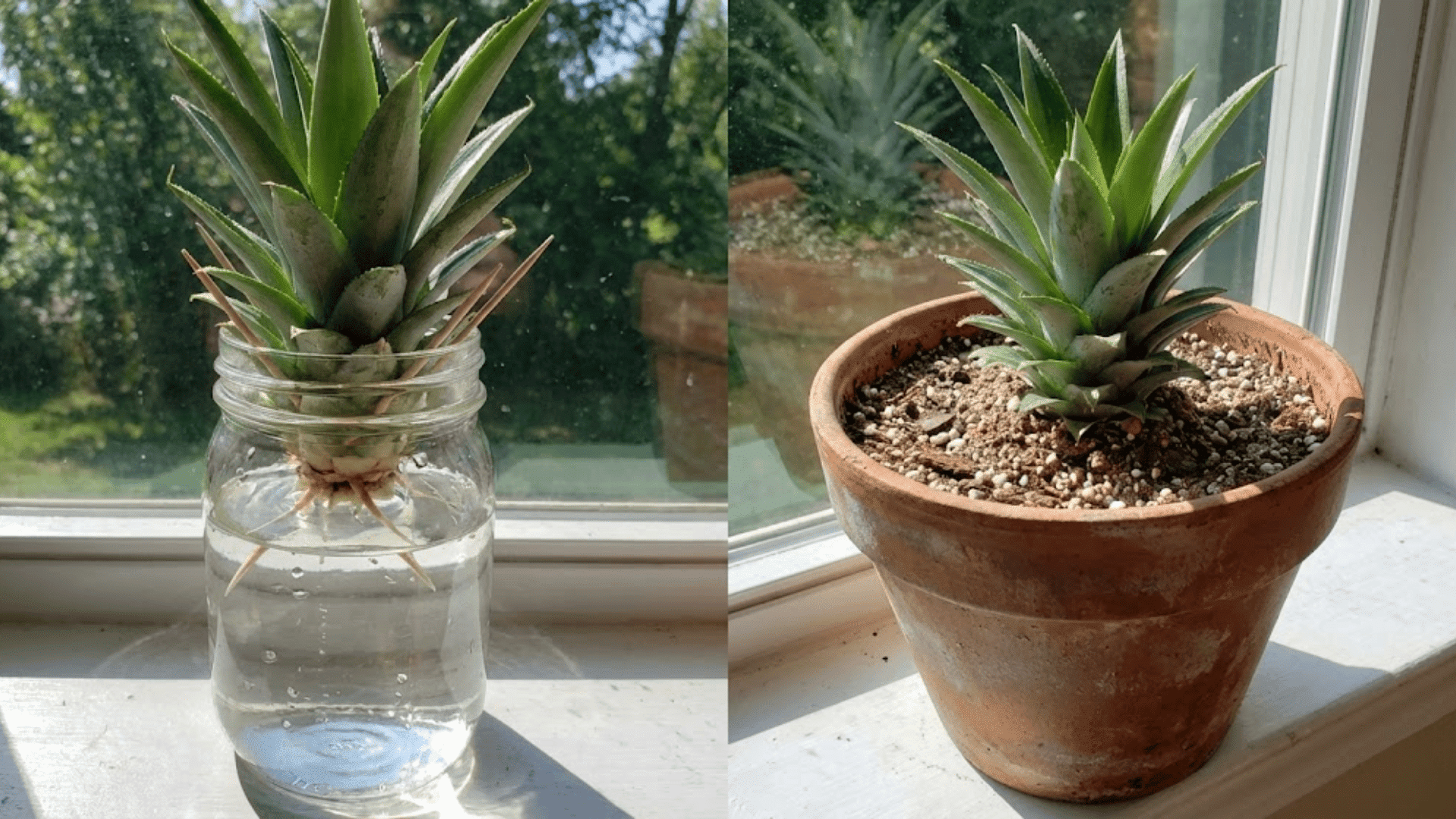
For water rooting, suspend the crown in a glass so the stem touches water, but the leaves stay dry. Change the water every few days. Roots usually appear in 2-3 weeks.
For soil rooting, plant the dried crown directly into a moist, well-draining mix and keep it lightly watered. Both methods work; water just lets you watch the progress.
Step 5: Wait for Strong Roots
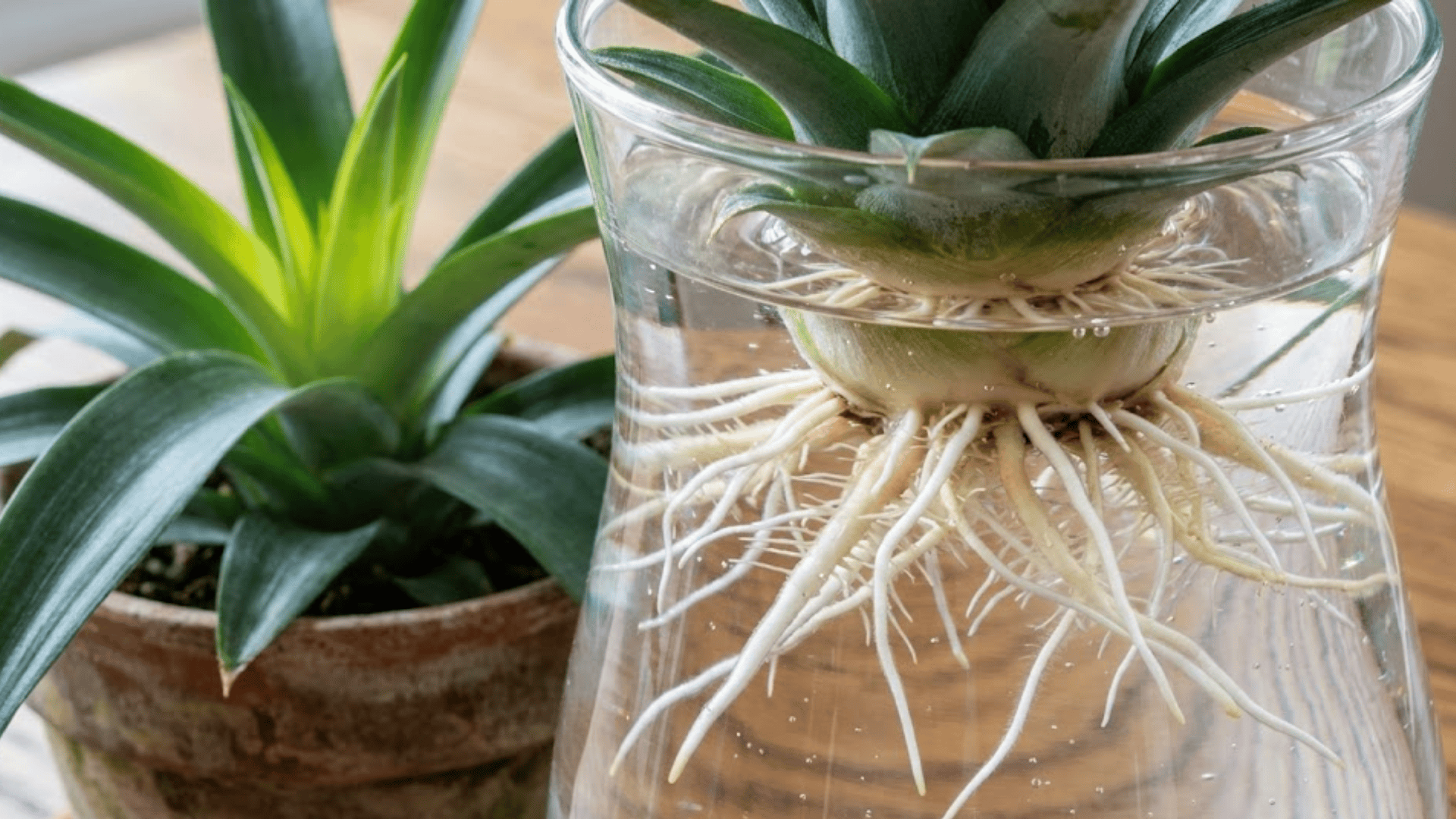
Once roots reach 2-3 inches long, your crown is ready for soil if you started in water.
If you rooted directly in soil, you’ll notice new green growth from the center after a few weeks; that’s your sign that the roots have taken hold. Be patient here, pineapples move at their own pace.
How to Plant a Pineapple Plant?
Once your crown has roots or you’ve brought home a nursery plant, it’s time to get it settled into its permanent home.
Here’s how to set it up for success.
Step 6: Choose the Right Soil Mix
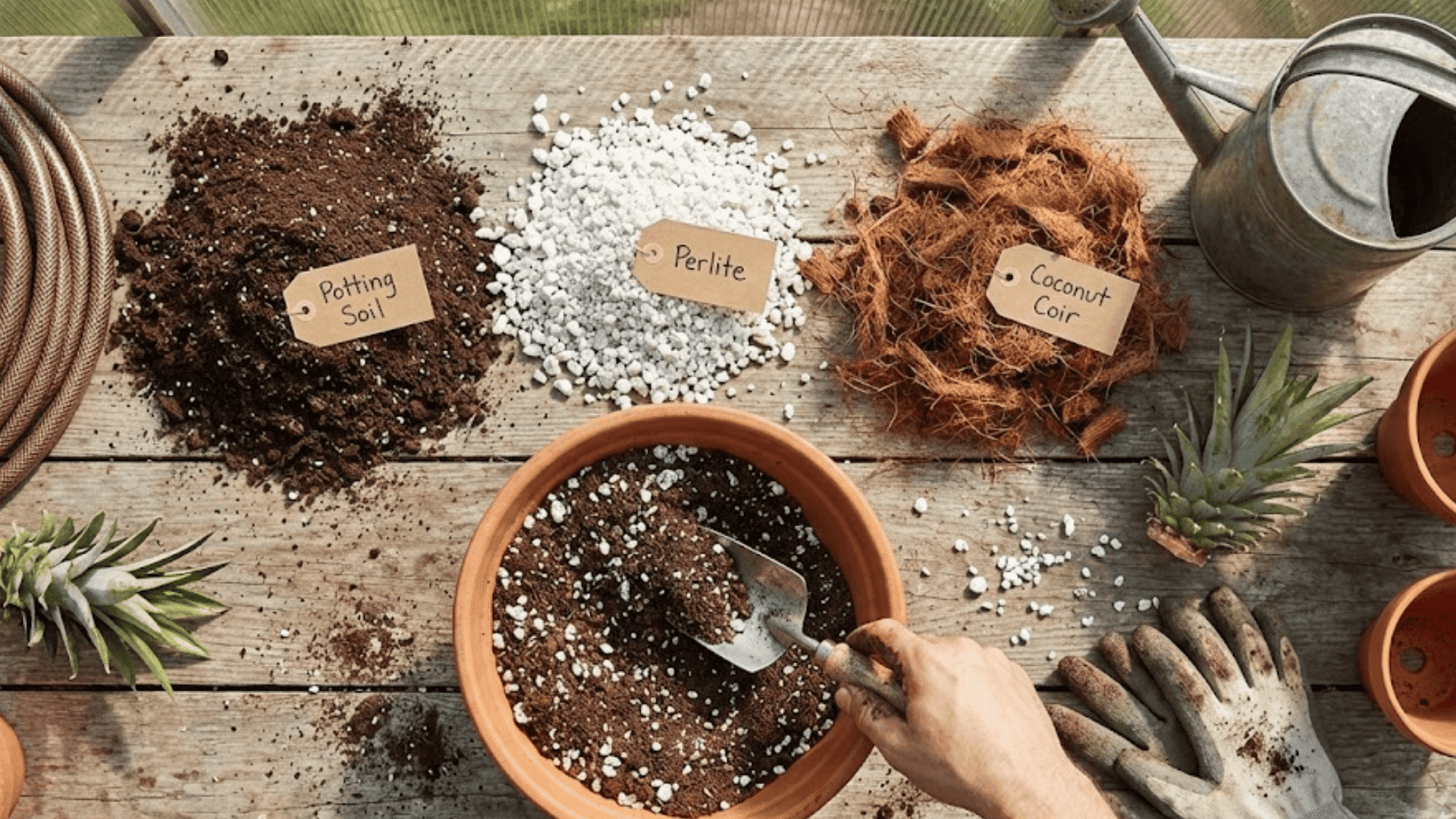
Pineapples need soil that drains fast and stays slightly acidic. A cactus or succulent mix works perfectly, or make your own by combining:
- 2 parts potting soil
- 1 part perlite or coarse sand
- 1 part peat moss or coconut coir
Skip heavy garden soil or anything that holds too much moisture. Waterlogged roots spell trouble for these tropical plants.
Step 7: Pick the Right Container
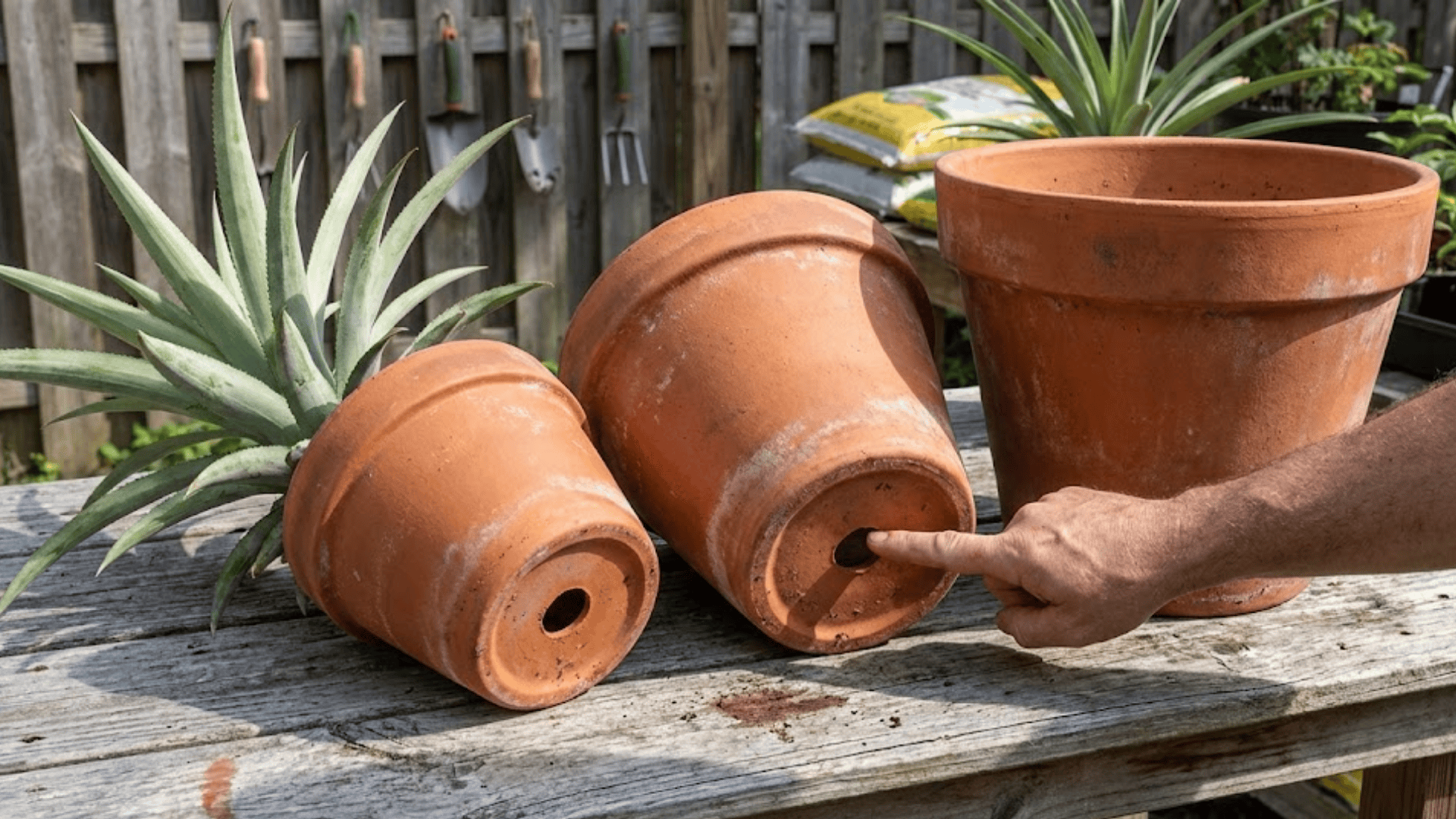
Start with a pot that’s 10-12 inches wide with drainage holes at the bottom. Pineapples have shallow root systems, so width matters more than depth.
As the plant grows over the next year or two, you can move it to a 5-gallon container. Terracotta pots work beautifully since they let excess moisture evaporate through the sides.
Step 8: Plant at the Proper Depth
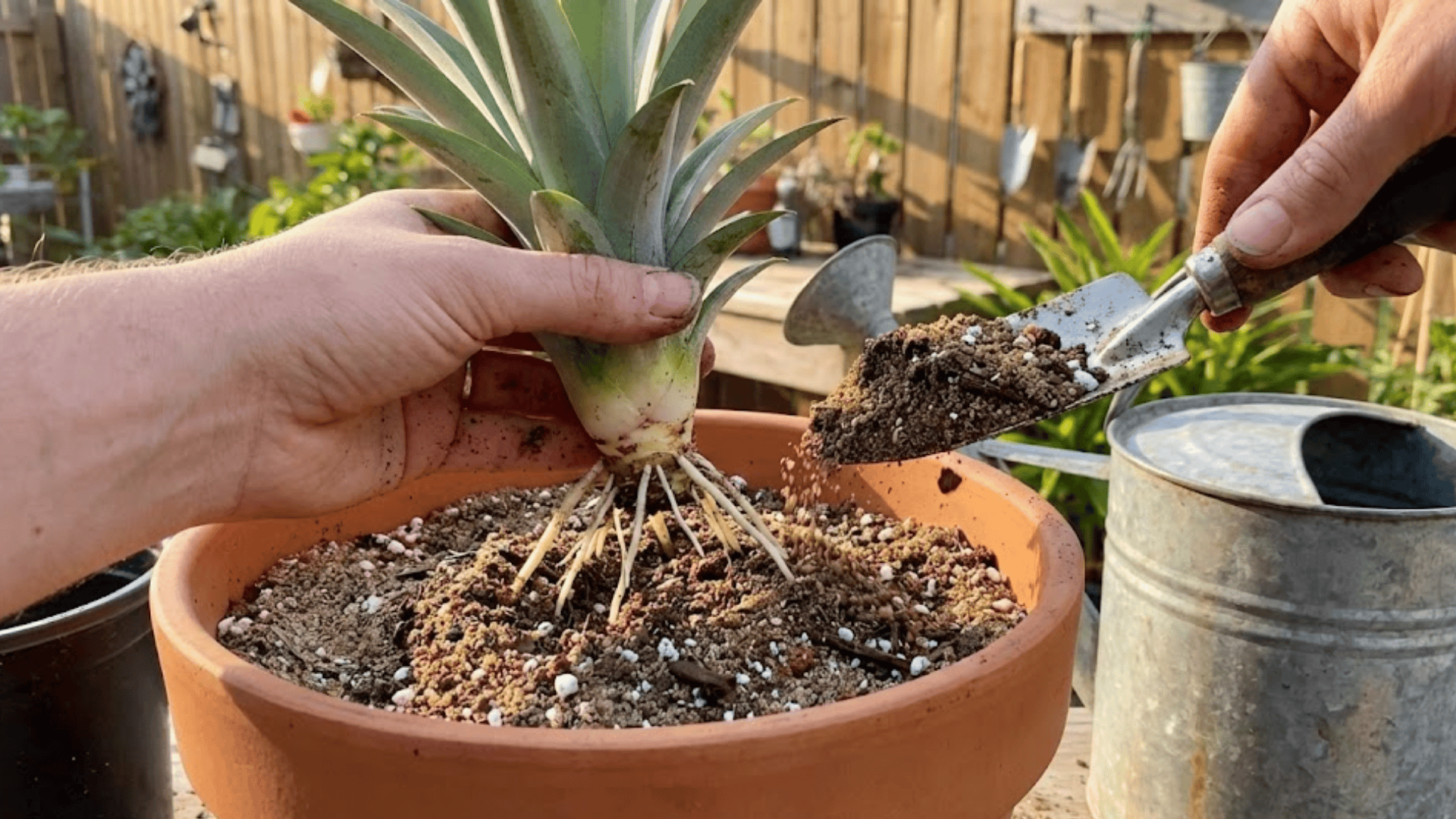
Set the rooted crown or starter plant so the base sits just below the soil surface, with the lowest leaves hovering right above it. Pack soil gently around the stem to keep it upright, but don’t bury it too deep.
Water lightly to settle everything in, then place your pot somewhere bright and warm. The plant might look a little shocked at first, but new growth should appear within a few weeks.
Caring for Your Pineapple Plant: Light, Water, and Temperature
Pineapples are pretty forgiving once you understand their preferences.
Here’s how to keep yours thriving with the right balance of sun, moisture, and warmth.
| What It Needs | Outdoor Growing | Indoor Growing |
|---|---|---|
| Light | 6-8 hours of full sun daily, can tolerate partial shade, but fruits more slowly | South-facing window or grow light, rotate weekly for even growth |
| Water | Once weekly in summer, every 10-14 days in winter when the top 2-3 inches are dry | Same schedule, adjust for heating/AC, water soil directly, not leaf cup |
| Temperature | 65-85°F ideal, cover or bring in if temps drop below 50°F | 65-85°F, keep away from cold drafts and heating vents |
| Humidity | 40-60% preferred, adapts well to outdoor conditions | Mist occasionally or use a pebble tray if the air is very dry, and ensure good circulation |
How Long Does It Take to Grow a Pineapple?
Plan for the long game here. Getting a harvestable pineapple takes 18 months to 3 years, depending on conditions.
The first year focuses on root development and leaf growth.
Around 12-18 months in, a red flower spike emerges from the center, blooming for a few weeks before the tiny fruit forms beneath it. That baby pineapple needs another 5-6 months for full maturity and ripeness.
Indoor plants or cooler climates stretch the timeline, while outdoor tropical conditions move things faster.
How to Make a Pineapple Plant Flower?
Sometimes, pineapples need a nudge to start fruiting. If your plant is at least 12-15 months old with healthy leaves, try these ethylene tricks to trigger flowering.
- Step 1: Confirm your plant is mature enough; it should have at least 60-70 leaves and be 12-18 months old before attempting.
- Step 2: Place a ripe apple in the center of the plant where leaves meet. The ethylene gas it releases signals the flowering time.
- Step 3: Cover the entire plant with a clear plastic bag for 3-5 days to trap the ethylene around the foliage.
- Step 4: Remove the bag and apple, then wait 6-10 weeks for the red flower spike to appear in the center.
- Step 5: Resume normal care once you see that spike; the plant will handle the rest on its own.
If nothing happens after 2 months, your plant might need more time to mature. Be patient and try again in a few months.
Common Problems When Growing Pineapples
Pineapples are resilient, but they’ll tell you when something’s off through their leaves and growth patterns. Catching issues early makes all the difference.
Here’s what to watch for and how to course-correct.
- Yellowing leaves usually mean overwatering or nutrient deficiency. Let the soil dry out more between waterings and feed with diluted fertilizer.
- Slow or stunted growth points to insufficient light or cold temperatures. Move to a brighter spot and keep temps above 65°F.
- No fruit after 2+ years means the plant needs maturity or an ethylene boost. Wait until it has 60+ leaves, then try the apple method.
- Root rot from overwatering shows as mushy stems and blackened roots. Repot in fresh dry soil and cut back watering frequency drastically.
Most issues trace back to water or light. Adjust those first, and your plant usually bounces back within a few weeks.
Growing a Pineapple Plant Indoors
Indoor pineapples adapt surprisingly well to life inside, but they need strategic placement and a few seasonal tweaks to truly thrive and fruit.
| Care Aspect | Spring/Summer | Fall/Winter |
|---|---|---|
| Placement | Within 3 feet of a south-facing window | Move closer to the glass, add a grow light if the leaves stretch |
| Outdoor Time | Transition outside gradually when nights stay above 60°F | Bring inside before temps hit 55°F |
| Container | Start 10-12 inches wide, roots spread horizontally | Upgrade to 14-16 inches after 12-18 months |
| Light | 6-8 hours of direct sun boosts flowering | Supplement with grow light 4-6 hours daily |
When and How to Harvest Pineapples?
The wait is almost over when your pineapple starts changing color and smelling sweet. Knowing exactly when and how to harvest ensures you get the best flavor possible.
- Step 1: Check for color change. The fruit should be mostly golden-yellow with only slight green remaining at the base.
- Step 2: Smell the base of the fruit; a sweet, fragrant aroma means sugars have developed, and it’s ready to pick.
- Step 3: Grip the fruit firmly and twist, or use a sharp knife to cut the stalk just below the pineapple.
- Step 4: Let it sit at room temperature for 1-2 days after harvesting to finish ripening and develop full sweetness.
Vine-ripened pineapples taste noticeably sweeter and more complex than store-bought ones picked early. That patience you invested pays off in every bite.
What Happens After Harvest?
Your main plant won’t fruit again, but it’s far from done.
After harvest, the mother plant produces offsets called pups or slips around its base or along the stem. These baby plants are genetic clones that fruit faster than crowns, usually within 12-18 months.
Let them grow until they’re 6-8 inches tall with their own root systems, then gently twist them off and replant in fresh soil.
You can also replant the crown from your harvested fruit. One pineapple plant essentially becomes several, keeping your harvest cycle going indefinitely.
The Bottom Line
Growing a pineapple at home isn’t just about the fruit, though that first harvest is incredibly satisfying.
It’s about the slow, steady rhythm of watching something unusual take shape in your space.
You’ve learned how patience and consistent care turn a grocery store scrap into a fruiting plant that keeps giving through its offsets.
Now you know how to grow a pineapple from start to finish, and honestly, the process is just as rewarding as the result.
Have questions or want to share your own pineapple growing experience? Drop a comment below, we’d love to hear how yours is coming along.
you are a