You walk into a bedroom and wonder: is this small, big, or just normal? It’s a simple thought, but it sticks. I’ve had that moment too, standing there, trying to figure out what feels “right.”
That’s why understanding the average bedroom size is a way to get clarity. Knowing the typical size gives you a better sense of space planning, furniture fit, and comfort.
In this blog, you’ll get the full picture: real numbers, layout tips, how bedroom sizes vary by home type, and what actually makes a bedroom feel bigger or smaller.
You’ll find what’s “standard” and what to expect when you’re looking around or planning your own space, you’re not guessing.
Why Bedroom Size Varies From Home to Home
Ever notice how some bedrooms feel roomy while others feel cramped, even in houses that seem the same size? That’s because bedroom size isn’t always based on a fixed rule.
It changes a lot depending on the type of home, when it was built, and even where it’s located. Older homes often have smaller bedrooms, while newer ones tend to give more space to bedrooms and closets.
In apartments, builders usually try to fit everything into a smaller footprint, which can shrink the size of the bedrooms too.
That’s why it can be confusing when you’re trying to figure out what’s “normal.” You might look at your room and wonder if it’s too small or just average.
The truth is, there’s a wide range. So if you’ve ever felt unsure comparing your space to someone else’s, you’re not alone. Let’s break it down and look at what the averages actually say.
What is the Average Bedroom Size?
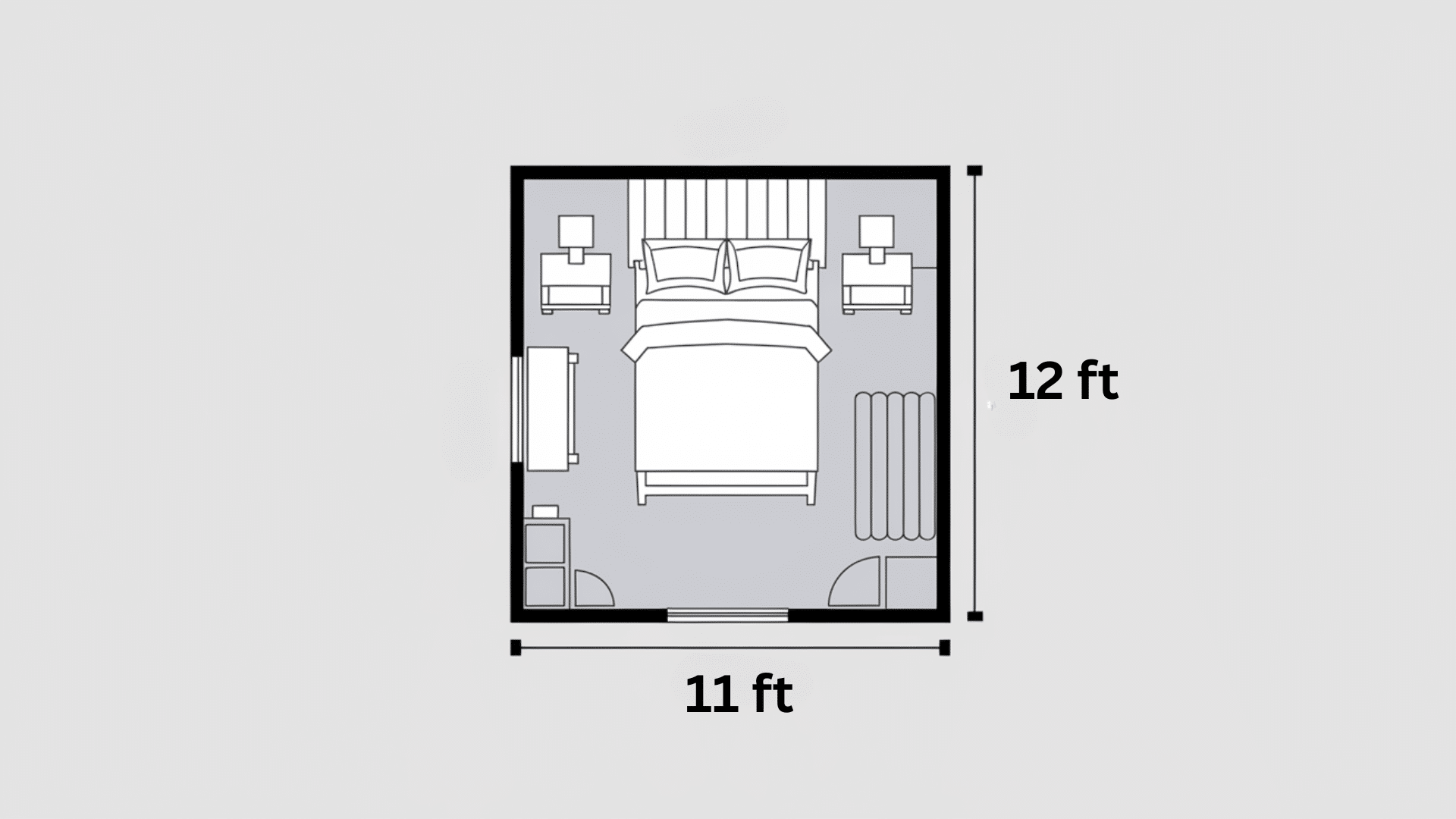
The average bedroom size in the U.S. is about 11 feet by 12 feet, which gives you around 132 square feet of space.
That’s what you’ll usually find in a standard home. It’s just enough room for a queen bed, a couple of nightstands, and maybe a dresser or small desk.
But here’s the thing, this number can change a lot depending on the type of home.
In apartments or condos, bedrooms are often smaller, closer to 10×10 feet or even 9×11 feet, which is about 100 to 110 square feet.
On the flip side, larger houses, especially newer ones, may have bedrooms that are 12×14 feet or more, sometimes pushing over 150 square feet.
It’s good to know the average, but it’s not a rule. Bedroom size depends on layout, home size, and even the year it was built. Use it as a reference, not something set in stone.
Standard Bedroom Size and Other Common Bedroom Types
Not every bedroom in a home is the same size and that’s on purpose.
Builders use different room sizes depending on how each space will be used. The standard bedroom size usually works well for everyday use, but it’s only one piece of the puzzle.
Bedrooms for kids, guests, or as the main suite each have different needs and layouts. Let’s break down how these sizes compare and what you can expect to fit in each type.
Standard Bedroom Size
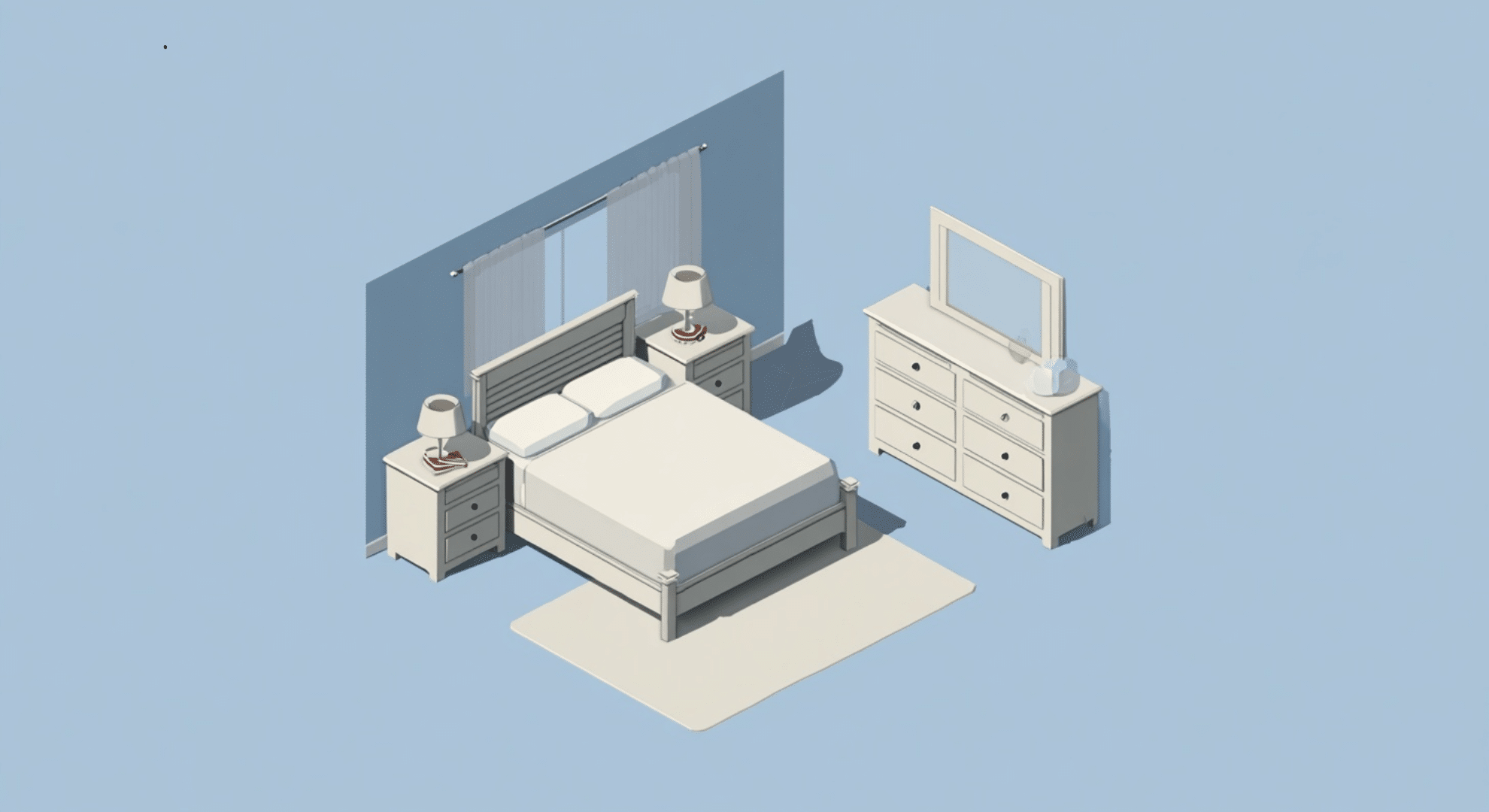
A standard bedroom size is typically 11×12 feet or 10×12 feet, which equals about 120 to 132 square feet. This is common in homes for secondary bedrooms like ones for older kids, teens, or even roommates.
What fits?
- A queen bed (tight but doable) or full-size bed (more room left over)
- Two nightstands
- Small dresser or desk
- One or two walkways with decent space to move
Why this size?
Builders often use this size because it’s just enough to be comfortable without taking up too much of the home’s square footage. It works well for most people’s daily needs and still leaves space for closets or hallways nearby.
Small or Kids’ Bedrooms

Small bedrooms, often used for kids or occasional use, usually fall between 9×10 feet and 10×10 feet. That’s about 90 to 100 square feet.
What works in this space?
- Twin or bunk beds fit best
- A small dresser or desk
- Maybe one nightstand
What feels tight?
A full-size bed can fit, but you’ll likely be short on space to move or add anything else. Closets, if included, may also take up a chunk of the usable area.
When is it limiting?
Small bedrooms start to feel limiting when used for more than sleeping—like homework, play, or storage. Older kids and teens may eventually need more space for comfort and privacy.
Guest Bedrooms
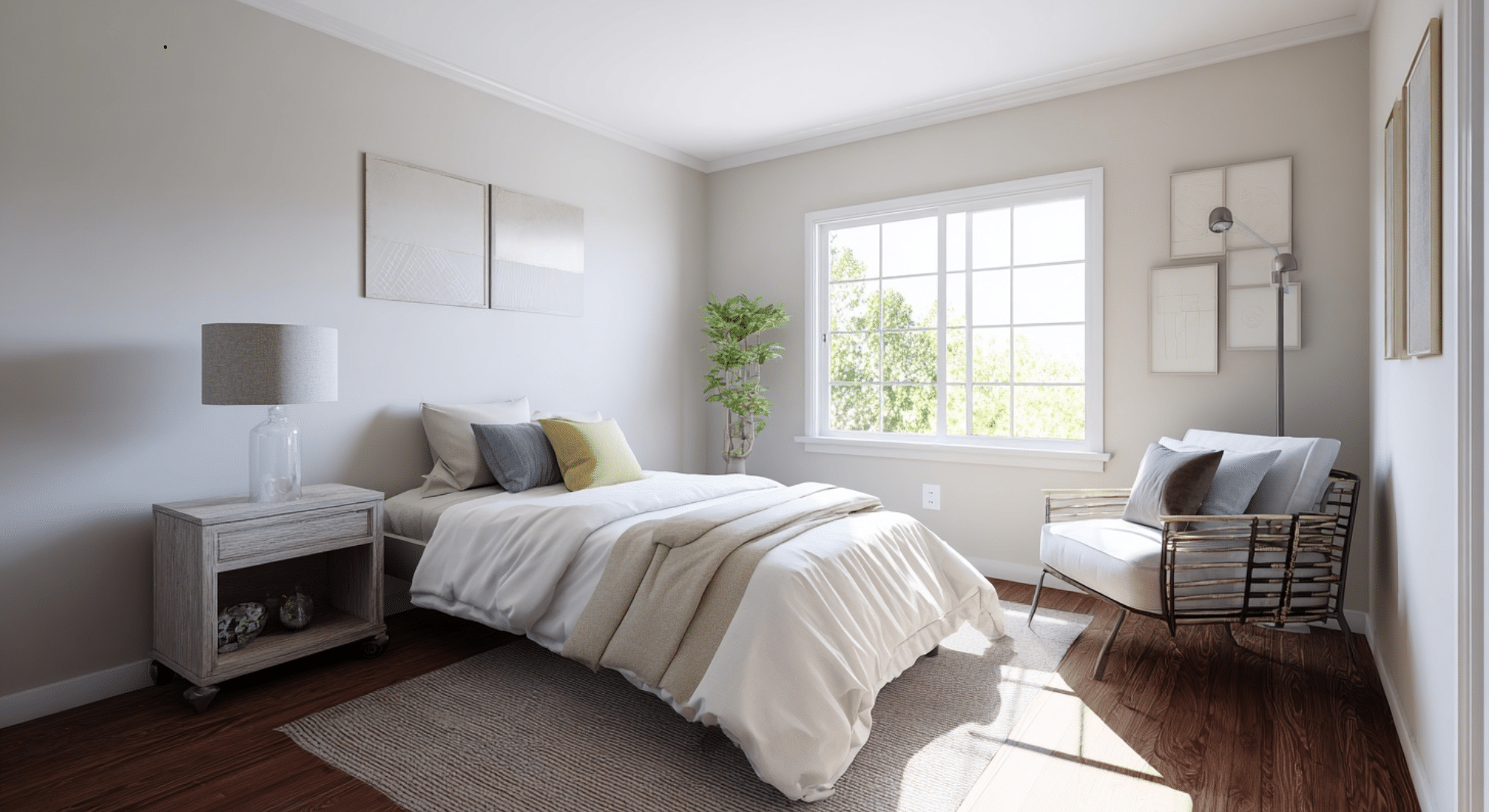
Guest bedrooms are flexible in size. They can be anywhere from 100 to 130 square feet, depending on the home.
What matters most?
It’s less about size and more about layout. A room that feels open and easy to move around in—even if it’s smaller—can be more useful than a big room that’s poorly arranged.
For a good guest space:
- A full or queen bed
- One nightstand
- A lamp
- Maybe a luggage bench or small chair
Even a 10×10 room can work well if it’s not cluttered.
Primary or Master Bedrooms
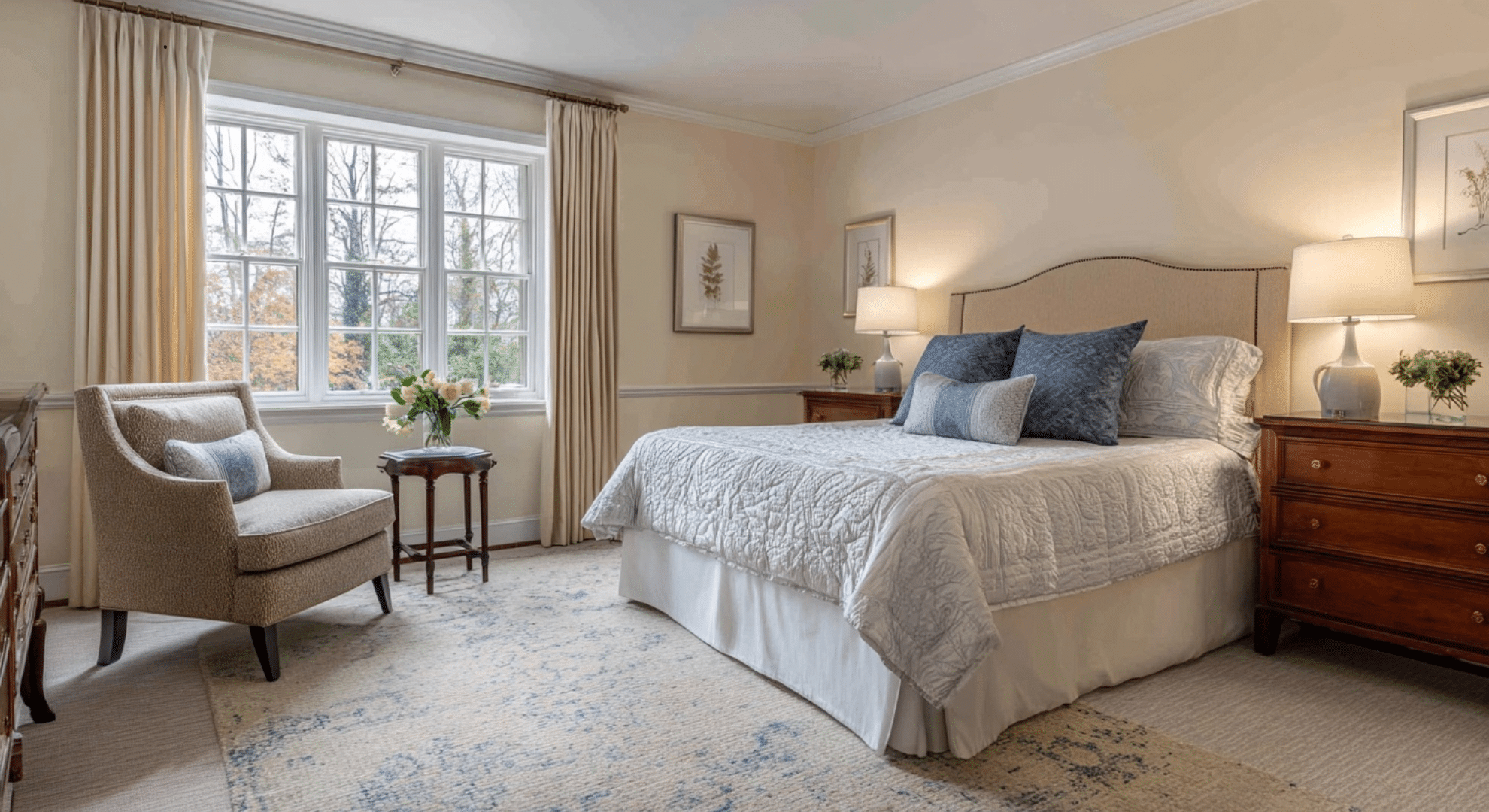
Primary bedrooms, sometimes called master bedrooms, are usually the biggest. The average size today is about 14×16 feet, or around 224 square feet, but in newer homes, it’s not unusual to see up to 250–300 square feet.
What’s expected now?
People want more than just a bed. A large bedroom often includes:
- King or queen bed
- Two nightstands
- Dresser and chest of drawers
- Seating area or reading nook
- Enough space to walk freely, even with furniture
Storage and comfort matter a lot here. Walk-in closets and even small home office corners are common. Bigger rooms allow for more breathing room and more ways to use the space, not just sleep in it.
Bedroom Size by Bed Type
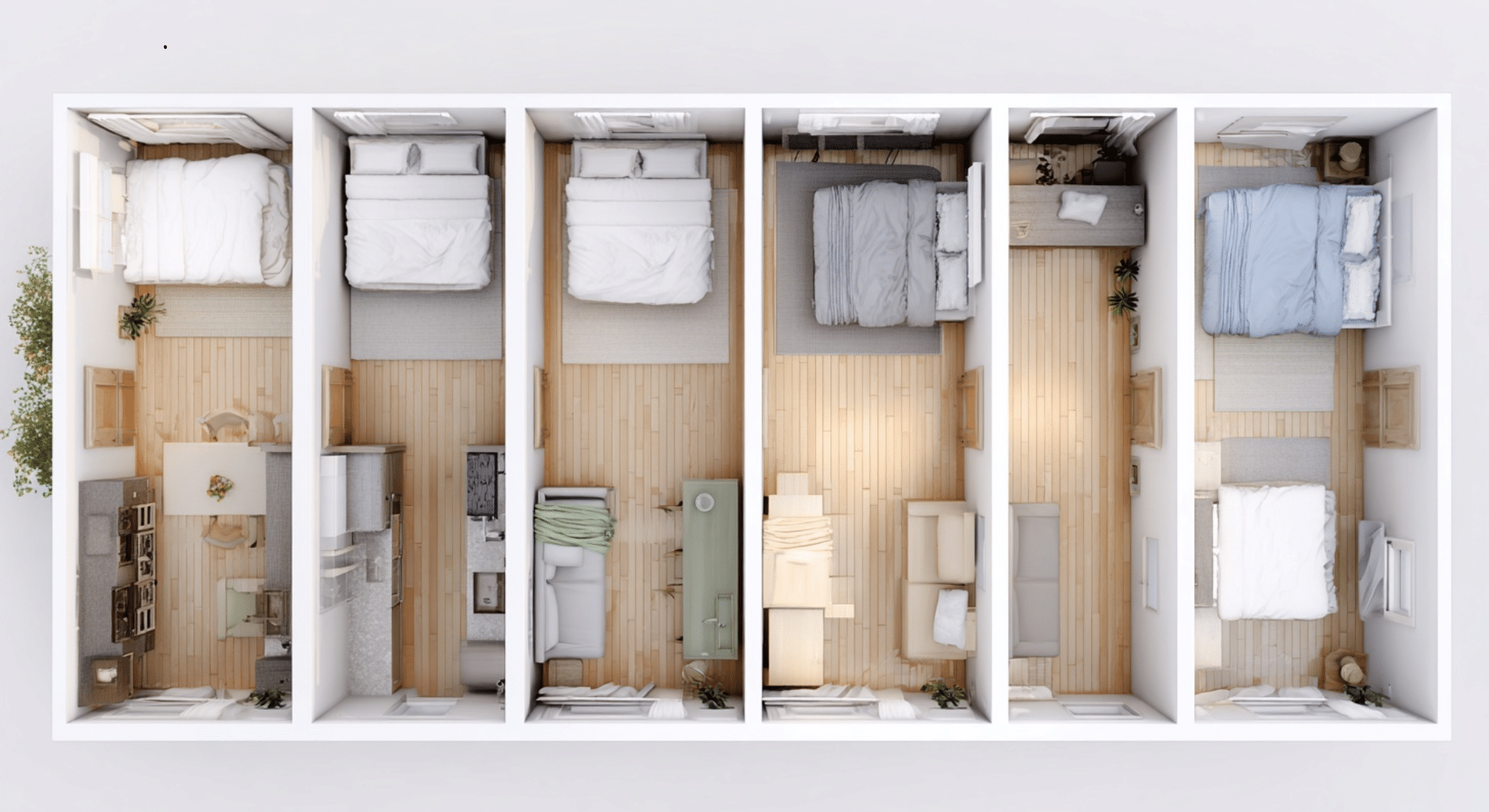
Choosing a bed is easy. Making sure it fits well in your room? That’s where things get tricky. It’s not just about whether a bed can fit—it’s about whether you still have room to walk, add a nightstand, or open a dresser.
Let’s look at each bed size and what bedroom size you need to make it work, feel comfortable, and actually live in day to day.
Twin Bed
Bed Size: 38” x 75” (about 3.2 x 6.25 feet)
Minimum workable room:7×9 feet
This leaves just enough room to walk around one side and fit a small dresser.
Comfortable room:8×10 feet
A bit more breathing space. You can add a nightstand or small desk.
Ideal room:9×10 or 9×11 feet
Great for kids, small guest rooms, or shared spaces. Easy to move around and store things.
Full Bed (also called Double)
Bed Size: 54” x 75” (4.5 x 6.25 feet)
Minimum workable room:9×10 feet
It fits, but tight. You might need to skip a nightstand or dresser.
Comfortable room:10×11 feet
You get walking space and can place a dresser or desk without cramming things.
Ideal room:10×12 feet
A nice balance. Feels open and works well for teens, solo adults, or guest rooms.
Queen Bed
Bed Size: 60” x 80” (5 x 6.6 feet)
Minimum workable room:10×10 feet
It just fits. You’ll have to keep furniture simple and move carefully around the bed.
Comfortable room:10×12 feet
Enough for two people, two nightstands, and a dresser.
Ideal room:11×12 or 11×13 feet
Good flow, less bumping into corners, and extra room for things like a bench or full-length mirror.
King Bed
Bed Size: 76” x 80” (6.3 x 6.6 feet)
Minimum workable room:12×12 feet
A king bed can fit in a smaller room, but it’ll take up most of it.
Comfortable room:13×13 feet
You can add nightstands and still have space to move.
Ideal room:14×14 or larger
You’ll have enough room for a dresser, seating area, and walking space on all sides. This setup feels more open and less like the bed eats the whole room.
Is Your Bedroom Too Small? How to Tell Without Guessing
Not sure if your bedroom is actually too small? Here’s how to figure it out without just guessing.
First, check the walking clearance. You should have at least 2 feet of space around the bed to move without turning sideways or bumping into furniture. Less than that? It might be too tight.
Next, look at door swing space; can your bedroom or closet door open fully without hitting anything? If not, that’s a red flag.
Now test dresser and closet access. Can you open drawers all the way and still stand in front of them comfortably? If you’re squeezing past furniture or hitting walls, space is limited.
Lastly, check the visual balance. Does the bed take up most of the room? A bed that looks oversized for the space can make everything feel cramped.
These signs give you a clearer sense of your room’s limits, no tape measure needed.
Legal Bedroom Size and What Actually Feels Comfortable
Just because a bedroom meets the legal size doesn’t mean it feels good to live in. Most places in the U.S. set the minimum legal bedroom size at 70 square feet. That’s often something like a 7×10 foot room. It also has to be at least 7 feet wide in one direction to count as a legal bedroom.
But here’s the thing; what’s legal isn’t always livable.
A 7×10 room might fit a twin bed and a small dresser, but not much else. You’ll likely have little to no walking room, and the space can feel closed-in, especially if there’s no natural light.
To feel comfortable, most people need at least 100 square feet.
That allows for basic furniture and movement without feeling trapped. If you’re planning a bedroom or choosing a home, focus on comfort, not just meeting the minimum code. It makes a real difference.
Average Bedroom Size in Apartments vs. Houses
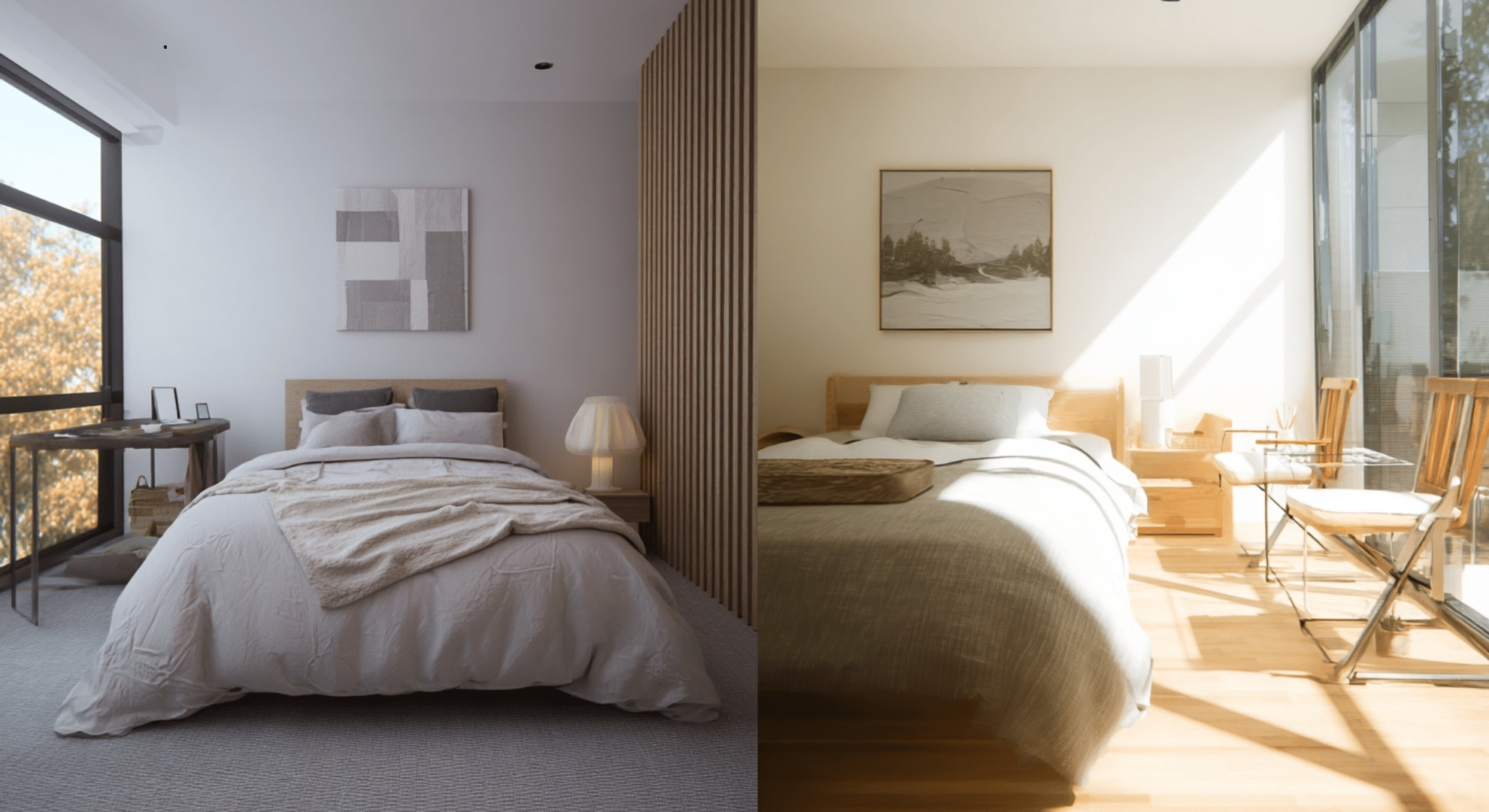
Bedroom sizes can vary a lot depending on the type of home. In general, apartments have smaller bedrooms than houses because space is more limited and needs to be used efficiently.
Here’s a quick look at how the sizes usually compare:
| Type of Home | Typical Bedroom Size | Square Foot Range |
|---|---|---|
| Apartment (Small) | 9×10 feet | 90–100 sq ft |
| Apartment (Standard) | 10×11 feet | 100–120 sq ft |
| House (Standard Bedroom) | 11×12 feet | 120–132 sq ft |
| House (Primary Bedroom) | 13×14 feet and up | 180–300+ sq ft |
As you can see, apartment bedrooms often stay around 100 square feet, while house bedrooms usually start above that. What’s considered “normal” today depends on where you live, but in most areas, anything under 100 sq ft is seen as small.
How Big Should a Bedroom Be for Everyday Living?
The right bedroom size depends on how you actually use the space—not just what fits.
If you’re only sleeping in the room, a smaller space can work. A room around 9×10 feet is enough for a twin or full bed and a nightstand. It’s simple, and it does the job.
Add storage, and you’ll need more room. A dresser, shelves, or extra closet space means bumping up to at least 10×11 feet.
This lets you move comfortably without feeling boxed in.
If you want space for seating or a workspace, the size really matters.
A room around 11×13 feet or larger gives you space for a desk, chair, or reading corner—without cramming everything in.
Your lifestyle shapes how much room you need. If your bedroom is more than just a place to sleep, make sure it fits your daily routine. That’s when it goes from just usable to actually comfortable.
How to Make a Small Bedroom Feel More Comfortable
A small bedroom doesn’t have to feel tight or awkward. With the right setup, even limited space can feel calm, useful, and roomy enough for daily life.
Here are some simple ways to make it work better:
- Put the bed against the longest wall to free up floor space and improve movement.
- Skip oversized furniture, choose pieces that match the room’s scale.
- Use under-bed storage for clothes, shoes, or off-season items.
- Try wall-mounted shelves instead of bulky dressers.
- Avoid placing furniture near the door so the entry stays open.
- Choose fewer but smarter pieces, like a bed with built-in drawers.
- Keep floor space open where possible to make the room feel bigger.
Making the most of a small room is about balance: not filling every inch, but using what you need in a way that still feels open. A few smart choices go a long way.
Conclusion
Knowing the average bedroom size gave me a better sense of what works, what feels too tight, and what actually makes a room livable. It’s not just about numbers, it’s about how space feels when you use it every day.
Now you’ve got the info to look at your own bedroom with fresh eyes.
You can plan better, shop smarter, or even rethink your layout.
Sometimes, just shifting the bed or picking the right-sized furniture can change the whole feel of a room. Even small spaces can work well if they’re set up right.
Want to learn more about making your home feel better without adding square feet? Keep reading.
Check out other blogs on the website for more real tips that fit real life!