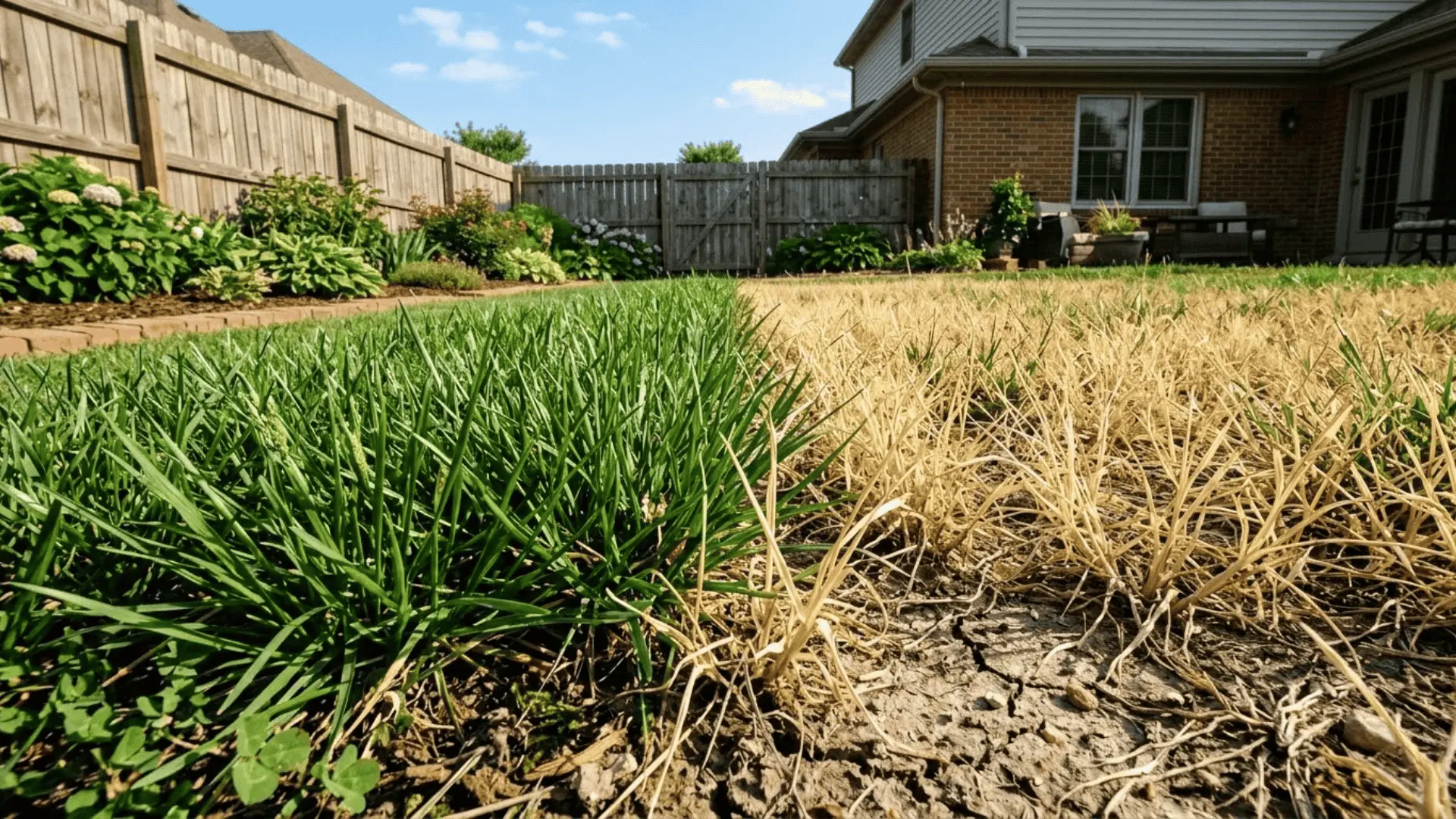
A sun-scorched lawn has a way of making even the most patient gardener anxious.
Brown grass has this unsettling way of showing up after a brutal summer, a dry spell, or a few weeks of pure neglect, and suddenly you’re left wondering: is it gone for good, or just resting?
That question matters more than most people realize, because watering dead grass brings back absolutely nothing, while dormant grass is simply waiting for the right nudge.
Knowing which one you’re dealing with is the whole game, and that’s exactly what we’re unpacking today.
Can Watering Dead Grass Bring it Back?
Watering dead grass will not bring it back. Once the grass plant itself is gone, no amount of water, fertilizer, or care can reverse that.
Dormant grass, though, is a different story entirely. It goes brown as a survival response to heat or drought, but the roots are still very much alive underneath.
Give dormant grass consistent water, and it greens up within a couple of weeks.
A quick way to tell the difference: tug a brown patch gently. If the grass pulls out with almost no resistance, it’s likely dead. Dormant grass holds its ground.
Dead Grass vs. Dormant Grass: How to Tell the Difference?
Not every brown lawn tells the same story, and learning to read the signs can save you a lot of wasted effort and water.
Here’s how dormant and dead grass actually compare up close.
| What to Check | How to Do It | Dormant Grass | Dead Grass |
|---|---|---|---|
| Pull Test | Grab a small patch and tug gently | Holds firm, roots are anchored in soil | Lifts out easily with little to no resistance |
| Color and Texture | Look closely and bend a few blades | Straw-colored, blades still have a little give | Gray or tan all over, blades snap or crumble |
| Root Check | Part the grass and inspect near the base | Roots appear white or light tan | Roots look dark, brown, or visibly rotted |
| Water Test | Water a small patch consistently for several days | Begins greening up within a week or two | No change in color or growth after repeated watering |
Common Reasons Grass Turns Brown
Brown grass rarely happens without a reason, and more often than not, the cause is hiding in plain sight. Pinpointing what went wrong is the first step toward actually fixing it.
1. Drought Stress
When rainfall is scarce, and temperatures climb, grass pulls water away from its blades to protect its roots, triggering dormancy.
The lawn browns out as a survival mechanism, not necessarily as a sign of permanent damage. Consistent deep watering during dry months can prevent this, but once drought stress sets in, recovery takes time and patience.
2. Heat Damage
Extended summer heat causes cool-season grasses to go dormant sooner than homeowners expect. The grass essentially shuts down to conserve energy, leaving behind a lawn that looks dead but isn’t.
Warm-season grasses handle heat better, but even they have a threshold. Shade, proper mowing height, and timely watering all go a long way during peak summer months.
3. Overwatering
Too much water is just as damaging as too little. Soggy soil cuts off oxygen to the roots, creating the perfect conditions for root rot and fungal growth.
Overwatered lawns often show brown or yellowing patches that spread gradually. If your lawn feels spongy underfoot or water pools frequently, pulling back on irrigation and improving drainage is usually the right move.
4. Lawn Diseases
Fungal diseases like brown patch and dollar spot cause uneven, discolored grass. Brown patch appears as dark-edged circular patches in humid conditions, while dollar spot leaves small, bleached spots scattered across the lawn.
Both thrive when lawns are overwatered or poorly ventilated, and both can spread quickly if left untreated.
5. Pet Urine Damage
Dog urine carries high concentrations of nitrogen, which in small amounts fertilizes grass but in large amounts essentially burns it.
The damage shows as bright green rings around a brown or dead center, a distinctive pattern. Rinsing the affected spots with water immediately after your pet goes can dilute the nitrogen before it causes lasting damage.
6. Soil Compaction
When soil becomes too dense, usually from heavy foot traffic or machinery, grass roots struggle to absorb the water and nutrients they need to survive.
The lawn thins and turns brown despite regular watering, making compaction an overlooked cause. Aerating once or twice yearly loosens soil and improves root air circulation.
7. Insect Damage
Grubs are highly destructive lawn pests that feed on grass roots below the soil surface through late summer and early fall. Damage occurs underground, causing sudden browning without an obvious cause.
A telltale sign is turf that peels back like loose carpet, revealing little white grubs underneath. Treating with a grub control product early in the season typically prevents the worst of it.
How to Revive Dead Grass?
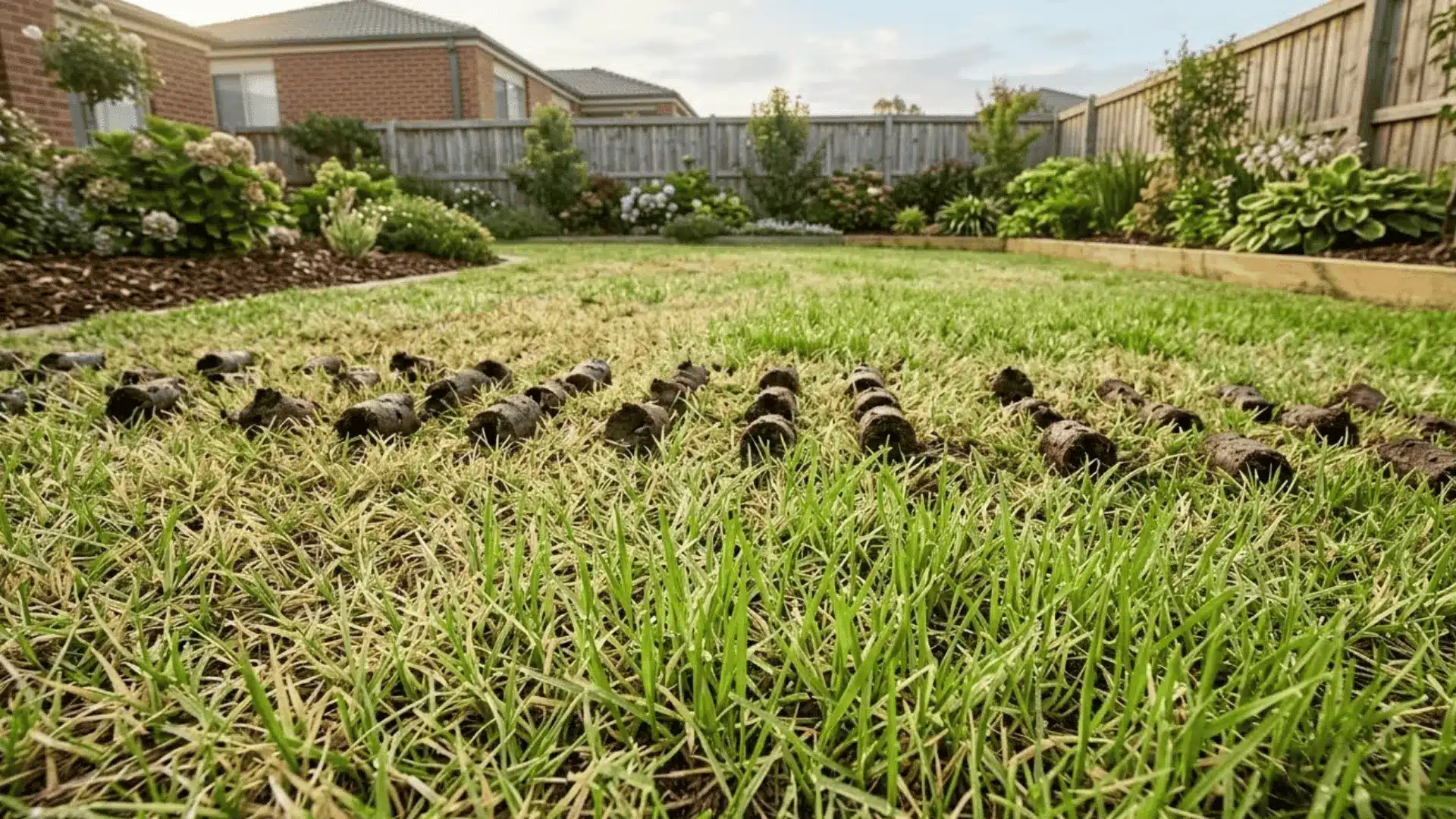
If your lawn has been diagnosed as dormant rather than dead, the right steps can bring it back looking better than before.
Here is how to revive dead grass that is actually just waiting on the right conditions.
Option 1: Water the Lawn Properly
Shallow, frequent watering does more harm than good. Deep watering encourages roots to grow downward where moisture lasts longer, and timing matters just as much as frequency.
Watering early in the morning gives the grass time to absorb moisture before the heat of the day kicks in, reducing evaporation and the risk of fungal growth overnight.
Option 2: Aerate the Soil
Compacted soil blocks water and oxygen from reaching the root zone, slowing recovery significantly. Aerating punches small holes through the surface, giving roots room to breathe and absorb what they need.
This one step alone can noticeably speed up how quickly a dormant lawn responds to watering and fertilizer.
Option 3: Fertilize to Stimulate Growth
A slow-release nitrogen fertilizer applied during recovery gives grass the nutrients it needs without overwhelming already stressed roots.
Avoid heavy fertilizing during peak heat as it can cause more damage. A balanced formula works well for most lawns coming out of drought dormancy.
Option 4: Overseed Thin or Bare Areas
Dormancy can leave behind patchy spots that do not fully recover on their own. Overseeding fills those gaps with fresh growth and thickens the lawn overall.
Spread seed over loosened soil, keep it consistently moist, and you will start seeing new shoots within a couple of weeks, depending on the grass variety.
Option 5: Mow at the Right Height
Cutting grass too short during recovery puts unnecessary stress on already weakened blades. Raise your mower deck and keep the grass on the taller side while it recovers.
Taller blades shade the soil, retain moisture, and allow the plant to photosynthesize more efficiently, all of which support a faster, healthier comeback.
Option 6: Add Organic Matter
Topdressing with a thin layer of compost or a quality soil conditioner improves soil structure, moisture retention, and microbial activity all at once. It works especially well when paired with aeration.
Organic matter feeds the soil over time rather than delivering a quick spike, making it one of the quieter but most effective long-term recovery tools available.
What to Do If Your Grass is Truly Dead?
Sometimes a lawn is past the point of revival, and the kindest thing you can do is start fresh. If you have confirmed the grass is truly dead, here is a straightforward path to getting your yard green again.
- Clear the area first by raking out all dead turf and debris to give new growth a clean surface to take hold.
- Test your soil for pH and nutrient levels before reseeding, so you are not setting new grass up to fail in the same conditions.
- Reseed with a grass variety suited to your climate and sun exposure, keeping the soil consistently moist until germination takes hold.
- Consider laying sod if you want faster results, as it establishes quickly and gives you a full, even lawn in a fraction of the time reseeding takes.
Starting over feels defeating, but a fresh lawn built on properly prepared soil almost always comes back stronger and more resilient than the one it replaced.
How Long It Takes Grass to Recover?
Recovery time really depends on what you are working with.
Dormant grass typically greens up within 2 to 4 weeks of consistent watering, assuming temperatures have also cooled down enough to support growth.
Reseeded lawns take a little longer, with most grass varieties showing new shoots anywhere from one to three weeks after germination, and a fuller lawn developing over the following months.
Soil health, grass type, climate, and how consistently you water all play into how quickly things turn around.
The more ideal the conditions, the faster the recovery.
Signs Your Lawn is Recovering
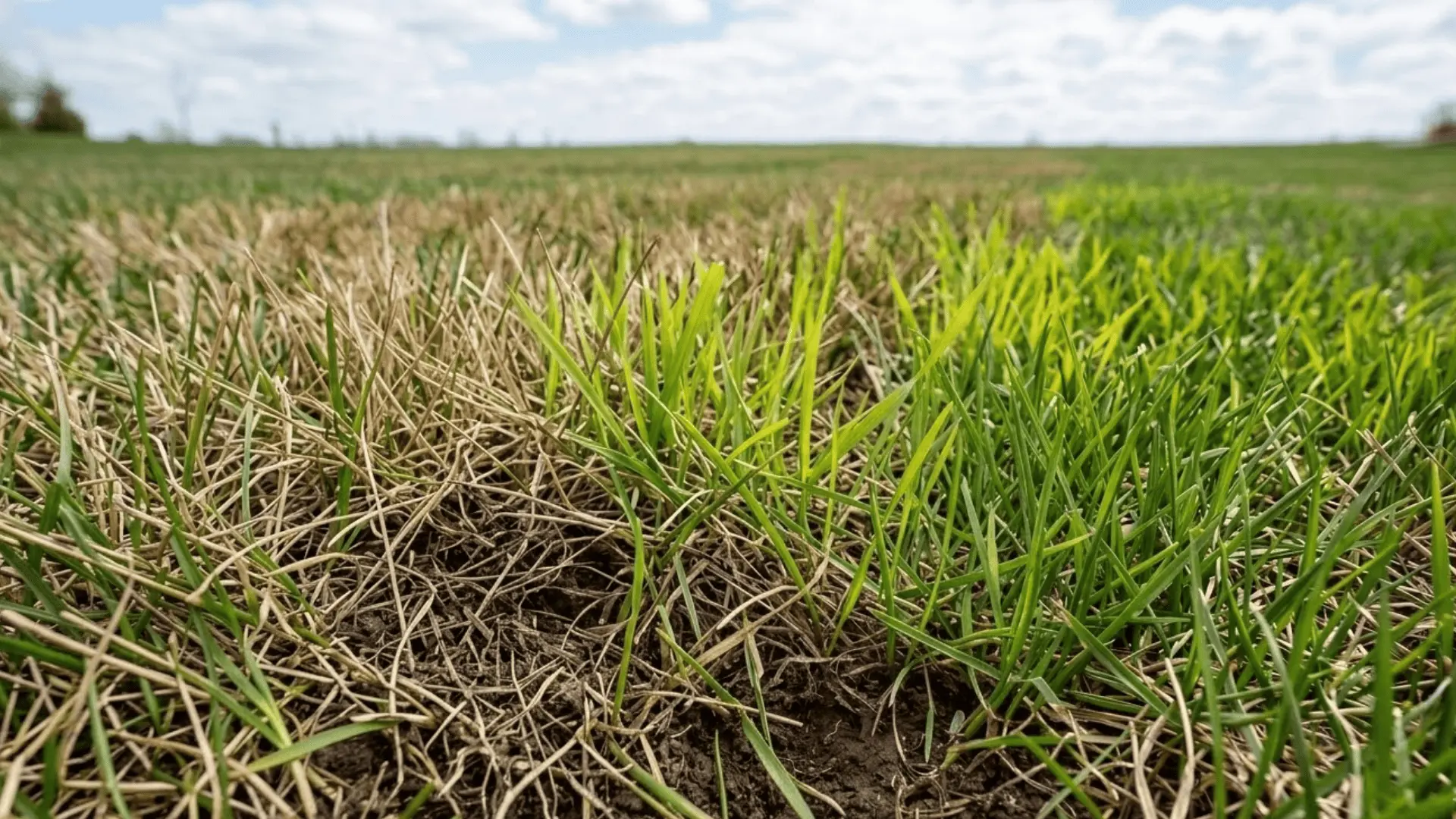
Once you have put in the work, your lawn will start giving you small but satisfying signals that it is heading in the right direction.
- Green shoots emerging from brown patches are usually the first sign that dormant grass is waking back up.
- Turf beginning to thicken across previously thin or patchy areas signals that root activity is picking back up.
- Roots appearing white and firm when you part the grass near the base mean the plant is healthy and actively growing.
These signs do not all show up at once, but when they do start appearing, consistent care will carry the rest of the way.
Final Thoughts
A brown lawn is rarely the end of the story. Watering dead grass will not bring it back, but catching dormancy early and responding with the right care absolutely can.
The difference between giving up on a lawn and watching it recover often comes down to a little patience and knowing what to look for.
Give your grass what it needs, stay consistent, and more often than not, it finds its way back.
If this helped you figure out what your lawn is going through, drop a comment below and let us know how your recovery is going!