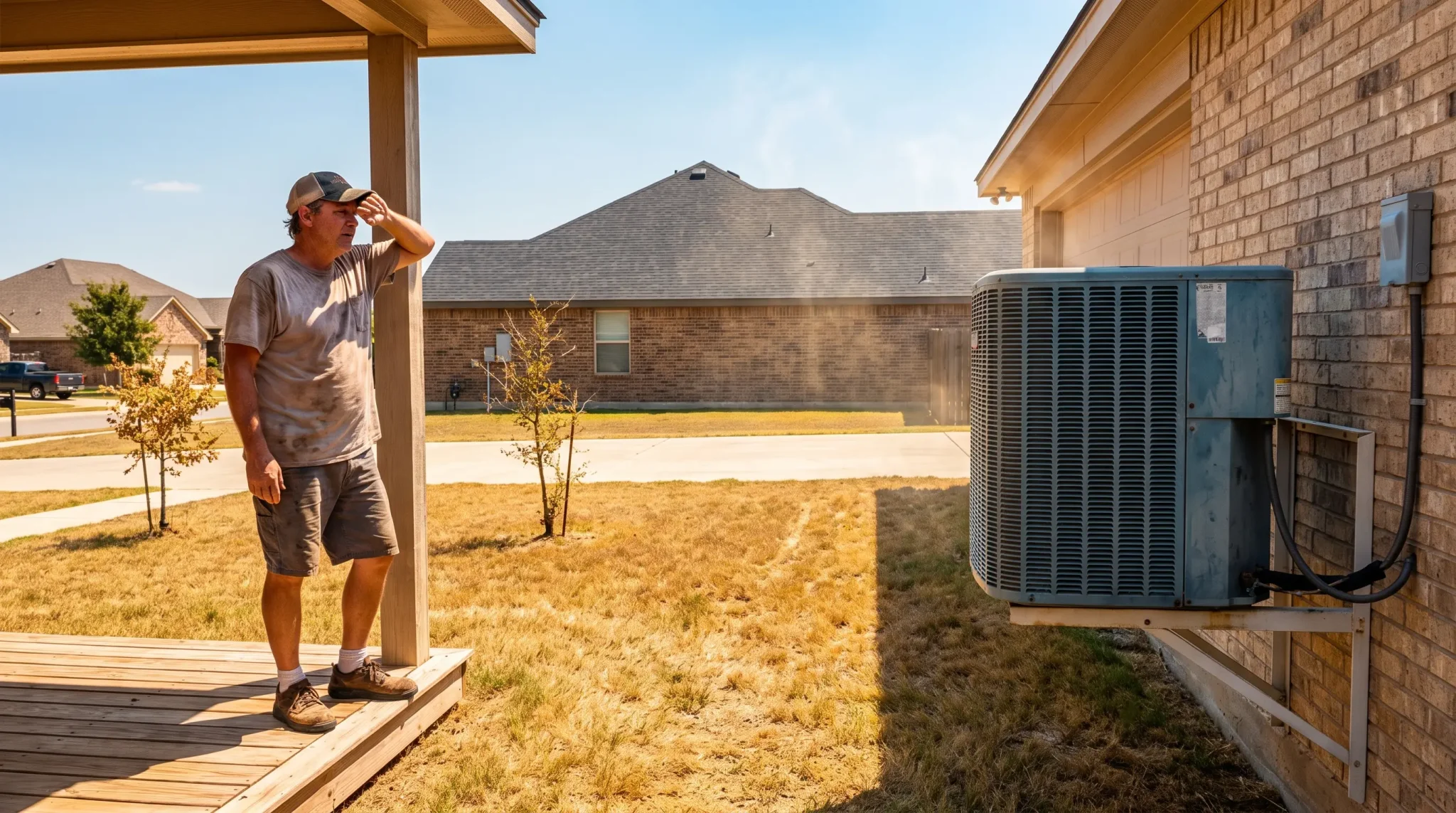
Your electric bill arrives, and the total is higher than last month. Meanwhile, you read that electricity prices have fallen. If you spent the past few weeks watching the air conditioner run through another Texas afternoon, those two facts might seem impossible to reconcile.
Both can be true. The price of electricity and the cost of powering your home measure different things. Your bill depends on how much electricity you use, the terms of your plan, the length of the billing period, and the charges applied to your account.
Understanding which part changed helps you decide what to do next. Sometimes the useful move is reviewing your electricity contract. Other times, it is investigating increased consumption or reducing the heat entering your home.
A Statewide Electricity Price Is Not Your Household Rate
An average price tells you something about a market. It does not tell you exactly what an individual customer pays.
That distinction is central to Texas Home Intelligence’s analysis of Texas electricity prices, which examines the statewide residential price series and explains why a change in that average does not automatically reach your statement. Your own plan still determines how your electricity use is billed.
Think of the statewide figure as context for a closer look at your account. It cannot establish whether your current contract is competitive, whether a renewal offer is suitable, or why your household used more electricity.
The same caution applies to headlines about wholesale electricity. Wholesale prices and residential retail rates operate at different levels of the market. The U.S. Energy Information Administration explains that wholesale costs can vary minute by minute, while most consumers do not experience those fluctuations directly.
Before comparing your statement with a news story, check what the story actually measures: wholesale prices, statewide residential averages, or offers available to customers shopping for a plan.
More Usage Can Outweigh a Lower Price
Consider a simplified example. These are illustrative figures, not current Texas rates or plan offers, and they exclude separate fees, taxes, and credits.
| Billing period | Electricity used | Price per kWh | Usage cost |
|---|---|---|---|
| First month | 1,000 kWh | 16 cents | $160 |
| Second month | 1,400 kWh | 14 cents | $196 |
The price falls by 12.5%, but consumption rises by 40%. The usage cost increases by $36.
This is why the total dollar amount is only the beginning of a useful bill comparison. A lower rate can help, yet still be overwhelmed by additional electricity use.
The reverse is also possible. A household can pay more per kilowatt-hour but receive a smaller bill after reducing consumption. Looking at both numbers prevents you from crediting—or blaming—the wrong change.
Compare the Number of Days You Are Paying For
A larger bill does not always mean your daily habits changed.
Suppose one statement covers 28 days and the next covers 33. At a steady 40 kilowatt-hours per day, the first period contains 1,120 kWh of consumption and the second contains 1,320 kWh. That is 200 additional kilowatt-hours without any increase in daily use.
Divide the consumption on each bill by its number of billing days. This gives you a daily average that is easier to compare.
Also look at the same period last year. A spring-to-summer comparison may capture seasonal changes, while a year-over-year comparison provides another perspective. Neither is perfect: weather, occupancy, equipment, and thermostat settings may have changed. Together, they help you ask better questions.
Read the Terms Behind Your Advertised Rate
For customers with retail electricity choice, the advertised price is a starting point for reviewing an offer.
The Public Utility Commission of Texas provides guidance on the Electricity Facts Label, a standardized document designed to help customers compare providers. Read it alongside the contract terms and your recent usage history.
Check how the offer handles energy charges, delivery charges, recurring fees, and any usage-dependent credits. Establish which parts are fixed and which can change under the agreement. A fixed-rate description does not mean your monthly bill will remain the same.
Your household’s consumption pattern matters here. Review several months instead of choosing a plan based only on an unusually mild month or a single summer peak.
Before switching, check your current contract’s end date and applicable termination terms. Customers served by municipal utilities or electric cooperatives should review their own utility’s rates and options; the same retail-shopping choices are not available everywhere in Texas.
Investigate What Changed Inside and Outside the House
Once you have separated the rate from the amount used, consider what happened during the billing period.
Did someone begin working from home? Were there guests? Did you lower the thermostat, add an appliance, charge an electric vehicle more often, or change a pool pump’s schedule?
Cooling demand deserves attention, but a large bill alone cannot diagnose an air-conditioning problem. The EIA identifies extreme temperatures as a driver of heating and cooling demand. Your particular consumption also reflects your building, equipment, and habits.
Write down changes before paying for an assessment. If your provider offers daily or interval usage, compare the timing of increases with weather and household activity. A consistent change after a new schedule or appliance is a useful clue, although it does not prove the cause.
For an unexplained increase, give your provider the specific billing dates and readings you want checked. If the home is also struggling to stay comfortable, bring those observations to an HVAC professional.
Where Shade and Landscaping Fit Into the Bill
The yard becomes relevant when you consider how much heat reaches the house.
The U.S. Department of Energy’s landscaping guidance explains how shade can reduce solar heat gain and cooling costs. Effective placement depends on where the shadow falls, its size, and how it changes.
Start by observing your property on a sunny afternoon. Which windows receive direct sun? Where does existing tree cover shade the building? Would a proposed tree eventually shade the house, or mainly an open section of lawn?
A planting plan should account for mature size, available space, local growing conditions, and the time needed to establish the tree. Ask a qualified local professional about suitable species and placement when structures or utilities constrain the site.
Avoid assuming a particular percentage reduction in your bill. The result depends on the property and the improvement. Shade is one way to address cooling demand; it does not change your electricity contract.
Start With Two Bills and Three Questions
Before buying equipment, changing providers, or redesigning the yard, place two statements side by side and answer three questions:
- Did daily electricity use increase? Divide each period’s kilowatt-hours by its billing days.
- Did the price or charge structure change? Compare the line items and check for a renewal, changed fee, or lost credit.
- What changed at home? Note weather, occupancy, equipment, and schedule differences.
Those answers point toward a useful next step. A contract change calls for reviewing the agreement. Increased consumption calls for looking at when and where electricity is being used. Persistent cooling difficulties may justify an equipment or home-performance assessment.
Keep those statements and your notes. After making a change, compare another billing period using the same method. A clear record will tell you more about your home’s costs than a statewide headline—or one unusually expensive month—can on its own.