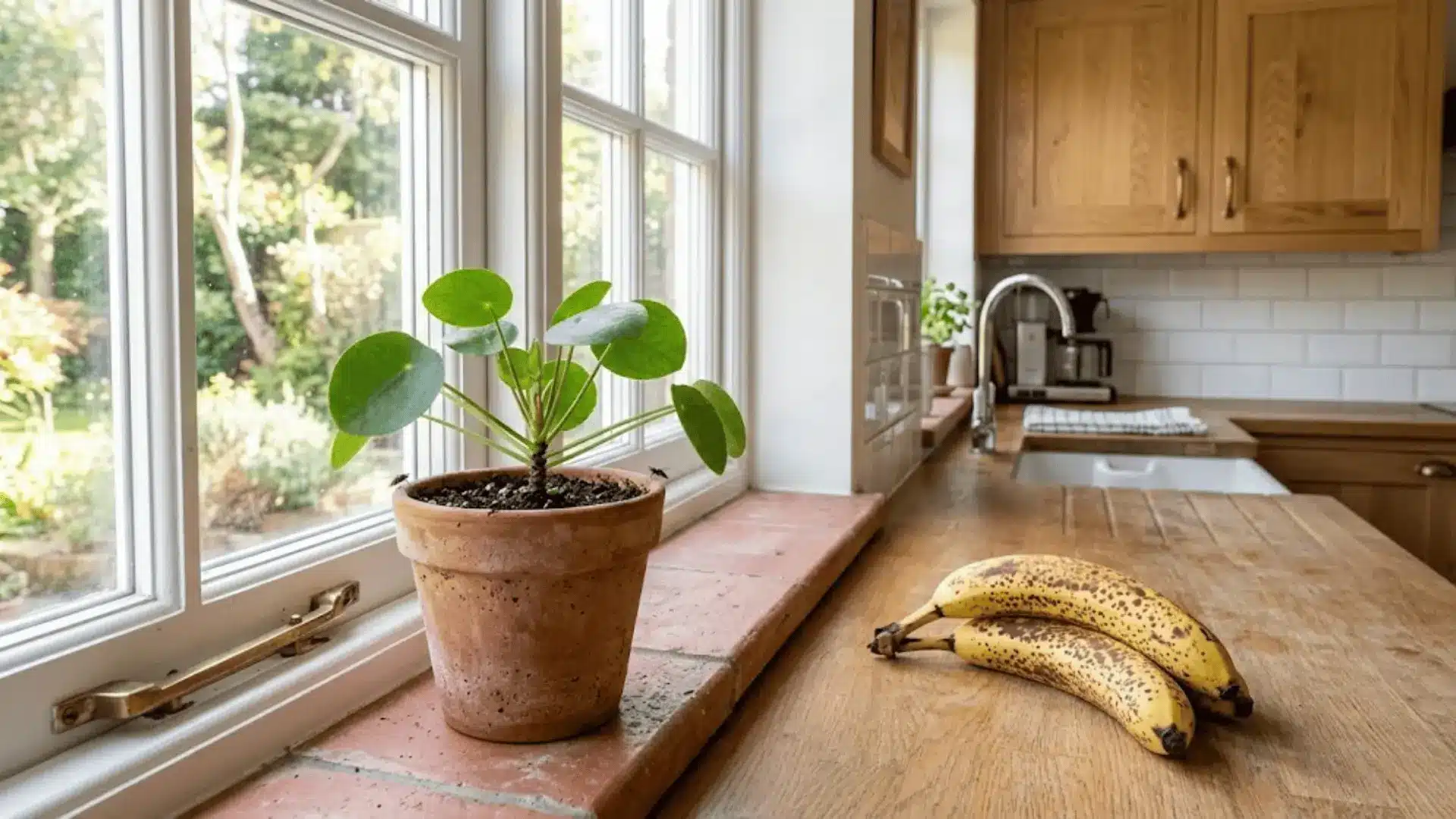
Tiny flies suddenly appearing near your sink or hovering over your favorite houseplant?
Gnats usually come from moist soil, overripe fruit, or organic buildup in drains, making your cozy home the perfect breeding ground.
Understanding where gnats come from is honestly the first step to showing them the door.
And yes, this goes for the ones circling your kitchen and the ones sneaking in from the garden outside.
Stick around, because getting rid of them is so much simpler than you’d think.
Why Gnats Suddenly Appear Indoors?
Not all gnats are the same; identifying them makes removal easier. From overwatered pothos to forgotten bananas, different types have unique habits and solutions.
Here’s a closer look at the most common ones you’ll find indoors.
| Type | Breeding Site | What Attracts Them | How to Eliminate |
|---|---|---|---|
| Fungus Gnat | Damp potting soil | Overwatered houseplants | Let the soil dry out, and use sticky traps |
| Fruit Fly | Ripe or rotting produce | Fermenting fruit, spills, trash | Remove produce, clean surfaces, and use traps |
| Drain Fly | Drain sludge buildup | Moist organic matter in pipes | Clean drains with a brush or enzymatic cleaner |
Why Gnats Suddenly Appear Indoors?
One day your home feels perfectly gnat-free, and the next you’re swatting at tiny flies in every room. Most of the time, the answer is hiding somewhere surprisingly close to your daily routine.
1. Overwatered Houseplants
Moist soil is basically a five-star resort for fungus gnats. When houseplants are watered too frequently, the soil stays damp long enough for gnats to lay eggs and complete their entire lifecycle right in your favorite planter.
Letting the top layer of soil dry out between waterings goes a long way in keeping them away.
2. Rotting Food or Produce
Fruit left out a day too long or forgotten leftovers in the back of the fridge are prime gnat territory. Fruit flies, especially, are drawn to the fermentation process, so anything overripe or decomposing will attract them fast.
Keeping produce stored properly and tossing anything past its prime makes a noticeable difference.
3. Clogged Drains
Your drains collect more than just water. Over time, organic matter, hair, and soap scum build up inside pipes, creating the warm, moist environment that drain flies love most.
A slow or slightly blocked drain is often all it takes for a small gnat problem to quietly grow into a bigger one.
4. Garbage & Recycling Bins
Bins that aren’t emptied or cleaned regularly become a reliable food source for gnats. Sticky residue from bottles, food scraps, and general moisture creates ideal breeding conditions.
Rinsing recyclables before tossing them and using bins with tight-fitting lids can make your kitchen a much less inviting space for them.
5. Open Windows & Seasonal Changes
Gnats are naturally more active during warmer months, and open windows without screens make it easy for them to drift indoors.
Seasonal shifts in humidity also play a role, as increased moisture both inside and outside your home creates more opportunities for gnats to settle in and start reproducing.
Where Do Gnats Come From in Houseplants?
Houseplants are one of the most common gnat sources, and the soil is usually where it all starts.
Fungus gnats lay their eggs in the top layer of damp potting mix, and once hatched, the larvae feed on organic matter and roots beneath the surface.
Even fresh, store-bought soil can carry eggs or larvae without any visible signs.
Watch for tiny flies hovering low around your pots, yellowing leaves, or slow plant growth as early indicators that fungus gnats have already made themselves at home in your planters.
How to Get Rid of Gnats Fast?
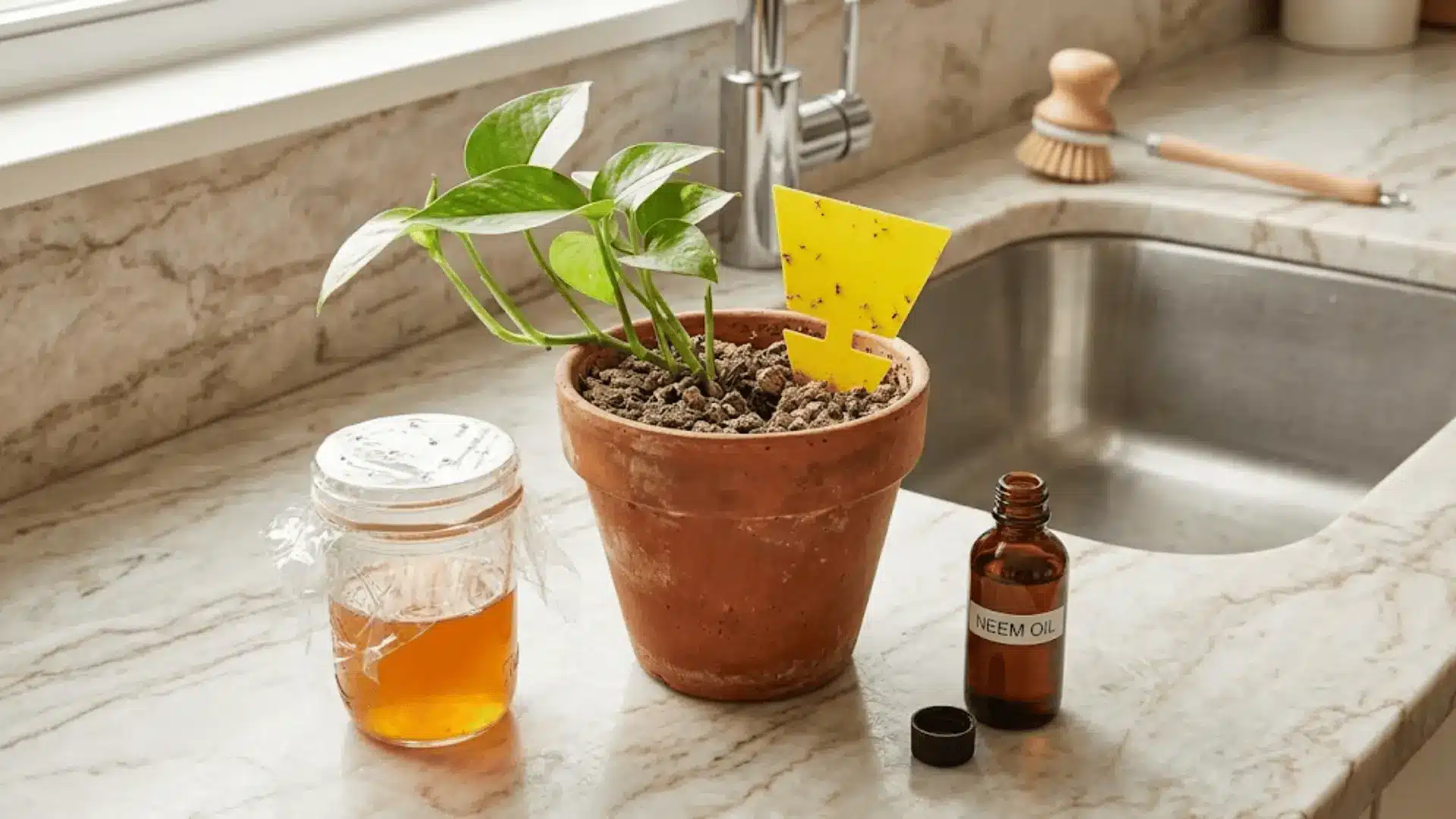
Getting rid of gnats is less about luck and more about targeting the right source with the right fix. Here’s what actually works depending on where they’re showing up.
For Houseplants
Your plants might be the culprit, but a few simple changes to your care routine can turn things around quickly.
- Let the soil dry out completely between waterings to cut off their breeding ground.
- Replace the top layer of potting mix to remove any eggs or larvae already present.
- Place sticky yellow traps near pots to catch adult gnats before they reproduce.
- Apply diluted neem oil to the soil as a natural larvicide.
For Kitchen Gnats
The kitchen offers gnats plenty to work with, so eliminating their food and entry sources is the fastest way forward.
- Set out apple cider vinegar traps covered with plastic wrap to lure and catch them.
- Clean drains regularly to remove any organic buildup attracting them.
- Store fruit and produce in the fridge or sealed containers to eliminate food sources.
- Empty and rinse garbage bins frequently to avoid residue buildup.
For Drain Gnats
Drain gnats are stubborn, but they can’t survive once their breeding ground is cleaned out.
- Flush drains with boiling water to break down organic matter lining the pipes.
- Use an enzyme-based drain cleaner to dissolve the sludge that drain flies breed in.
- Scrub inside the drain opening with a stiff brush to manually remove buildup.
- Cover drains overnight to confirm activity and prevent adult flies from escaping.
Do Gnats Bite or Harm Humans?
Most indoor gnats, including fruit flies and drain flies, do not bite and pose no direct threat to humans. They’re more of a nuisance than a danger.
Mosquitoes, by comparison, are actual biters with the potential to transmit disease, so the two are worth telling apart.
Gnats become a mild concern mainly when numbers grow large, as some species can trigger allergies or contaminate food.
Keeping infestations under control early is really all it takes to keep your home comfortable and worry-free.
Seasonal Gnat Problems
Gnats don’t behave the same year-round, and knowing when and where they’re most active helps you stay one step ahead of an infestation.
| Factor | When It Peaks | Indoor Impact | Outdoor Impact |
|---|---|---|---|
| Spring & Summer Surge | Spring through late summer | Houseplants and kitchens see more activity | Breeding accelerates in soil and standing water |
| Garden Compost Piles | Spring through fall | Gnats enter through open doors and windows | Decomposing matter becomes a major breeding site |
| Outdoor Lighting | Warm evenings year-round | Gaps and screens let swarms drift inside | Exterior lights near entrances attract large numbers |
Key Takeaway
Now that you know where gnats come from and what keeps drawing them back, staying ahead of the problem feels a lot more manageable.
Small habits like letting soil dry out, storing produce properly, and keeping drains clean can genuinely convert your space.
Gnats are persistent, but they’re no match for a little consistency and the right approach. A gnat-free home is absolutely within reach, and honestly, it starts with just one small change today.
Tried any of these fixes? Drop your experience in the comments below!