You know that feeling when you finally decide you’re ready to grow something real, not just herbs on a windowsill, but actual fruit?
Blueberries seem like the perfect choice. They’re gorgeous, they’re delicious, and honestly, who doesn’t want to wander outside in July and snack straight from the bush?
But then you start googling, and suddenly everyone’s talking about chill hours and soil pH and optimal planting windows, and it feels overwhelming.
Here’s the thing, though: timing really does matter with blueberries, not in a stressful way, but in a “let’s set ourselves up for success” way. These plants can live longer than most pets, producing berries for decades with proper care.
So before we dig in, literally, let’s talk about why when you plant matters just as much as how.
When to Plant Blueberry Bushes?
The best time to plant blueberry bushes is early spring, right when the ground thaws but before new growth emerges. This gives roots weeks to establish before summer heat arrives.
In milder climates, late fall planting works beautifully too, allowing bushes to settle in during dormancy.
Blueberries actually prefer these cooler windows because they’re not fighting to support leaves while building underground strength.
Spring planting offers a full growing season ahead, perfect for beginners who want to monitor progress. Fall planting means less watering and more root development, though there’s less margin for error before winter.
For first-timers, spring typically feels safer and more forgiving.
When to Plant Blueberry Bushes by Climate
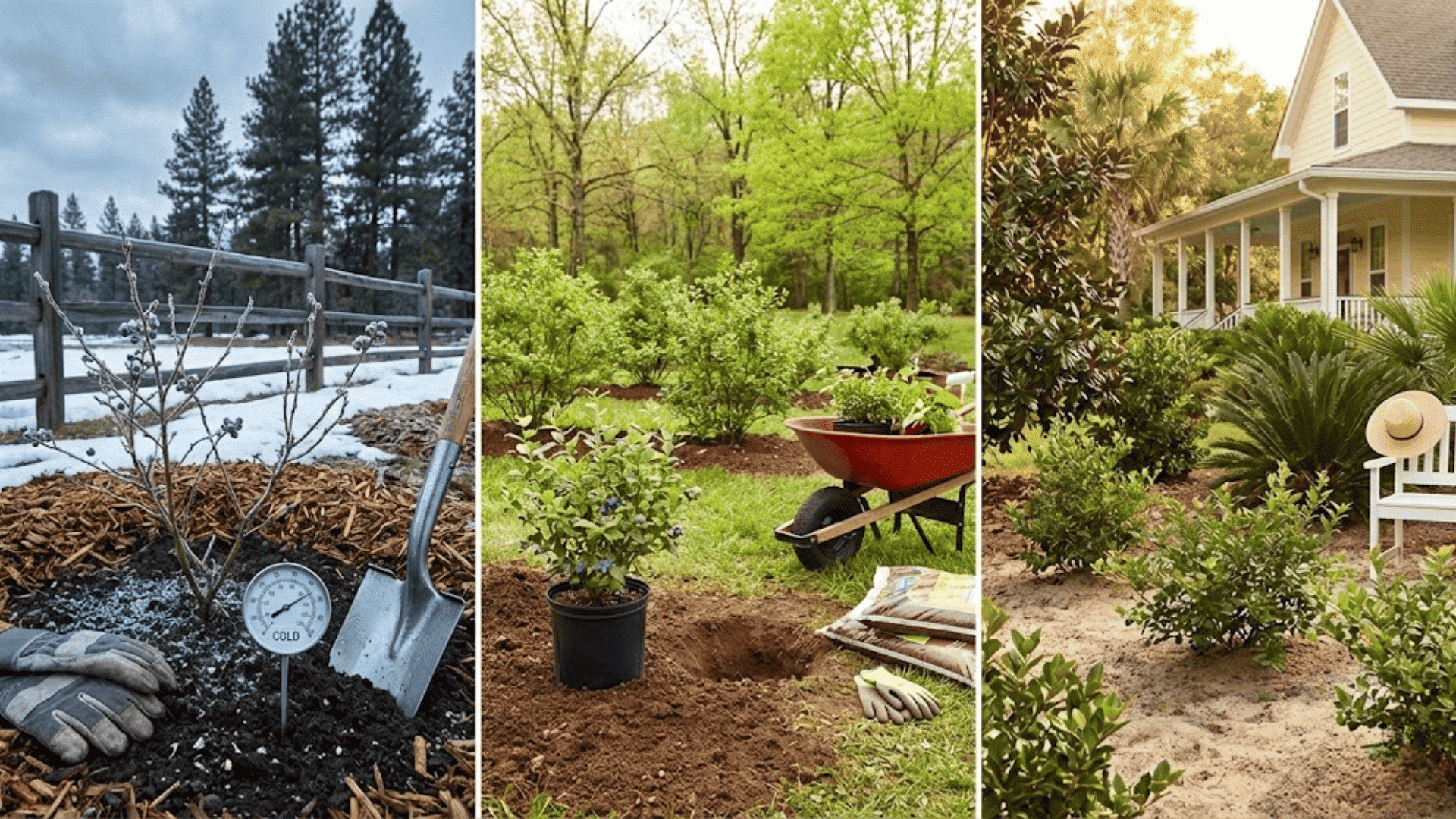
Climate isn’t just background information when it comes to blueberries. It actually dictates your entire planting strategy.
What works in Maine won’t work in Georgia, and trying to follow generic advice can leave your bushes struggling from day one.
1. Cold & Northern Climates
If you’re gardening where winters bite hard, timing is tight but doable. You’re working with a shorter window, so precision matters more here than anywhere else.
- Plant in late spring after the last frost date passes and the soil warms to at least 50 degrees.
- Avoid fall planting unless you can get bushes in the ground at least six weeks before the first hard freeze.
- Choose cold-hardy varieties like Northblue or Patriot that can handle your winters without flinching.
- Mulch heavily right after planting to protect shallow roots from temperature swings.
2. Moderate & Temperate Climates
Lucky you. Temperate zones offer the most flexibility for planting blueberries, giving you options that gardeners in extreme climates don’t have.
Here’s how spring and fall stack up:
| Spring Planting | Fall Planting |
|---|---|
| Plant March through May as the soil becomes workable | Plant September through November before the ground freezes |
| Bushes establish during the active growing season | Roots develop without supporting leaf growth |
| Requires consistent watering through summer heat | Less watering needed; rain often does the work |
| Best for bare-root plants and nervous beginners | Ideal for container plants with established roots |
3. Warm & Southern Climates
Down south, the rules flip a bit. Late fall through winter becomes your sweet spot, typically November through February, when temperatures stay mild but aren’t scorching.
Spring planting is risky because bushes barely get their roots down before brutal summer heat arrives.
Avoid planting anywhere near the summer months. Even May can be too late in zones eight and above, as young plants simply can’t handle establishing themselves in 90-degree weather while trying to grow leaves.
When to Plant Blueberry Bushes by Type
Different blueberry varieties have different personalities, and that includes when they prefer to be planted. Matching your planting time to your specific blueberry type gives you a serious advantage right from the start.
| Blueberry Type | Best Planting Time | Key Consideration |
|---|---|---|
| Northern Highbush | Early spring after the last frost | Needs cold winters, plant when the soil is workable |
| Southern Highbush | Late fall through winter | Plant before the heat arrives in mild climates |
| Rabbiteye | Late winter to early spring | Most heat-tolerant, zones 7 to 9 |
| Lowbush (Wild) | Early spring or late fall | Prefers cool climates and acidic soil |
Bare-Root vs. Potted Blueberry Bushes
The form your blueberry arrives in actually changes when you can plant it. Bare-root and potted bushes play by different rules, and knowing which you have opens up (or narrows) your planting window.
Bare-Root Blueberries: Stick to Spring
Plant bare-root bushes in early spring while they’re still dormant, typically March through April, depending on your zone.
These bushes have exposed roots and need to go in the ground before they break dormancy and start leafing out. Soak roots in water for a few hours before planting to rehydrate them after shipping.
The narrow window means less flexibility, but bare-root plants are usually cheaper and establish quickly when planted at the right time.
Potted Blueberries: Plant Almost Anytime
Container-grown bushes give you way more freedom with timing. Since their roots are protected and already established in the soil, you can plant them from spring through fall as long as you avoid temperature extremes.
Just keep them watered consistently after planting. This flexibility makes potted bushes perfect for beginners or anyone who missed the spring window.
You’ll pay a bit more, but the convenience and lower stress factor are often worth it.
Best Conditions for Planting Blueberry Bushes
Timing is only half the battle. Even if you plant during the perfect season, your blueberries won’t thrive unless the actual conditions on planting day are right.
Here’s what to look for:
- Soil temperature between 50 and 70 degrees ensures roots can start growing without shock or stress.
- Moist but not waterlogged soil that holds together when squeezed but doesn’t drip water.
- Full sun exposure for at least six hours daily to support healthy growth and maximum berry production.
- Protection from strong winds during establishment, especially for young bare-root plants.
- Well-draining soil with a proper acidic pH between 4.5 and 5.5 to prevent root rot and nutrient issues.
Get these basics dialed in on planting day, and your bushes will reward you with strong starts and healthier growth from the very beginning.
How to Prepare Before Planting Blueberry Bushes?
You wouldn’t build a house without a solid foundation, and the same logic applies to blueberries. A little prep work before planting day makes a massive difference in how well your bushes adapt and grow.
Getting Your Soil Right
Blueberries are picky about soil, specifically the acidity level. Test your soil first, then adjust based on what you find.
| Soil Factor | Ideal Range | How to Adjust |
|---|---|---|
| pH Level | 4.5 to 5.5 (acidic) | Add sulfur to lower the pH or peat moss to increase acidity |
| Organic Matter | High content preferred | Mix in compost, aged pine bark, or leaf mold |
| Drainage | Well-draining but moisture-retentive | Amend clay soil with sand and organic matter |
| Testing Time | 3 to 6 months before planting | Gives amendments time to work into the soil |
Choosing the Perfect Spot
Blueberries need full sun, meaning at least six to eight hours of direct sunlight daily for the best berry production. They can tolerate partial shade but expect smaller harvests.
Space bushes four to six feet apart for highbush varieties, or two to three feet for lowbush types.
Good airflow between plants prevents disease, and adequate spacing means roots won’t compete for nutrients as your bushes mature over the years.
How to Plant Blueberry Bushes: Quick Beginner Steps
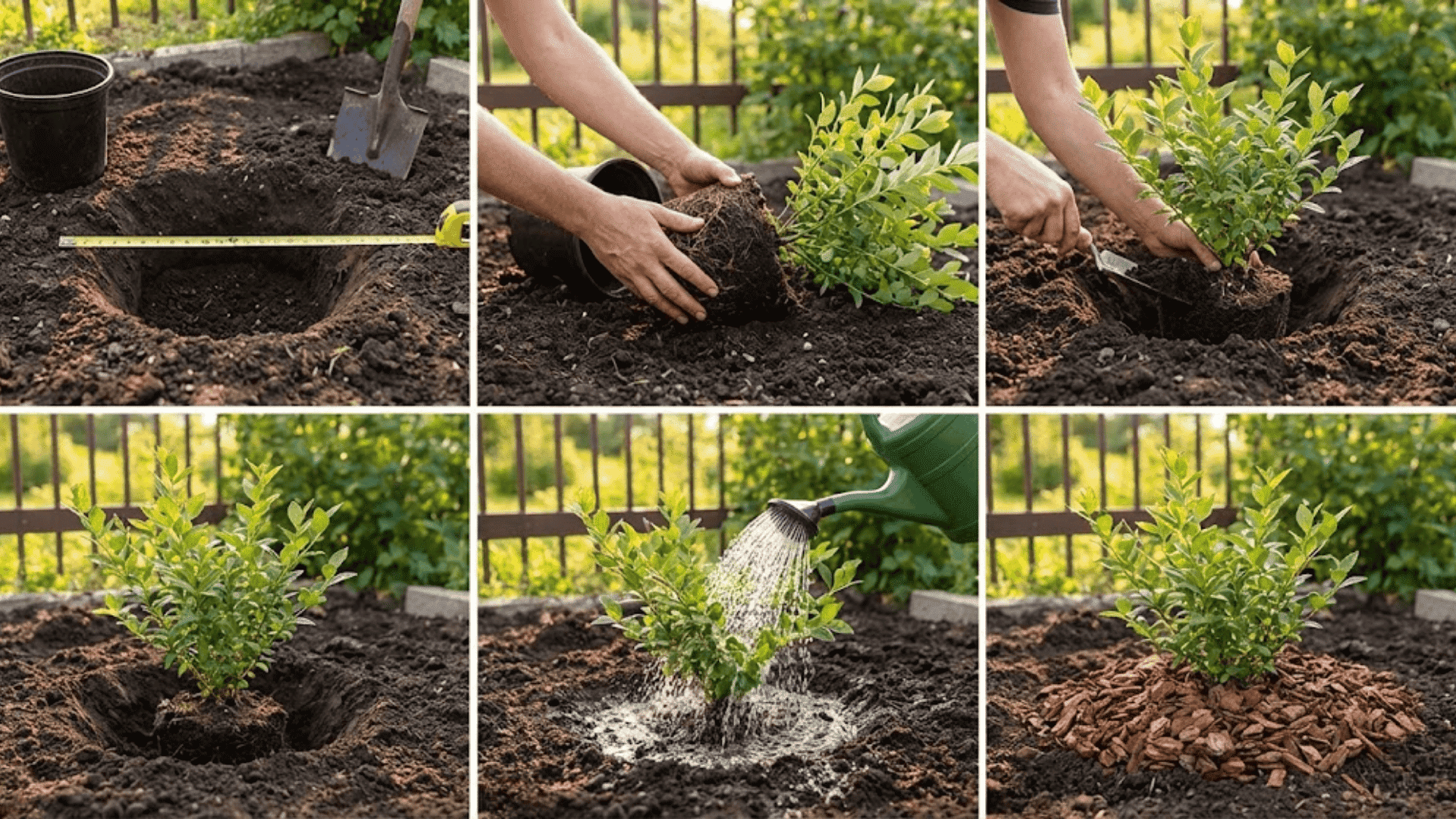
You’ve prepped the soil, picked the perfect spot, and chosen your planting window. Now comes the actual planting, which is honestly more straightforward than you might think.
Here’s how to get your blueberries in the ground:
- Step 1: Dig a hole twice as wide and just as deep as the root ball to give the roots room to spread easily.
- Step 2: Loosen the root ball gently and position the bush so the crown sits at or slightly above ground level.
- Step 3: Backfill with amended acidic soil and firm it gently around the roots without compacting too hard.
- Step 4: Water deeply and thoroughly to settle soil and eliminate air pockets around the roots.
- Step 5: Apply a thick layer of mulch (pine bark, wood chips, or pine needles) around the base to retain moisture and suppress weeds.
That’s it. No fancy techniques, no complicated maneuvers. Just thoughtful placement and good follow-through, and your blueberries are off to a strong start.
Care Tips After Planting
Planting is just the beginning. What you do in those first few weeks and months determines whether your blueberries struggle or flourish.
Let’s break down the essential care steps that actually matter.
Watering and Feeding Your New Bushes
Watering and fertilizing work hand in hand, but the timing for each is completely different.
Here’s what your blueberries need and when:
| Care Task | Timing | What to Do |
|---|---|---|
| First Week Watering | Daily to every other day | Keep soil consistently moist, not soggy |
| Ongoing Watering | 1 to 2 inches weekly | Deep watering beats frequent shallow watering |
| Avoid Fertilizing | Entire first year | New roots burn easily |
| Start Fertilizing | Second spring | Use acidic blueberry or azalea fertilizer |
First Year Pruning Strategy
This might sound counterintuitive, but removing those first flowers is one of the smartest things you can do for new blueberry bushes.
- Pinch off all flowers during the first growing season to redirect energy from fruit production into root development.
- Focus the plant’s energy underground where it matters most for long-term survival and productivity.
- Expect stronger growth in year two because the roots had time to establish without the stress of supporting berries.
- Start allowing fruit in the second year once the bush has a solid foundation and a healthy root system.
How Long Until Blueberry Bushes Produce Fruit?
Here’s the truth nobody wants to hear: blueberries test your patience. In the first year, you’ll pinch off flowers and get zero berries. Year two might give you a handful, just enough for a taste.
By year three, you’ll see a modest harvest that actually feels rewarding. But full production takes four to six years, when your bushes finally hit their stride and produce several pounds of fruit each season.
It feels like forever when you’re waiting, but here’s the payoff: once established, those same bushes keep producing for twenty to thirty years or more.
One patient decade gives you two decades of abundance.
The Closing Note
So when should you plant blueberry bushes? The answer depends on where you live and what type you’re growing, but the underlying truth stays the same: cooler seasons win.
Whether that’s early spring in cold climates or late fall down south, giving your bushes time to settle in without fighting extreme heat sets everything else in motion.
Yes, it takes patience. Yes, you’ll wait years for full harvests. But there’s something deeply satisfying about tending plants that outlast trends and keep giving back season after season.
Got questions or your own planting stories? Drop them in the comments below.