

Your lawn works hard all season long, growing thick and lush through sun and rain. But beneath that green carpet, something sneaky might be happening.
Dead grass and organic debris can weave themselves into a suffocating layer that steals moisture and nutrients from healthy roots below.
That’s where dethatching comes in. This essential lawn care practice clears away the buildup, letting your grass breathe again.
The catch? Timing makes all the difference between a lawn that bounces back beautifully and one that struggles for weeks.
Understanding the rhythm of your lawn’s growth cycle turns this from a risky gamble into a rejuvenating treatment that brings out the best in your yard.
What is Dethatching a Lawn?
Dethatching removes the layer of dead grass, roots, and organic matter that accumulates between your soil and living grass blades.
A thin layer of thatch is actually beneficial, acting like mulch to retain moisture and protect roots.
Problems start when thatch exceeds half an inch thick, creating a dense barrier that blocks water, air, and nutrients from reaching the soil. Your lawn will tell you when things have gone too far.
Signs you need to dethatch:
- Grass feels spongy or bouncy underfoot
- Water pools on the surface instead of soaking in
- Lawn looks dull despite regular watering and fertilizing
- Brown patches appear even with proper care
- Grass roots grow into thatch instead of soil
Why Timing Matters When Dethatching Lawn?
Dethatching is essentially controlled trauma for your lawn.
You’re raking out the buildup and inevitably tearing some healthy roots along with the dead material. This stress leaves your grass temporarily vulnerable and in need of serious recovery time.
Dethatch when your lawn is dormant or struggling, and you’re asking it to heal when it has no energy to spare.
The result? Bare patches, weed invasions, and a lawn that looks worse for months.
But time it right, during your grass’s peak growing season, and those same roots regenerate quickly. Your turf fills in bare spots before weeds can settle, bouncing back thicker and healthier than before.
Growth momentum is everything.
Best Time of Year to Dethatch a Lawn
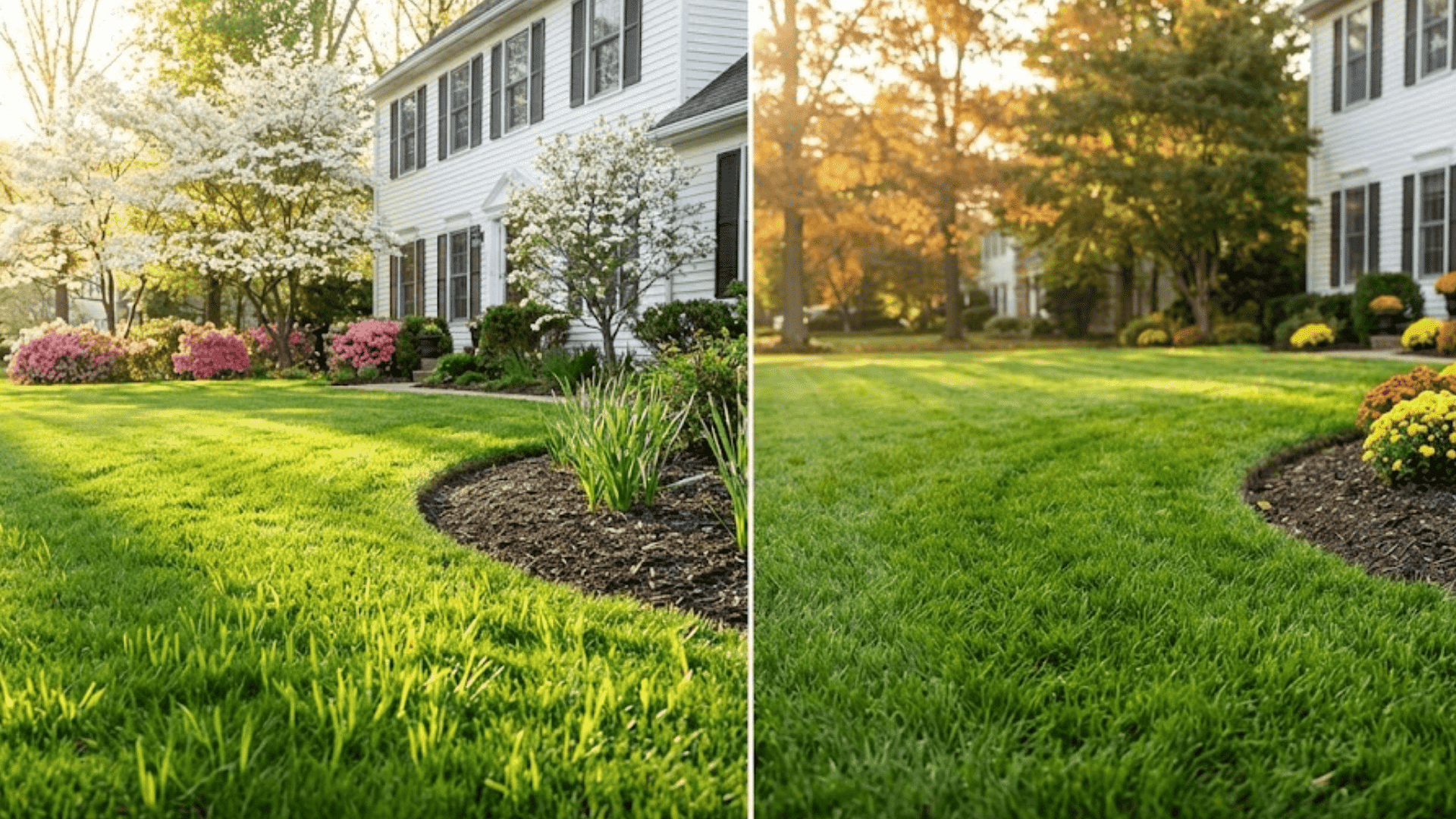
The best dethatching window depends entirely on what type of grass you’re growing.
Cool-season and warm-season grasses have opposite growth patterns, which means their ideal dethatching times are months apart.
Spring Dethatching
Spring works well for warm-season grasses like Bermuda, zoysia, and St. Augustine. Wait until soil temperatures hit the mid-sixties and your grass shows strong green growth.
Dethatching too early, while grass is still waking up, leaves it defenseless against weeds and cold snaps. You want that vigorous spring growth momentum carrying your lawn through recovery and filling in any disturbed areas quickly.
Fall Dethatching
Fall is prime time for cool-season grasses such as fescue, bluegrass, and ryegrass. These varieties thrive in cooler temperatures, making early fall their peak growing season.
Dethatching in September gives your lawn several weeks of ideal growing conditions to recover before winter dormancy. Moderate weather reduces stress and weed competition compared to spring’s invasion.
When to Dethatch Based on Grass Type?
Different grass types follow completely different schedules, and mixing them up is one of the fastest ways to wreck your lawn.
Here’s exactly when to dethatch based on what’s growing in your yard.
Cool-Season Grasses
These northern favorites love cooler weather and go dormant during summer heat.
Their active growth happens in spring and fall, with early fall being the sweet spot for dethatching. This timing gives them maximum recovery time before winter.
| Grass Type | Best Dethatching Window | Notes |
|---|---|---|
| Kentucky Bluegrass | Early to mid-September | Recovers quickly with fall moisture |
| Fescue | Late August to September | Avoid spring to prevent crabgrass issues |
| Perennial Ryegrass | Early September | Most heat-sensitive, needs cool temps |
Warm-Season Grasses
Southern grasses thrive in heat and go dormant when temperatures drop.
Dethatch during their late spring to early summer growth surge when they’re growing aggressively and can heal fast.
| Grass Type | Best Dethatching Window | Notes |
|---|---|---|
| Bermuda Grass | Late May to early July | Wait for full green-up first |
| Zoysia Grass | Late spring after green-up | Slower to recover than Bermuda |
| St. Augustine | Late spring to early summer | Avoid during drought stress |
Lawn Conditions to Check Before Dethatching
Even perfect timing won’t help if your lawn isn’t in the right condition to handle dethatching. Check these factors before you start raking.
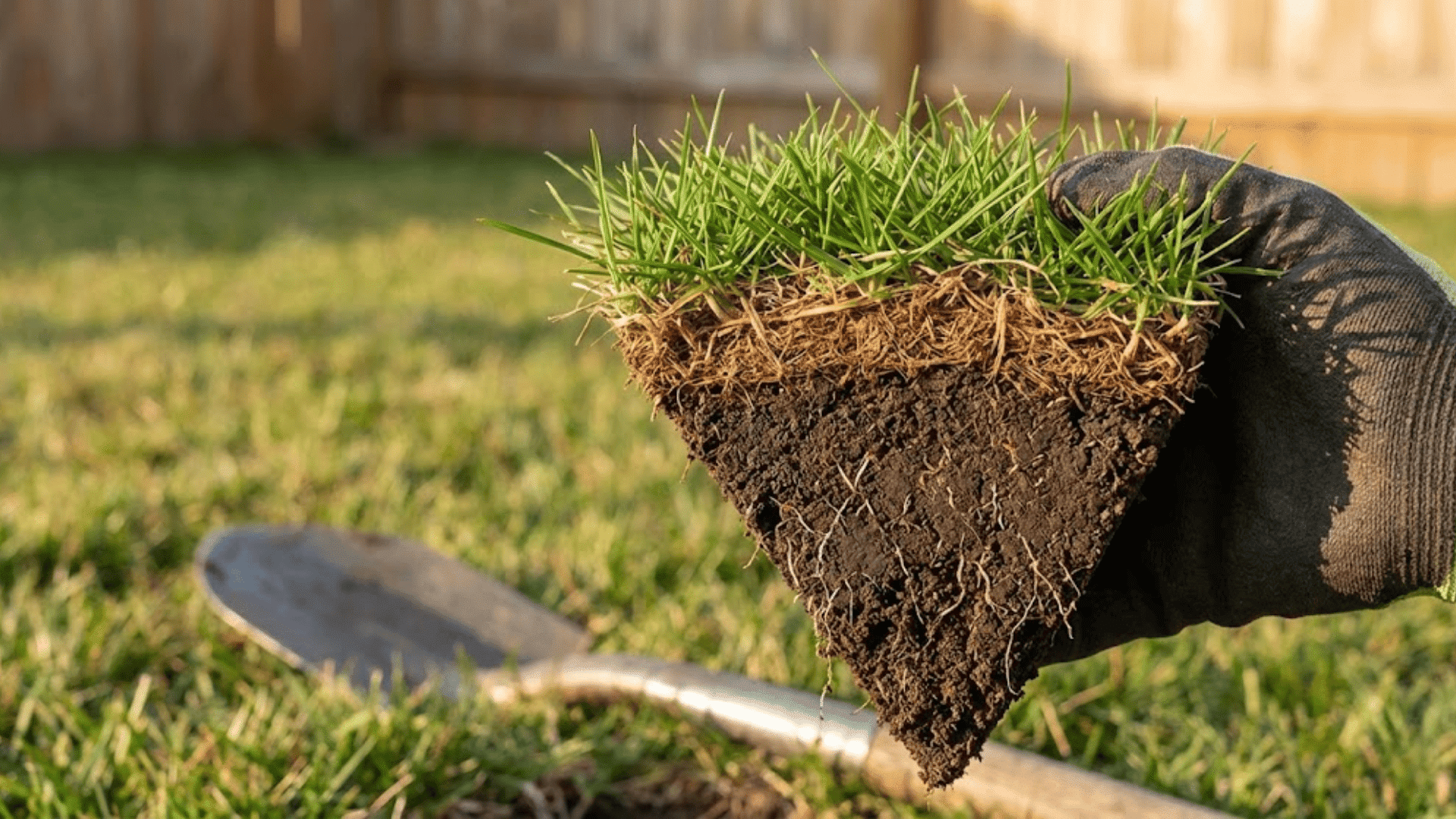
- Thatch Thickness Should Measure at Least Half an Inch: Dig a small wedge to check, and if it’s thinner, skip dethatching altogether.
- Soil Needs to Be Slightly Moist, Not Soaking Wet or Bone Dry: Water a day or two before if the ground feels hard.
- Grass Should Be Actively Growing With Visible New Shoots: Dormant or stressed lawns can’t recover from the damage.
- No Existing Disease, Pest Damage, or Drought Stress Visible: Let your lawn recover from other issues first.
- Weather Forecast Shows Consistent Mild Temperatures Ahead: Avoid dethatching right before heat waves or cold snaps.
Getting these conditions right means your lawn can focus all its energy on healing and filling back in, rather than fighting multiple stressors at once.
When You Should NOT Dethatch Your Lawn?
Sometimes the best decision is to put the rake away. Dethatching at the wrong moment can set your lawn back by months, so avoid these situations entirely.
- During Extreme Heat or Drought: Stressed grass can’t heal, and you’ll end up with permanent bare patches and invasive weeds.
- Right Before Frost or Dormancy: Your lawn needs active growth to recover, not a shutdown signal from cold weather.
- On Newly Seeded or Recently Sodded Lawns: Wait at least a full growing season for roots to establish before disturbing them.
- When Thatch Measures Less Than Half an Inch: You’ll cause unnecessary damage without any real benefit to your turf.
Patience pays off when it comes to lawn care. Wait for the right conditions, and your grass will reward you with faster recovery and thicker growth.
How Often Should You Dethatch a Lawn?
Most lawns only need dethatching every 2 to 3 years, though some never need it at all.
Grass type plays a huge role here. Kentucky bluegrass and creeping red fescue naturally produce more thatch than tall fescue or perennial ryegrass.
Your maintenance habits matter, too. Overwatering, over-fertilizing with high nitrogen, and bagging clippings instead of mulching can all speed up thatch accumulation.
Lawns with heavy clay soil also tend to develop thicker thatch layers.
Check your thatch annually by digging a small wedge. If it’s under 1/2 an inch, skip dethatching that year. There’s no need to dethatch on a rigid schedule when your lawn doesn’t actually need it.
Dethatching vs. Aeration: Timing Differences
Dethatching and aeration both improve lawn health, but they tackle different problems and shouldn’t be done on the same day.
Here’s how to tell which one your lawn needs and when to schedule each task.
| Aspect | Dethatching | Core Aeration |
|---|---|---|
| What It Does | Removes dead organic buildup from the surface | Pulls soil plugs to reduce compaction |
| When to Do It | During peak growth season | Spring or fall for cool-season, late spring for warm-season |
| Best For | Lawns with a thick thatch layer (over 1/2 inch) | Compacted soil, heavy foot traffic areas |
| How Often | Every 2 to 3 years, as needed | Annually for high-traffic lawns |
| Can You Do Both? | Yes, but aerate first | Aeration creates recovery channels before dethatching stress |
| Wait Time Between | Aerate, wait 1 to 2 weeks, then dethatch | Gives grass time to start healing |
If your lawn needs both treatments, always aerate first. The soil plugs help with drainage and give roots breathing room, which actually helps your grass recover faster when you dethatch a week or two later.
What to Do After Dethatching?
Your lawn looks rough immediately after dethatching, but proper aftercare speeds up recovery dramatically.
Water deeply right away to help stressed roots rehydrate, then keep the soil consistently moist for the next 2 weeks. This is the perfect window for overseeding since seeds make direct contact with the soil.
Apply a starter fertilizer to fuel new growth, but skip high-nitrogen blends that encourage thatch buildup.
Keep foot traffic minimal while the grass recovers.
Cool-season lawns typically bounce back within 2 to 3 weeks, while warm-season varieties need 3 to 4 weeks during active growth.
You’ll notice bare spots filling in and overall thickness improving as roots regenerate and spread into newly opened space.
Common Mistakes When Dethatching
Even well-intentioned dethatching can backfire if you make these common errors. Here’s what to avoid for a lawn that recovers quickly and stays healthy.
- Dethatching Too Aggressively: Going too deep tears healthy roots and creates bare patches that take months to recover.
- Choosing the Wrong Season: Dethatching during dormancy or stress periods leaves grass defenseless against weeds and weather damage.
- Skipping Lawn Recovery Steps: Failing to water, overseed, or fertilize after dethatching wastes the opportunity and slows healing.
- Over-Dethatching or Doing It Too Frequently: Annual dethatching when your lawn doesn’t need it causes more harm than the thatch ever would.
Learn from these mistakes before they happen. A little knowledge and restraint go a long way toward keeping your lawn thick, green, and resilient year after year.
Wrapping Up
Knowing when to dethatch your lawn takes the guesswork out of this essential maintenance task.
Cool-season grasses thrive with fall dethatching, while warm-season varieties peak when treated in late spring.
Timing your dethatching during active growth makes all the difference. Check your thatch layer annually, wait for the right conditions, and give your grass the aftercare it deserves.
Your lawn will repay that patience with deeper roots, better nutrient absorption, and a lush carpet that holds up to summer heat and winter cold.
Have questions about your specific grass type or dethatching experience? Drop a comment below and let’s talk turf.