Spring arrives, and you’re stuck wondering: Will my tulips actually bloom this year?
You planted bulbs last fall. You waited through winter. Now you’re checking the garden every morning, hoping to see color.
Tulip timing confuses most gardeners. Some years, they pop up in March. In other years, nothing happens until May. And then there’s the question of how long they’ll actually last once they open.
This guide breaks down exactly when tulips bloom across different US regions, which varieties flower earliest, and how to plant and care for bulbs so they come back strong every spring.
When Do Tulips Bloom in the US?
Tulips typically bloom between March and May across most of the United States. In warmer southern states like Texas and Florida, you might see blooms as early as late February or early March.
Meanwhile, colder northern regions like Minnesota and Maine often don’t see flowers until late April or early May. The exact timing depends on your USDA hardiness zone and local weather patterns.
A mild winter can push blooms earlier, while a late frost or extended cold snap delays them by several weeks.
Spring temperatures are the most significant factor; tulips need soil to warm up to around 55°F before they’ll start showing off their colorful petals.
When Are Tulips in Season?
Tulip season spans several months, depending on which varieties you choose to plant. Understanding bloom periods helps you create a garden with continuous color.
- Tulip season vs bloom window: Tulip season refers to the entire spring period when different varieties bloom, while the bloom window is the specific 1-3 weeks an individual tulip stays in flower.
- Early, mid, and late-season bloom periods: Early-season tulips open in March to early April, mid-season varieties bloom from mid-April to early May, and late-season types flower from late April through May.
By planting a mix of all three types, you can extend your tulip display for 6-8 weeks instead of just two weeks.
8 Types of Tulips and When They Bloom
Not all tulips bloom at once; different types flower from early March through late May. Choosing a mix of these eight varieties lets you enjoy fresh blooms for the entire spring season.
1. Single Early Tulips
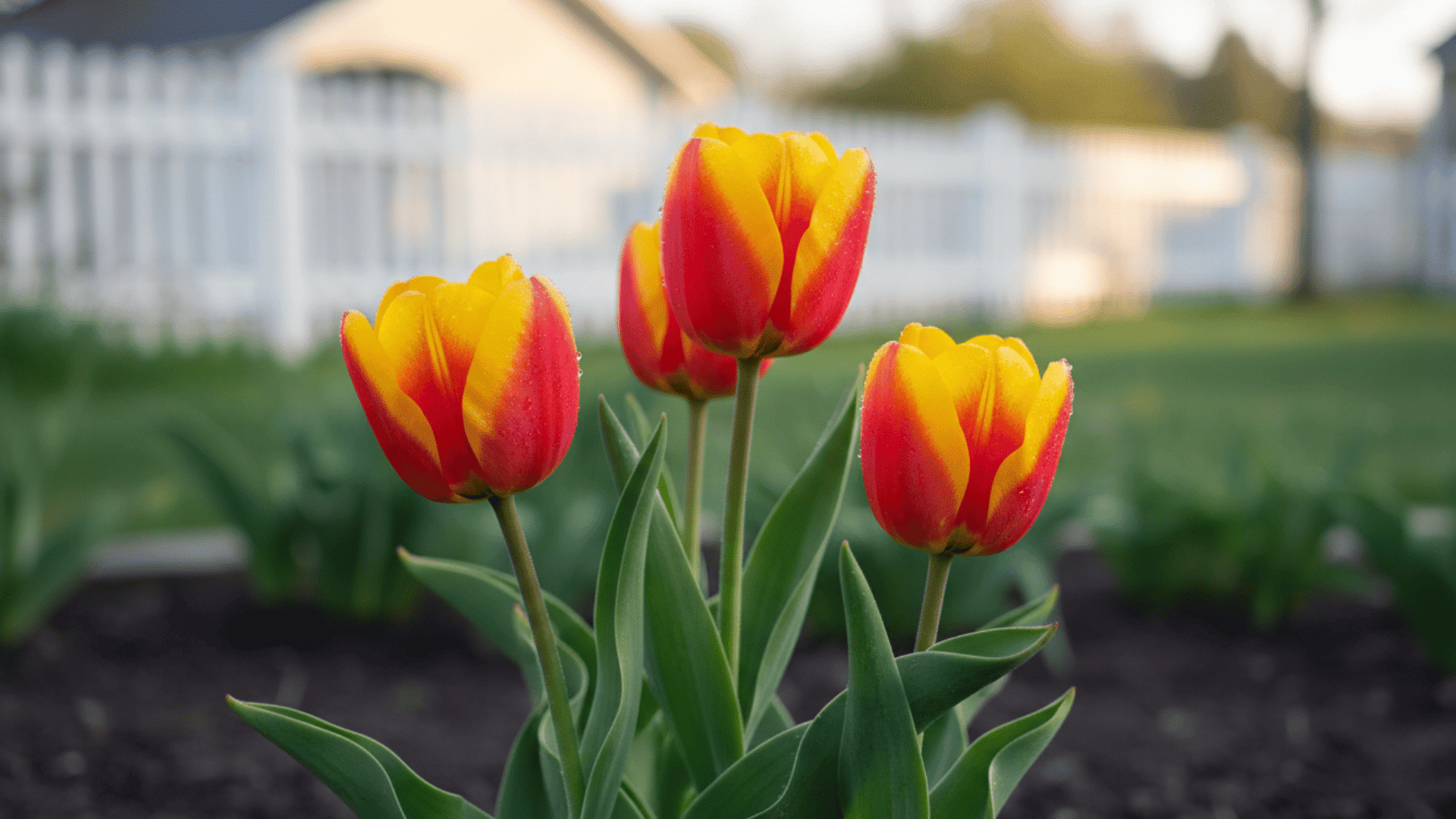
These are among the first tulips to appear each spring, usually blooming in late March to early April.
Single Early tulips have classic cup-shaped flowers on shorter stems, making them perfect for windy spots or container gardens.
They come in bright reds, yellows, pinks, and whites, bringing the first burst of color after winter ends.
- Stem height: 10-16 inches
- Best for: Rock gardens and front borders
- Cold tolerance: Handle late frosts better than other types
- Bloom duration: 7-10 days
2. Double Early Tulips
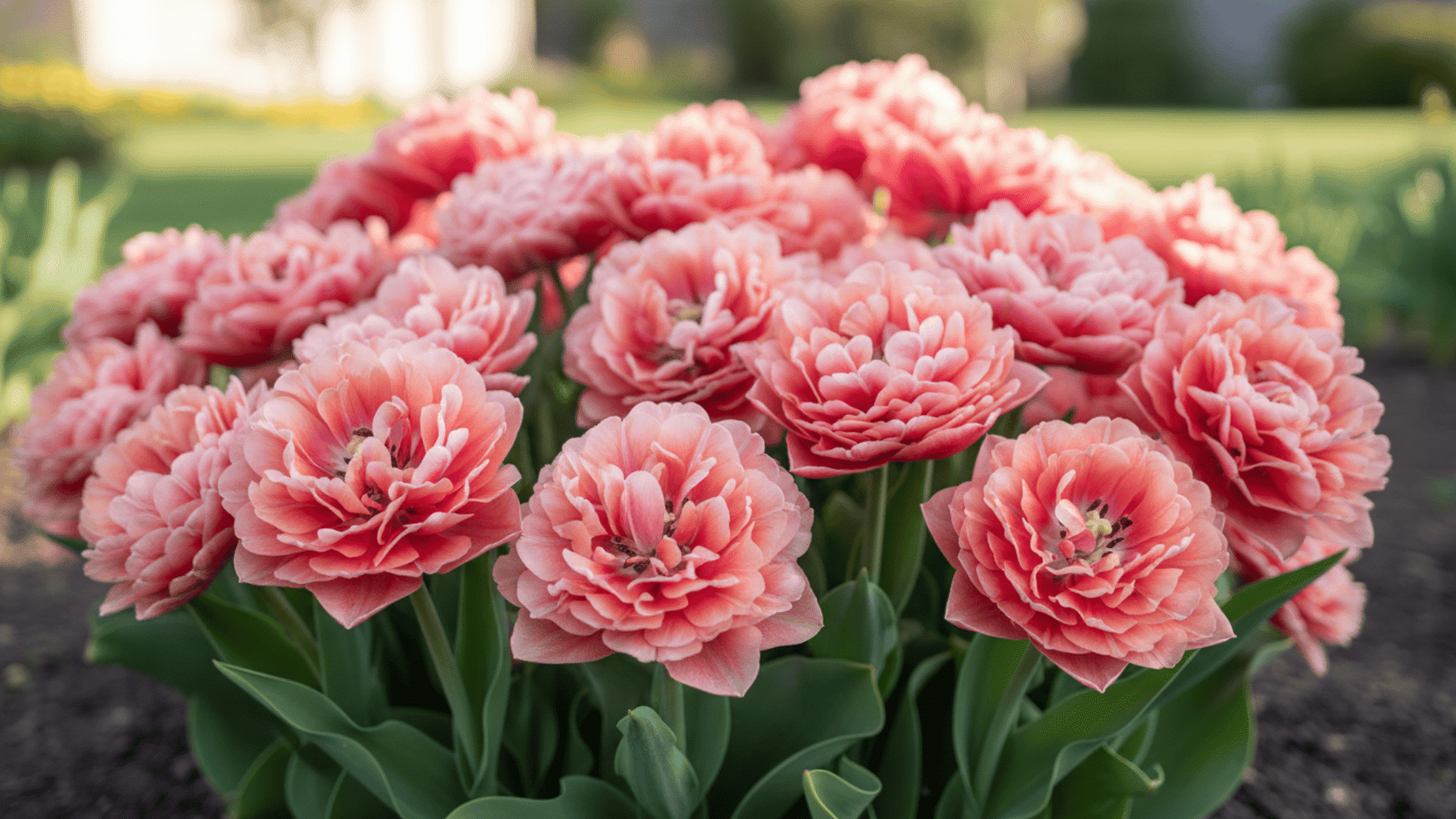
Double Early tulips bloom around the same time as Single Early varieties but pack twice the petals for a fuller, peony-like appearance.
These dense, layered flowers last slightly longer than single blooms because their extra petals protect the center. They work beautifully in borders and beds where you want maximum visual impact in early spring.
- Stem height: 12-16 inches
- Best for: Mass plantings and close-up viewing
- Fragrance: Some varieties have a light, sweet scent
- Weathernote: Heavy blooms may need support in rain
3. Triumph Tulips
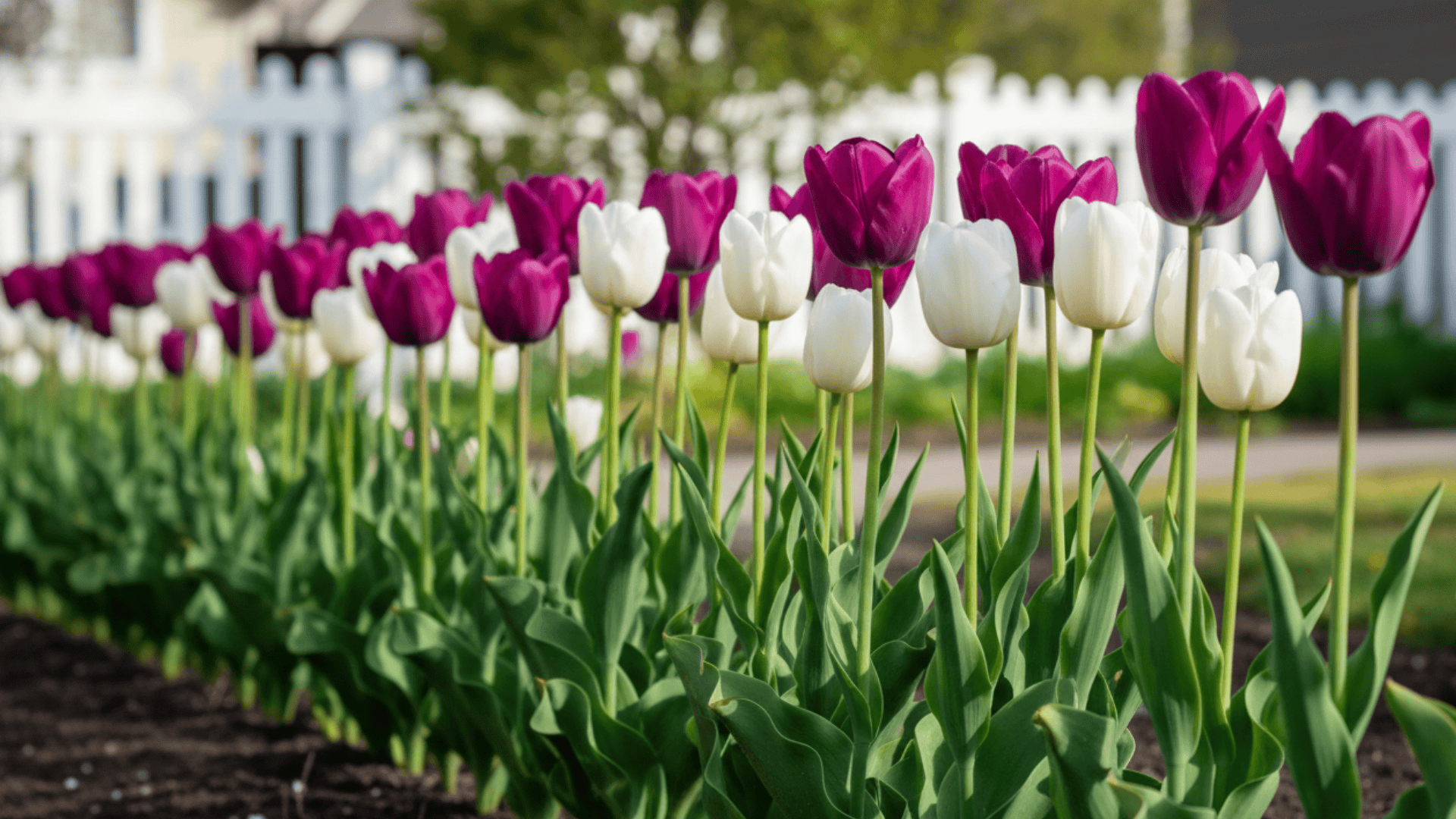
Triumph tulips are the mid-season champions, blooming from mid to late April in most regions.
They have strong, sturdy stems that hold up well in spring rain and wind, making them excellent cut flowers. Available in nearly every color imaginable, Triumph tulips bridge the gap between early and late bloomers.
- Stem height: 16-20 inches
- Best for: Cutting gardens and mixed borders
- Vase life: 7-10 days when cut fresh
- Repeat blooming: May return for 2-3 years with proper care
4. Darwin Hybrid Tulips
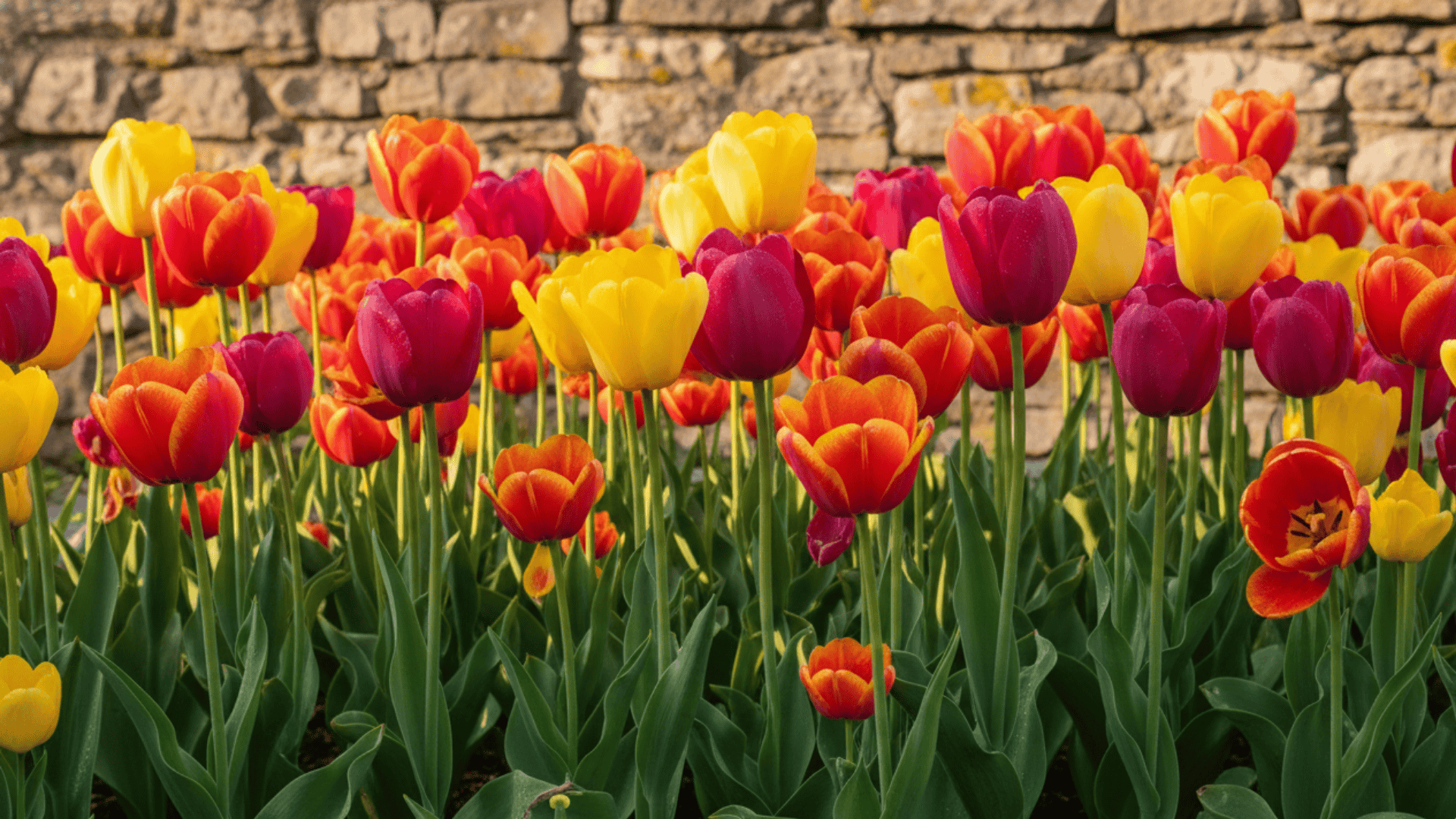
These tall, bold tulips appear in late April to early May and are known for their enormous flowers and vibrant colors.
Darwin Hybrids have thick stems that can reach 24-28 inches tall, creating stunning displays in garden beds. They’re also more likely to return year after year compared to other tulip types.
- Stem height: 24-28 inches
- Best for: Background plantings and dramatic displays
- Flower size: 4-6 inches across when fully open
- Perennial potential: Can bloom for 3-5 years
5. Lily-Flowered Tulips
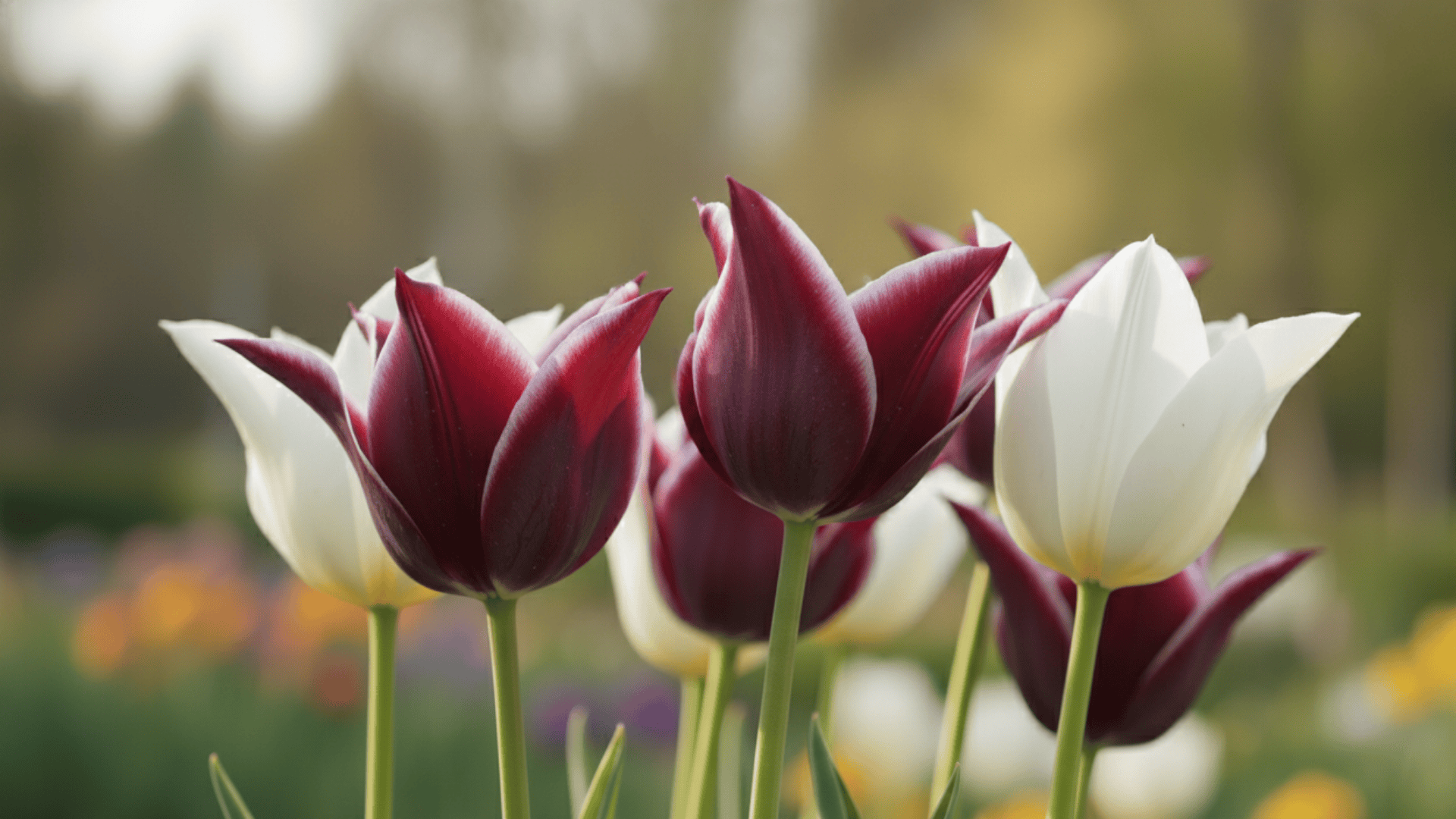
Lily-Flowered tulips bloom in late April through early May with distinctive pointed petals that curve outward. Their elegant, star-like shape adds a refined look to spring gardens and bouquets.
These tulips prefer sunny spots and well-drained soil to show off their graceful form.
- Stem height: 18-24 inches
- Best for: Formal gardens and elegant arrangements
- Petal shape: Pointed tips with reflexed edges
- Sun needs: Full sun for best petal definition
6. Parrot Tulips
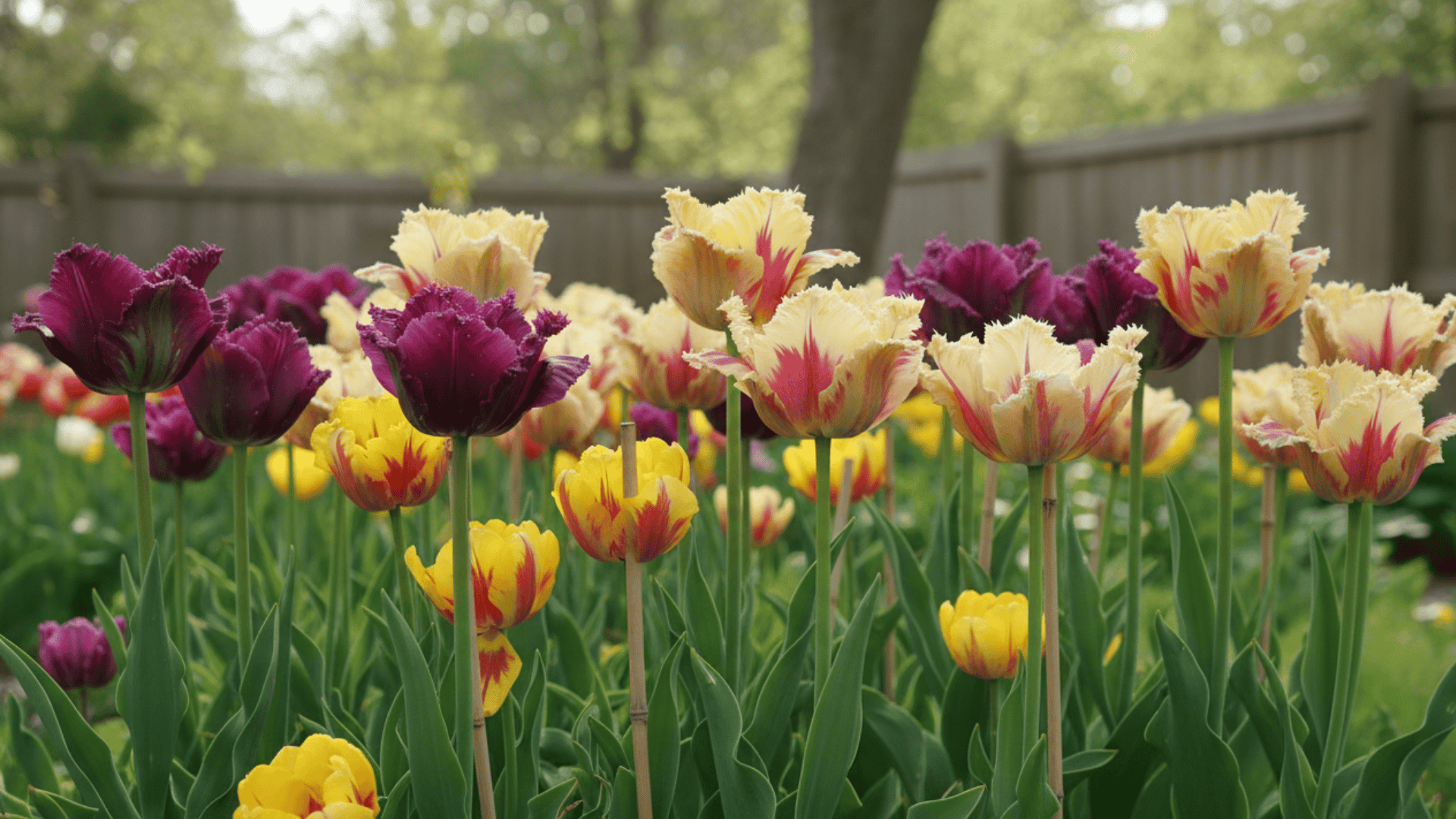
Parrot tulips are late bloomers, typically opening in early to mid-May with dramatic, ruffled petals that twist and curl.
Their wild, feathery appearance and bold color combinations make them look almost tropical. These statement flowers need some shelter from strong winds since their large, fluffy blooms can be top-heavy.
- Stem height: 16-24 inches
- Best for: Cottage gardens and artistic arrangements
- Color patterns: Often feature stripes, flames, or color breaks
- Staking: May need support when flowers are fully open
7. Fringed Tulips
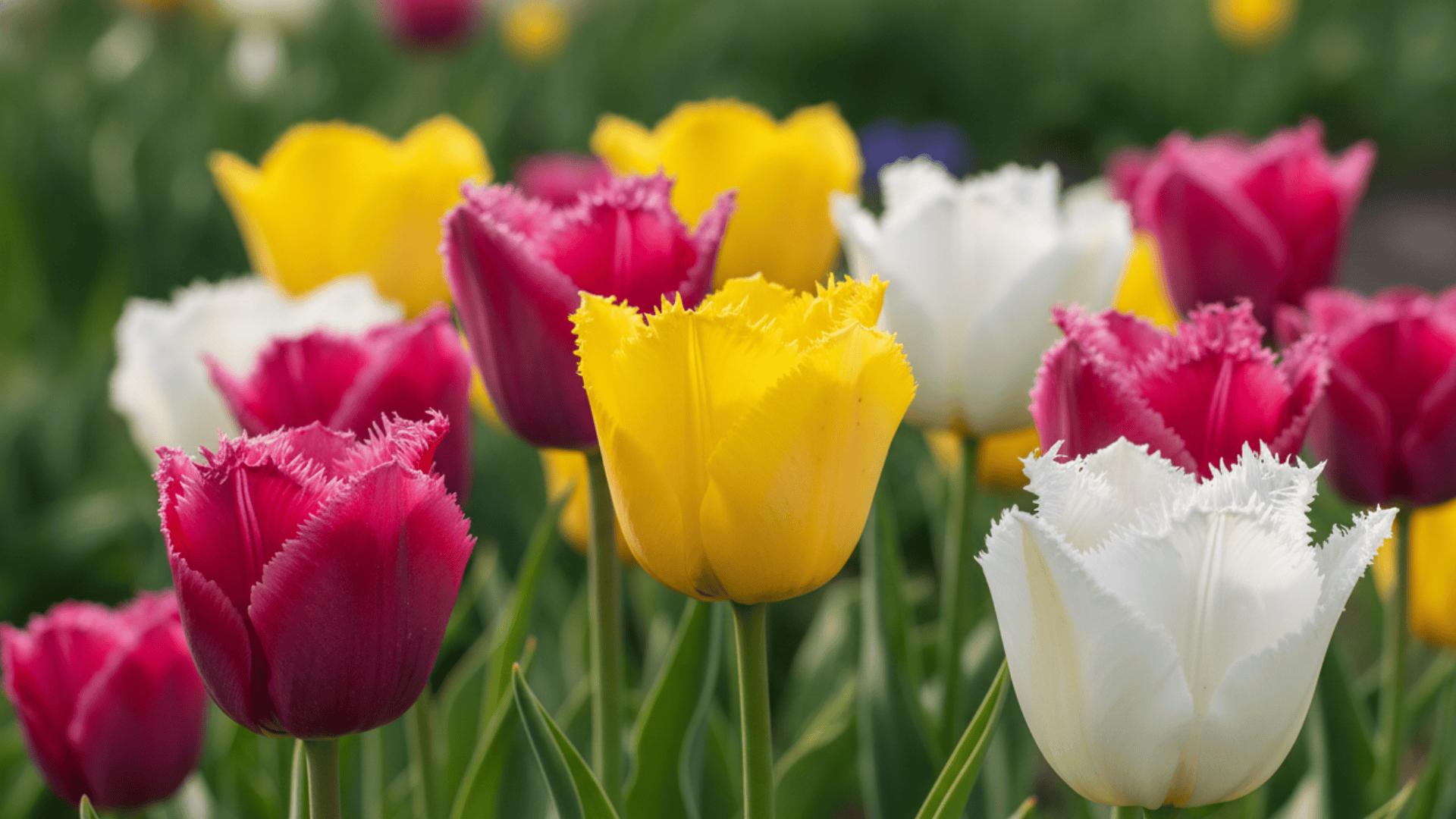
Fringed tulips bloom in late April to May and feature delicate, crystalline edges on their petals that look like fine lace.
The fringed texture catches sunlight beautifully and adds a unique touch to traditional tulip shapes. They’re available in both pastel and saturated colors, offering something for every garden style.
- Stem height: 14-24 inches, depending on variety
- Best for: Border fronts and focal points
- Fringe detail: Needle-like crystals along petal edges
- Photography favorite: Texture shows beautifully in close-ups
8. Single Late Tulips
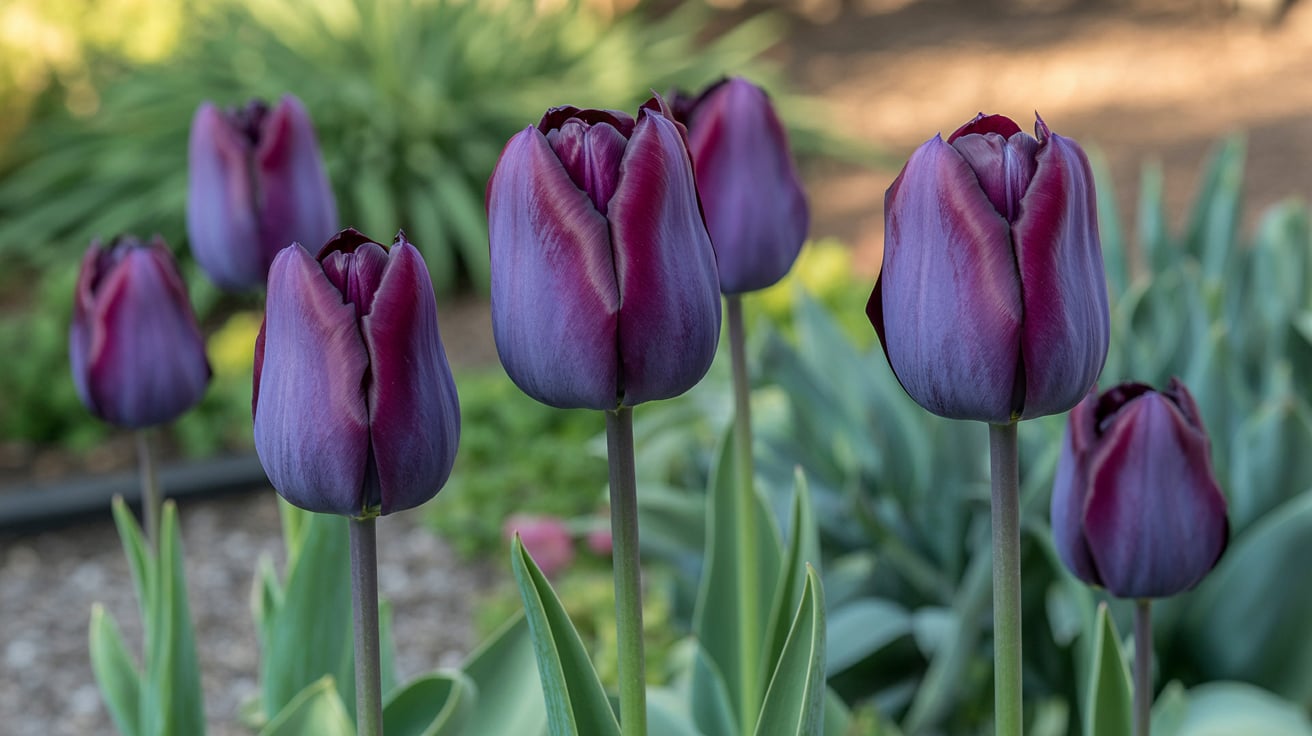
Single Late tulips are the final act of tulip season, blooming from early to mid-May in most areas.
These tall, stately flowers have smooth, egg-shaped blooms in rich, deep colors that close the spring show. They’re ideal if you want to extend your tulip display as long as possible into late spring.
- Stem height: 20-30 inches
- Best for: Tall back borders and cutting
- Color range: Includes rare blacks, purples, and bicolors
- Companion plants: Pair well with late-blooming daffodils and alliums
How Long Do Tulips Stay Blooming?
Most tulips stay in bloom for 1 to 3 weeks once the flowers fully open, depending on the variety and weather conditions.
Cooler spring temperatures around 45-55°F help tulips last longer, while hot sunny days above 70°F can cause petals to fade and drop within just a few days.
Early-blooming varieties tend to have shorter bloom windows, while late-season types often hold their flowers a bit longer.
Once your tulips open, expect the colors to be most vibrant for the first week, then gradually soften as the petals mature.
Rain, strong winds, and direct afternoon sun can all shorten bloom time, so planting in spots with morning sun and afternoon shade gives you the longest-lasting display.
Factors Affecting Tulip Bloom Duration
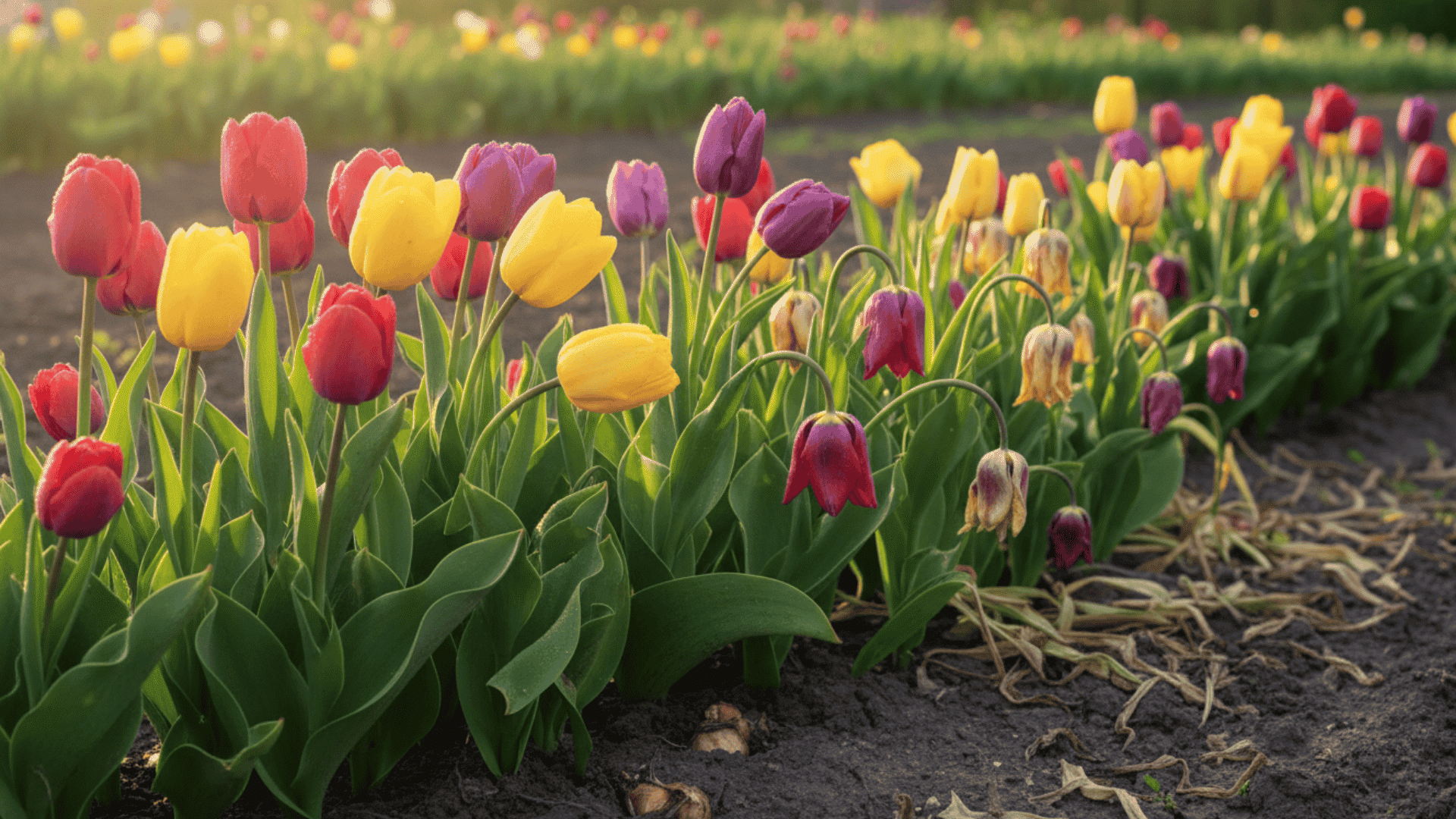
Your tulips might bloom for three weeks, or just three days; it all depends on the conditions they’re growing in. These four key factors determine whether your flowers stick around or fade fast.
1. Temperature and Weather Patterns
Cool spring weather between 45-60°F keeps tulips blooming longer by slowing down petal aging and color fade.
Hot spells above 70°F speed up the bloom cycle, causing flowers to open faster and wilt within days instead of weeks.
2. Sun Exposure and Soil Quality
Tulips need 6-8 hours of sunlight daily to produce strong blooms, but too much intense afternoon sun in warm climates shortens their display.
Well-draining soil rich in organic matter supports healthier roots that feed flowers longer, while heavy clay or waterlogged soil weakens bulbs and reduces bloom quality.
3. Watering Habits
Consistent moisture during the growing and blooming phase keeps tulip stems firm and petals fresh-looking.
Overwatering causes bulb rot and weak stems that can’t support flowers properly, while underwatering during bloom time makes petals wilt and drop early.
4. Bulb Size and Health
Larger bulbs store more energy and produce bigger, longer-lasting flowers compared to smaller or damaged bulbs.
Healthy bulbs without soft spots, mold, or pest damage have the strength to maintain blooms through variable spring weather.
How to Plant Tulips Correctly?
Planting tulips the right way in fall determines whether you’ll see blooms next spring. Follow these four steps to give your bulbs the best start for healthy, long-lasting flowers.
- Choosing healthy bulbs: Select firm, plump bulbs that feel heavy for their size, avoiding any with soft spots, mold, or visible damage.
- Preparing the soil: Loosen the soil to a depth of 12 inches and mix in compost or aged manure to improve drainage and add nutrients.
- Step-by-step planting process: Plant bulbs pointed end up at a depth three times their height (usually 6-8 inches deep) and space them 4-6 inches apart.
- Watering after planting: Water thoroughly right after planting to settle the soil around bulbs and kickstart root growth before winter.
How to Care for Tulips So They Bloom Every Year?

Tulips need full sun (6-8 hours daily) and consistent watering during their active growth period from spring through early summer.
Water when the top inch of soil feels dry, but stop once the foliage turns yellow after blooming. Fertilize with a balanced bulb food in early spring when shoots first emerge and again right after flowers fade to feed the bulbs for next year.
The most crucial step for repeat blooms is leaving the foliage in place for 6-8 weeks after flowers die, which allows leaves to photosynthesize and recharge the bulbs.
Once leaves turn completely yellow and brown, cut them back and let bulbs rest in the ground through summer, or dig them up in areas with wet summers and store them in a cool, dry place until fall replanting.
Wrapping It Up
Tulips bloom between March and May across the US, with timing depending on your climate zone and the varieties you plant.
Most blooms last 1-3 weeks, but cool weather and proper care can extend that window. The secret to reliable yearly blooms?
Plant healthy bulbs in fall at the right depth, provide full sun and good drainage, and let foliage die back naturally after flowering.
Ready to plan your tulip display? Choose a mix of early, mid, and late-season varieties to enjoy color from March through May.
Start planting this fall, and next spring, your garden will reward you with weeks of vibrant blooms.
What tulip types will you try first?