Ever painted a room and noticed that smell that lingers for days? That’s VOCs at work. Most paint cans mention them, but few people actually know what they are or why they matter.
VOCs affect how your paint performs and how your indoor air feels after painting.
Some release quickly. Others stick around for weeks. Understanding them helps you pick better paint and apply it safely.
In this article, you’ll learn what VOCs are in paint, what they’re made of, why manufacturers use them, how long they last, their effects on indoor spaces, and practical ways to reduce exposure.
What Does VOC Mean in Paint?
VOC stands for Volatile Organic Compounds. These are chemicals in paint that evaporate into the air at room temperature. Volatile means they turn into gas quickly.
Organic refers to carbon-based substances. Compounds mean a mix of different chemical ingredients. When paint dries, VOCs are released into the air through a process called off-gassing.
What VOCs in paint are made of:
- Solvents that keep paint liquid and help it spread smoothly
- Additives that improve how paint flows and levels on surfaces
- Carriers that help color pigments spread evenly across the wall
- Chemical compounds like formaldehyde, benzene derivatives, and glycol ethers
Why Are VOCs Used in Paint?

VOCs are not added to paint by accident. For decades, they played an essential role in how paint performed. VOCs help paint spread smoothly across surfaces and dry evenly.
They create a durable finish that resists cracking, peeling, and bubbling over time. Without VOCs, traditional paints often dried too slowly, looked streaky, or failed to stick properly to walls.
Modern formulas have reduced the need for high VOC levels. However, some paints still use them to maintain performance and quality standards.
Advantages and Disadvantages of VOCs in Paint
VOCs are not entirely bad, nor are they altogether good. Understanding both sides helps explain why some paints still contain them despite health concerns.
| Advantages | Disadvantages |
|---|---|
| Smoother application on walls and surfaces | Strong odors that linger after painting |
| Faster drying times between coats | Negative impact on indoor air quality |
| Improved durability for specific paint uses | Longer off-gassing period in enclosed spaces |
Understanding both sides explains why VOCs still exist in some paint formulas.
 VOC Levels in Paint:

VOC levels are typically measured in grams per liter. Lower numbers indicate fewer emissions from the paint. Labels often list VOC content directly on the can for easy comparison. Understanding these numbers helps compare products, but VOC content should be considered alongside performance, durability, and intended use.
Effects of VOCs in Paint
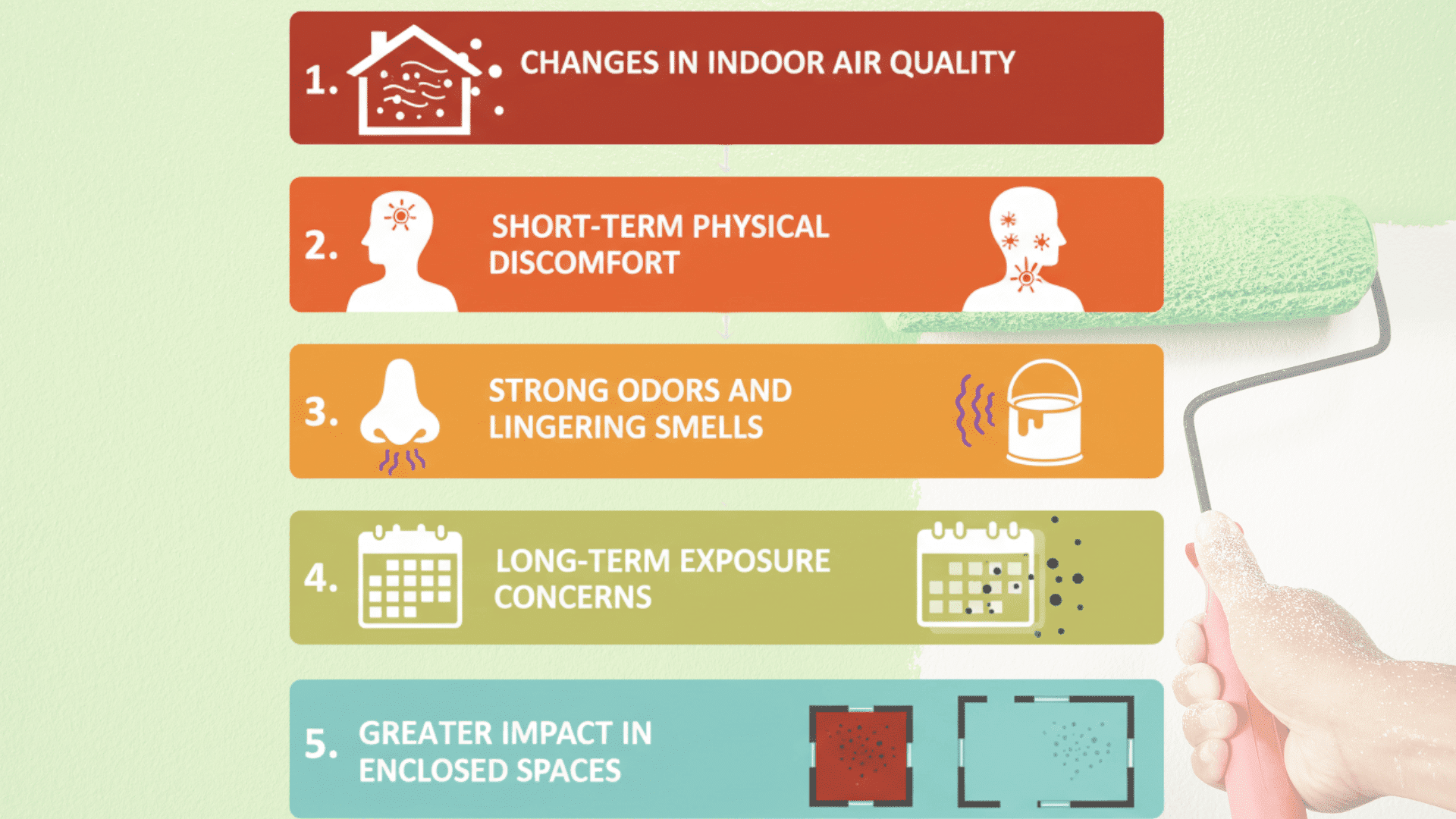
Now that you know what VOCs are and why they exist in paint, it’s essential to understand their actual effects. Below are five clearly defined effects associated with VOCs in paint.
1. Changes in Indoor Air Quality
VOCs increase chemical levels in the air indoors, especially right after painting. Poor ventilation makes these compounds stay in the air longer. Rooms with closed windows or doors are affected the most. This can make the air feel stuffy or uncomfortable to breathe.
2. Short-Term Physical Discomfort
Some people feel irritation during or shortly after painting. This happens more often in closed rooms with little fresh air. Symptoms may include headaches, dizziness, or eye irritation. Children, elderly people, and those with respiratory issues may be more sensitive.
3. Strong Odors and Lingering Smells
That familiar paint smell comes from VOCs being released into the air. More pungent odors usually mean higher emission levels. However, smell alone does not tell you the exact VOC content. The scent can last anywhere from a few hours to several days.
4. Long-Term Exposure Concerns
Extended exposure to VOCs over time has raised health concerns. This is especially true in indoor spaces where air does not circulate well. Repeated exposure may have cumulative effects on health. People who work with paint regularly face higher exposure risks.
5. Greater Impact in Enclosed Spaces
Bedrooms, small offices, and rooms with minimal airflow retain VOCs longer. Open spaces and outdoor areas allow VOCs to dissipate faster. The size and ventilation of a room directly affect how long VOCs remain. Using fans or opening windows can help reduce this impact significantly.
How Long Do VOCs Last After Painting?
The duration of VOC emissions varies based on paint type and room conditions. Some VOCs dissipate within a few days after painting. Others may continue releasing for several weeks.
Full curing of paint can take up to 30 days or even longer. Factors that influence how long VOCs last include ventilation, room temperature, humidity levels, and the specific paint formula used.
Better airflow and warmer temperatures typically help VOCs clear faster from indoor spaces.
Regulations and VOC Limits in the United States
VOC limits exist to reduce air pollution and improve indoor air quality. Regulations influence how paints are formulated and labeled.
- Limits vary by application type – Different VOC limits apply depending on whether paint is used for walls, trim, or industrial purposes.
- Indoor paints often have stricter limits – Paints meant for indoor use face tighter VOC restrictions than exterior paints.
- Regional standards may differ – Some states, like California, have stricter VOC rules than federal standards require.
These regulations have driven the growth of low-VOC and zero-VOC paint options in recent years.
VOC Paint vs Low-VOC Paint vs Zero-VOC Paint
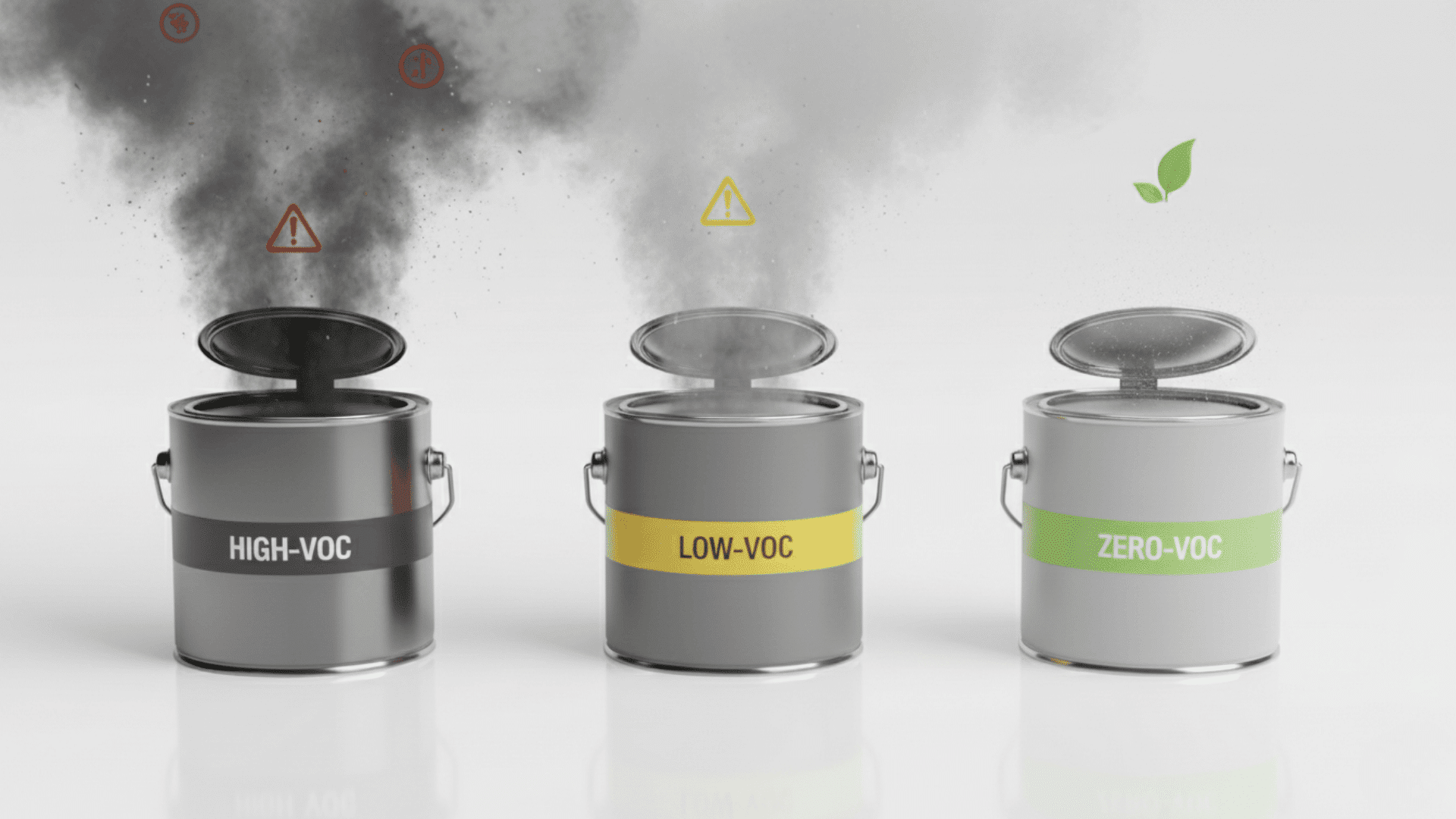
These terms are often confused, but they are not the same. Each type has different VOC levels and characteristics. Understanding the differences helps you choose the right paint for your needs.
| Paint Type | What It Means | Important Notes |
|---|---|---|
| VOC Paint | Contains higher levels of VOCs | Common in older or specialty paints |
| Low-VOC Paint | Reduced VOC content | Still may release small amounts |
| Zero-VOC Paint | No VOCs added | May still contain trace VOCs from pigments |
Zero-VOC does not always mean VOC-free downright. Some colorants or additives may introduce small amounts even when the base paint is labeled zero-VOC.
Always check the full product label to understand what you are actually getting. The term refers to the base formula, not necessarily the final mixed product.
What to Look for When Shopping for Paint?
When choosing paint, VOC content is only one part of the decision. Several other factors matter just as much for getting good results.
Consider:
- VOC level appropriate for the space – Choose lower VOC paints for bedrooms and nurseries where people spend more time.
- Room function and ventilation – Rooms with better airflow can handle slightly higher VOC levels than closed spaces.
- Durability and finish requirements – High-traffic areas may need more durable paint that could have different VOC levels.
- Label transparency and ingredient clarity – Look for brands that clearly list VOC content and ingredients on the label.
Balancing air considerations with performance leads to better results.
How to Apply Paint While Minimizing VOC Exposure?
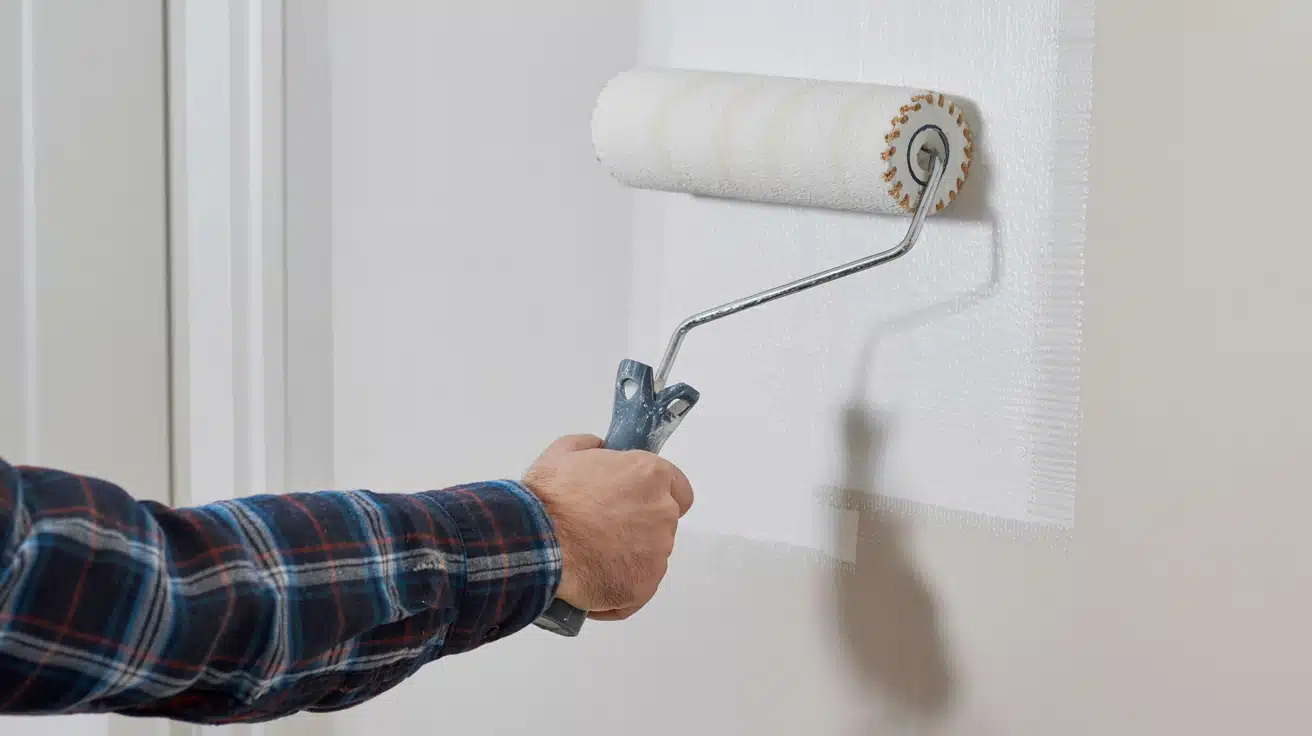
Smart application practices can significantly reduce exposure to VOCs during painting. Ventilate the room before, during, and after you paint.
Keep windows open whenever possible to let fresh air circulate. Use fans to promote better airflow throughout the space. Allow proper curing time before anyone occupies the room again.
These simple steps help VOCs dissipate more quickly and reduce the amount of chemicals you breathe in while painting.
Final Thoughts
Understanding what VOC means in paint helps you make more intelligent choices for your home. VOCs affect everything from how paint smells to how long that odor lingers in your rooms.
Some paints have higher levels, others have almost none. The right choice depends on where you’re painting, how much ventilation you have, and what finish you need.
By choosing lower VOC options, ventilating properly, and applying paint correctly, you can balance performance with better indoor air quality.
Your next paint project doesn’t have to mean breathing in chemicals for weeks.
What’s your experience with paint odors? Share your thoughts in the comments below.