Most people think carefully about their knives, pots, and pans. The cutting board barely gets a second look. But here is the thing.
Your cutting board comes into contact with almost every ingredient you cook with. Raw chicken, fresh vegetables, bread, and fruit. It all lands on that surface, every single day.
If that surface is made from the wrong material, it can release microplastics into your food. It can also hide bacteria in deep knife marks that never fully wash out, no matter how hard you scrub.
Choosing the safest cutting board material does not have to be confusing. You just need the right information. This guide covers what is safe, what is risky, and what to look for before your next purchase.
Why Your Cutting Board Material Actually Matters
Your cutting board is in direct contact with raw meat, vegetables, and everything in between. If it is made from a material that harbors bacteria or leaches chemicals, those things can end up in your food.
The USDA notes that worn boards with deep grooves are very hard to properly sanitize. Picking the right material from the start keeps your food prep cleaner and your family safer.
What Makes a Cutting Board Safe or Unsafe?
There is more to a cutting board than how it looks in your kitchen. Several key factors decide how safe a material actually is for daily food prep.
| Safety Factor | What It Means |
|---|---|
| Porosity | Porous materials absorb liquid. Non-porous ones do not. |
| Chemical content | Some boards contain BPA, phthalates, or formaldehyde-based glues. |
| Microplastics | Plastic boards shed tiny plastic particles into food during chopping. |
| Knife-friendliness | Hard surfaces dull knife blades faster and increase the risk of slip-and-fall injuries. |
| Ease of cleaning | Deep knife scars trap bacteria that soap and water cannot always remove. |
| Durability | Boards that last longer reduce waste and long-term cost. |
| Antibacterial coatings | Coatings like triclosan can break down into harmful byproducts when wet. |
7 Safest Cutting Board Materials You Can Actually Trust
Now that you know what to look for, here are the safest materials for cutting boards. Each one has its own strengths depending on how you cook.
1. Solid Hardwood
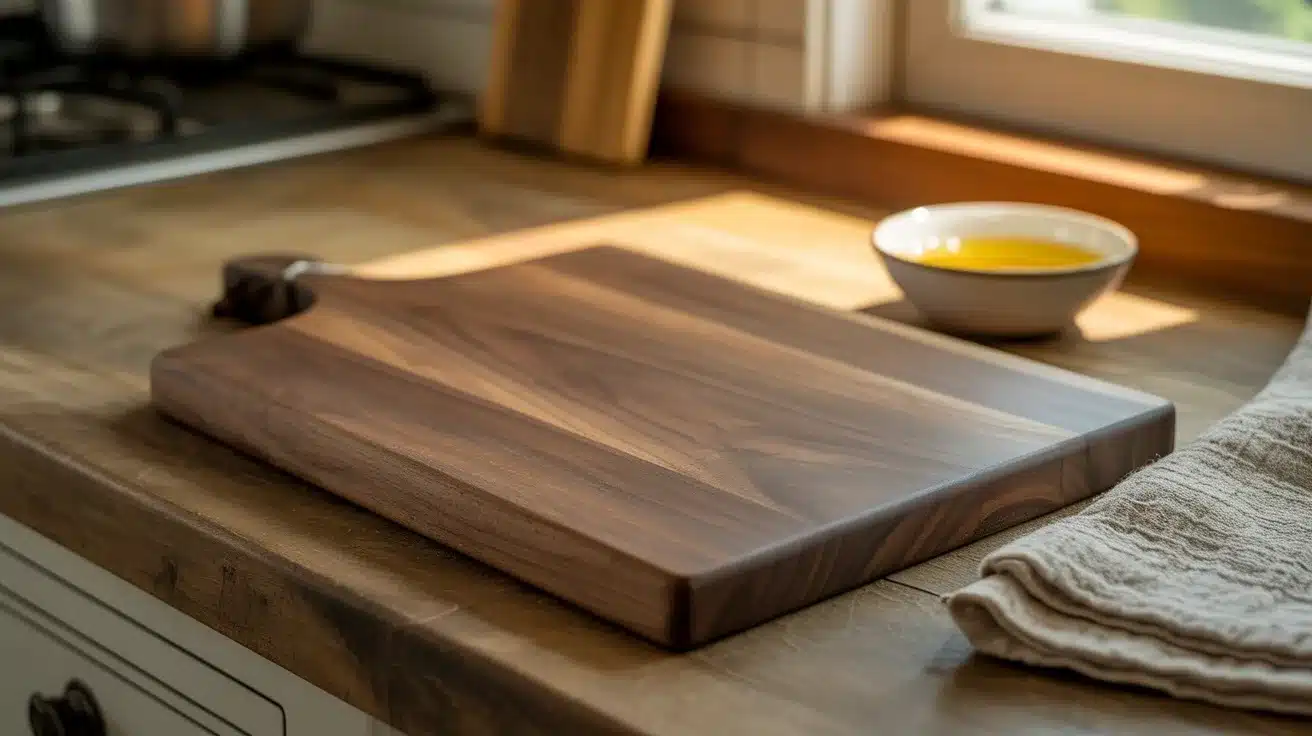
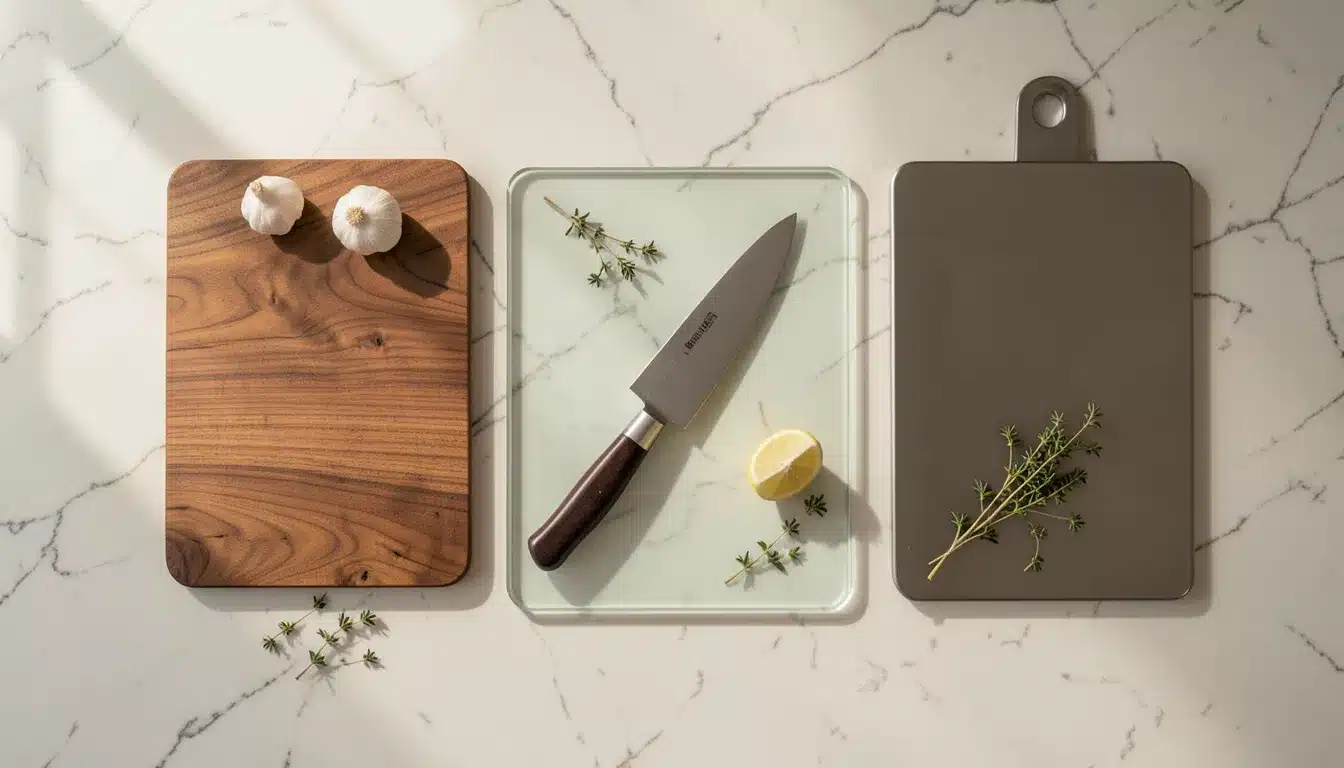
Hardwoods like maple, walnut, cherry, and oak are naturally antimicrobial. They contain compounds called tannins that slow bacterial growth on the surface.
A single-slab board with no adhesive is your safest wood option. Oil it regularly with a food-safe, petroleum-free oil to keep it from drying out and cracking.
2. Bamboo
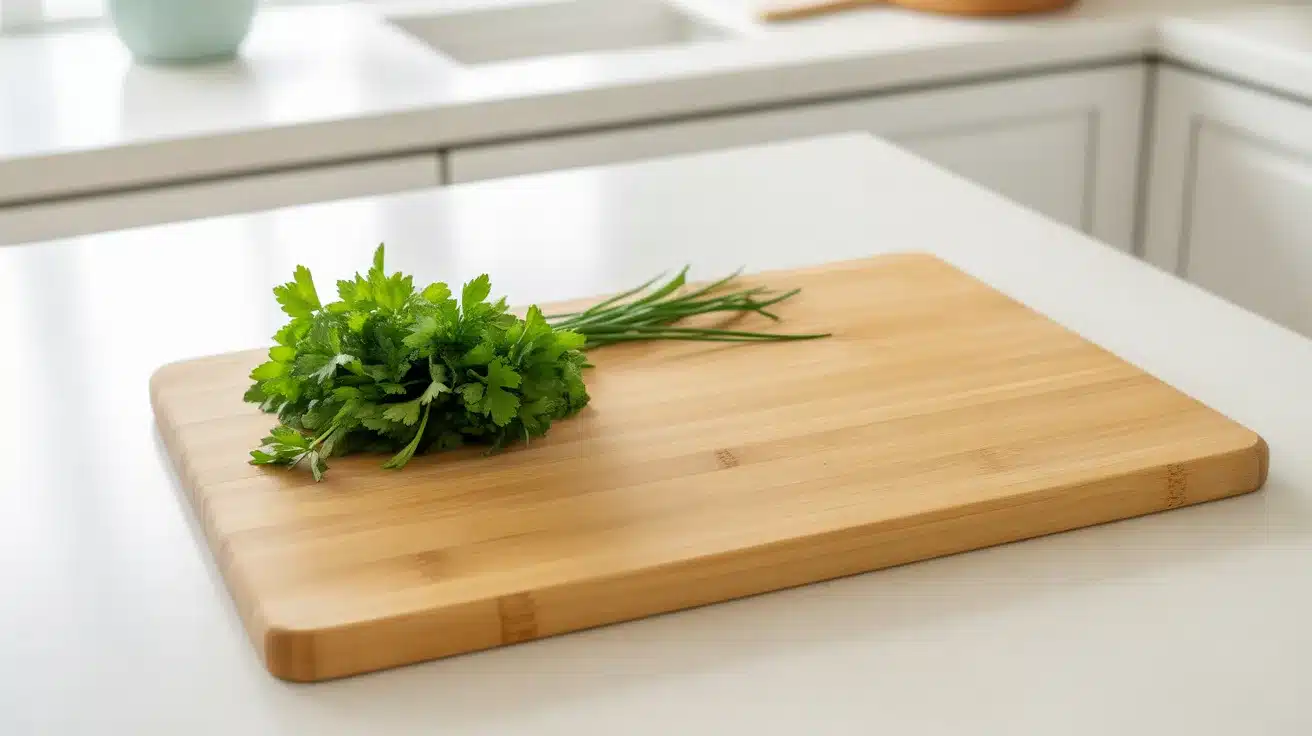
Bamboo absorbs far less moisture than most hardwoods and resists knife scarring well. Its low moisture retention makes it naturally more resistant to bacteria than other wood types. Most bamboo boards are made from pressed pieces, so look for options that clearly use formaldehyde-free adhesive.
3. Glass
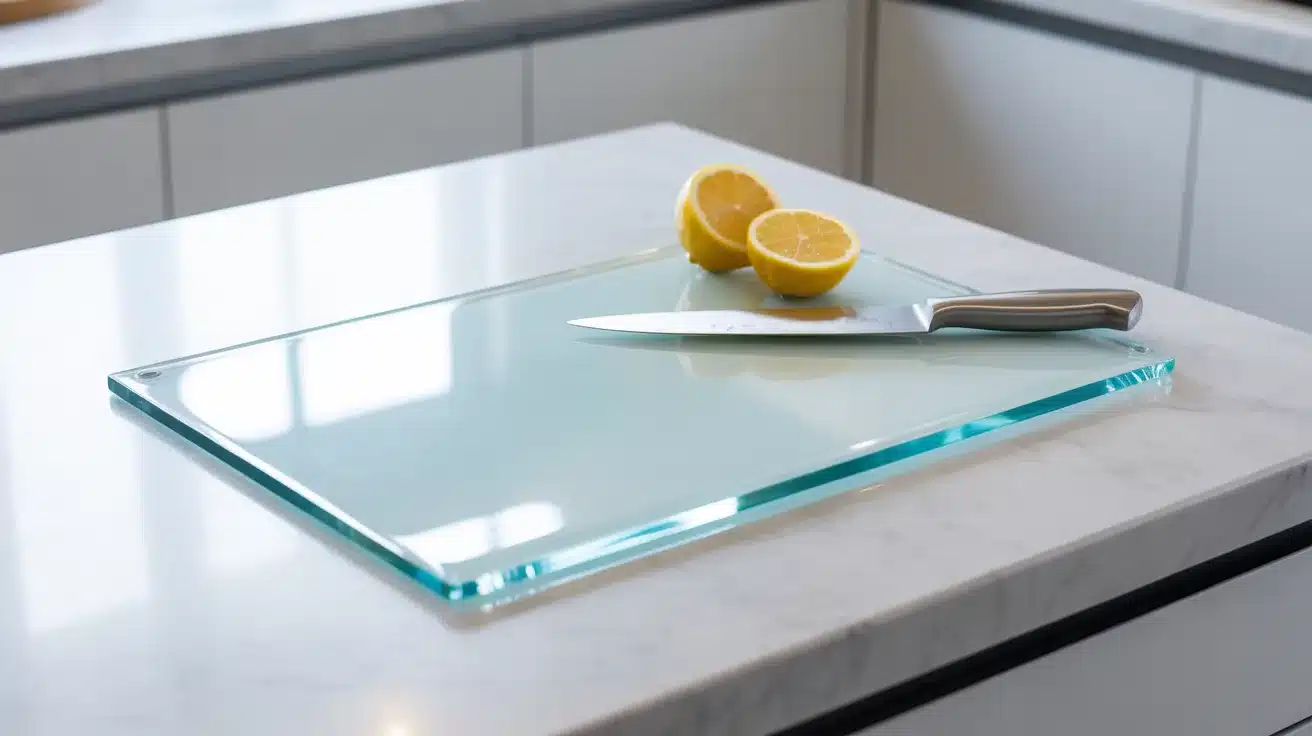
Glass is fully non-porous and one of the most hygienic surfaces you can put food on. It does not absorb odors, stains, or bacteria, and it is completely dishwasher-safe. The main downside is that it dulls your knives quickly and can be quite loud during heavy chopping.
4. Stainless Steel
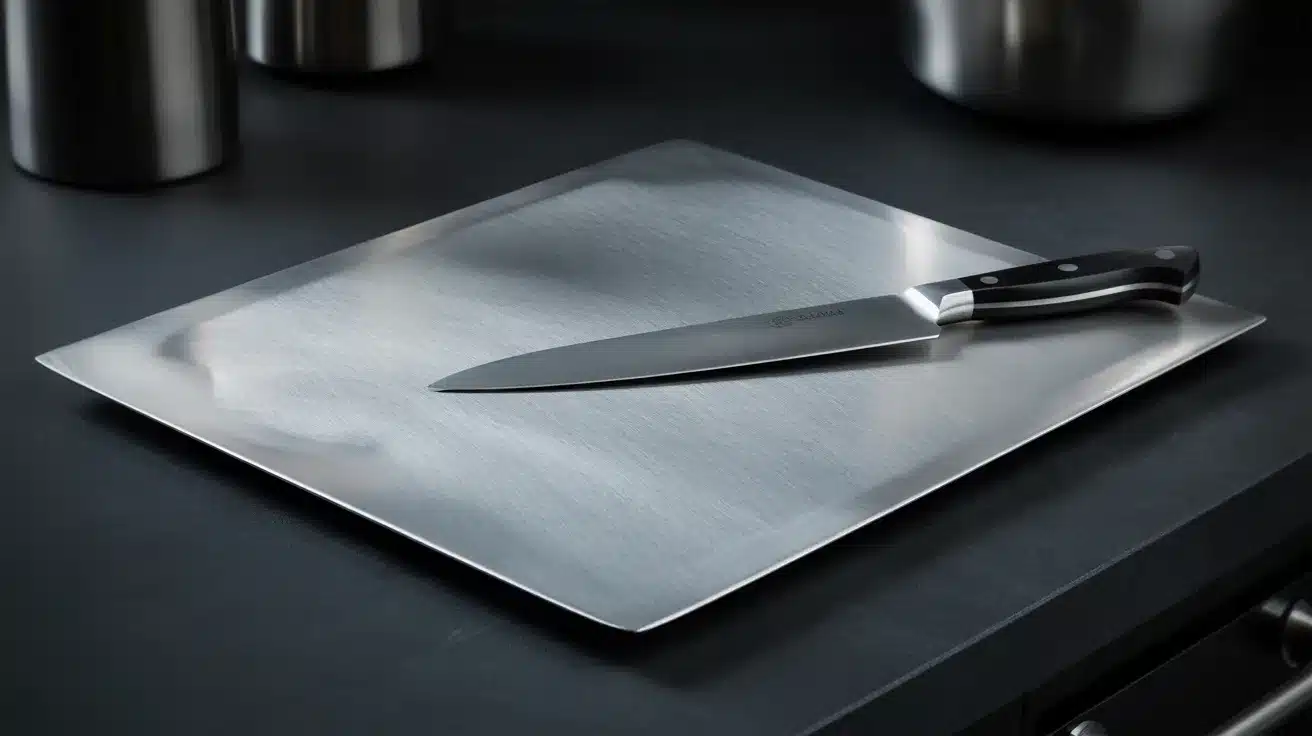
Stainless steel is non-porous, non-toxic, and very easy to clean after use. It does not harbor bacteria, holds up well over time, and often contains recycled materials. Keep in mind it dulls knives faster than wood, and people sensitive to nickel or chromium should choose another option.
5. Titanium
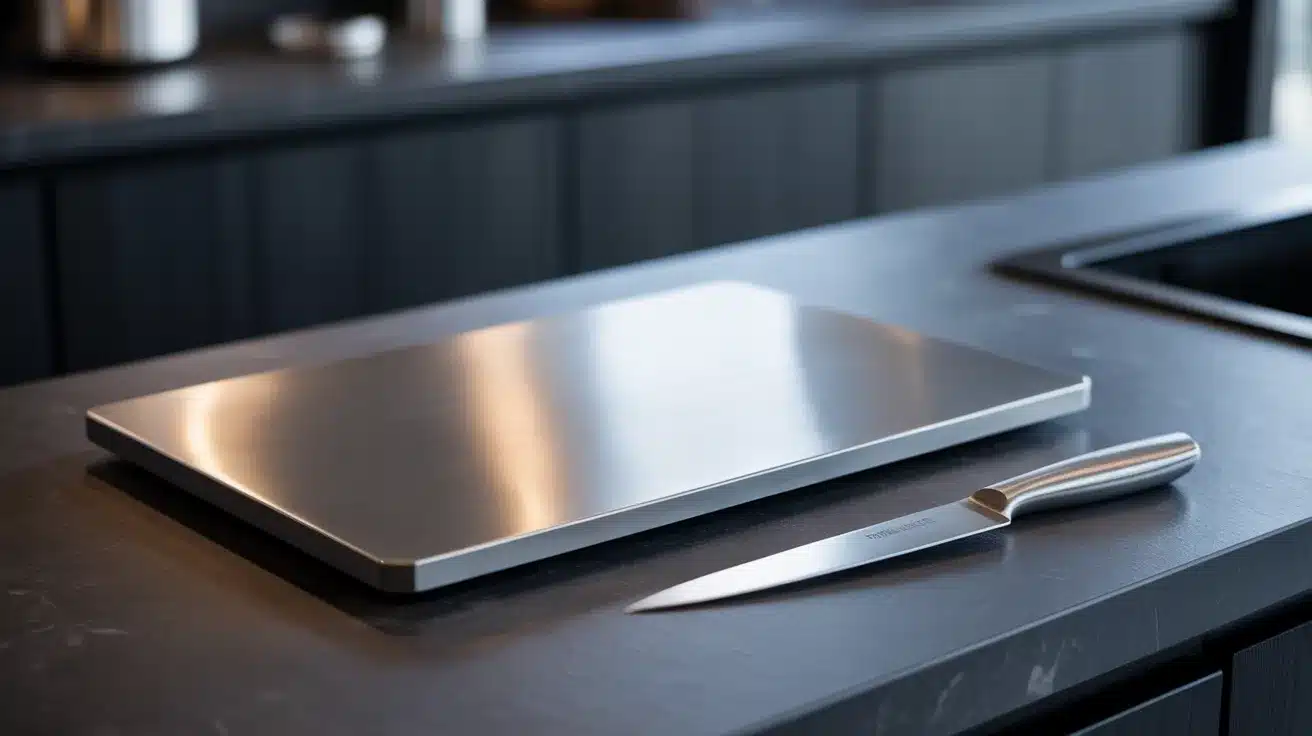
Titanium is stronger than stainless steel but noticeably lighter. It is completely non-toxic, non-reactive, and does not leach metals even when cutting acidic foods like tomatoes or citrus. It is one of the most reliable options available, though the price point is higher than most other materials.
6. Natural Rubber
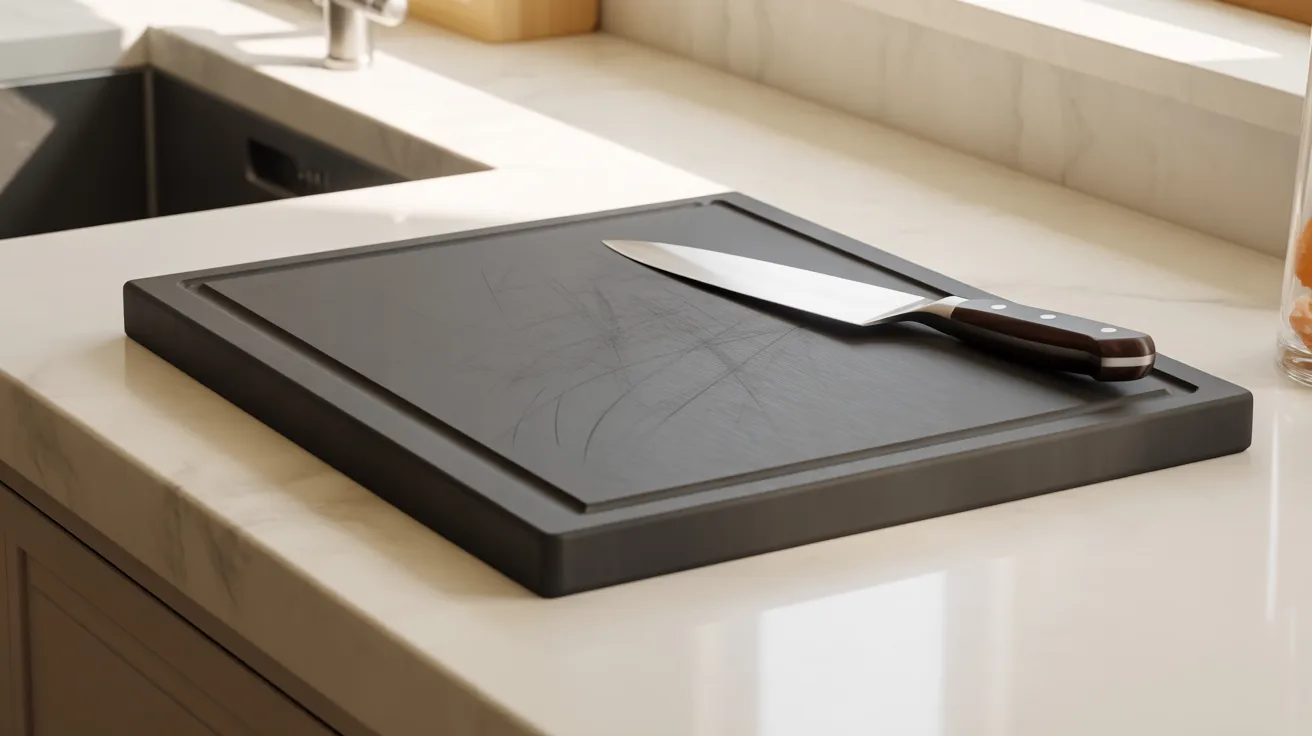
Natural rubber boards are kind to knife blades, non-toxic, and naturally resistant to bacteria when cleaned regularly. They grip countertops well and hold up to heavy daily use without shifting around. Choose boards without antimicrobial chemical treatments, as those coatings can add new risks of their own.
7. Silicone

Silicone is a flexible, lightweight option that is far safer than standard plastic. It handles high temperatures without leaching chemicals and cleans up quickly. It works best for light chopping and food prep rather than heavy daily cutting work.
|
How Long Should a Cutting Board Last? A well-maintained solid wood board can last for years, even decades, with proper care. But any board should be replaced once it shows deep knife grooves, warping, persistent odors, or visible mold. The USDA recommends discarding boards that are excessively worn or have hard-to-clean grooves, as these areas become breeding grounds for bacteria, no matter how often you wash them. |
Wood vs. Plastic Cutting Boards: Which One Wins?
This is the question most home cooks ask first. Both have their place in a kitchen, but there are some meaningful differences worth knowing before you settle on one.
| Factor | Solid Wood | Plastic |
|---|---|---|
| Bacteria resistance | Naturally antimicrobial when maintained | Difficult to clean fully once scarred |
| Microplastics | None | Sheds microplastics during chopping |
| Chemical risk | Low, if no adhesives or coatings are used | May contain BPA, phthalates, or triclosan |
| Dishwasher-safe | No | Yes |
| Knife-friendly | Yes | Yes |
| Lifespan | Long with regular care | Short, replace when heavily scarred |
| Maintenance required | Regular oiling needed | Low maintenance when new |
| Overall safety | High | Low to medium |
How to Clean and Care for Your Cutting Board the Right Way
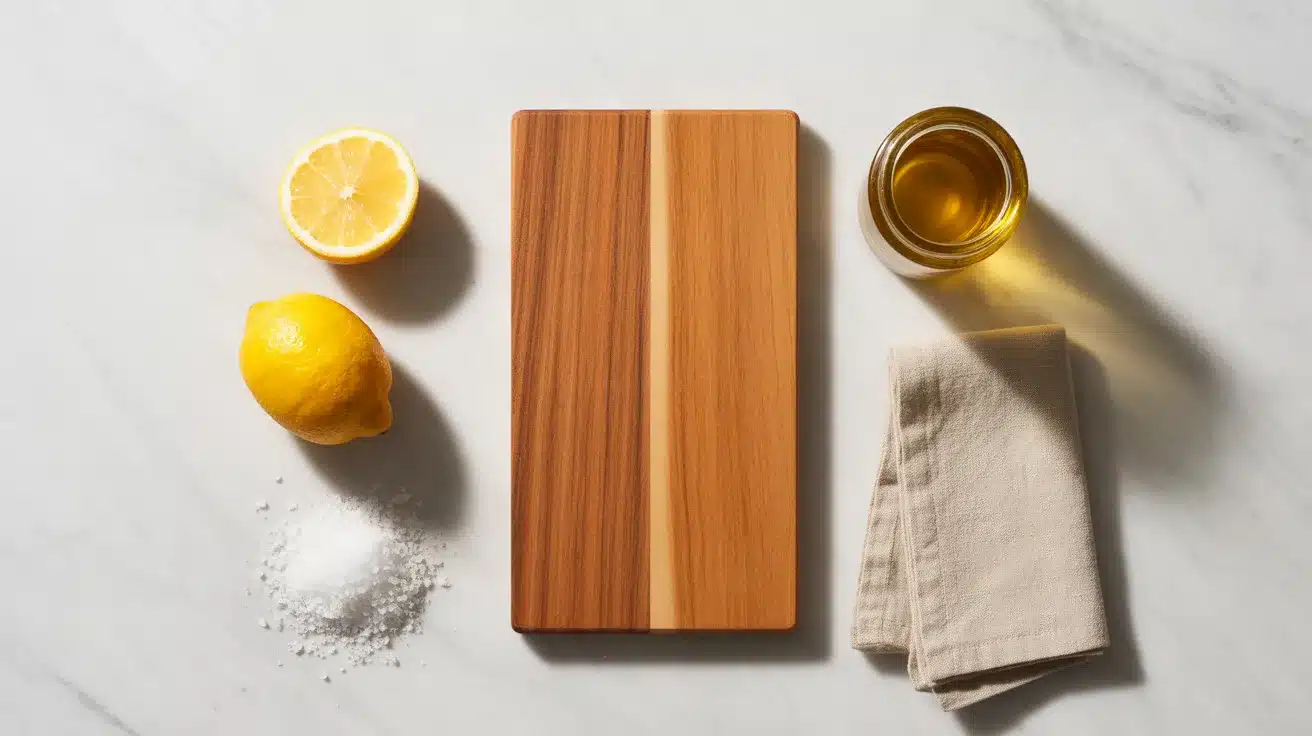
Buying a safe cutting board is only half the job. How you clean and maintain it decides how long it stays safe to use every day.
- Wash after every use: Clean your board with hot, soapy water right after each use and dry it thoroughly.
- Sanitize when needed: Mix 1 tablespoon of unscented bleach with 1 gallon of water, flood the surface, let it sit for a few minutes, then rinse and air dry.
- Do not soak wooden boards: Soaking can cause wood to crack and warp, creating gaps where bacteria can grow.
- Oil wooden boards regularly: Apply food-safe, petroleum-free oil, such as coconut oil or beeswax, to prevent the wood from drying out.
- Natural deodorizing tip: Rub the surface with half a lemon and a little kosher salt to remove odors and surface bacteria.
- Use separate boards: Keep one board strictly for raw meat and poultry, and another for fresh produce and bread.
- Know what is dishwasher-safe: Glass, stainless steel, and plastic boards can go in the dishwasher. Wood and bamboo boards cannot.
- Replace worn boards: Any board showing deep cuts, cracks, or persistent smells should be thrown out, regardless of the material.
How to Pick the Right Cutting Board for Your Kitchen
The best cutting board for your kitchen depends on how you cook and how much upkeep you are willing to do.
If you want a long-lasting, food-safe option with a natural feel, a solid single-slab hardwood board is the right pick.
If you prefer something low-maintenance and quick to clean, stainless steel or glass is a strong choice.
Before buying anything, check that the board is free from harmful adhesives and chemical coatings, easy to sanitize after use, and a good match for the type of cooking you do every day.
The Bottom Line
At the end of the day, your cutting board is one of the most-used tools in your kitchen. It deserves more thought than it usually gets.
The safest cutting board material comes down to a few clear things. Solid hardwood, formaldehyde-free bamboo, glass, stainless steel, and silicone are all strong choices.
Avoid plastic boards that are heavily scratched. Replace any board that looks worn out or smells bad, no matter what it is made from.
Clean it well. Oil it if it is wood. Use separate boards for raw meat and fresh produce. These small habits make a real difference.
Your food is only as clean as the surface on which it is prepared. Make a smart choice now, and your kitchen will be in much better shape for it.