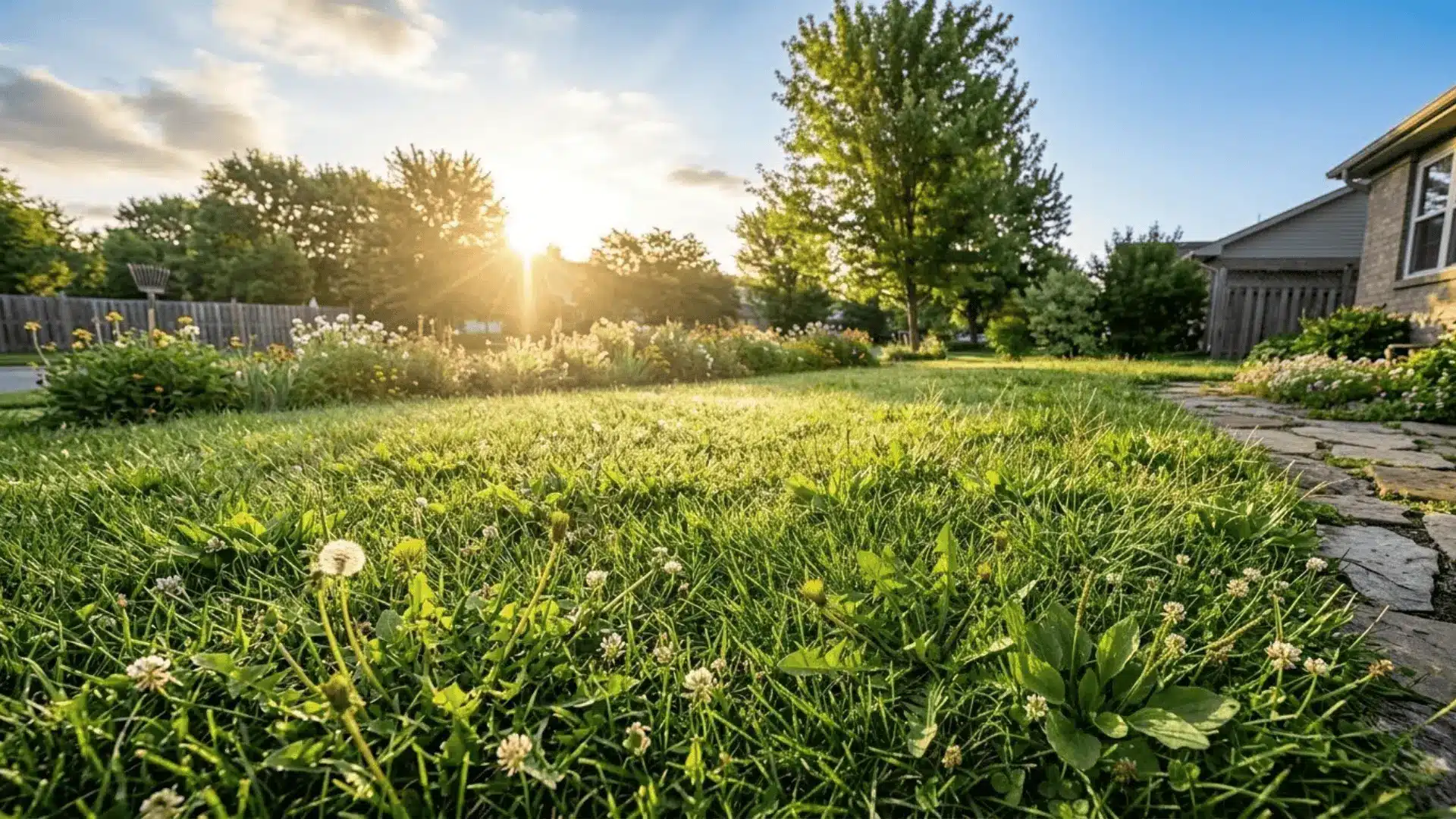
You put real effort into your lawn, so finding uninvited weeds creeping through the grass can feel a little defeating.
They show up quietly, settle in fast, and start stealing the nutrients, water, and sunlight your grass actually needs to thrive.
The tricky part?
Not all weeds play by the same rules, and treating the wrong one the wrong way often makes things worse. Knowing what you’re dealing with changes everything.
Read on for a friendly guide to identifying the most common weeds in grass, plus the simplest ways to get rid of them for good.
How to Identify Weeds Growing in Grass?
Weeds have a way of blending in until they’ve already taken over. The earliest signs are usually patchy growth, unusual leaf shapes, or plants spreading a little too quickly for comfort.
To actually tell them apart, look closely at leaf texture and shape, how they grow (clumping or creeping), their root structure, and any visible flowers or seed heads.
Most weeds in grass fall into three categories worth knowing:
- Broadleaf weeds: wide, flat leaves
- Grassy weeds: mimic your turf closely
- Sedge weeds: triangular stems, love moisture
Common Weeds in Grass
Not all weeds look obviously out of place, and that’s exactly what makes them so hard to manage.
Here’s a closer look at the most common ones you’ll find creeping through your lawn.
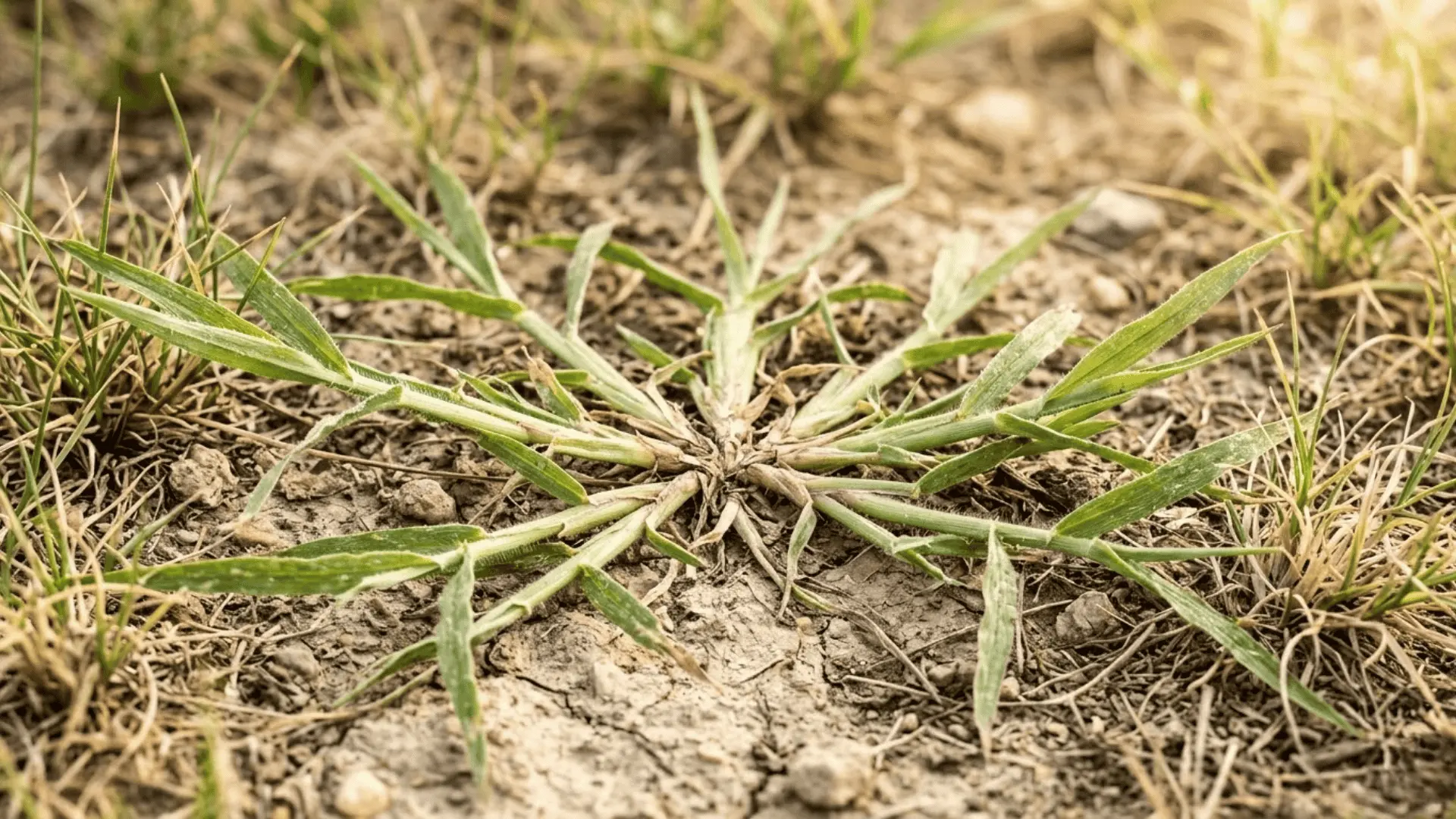
1. Crabgrass
Plant Type: Annual grassy weed
Threat Level: High; spreads rapidly through thousands of seeds per plant
Habitat: Thrives in thin, dry, or compacted soil with full sun exposure
Crabgrass grows low and wide, with coarse, finger-like blades spreading outward from a central stem. It germinates in warm soil and fills in bare patches fast.
Pre-emergent herbicides applied in early spring are your best defense, along with overseeding thin areas to leave no room for it to settle.
2. Dandelion
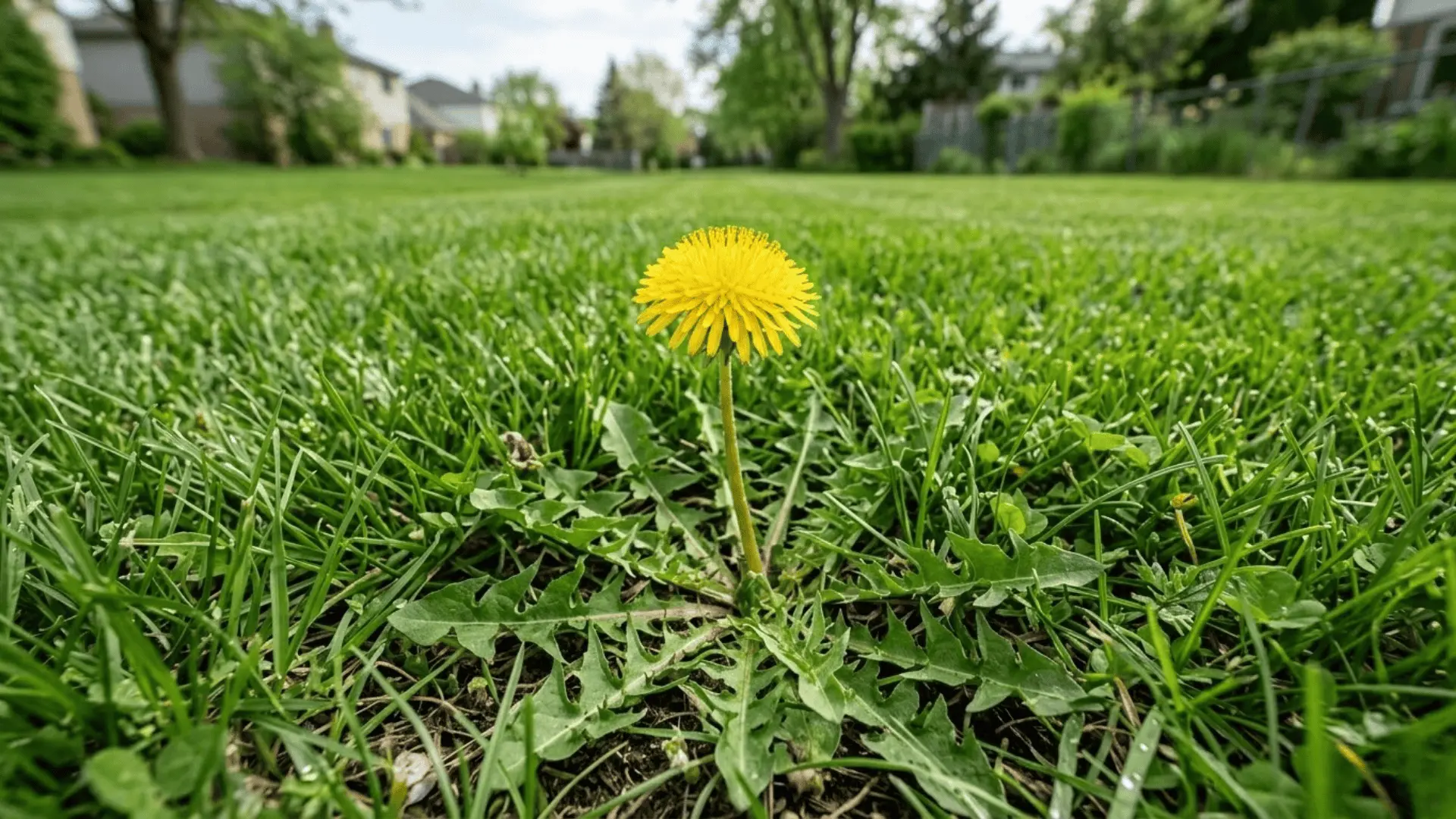
Plant Type: Broadleaf perennial
Threat Level: Moderate to high; deep roots and airborne seeds make it persistent
Habitat: Grows in almost any soil condition, sun or partial shade
Those bright yellow flowers and jagged, rosette-shaped leaves are hard to miss. The real challenge is the deep taproot, which regrows if not fully removed.
Hand-pull after rain when the soil is soft, or use a targeted broadleaf herbicide for stubborn patches.
3. Clover
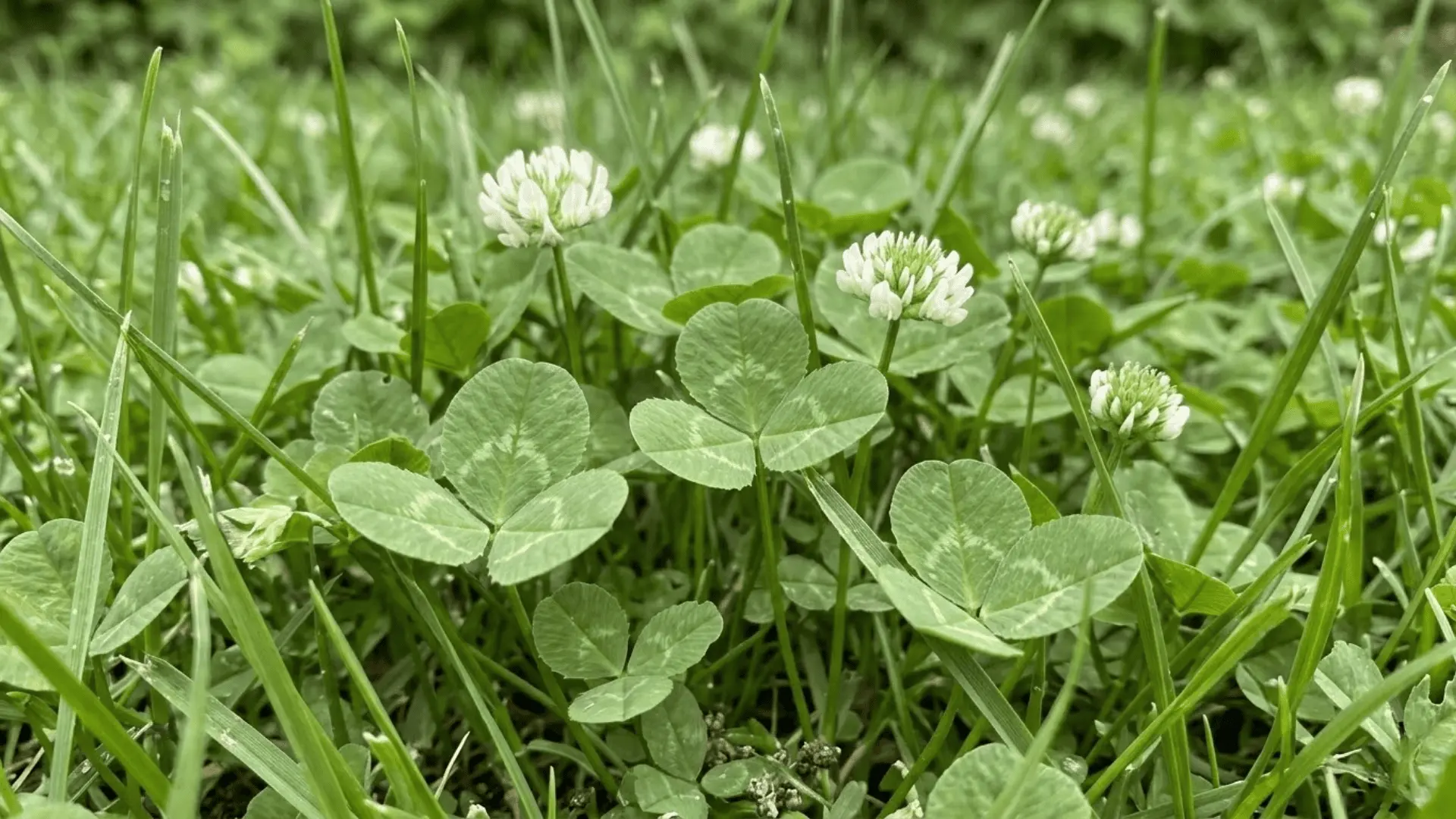
Plant Type: Broadleaf perennial
Threat Level: Low to moderate; beneficial until it starts crowding out turf
Habitat: Prefers nitrogen-poor, slightly dry soil in open sunny areas
Clover’s small, round leaflets in groups of three make it easy to spot. It actually fixes nitrogen into the soil, which sounds helpful until it starts overtaking your grass.
If it becomes invasive, a broadleaf herbicide or improved lawn fertilization raising nitrogen levels will discourage its spread naturally.
4. Nutsedge
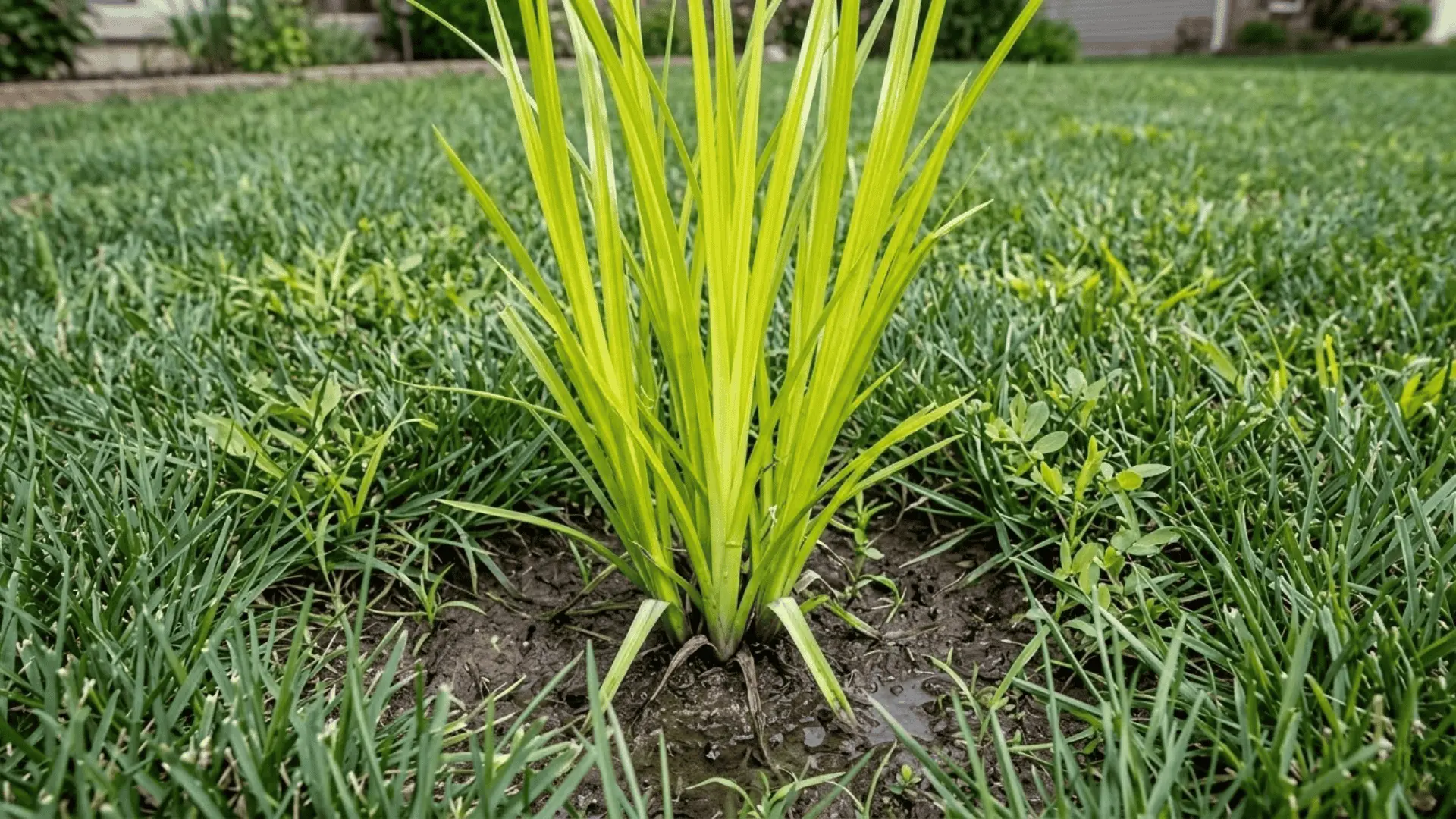
Plant Type: Sedge, not a true grass
Threat Level: High; outgrows turf quickly in warm months
Habitat: Wet, poorly drained, or overwatered lawn areas
Nutsedge is identifiable by its triangular stem and glossy, upright blades that grow faster than the surrounding grass. It spreads through underground tubers called nutlets, making it very persistent.
Sedge-specific herbicides work best, and improving soil drainage goes a long way in preventing it from returning.
5. Chickweed
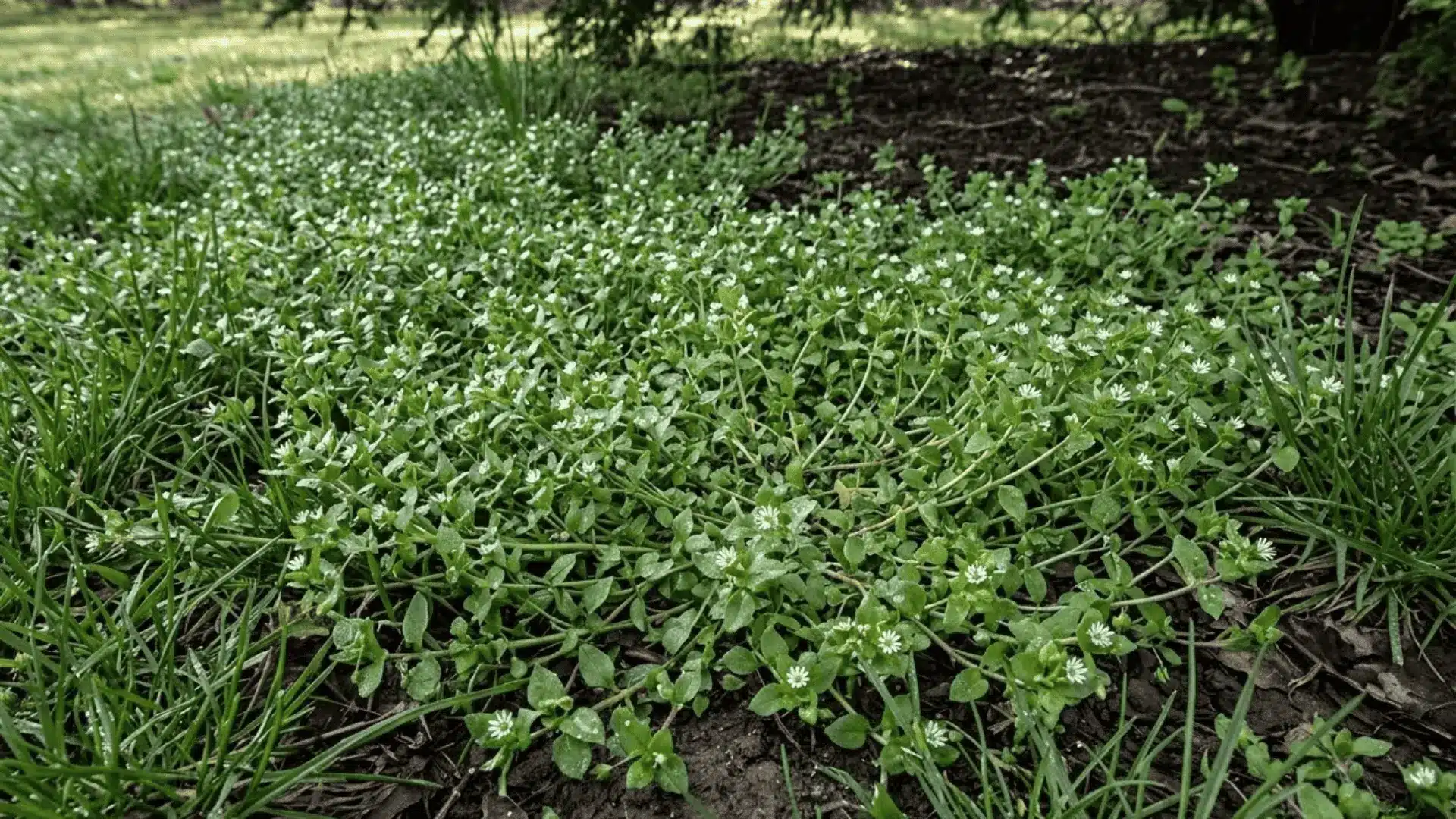
Plant Type: Annual broadleaf weed
Threat Level: Moderate; rapid cool-season spreader
Habitat: Moist, shaded, or fertile soil during fall and early spring
Chickweed forms dense, low-growing mats with tiny star-shaped white flowers that bloom surprisingly early in the season. It thrives before most lawns wake up from winter.
Hand removal works well when patches are small; for larger areas, a post-emergent broadleaf herbicide applied in early spring keeps them in check.
6. Plantain
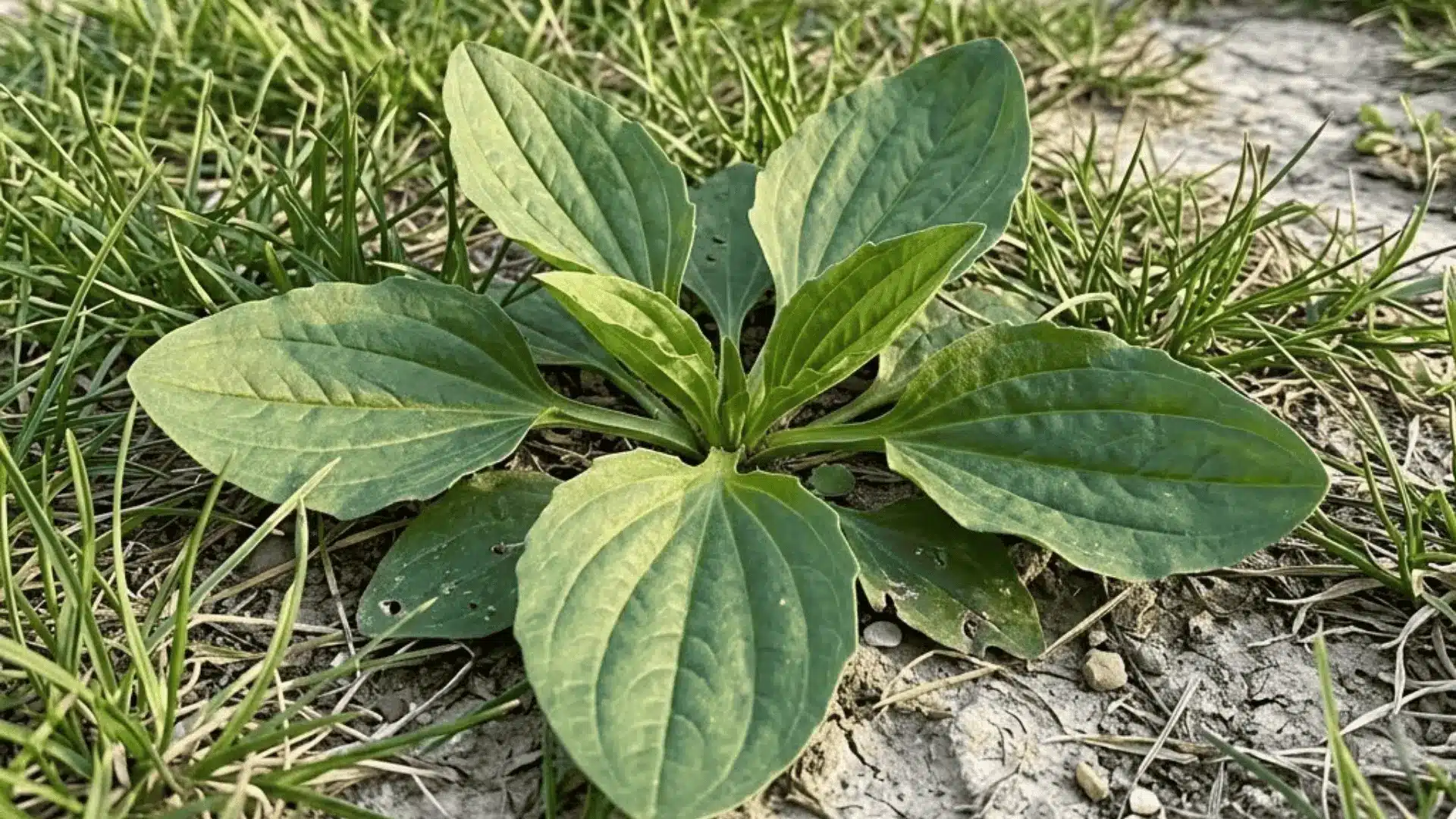
Plant Type: Broadleaf perennial
Threat Level: Moderate; slow-spreading but stubborn without soil correction
Habitat: Compacted, high-traffic, or poorly aerated soil
Plantain forms a low rosette of broad oval leaves with prominent parallel veins, making it distinct from most grassy weeds. It doesn’t spread aggressively, but signals compacted soil underneath.
Core aeration and overseeding help reclaim those areas, while hand-pulling or spot-treating with herbicide handles existing plants effectively.
7. Quackgrass
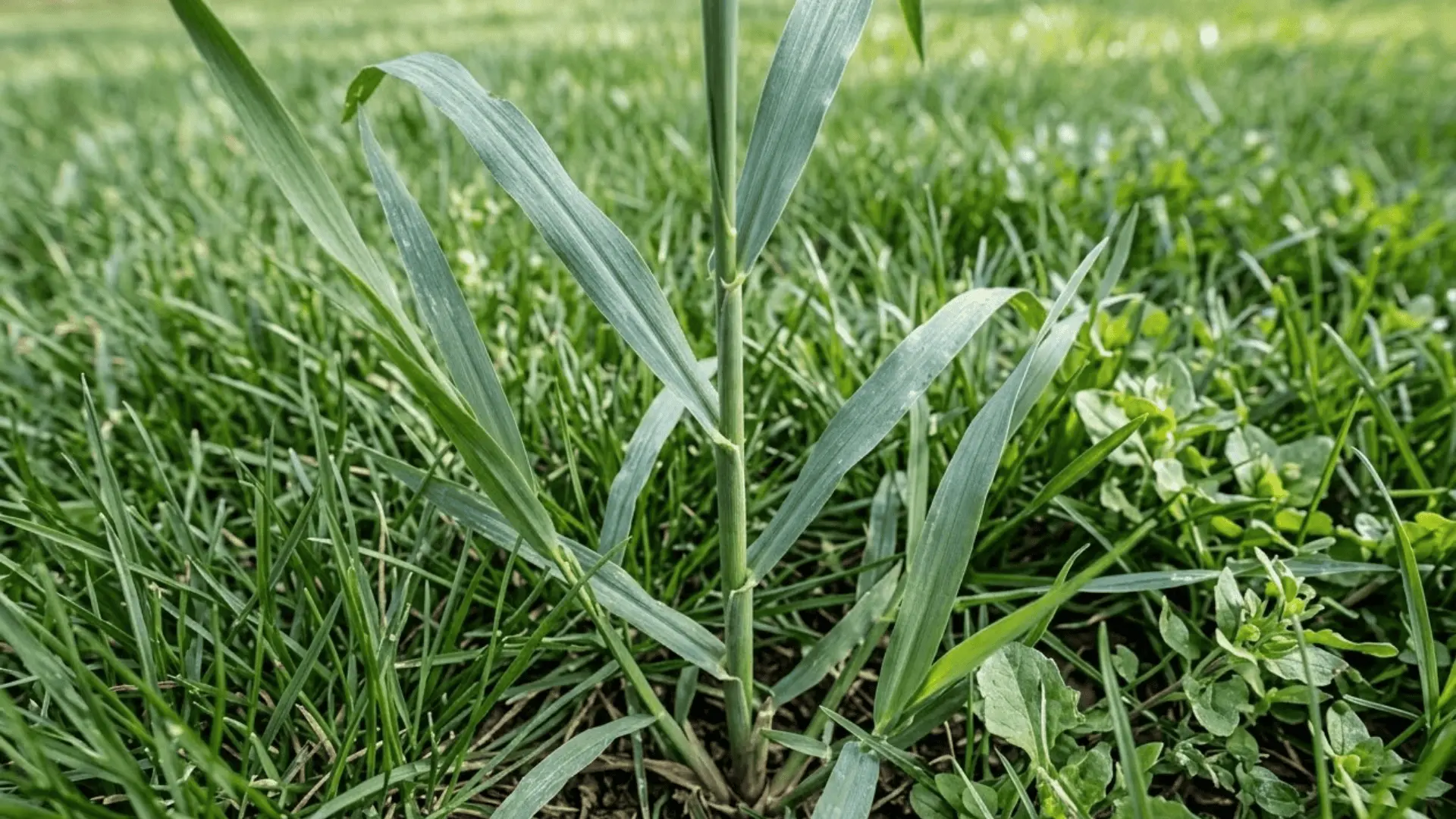
Plant Type: Perennial grassy weed
Threat Level: High; extremely aggressive spreader with deep rhizome roots
Habitat: Disturbed soil, roadsides, and lawns with loose or fertile ground
Quackgrass grows tall with rough, wide blades and a distinctive clasping base around the stem. Its rhizome root system spreads horizontally underground, making it very hard to fully eradicate.
Digging out the entire root network helps, and non-selective herbicides may be needed for serious infestations.
8. Spurge
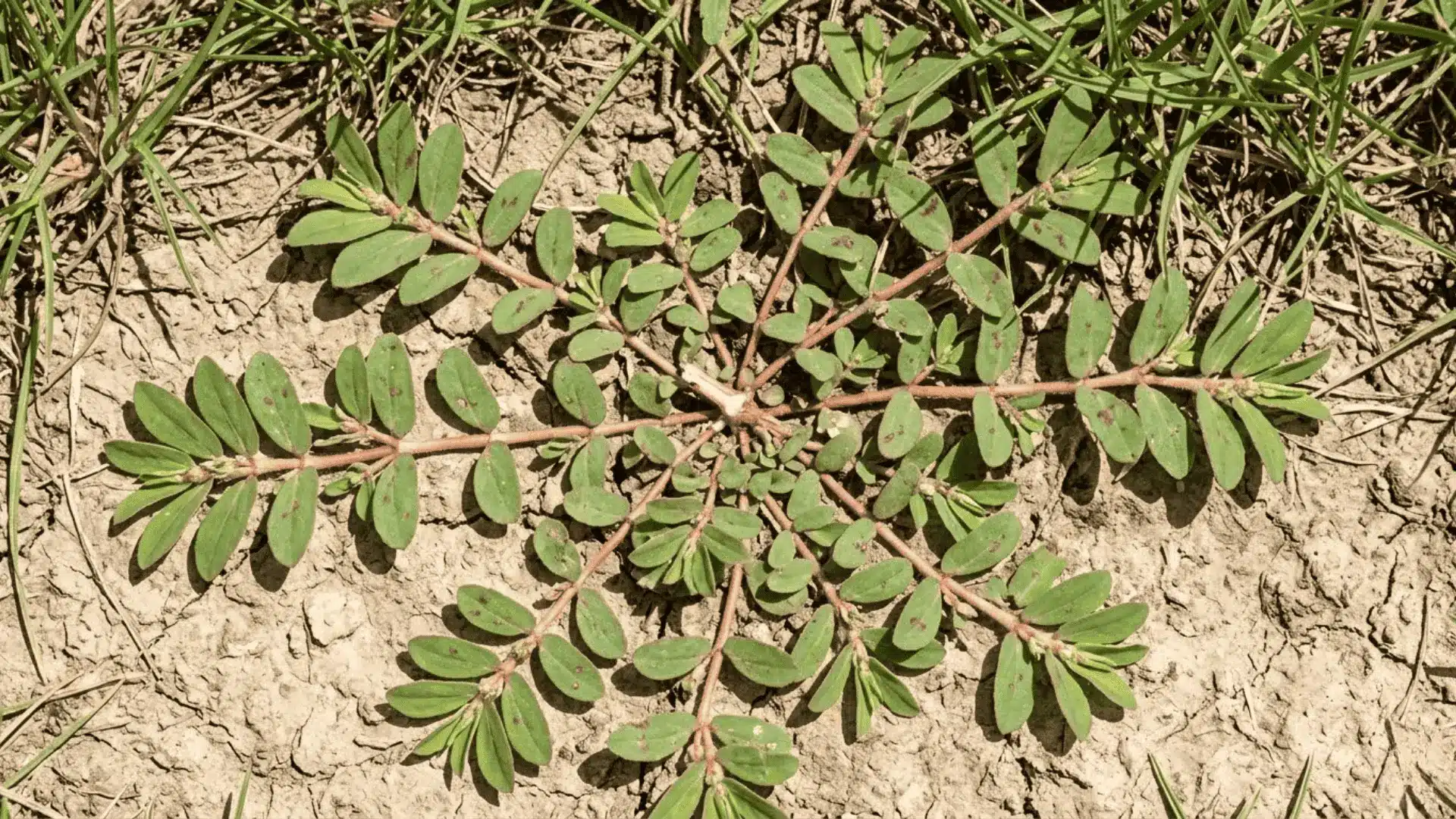
Plant Type: Annual broadleaf weed
Threat Level: Moderate; fast summer spreader in stressed lawns
Habitat: Hot, dry, compacted soil and lawn edges with full sun
Spurge hugs the ground with reddish stems, small oval leaves, and a milky sap that can irritate skin on contact. It spreads quickly in the summer heat. Always wear gloves when removing it by hand.
Pre-emergent herbicides in spring and maintaining a dense lawn canopy are the most effective preventive measures.
9. Creeping Charlie
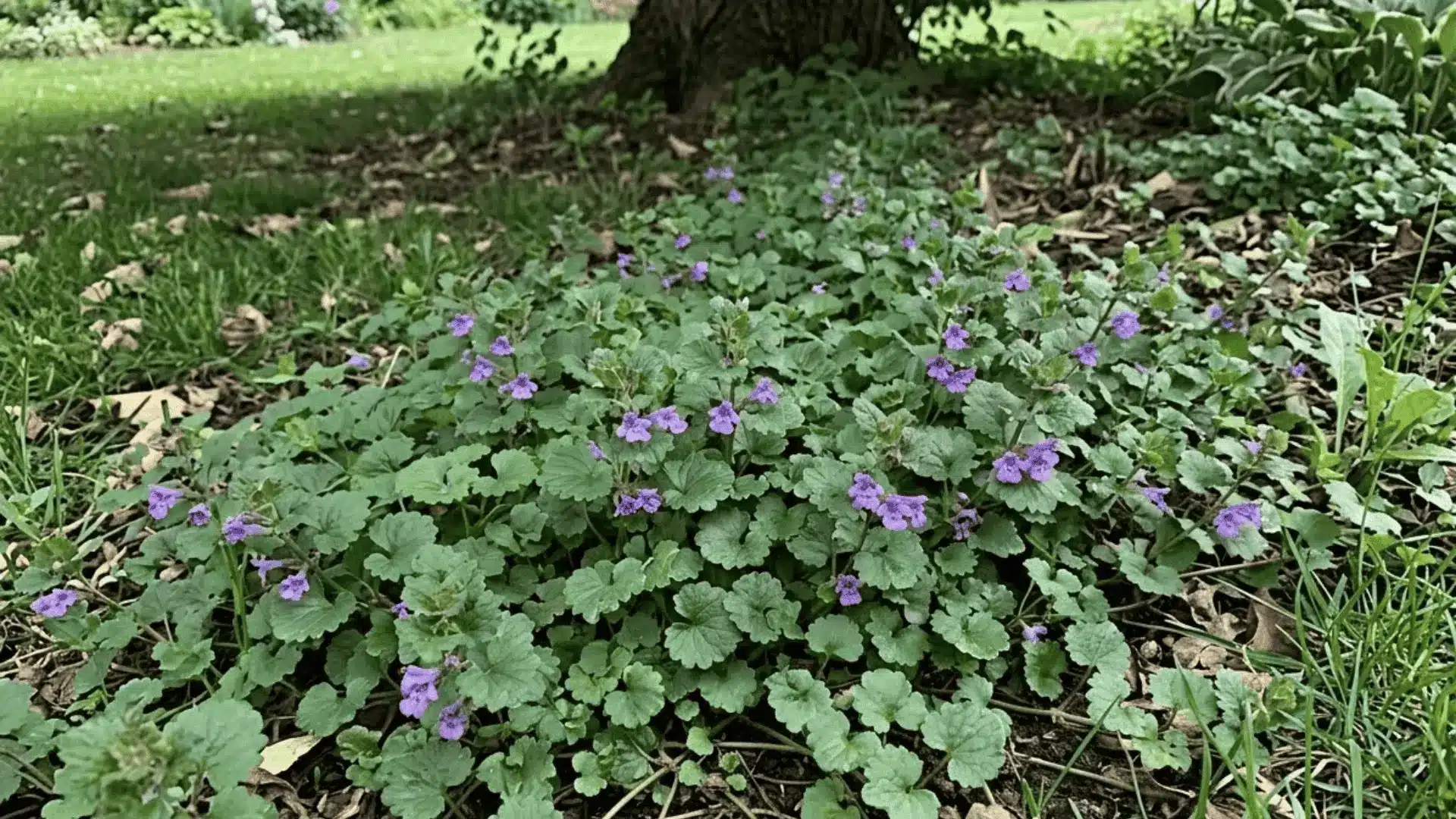
Plant Type: Perennial broadleaf weed
Threat Level: High; very difficult to fully remove once established
Habitat: Shady, moist areas with poor air circulation and weak turf
Creeping Charlie spreads along the ground with rounded, scalloped leaves and small purple flowers in spring. It particularly loves shaded lawns where grass already struggles to grow.
Improving sunlight and drainage helps, but triclopyr-based broadleaf herbicides applied in the fall tend to give the best long-term control results.
10. Oxalis
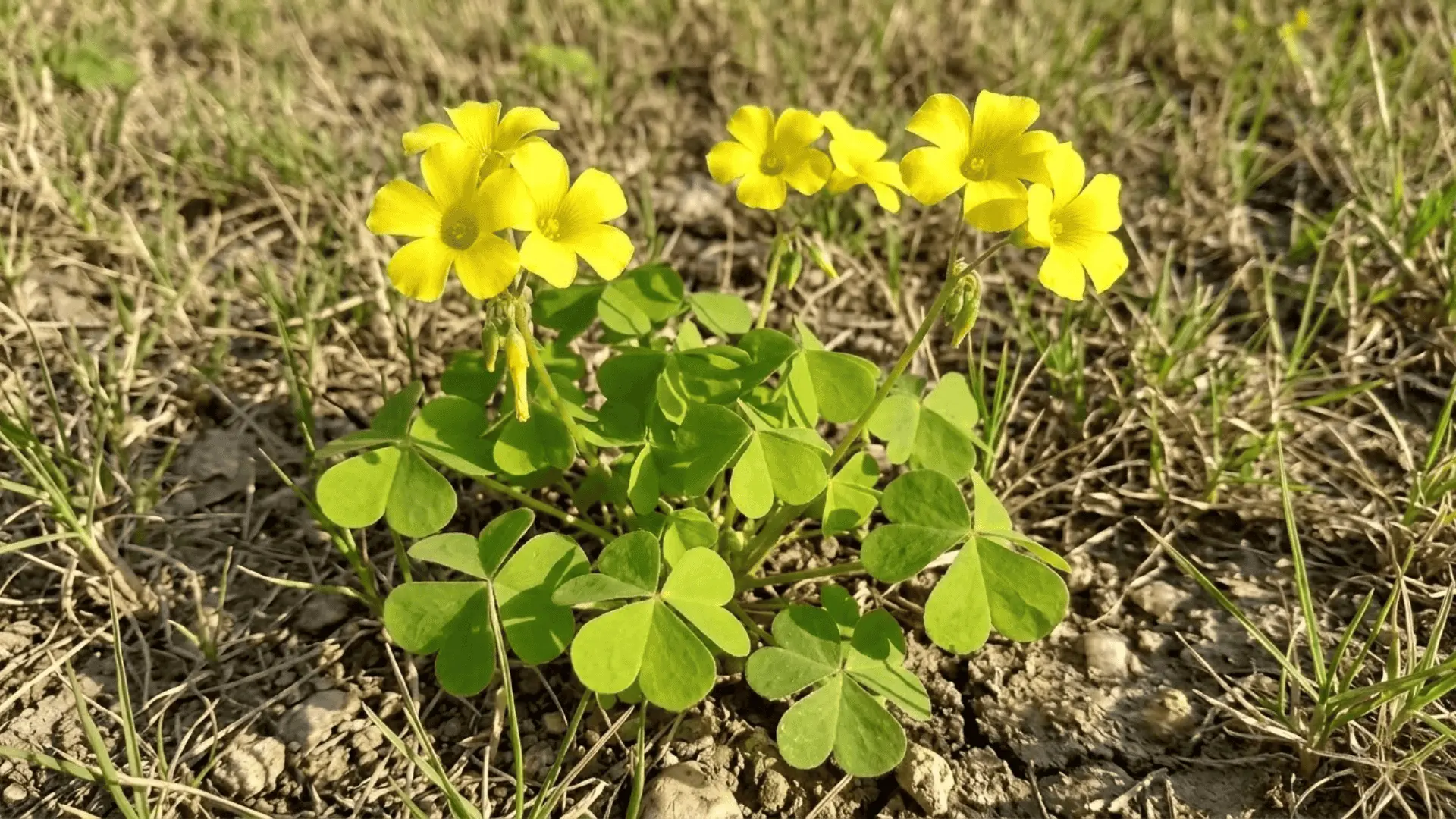
Plant Type: Perennial broadleaf weed
Threat Level: Moderate; easily mistaken for clover and hard to fully pull
Habitat: Thin turf, garden beds, and lawns with dry or nutrient-poor soil
Oxalis looks like clover but gives itself away with bright yellow flowers and heart-shaped leaflets. Its roots break easily during hand removal, leaving fragments that regrow.
Consistent spot treatment with a broadleaf herbicide and thickening your turf through overseeding are the most reliable ways to push it out.
11. Wild Violet
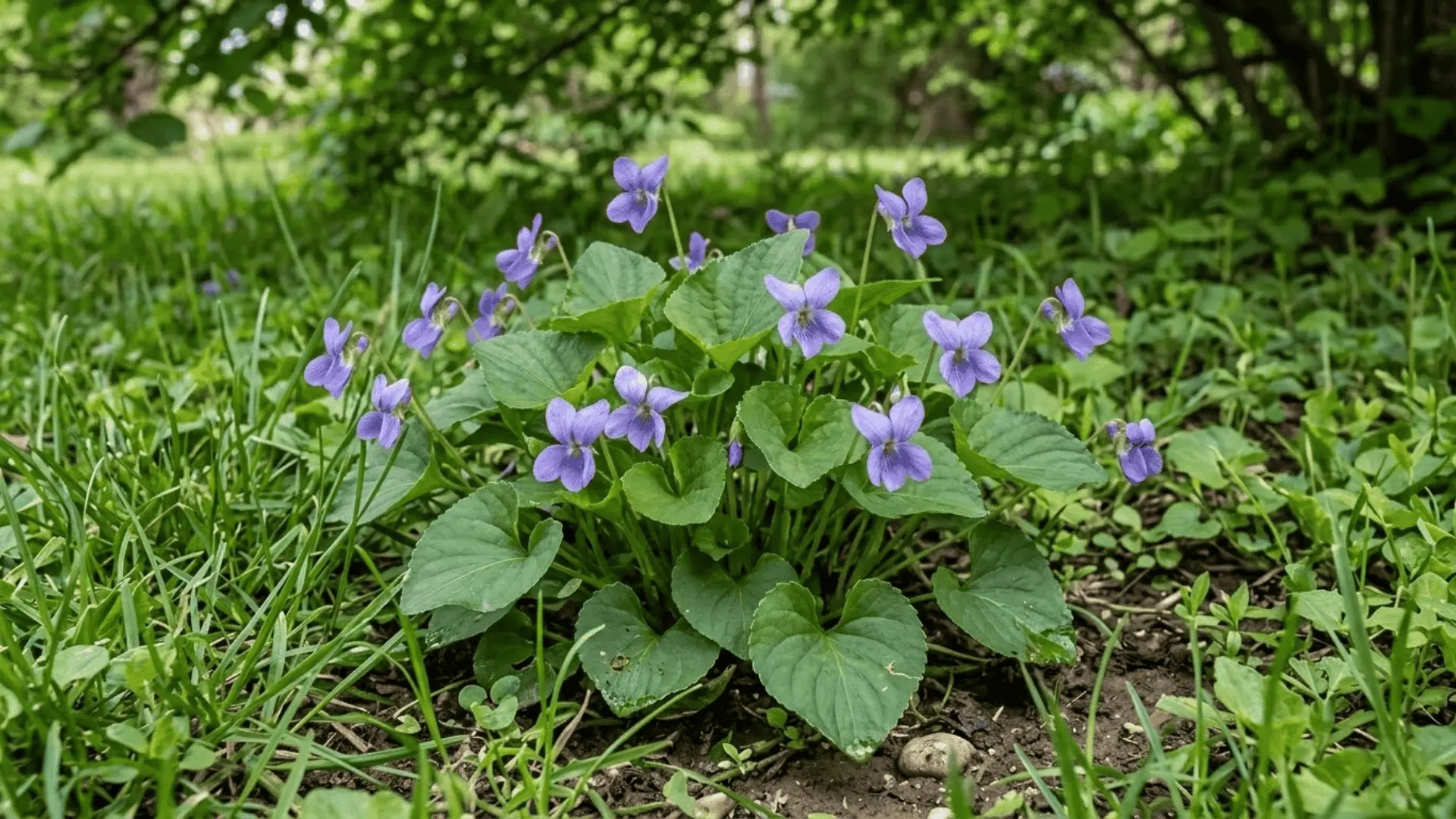
Plant Type: Perennial broadleaf weed
Threat Level: Moderate to high; spreads through both seeds and underground stems
Habitat: Moist, shaded lawns with dense or compacted soil
Wild violet is pretty to look at, with heart-shaped leaves and purple-blue flowers, but it spreads aggressively through both seeds and rhizomes. It’s also notably resistant to many common herbicides.
Triclopyr-containing products applied in the fall offer the strongest results, paired with improving light and drainage in affected areas.
12. Goosegrass
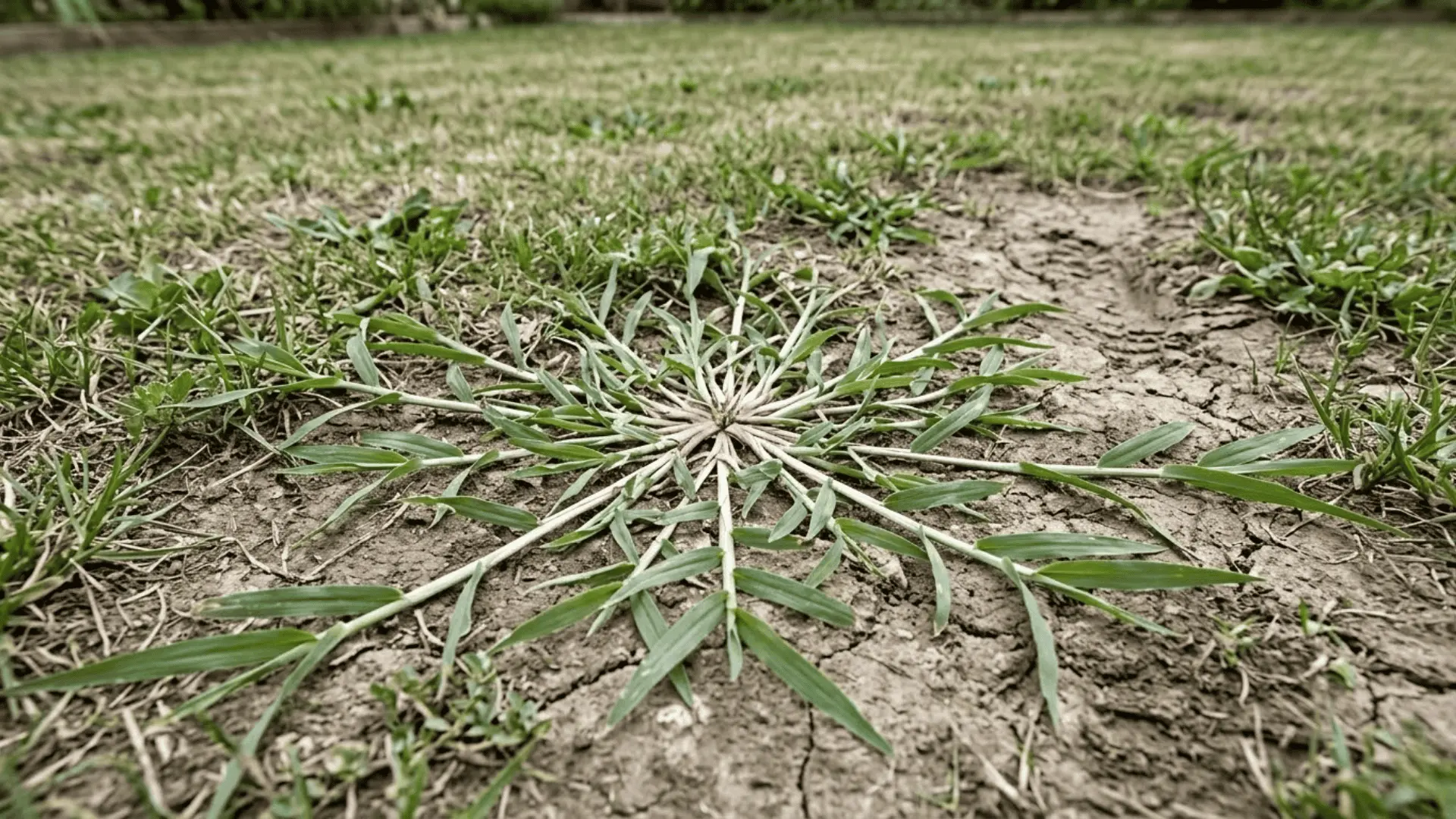
Plant Type: Annual grassy weed
Threat Level: High; heat-tolerant and resistant to many herbicides
Habitat: Compacted, high-traffic areas and lawns with thin or stressed turf
Goosegrass is recognizable by its flattened, star-shaped base and silvery white center stems radiating outward. It germinates later than crabgrass and is tougher to control.
Core aeration reduces compaction and removes its preferred environment, while post-emergent grassy weed herbicides help manage existing growth through the season.
13. Hairy Bittercress
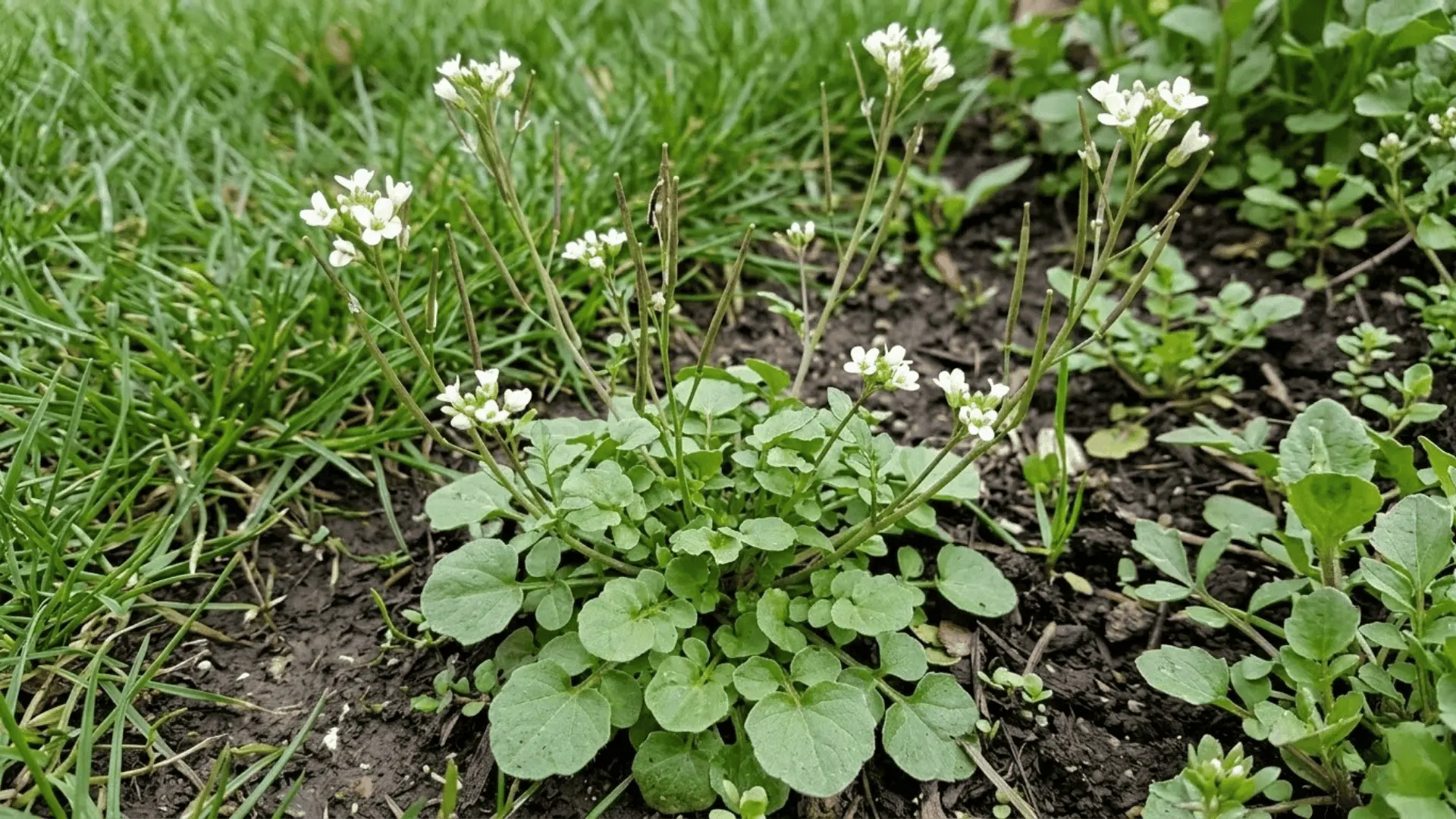
Plant Type: Annual broadleaf weed
Threat Level: Moderate; seed pods burst open and scatter widely at maturity
Habitat: Cool, moist soil in garden beds, lawn edges, and shaded turf areas
Hairy bittercress stays small with tiny white flowers and seed pods that burst open at the slightest touch, scattering seeds widely.
Remove it before those pods mature to avoid a much bigger problem next season. Hand-pulling works well in early stages, and a pre-emergent herbicide in late winter keeps it from returning.
Why Weeds Grow in Grass?
Weeds don’t show up randomly. They move in when your lawn gives them an opening, and knowing why that happens makes it a lot easier to stop them.
- Compacted or nutrient-poor soil creates conditions in which grass struggles to grow, but weeds don’t mind at all.
- Mowing too short stresses your turf and leaves room for weeds to catch light and take hold.
- Inconsistent watering weakens grass roots, making it harder for your lawn to compete.
- Thin or bare patches are open invitations; weeds are simply the first to fill the gap.
- Spreading from nearby areas via wind, birds, or foot traffic brings new seeds in constantly.
A healthy, well-fed lawn is genuinely the best weed barrier you have. Most weeds thrive on neglect, so a little consistent care goes a long way.
How to Remove Weeds from Grass?
Getting rid of weeds comes down to picking the right method for what you’re dealing with. Some situations call for a hands-on approach, others need a little more firepower.
Manual Weed Removal
Rolling up your sleeves works better than people give it credit for, especially when you catch weeds early. Best for small patches, shallow-rooted weeds, and lawns where you’d rather not use any chemicals.
- A fishtail weeder or hand fork gives you the best leverage for pulling roots out cleanly.
- After rainfall is the ideal time to pull, when the soil is soft, and roots release more easily.
- Always remove the full root to prevent regrowth; partial removal often makes things worse.
Natural Weed Control Methods
If you prefer keeping things chemical-free, a few household methods can do a decent job on isolated weeds without disturbing the rest of your lawn.
- Mulching suppresses weed growth by blocking sunlight from reaching the soil surface.
- Undiluted white vinegar works as a contact killer on young weeds, though it affects the surrounding grass, too.
- Boiling water poured directly onto weeds destroys them at the root with zero product needed.
Chemical Weed Control
For widespread or stubborn weed problems, herbicides are often the most practical and effective solution when used correctly.
- Pre-emergent herbicides stop weed seeds from germinating and work best when applied in early spring.
- Post-emergent herbicides target weeds already growing and can be spot-treated or broadcast applied.
- Selective herbicides target specific weed types while sparing your grass, unlike non-selective formulas that kill all vegetation.
How to Prevent Weeds in Your Lawn?
The best weed control is the kind you never have to think about. A well-maintained lawn leaves so little room for weeds that most of them never get a real chance to settle in.
- Mow at the right height and keep grass slightly taller to shade the soil and block weed seeds from germinating.
- Fertilize on a consistent schedule to keep your turf well-fed, dense, and strong enough to outcompete weeds naturally.
- Aerate compacted soil annually so grass roots can breathe, spread deeper, and hold their ground against invasion.
- Overseed thin or bare areas before weeds do it for you. Thick turf is simply the best defense you have.
- Test and improve your soil regularly to catch nutrient imbalances early. Healthy soil grows healthy grass that weeds struggle to penetrate.
Prevention really does beat treatment every time. Stay consistent with these habits, and your lawn will do most of the hard work on its own.
Seasonal Lawn Weed Control Calendar
Timing your weed control efforts makes a real difference. Here’s everything mapped out seasonally and by weed type so you always know exactly what to do and when.
| Weed Name | Type | Key Identifying Feature | Best Control Method | Best Season to Treat |
|---|---|---|---|---|
| Crabgrass | Grassy | Coarse, finger-like blades spreading from the center | Pre-emergent herbicide | Spring |
| Dandelion | Broadleaf | Jagged leaves, yellow flowers, deep taproot | Hand-pull or broadleaf herbicide | Spring, Fall |
| Clover | Broadleaf | Round leaflets in groups of three | Broadleaf herbicide or fertilization | Spring, Summer |
| Nutsedge | Sedge | Triangular stem, glossy upright blades | Sedge-specific herbicide | Summer |
| Chickweed | Broadleaf | Star-shaped white flowers, low, dense mats | Post-emergent herbicide | Spring |
| Plantain | Broadleaf | Oval leaves with parallel veins, rosette shape | Hand-pull or spot herbicide | Spring, Summer |
| Quackgrass | Grassy | Clasping stem base, spreading rhizome roots | Non-selective herbicide | Spring, Fall |
| Spurge | Broadleaf | Reddish stems, milky sap, flat spreading growth | Pre-emergent herbicide | Summer |
| Creeping Charlie | Broadleaf | Scalloped, rounded leaves, purple flowers | Triclopyr-based herbicide | Fall |
| Oxalis | Broadleaf | Heart-shaped leaflets, yellow flowers | Broadleaf herbicide | Spring, Summer |
| Wild Violet | Broadleaf | Heart-shaped leaves, purple-blue flowers | Triclopyr-based herbicide | Fall |
| Goosegrass | Grassy | Flattened base, silvery white center stems | Post-emergent herbicide | Summer |
| Hairy Bittercress | Broadleaf | Tiny white flowers, explosive seed pods | Pre-emergent herbicide | Late Winter, Spring |
The Bottom Line
Dealing with weeds in grass is less overwhelming once you know what you’re looking at and have a simple plan in place.
A little identification goes a long way, and the right treatment at the right time makes all the difference for your lawn’s long-term health.
Keep up with the basics, stay consistent through the seasons, and your grass will naturally grow thicker and harder for weeds to crack.
Got a weed you’re still trying to identify, or a control method that worked really well for you? Drop it in the comments below!