When people hear standard closet size, they usually expect one simple number. But there isn’t just one.
Closet dimensions follow patterns rather than fixed rules. A reach-in closet is built differently from a walk-in, and a coat closet serves a different purpose than a bedroom closet.
I’ve seen many people assume “standard” means exact. It doesn’t. It means common, practical, and shaped around how clothes and people actually move.
In this guide, you’ll see the real dimensions and, more importantly, why those numbers exist. Once that part clicks, the measurements will make more sense.
What is Considered a Standard Closet Size?
A standard closet size is not one exact measurement. It’s a range shaped by building habits and everyday use.
Most homes in the U.S. are framed in consistent modules. Stud spacing, ceiling height, and room width follow repeatable patterns, and closets are built inside those patterns. That’s why certain sizes show up again and again.
“Standard” also depends on the type. There are two main categories:
- Reach-in closets
- Walk-in closets
A reach-in closet is shallow, and you stand outside it. A walk-in closet allows you to step inside.
The common misunderstanding is thinking one number applies to both. It doesn’t. Each type has its own functional limits.
Builders design closets around how much space clothing takes up and how much room a person needs to move. That balance is what creates the familiar size ranges.
What are the Standard Dimensions for a Reach-In Closet?
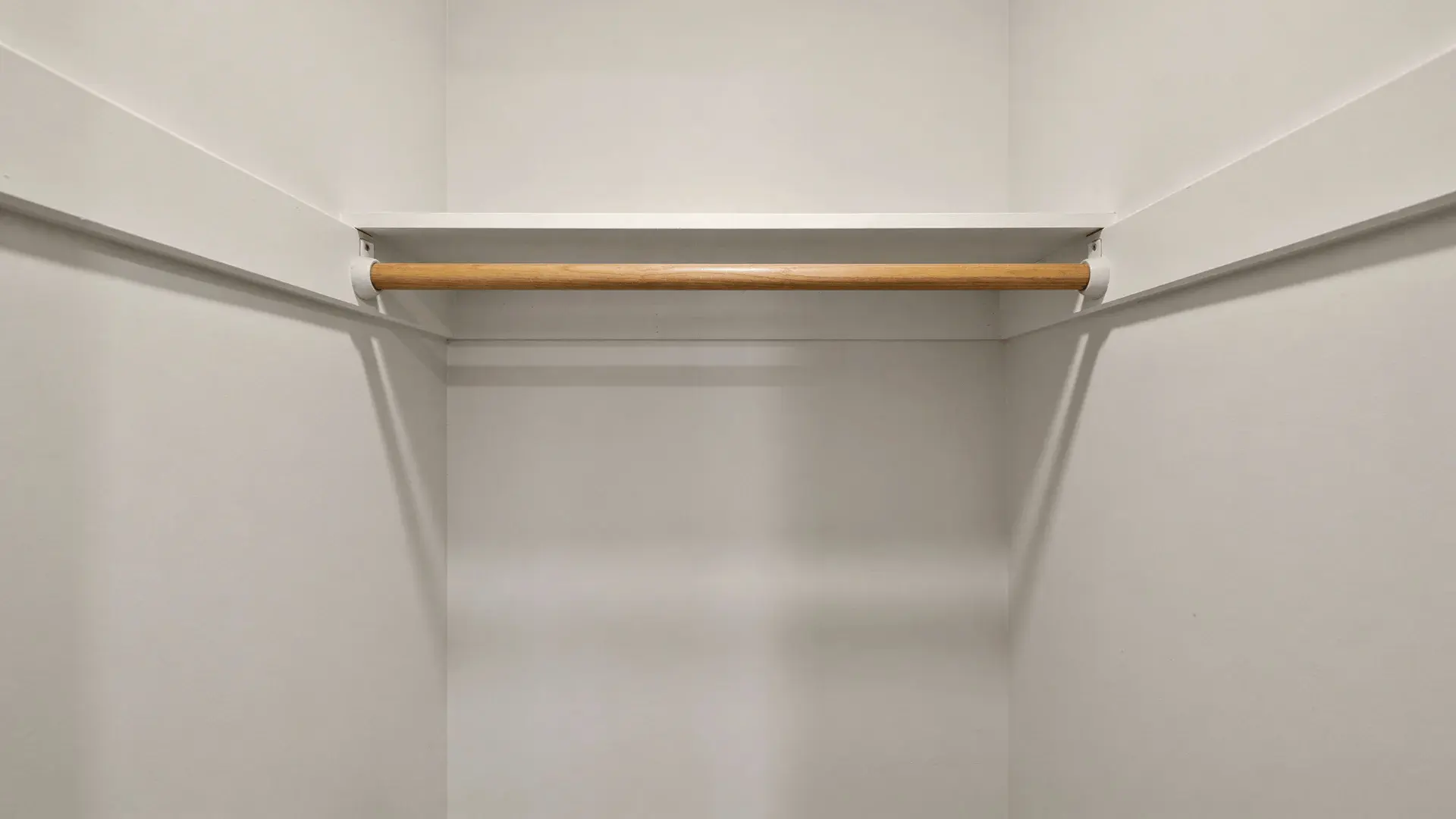
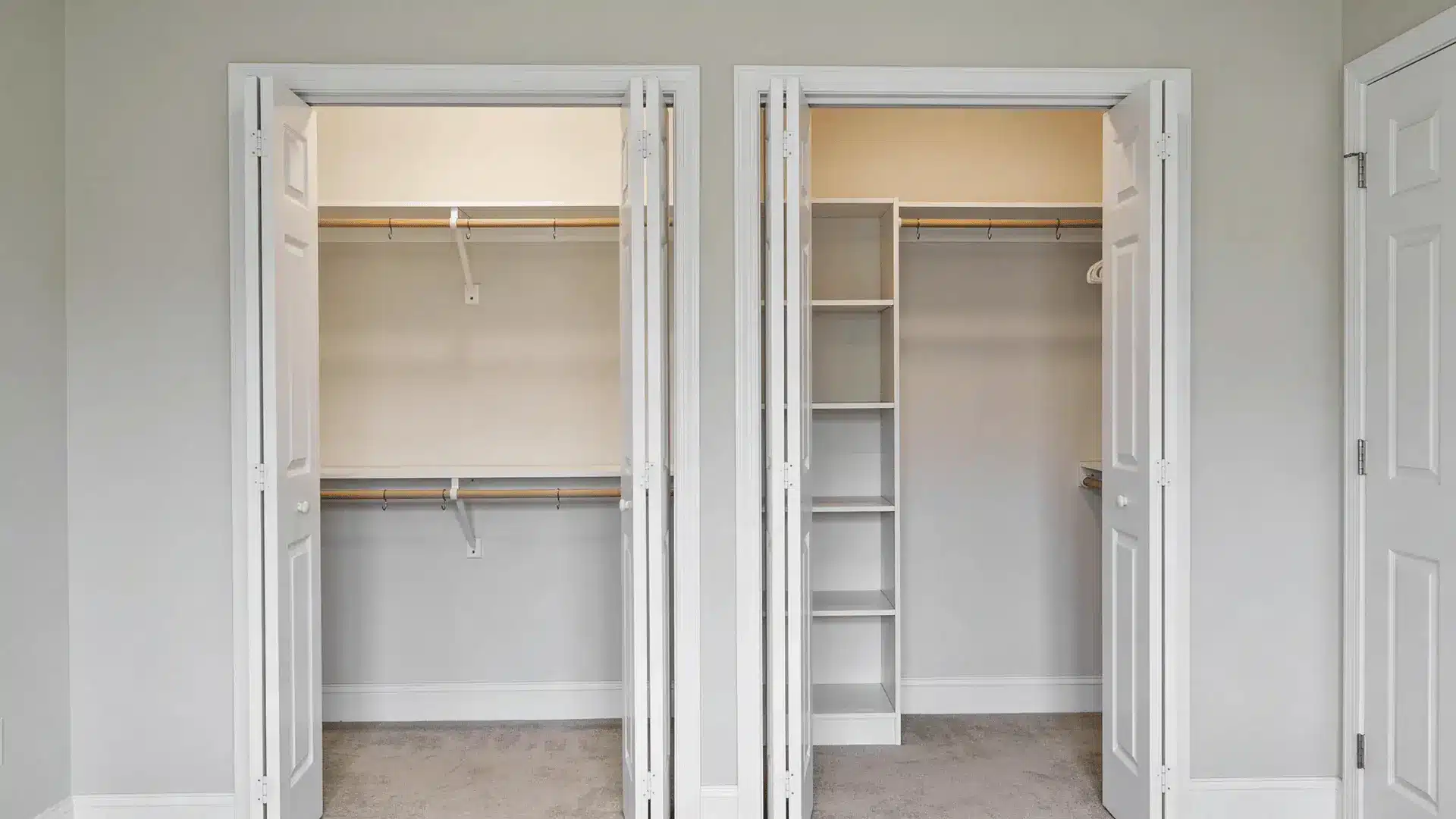
A standard reach-in closet is usually:
- 24 inches deep
- 3 to 6 feet wide
- About 8 feet tall
Those numbers are tied to physical limits, not style choices.
Depth: Why 24 Inches is Standard
The 24-inch depth isn’t random. A typical clothing hanger measures about 17 to 19 inches from shoulder to shoulder. When you hang a jacket, the sleeves extend slightly forward.
If the closet were only 18 inches deep, clothing would press against the door. At 24 inches, there’s enough clearance for clothes to hang freely without bending or catching.
Some closets go as low as 22 inches deep. That’s the practical minimum for adult clothing. Below that, hangers begin to angle and doors may not close smoothly.
So the depth is driven by:
Hanger width → shoulder width → fabric clearance → door interference
That chain explains the number. Once you see it that way, 24 inches feels logical rather than arbitrary.
Width: Why 3 to 6 Feet is Common
The width range depends on wall framing and room layout.
A 3-foot-wide closet allows a single rod with usable hanging space. It fits neatly within standard wall framing and inside most bedroom walls without crowding the room.
A 6-foot-wide closet doubles the hanging span. That width often appears in primary bedrooms because it balances storage and wall space.
Less than 3 feet feels tight fast. More than 6 feet begins pushing toward walk-in territory or requires different structural planning.
Height: Why 8 Feet is Typical
Most ceilings are 8 feet high, and closets usually match that height. This allows:
- A hanging rod around 66–72 inches high
- A shelf above for storage
- Vertical alignment with the room ceiling
The height follows house construction more than clothing needs.
The key point here is simple: 24 inches deep is function-driven. It comes from how wide clothing actually is and how it hangs.
What are the Standard Dimensions for a Walk-In Closet?
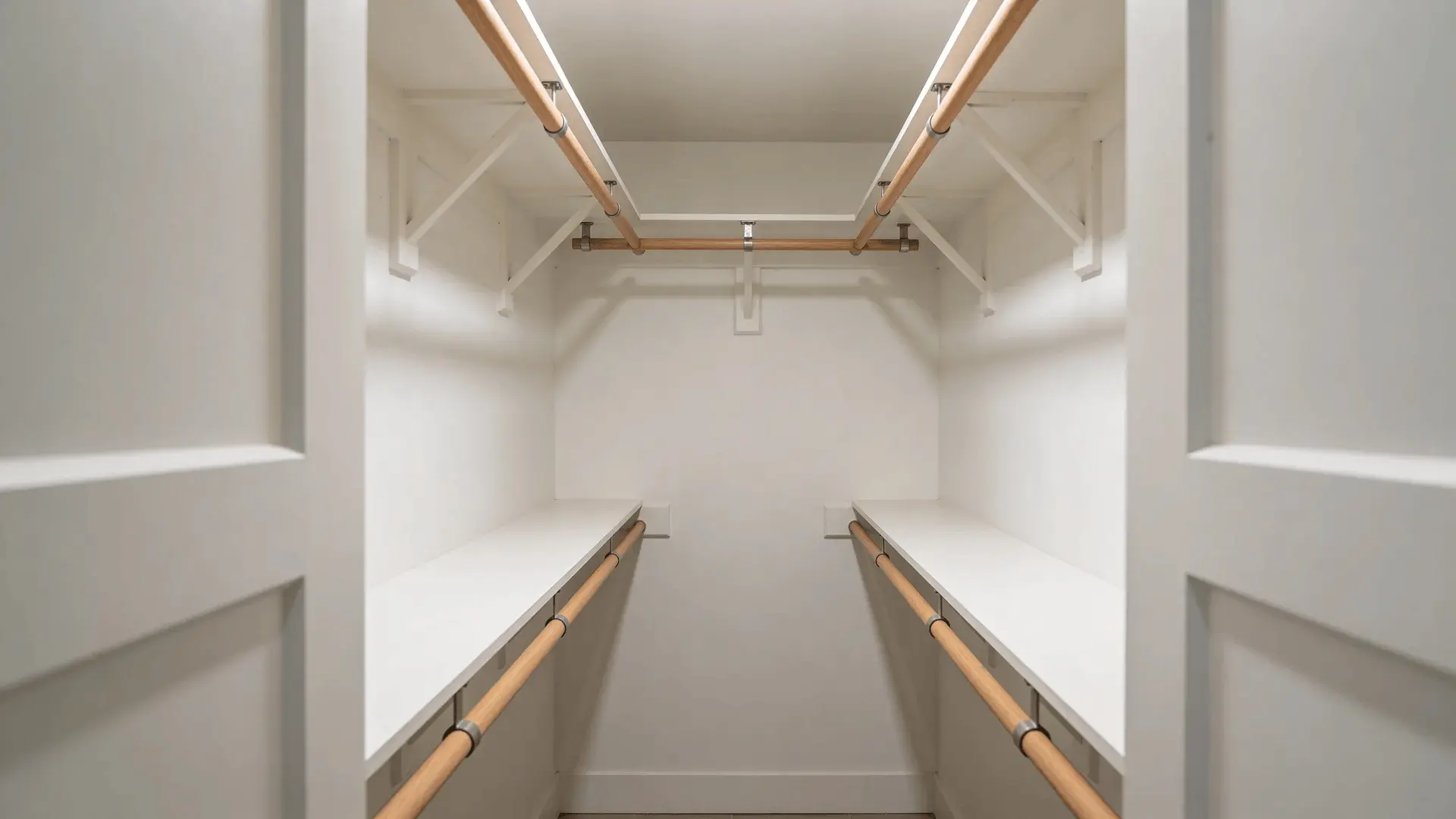
Walk-in closets begin where reach-in closets stop.
A small walk-in typically starts at:
4 x 4 feet or 5 x 5 feet (minimum)
Larger walk-ins often range from:
- 6 x 8 feet
- 6 x 10 feet
- 7 x 10 feet
The difference between these sizes comes down to movement and circulation.
Why 4×4 or 5×5 is the Minimum
At 4×4 feet, you can step inside and turn around, but movement feels tight.
A 5×5 layout provides a clearer turning radius. You need room not just to stand but to pivot while clothing hangs around you.
If hanging rods are 24 inches deep on one side, that leaves roughly 24 to 36 inches for standing space in smaller layouts. That clearance is what determines whether the closet is merely walkable or actually usable.
The real shift from “reach-in” to “walk-in” is circulation space.
Single-Sided vs. Double-Sided Storage
| Feature | Single-Sided Storage | Double-Sided Storage |
|---|---|---|
| Hanging Depth | 24 inches (one wall) | 24 inches + 24 inches (both walls) |
| Walking / Aisle Space | About 30 inches | 30–36 inches |
| Total Recommended Width | About 5 feet | 6–8 feet |
| Best For | Smaller walk-ins or one person | Shared closets or higher storage needs |
| What Happens If Too Narrow | Tight but usable | Movement becomes cramped and access feels restricted |
Simply being able to stand inside doesn’t make a space fully functional. If the aisle is too narrow, doors, drawers, and even basic movement become awkward.
What is the Standard Size of a Coat Closet?
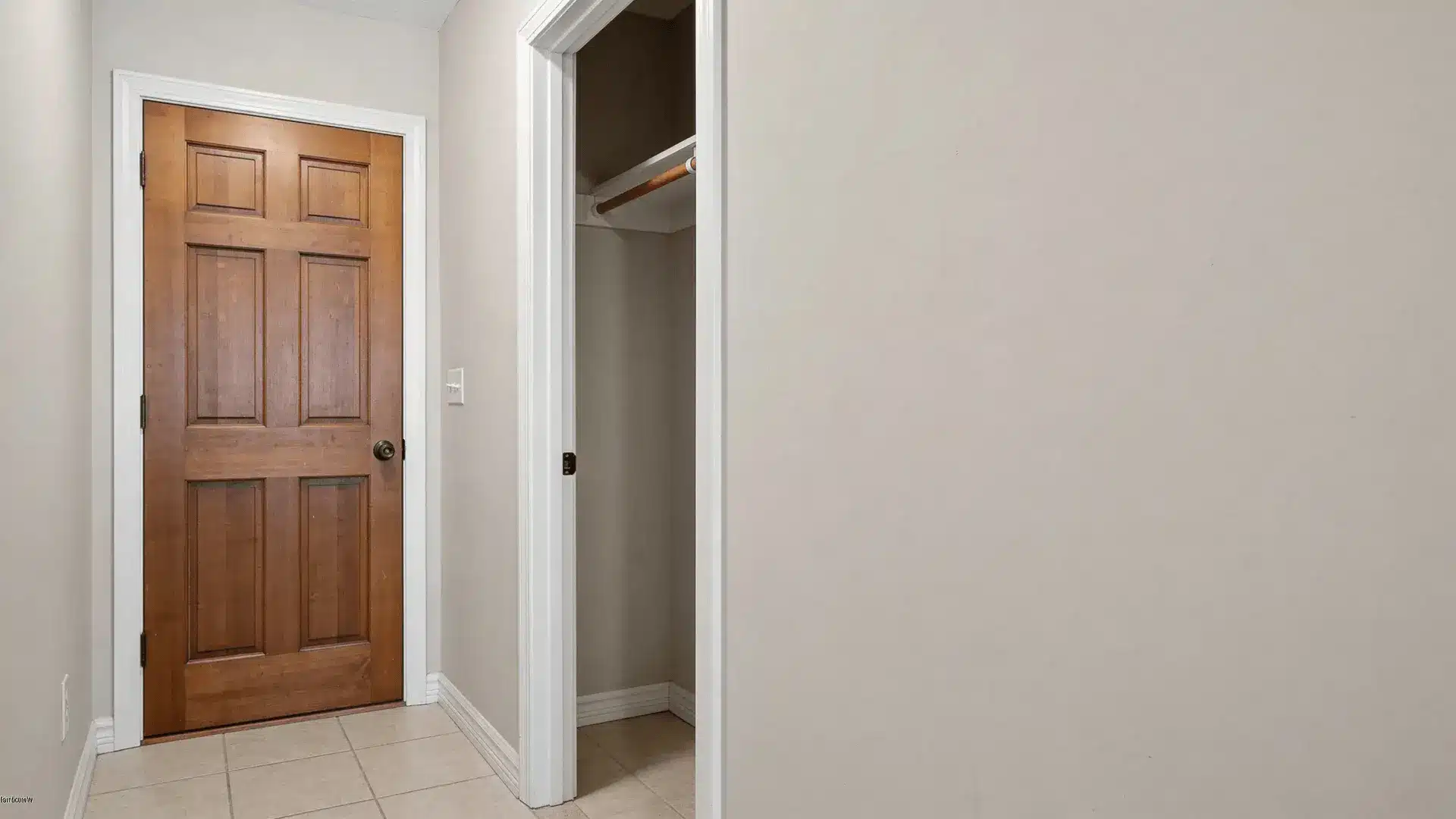
A coat closet is usually:
- 24 inches deep
- Around 36 inches wide
The depth stays at 24 inches because coats are bulkier than shirts. Thick winter coats still rely on the same shoulder clearance, sometimes even more.
The width of about 36 inches allows several coats to hang side by side without excessive overlap. It also fits into entryways without dominating the hall.
Entry areas are often narrow. Builders must protect walking paths while still offering storage, and that constraint keeps coat closets smaller than bedroom closets.
If the closet is narrower than 30 inches, coats overlap heavily and become hard to access. Door swing also matters. The door must open fully without blocking the hallway.
Coat closets follow entryway limits, not bedroom storage logic. That’s why they feel compact yet still maintain the 24-inch depth.
What is the Standard Size of a Bedroom Closet?
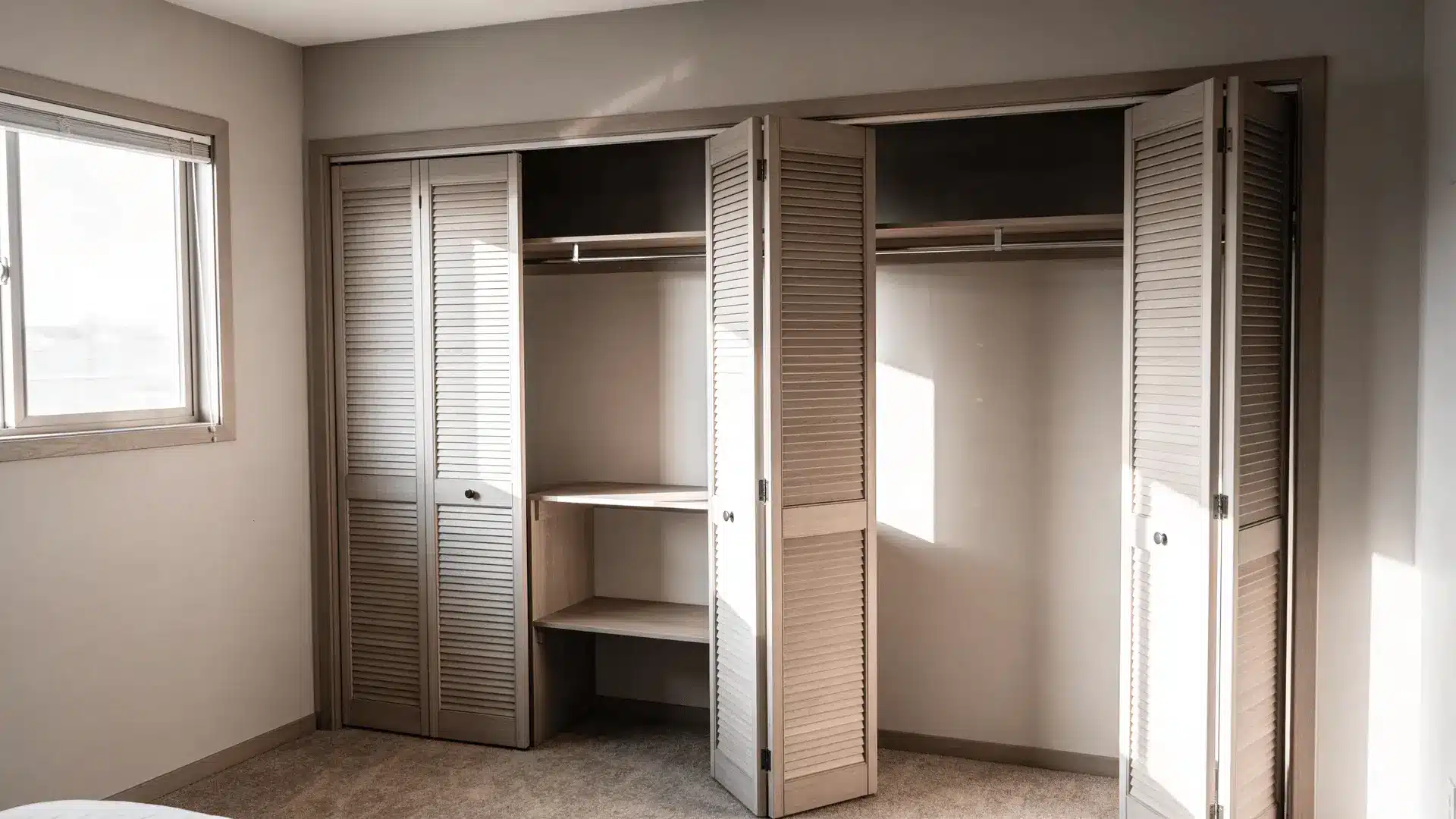
A typical bedroom closet is:
- 3 to 6 feet wide
- 24 inches deep
- 8 feet high
The 3–6 foot width ties directly to room framing. Bedrooms are built in predictable dimensions, and closets are inserted along one wall without disrupting furniture placement.
A 3-foot closet works in smaller bedrooms. A 6-foot closet provides more flexibility in larger rooms.
Depth remains at 24 inches for consistency. Builders avoid changing that depth because it affects wall thickness and usable room space.
The 8-foot height aligns with ceiling height, keeping framing simple and continuous.
Not every bedroom needs a large closet to be considered normal. Smaller homes often use compact closets, while larger homes may include wider or dual closets. Function depends on storage needs, not just square footage.
What is the Minimum Functional Closet Size?
Minimum functional means usable, not comfortable.
For reach-in closets:
- Minimum depth: about 22 inches
- Minimum width: about 3 feet
At 22 inches deep, clothing just clears the door. At 3 feet wide, a rod can hold a practical amount of clothing without immediate crowding.
Anything narrower than 3 feet reduces the hanging span too much, and clothes begin to bunch quickly.
For walk-ins, 4×4 feet is the tightest workable size.
In a 4×4 space, movement is restricted. You can stand and turn, but not comfortably share the space or move freely.
Minimum sizes meet basic mechanical needs:
Clothing depth + human standing space
Comfort requires more than the minimum. That’s where confusion often happens. Minimum allows function, but it doesn’t guarantee ease.
Standard Closet Dimensions in Different Units (Feet, Inches, Meters)
Below is a clear comparison of common dimensions:
| Closet Type | Width (Feet) | Depth (Inches) | Depth (Meters) |
|---|---|---|---|
| Reach-In | 3–6 ft | 24 in | 0.61 m |
| Coat Closet | ~3 ft | 24 in | 0.61 m |
| Walk-In (Min) | 4–5 ft | 24 in storage depth | 0.61 m storage depth |
| Walk-In (Common) | 6–10 ft | 24 in storage depth | 0.61 m storage depth |
Key conversions:
- 24 inches = 2 feet = 0.61 meters
- 3 feet = 36 inches = 0.91 meters
- 6 feet = 72 inches = 1.83 meters
People often mix up width and depth when switching units. Remember that depth is front-to-back, while width runs left-to-right across the wall.
Wrapping Up
Understanding standard closet size is really about understanding limits. Clothes take up real width, people need space to turn, and houses follow framing patterns.
Those three forces quietly shape nearly every closet dimension you see.
Once you understand the mechanism behind the numbers, they stop feeling random. You can look at a space and quickly judge whether it will function well or only just get by.
That kind of clarity matters more than memorizing a single measurement.
If you’re planning or evaluating a space, use these ranges as a reference and check them against how you actually move and store clothing.
Frequently Asked Questions
What size is a standard closet?
A standard closet is usually 24 inches deep and 3 to 6 feet wide, depending on whether it is reach-in or walk-in.
Is 3 ft wide enough for a closet?
Yes. Three feet is the minimum practical width for a reach-in closet with a single hanging rod.
What is a good size for a bedroom closet?
A good bedroom closet is 5 to 6 feet wide and 24 inches deep, offering balanced storage without overwhelming the room.
What is the average size of a small closet?
A small closet is often about 3 feet wide and 24 inches deep, with an 8-foot height.
How deep should a standard closet be?
A standard closet should be about 24 inches deep to allow hangers and clothing to clear the door properly.