Think of space planning as the invisible foundation beneath every room that just feels right.
It’s the thoughtful choreography of furniture, pathways, and purpose that converts empty square footage into spaces where life unfolds naturally.
When done well, it creates rooms that breathe, flow, and serve you effortlessly, places where quiet reading nooks and lively gathering spaces both find their perfect expression.
What follows outlines essentials for anyone designing a home: designers sketching concepts, homeowners reimagining spaces, and students viewing rooms as puzzles waiting to be solved beautifully.
What is Space Planning in Interior Design?
Space planning in interior design is the strategic process of organizing a room’s layout to maximize both function and flow. It goes deeper than decorating, which focuses on aesthetics and styling.
Instead, space planning addresses how you move through and use a room, determining where furniture lives, how pathways connect, and how each zone serves its purpose.
It’s about creating harmony between square footage and daily life. Layout defines the physical arrangement of elements, while flow ensures smooth transitions between spaces.
Together, they form the blueprint that makes a room not just beautiful, but genuinely livable and intuitive.
Why Space Planning is the Foundation of Good Design?
Space planning is what separates rooms that look good from rooms that actually work. It’s the difference between a sofa that floats awkwardly and one that anchors a conversation perfectly.
- Function dictates form; beauty emerges naturally when purpose is solved first.
- Poor circulation creates daily friction; good flow makes every movement intuitive.
- Usability isn’t negotiable; furniture that blocks doors or crowds walkways fails regardless of style.
- Layout mistakes multiply costs; moving a misplaced wall or built-in later is exponentially harder than planning it right initially.
When space planning leads, design decisions become clearer, budgets stretch further, and rooms earn their keep for years.
Key Principles of Space Planning
Every successful space plan rests on a handful of core principles that guide how rooms come together. Master these, and you’ll create layouts that feel intentional, balanced, and effortlessly functional.
1. Function & Purpose
Start by defining what the space needs to do. Identify primary activities like dining or sleeping, then layer in secondary uses such as reading or storage. A living room might center on conversation but also accommodate solo relaxation.
Clarity about purpose shapes every decision that follows, from furniture selection to lighting placement, ensuring the room serves real life rather than just looking composed.
2. Flow & Circulation
Movement through a space should feel natural, never forced. Clear pathways prevent bottlenecks and awkward transitions, with standard clearances of at least three feet for main walkways and 18 inches around furniture.
Consider how people enter, move between zones, and exit. Good circulation means you can carry a tray across the room or vacuum without rearranging furniture first.
3. Scale & Proportion
Furniture must fit the room, not fight it. Oversized sofas swallow small spaces; tiny chairs disappear in large ones. Proportion creates visual harmony, matching piece size to room dimensions while leaving breathing room.
Aim for a balance between furnished and open areas. A crowded room feels claustrophobic; an under-furnished one feels incomplete. Scale bridges the gap between emptiness and clutter.
4. Balance & Visual Weight
Rooms need equilibrium, whether through symmetrical arrangements or asymmetrical compositions that distribute visual weight thoughtfully. Symmetry brings formality and calm; asymmetry offers dynamism and interest.
Anchor spaces with substantial pieces like sofas or beds, then balance lighter elements around them. Consider how color, texture, and mass interact. A heavy wooden table might balance smaller chairs, creating stability without rigidity.
Step-by-Step: The Space Planning Process
Space planning unfolds in stages, each building on the last. Walking through these steps systematically prevents guesswork and creates layouts that actually function.
Step 1: Measure the Space Accurately
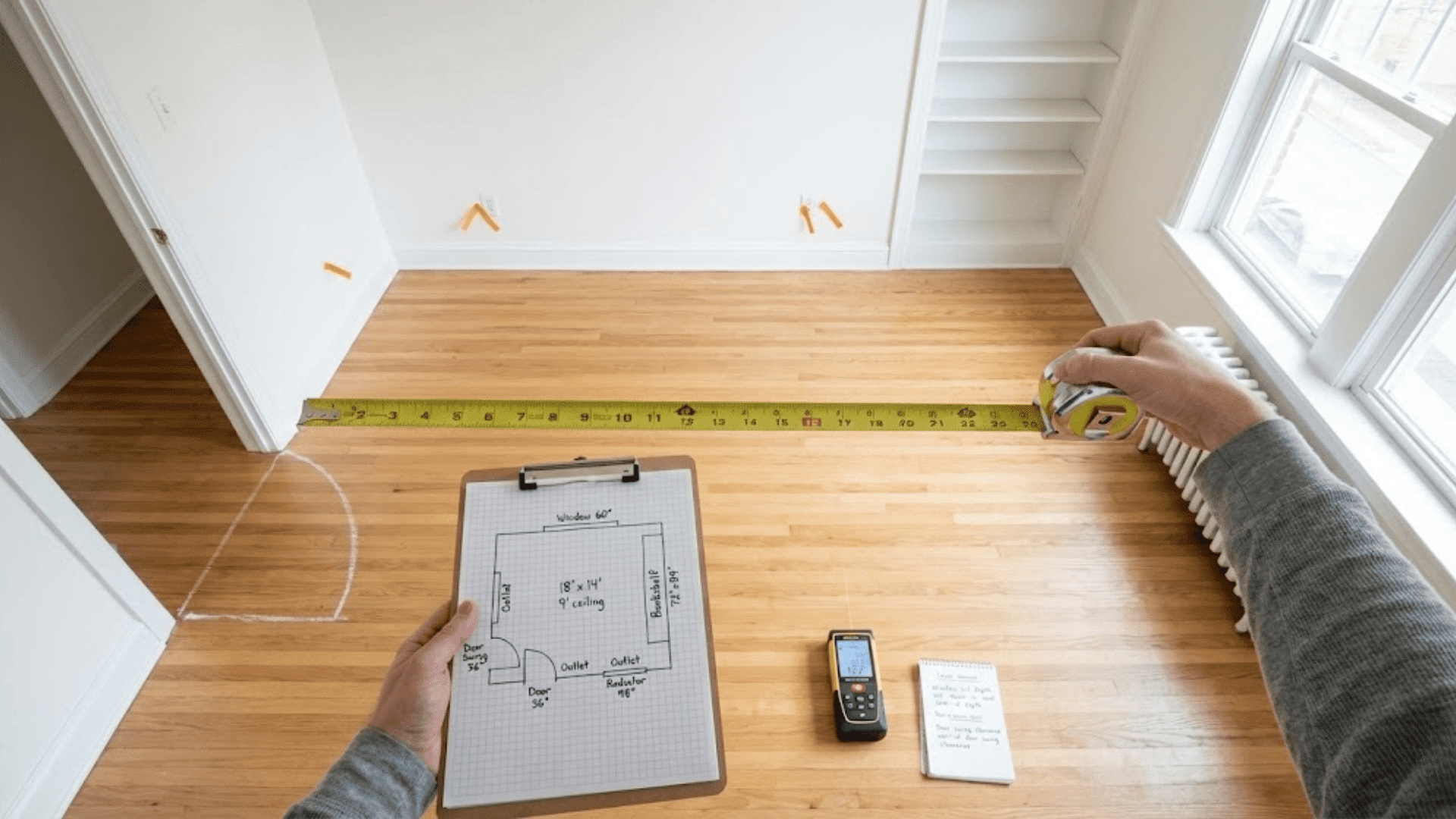
Begin with precise measurements of the entire room: length, width, and ceiling height. Document fixed elements like built-ins, radiators, or architectural details. Note window sills, door swings, and any level changes.
Accuracy here prevents furniture ordering mistakes and layout failures later. Sketch a basic floor plan to scale, marking all permanent features. These measurements become your canvas for everything that follows.
Step 2: Identify Constraints
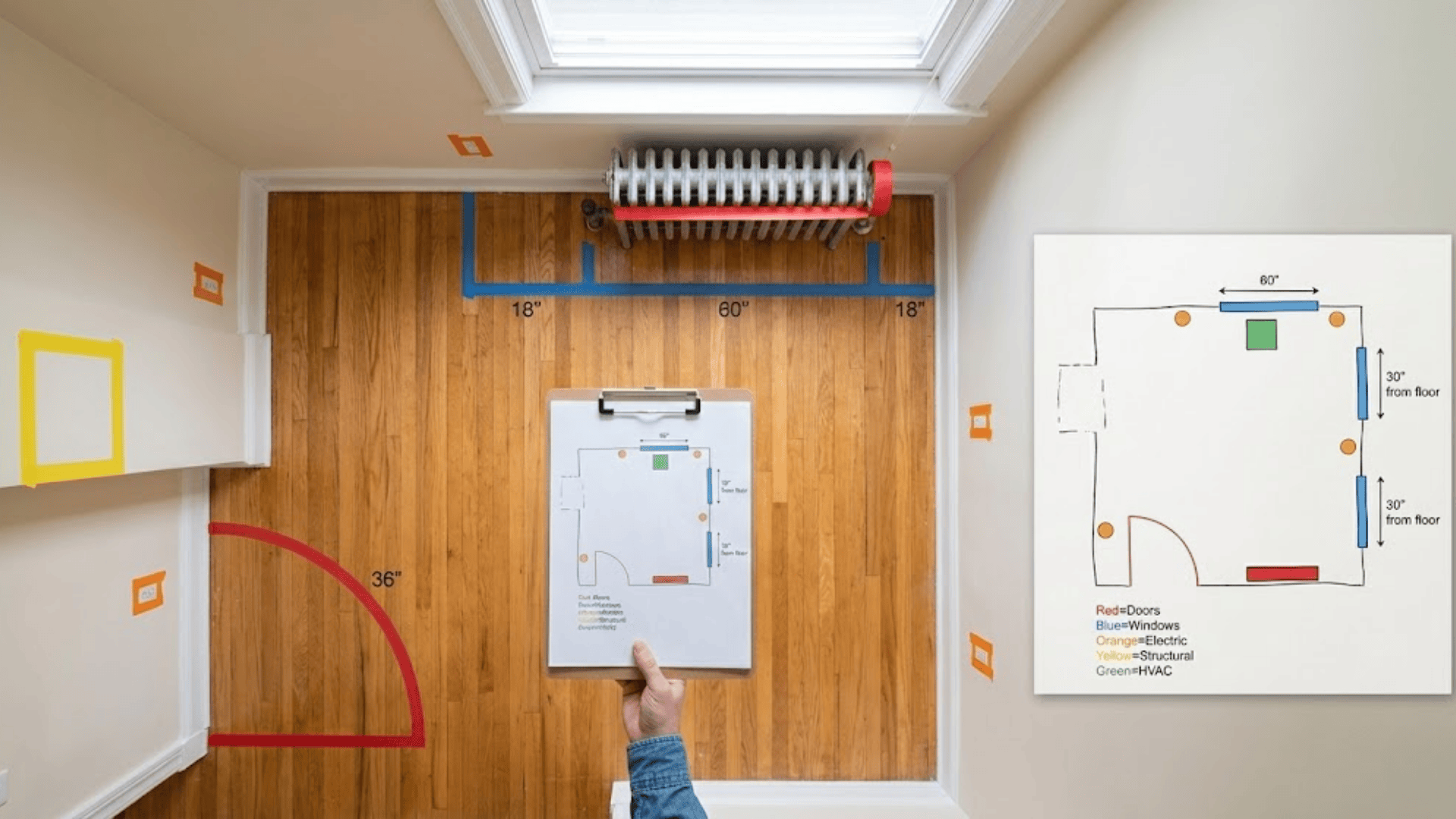
Map out what limits your options before planning placement:
- Door swings and their clearance zones
- Window locations and how they open
- Structural columns, beams, or load-bearing walls
- Electrical outlets, switches, and lighting fixtures
- Plumbing access points and HVAC vents
Constraints aren’t obstacles; they’re guides that reveal where furniture can and cannot go, saving you from impractical arrangements.
Step 3: Create a Bubble Diagram
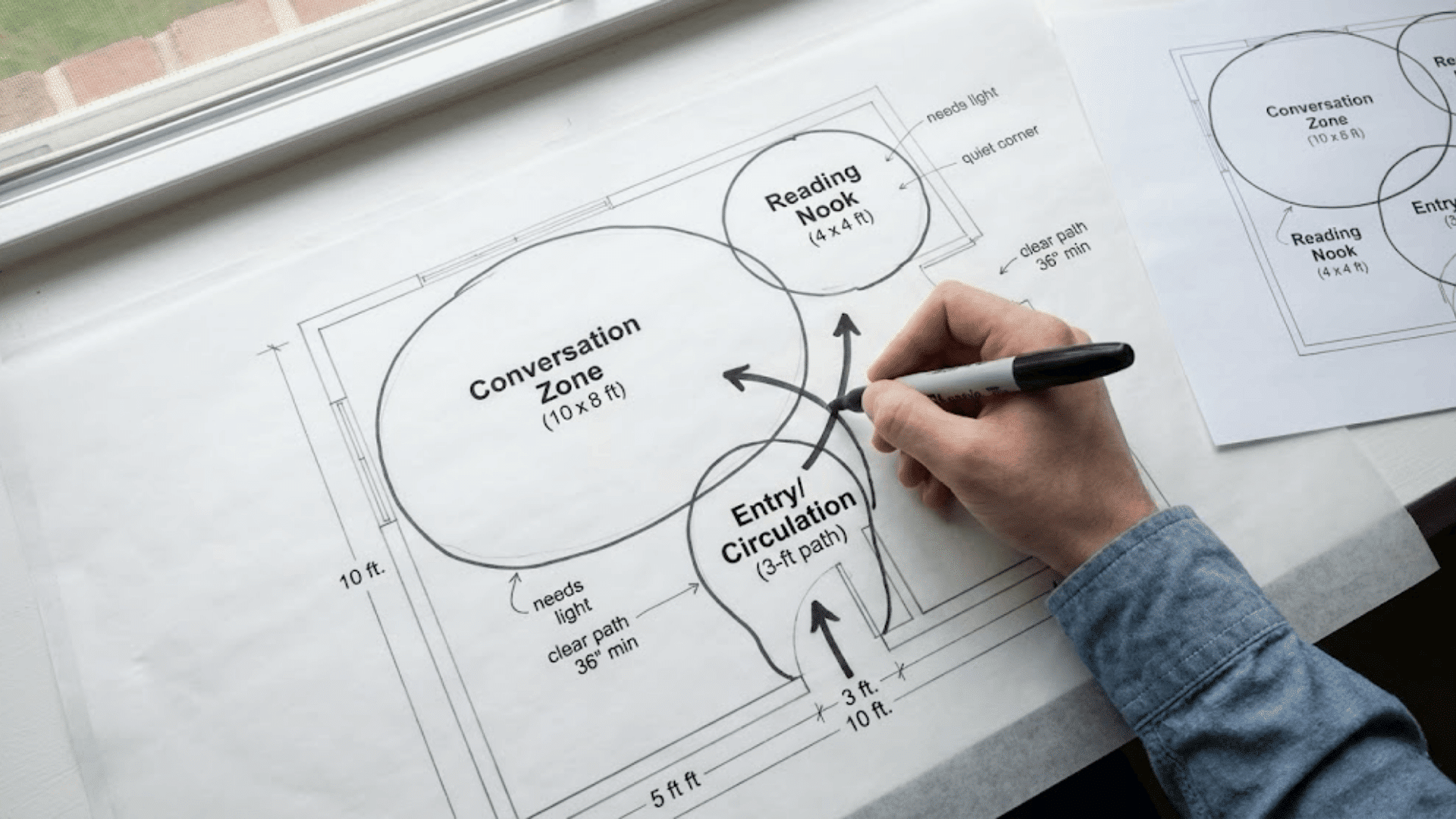
Sketch loose, abstract zones on your floor plan without specific furniture yet. Circle areas for dining, seating, or work based on natural light, views, and room entry points.
Bubble diagrams establish functional territories before committing to exact pieces. This stage clarifies activity placement: Does the reading nook need morning sun? Should the desk face away from distractions?
Zone first, furnish second.
Step 4: Develop Layout Options
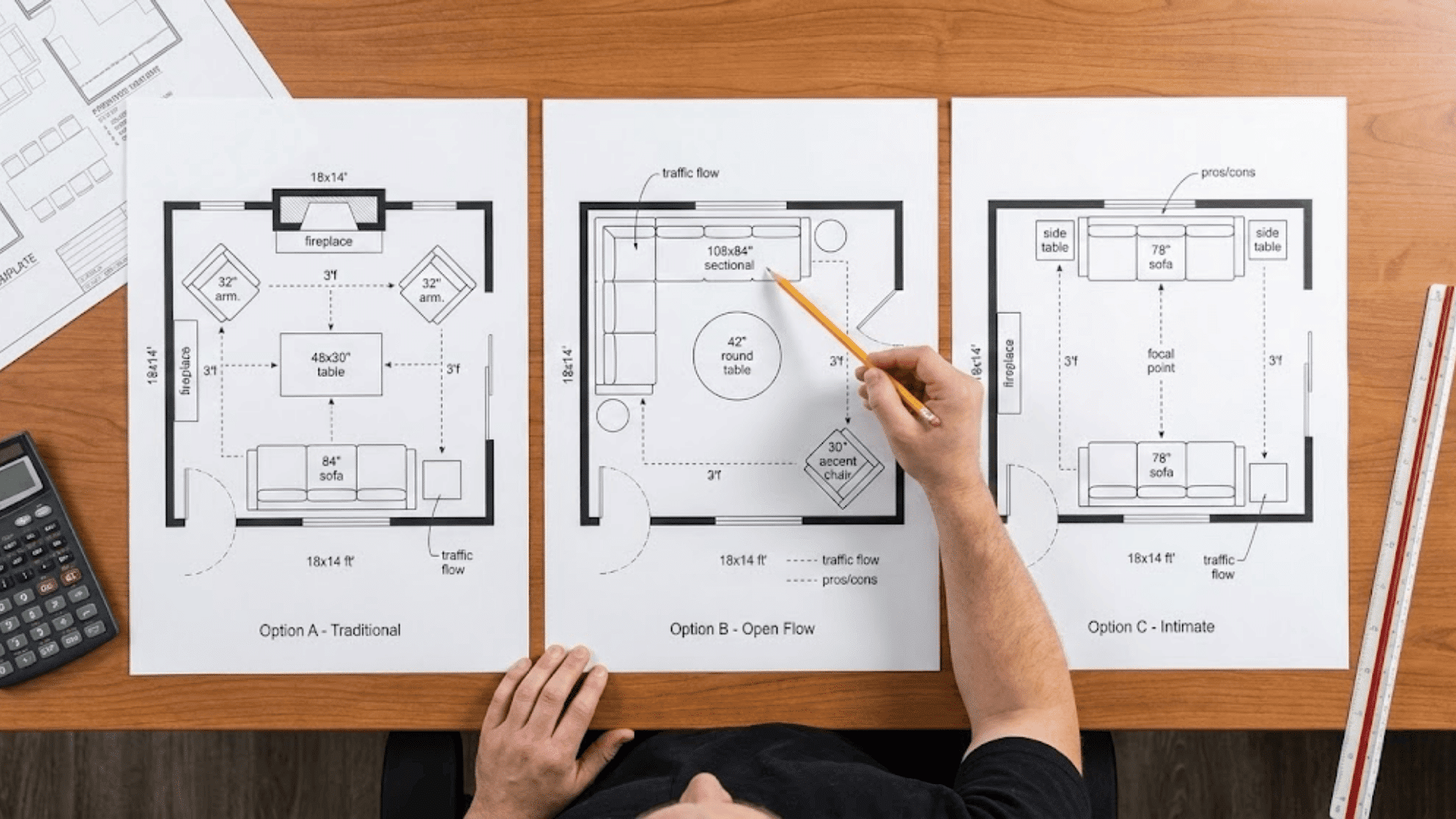
Test multiple furniture arrangements on paper or digitally before moving anything physical:
- Option A: Sofa facing the fireplace, chairs flanking
- Option B: Sectional anchoring the corner, opening sightlines
- Option C: Conversation pit centered, creating intimacy
Compare how each affects flow, focal points, and functionality. Finding alternatives reveals the strongest solution, one that might not have been obvious initially. Don’t settle on the first arrangement that fits.
Step 5: Finalize Furniture Placement
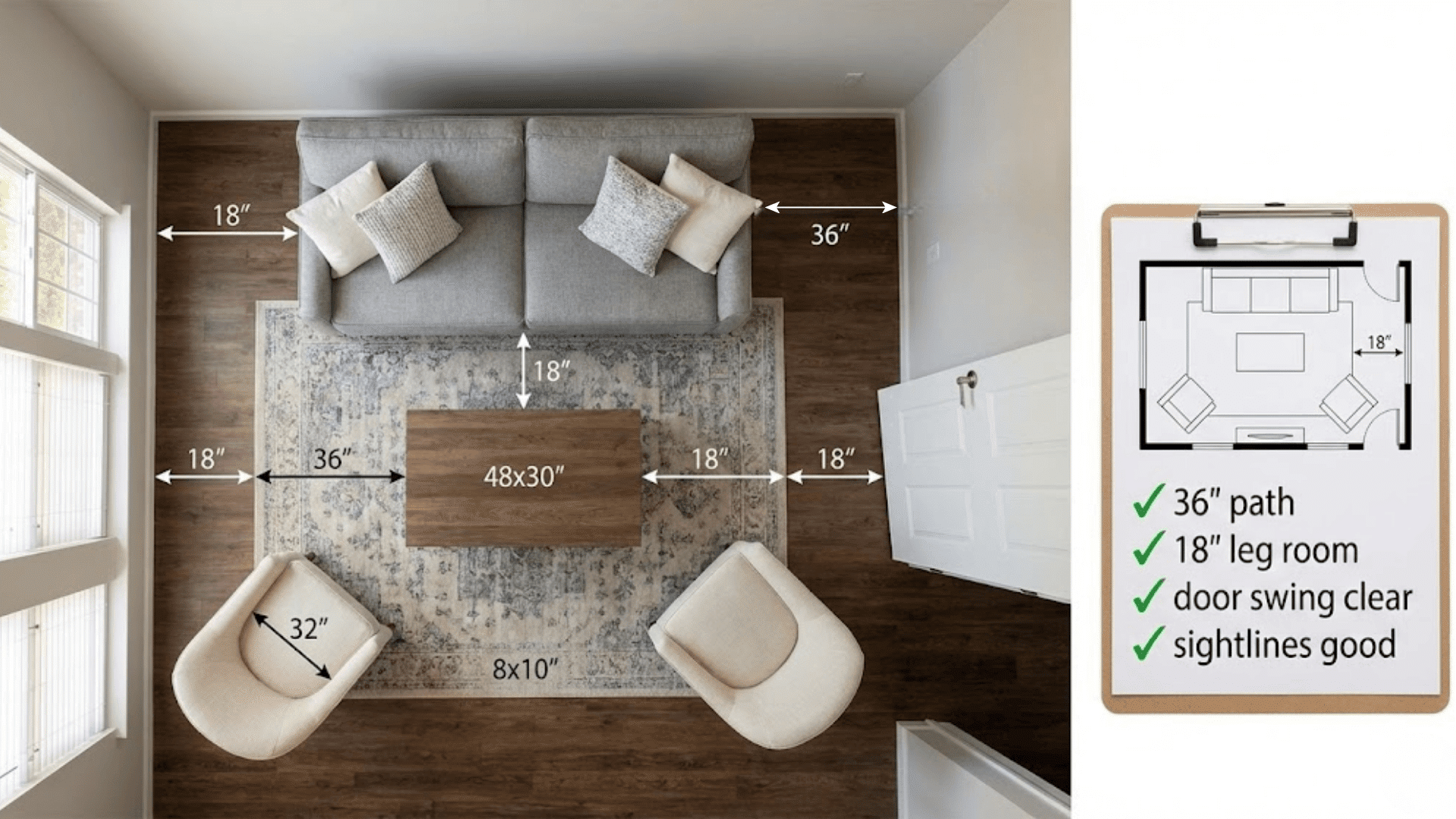
Confirm every piece with real measurements and clearances. Verify that walkways maintain a minimum of 3 feet, seating allows comfortable legroom, and doors open freely.
Check sightlines, ensure balanced visual weight, and test the layout mentally by walking through daily scenarios. This final review catches spacing issues before they become permanent.
Once verified, you’re ready to arrange confidently.
Space Planning Guidelines & Standard Measurements
Space planning relies on tried-and-true measurements that ensure comfort and usability. These standards aren’t rigid rules, but guardrails that keep layouts functional and livable.
Guidelines for Effective Space Planning
- Prioritize primary pathways; main circulation routes need at least three feet of clearance to feel open and accommodate movement comfortably.
- Maintain 18 to 24 inches around furniture perimeters so people can pass behind seated individuals or access drawers and doors easily.
- Consider ergonomic reach and sightlines; place surfaces at accessible heights, position seating for optimal views, and ensure task areas receive adequate light without glare.
Here are the dimensions that provide a baseline for common scenarios. Adjust based on specific needs and room proportions.
| Space Type | Minimum Clearance | Optimal Range |
|---|---|---|
| Main walkways | 36 inches | 42–48 inches |
| Behind dining chairs (pushed in) | 32 inches | 36–42 inches |
| Behind dining chairs (seated) | 48 inches | 54–60 inches |
| Between the sofa and the coffee table | 14 inches | 16–18 inches |
| Bedside clearance | 24 inches | 30–36 inches |
| Desk working space (depth) | 24 inches | 30 inches |
| Kitchen work aisle (one cook) | 42 inches | 48 inches |
| Kitchen work aisle (two cooks) | 48 inches | 60 inches |
These measurements create breathing room. Rooms feel cramped when clearances shrink below minimums, yet too much space dilutes intimacy and connection.
Space Planning for Different Room Types
Different rooms demand different planning strategies. Each space type has unique requirements that shape how furniture, zones, and circulation come together.
1. Living Room Space Planning
Center the layout around a focal point like a fireplace, window view, or media console. Arrange seating to encourage conversation, typically in a U-shape or facing configuration with pieces twelve to fourteen feet apart maximum.
Anchor the grouping with a rug that fits under front furniture legs. Ensure side tables sit within arm’s reach of seating. Balance traffic flow so pathways don’t cut through conversation zones.
2. Bedroom Space Planning
Position the bed as the visual anchor, ideally facing the door but not directly in line with it. Allow at least twenty-four inches on each side for easy access and making the bed.
Storage flow matters: dressers need 36 inches of clearance in front for drawer operation and dressing space. Keep nightstands proportional to bed height. Consider morning light when orienting sleeping areas.
3. Kitchen Space Planning
The work triangle connecting sink, stove, and refrigerator should total 12 to 26 feet for efficiency. Zone prep, cooking, and cleanup areas logically. Allow 42 inches minimum for single-cook aisles, 48 for multi-cook households.
Position frequently used items within easy reach. Counter landing space near appliances prevents accidents. Good kitchen planning reduces steps and wasted motion during meal preparation.
4. Dining Room Space Planning
Select table size based on regular occupancy plus occasional guests. Allow twenty-four inches of table width per person, minimum, thirty inches for comfort. Chairs need 32 inches when pushed in, 48 inches when occupied, to avoid tight squeezes.
Leave 48 inches between the table edge and walls or furniture for serving and seating. Round tables maximize intimacy; rectangular tables suit formal gatherings.
5. Home Office Space Planning
Balance productivity with physical comfort. Position desks perpendicular to windows to minimize screen glare while accessing natural light. Ensure thirty inches of depth for the work surface plus legroom underneath.
Place frequently used items within arm’s reach to reduce repetitive strain. Storage should be accessible without leaving the chair. Consider acoustic privacy when sharing space.
Space Planning Tools & Software
The right tools streamline space planning, whether you’re sketching rough concepts or finalizing precise layouts.
Choose based on your project complexity and comfort level.
| Tool Type | Best For | Popular Options |
|---|---|---|
| Floor Planning Apps | Homeowners, quick visualization | Planner 5D, RoomSketcher, Floorplanner |
| Professional CAD Tools | Architects, technical drawings | AutoCAD, SketchUp, Chief Architect |
| Hand Sketching | Initial concepts, brainstorming | Graph paper, tracing paper, scale rulers |
When to Use Each Approach?
Hand sketching excels for initial concepts and rapid exploration without digital constraints. Digital tools become essential for precision work: finalizing measurements, client presentations, and contractor coordination.
Space Planning Tips Designers Actually Use
Professionals rely on counterintuitive moves that amateurs often miss. These techniques create the invisible structure that makes great rooms feel effortless.
- Place the largest piece first, but not where it obviously fits; challenge the default position to unlock better flow and sightlines.
- Focal points should command attention without demanding it; let architecture or views lead, and furniture follows.
- Negative space does the heavy lifting; overcrowded rooms feel smaller regardless of square footage.
- Float furniture away from walls in larger rooms to create intimacy and define zones naturally.
These aren’t decorating tricks but foundational decisions that determine whether a space merely functions or truly works.
Space Planning vs. Interior Layout vs. Floor Planning
These terms often get used interchangeably, but they describe distinct aspects of design. Understanding the differences clarifies what each stage accomplishes.
Terminology Breakdown
| Term | What It Means | When It Applies |
|---|---|---|
| Space Planning | Strategic organization of function and flow | Early design phase: determining zones and purpose |
| Interior Layout | Physical furniture arrangement | Implementation phase: placing specific pieces |
| Floor Planning | Technical overhead drawing with measurements | Documentation phase: scaled diagrams for visualization |
Note: Space planning informs layout, which gets documented through floor plans. Skipping straight to furniture placement without planning the function creates layouts that look fine but live poorly.
The Bottom Line
Great space planning doesn’t announce itself with fanfare; it simply makes every room feel right.
When circulation flows smoothly, furniture sits at just the right scale, and each zone serves its purpose without conflict, that’s planning at work.
The difference between spaces that merely exist and spaces that improve daily life often comes down to these foundational decisions. Start with function, honor proportion, and let breathing room do its quiet magic.
Have thoughts on space planning or questions about your own project? Drop a comment below and let’s explore it together.