Sometimes, you just want space to stretch out, have more storage, or create something that feels truly yours.
A barndominium with basement gives you that chance. It’s more than just a home, it’s a smart mix of function and comfort.
I started looking into it because I wanted a home that felt open and flexible but also had room for the messy stuff of life: tools, hobbies, maybe even a quiet space to work.
If you’re curious about how this setup works or if it’s even possible, you’re in the right place.
You’ll learn how a basement changes what a barndominium can do, what to watch out for, how much it costs, and smart things to plan for. You’ll walk away with real answers and useful ideas.
How a Basement Changes the Way a Barndominium Works
Adding a basement to a barndominium changes more than just where you store stuff.
It shifts how you think about the whole building. Most barndominiums are simple: open layouts, one or two floors, and built for easy living. But once you add a basement, you can’t just drop it under a regular plan.
A basement needs to be part of the plan right from the start. You have to think about how the stairs fit in, how the basement connects with the rest of the home, and how it affects plumbing and support beams.
It also impacts what kind of land you can build on and how much it will cost.
More than that, the design inside matters a lot. The outside might look like a barn, but the inside has to work well.
If the layout isn’t planned right, the basement can feel disconnected or like wasted space. So planning ahead really matters.
Barndominium With Basement Design Options
Adding a basement to a barndominium opens up more ways to use your space. But not every basement is the same. There are different styles that fit different needs, budgets, and types of land.
I’ll tell you the main options so you can figure out what works best for you.
Full Basement Designs
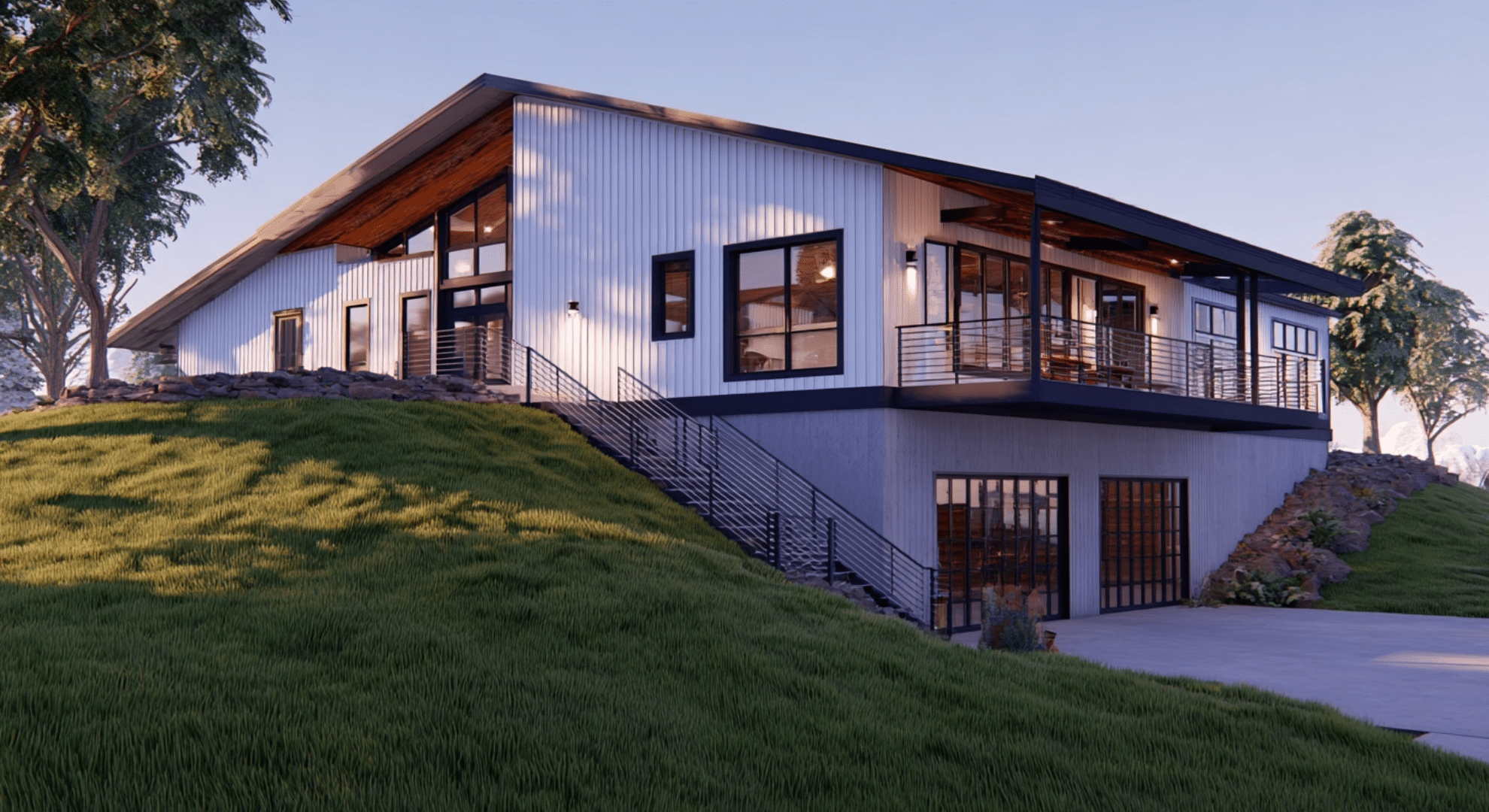
A full basement gives you a space that matches the size of the main floor. If your barndominium is 2,000 square feet, the basement will be close to that too. This gives you lots of space to work with.
Most people use full basements for:
- Storage
- Mechanical systems (like water heaters or furnaces)
- Future living areas (like extra bedrooms or a game room)
You’ll need to think about ceiling height early on. A taller basement ceiling (like 9 feet) feels more open and can be used as a regular living space.
But it costs more to dig deeper. Also, the structure above has to support another level, so you’ll need stronger beams and careful planning.
Barndominium With Walkout Basement
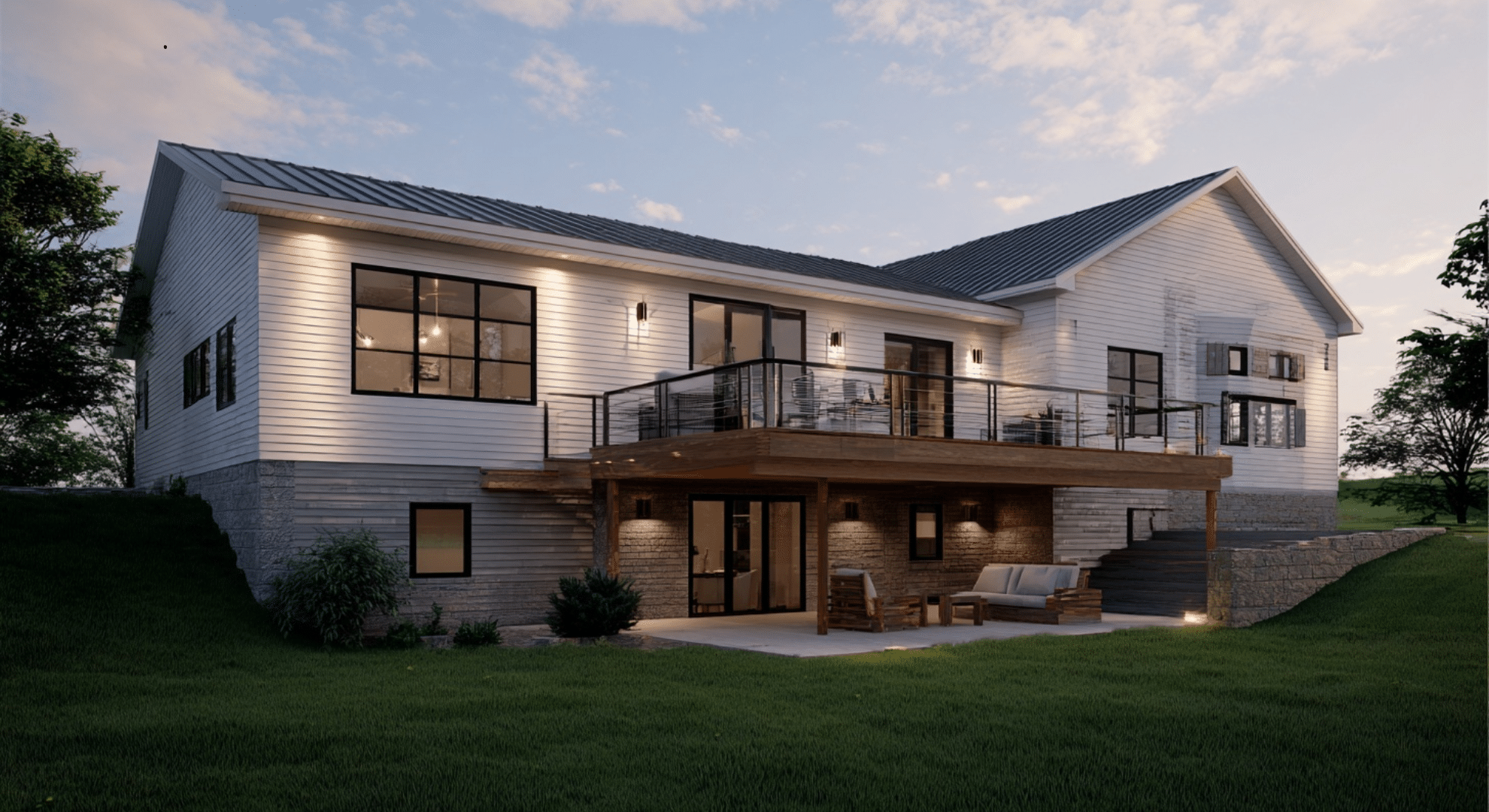
If your land slopes, a walkout basement might be a great choice. One side is built into the hill, but the other opens up to the outside.
That side can have windows, a patio, or even a door to a garage.
Walkout basements work best on sloped lots. This type of layout lets in natural light and fresh air. It can feel like a regular part of the home, not a dark lower level. It’s also easier to add a separate entrance, which is great if you plan to rent it out or use it as an in-law suite.
Another plus? Homes with walkout basements usually sell for more because they offer more usable space and better light.
Partial Basement and Hybrid Layouts
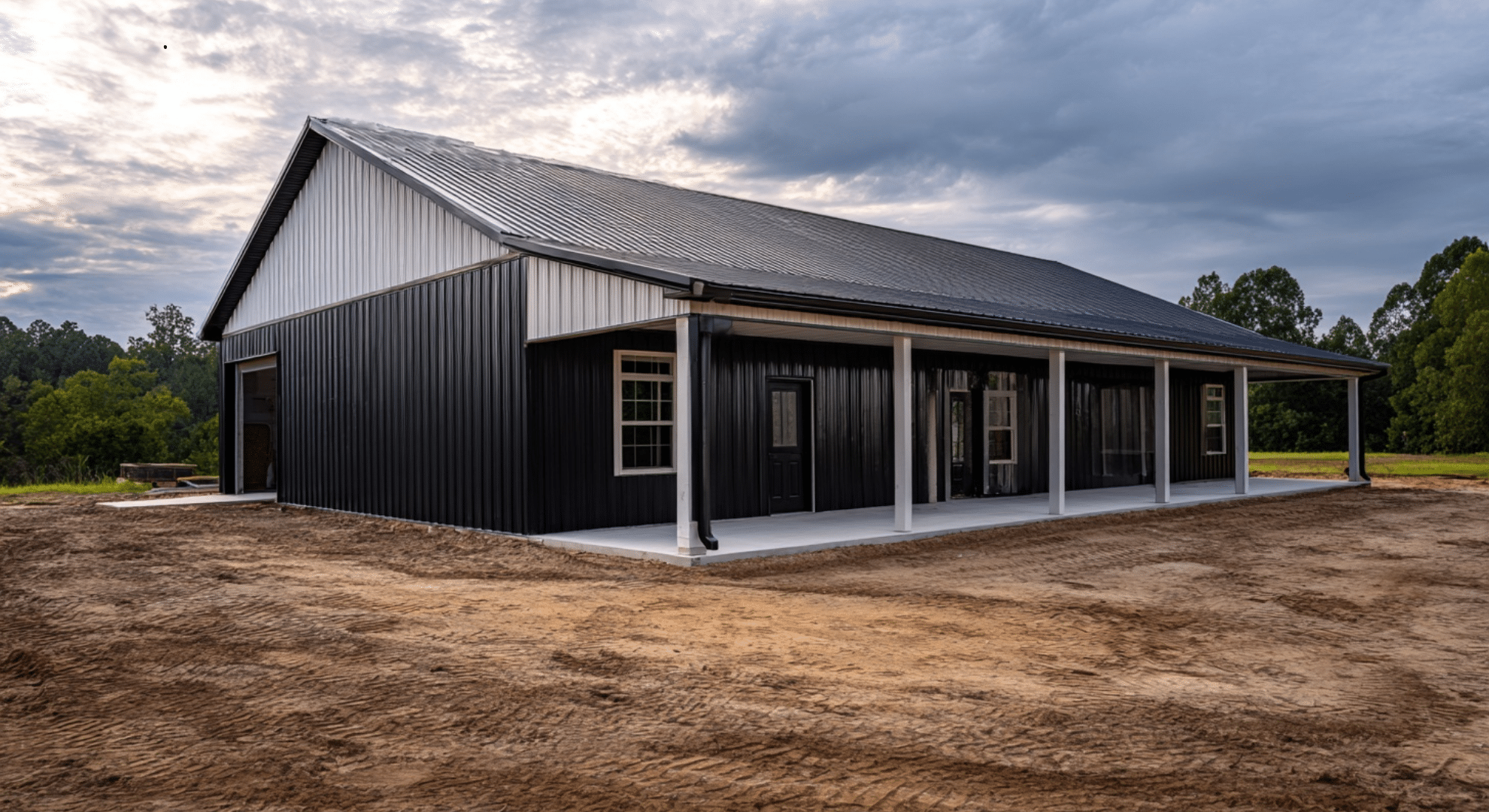
A full basement isn’t always needed. In some cases, a partial basement makes more sense. You might only need part of your barndominium to have a basement. For example:
- Just under the bedrooms
- Only beneath the kitchen and storage areas
- A small basement only for mechanical equipment
These layouts save money on excavation and materials. You can also mix a slab foundation with a basement. That means part of the home sits on a concrete slab, and the rest has a basement under it.
Hybrid layouts are good for uneven land or when you’re trying to cut costs but still want the benefits of a basement.
Smart Barndominium Floor Plan Ideas With a Basement
If you’re thinking about building a barndominium with a basement, the layout matters a lot.
The way you design your space can save money, add storage, or even give you more room to live later on. Below are some helpful layout ideas you can use or tweak to fit your land and budget:
1. One-Story Home Over a Full Basement
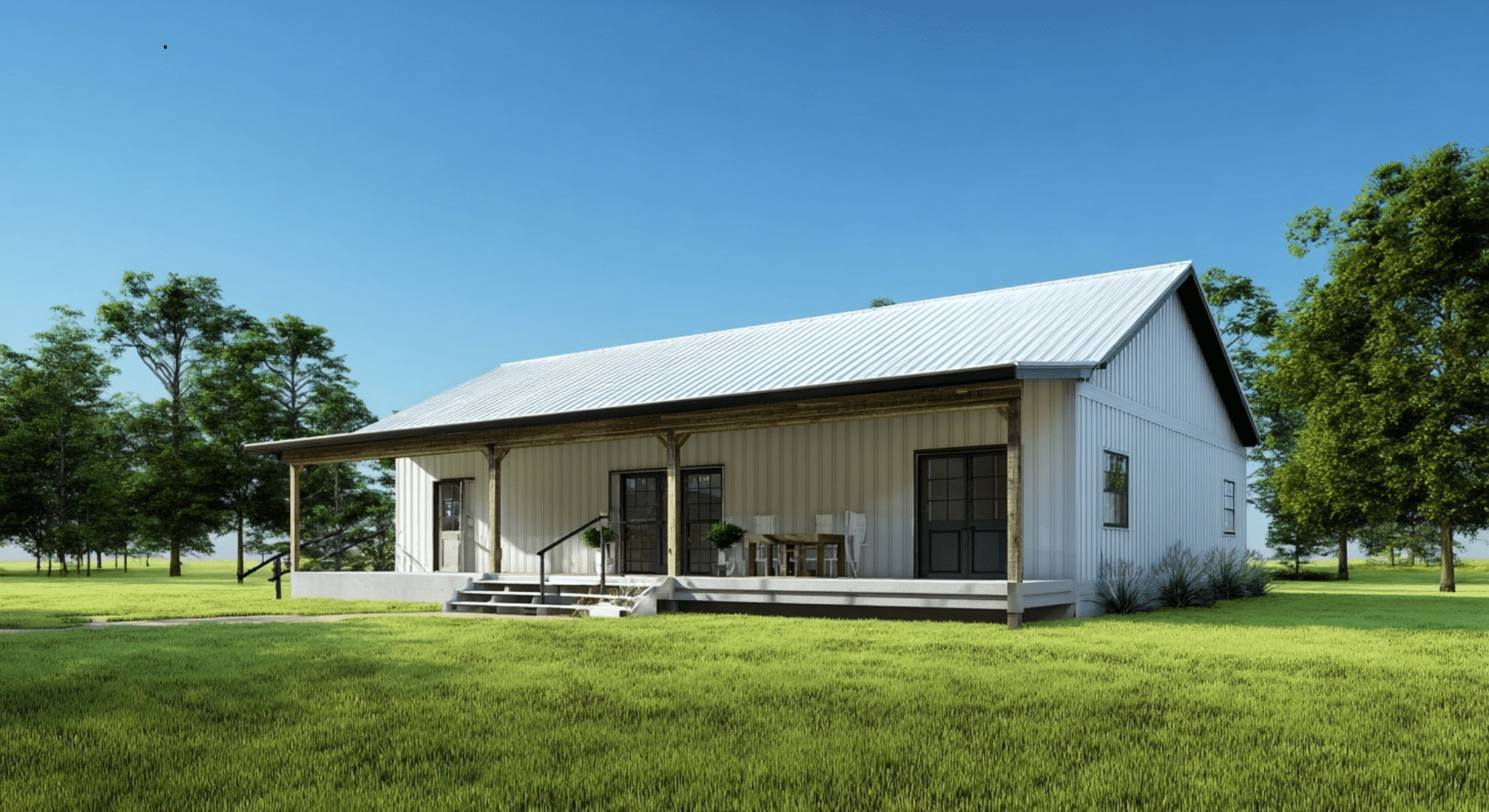
This is one of the most common layouts because it’s simple and flexible. You get all your main living space upstairs and a full-size basement underneath.
What this layout looks like:
- One floor with 2–3 bedrooms and an open kitchen/living area
- Basement with laundry, storage, or space to finish later
- Staircase near the entry or kitchen for easy access
You can build this on flat land and keep future options open.
2. Two-Story Barndominium With a Basement
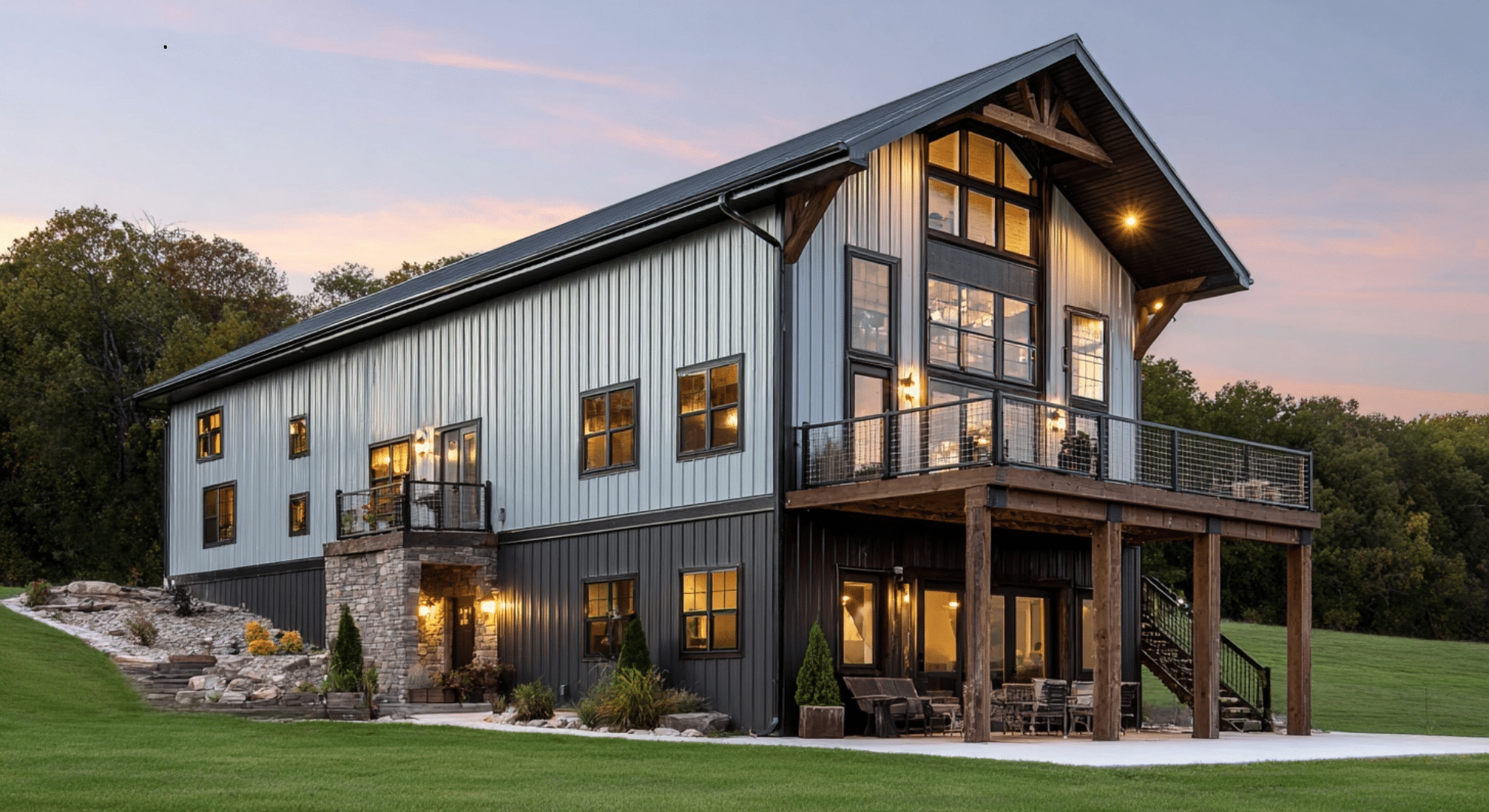
With this setup, you get three full levels of space. It works great for bigger families or anyone who wants more room without using more land.
What this layout looks like:
- Main floor with kitchen, living area, and guest room
- Second floor with bedrooms and bathrooms
- Basement for utilities, storage, or a second living room
You’ll need stronger support, but the space you gain is worth it.
3. Barndominium With Walkout Basement and Garage
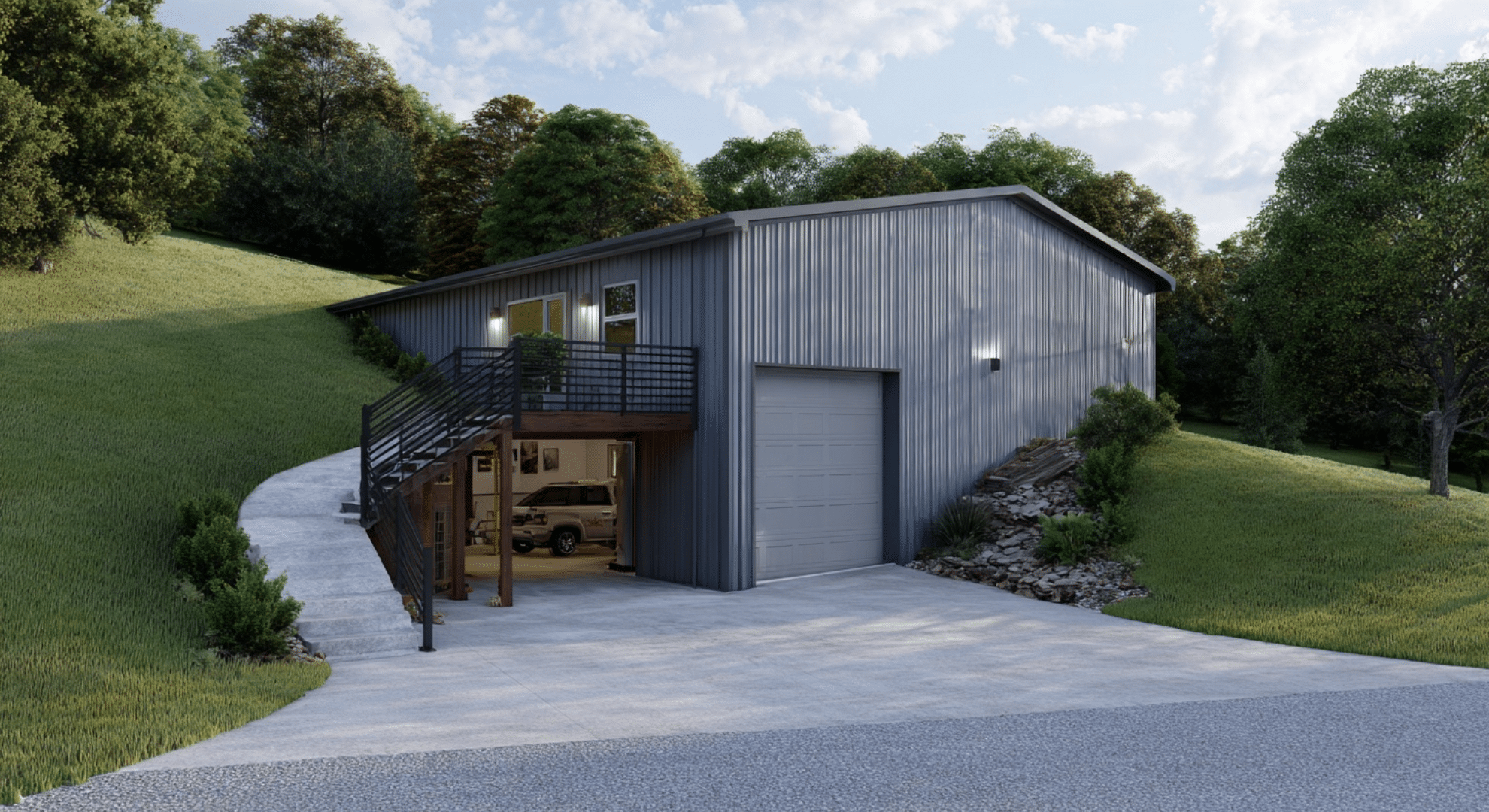
If your land slopes, this layout lets you use that space smartly. A walkout basement gives you more light and a garage without taking up the main floor.
What this layout looks like:
- Main level with living space and bedrooms
- Basement with a garage, tool shop, or storage
- One side of the basement opens to the outside
It’s great for anyone who works with tools, cars, or needs easy basement access.
4. Open-Concept Main Floor With Utility Basement
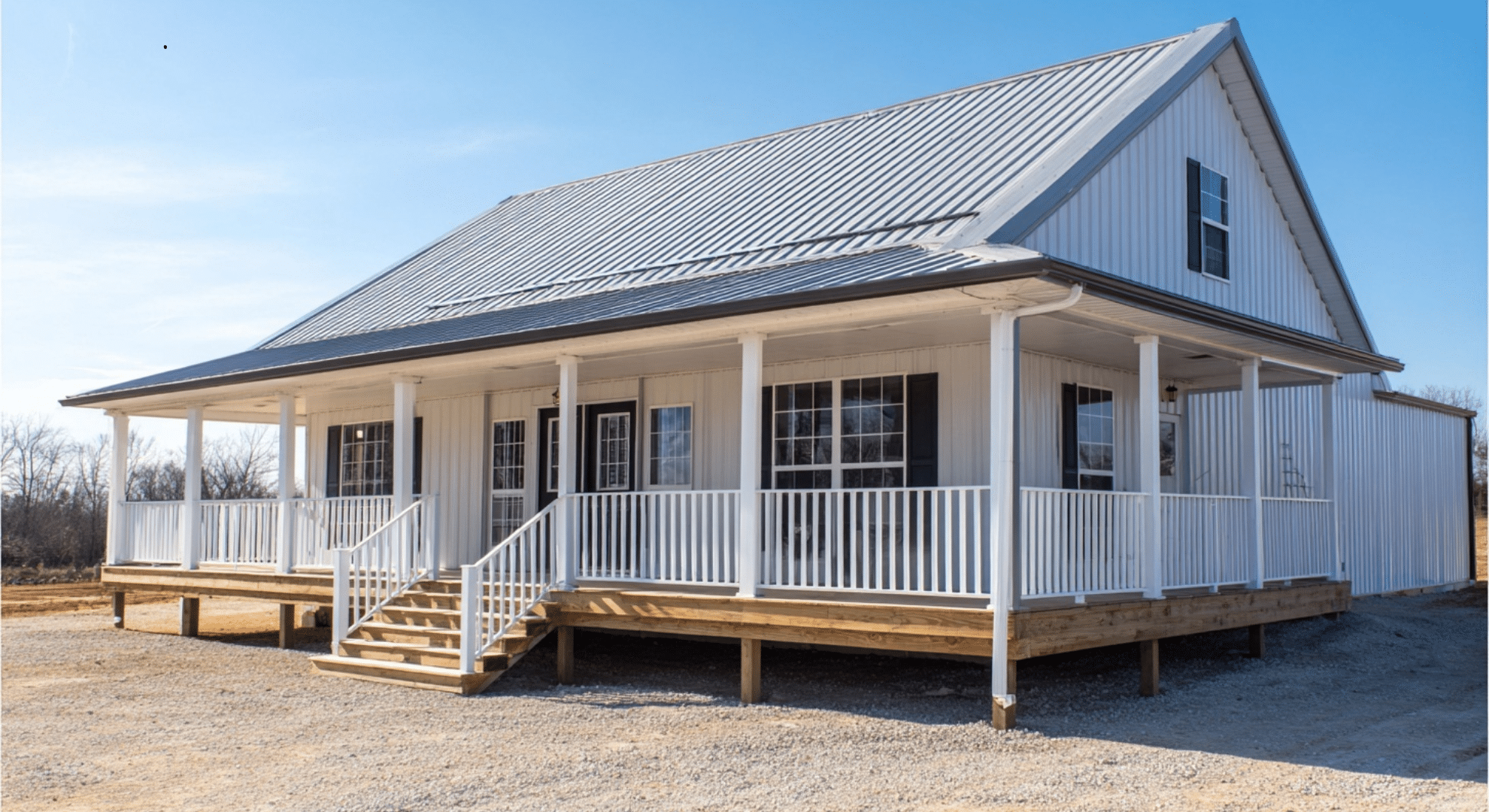
This layout keeps the upstairs wide and open while the basement holds everything behind the scenes.
What this layout looks like:
- One big upstairs room for kitchen, dining, and living
- Bedrooms off to the side
- Basement with furnace, water heater, and panels
It keeps the main level clean, with no bulky closets or mechanical rooms.
5. Split-Level Barndominium With Partial Basement
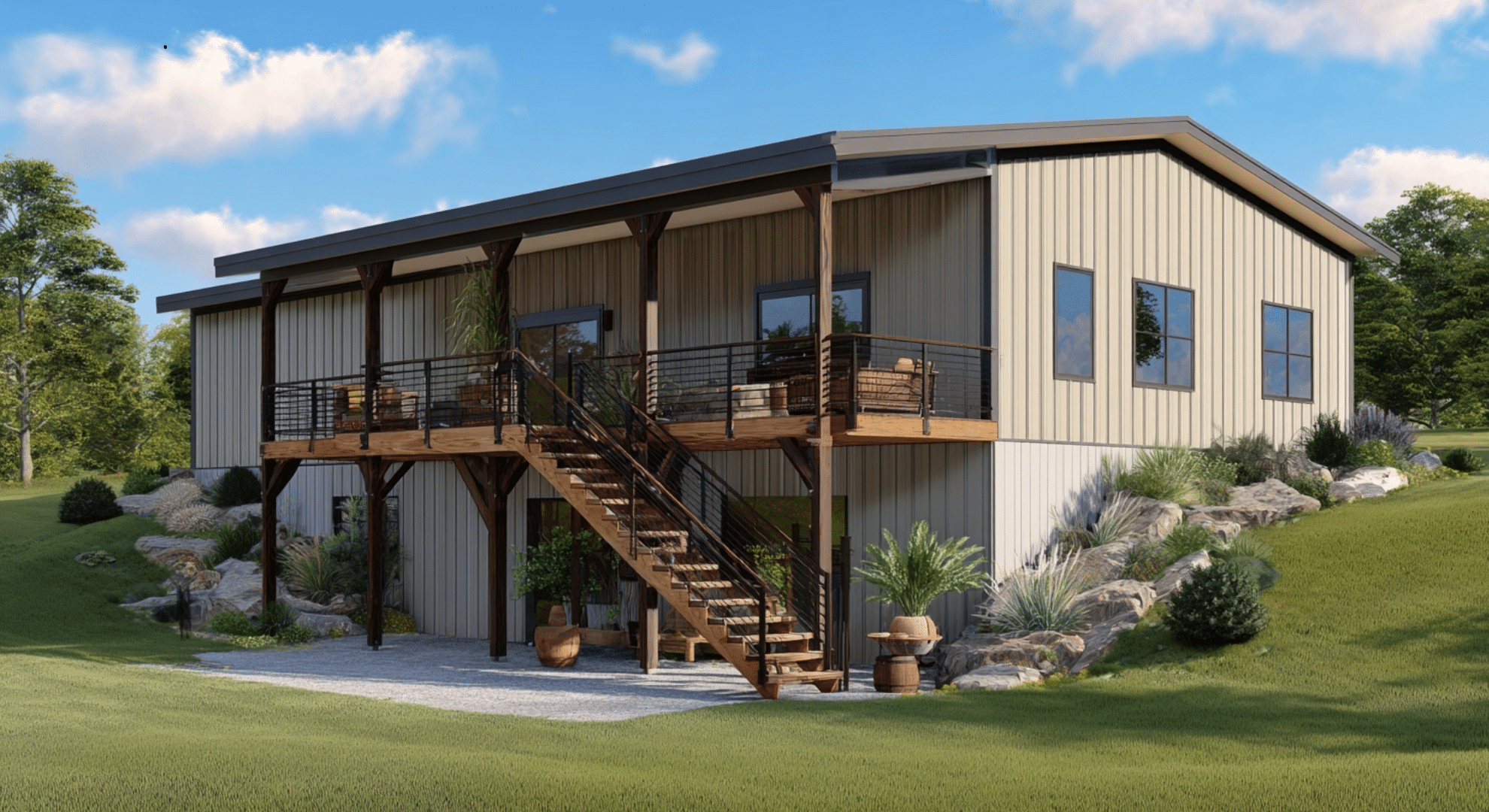
You don’t always need a full basement. A partial one can be more affordable while still giving you space for storage or systems.
What this layout looks like:
- Raised main floor with 2–3 bedrooms
- Basement only under part of the home
- Storage or utility zone under the kitchen or laundry
This is a good middle ground if you want some basement space without the full cost.
6. Multi-Use Basement With Living Space
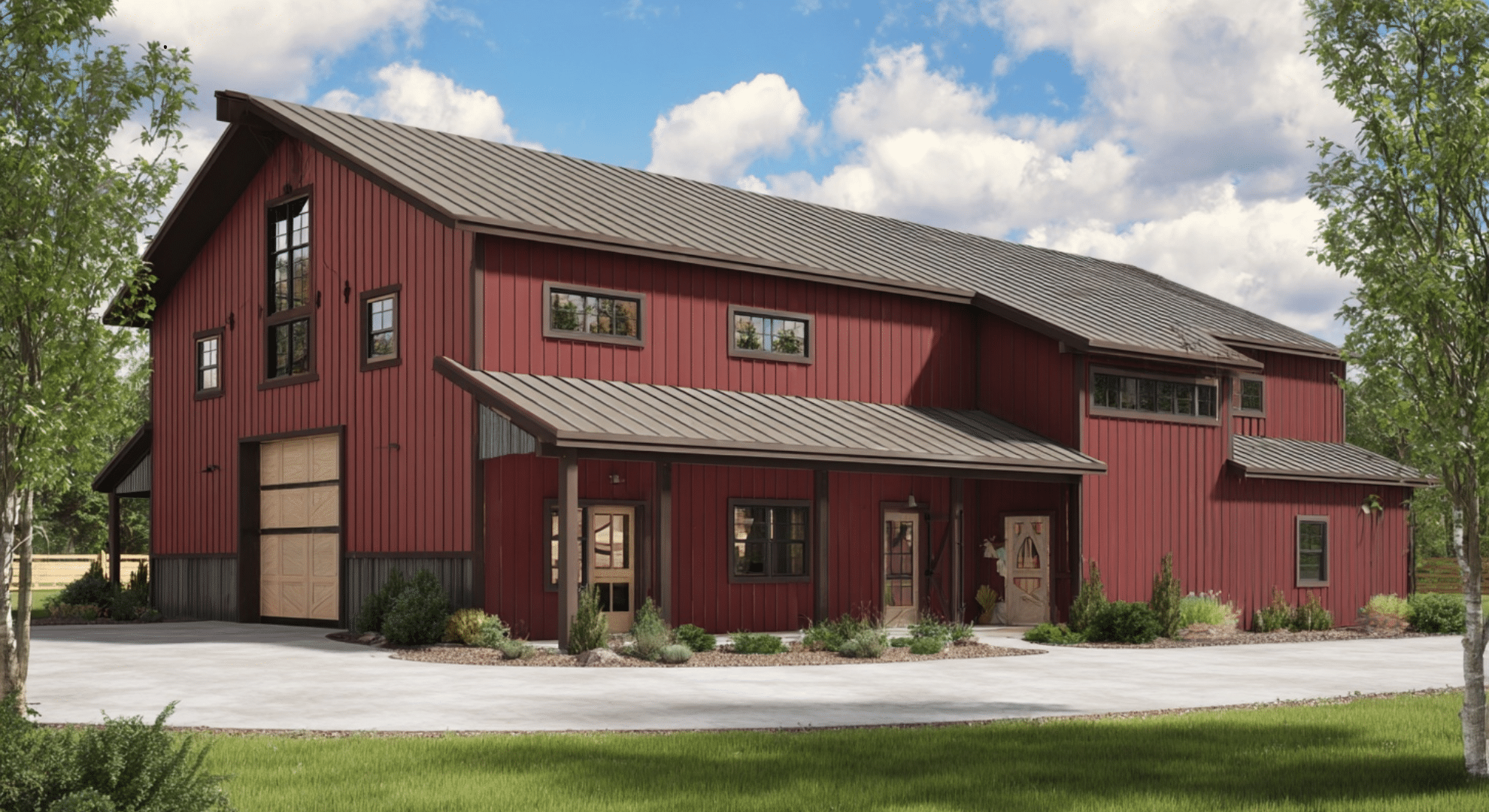
This plan makes the basement more than just a place for boxes. It gives you real, usable space along with room for storage and systems.
What this layout looks like:
- Upstairs with bedrooms, bathrooms, and a kitchen
- The basement is split into a living area, storage, and a utility room
- Extra living space for a TV room, office, or guests
It works well for growing families or anyone needing more flexible space.
7. Barndominium With Basement Apartment
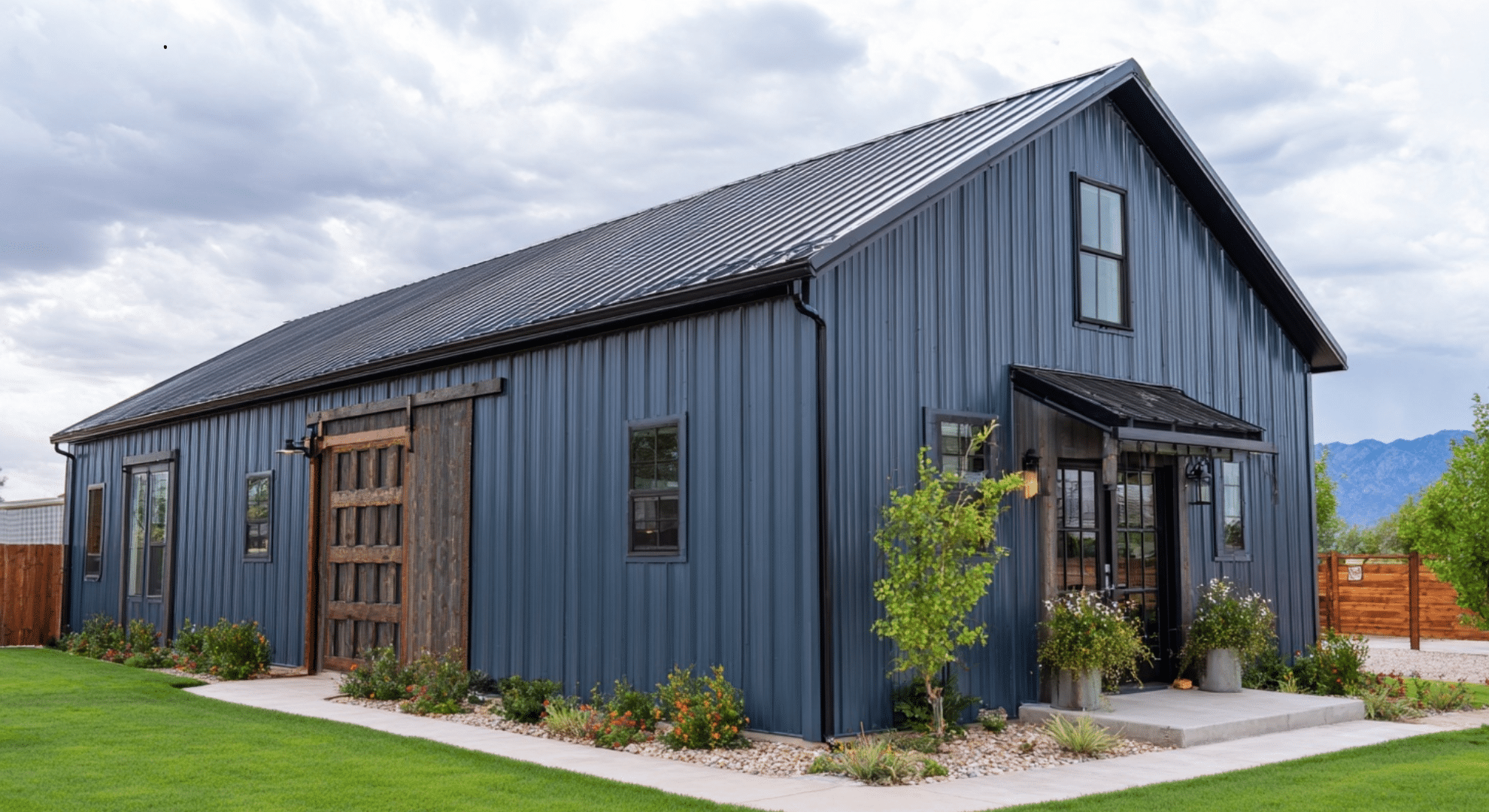
This layout includes a second small home in the basement. Great if you want rental income or a private area for family.
What this layout looks like:
- Upstairs with your main living areas
- Basement with its own kitchen, bedroom, bathroom, and entrance
- Space is private but connected if needed
You get two homes in one, with lots of ways to use it.
Choosing the Right Structural System for a Basement
When building a barndominium with a basement, the frame you choose plays a big role in how strong, safe, and cost-friendly your build will be. Some systems are faster, others are stronger, and some are better suited for sloped or wet land.
This table lays it all out for you so you can make a smart choice before you start building:
| System Type | How It Works With a Basement | Best For | Advantages | Challenges or Limits |
|---|---|---|---|---|
| Post-Frame Barndominium | Uses vertical wood posts placed into or on top of concrete footings. Load transfers through posts into the basement foundation or concrete walls. | Flat or slightly sloped lots, rural areas | – Affordable to build – Simple materials – Flexible design options |
– Large open rooms need extra support – May need upgrades for basement integration |
| Steel Frame Barndominium | Steel columns and beams support the roof and walls. Weight transfers to footings or piers around or above the basement foundation. | Large barndominiums, commercial-style homes | – Strong structure for large spans – Resists pests and fire – Long lifespan |
– Higher upfront cost – Needs exact planning – Columns limit some room layouts |
| Modular/Precast Basement | Precast concrete wall panels are built off-site, then lowered in and joined at the site. The floor slab is poured later. | Fast builds, tight job sites, bad weather zones | – Fast install time – Clean and dry build – Consistent quality control |
– Limited layout sizes – Delivery can be tricky – May cost more per square foot |
Each of these systems has trade-offs.
If you’re looking to save money and keep things simple, post-frame might be right for you. If you need strength and space, steel frames give you more options. And if time or weather is a concern, precast systems can speed things up while staying solid.
Blueprint and Plan Considerations Before You Buy
Before you pick a floor plan for your barndominium with a basement, make sure it’s more than just a basic layout. Many off-the-shelf plans look nice at first, but may not be ready for real land or real weather.
Basements add a lot of extra planning, and not all blueprints include the details you’ll need.
Here’s what a complete plan set should show:
- Load paths (how weight is carried through the structure)
- Foundation specs (especially for basements on slopes)
- Drainage systems (to keep water out)
- Egress locations (safe exits in case of emergency)
Also, ask the plan designer if the basement was part of the original design or added later. A plan that simply tacks on a basement might not work for your site.
You should also check if local codes require changes. Not every plan meets your area’s rules.
Ask questions early; it’s easier to adjust a plan than to fix a bad build.
Cost Impact of Adding a Basement to a Barndominium
Adding a basement gives you more space, but it also adds cost.
Understanding where that extra cost comes from and how much it could change your budget helps you plan better. Let’s see what you’re really paying for and where you might be able to save.
Basement vs. Slab Cost Comparison
Slab foundations are the cheapest option, but they don’t give you any below-ground space.
Adding a basement can increase your foundation cost by 30% to 60%, sometimes more, depending on where you live and how deep you go.
Still, a basement can replace some square footage from the main or second floor. Instead of building out or up, you’re building down.
That can balance costs in some cases, especially if you finish the space later.
So while the price goes up at the start, it might save you money long-term by keeping your overall footprint smaller.
Excavation, Engineering, and Foundation Costs
The biggest cost drivers for basements aren’t just concrete. You’re also paying for:
- Excavation (digging the hole)
- Foundation walls (thicker and deeper than slab)
- Drainage systems (to keep water out)
- Extra engineering (load calculations, soil studies, support planning)
Costs also change by region. Wet or rocky soil, high water tables, or stricter building codes can all raise the price. Some places charge more just to haul away the dirt. Always get site-specific pricing; generic numbers aren’t enough.
Finished vs. Unfinished Basement Costs
An unfinished basement is just the shell: concrete walls, slab floor, maybe rough plumbing. A finished basement includes flooring, drywall, lights, outlets, and heating or cooling. Finishing can double the cost per square foot.
But you don’t have to do it all at once. Many people plan to finish later. That means:
- Running rough electrical and plumbing during the main build
- Framing out walls now, finishing them later
- Leaving floors and ceilings undone until the budget allows
This kind of staging keeps your build cost lower now while giving you the chance to grow into the space later.
Waterproofing, Drainage, and Long-Term Protection
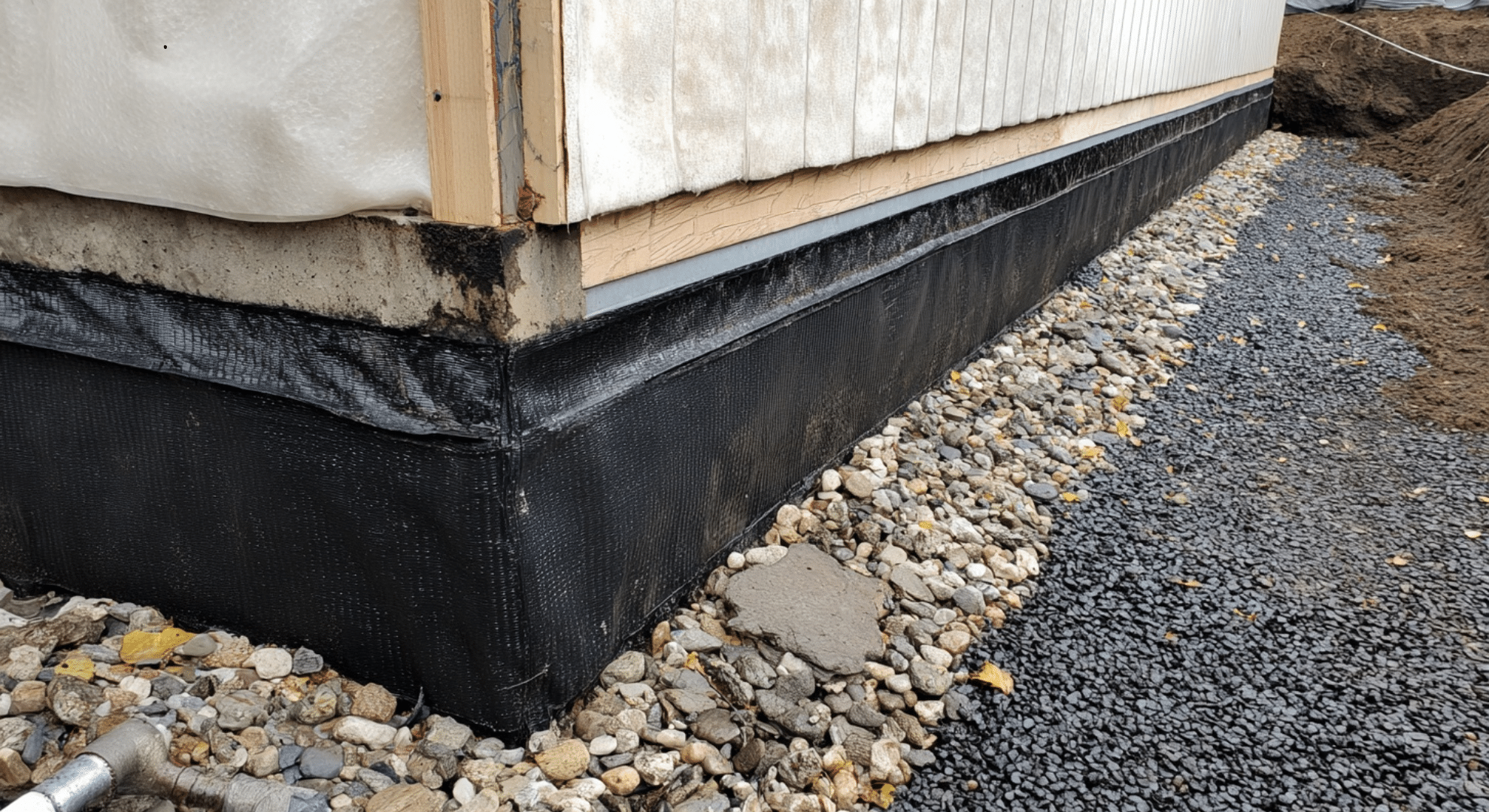
Basements under metal barndominiums need extra care when it comes to waterproofing and drainage. Unlike wood-framed homes, metal buildings can trap moisture in certain spots, leading to rust, mold, or damage over time if water gets in.
That’s why a strong waterproofing system is a must, not just an extra. This includes a waterproof membrane on the outside of the basement walls, proper sealing at all joints, and a good vapor barrier under the basement floor.
But even the best waterproofing fails without drainage.
You need a layout that moves water away fast, like footing drains around the perimeter and a sump pump inside. Downspouts should send rainwater far from the foundation.
One of the most common failure points is poor grading, when water flows toward the home instead of away. Cracks in walls or gaps where pipes enter are also weak spots. Careful planning now saves huge repair bills later.
Climate, Land, and Site Suitability
The land you build on and the climate around it can change how well a basement will work in your barndominium.
In cold climates, frost depth matters a lot. Your basement walls need to go below the frost line to keep from shifting or cracking, and you’ll also need good insulation to prevent heat loss. In warm areas, moisture and drainage are bigger concerns, especially in places with heavy rain or clay soils.
If your lot has a natural slope, that’s a big win; it makes a walkout basement easier and helps with drainage. Flat land can still work, but you may need more digging and water control.
Soil type also plays a role. Sandy or rocky soil drains well, while heavy clay holds water, which can press against basement walls. Always do a soil test before you build, it can save time, money, and trouble later.
Permits, Codes, and Basement Rules to Know
Before building a basement in your barndominium, it’s important to know what your local building department requires. Basements have more rules than you might think, and missing even one can delay your build or cause problems during inspections.
One of the most important rules is egress. Every bedroom or living space in a basement must have a way to exit safely during a fire or emergency, usually a full-size window or door that opens to the outside.
You’ll also need to meet minimum ceiling heights, which are often 7 feet or higher, depending on your location.
Fire separation is another key rule. Most codes require a fire-rated barrier between the basement and the floor above, especially if the basement has living space or mechanical systems.
Finally, local codes vary, so what’s allowed in one area may not be allowed in another. Always check with your local building office before buying a plan or starting construction. It’ll save time, money, and stress.
Is a Basement the Right Choice for Your Barndominium?
Not every barndominium needs a basement. While it can add space and value, it also adds cost and complexity. To decide if it’s the right fit, you’ll need to think about your land, budget, and long-term plans. Here’s a way to weigh the pros and cons before you build:
When a Basement Makes Sense
A basement is a smart choice if you need extra storage, want space for future living areas, or have sloped land that makes a walkout easy. It also helps if you’re planning to stay in the home for many years.
Over time, a basement can give you room to grow, no matter if that means a home office, guest space, or even a rental unit. It’s also good for keeping systems like furnaces and water heaters out of sight.
When a Basement May Not Be Worth It
If your land is flat, the digging and drainage work can get expensive fast.
A tight budget may be better spent on finishing the main floor first. For short-term builds or investment properties, a slab foundation may be the better choice.
Common Design and Planning Mistakes to Avoid
Building a barndominium with a basement takes more than just picking a nice floor plan. Small mistakes in the planning stage can lead to big problems later: leaks, layout issues, or extra costs you didn’t expect.
Here are some of the most common mistakes to watch out for before you start building:
- Choosing floor plans that don’t include basement load paths
- Not talking to a structural engineer about how the weight transfers to the foundation
- Underestimating waterproofing and thinking basic sealant is enough
- Skipping sump pump or footing drain planning in wet areas
- Forgetting about future finishing like plumbing, outlets, and wall framing
- Not leaving enough space for stairs in the main layout
- Ignoring site drainage, grading, and water runoff
- Assuming your soil is “good enough” without a test
Taking time to plan right with real site info and solid drawings can save you from expensive fixes later. It’s always easier to build it right than to redo it.
Conclusion
A barndominium with a basement gives you a lot more than just extra space; it gives you options.
I realized how useful it can be for storage, quiet work, or even future plans like a guest room. It’s the kind of setup that keeps things simple, but still flexible.
Now you’ve got a clearer idea of how this works and what to think about before you build or buy. You can take what you learned here and really plan out what fits your life best.
One thing I’d say, don’t skip the details during planning. It makes a big difference later.
If you’re still curious about building, layouts, or smart designs, check out more of my blogs. You’ll find a lot more helpful stuff there!