The finish you choose can quietly make or break a beautifully painted room, and yet it’s the detail most people decide on last.
If you’ve ever stood in the paint aisle weighing satin vs semi gloss and walked away more confused than when you arrived, you’re in good company.
Both finishes look deceptively similar on those tiny swatches, and knowing how they each compare to flat paint adds another layer to the decision.
Stick around because by the end, you’ll know exactly which finish belongs where in your home.
What is Satin Paint?
Satin paint sits right in the middle of the sheen spectrum, giving walls a soft, velvety finish that feels polished without being too shiny.
It holds up well in moderately busy spaces and is easy enough to wipe down when life gets messy.
It also does a quiet favor for walls that aren’t perfectly smooth, since its subtle sheen diffuses light just enough to downplay minor imperfections.
On the flip side, brush strokes can show through if the application isn’t careful, and touch-ups can be tricky to blend seamlessly.
What is Semi-Gloss Paint?
Semi-gloss paint brings a noticeably shinier, more reflective finish to the table, making it a go-to for spaces that take a beating daily.
It’s highly durable, moisture-resistant, and remarkably easy to clean, which is why you’ll find it in kitchens, bathrooms, and on trim so often.
The tradeoff, though, is that all that reflectivity doesn’t do imperfect walls any favors.
Every dent, crack, or uneven patch becomes more visible under a semi-gloss finish, so surface prep matters a lot more before you ever open the can.
Satin vs. Semi-Gloss: Key Differences
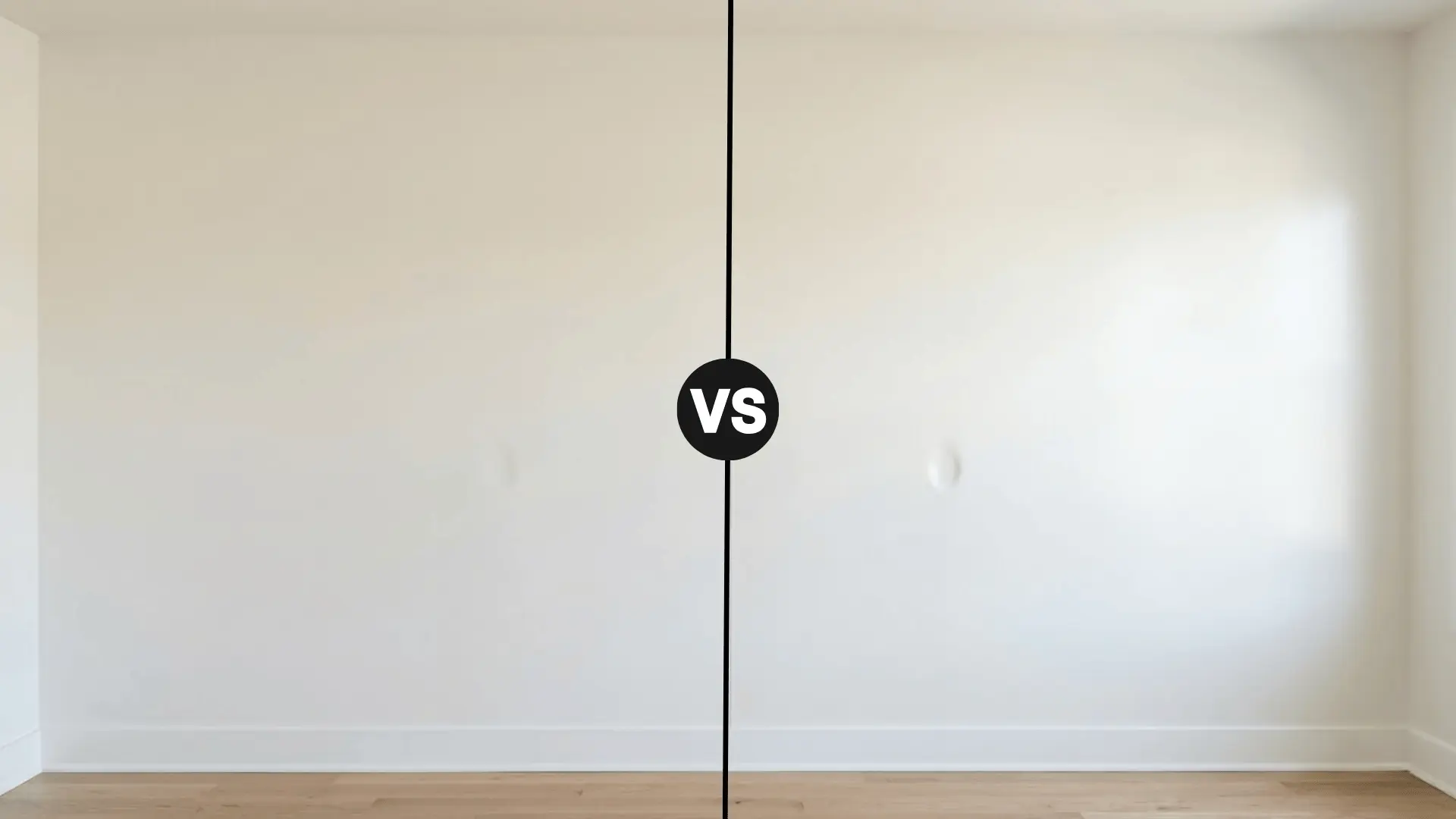
Choosing between the two really comes down to what your space needs most, whether that’s a forgiving, softer look or a tough, easy-clean surface.
Here’s how they actually stack up.
1. Level of Shine
Satin carries a soft, low-key sheen that feels warm and understated on walls. Semi-gloss reflects noticeably more light, giving surfaces a polished, almost lacquered appearance.
If you’re painting a large wall and want it to feel inviting rather than stark, satin’s gentler glow sits more naturally across a room without pulling too much attention.
2. Durability
When it comes to standing up to daily wear, semi-gloss has the clear edge. Its harder finish resists scuffs, chips, and general roughhousing better than satin over time.
Satin is still a reliable choice for most living spaces, but in areas that see heavy use or frequent contact, semi-gloss will hold its appearance longer without looking worn or tired.
3. Ease of Cleaning
Semi-gloss wins here without much debate. Its slick, denser surface lets you wipe away grease, fingerprints, and stains effortlessly. Satin is cleanable too, but it needs a gentler touch to avoid dulling the finish over time.
For households with kids or pets, that difference in washability is a practical detail that’s genuinely worth factoring into your decision.
4. Appearance on Walls
Satin creates a softer, more breathable look on larger wall surfaces, making rooms feel cozy and well-balanced. Semi-gloss, while stunning on trim and accents, can feel visually heavy on full walls because of how intensely it reflects light.
The finish you choose shapes a room’s entire mood, often more than the color itself does.
5. Ability to Hide Imperfections
Satin is the more forgiving of the two by a fair margin. Its diffused sheen naturally minimizes the appearance of dents, patches, and uneven texture in a way semi-gloss simply cannot.
If your walls aren’t in perfect condition, reaching for satin is the smarter, more flattering call before you even think about color.
Satin vs. Semi-Gloss: At a Glance
| Feature | Satin | Semi-Gloss |
|---|---|---|
| Shine Level | Soft, velvety sheen | High-reflective, almost lacquered |
| Durability | Holds up in moderate traffic | Built for heavy daily wear |
| Cleaning | Wipe with care to avoid dulling | Scrub-friendly, resists stains easily |
| Best Surfaces | Walls, ceilings, and living areas | Trim, doors, cabinets, wet rooms |
| Imperfection Visibility | Diffuses light, softens flaws | Amplifies every dent and patch |
Best Places to Use Satin Paint
Satin works beautifully in spaces where you want a refined, livable finish that’s easy on the eyes without demanding too much maintenance.
- Living rooms get a soft, understated look that feels warm without any glare.
- Bedrooms stay calm and cozy with just enough sheen to feel polished.
- Hallways hold up well under moderate foot traffic without showing wear too quickly.
- Dining rooms land in that sweet spot of refined without feeling overly formal.
If a space is meant to feel welcoming and relaxed, satin is almost always the right call.
Best Places to Use Semi-Gloss Paint
Semi-gloss earns its place in the rooms that work the hardest, where durability and easy cleanup matter more than a soft, understated finish.
- Kitchen cabinets stay fresh longer since grease and grime wipe right off.
- Bathroom walls stand up to daily moisture and humidity without peeling or dulling.
- Doors and trim pop with a crisp, defined finish that makes architectural detail stand out.
- Baseboards and moldings stay looking clean with barely any effort between touch-ups.
Anywhere your walls or surfaces face water, heat, or constant contact, semi-gloss is the finish built for it.
Semi Gloss vs. Satin: Which is Better for Walls?
For most walls in living spaces, satin is the more flattering choice. It’s forgiving, softer to look at, and suits large surfaces without overwhelming a room.
Semi-gloss, however, pulls ahead in kitchens, bathrooms, and anywhere moisture or heavy contact is part of daily life.
It also does wonders on trim and woodwork, where that extra sheen actually adds to the look rather than taking away from it.
The wall itself, and what it has to endure, should really make the decision for you.
Satin vs. Flat Paint: What’s the Difference?
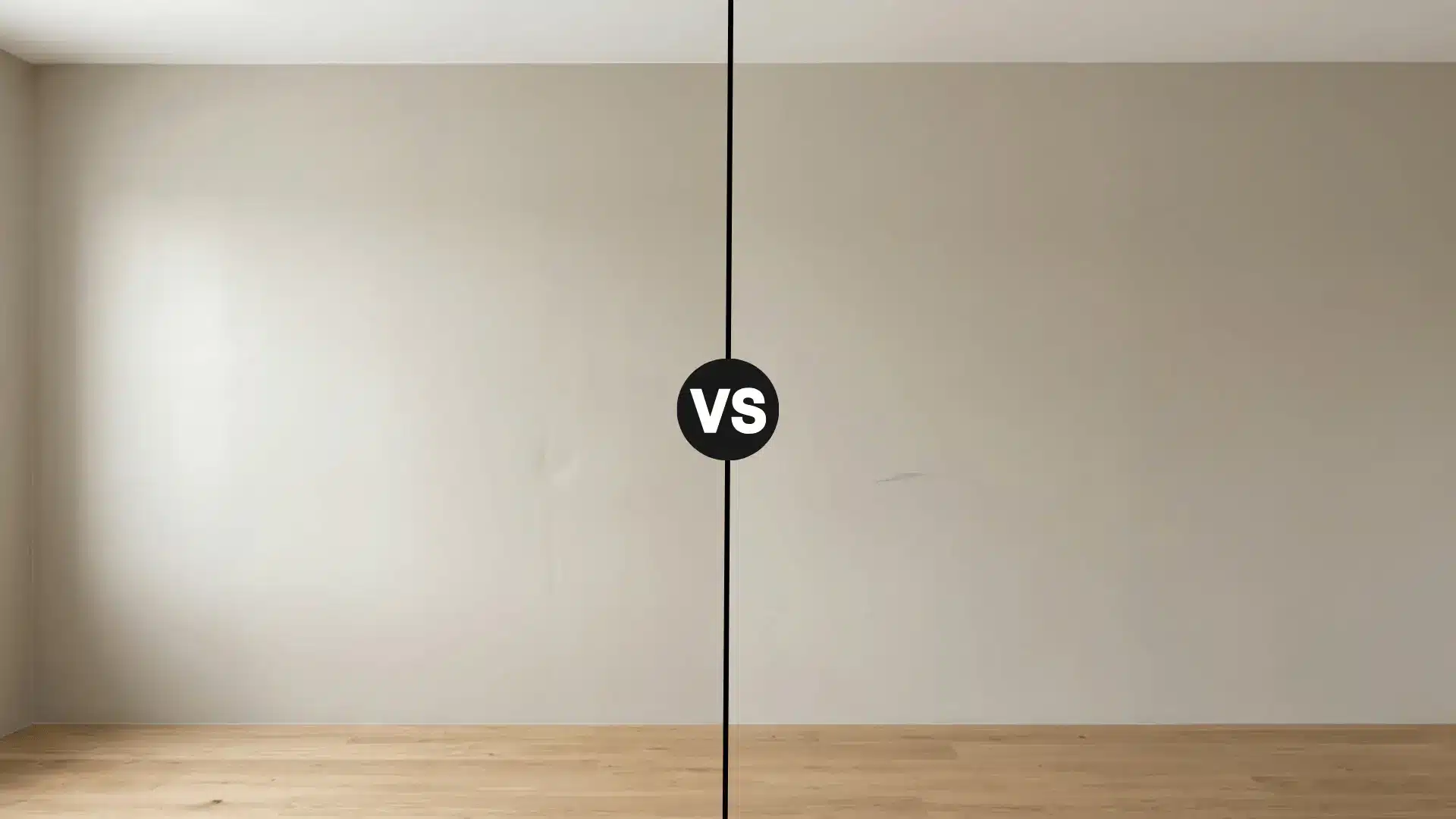
If satin feels like a middle ground, flat paint sits at the opposite end of the sheen spectrum entirely.
Here’s how the two compare where it counts.
| Feature | Satin | Flat |
|---|---|---|
| Finish | Soft, velvety sheen | Completely matte, zero reflection |
| Durability | Holds up to cleaning and wear | Scuffs and marks more easily |
| Washability | Wipe-friendly with gentle care | Not ideal for frequent cleaning |
| Imperfection Coverage | Softens flaws noticeably | Conceals flaws best of all finishes |
| Best Used On | Walls, moderate traffic areas | Ceilings, low-traffic rooms |
How to Choose Between Satin and Semi-Gloss Paint?
Before you commit to a finish, it helps to think through a few things about the space you’re painting rather than going purely by preference.
- Room Function: High-traffic, high-contact spaces call for the durability that semi-gloss delivers.
- Lighting Conditions: If the room already gets a lot of natural light, a glossier finish can feel overwhelming on large walls.
- Surface Condition: Rough, patchy, or imperfect walls will look far more forgiving under satin.
- Maintenance Needs: If easy, frequent cleaning is a priority, semi-gloss is the more practical pick.
Getting these four things straight before you buy will save you from repainting sooner than you’d like.
The Bottom Line
At the end of the day, the satin vs semi gloss decision is less about which finish is better and more about which one your space actually needs.
Satin brings warmth and softness to everyday living spaces, while semi-gloss shows up where durability and easy maintenance matter most.
Use them thoughtfully, sometimes even together, and your paint job will do a lot more than just cover walls.
Got a room you’re currently debating a finish for? Drop it in the comments and let’s figure it out together.