Choosing mulch sounds simple until the options start to blur together.
Rubber mulch vs wood mulch is one of those decisions where looks, cost, comfort, and long-term care all collide.
One option promises staying power and fewer replacements, while the other works with the soil and changes over time.
The right choice depends on how the space is used, how much upkeep feels reasonable, and how the area handles sun, rain, and foot traffic.
In this blog, we will break down rubber mulch vs wood mulch by cost, lifespan, maintenance, installation basics, and best uses so the decision feels clear, not confusing.
What Is Rubber Mulch?
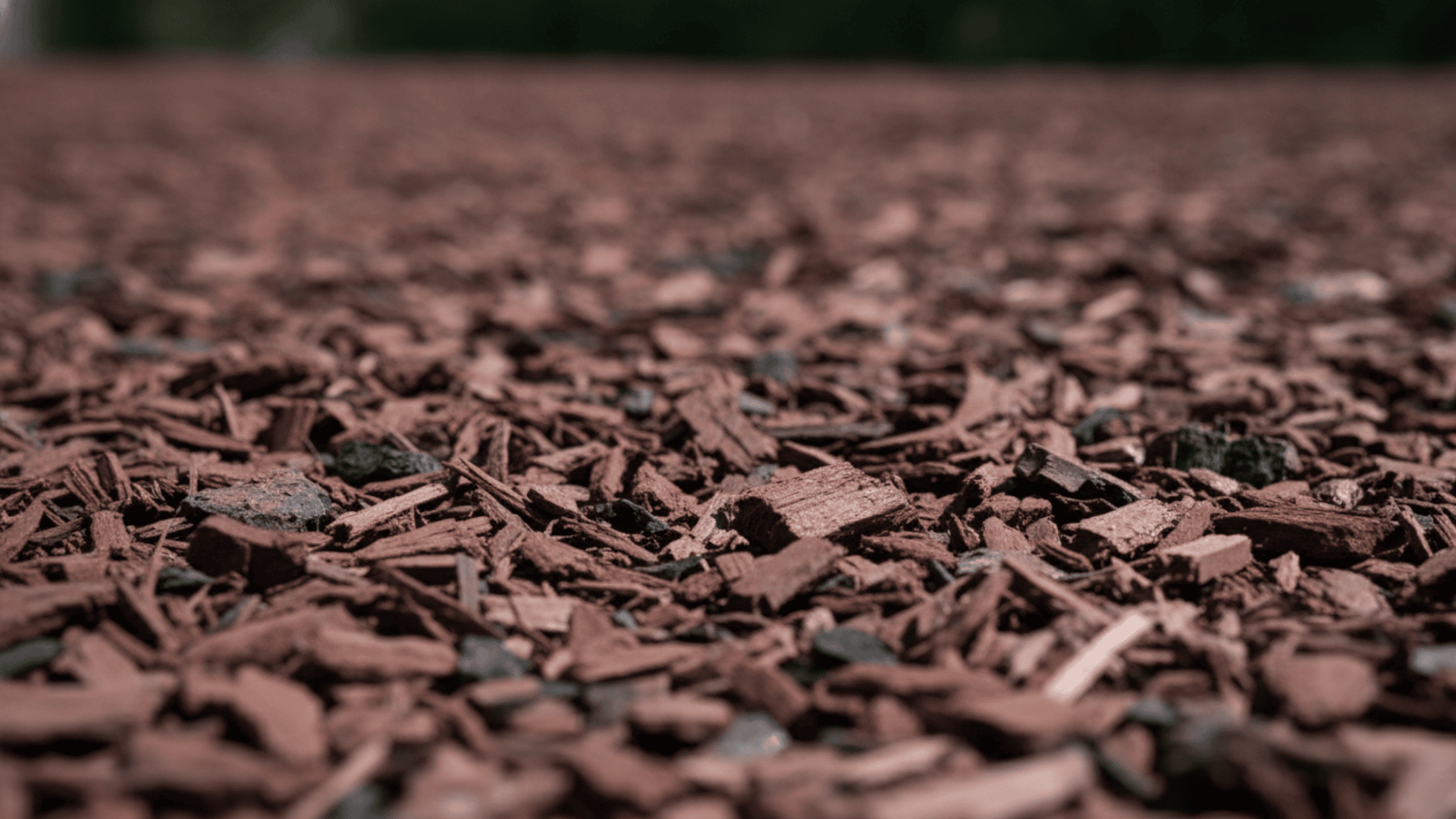
Rubber mulch is a ground cover made mainly from recycled vehicle tires that are cleaned, shredded, and processed into small, uniform pieces.
During manufacturing, the rubber is stripped of steel and fiber, washed to remove surface residues, and then cut into mulch-sized granules, often finished with a color coating to improve appearance and reduce dust.
Rubber mulch is known for durability, low breakdown over time, and consistent texture rather than soil improvement.
Common applications
- Playgrounds: Used for impact absorption under play equipment
- Landscaping: Chosen for decorative beds where low replacement is preferred
- Pathways: Helps create stable walking surfaces that do not decompose
Rubber mulch is available in several forms, such as nuggets, chips, or fine shreds, with sizes designed for specific uses, such as play areas or landscaping beds.
Color options commonly include black, brown, red, green, and gray, allowing it to blend with outdoor spaces while keeping a uniform look longer than natural mulch.
Pros and Cons of Rubber Mulch:
In a rubber mulch vs wood mulch comparison, rubber mulch is often chosen for its durability and low upkeep. Still, it is not a one-size option, so seeing both sides together helps make a clearer decision.
| Advantages of Rubber Mulch | Disadvantages of Rubber Mulch |
|---|---|
| Long lifespan and strong durability that holds up for years | Higher upfront cost compared to wood mulch |
| Does not decompose or rot over time | Can retain heat in direct sunlight |
| Lower long-term maintenance once installed | Does not improve soil health or add nutrients |
| Helps control weeds when laid at the proper depth | Environmental concerns linked to the rubber material |
| Commonly used in playgrounds for impact absorption | Difficult to remove once it settles into the ground |
What Is Wood Mulch?
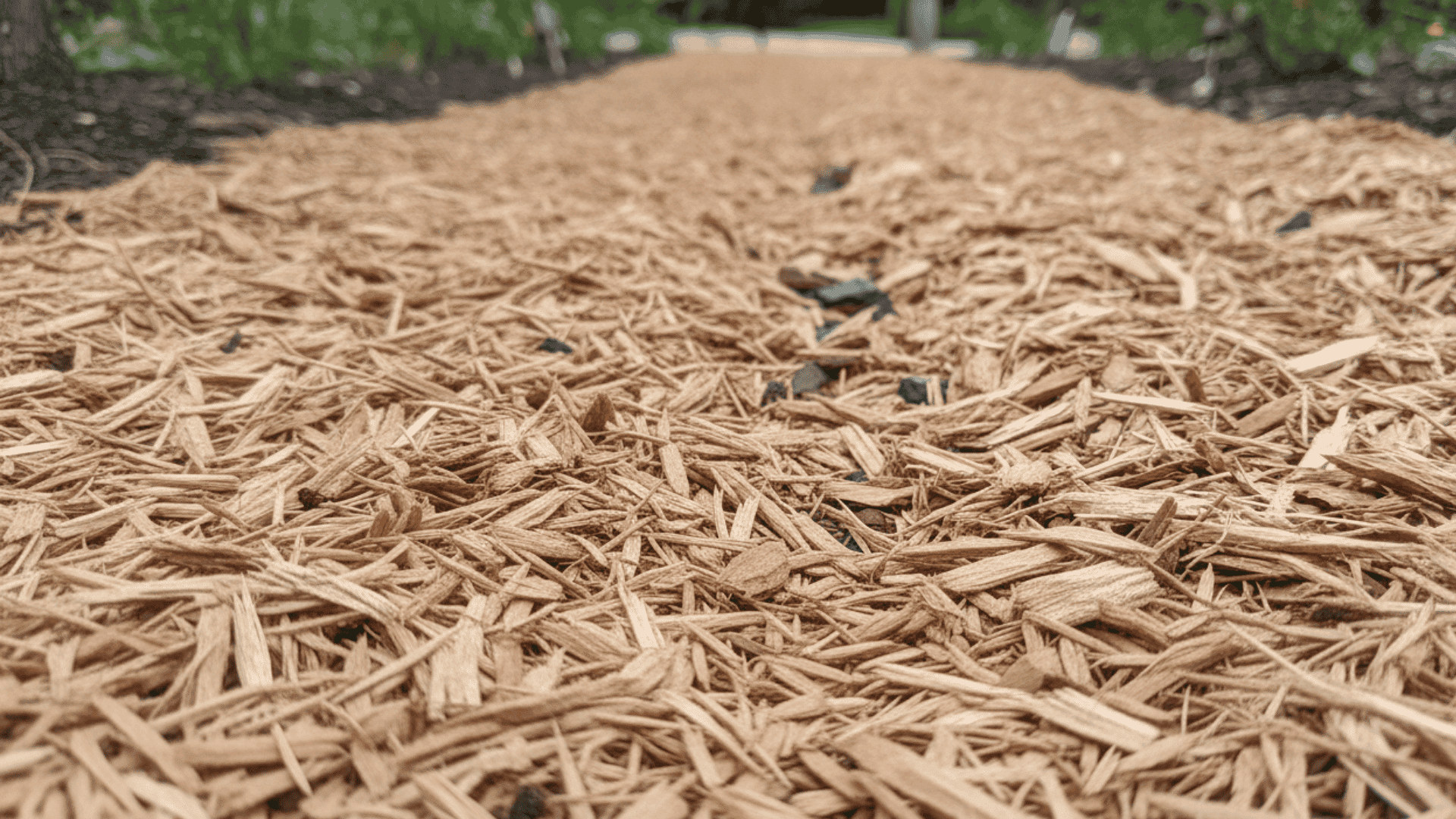
Wood mulch is an organic ground cover made from shredded or chipped tree materials, such as bark, branches, and sawmill byproducts.
It is commonly produced from hardwood, pine, or cedar and is widely used because it breaks down over time, helping soil retain moisture and improve structure.
Wood mulch is often chosen for garden beds due to its natural composition and soil-friendly benefits.
Typical uses
- Landscaping beds: Helps retain moisture and limit weed growth
- Gardens: Supports plant health as it breaks down
- Around trees and shrubs: Protects roots and improves soil condition
Wood mulch comes in several types, including bark, hardwood, pine, and cedar, each with slightly different textures and breakdown rates.
Natural wood mulch keeps its raw wood color and feeds the soil as it decomposes, while dyed wood mulch is treated with color to maintain a consistent look for longer periods.
Pros and Cons of Wood Mulch:
In a rubber mulch vs wood mulch comparison, wood mulch is often preferred for planting areas because it supports soil health. However, it also requires more attention over time, which makes understanding both sides important.
| Advantages of Wood Mulch | Disadvantages of Wood Mulch |
|---|---|
| Improves soil quality as it breaks down and adds organic matter | Requires regular replacement as it decomposes |
| Lower initial cost compared to rubber mulch | Can wash away during heavy rain if not contained |
| Helps regulate soil temperature and moisture | May attract insects if moisture is not managed |
| Widely available and simple to install | Needs consistent upkeep to stay effective |
| Blends easily into garden and landscape settings | Appearance can fade as it ages |
Rubber Mulch vs Wood Mulch: Key Differences
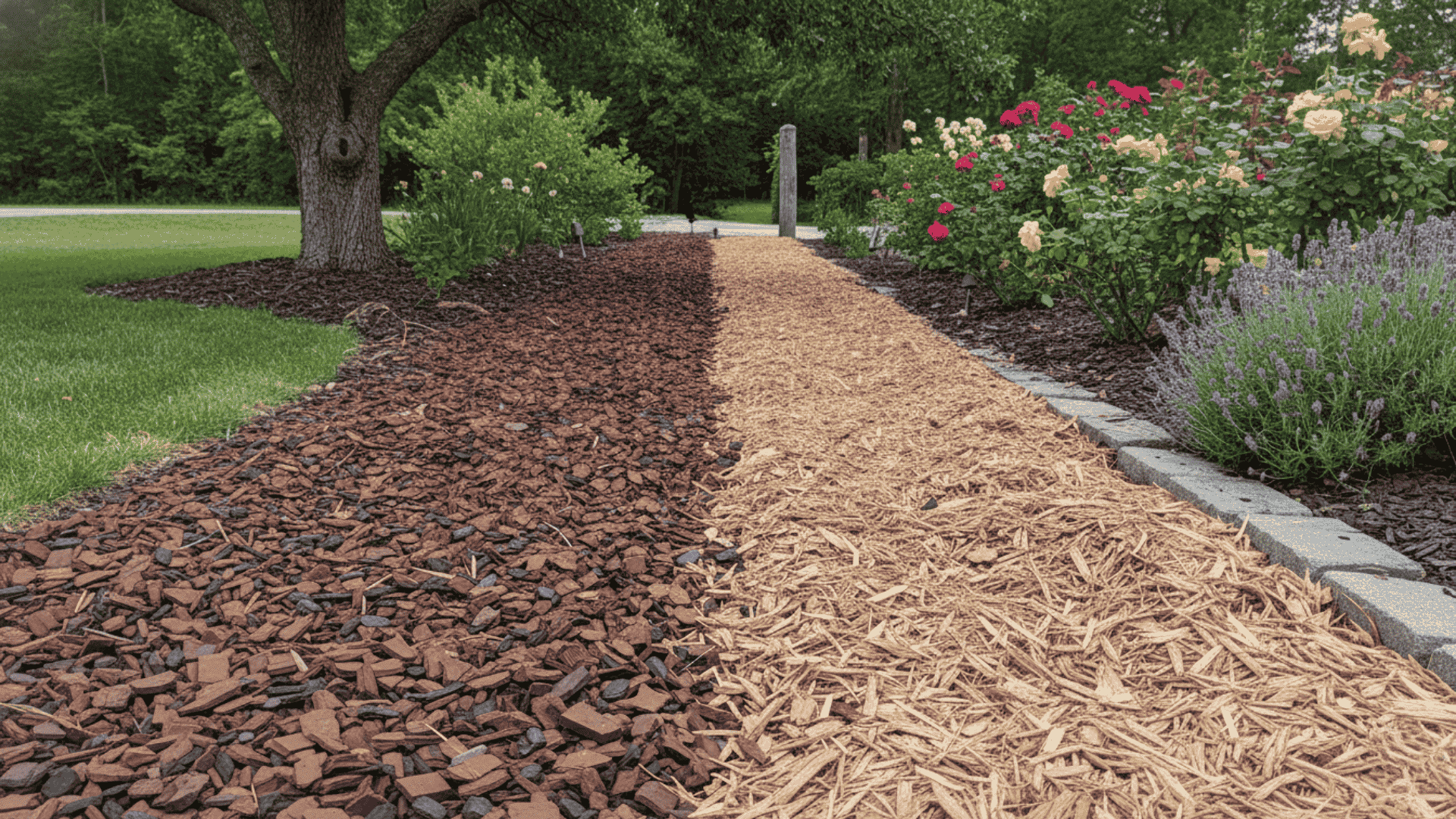
When it comes to choosing between rubber mulch vs wood mulch, each option offers unique benefits and drawbacks. Understanding the key differences will help you make the best choice for your space.
1. Material Composition
Rubber mulch vs wood mulch starts with what each one is made of. The base material affects everything from soil impact to how long it lasts.
- Rubber mulch: Made from recycled rubber, often processed from tires into uniform pieces. It stays stable and does not break down into soil.
- Wood mulch: Made from shredded or chipped tree material such as bark, hardwood, pine, or cedar. It is organic and breaks down over time.
2. Lifespan
Longevity is one of the biggest deciding points in rubber mulch vs wood mulch. Some people want a long-lasting option, others prefer a natural one that refreshes soil.
- Rubber mulch: Usually lasts for years without decomposing, so it does not need frequent replacement. It may shift or scatter, but it does not rot.
- Wood mulch: Breaks down naturally and often needs topping up to keep the same coverage. Lifespan depends on climate, mulch type, and bed conditions.
3. Maintenance Requirements
Maintenance is where rubber mulch vs wood mulch can feel very different in day-to-day yard care. One leans toward less replacement, the other needs ongoing refresh.
- Rubber mulch: Requires occasional raking and leveling, plus leaf and debris cleanup. It generally does not need to be topped up as often as wood mulch.
- Wood mulch: Needs periodic topping up as it decomposes and thins out. It may also need fluffing or re-spreading after storms or heavy foot traffic.
4. Upfront Cost vs Long Term Cost
Cost is not just the price tag today; rubber mulch vs. wood mulch should be compared over time. What seems cheaper upfront can add up later.
- Rubber mulch: Higher upfront cost, especially for larger areas. Long-term costs may be lower because it does not break down quickly.
- Wood mulch: Lower upfront cost and often easier to source locally. Long-term costs can rise due to regular replacement and seasonal topping up.
5. Weed Suppression
Weed control matters for both curb appeal and time, so it is a key point in rubber mulch vs wood mulch. Depth and coverage are what make or break results.
- Rubber mulch: Can block weeds well when applied at the right depth and contained with edging. Gaps or thin spots allow weeds through.
- Wood mulch: Also suppresses weeds effectively when applied thick enough and refreshed as it breaks down. It can reduce weed seed sprouting by blocking light.
6. Soil Impact
This is where rubber mulch vs wood mulch differs in a big way, especially for garden beds. One is neutral, the other actively changes the soil over time.
- Rubber mulch: Does not add organic matter or nutrients to soil. It is mainly a surface layer and does not improve soil structure.
- Wood mulch: Breaks down and adds organic matter, which can improve soil texture and moisture retention. It supports soil life over time.
7. Environmental Considerations
Environmental impact is an important factor in the debate over rubber mulch vs. wood mulch. The key consideration is the trade-off between rubber mulch’s recyclability and wood mulch’s biodegradability.
- Rubber mulch: Often made from recycled rubber, which keeps waste out of landfills, but it does not biodegrade. Some people avoid it due to long-term environmental concerns.
- Wood mulch: Biodegradable and can come from natural wood byproducts, depending on sourcing. It returns to the soil but requires ongoing replacement.
8. Appearance Over Time
Looks matter in rubber mulch vs wood mulch, especially in front yards and visible beds. Both can look great at first, but they age differently.
- Rubber mulch: Often keeps a consistent shape and coverage, though color may fade over time. It tends to look uniform longer without decomposing.
- Wood mulch: Looks fresh at first, but fades and thins as it breaks down. It may need topping up to keep the same color and fullness.
Cost Comparison: Rubber Mulch vs Wood Mulch
When comparing rubber mulch vs wood mulch, cost plays a major role in the decision-making process. Let’s break down the upfront costs, maintenance, and long-term value of each option.
| Cost Area | Rubber Mulch | Wood Mulch |
|---|---|---|
| Upfront cost | Higher cost per square foot at purchase | Lower cost and easier on the budget |
| Installation | May cost more due to containment needs | Often low cost and simple to install |
| Ongoing costs | Minimal replacement over time | Needs regular topping up |
| Long-term value | Can cost less over many years | Can add up due to repeat buying |
How to Properly Install Rubber and Wood Mulch
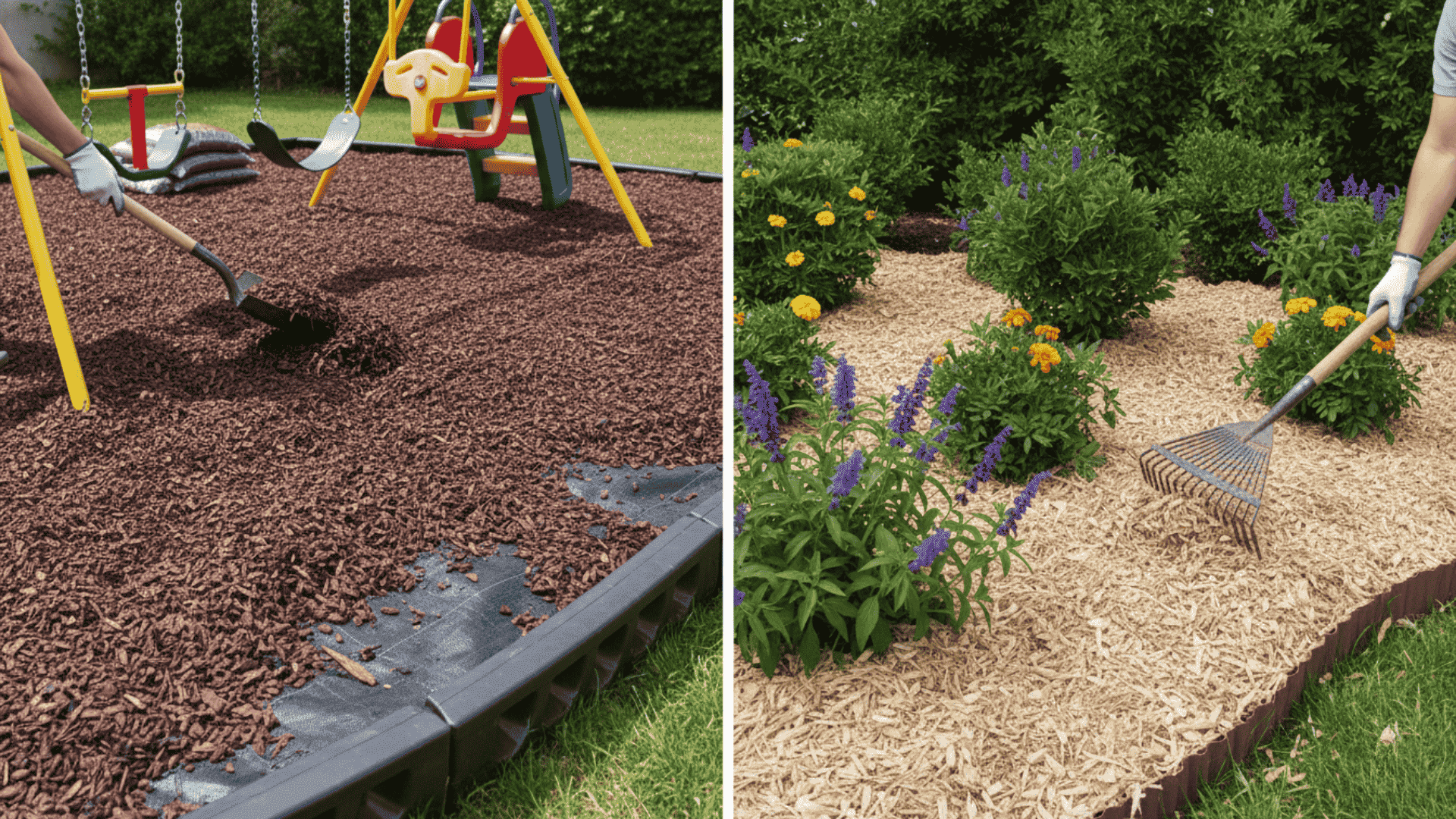
Proper installation affects performance, safety, and lifespan, which is why setup matters in any rubber mulch vs wood mulch comparison. Depth, base preparation, and placement mistakes can change how well each mulch works over time.
Rubber mulch installation basics
- Recommended depth for rubber mulch: Usually applied at about 2 to 3 inches for landscaping areas and deeper for play zones to support impact cushioning.
- Base preparation: Requires a firm, level base, often with landscape fabric and edging to keep pieces contained.
- Common installation mistakes: Spreading it too thin, skipping edging, or placing it directly on uneven soil can lead to movement and poor coverage.
Wood mulch installation basics
- Recommended depth for wood mulch: Commonly applied at 2 to 4 inches to help with moisture control and weed suppression.
- Base preparation: Soil should be cleared of weeds and lightly loosened before application, with optional fabric, if preferred.
- Common installation mistakes: Applying too thick, piling mulch against plant stems or tree trunks, or failing to refresh it as it breaks down.
Rubber vs Wood Mulch: Which Is Best?
Choosing Between Rubber Mulch vs Wood Mulch Comes Down to Budget, Purpose, and Local Conditions.
This Tends to Favor Rubber Mulch for Play Areas, High-Traffic Zones, and Spaces Where Long Lifespan and Low Replacement Matter, Even with a Higher Upfront Cost.
Wood Mulch Fits Better in Garden Beds, Around Plants, and in Areas Where Improving Soil Quality Is Important, and Lower Initial Cost Is Preferred.
In Hot, Sunny Locations, Wood Mulch May Feel More Comfortable Underfoot, While Rubber Mulch Performs Better in Shaded or Contained Spaces.
Matching the Mulch Type to the Space Use Helps Avoid Extra Cost and Maintenance Later.
Final Thoughts
Choosing between rubber mulch vs wood mulch comes down to how the space is used and how much upkeep fits your routine.
Rubber mulch vs. wood mulch works best when rubber is reserved for play areas and high-traffic zones, while wood supports gardens and soil health.
Budget, climate, and comfort should guide the final call. There is no single right answer, only the right fit for the space. Review your needs, measure the area, and weigh long-term care before buying.
If you are planning a project soon, use this comparison to make your decision with confidence and avoid changes later.