
When I first brought home a rubber fig, I had no idea it would become one of the easiest plants I’ve ever grown. It sat in my living room corner, barely asking for anything, yet it thrived.
That’s the beauty of these plants. They’re forgiving, adaptable, and surprisingly low-maintenance once you understand what they need.
Rubber fig care really comes down to a few simple habits that keep your plant happy and growing strong.
You don’t need a green thumb or fancy equipment. Just a bit of attention to light, water, and the occasional pruning.
In this guide, you’ll learn exactly how to care for your rubber fig so it stays healthy, vibrant, and full of life for years to come.
Why Rubber Figs Make Perfect Houseplants
Rubber figs are tough. That’s the first thing you notice when you’ve had one for a while. They handle low light better than most plants, bounce back from missed waterings, and don’t throw a fit when conditions aren’t perfect. I’ve seen them thrive in dim apartments and bright sunrooms alike.
What sets them apart is their adaptability. You can place them in a corner with indirect light, and they’ll grow steadily without complaint. They don’t need constant misting or humidity trays like ferns do. Their thick, waxy leaves are built to retain moisture, which means they’re forgiving if you forget to water for a week or two.
They’ve become popular for good reason. Rubber figs grow tall and make a statement without taking up much floor space. Their glossy leaves add a clean, modern look to any room. Plus, they’re not fussy about temperature fluctuations like tropical plants can be.
You get a plant that looks impressive but doesn’t demand much from you. That’s why rubber figs work so well for busy people or anyone just starting with houseplants. They give you confidence without the stress.
Understanding Your Rubber Fig’s Needs
Before you start watering and fertilizing, it helps to understand what your rubber fig actually wants. Knowing its basic preferences makes everything else fall into place naturally.
Light Requirements for Healthy Growth
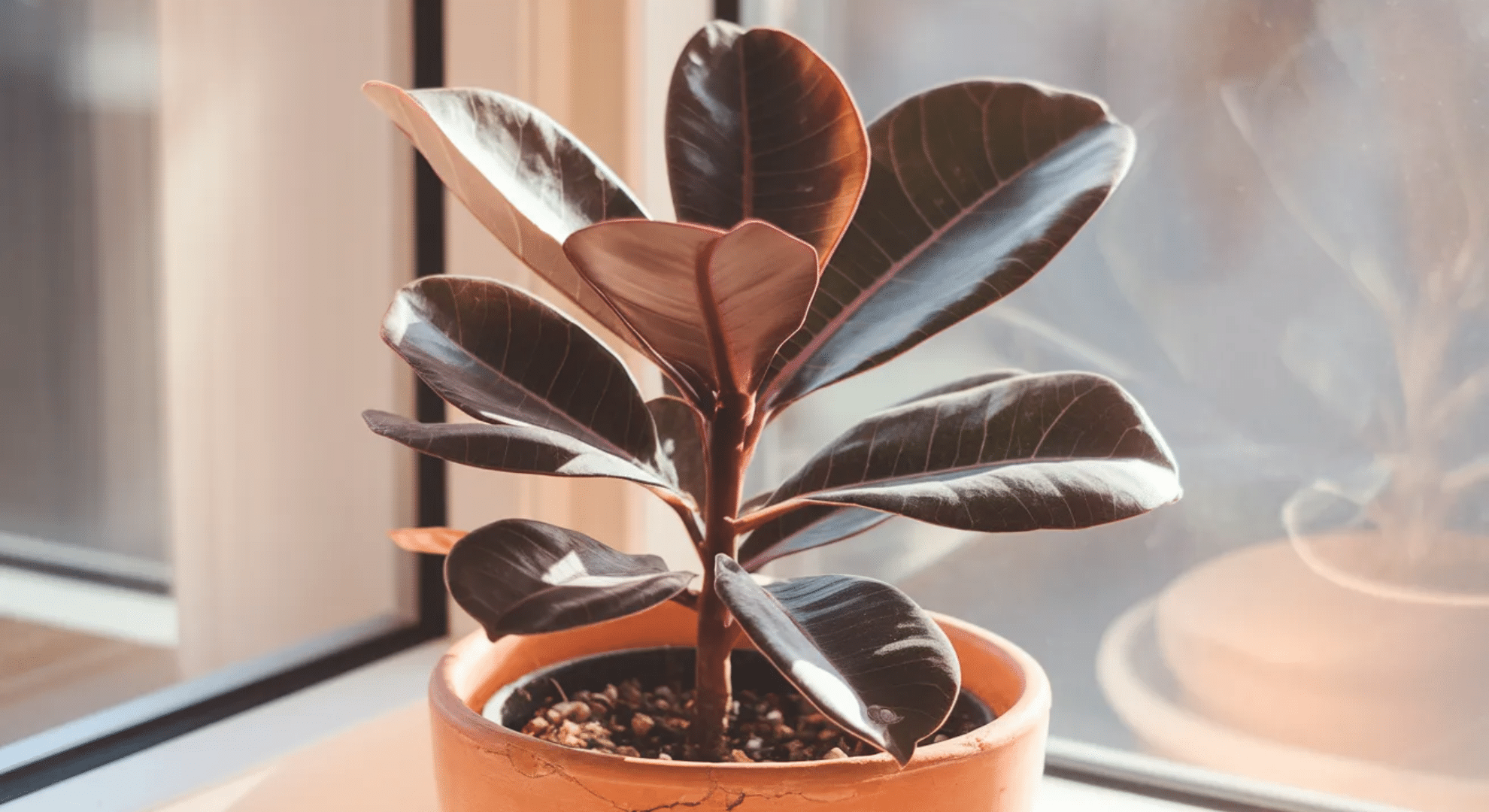
Rubber figs love bright, indirect light. That’s their sweet spot. I’ve found that east-facing windows work best because they get gentle morning sun without the harsh afternoon rays that can scorch leaves. You’ll see steady growth and vibrant, glossy foliage when the light is right.
In my experience, you can tell when light is an issue. If your plant starts dropping lower leaves or the new growth comes in smaller and paler, it’s probably not getting enough. The stems might also stretch toward the light source, which looks leggy and awkward.
They can adapt to lower light situations, but growth slows down noticeably. I’ve kept one in a north-facing room for months, and while it survived just fine, it barely put out new leaves. If low light is all you have, your rubber fig will manage. Just don’t expect rapid growth or that lush, full appearance.
Temperature and Humidity Preferences

Your rubber fig does best between 60 and 80 degrees Fahrenheit. That’s the range where it grows consistently without stress. As I see it, most homes naturally fall into this range, which is why these plants adapt so easily to indoor life.
Humidity isn’t a dealbreaker here. Average household humidity works fine.
You don’t need to run a humidifier or mist the leaves constantly like you would with a calathea. I’ve never bothered with extra humidity for mine, and they’ve always done well.
If you live somewhere really dry, like a desert climate or a place with harsh winters and forced heat, you might notice the leaf edges browning slightly.
A quick wipe-down of the leaves every couple weeks helps. It clears dust and gives the plant a bit of moisture without going overboard.
Keep your plant away from drafty windows, heating vents, and air conditioners. Sudden temperature swings stress it out.
Choosing the Right Soil and Pot
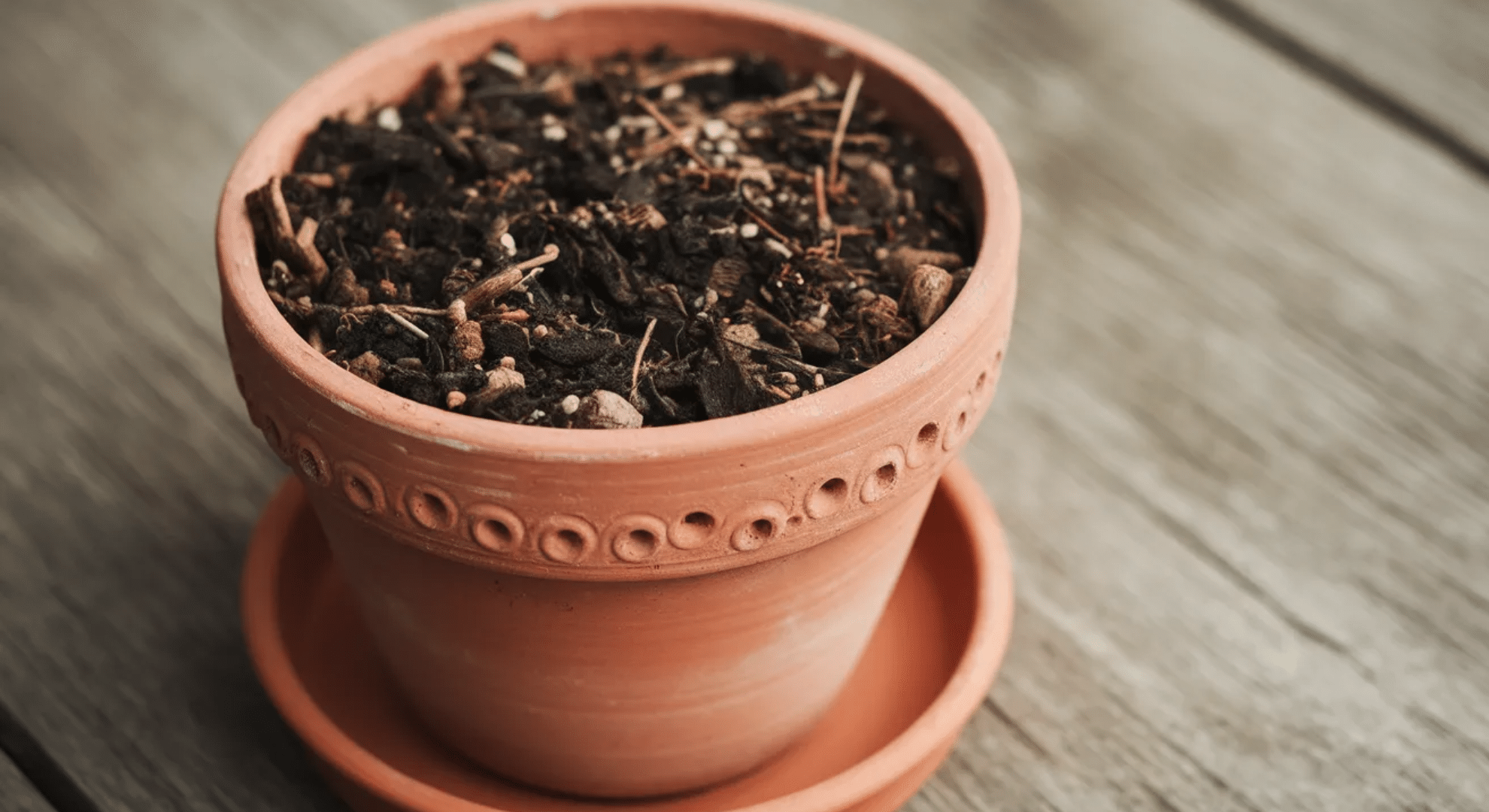
Well-draining soil is non-negotiable. Rubber figs hate sitting in water. I use a standard potting mix and add perlite or orchid bark to lighten it up. That combo drains quickly while still holding enough moisture for the roots.
Drainage holes are essential. Without them, water pools at the bottom and causes root rot. I’ve learned this the hard way. No matter how careful you are with watering, a pot without drainage will eventually cause problems.
For soil composition, aim for something airy.
A mix of potting soil, perlite, and a bit of peat moss or coco coir works great. The goal is to let water flow through easily while giving roots room to breathe.
Pot sizing matters too. Choose a pot that’s about two inches larger than the current root ball when repotting. Going too big means excess soil holds moisture longer than the roots can use it, which leads to soggy conditions. Start small and size up as your plant grows.
Rubber Fig Care: Watering and Feeding
Getting watering and feeding right makes all the difference. These two things form the foundation of healthy growth and keep your rubber fig thriving year-round.
How to Water Your Rubber Fig Properly
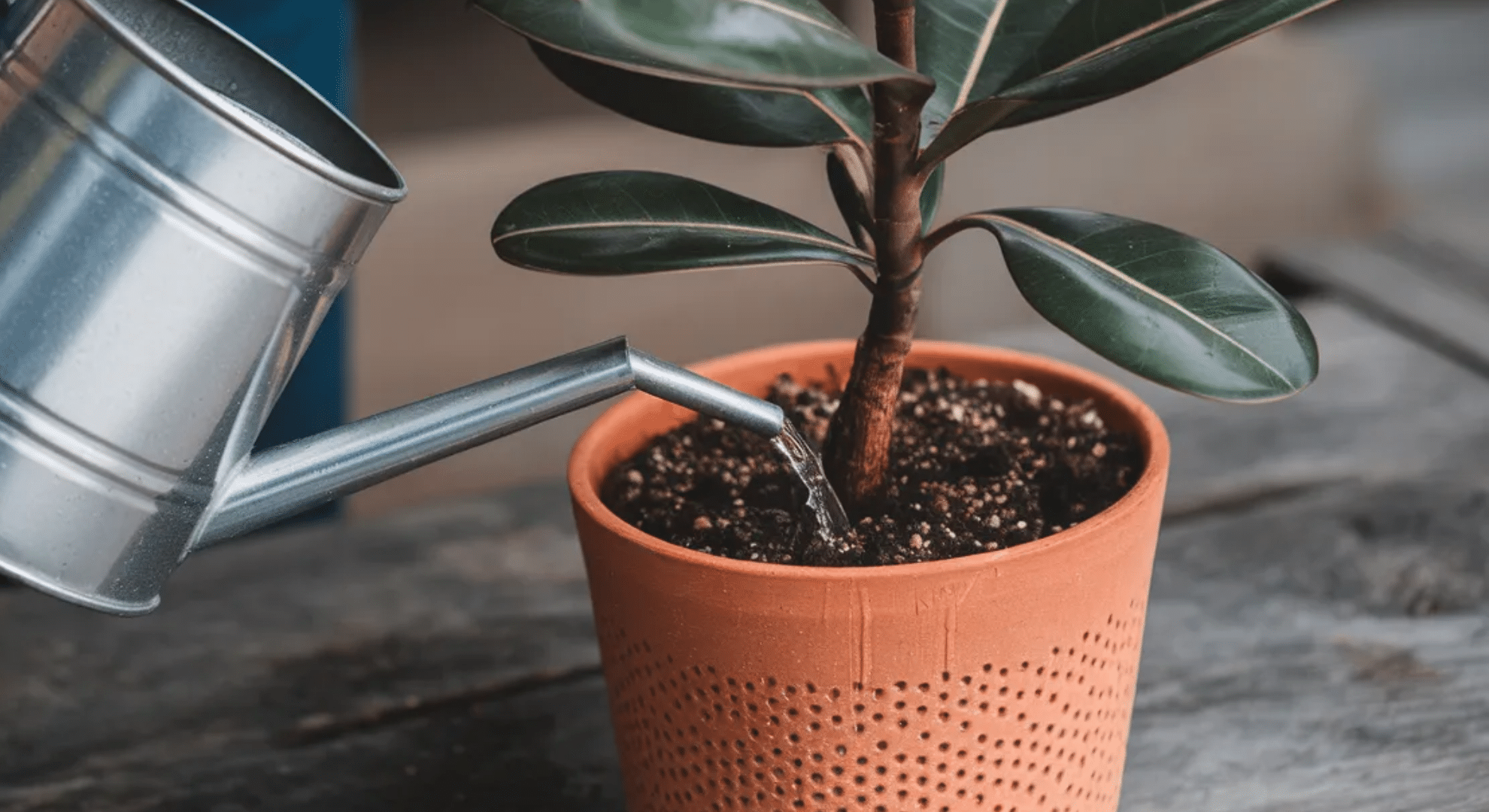
Let the soil dry out between waterings. That’s the golden rule. I stick my finger about two inches into the soil, and if it feels dry, I water. If it’s still moist, I wait a few more days. This simple check has saved me from so many watering mistakes.
When you learn how to take care of a rubber plant, you’ll notice watering needs change with the seasons. In spring and summer, when growth is active, you’ll water more often, maybe once a week. In fall and winter, growth slows down, and the soil stays moist longer. I’ve gone two weeks between waterings in winter without any issues.
Water quality matters too. Tap water works fine in most cases, but if yours is heavily chlorinated or has high fluoride, let it sit out overnight before using it. I’ve seen leaf tips brown from harsh water over time.
When you do water, water thoroughly. Let it run through until it drains from the bottom, then empty the saucer. Never let your plant sit in standing water.
Signs of Overwatering vs. Underwatering
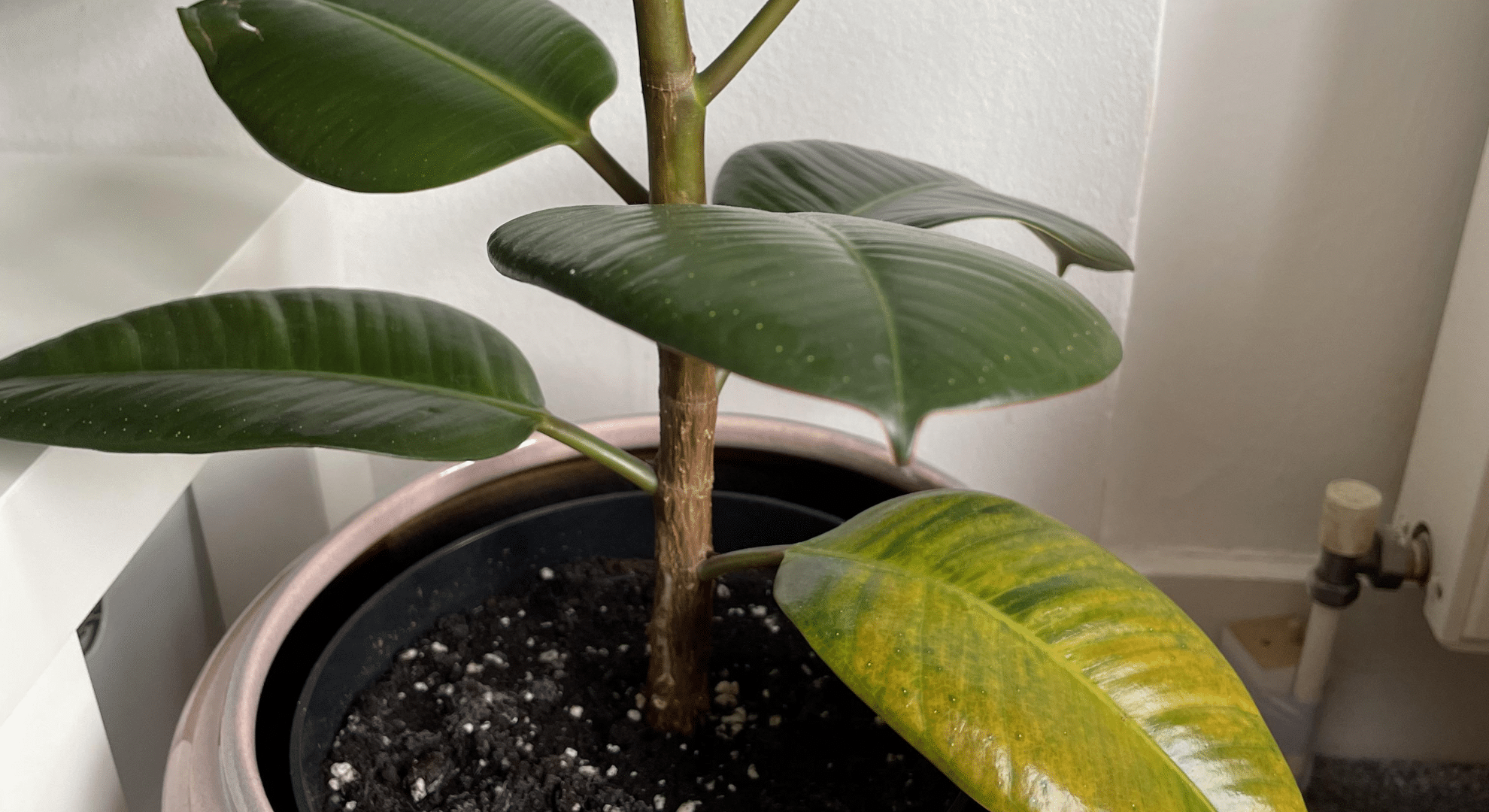
Overwatering and underwatering look different once you know what to watch for. Overwatered rubber figs develop yellow leaves that feel soft and mushy. The yellowing usually starts on lower leaves and works its way up. In my experience, the soil stays wet for days, and you might even smell a sour, rotting odor from the pot.
Underwatering shows up differently. Leaves droop and curl inward, and they feel dry and crispy to the touch.
The whole plant looks wilted and sad. Leaf drop happens with both conditions, but underwatered leaves fall off while still green or slightly brown at the edges.
Here’s how I diagnose it quickly: check the soil first. If it’s soaking wet and the leaves are yellow, you’ve overwatered. If it’s bone dry and the leaves are droopy and crispy, you’ve underwatered.
Overwatering is harder to fix because root rot can set in. You might need to repot with fresh soil and trim damaged roots. Underwatering is easier—just give it a good drink and it perks up within a day or two.
Fertilizing for Strong, Vibrant Growth
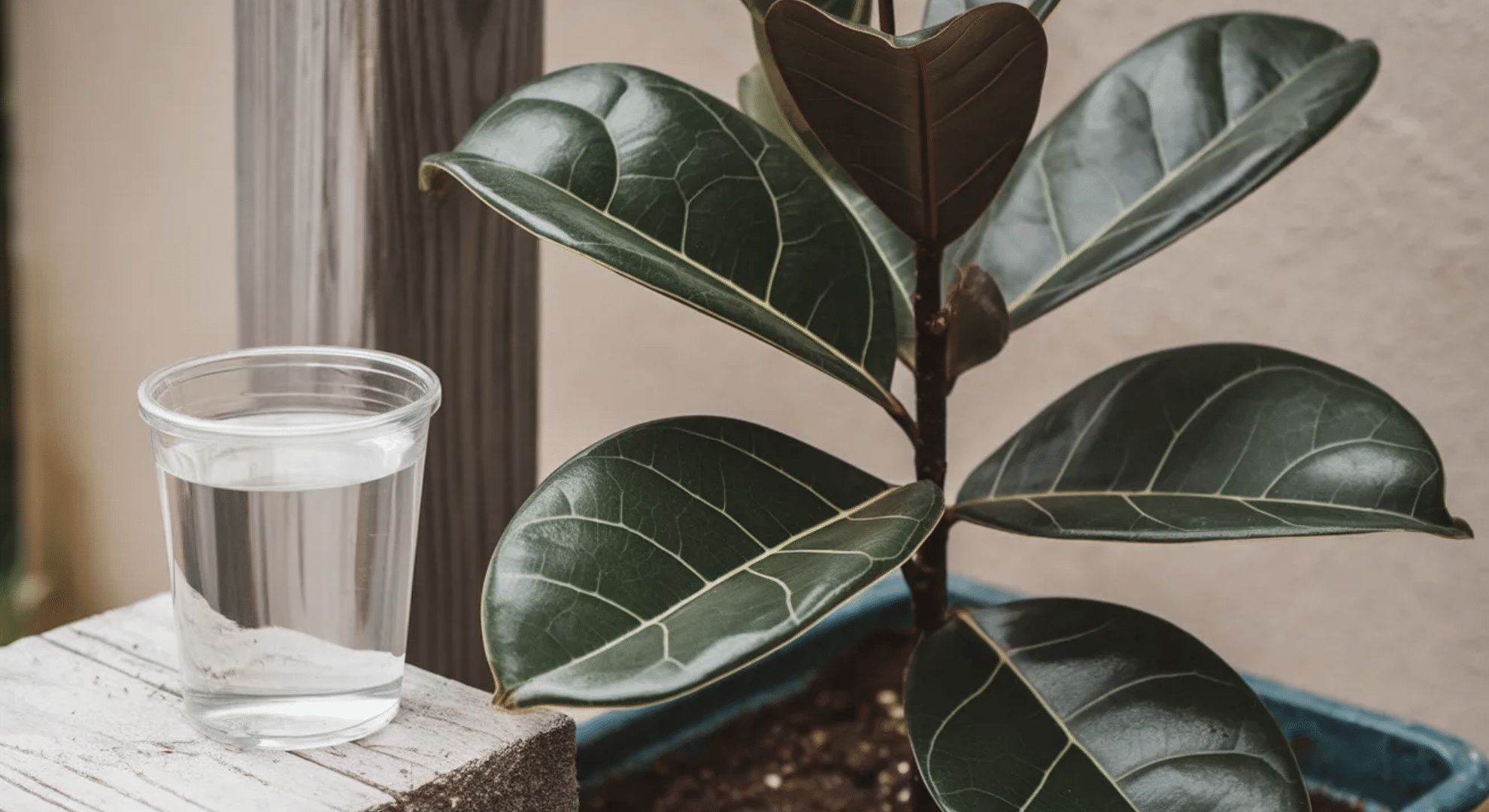
Feed your rubber fig during the growing season, which runs from spring through early fall. That’s when it’s actively pushing out new leaves and needs extra nutrients. I use a balanced liquid fertilizer diluted to half strength once a month. That’s enough to support growth without overwhelming the plant.
Use a standard houseplant fertilizer with equal parts nitrogen, phosphorus, and potassium, something like a 10-10-10 or 20-20-20 formula.
Dilute it to half the recommended strength on the bottle. Full-strength fertilizer can burn the roots, especially if the soil is dry.
Stop fertilizing in fall and winter. Your plant goes into rest mode and doesn’t need extra nutrients during this time. Feeding it anyway can cause salt buildup in the soil, which damages roots over time.
You’ll know your plant needs more nutrients if new leaves come in pale or smaller than usual. Growth might slow down even during peak growing season. If you see these signs, resume your monthly feeding schedule and watch for improvement within a few weeks.
Maintaining Your Rubber Fig’s Appearance
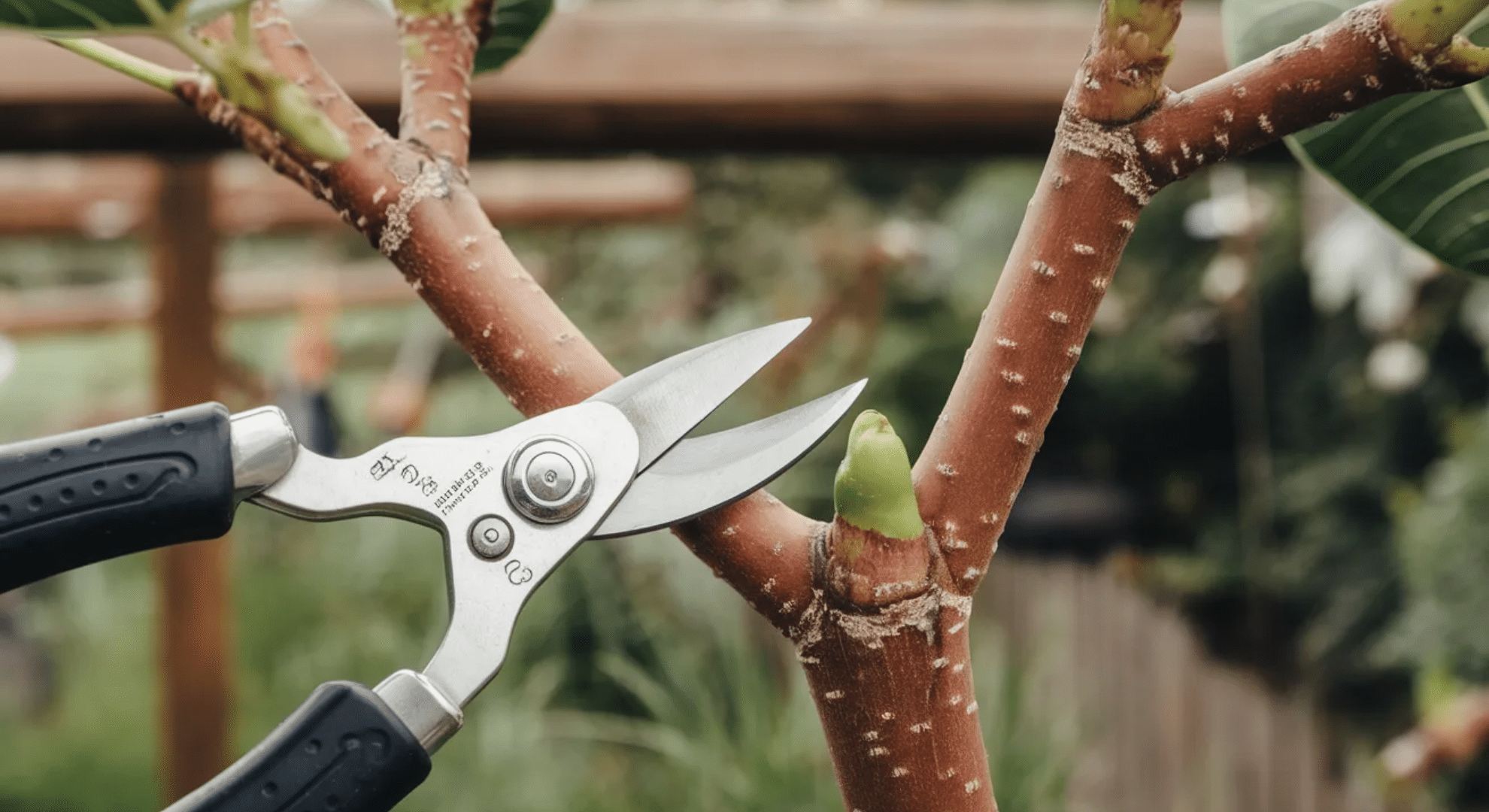
Regular maintenance keeps your rubber fig looking sharp and growing strong. A little attention to pruning and cleaning goes a long way in maintaining that vibrant, healthy appearance.
Prune in spring when your rubber fig is gearing up for active growth. That’s when it recovers fastest and pushes out new growth where you’ve made cuts. I’ve found this timing makes all the difference in how quickly the plant bounces back.
Here’s my step-by-step approach to pruning:
- Start by identifying what to cut. Look for leggy stems, dead or damaged leaves, or branches growing in awkward directions. Remove anything that’s crowding the plant or throwing off its shape.
- Make clean cuts just above a leaf node. That’s the bump on the stem where leaves emerge. Cutting here encourages branching because the plant sends out new growth from that point.
- To encourage bushier growth, cut the main stem back. This forces the plant to branch out from lower nodes instead of just growing tall. I’ve done this with a few rubber figs that were getting too leggy, and they filled out beautifully within months.
- Manage height by topping the plant. If yours is reaching the ceiling, cut the top stem to your desired height. New branches will sprout from below the cut, giving you a fuller, more controlled shape.
- Wear gloves when pruning. Rubber figs release a milky sap that can irritate skin. Wipe your tools with rubbing alcohol between cuts to keep them clean.
Dust blocks light and reduces photosynthesis. Those big, glossy leaves are magnets for dust, and a buildup slows down growth over time. In my experience, cleaning leaves every two to three weeks keeps your plant functioning at its best.
Use a damp, soft cloth to wipe each leaf gently. Plain water works fine. I dampen a microfiber cloth and support each leaf with one hand while wiping with the other. This prevents tearing or bending.
Avoid leaf shine products. They leave a waxy residue that can clog the leaf pores. Your rubber fig’s natural shine comes back on its own once the dust is gone.
For smaller plants, you can give them a gentle shower in the sink or tub. Let the water rinse off the dust, then let the plant drain completely before putting it back in its spot. I do this occasionally when I don’t feel like wiping each leaf individually.
When and How to Repot
Your rubber fig needs repotting when roots start circling the pot or poking through drainage holes. You might also notice water running straight through without being absorbed, which means the roots have taken up most of the soil space. I usually repot every two to three years, or whenever I see these signs.
Spring is the best time to repot. The plant is entering its active growth phase and recovers quickly from the disturbance.
After repotting, your plant might look a bit droopy for a few days. That’s normal. It’s adjusting to the new environment. Keep watering on your regular schedule and avoid fertilizing for about a month to let the roots settle in.
Troubleshooting Common Rubber Fig Problems
Even low-maintenance plants run into issues sometimes. Here are the most common problems I’ve seen with rubber figs and how to fix them quickly.
- Yellow leaves: Usually from overwatering. Check if soil is soggy and cut back on watering frequency. Let the top two inches dry out completely between waterings.
- Brown leaf edges: Often caused by dry air, inconsistent watering, or water quality issues. Wipe leaves regularly and consider using filtered water if your tap water is harsh.
- Leaf drop: Can happen from sudden temperature changes, drafts, or moving the plant to a new spot. Keep your rubber fig away from vents and windows, and avoid relocating it frequently.
- Leggy, sparse growth: Not enough light. Move your plant closer to a window with bright, indirect light. East or west-facing windows work best.
- Sticky leaves or residue: Sign of pests like scale or mealybugs. Wipe leaves with a cloth dipped in soapy water, then rinse. Repeat weekly until pests are gone.
- Slow or no growth: Normal during fall and winter when plants rest. If it happens in spring or summer, check light levels and resume monthly fertilizing.
- Root rot: From sitting in waterlogged soil too long. You’ll need to repot immediately, trim away mushy brown roots, and use fresh, well-draining soil.
Most problems are easy to reverse once you identify the cause. Pay attention to changes in your plant’s appearance and adjust care accordingly.
Conclusion
I’ve kept rubber figs for years, and they’ve never let me down. They’re forgiving, adaptable, and grow beautifully with just a bit of consistent care. That’s what makes them perfect for anyone looking to add greenery without the stress.
Rubber fig care really comes down to understanding a few basics: proper light, mindful watering, and occasional maintenance. Once you’ve got those down, your plant practically takes care of itself.
You now have everything you need to keep your rubber fig thriving. Start by placing it in bright, indirect light and letting the soil dry between waterings. Watch how it responds and adjust as needed.
The glossy leaves and steady growth will show you when things are going right.
Want more plant care tips and guides? Check out other blogs for practical advice on keeping your indoor garden healthy and beautiful!