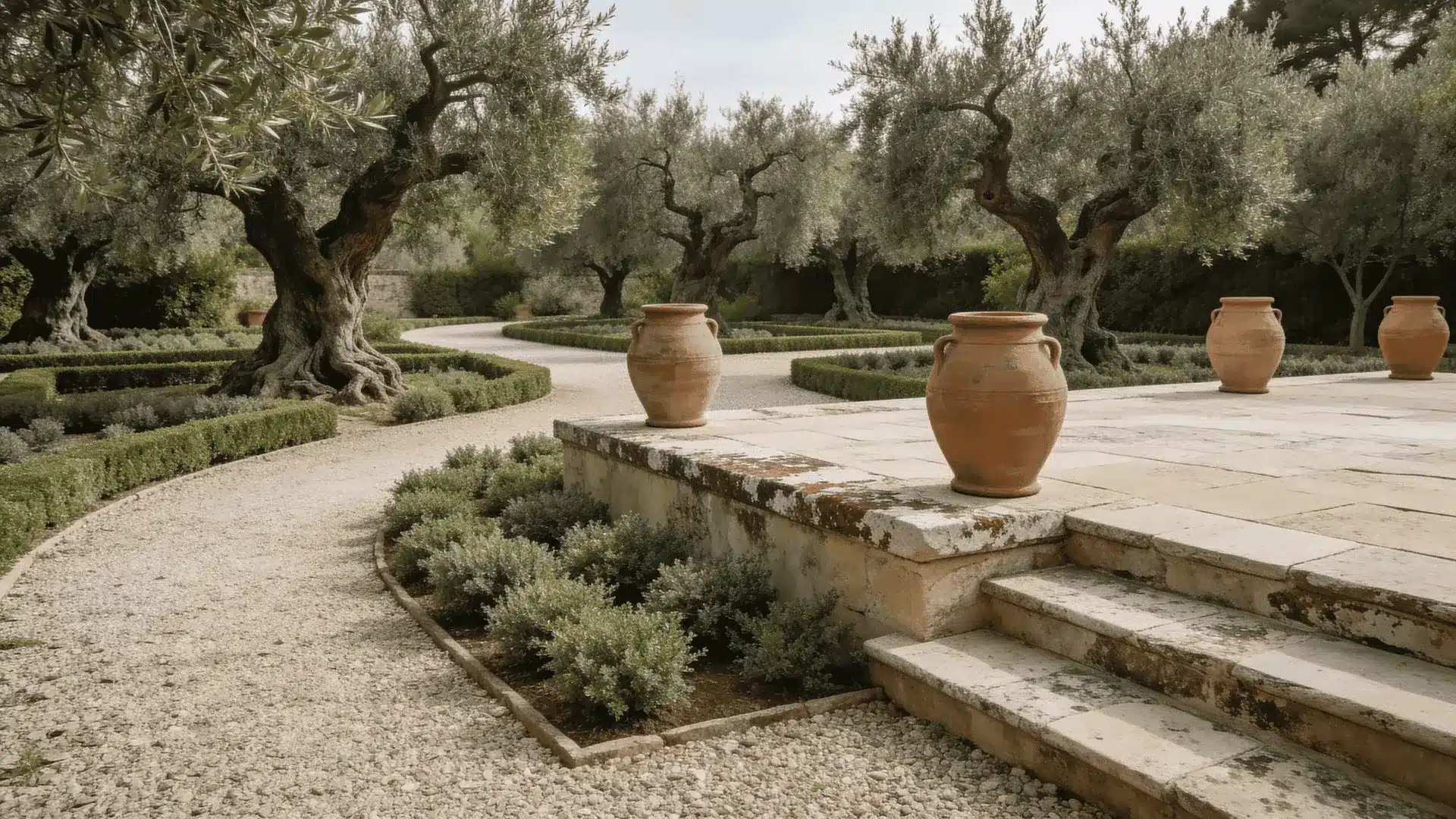
A Mediterranean landscape often gets reduced to a mood: warm stone, olive trees, and sun-washed courtyards.
But the style is not built from visuals alone. It is shaped by a specific climate pattern and by design choices that respond directly to heat, drought, and seasonal rainfall.
In my experience working through different climate-based garden styles, this one only works when you respect the environmental logic behind it.
Today, I’ll show you how climate drives structure, why certain plants thrive, and how materials quietly support the system. Let’s break it down properly.
What is a Mediterranean Landscape?
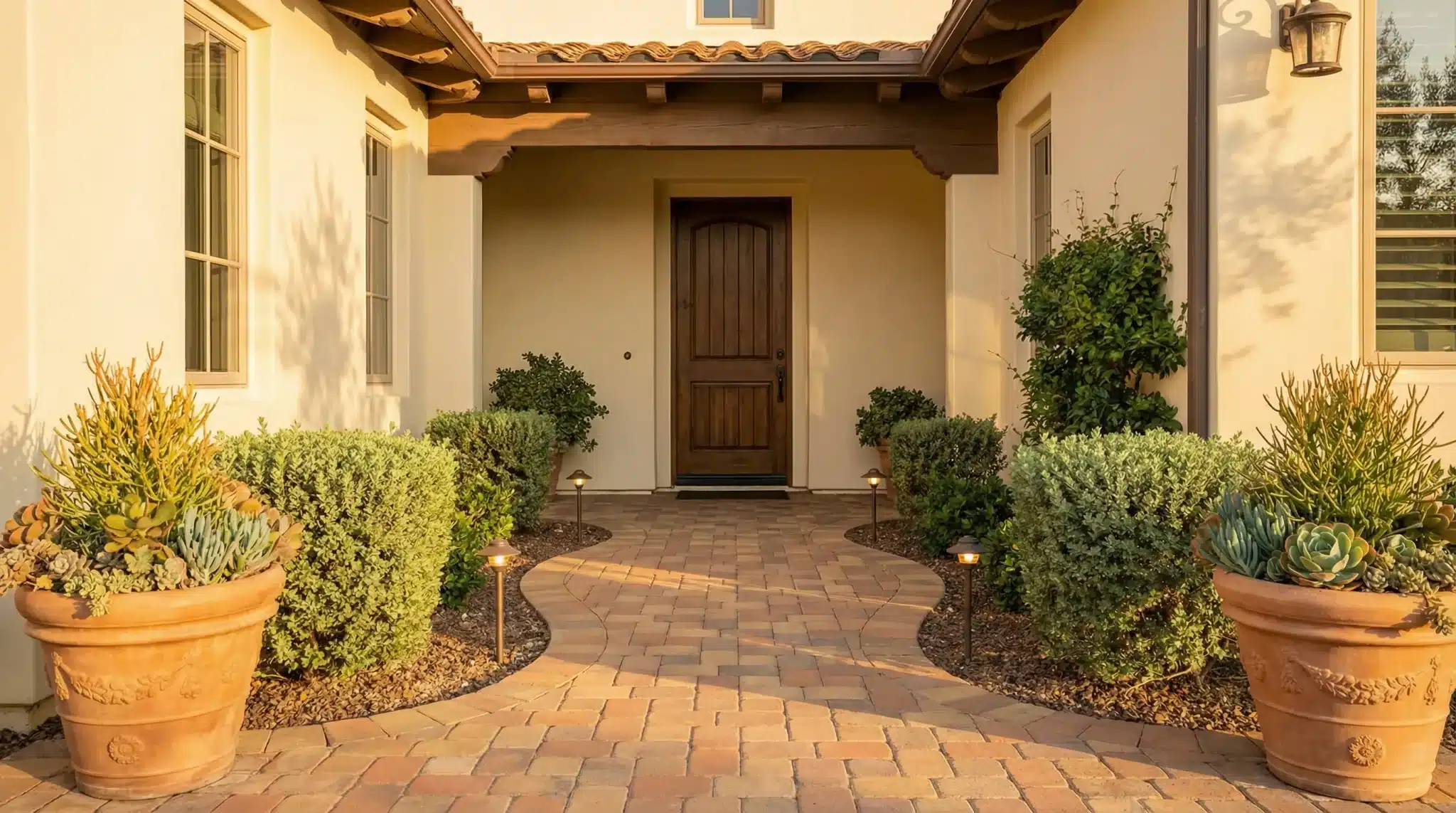
A Mediterranean landscape is a climate-driven design style shaped by hot, dry summers and mild, wetter winters. It features drought-tolerant plants, structured layouts, gravel or stone surfaces, warm earth-toned materials, and minimal lawn areas. The design prioritizes drainage, heat management, and plant adaptation to seasonal moisture patterns.
In water-limited climates, large open lawns require steady summer irrigation, which works against the seasonal pattern. Structured layouts with defined beds and hard surfaces reduce exposed soil and lower long-term water demand.
At its core, the style includes:
- Architectural trees like olive and cypress
- Aromatic shrubs such as lavender and rosemary
- Gravel or stone surfaces instead of large grass areas
- Warm-toned materials like limestone and terracotta
- Simple geometry, often courtyard-inspired
- Limited but intentional water features
The key idea is restraint. This is not a lush tropical garden, and it is not a desert rock yard either. It sits somewhere in between. Plants are spaced to breathe, surfaces are intentional, and lawns are minimized because water is limited in summer.
Many people assume this style is mostly about color and mood. It is not. The look exists because the environment demands it. Change the climate logic, and the design starts to fall apart.
What Climate Conditions Create Mediterranean Landscapes?
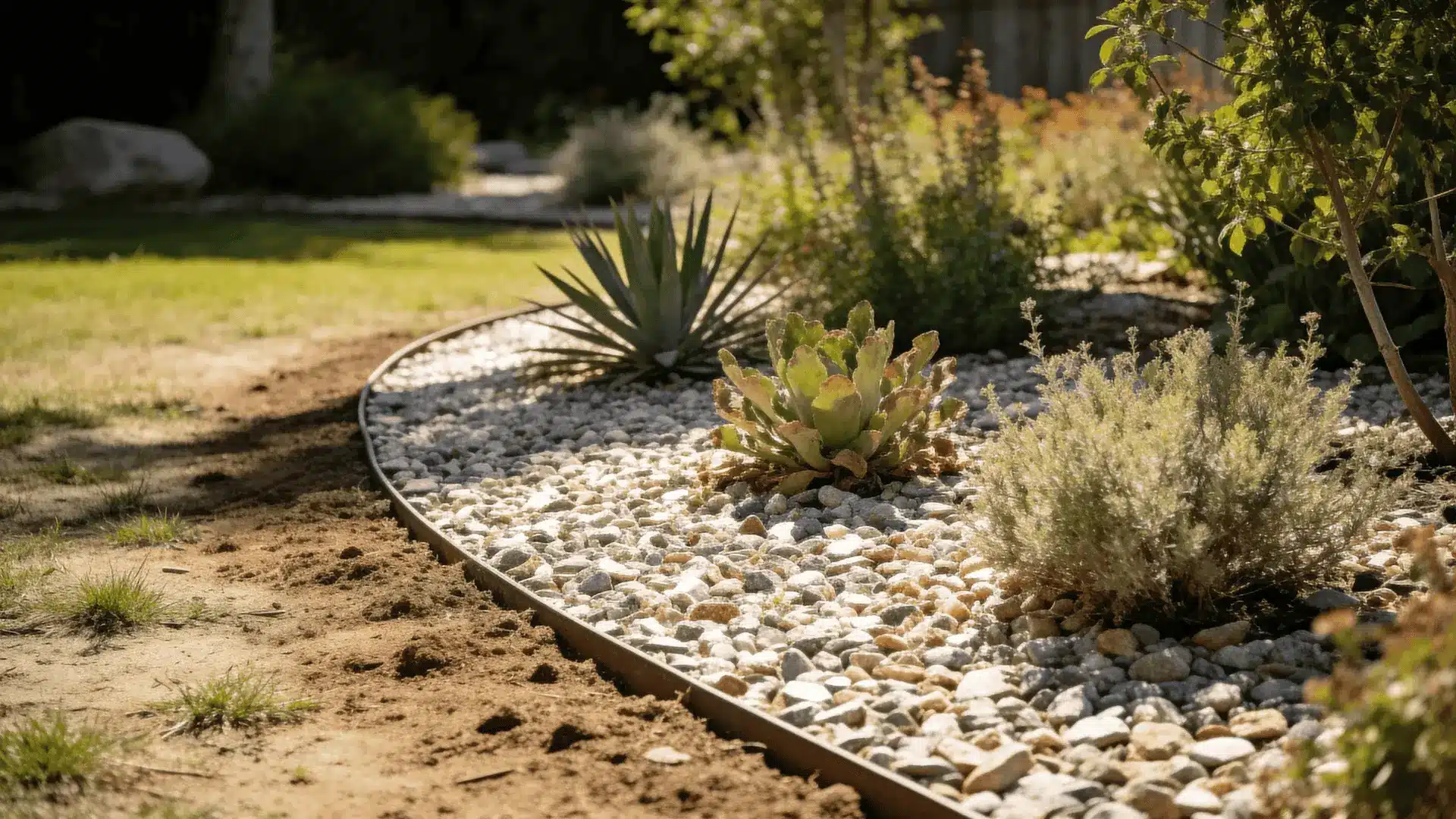
To understand this style, you first need to understand the climate behind it. A Mediterranean landscape is shaped by a very specific seasonal pattern.
Here is what defines that pattern:
- Long, hot, dry summers: Rainfall is minimal during peak heat. Plants must survive extended dry periods without steady irrigation.
- Mild, wetter winters: Most of the yearly rainfall arrives in cooler months. Soil must handle seasonal moisture without holding excess water.
- Strong seasonal contrast: The sharp shift between dry summers and wetter winters drives plant selection, layout, and material choice.
- High importance of drainage: If soil holds too much water in winter, roots can suffocate or rot. If soil drains too fast and retains nothing, plants struggle during summer drought. Balance is critical.
This seasonal pattern also affects how plants grow. Many Mediterranean species grow most actively in cooler months and slow down during peak summer heat. That differs from many temperate plants, which push their strongest growth during warm, rainy summers.
It is also important to understand that heat alone does not define this climate.
Desert regions are hot and dry year-round. Tropical regions are hot and humid with frequent rain. Mediterranean climates are defined specifically by dry summers and wetter winters.
Why Mediterranean Plants Tolerate Drought
Drought-tolerant does not mean “never water.” It means the plants are adapted to survive extended dry periods.
These plants rely on specific survival strategies. Many have small, narrow, or silver-gray leaves that reduce water loss. Some leaves are waxy, while others are covered in tiny hairs. These features reflect sunlight and slow evaporation.
Root systems also matter. Some plants send roots deep into the soil to access stored moisture. Others spread wide to capture light rainfall quickly. Both strategies reduce dependence on frequent irrigation.
Aromatic herbs such as lavender and rosemary go a step further. The oils that give them their fragrance also help limit water loss and protect against harsh sun exposure.
Lawns struggle in this climate because turf grasses usually require consistent summer moisture to stay green. In a climate defined by dry summers, that moisture demand conflicts with the environment.
That is why traditional Mediterranean gardens reduce or eliminate grass areas.
Structural Trees: Olive and Cypress
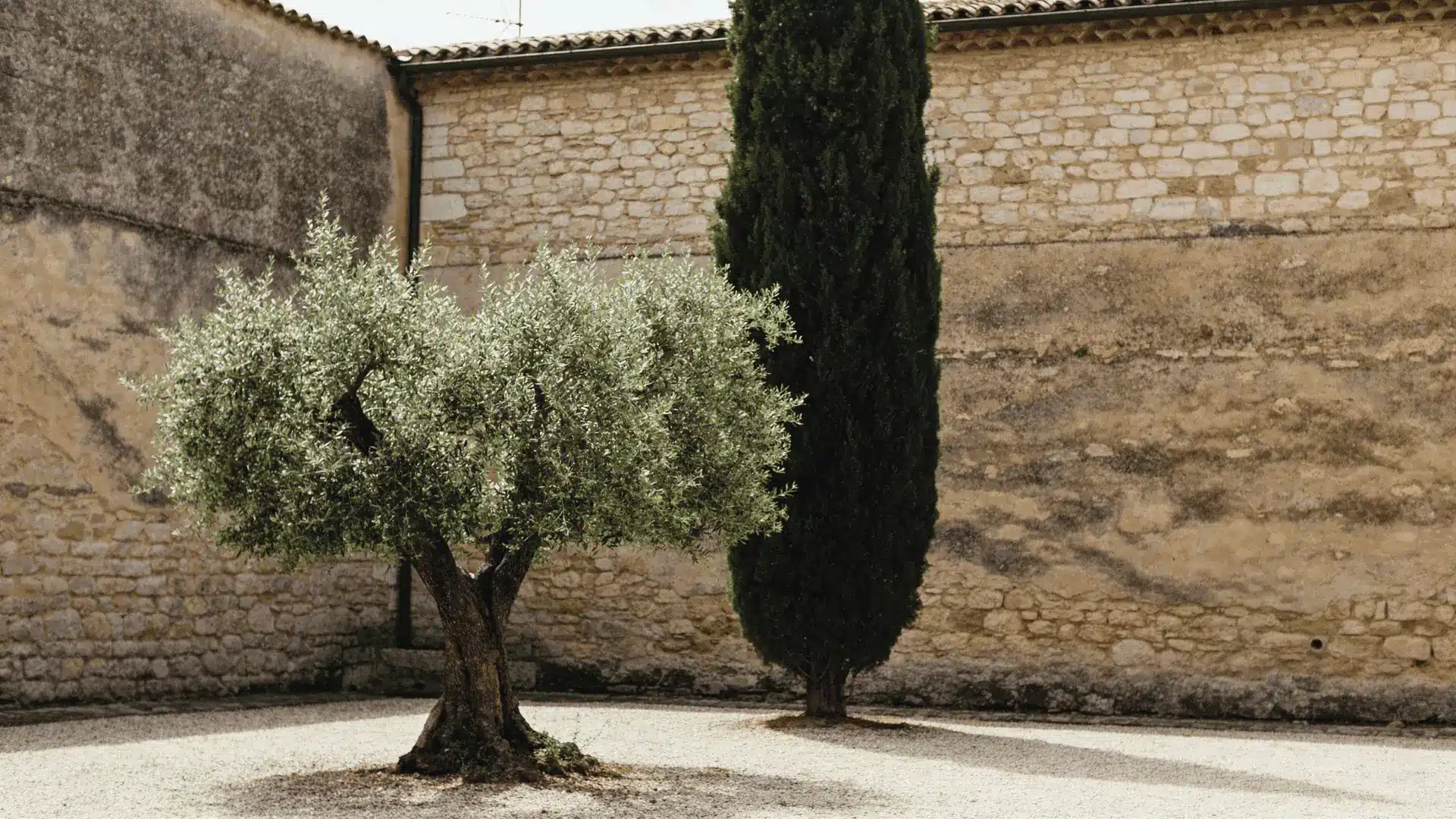
Olive and cypress trees define the vertical structure of a Mediterranean landscape.
Olives tolerate drought because of their narrow, gray-green leaves, which reduce water loss, and their deep root systems, which access stored soil moisture. They grow slowly and remain stable in prolonged heat without heavy irrigation.
Cypress trees provide height and spatial definition. Their upright form shapes pathways and courtyards while allowing sunlight and airflow to pass through.
These trees are selected because they function well in intense sun and dry, well-drained soil. Their form and resilience support both structure and climate demands.
Shrubs and Aromatic Herbs
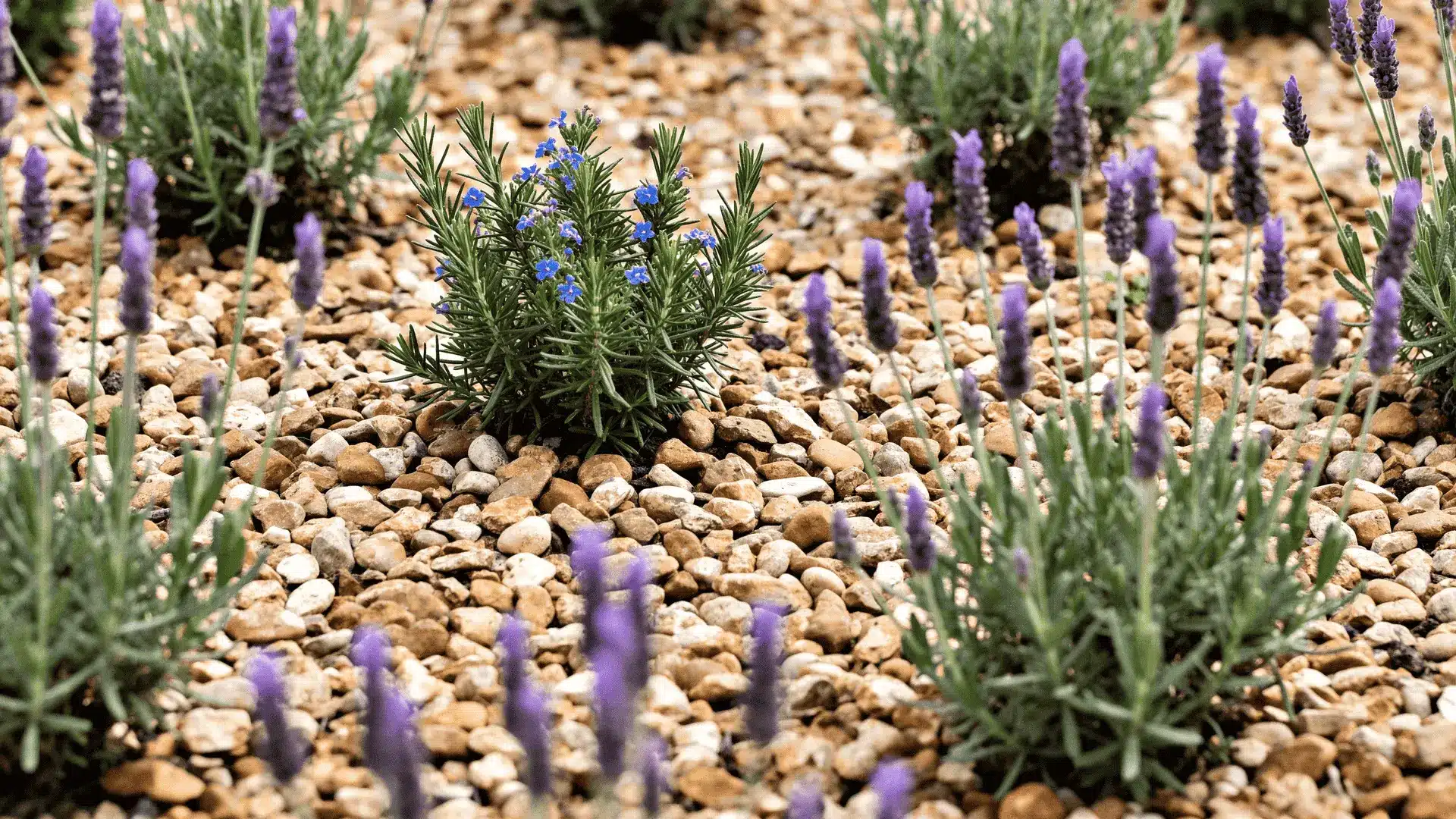
Shrubs and herbs add layered planting and fragrance while staying adapted to dry conditions.
Lavender performs best in sharply drained soil and often declines in heavy clay where roots stay wet.
Rosemary prefers dry roots and steady airflow. In humid climates, prolonged moisture increases fungal disease and weakens growth.
This variability matters. A plant labeled drought-tolerant may thrive in one environment and fail in another if soil drainage or humidity changes.
Survival depends on how the plant manages water at the leaf and root level, not on the label alone.
How Mediterranean Materials Function
In a Mediterranean landscape, hard materials do more than define style. They manage water, regulate heat, and support plant survival through seasonal extremes.
Each material serves a specific function:
| Material | What It Does | Why It Matters |
|---|---|---|
| Gravel | Allows water to pass through quickly; reduces surface moisture; suppresses weeds when installed over a stable base | Limits root rot during wetter winters and prevents excess moisture retention during dry summers |
| Stone | Absorbs heat during the day and releases it slowly at night (thermal mass) | Moderates temperature swings and stabilizes nearby soil conditions |
| Terracotta | Porous clay permits gradual moisture exchange through container walls | Helps prevent waterlogging while supporting roots in dry conditions |
Gravel does not automatically equal low maintenance. In many Mediterranean layouts, paved areas such as gravel paths, stone terraces, and courtyards intentionally cover more space than the lawn.
Reducing turf limits irrigation needs, helps guide rainwater away from planting beds, and keeps soil conditions more stable through seasonal changes.
The structure beneath the surface determines whether the system works as intended.
When Mediterranean Landscapes Stay Low Maintenance
Mediterranean landscapes are often labeled as low-maintenance. That reputation comes from real advantages, but only when the system is built correctly.
Low maintenance works because:
- Established plants need less irrigation. Once roots are fully developed, drought-adapted species draw moisture from deeper soil layers and depend far less on supplemental watering than traditional turf lawns.
- Hard surfaces reduce routine upkeep. Gravel and stone eliminate mowing, edging, and frequent trimming, significantly lowering ongoing maintenance compared to landscapes dominated by grass.
- Perennials return without replanting. Many Mediterranean plants are long-lived perennials that come back each year, reducing the need for seasonal replacement and repeated planting cycles.
However, the system breaks down when:
- Plants are not properly established. Young plants require steady watering during their first growing seasons so roots can grow deeper into the soil. Without consistent moisture early on, roots remain shallow and drought tolerance never fully develops.
- Soil is poorly prepared. If drainage is inadequate, winter moisture can cause root rot. The resulting stress often appears as drought damage, but the real issue is suffocated roots.
- Climate does not match the design logic. In humid regions with frequent summer rain, fungal diseases increase, and soil stays damp longer than intended, undermining drought-adapted plant performance.
- Drainage and airflow are ignored. Compacted soil restricts oxygen to roots, while tight spacing traps moisture around foliage. Sun-loving plants placed in shade weaken and require more intervention.
Low maintenance here is earned, not assumed. When climate, soil, and plant choices align, upkeep decreases naturally. When they do not, effort rises just as quickly.
What Makes a Landscape Mediterranean (Not Just Dry)
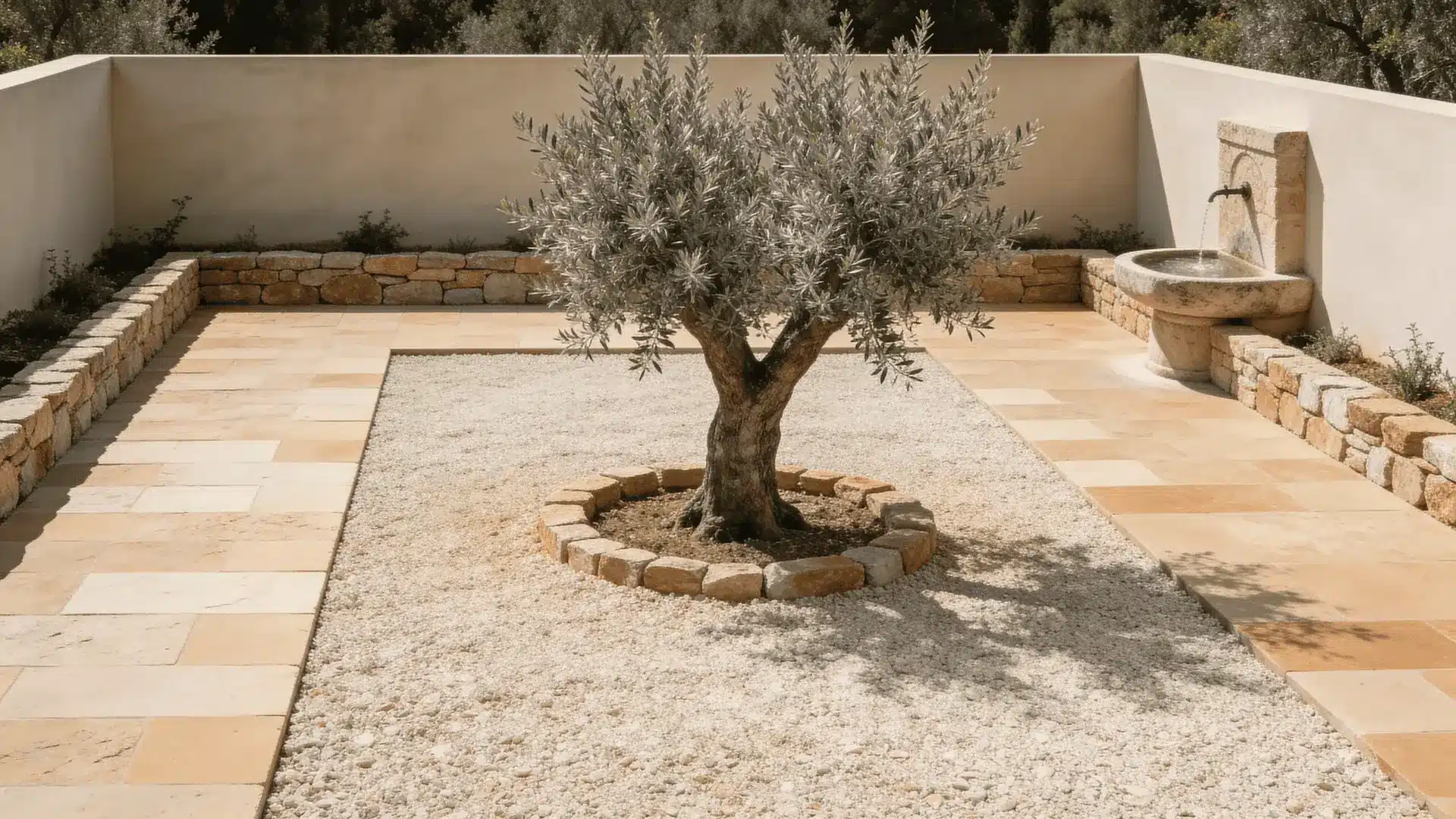
A dry yard with rocks is not automatically Mediterranean. The difference lies in structure and restraint.
Authentic design includes:
- Defined geometry, often rectangular or courtyard-based
- Layered planting with clear spacing, not overcrowded beds
- A restrained color palette of muted greens and warm earth tones
- Focal water features used sparingly, not as dominant elements
- Architectural balance between plants and hardscape, where neither overwhelms the other
Courtyard influence plays a central role in this style. Many Mediterranean gardens are enclosed or semi-enclosed. Walls create shade, reduce wind exposure, and frame the space, making it feel intentional and intimate rather than open and sprawling.
Those walls also create small microclimates. By blocking drying winds and casting partial shade, enclosed spaces slow evaporation and reduce plant stress during peak heat. This environmental buffering allows drought-adapted plants to perform with less intervention.
Water features are subtle. A small fountain provides sound and localized cooling without excessive water use. The goal is atmosphere, not spectacle.
Generic drought landscaping often combines rocks and succulents without structural rhythm. Mediterranean design, by contrast, feels composed and deliberate.
The difference comes down to discipline in layout, spacing, and plant selection.
Wrapping Up
A Mediterranean landscape works when it follows the climate instead of trying to fight it.
It is not about copying a look, but about understanding dry summers, wetter winters, and choosing plants and materials that handle both without constant intervention.
When drainage, spacing, and plant choice are handled with care, the yard settles into a rhythm that feels natural and steady over time. That is what makes the style last.
If you are thinking about creating one, start by looking closely at your soil, sun exposure, and rainfall pattern. Then build from there.
Read other landscape design guides on the website to compare styles, plant choices, and layout ideas that fit your climate. Find the approach that works best for your space.
Frequently Asked Questions
How is a Mediterranean garden different from desert landscaping?
Desert landscaping addresses year-round dryness. Mediterranean design adapts to dry summers and wetter winters, resulting in different plant choices, soil requirements, and seasonal growth cycles.
Can Mediterranean landscaping work outside Mediterranean climates?
It works best in regions with similar seasonal patterns and well-drained soil. In humid climates, disease risk increases and drainage becomes critical.
What are the key characteristics of Mediterranean style?
Mediterranean style is defined by drought-tolerant plants, structured layouts, gravel or stone surfaces, warm earth tones, minimal lawn areas, and climate-driven plant selection.